Learn the fundamental ADSR envelope using Mojito, the synthesizer included with Studio One. This article explains the amp and filter sections in detail, covering velocity control, the Attack, Decay, Sustain, and Release parameters, low-pass filter Cutoff and Resonance, and the filter envelope. Its simple interface makes it a useful way for beginners and experienced producers alike to learn essential sound-design concepts.
Learn the Basics of ADSR with Mojito
Studio One includes the synthesizer Mojito.
Its structure is very simple,
but it is an excellent way to learn synthesizer fundamentals.
Here we focus on the essential synthesizer concept of
ADSR and how it works.
Mojito Video Tutorials
Video Focus: Amp Controls
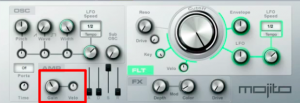
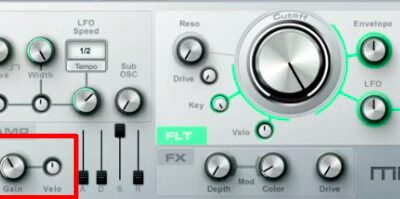
The AMP section simply controls volume.
Next to it, Velo is short for velocity and
determines how MIDI velocity affects the volume.
- At the default center position, velocity has no effect and the volume stays the same.
- Turning the knob to the right of center makes the volume follow velocity more closely.
- Turning it to the left of center makes the volume respond inversely to velocity
(higher velocity values produce a quieter sound).
Velocity settings are explained at the following URL:
https://sleepfreaks-dtm.com/for-beginner-studioone/edit-velocity/
Video Focus: ADSR
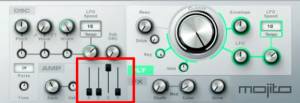
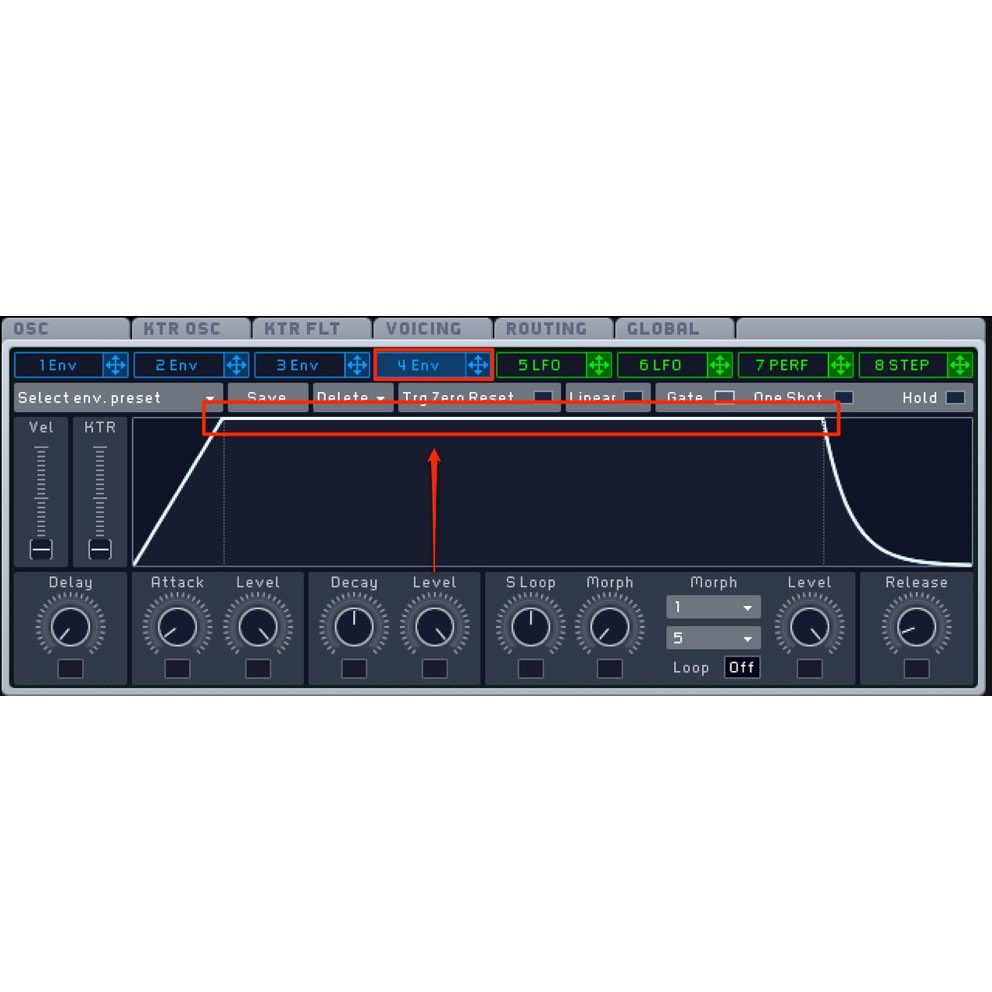
ADSR is one of the most exciting aspects of a synthesizer.
It lets you change volume or filter values over time.
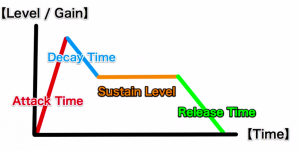
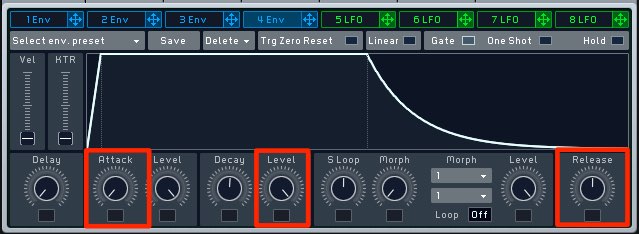
- A — Attack: How long does the volume take to reach its maximum after a key is pressed?
- D — Decay: How long does it take to fall to the sustain level?
- S — Sustain: What level does the volume settle at after the attack reaches its maximum?
- R — Release: How long does the sound remain after the key is released?
ADSR settings are also explained at the following URL:
https://sleepfreaks-dtm.com/synth-basic/synth-am/
Video Focus: The Low-Pass Filter
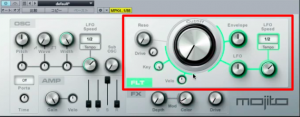
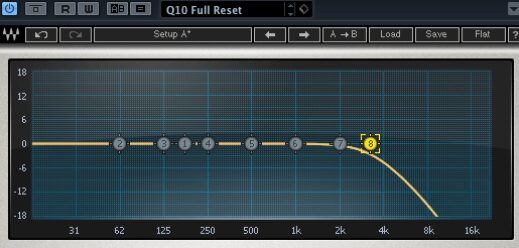
The filter section lets you shape the tone by cutting frequencies from the sound.
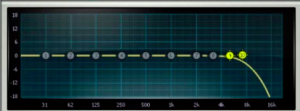
The filter in Mojito is called LP (low-pass), and
it cuts high frequencies.
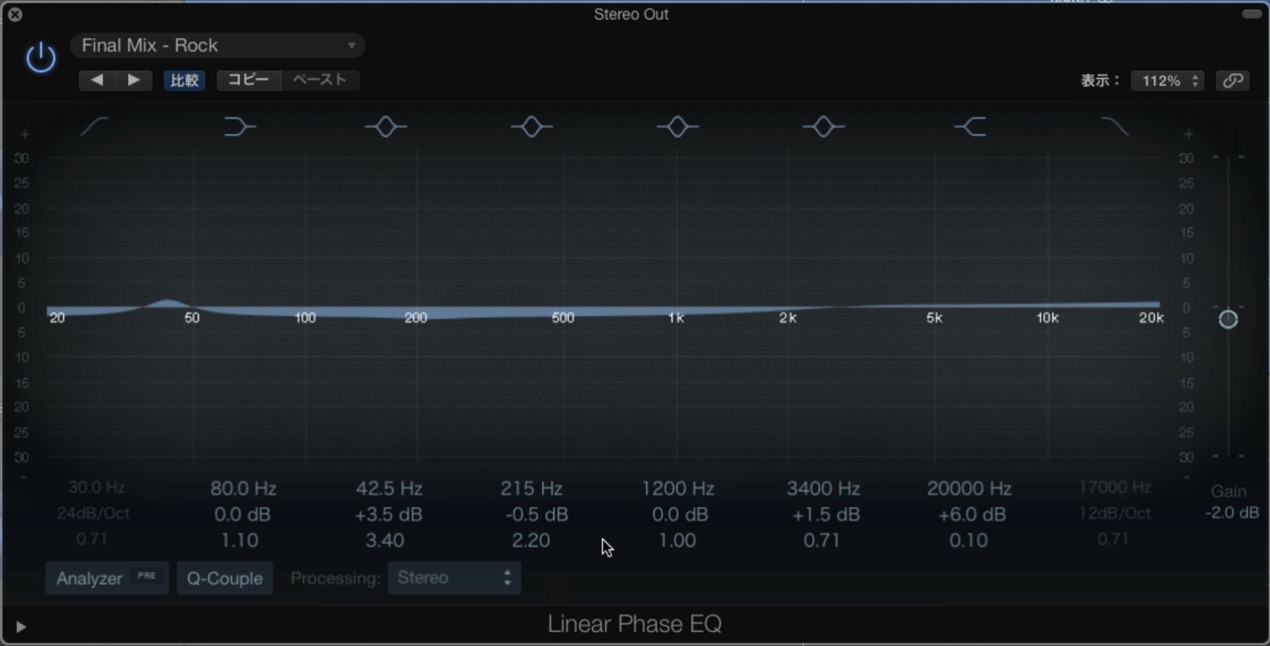
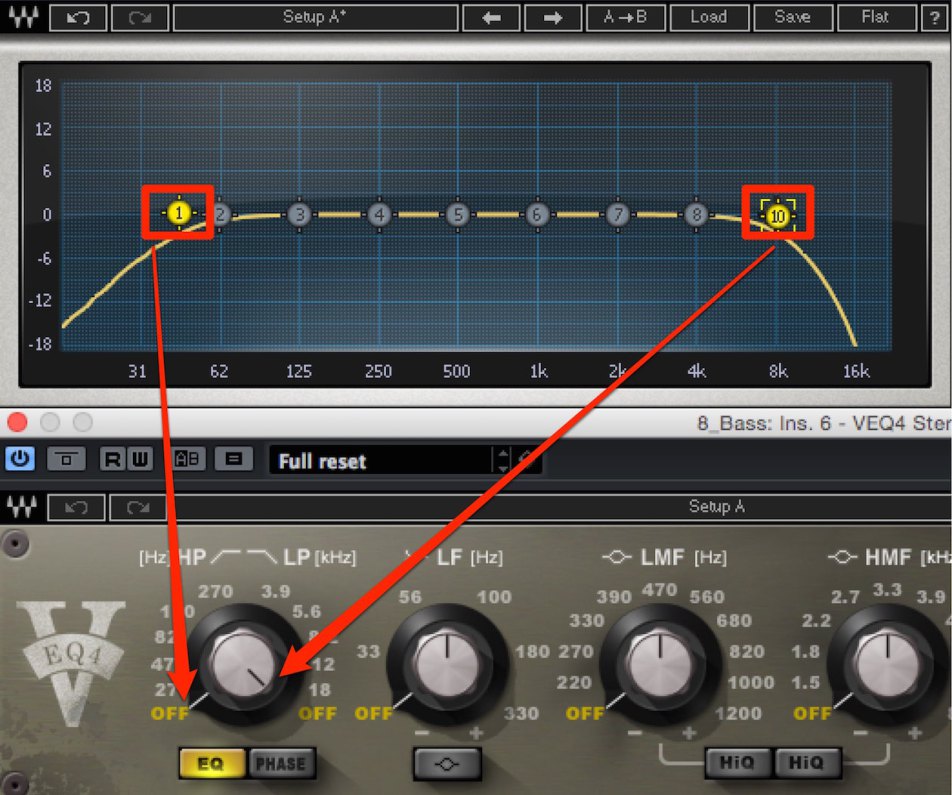
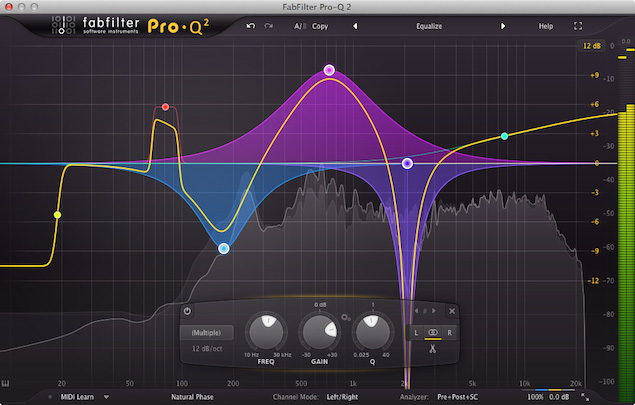
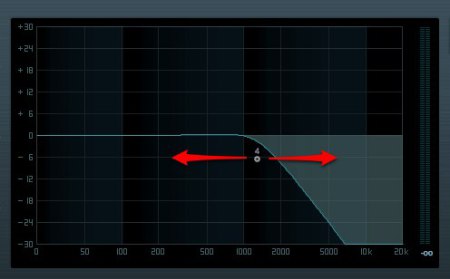
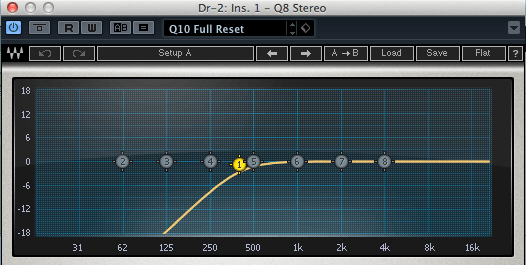
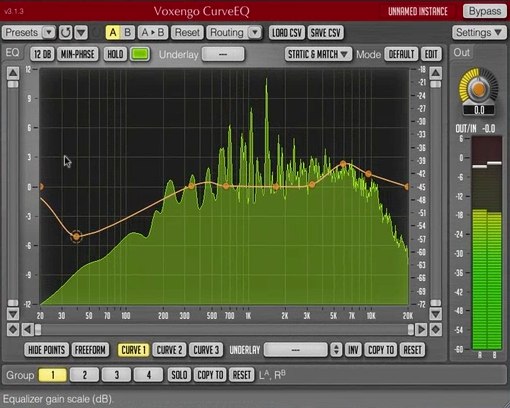
The image above represents a low-pass filter as an EQ curve.
This type is well suited to creating thick sounds.
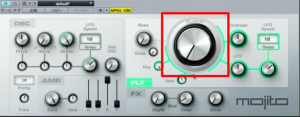
Cutoff determines how much of the high end is cut.
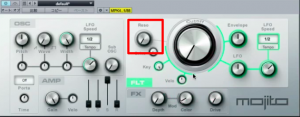
Reso (resonance) deliberately boosts the area around the cutoff
to give the sound a distinctive character.
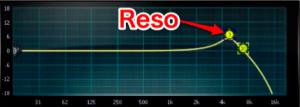
The image above shows an approximate EQ representation.
Video Focus: The Filter Envelope
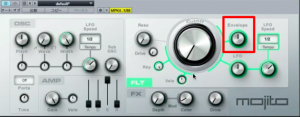
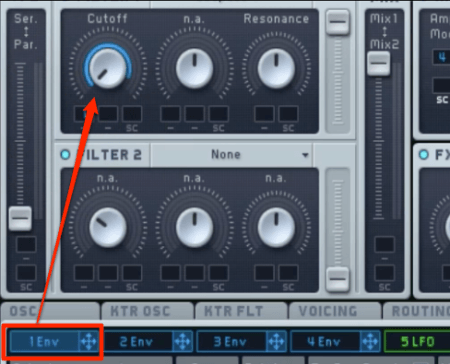
Using Envelope,
you can apply the ADSR movement described above to the filter as well.
This lets you create tones that gradually change over time.
- Turning Envelope to the right moves the effective cutoff upward according to the ADSR values.
- Turning Envelope to the left moves the effective cutoff downward according to the ADSR values.
The cutoff knob does not actually move; only the sound changes.
The amp and filter share the same ADSR.
On many synthesizers, these ADSR envelopes are independent.

Frequently Asked Questions
Q1. What does the center position of Mojito’s Velo control do?
At its default center position, MIDI velocity has no effect and notes sound at the same volume. Turning the knob right makes volume follow velocity; turning it left makes the response increasingly inverse.
Q2. What is an ADSR envelope?
It is a basic synthesizer function that changes volume or filter settings over time using four parameters: Attack (rise time), Decay (fall time), Sustain (held level), and Release (time after the note is released). This enables expressive sound design.
Q3. How do the low-pass filter and resonance differ?
The low-pass Cutoff determines how much high-frequency content is removed. Resonance boosts the area around the cutoff to add character and emphasis; this can help create thick sounds.
NEW ARTICLES
Latest English Articles