This is the second half of our guide to cutting up guitar phrases with Native Instruments’ BATTERY sampler. We explain how to create new melodies by combining pitch changes and time stretching, add movement with LFO-driven panning, and reshape the sound with filters and Lo-Fi effects. The examples and step-by-step instructions show how a capable sampler can open up creative possibilities from a limited set of source material.
Add Color to Cut-Up Phrases with BATTERY
Building on the first half, we will explore pitch changes, time stretching, LFO-controlled panning, and effects to add more variety to cut-up phrases.
The features of a powerful sampler make it easier to create sophisticated results, so give these techniques a try.
Questions and Answers from YouTube

I have a question: is a condenser or dynamic microphone better? Sorry that this is unrelated to the video.

The article at the following URL summarizes the differences between microphones; please use it as a reference. https://sleepfreaks-dtm.com/produce-recipe/vo_home_recording/
Pitch Changes and Time Stretching
Copy a Cell and Change Its Pitch
As before, copy a cell to create a version whose pitch can be changed.
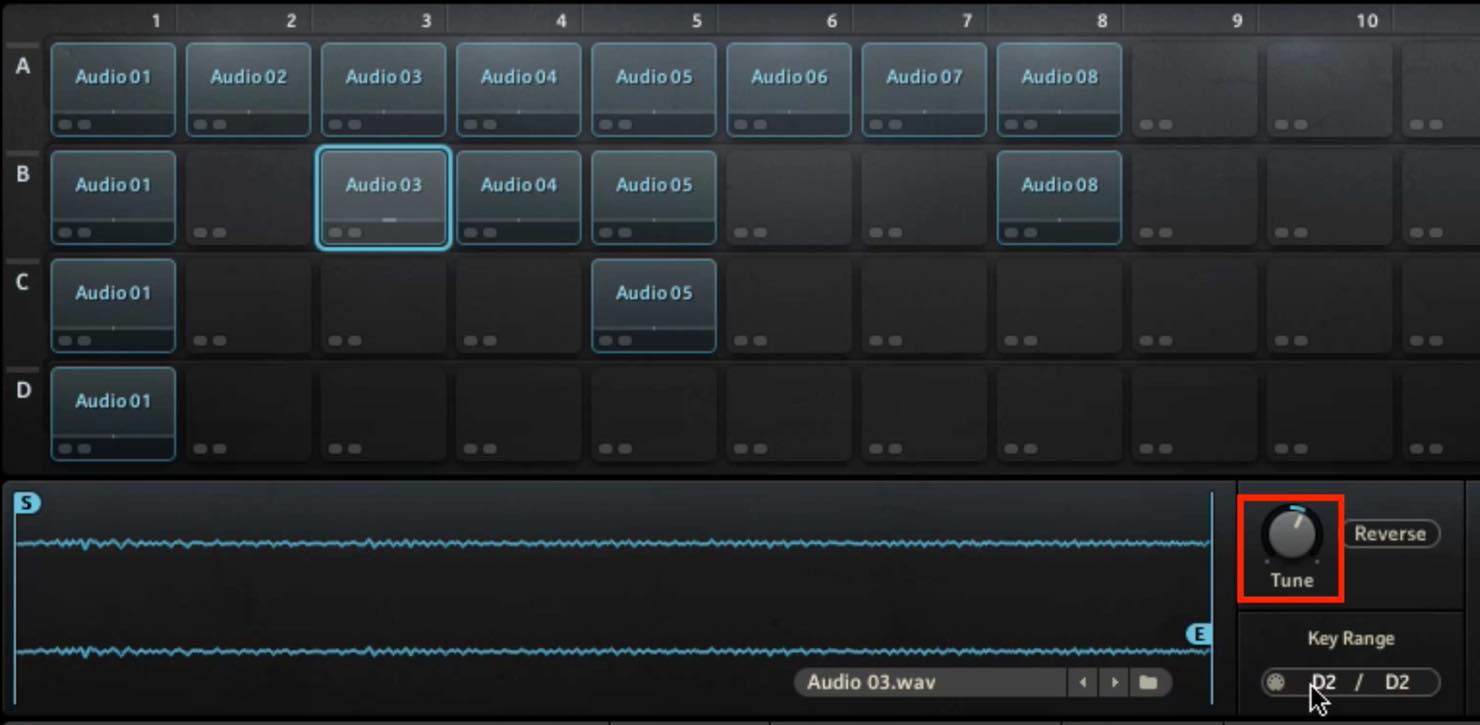
Here we copied it to the D2 cell and set the Tune knob to +7, a perfect fifth higher.
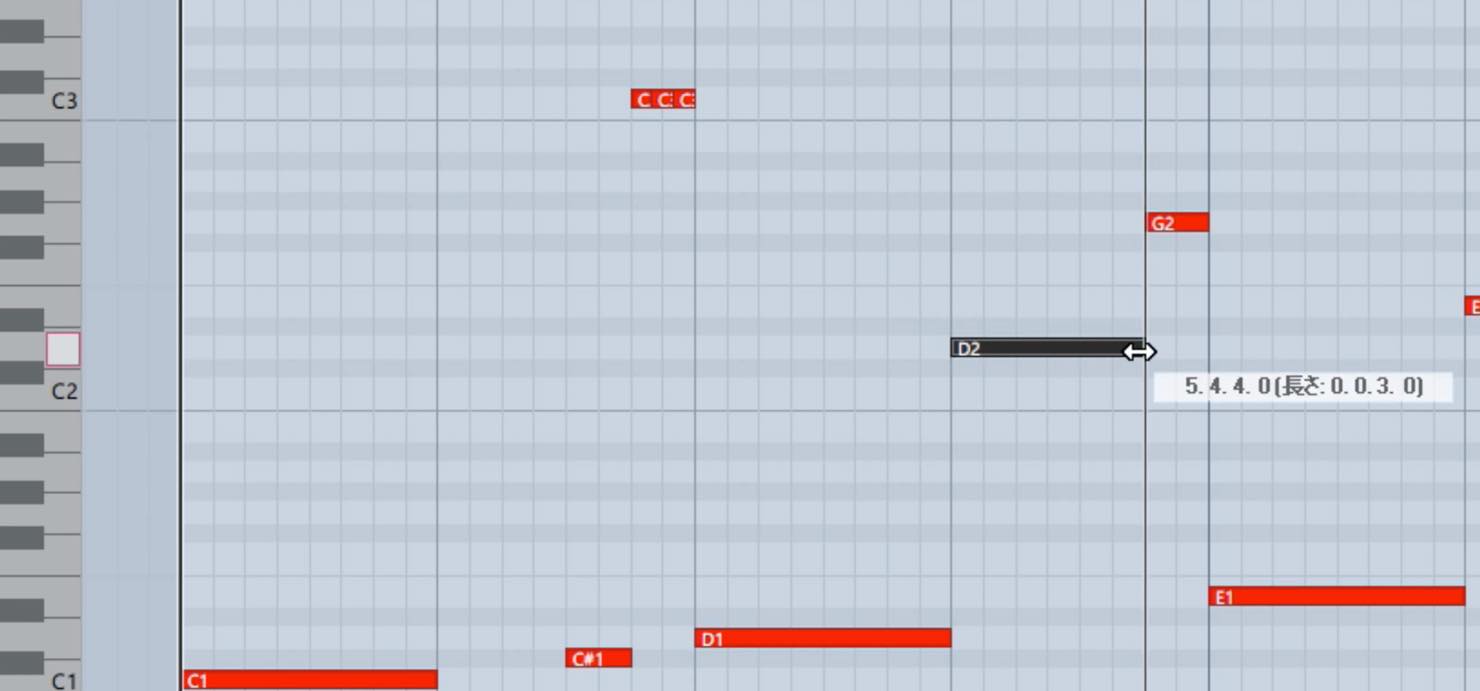
Then incorporate it into the phrase.
Time Stretching
Changing the pitch in the cell also changes its playback speed.
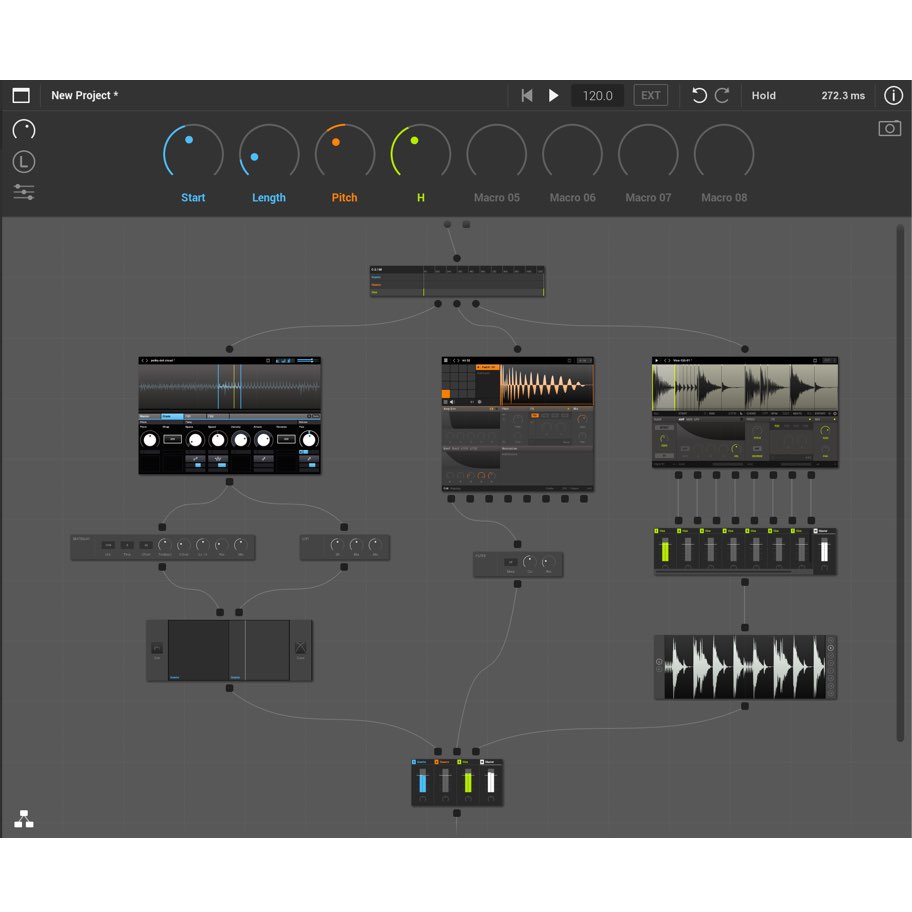
To address this, use the Engine section at the bottom.
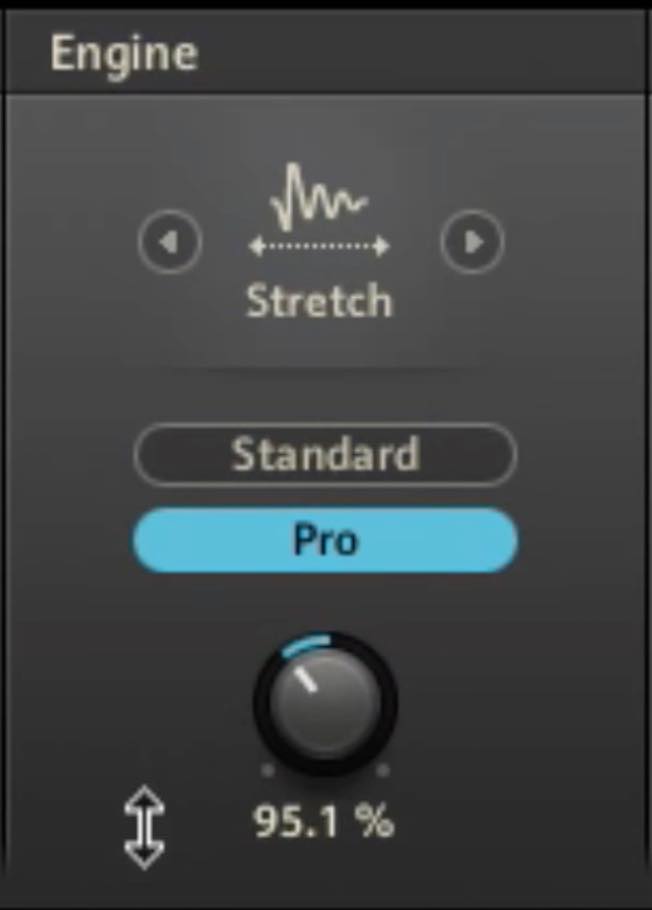
Click the area labeled Sampler by default to choose a mode, then select Stretch.
Finally, adjust the Speed knob to match the tempo.
Adjusting the Phrase
This works as it is, but the programmed phrase can feel a little repetitive. Try shifting the timing by about a sixteenth note, as shown below.
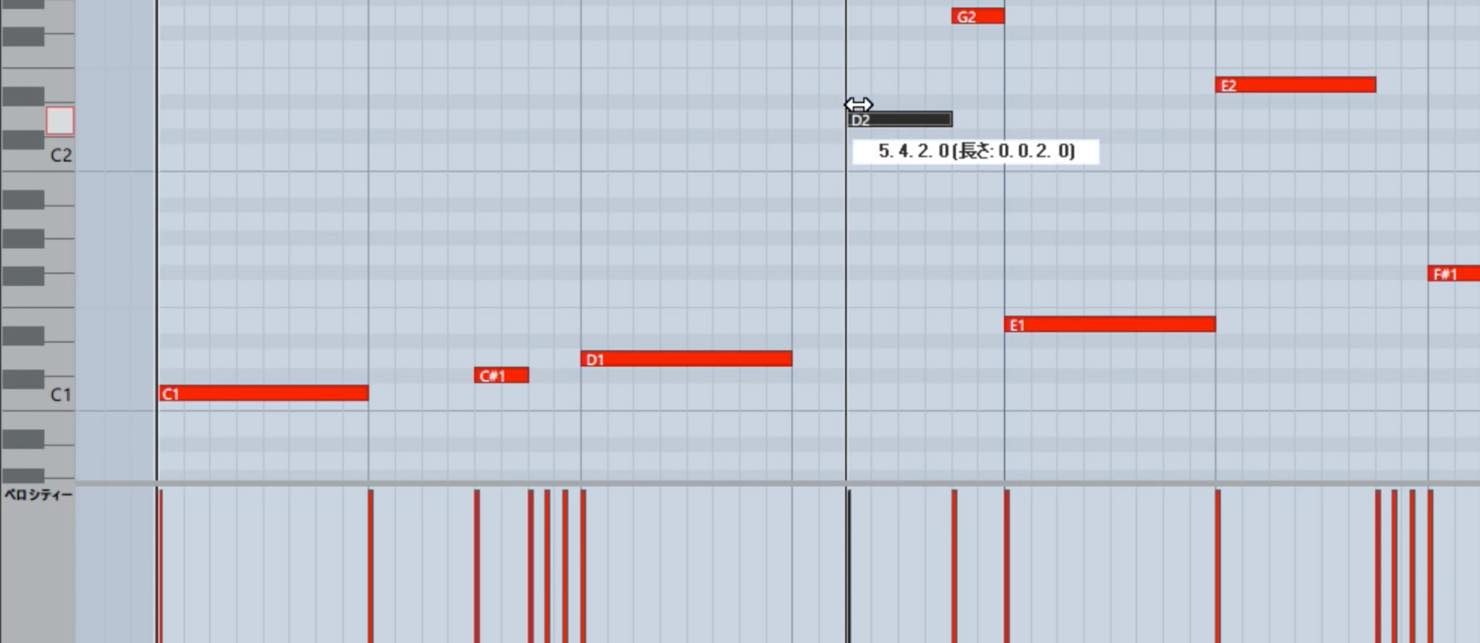
The result is a modern phrase with a cut-up feel.
Panning with an LFO
Let’s explore more of BATTERY’s features, starting with panning.
You can use separate cells with different pan settings, but an LFO is an efficient way to produce regular movement.
Let’s apply it to the cell we created last time for the triplet stutter effect.
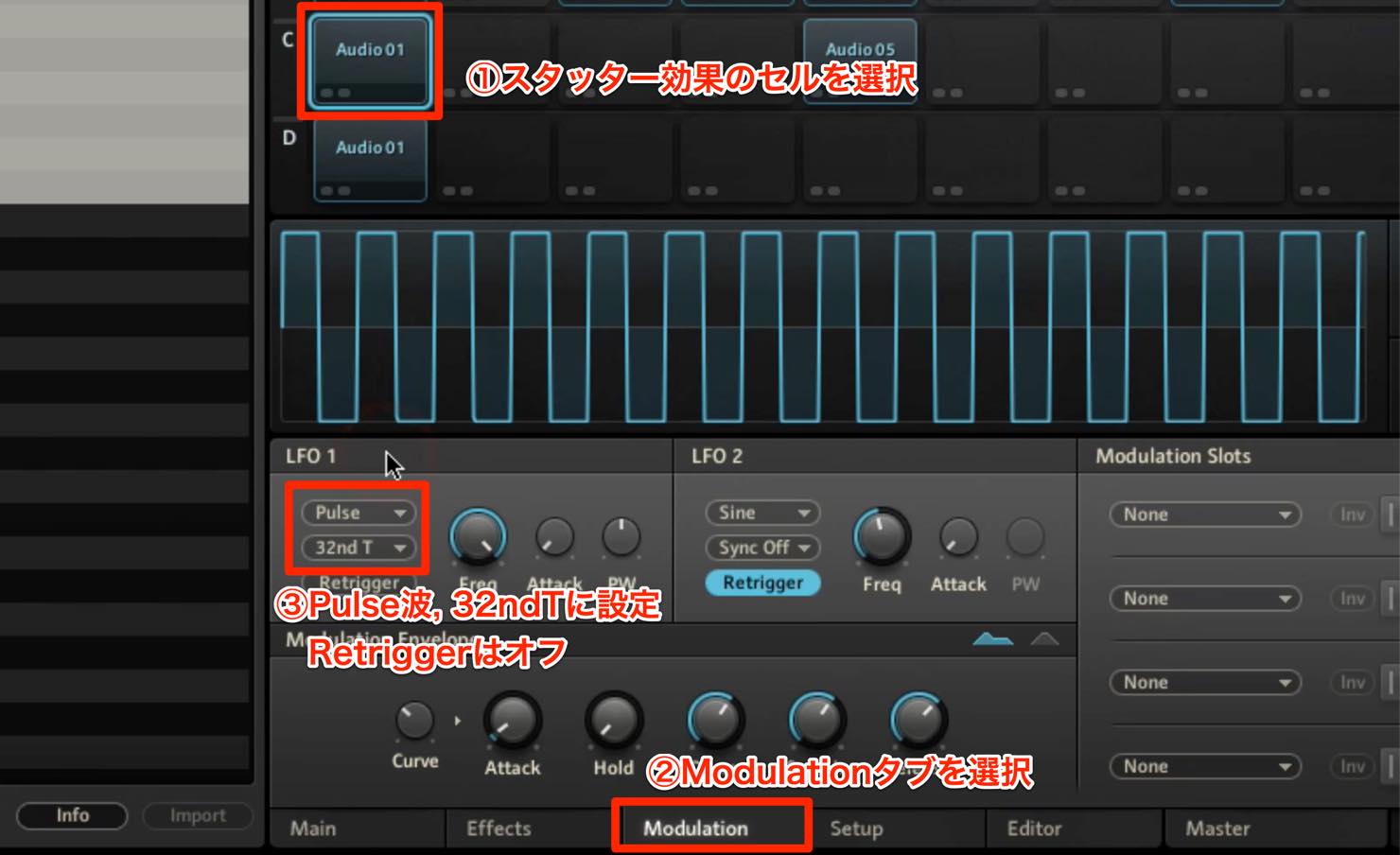
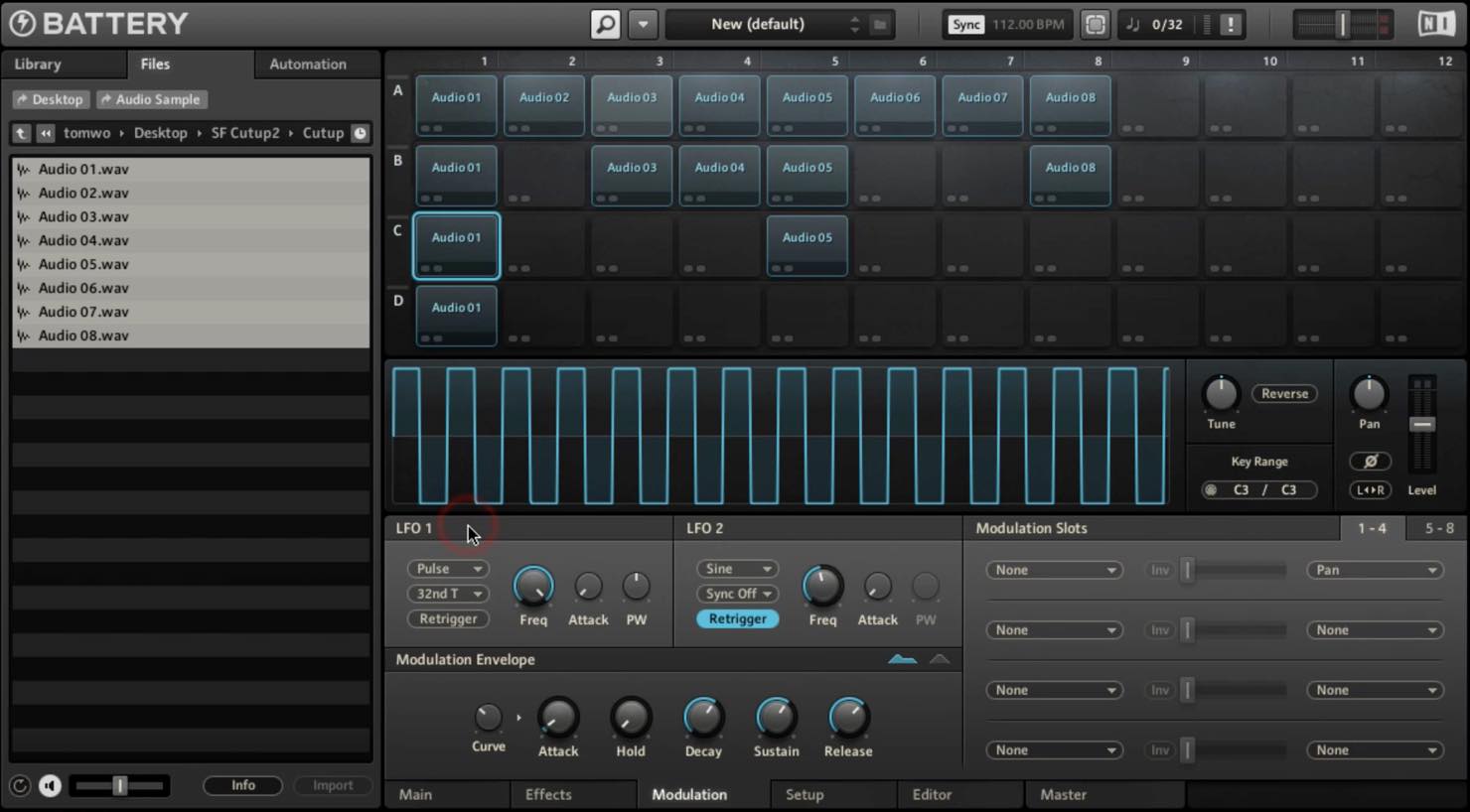
- 1. Select the cell used for the stutter effect.
- 2. Select Modulation from the tabs below.
- 3. Set the LFO1 waveform to Pulse and its rate to 32ndT, matching the programmed notes. Turn Retrigger off.
This prepares the LFO to move the parameter between its extremes in a 32nd-note triplet rhythm.
Next, assign the LFO to pan.
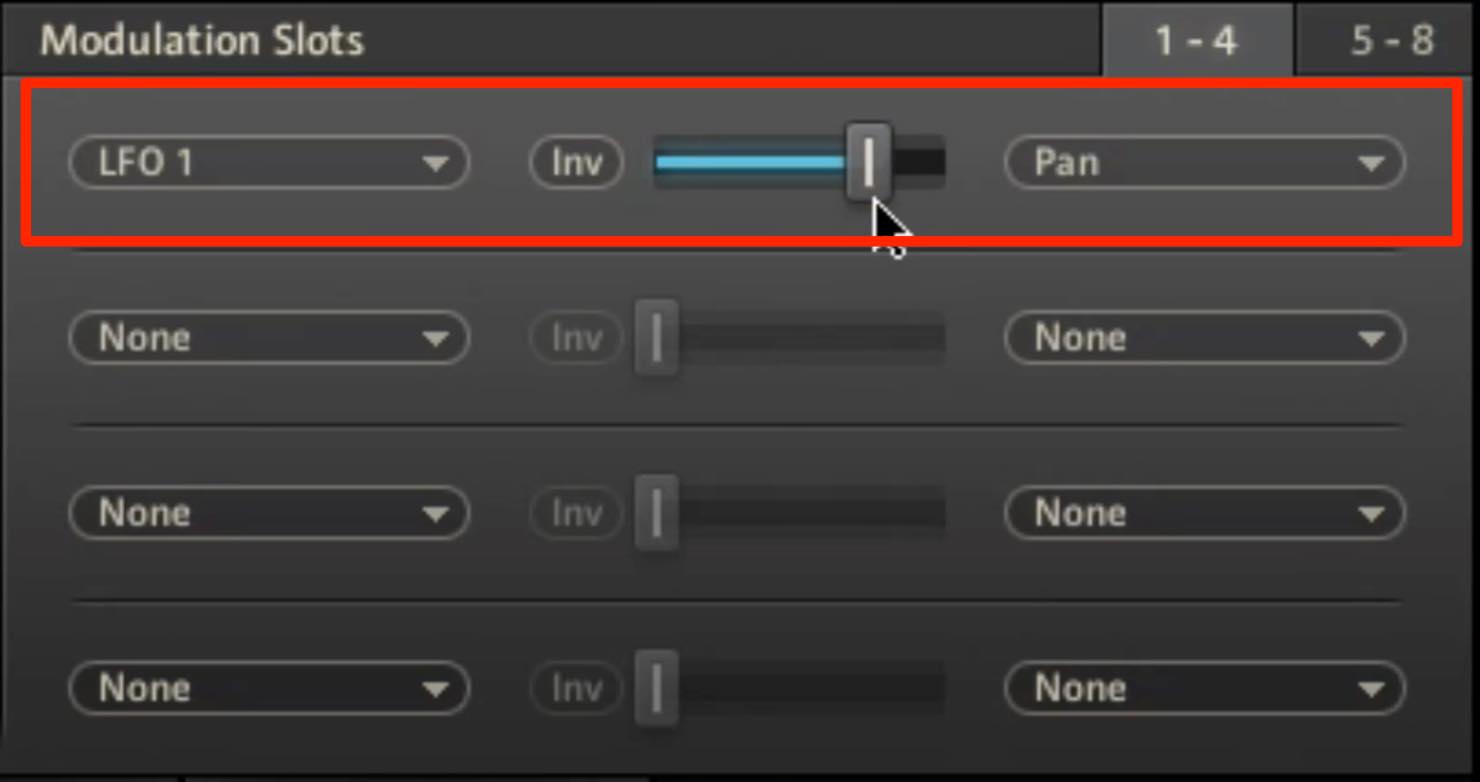
- Set the modulation source on the left to LFO1.
- Set the modulation destination on the right to Pan.
- If the panning is too strong, adjust it with the center slider.
Applying Effects
BATTERY also includes a variety of effects.
You can prepare several cells with different effects and switch between them to create a more complex cut-up phrase.
As an example, we applied a filter and Lo-Fi to the reversed cell.
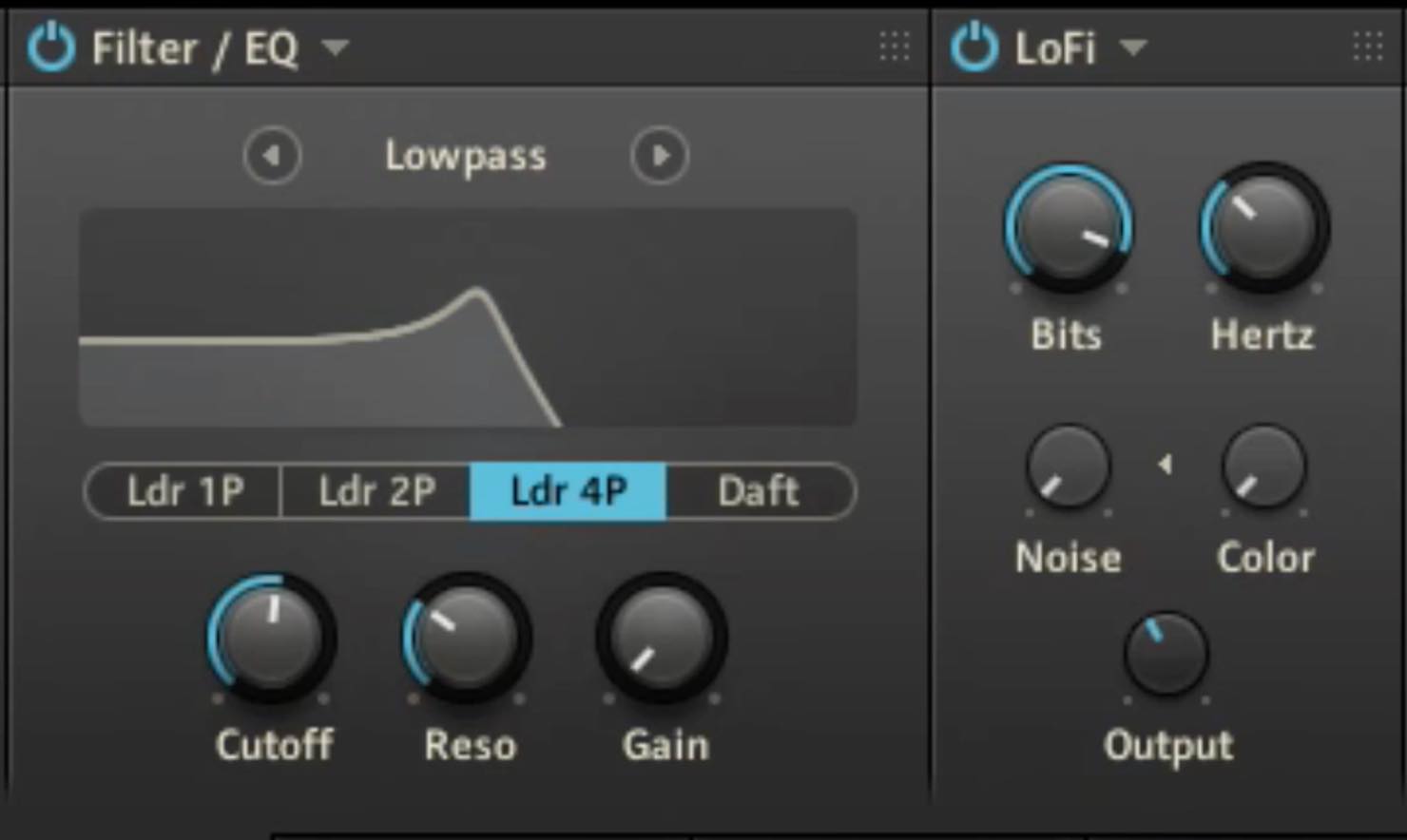
A low-pass filter and resonance change the atmosphere, while Lo-Fi adds grit, giving the sound a distinctive character.
If the effects become too heavy, try mixing the processed sound with the original audio.
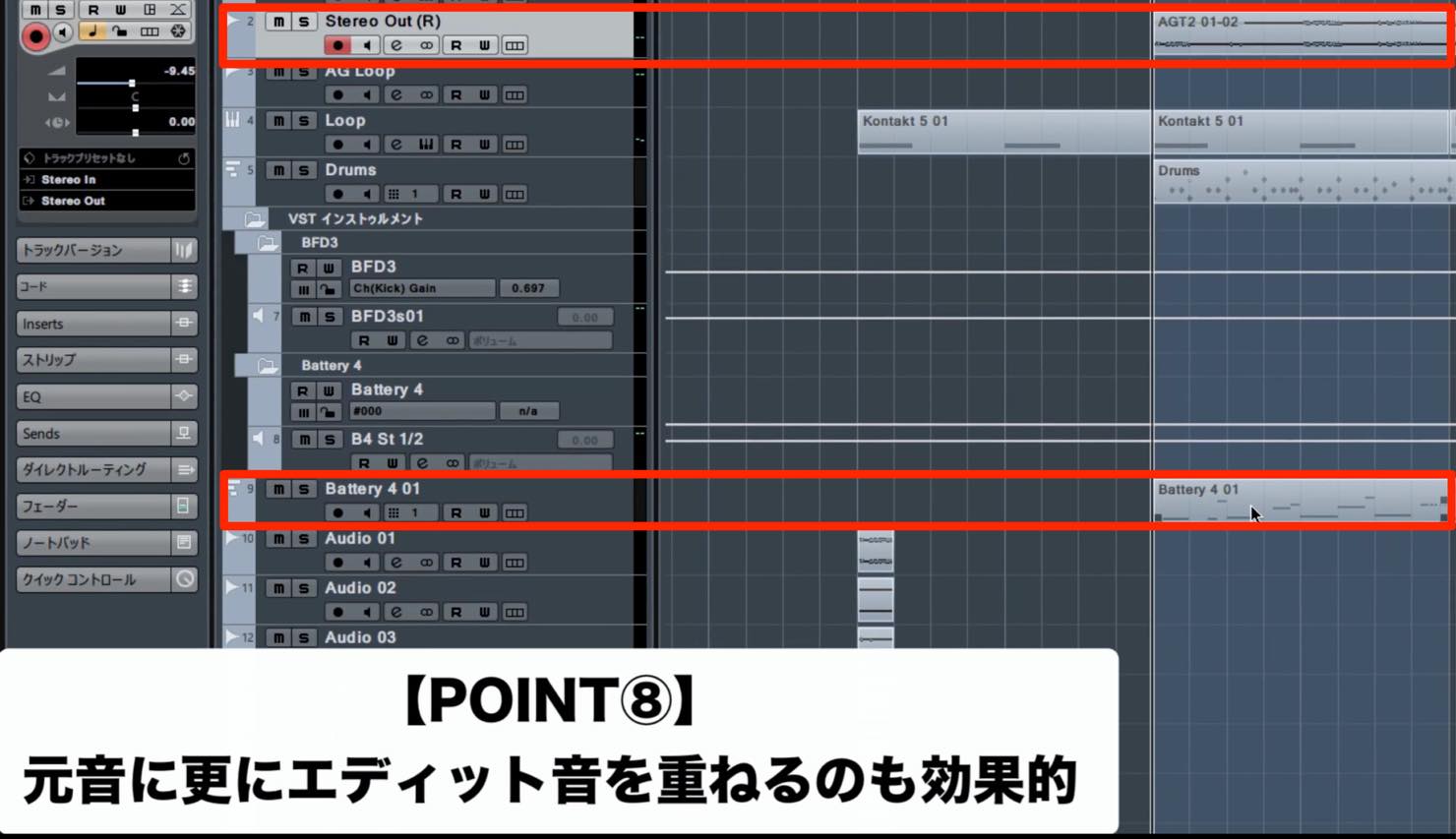
This can make the effects sound more natural while creating a new character through the blend.
This concludes our two-part look at cut-up techniques using BATTERY.
We hope these ideas help you create original phrases of your own.
Frequently Asked Questions
Q1. The tempo changes when I change the pitch. What should I do?
In BATTERY’s Engine section, switch from Sampler to Stretch to compensate for the timing change caused by pitch adjustment. Then use the Speed knob to match your DAW’s tempo.
Q2. Can beginners use an LFO to control panning?
Yes. In the Modulation tab, select an LFO waveform, then set the modulation source to LFO1 and the destination to Pan. Use the center slider to adjust the strength.
Q3. What if several effects make the sound too busy?
Try blending the processed cell with the original cell in your DAW. This can make the effect more natural and create a different texture.
NEW ARTICLES
Latest English Articles