Guitarist Kenji Suzuki explains how to shape guitar solo tones. For a high-gain sound using the Mesa Boogie DUAL Rectifier, he uses a drive pedal as a booster and combines its distortion with the amp’s to create complex harmonics and a greater sense of depth. For a traditional overdriven sound with the Fender Deluxe Reverb, adjusting the volume produces warm drive. Plug-ins let you fine-tune these sounds without playing at high volume. Combining amp EQ and drive pedals helps you build professional guitar solo tones.
Distortion: A Classic Electric Guitar Sound
Hello, I’m Kenji Suzuki, a guitarist and guitar sound designer.
Welcome to the third installment of this series on shaping guitar amp tones.
This time, we will look at guitar solo tones—one of the electric guitar’s signature sounds.
I aim to make this useful both for people who have never worked with a real guitar amp and for those who struggle to create sounds with amp simulators.
In particular, this installment also explains techniques for combining an amp with stompbox effects.
Give these ideas a try and create a great guitar solo tone.
Video: Creating Guitar Solo Tones
- 1Guitar Amp Tone with Kenji Suzuki, Part 1: What Is an Amp Simulator?
- 2Guitar Amp Tone with Kenji Suzuki, Part 2: Creating Distortion Sounds
- 3Guitar Amp Tone with Kenji Suzuki, Part 3: Creating Guitar Solo Tones
A Modern High-Gain Sound for Technical Playing and Heavy Songs
Choosing the Mesa Boogie DUAL Rectifier Amp Model
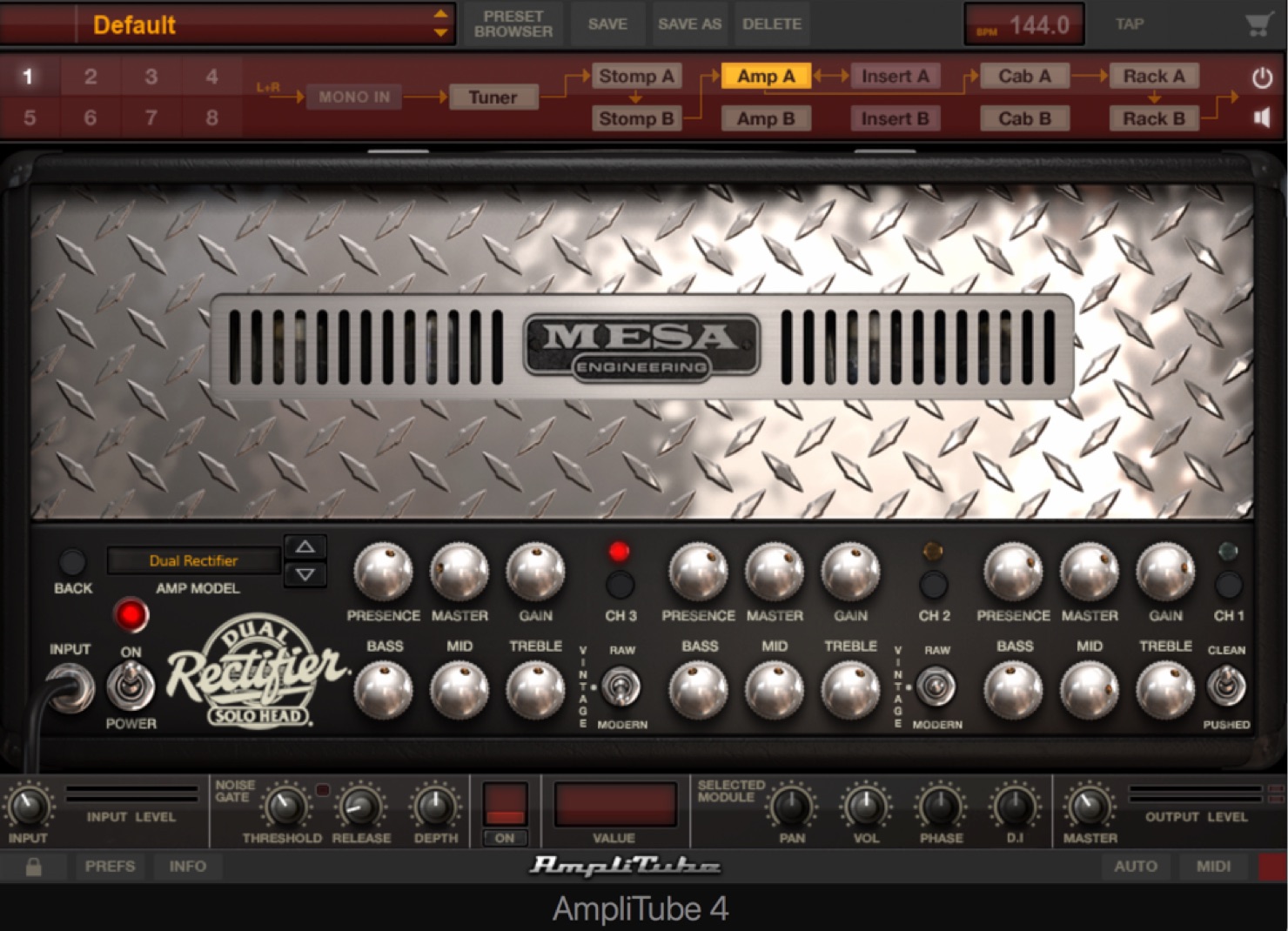
We also used this model in the previous installment on distortion. It is particularly well suited to distorted sounds.
In addition to its high gain, this amp’s tone circuit gives the midrange a distinctive character that helps it cut through busy tracks.
The characteristics of an amp’s tone circuit have a major influence on its sound.
Boosting the Amp with a Drive Pedal
Here, too, I use stompbox pedals before the amp.
The pedals are a compressor and DIODE OVER drive.
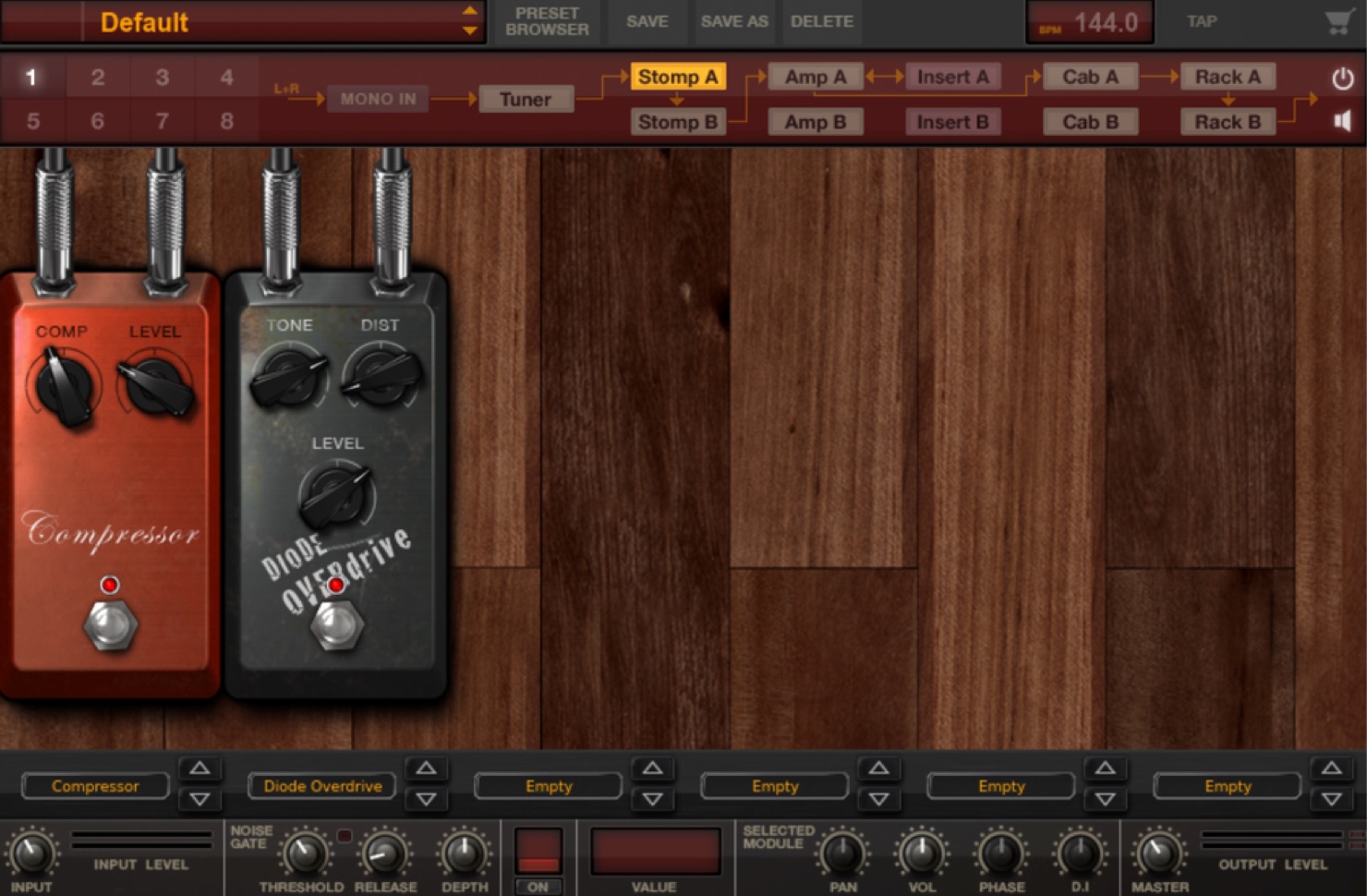
The amp itself is already set to distort. By using the overdrive as a booster, I am aiming to boost the input to the amp and add a tight, crunchy edge.
Combining the amp’s distortion with the drive pedal’s distortion also adds complex harmonics and gives the sound more depth.
Watch the video to hear the result.
I use the compressor to even out the volume between picked notes and legato playing.
Be careful not to apply too much compression, as it can increase noise or remove too much of the playing’s nuance.
A Traditional Overdriven Sound That Preserves Playing Nuance
Choosing the Fender Deluxe Reverb Amp Model
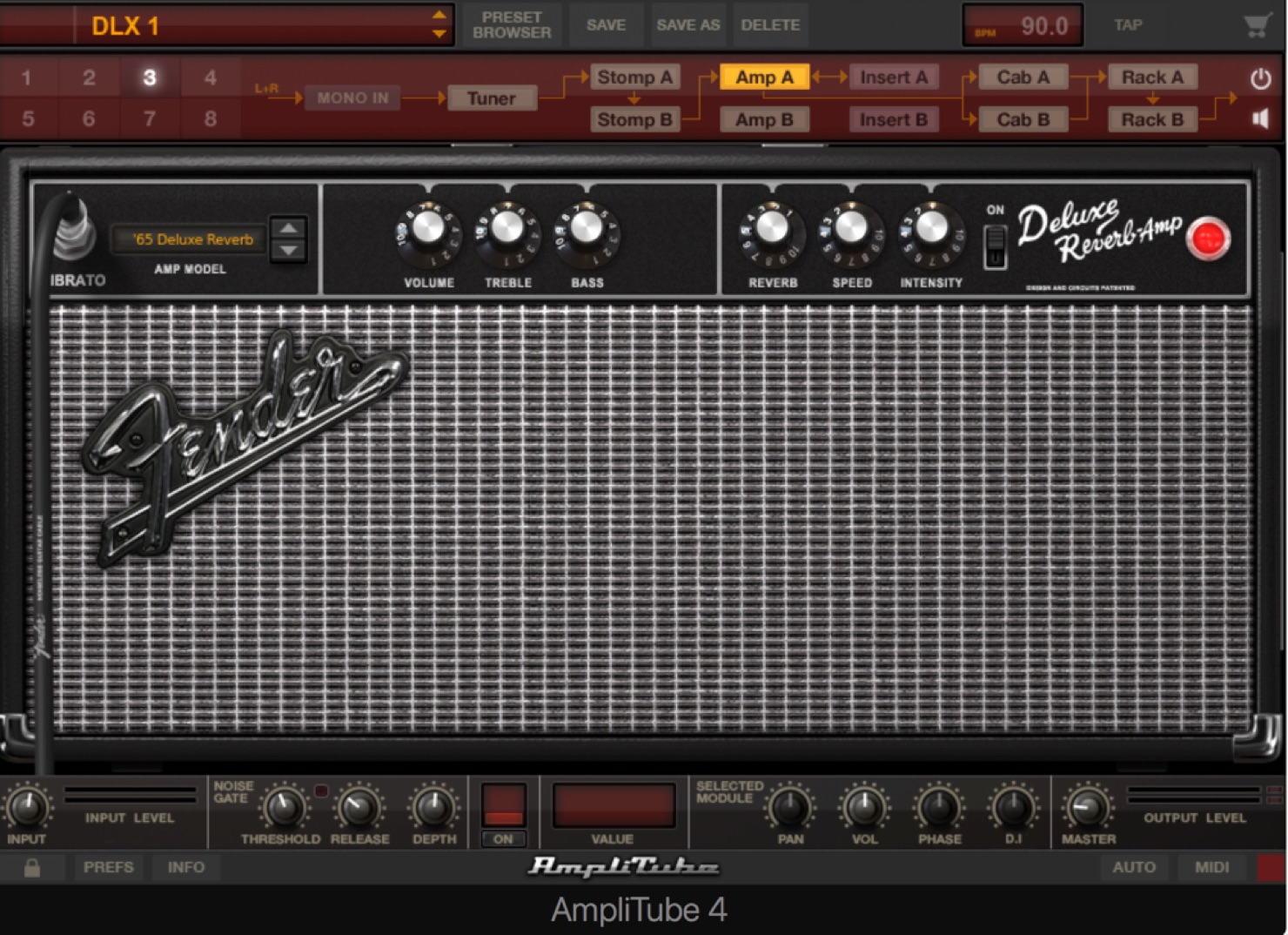
You may associate this amp with clean tones.
Fender’s clean sound is indeed a benchmark for clean electric guitar tones. However, turning up the volume adds warm, natural drive. The result is a traditional, warm overdriven tone with a different character from the more aggressive distortion of amps such as Marshall and Mesa Boogie.
The Advantages of Using a Plug-in
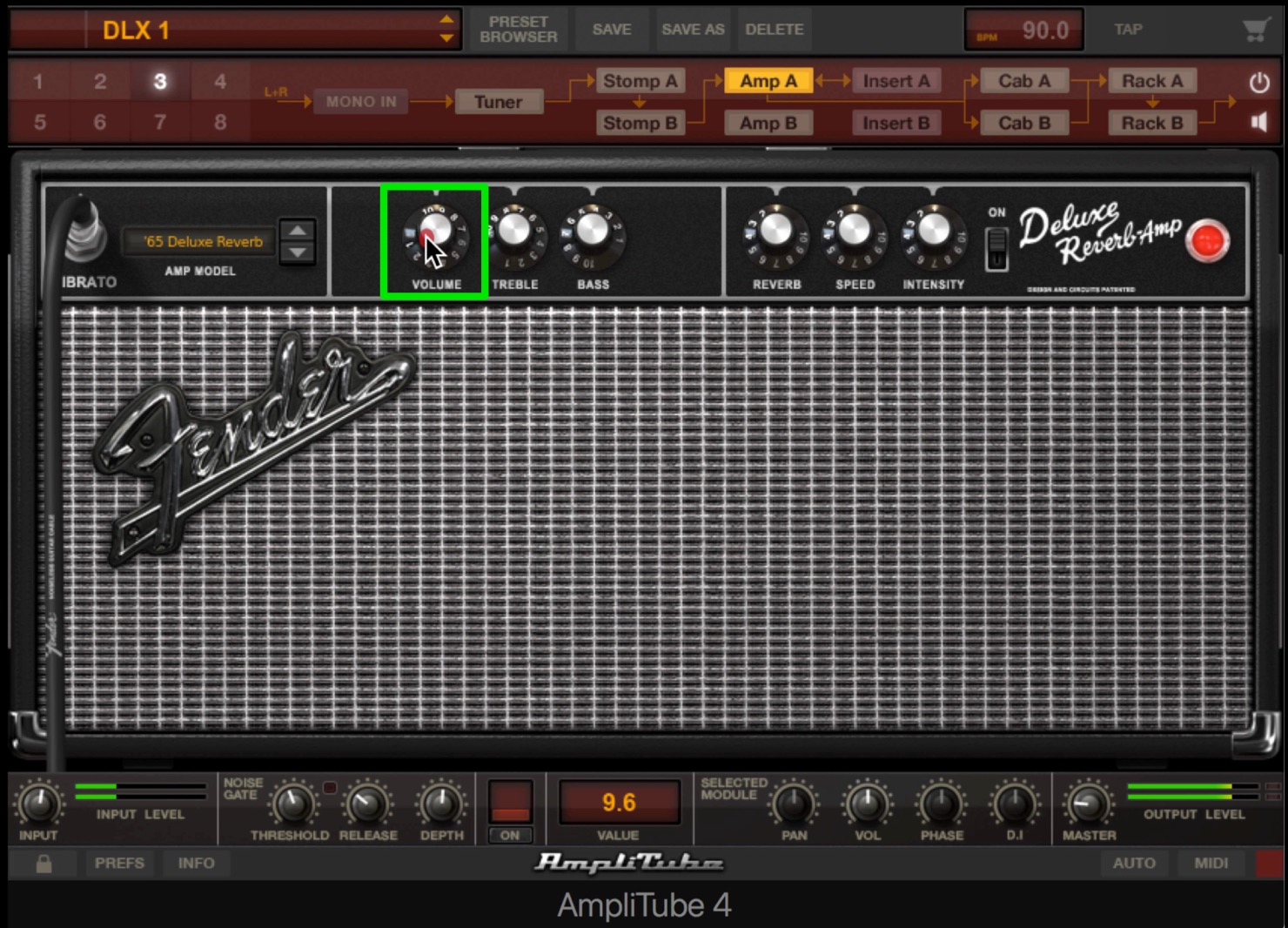
With a real amp, getting this kind of drive by turning up a single volume control means playing quite loudly, which can be difficult in a home-recording environment.
Even in a studio, controlling volume and distortion together with one knob is far from easy. Finding the right sound while listening to a loud amp requires considerable experience and skill.
A plug-in has a major advantage here: you can turn up the amp model’s volume while monitoring at a suitable listening level.
The Amp’s EQ
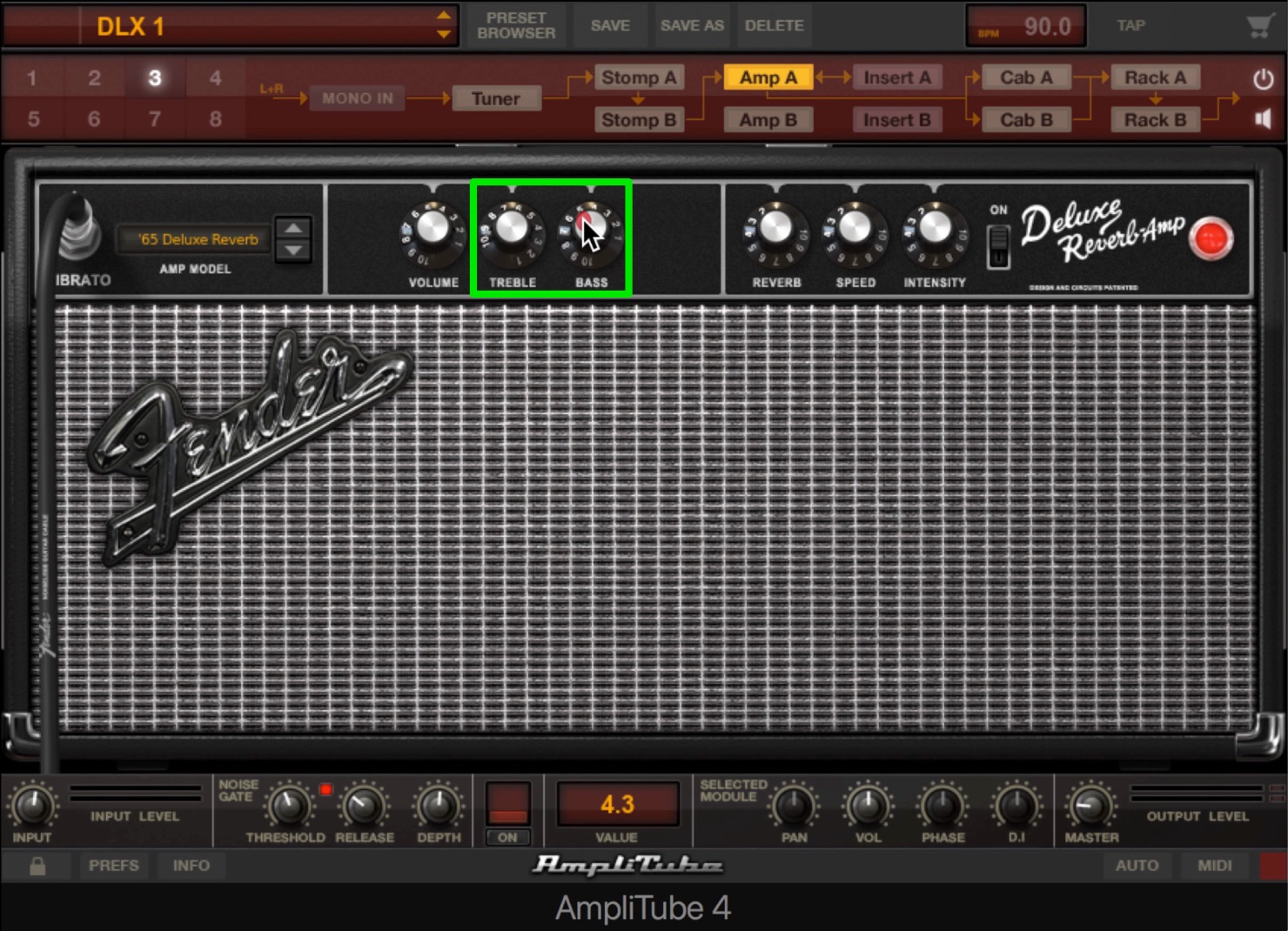
Unlike a parametric EQ in a DAW, many guitar amp EQs are used to make broad changes to the sound with only a few controls.
Although the controls are called Treble and Bass, it is helpful to think of them as tone controls that broadly shape the high and low ranges, rather than tools for cutting or boosting a specific frequency.
A useful approach is to make large adjustments first to hear how the sound changes, then fine-tune the settings.
Why Add a Stompbox?
If you have shaped the sound with the amp but want a slightly different character or a little more distortion, adding a drive pedal before the amp is another useful approach.
Here, I have added an overdrive pedal called OVERSCREAM with the settings shown.
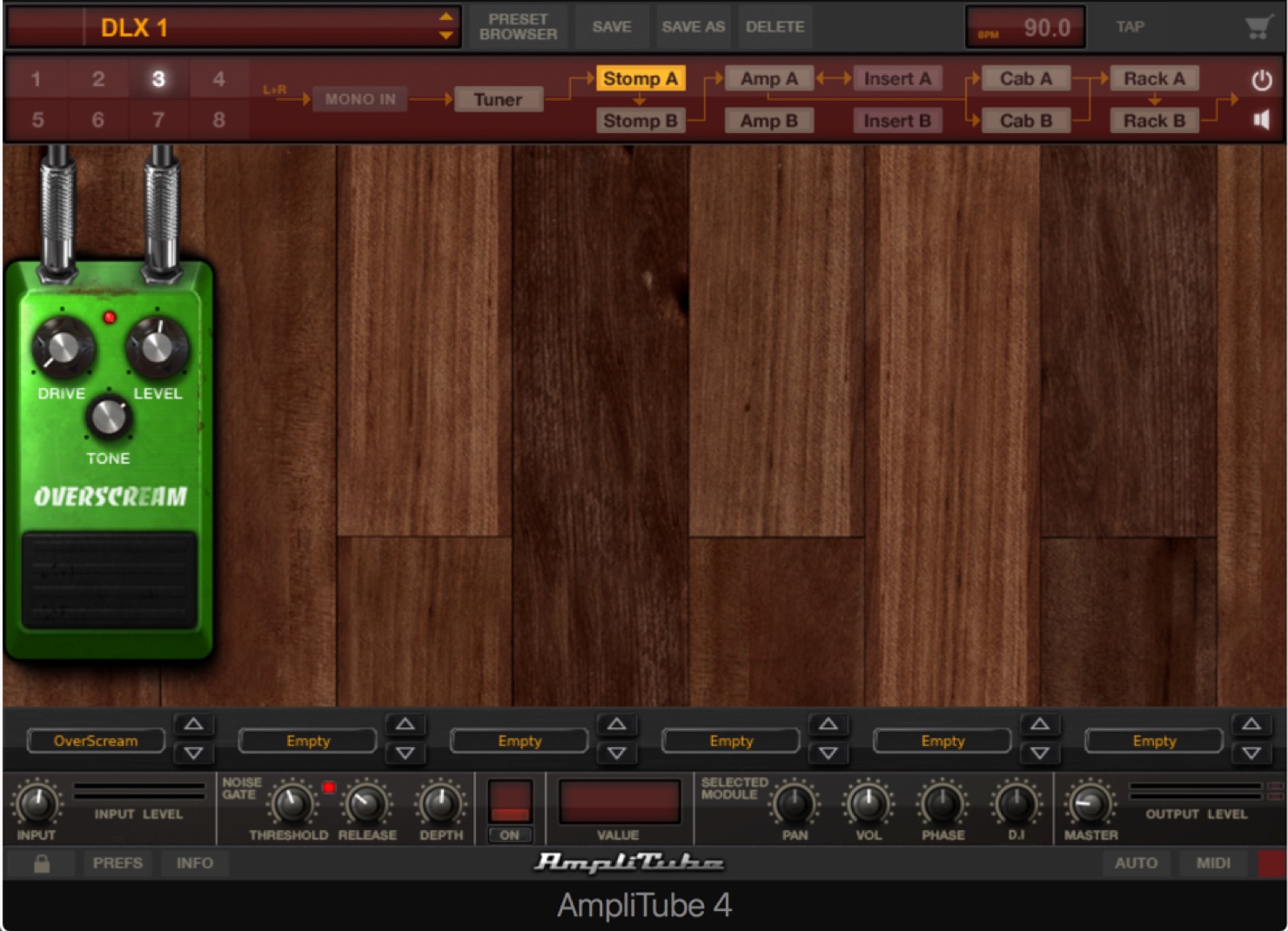
An overdrive pedal is designed to add distortion, but you can also deliberately use the tonal changes that come from running the signal through it.
In this example, I narrow the amp sound’s tonal range slightly to make the solo phrases easier to hear, especially within the backing track.
Creating Distortion with the Drive Pedal Alone
Another approach is to set the amp clean and get the distortion from a drive pedal.
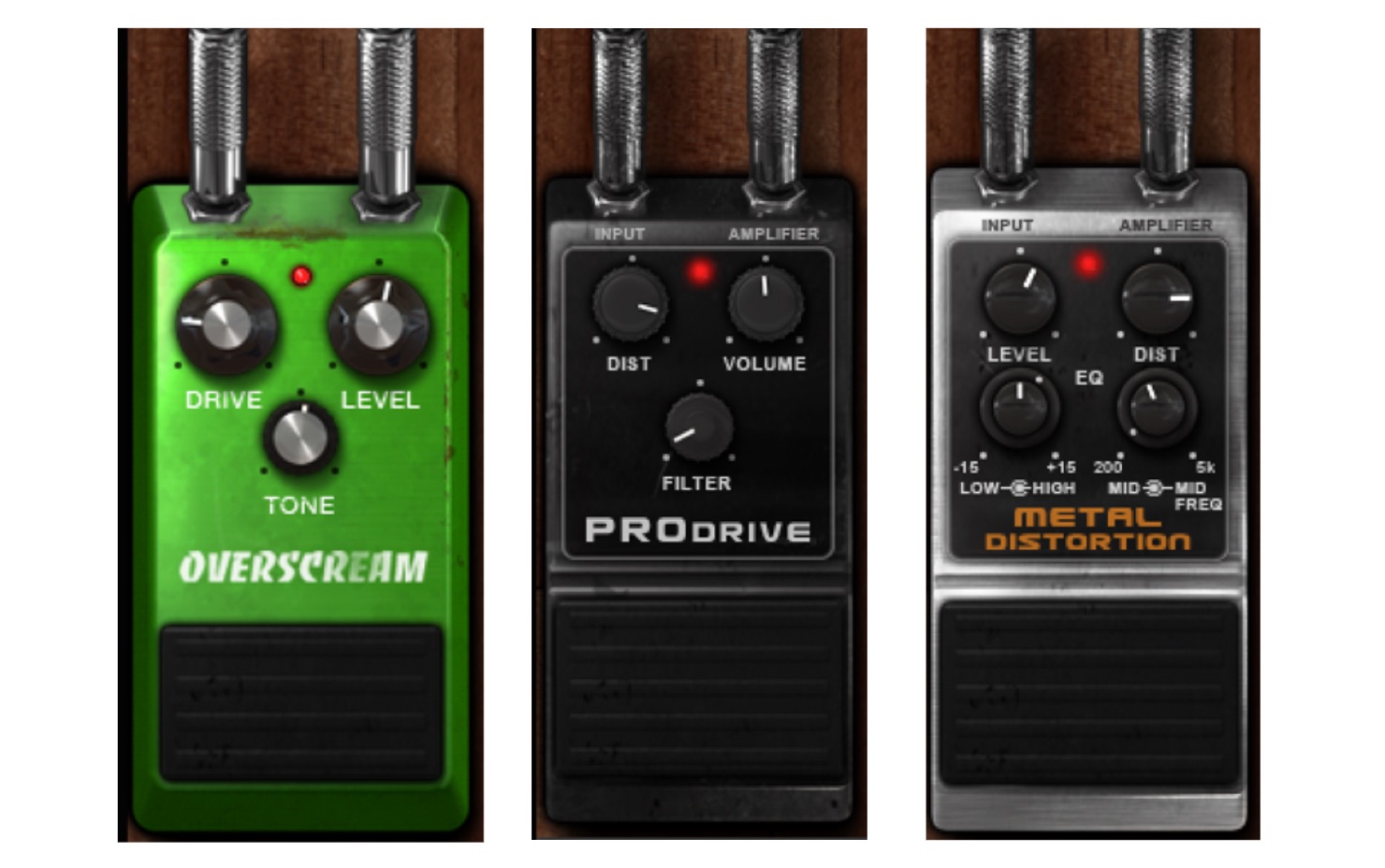
Typically, controls such as DRIVE or DIST set the amount of distortion, while TONE or FILTER mainly adjusts the character of the high frequencies.
Pedals with a built-in parametric EQ allow more detailed adjustments.
LEVEL or VOLUME adjusts the overall level, but it also affects the input level reaching the amp, so it does more than simply turn the final sound up or down.
In this video, I created two different guitar solo tones. I hope these examples are useful in your own productions.
Frequently Asked Questions
Q1. How can I combine an amp and a drive pedal effectively for a guitar solo tone?
With the amp already set to distort, use an overdrive pedal as a booster to increase the input to the amp and add a tight, crunchy edge. Combining the two sources of distortion also creates complex harmonics and gives the sound more depth.
Q2. I thought the Fender Deluxe Reverb was a clean amp. Why use it for guitar solos?
Turning up its volume adds warm, natural drive, producing a traditional overdriven sound. Its character differs from the more aggressive distortion of Mesa Boogie or Marshall amps.
Q3. I struggle to create sounds with amp simulator plug-ins. What should I try?
Use the amp’s EQ as broad tone controls rather than trying to target individual frequencies. Make large adjustments first to hear the changes, then fine-tune the settings.
Q4. Do I need a compressor pedal for a guitar solo tone?
You can use one to even out the volume between picked notes and legato playing. Take care with the amount, as too much compression can increase noise and remove playing nuance.
NEW ARTICLES
Latest English Articles