
This article explores avoid notes and a playful way to experiment with chord extensions. In the C-major examples, the ii minor chord, D minor, and the IV major chord, F major, can be extended using the seven white-key pitch classes without the minor-ninth clashes highlighted in the other illustrated voicings. The author calls this idea the Matatabi, or catnip, chord. It is an invitation to explore voicings, not a rule that every white-key cluster will sound smooth. Editorial clarification: the fourth-degree chord shown in the diagrams is IV major (F major), not iv minor.
Understanding Avoid Notes: The ii Minor and IV Major Examples
If you have studied chord theory, you have probably come across the term avoid note.
Here, we look at the idea and explore two interesting examples: ii minor and IV major. In C major, these are D minor and F major; the diagrams establish the major quality of IV.
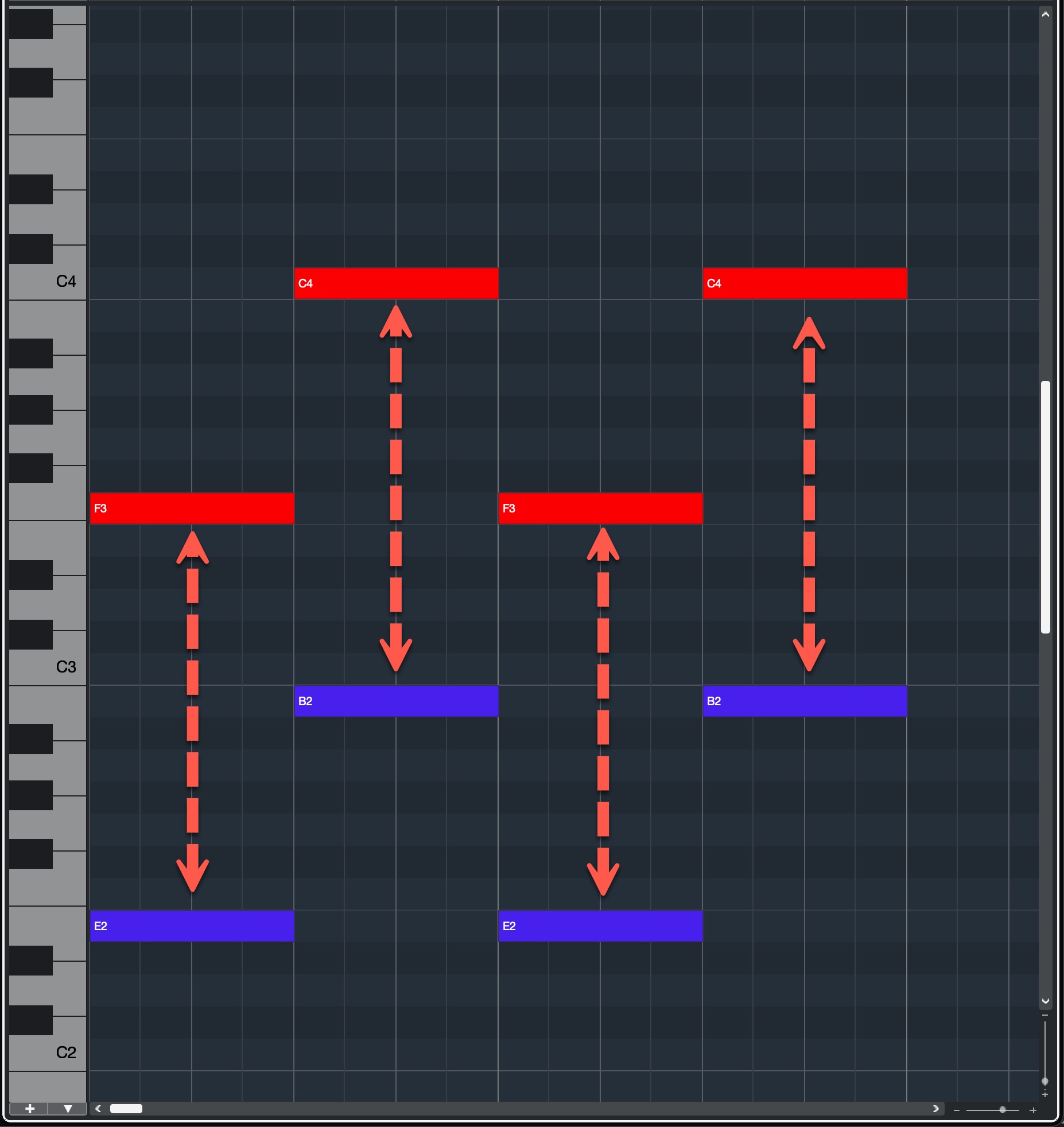
A minor ninth is an interval with a particularly sharp, dissonant sound.
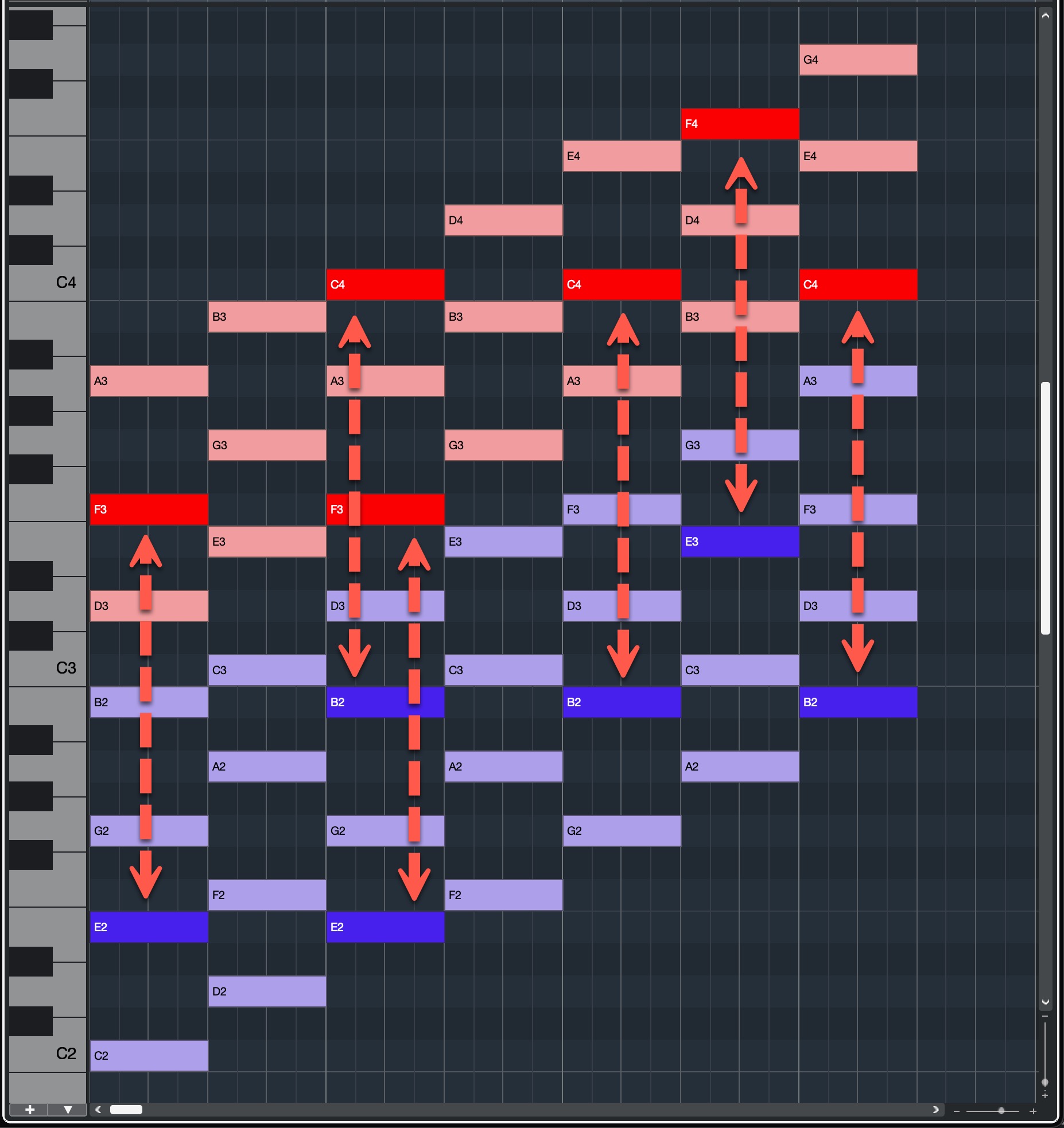
Here are the diatonic chords of C major,
with diatonic ninths, elevenths and thirteenths stacked above them.
Some added notes form a minor ninth with a lower chord tone and can clash with the intended harmony. Such notes are often discussed as avoid notes in this context.
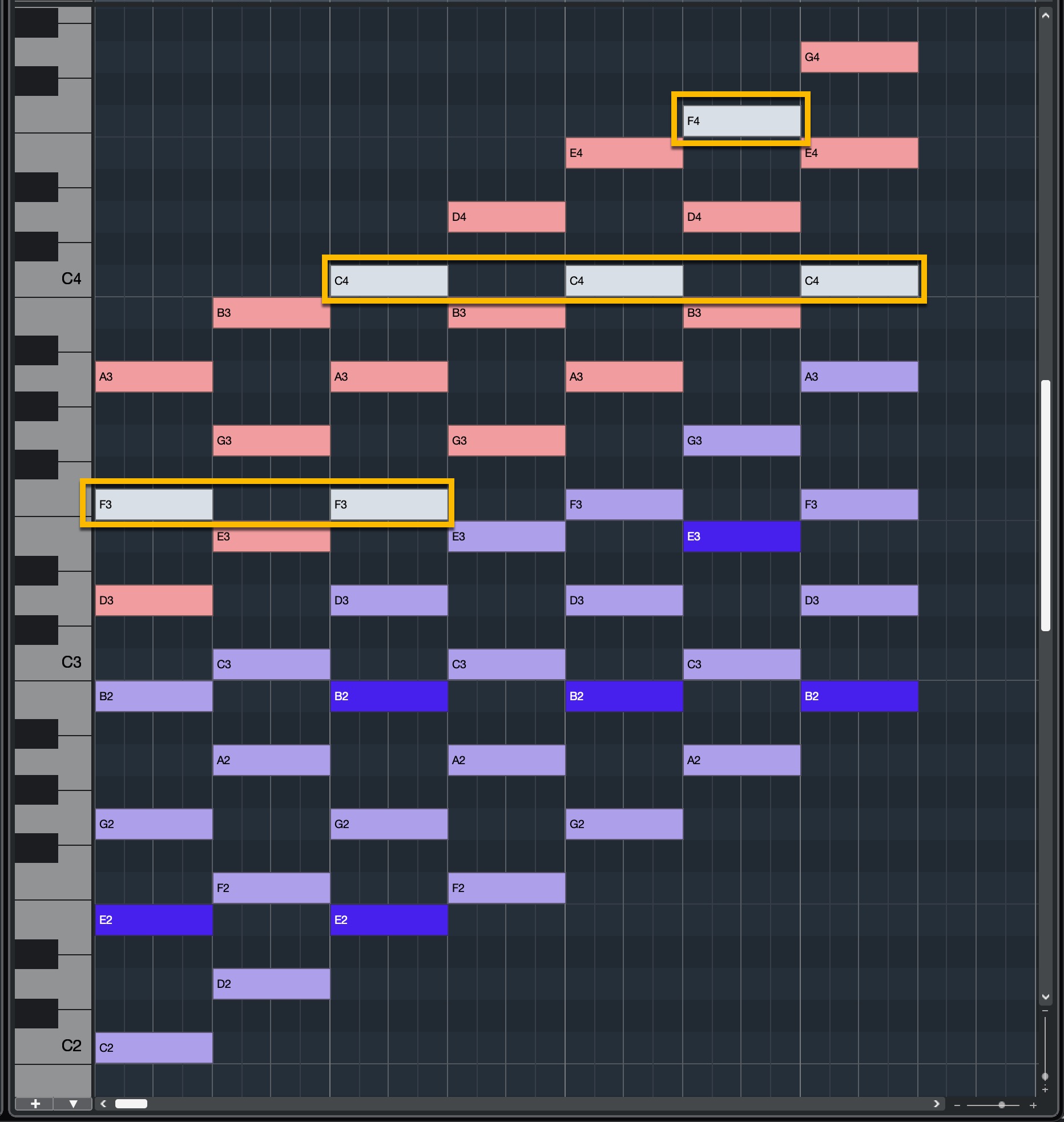
Listen to the example with the extensions that create those minor-ninth clashes muted.
Avoiding them is not an absolute rule, but leaving them out makes these particular voicings sound gentler.
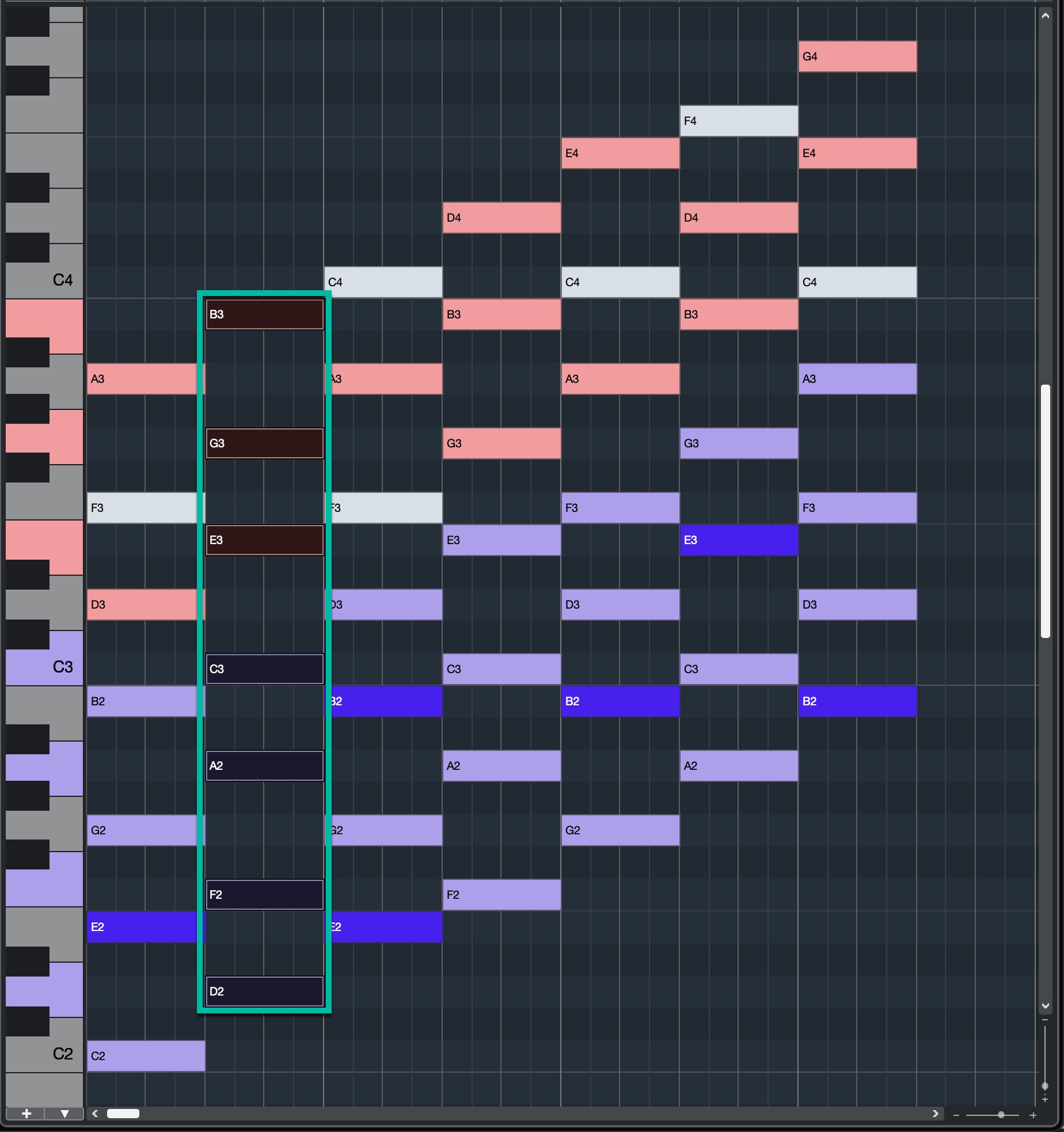
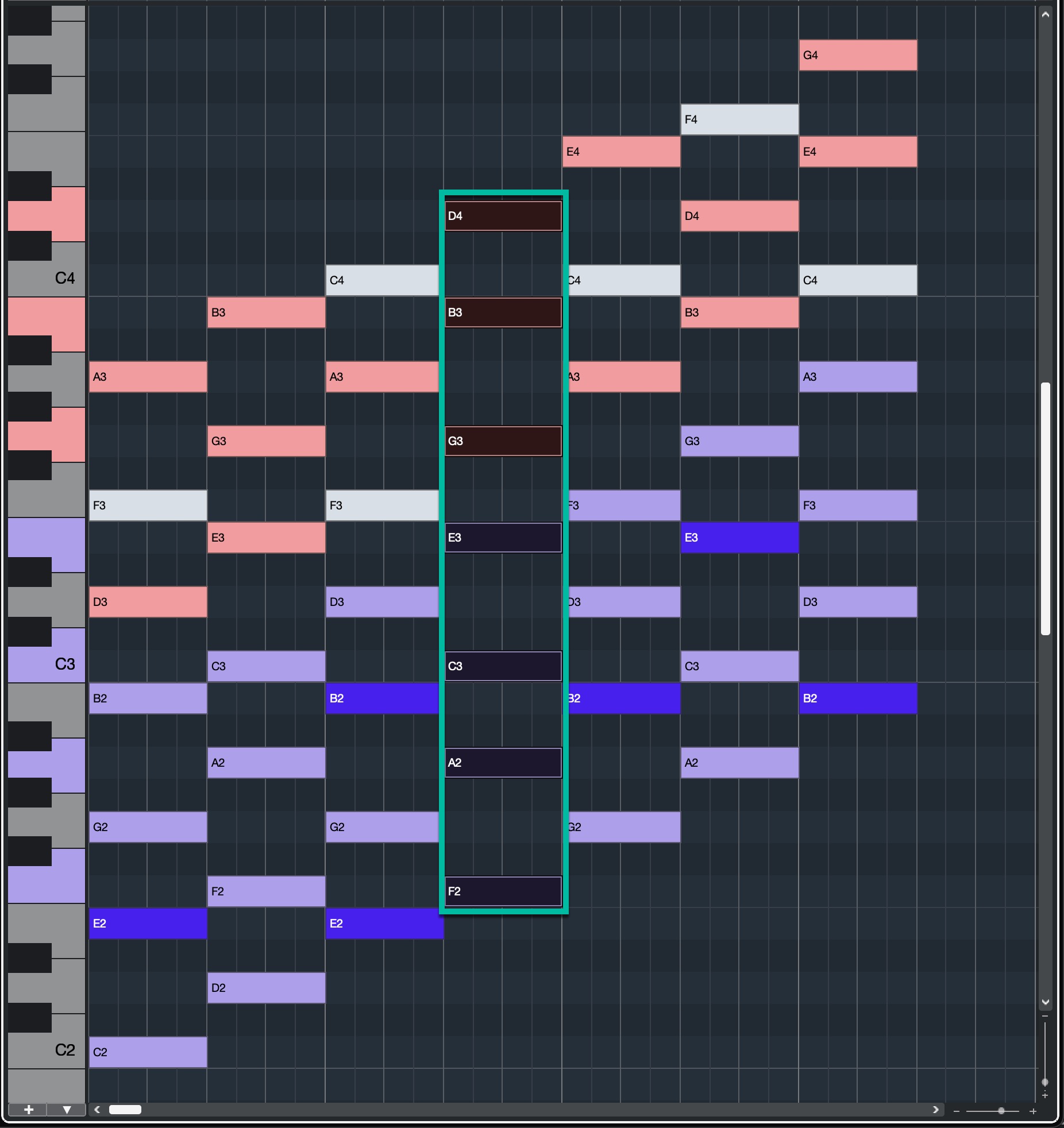
Did you notice something?
In the illustrated stacks, the second and fourth chords do not contain the highlighted minor-ninth clashes.
They do, however, include the tritone between F and B, an augmented fourth or diminished fifth. That tension still matters when considering harmonic function, voice leading and cadences.
These examples therefore offer considerable freedom in choosing chord extensions, rather than a promise that all voicings will work equally well.
And here is the playful discovery: together, their notes use all seven pitch classes of the C-major scale—the white keys.
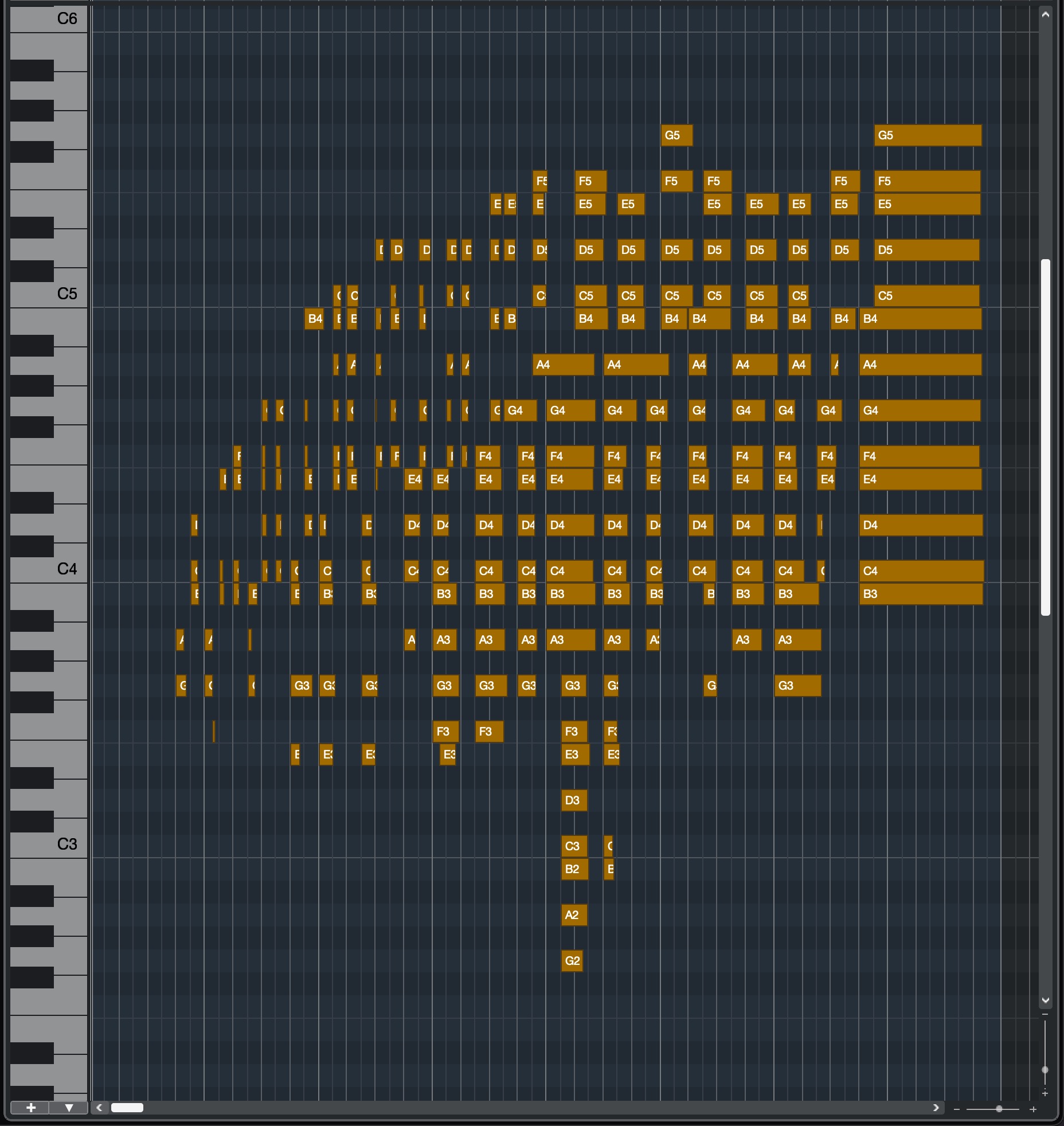
With D or F in the bass, perhaps even a cat strolling across the white keys, or a handful of notes played with a fist or elbow, could suggest an interesting extended chord!
That is the tongue-in-cheek idea behind the Matatabi, or catnip, chord. Use D and F as alternative bass notes, not necessarily both at once, and listen to the spacing of the upper notes.
Frequently Asked Questions
Q1. What is an avoid note?
An avoid note is a note that may clash with a particular chord or its intended harmonic function. In these examples, the issue is an added note a minor ninth above a lower chord tone. This dissonance is not forbidden: whether to use it depends on the voicing, musical context and style.
Q2. What is special about the ii minor and IV major examples?
In C major, the illustrated extended D-minor and F-major stacks avoid the minor-ninth clashes marked in the other examples. Their extensions draw on the same seven diatonic pitch classes. This makes them useful for exploration, but changing registers or note order can introduce new clashes, and the F–B tritone still contributes tension. The fourth-degree chord here is F major, not F minor.
Q3. How can a beginner use this idea in music production?
Start with D minor or F major in C major, then try adding diatonic extensions such as ninths, elevenths and thirteenths above the bass. Compare different spacings, registers and combinations in a progression. Listen to the resulting tension and release rather than adding every available note automatically.
NEW ARTICLES
Latest English Articles




























































































