Ableton Live Suite is the top edition of a DAW that is popular for EDM production. In this article, originally published in September 2020, I compare the sound of its 15 included instruments with third-party plug-ins. Its range spans wavetable, virtual analog and FM synthesizers, as well as sampled acoustic instruments such as pianos and strings. These included tools can support high-quality productions without buying each instrument separately. For me, Suite provides a professional production setup while reducing the need for additional plug-in purchases. Edition contents, counts and comparisons below reflect the original 2020 article, rather than the current Live lineup.
The Features and Included Sounds That Bring Live Into Its Own
Hi, I’m Tomoki Miyakawa from Sleepfreaks.
A particularly popular DAW among EDM producers is Ableton Live.
Live was available in three editions: Intro, Standard and Suite at the time of this review.

Live feature comparison: https://bit.ly/2Hqpw0Q
I started using Ableton Live with the middle-tier Standard edition, but by the time of this article I had upgraded to the top-tier Suite edition and was making extensive use of its features and included sounds.
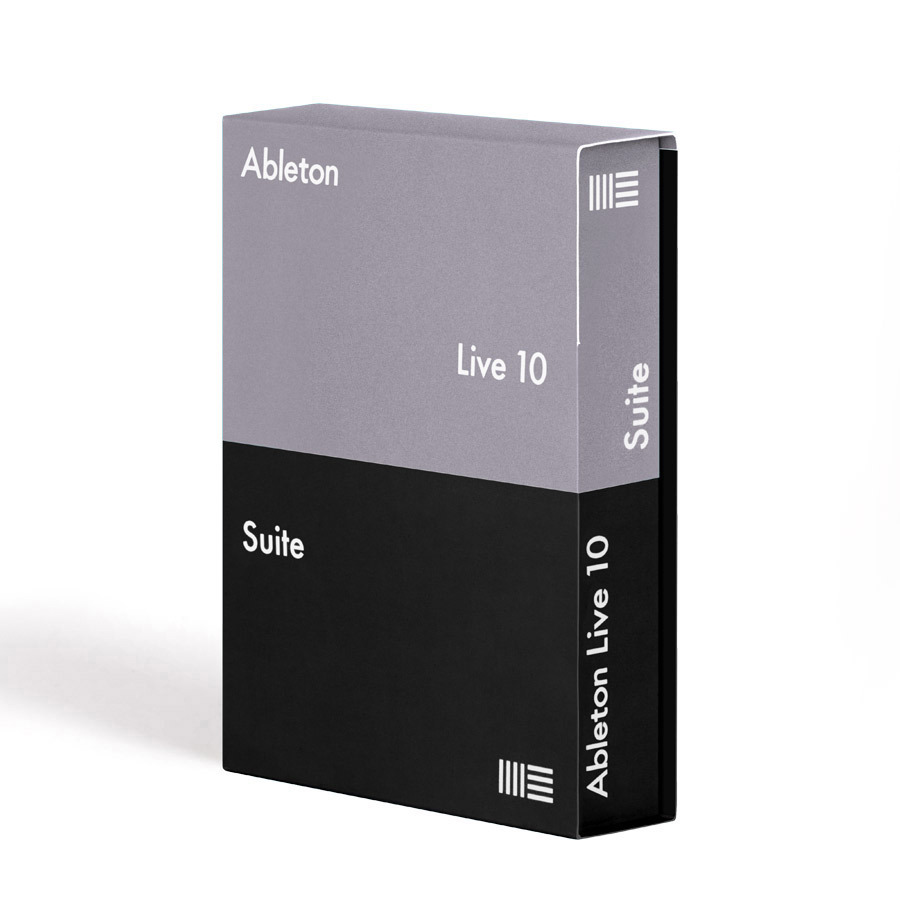
Since then, I have recommended Suite to people who want to create high-quality music. So why do I recommend this edition?
In this two-part series, I explain the benefits of choosing Suite from a music maker’s perspective.
In this first part, I focus on Suite’s included instruments and compare their sound quality with third-party plug-ins.
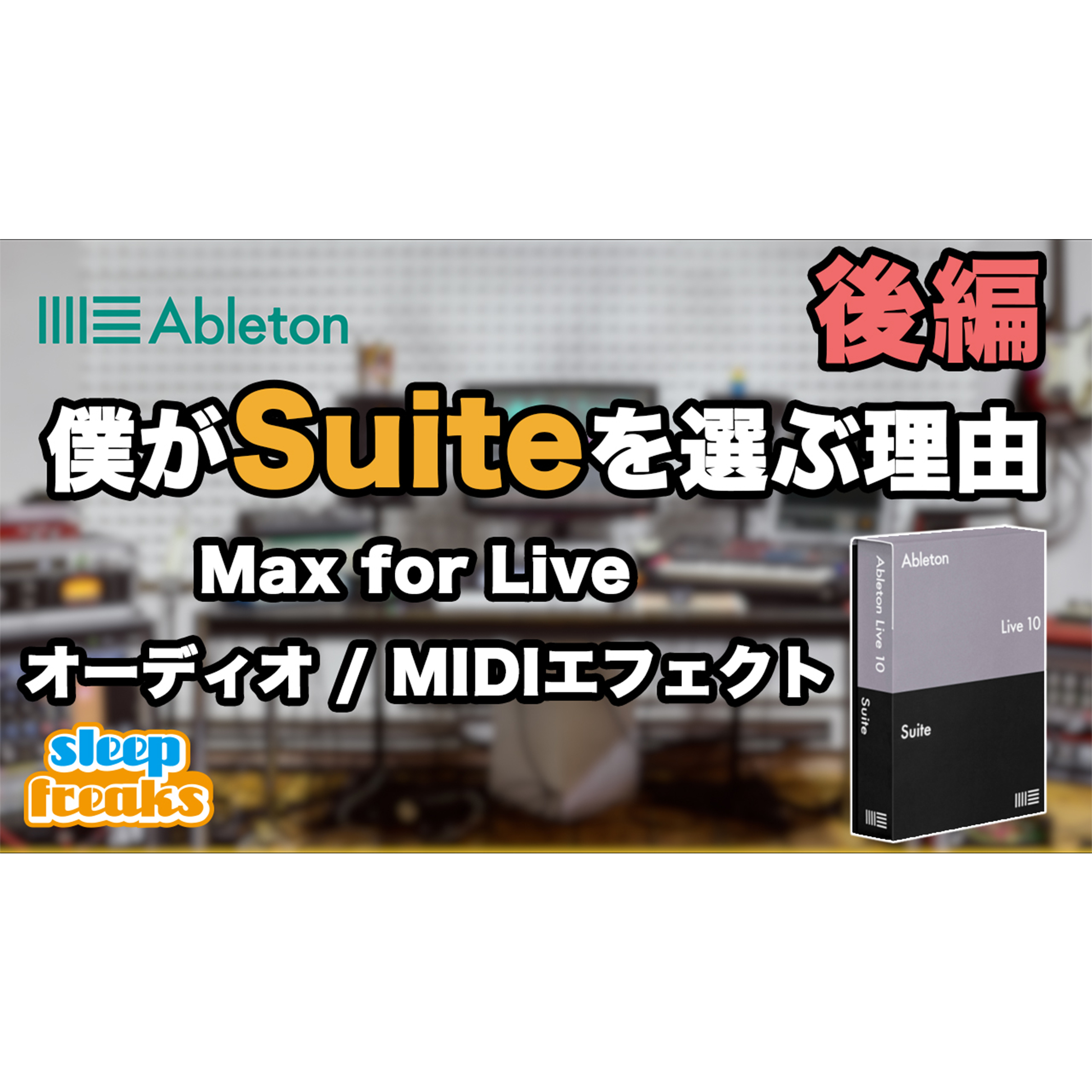
Why I Choose Ableton Live Suite — Part 1
Product website: https://bit.ly/2Hp4Ar4
The Instruments Included With Live Suite
First, let’s compare the number of included instruments in Live Suite and the other editions at the time of this 2020 review.

Suite included 15 instruments, counting synthesizers, samplers and related devices.
That was three times as many as Standard.
The selection included a wide variety of synthesizers and samplers, covering wavetable, FM, virtual analog and physical modeling synthesis. In other words, it could serve a broad range of musical genres.
The “Sounds” category in the comparison chart above refers to an extensive collection of sample-based instruments, including:
- Band instruments such as piano and bass
- A wide range of acoustic instruments for orchestral music
- Drum sounds covering everything from acoustic styles to electronic music
Together, these form a substantial library of sampled sounds.
You might wonder whether instruments bundled with a DAW can really deliver the quality you need. However,

Live Suite includes sound collections that are also sold separately and a wide range of sound Packs.
In my view, their sound quality goes far beyond what the word “bundled” might suggest.
Here are some of the included instruments and sounds that I particularly recommend.
Wavetable Synthesis

Around the time of this review, wavetable synthesis was one of the most popular approaches to synthesis.
Suite comes with its own Wavetable synthesizer.

Let’s compare it with Serum, a widely used third-party wavetable synthesizer. This comparison refers to the versions available in 2020.
I used matching settings to create a familiar type of sound heard across electronic music.
- Serum
- Wavetable (Live Suite)
As you can hear, I find the sound quality holds its own against a dedicated third-party plug-in.

In terms of features, Serum offers a large selection of filter types.
That gives it an advantage over Live’s Wavetable in this respect. However,

I prefer Live Wavetable’s ability to route two filters in parallel or in series.

Live Wavetable does not include a built-in effects section like Serum’s; instead, it is designed to work with Live’s other effects.
Combining those effects with the Max for Live tools discussed later lets you modulate parameters with LFOs and envelopes. In practical use, I do not find the absence of an integrated effects section a limitation.
Third-party sound designers even sell presets for Wavetable, something that was relatively unusual for a synthesizer bundled with a DAW.

To me, that reflects Live’s popularity around the world.
Virtual Analog Synthesis
As mentioned above, Suite includes FM, physical modeling and analog modeling synthesizers, among other types.
Bass, an analog modeling synthesizer, captures the character of analog sound particularly well. I strongly recommend trying it if you are looking for the thick, warm sound that was gaining popularity at the time.

Here, I compare Bass from the included Max for Live Essentials Pack with Diva, the highly regarded third-party synthesizer from u-he.
- Diva
- Bass
This is a simple bass sound using just one oscillator. Even so, I think you can hear the weight and slightly driven character associated with analog synthesizers, reproduced convincingly alongside Diva.
Suite also includes a more versatile synthesizer called Analog.

Its features include oscillator unison, vibrato and two LFOs.
It offers more features than Bass or Poli, allowing a wider range of sound design.
- Live Analog
FM Synthesis

With synthwave and lo-fi sounds bringing renewed attention to FM synthesis at the time, Suite’s included FM synthesizer, Operator, is another useful option.
This digital synthesizer is particularly good at hard, bright, sparkling tones.
- Live Operator
Suite also includes other synthesis approaches, such as physical modeling and granular synthesis.
Even if you are unfamiliar with a particular type of synthesizer, having it available gives you more opportunities to discover sounds you like.
Acoustic Instrument Sounds Included With Suite
Next, let’s look at instruments based on acoustic and electromechanical sources.
Electric Piano

First, I compare the electric piano Pack Electric Keyboards with Scarbee Vintage Keys, from the third-party Komplete collection that many producers own.
- Scarbee Vintage Keys
- Electric Keyboards

Electric Keyboards provides five to six velocity layers, as described in the original comparison. To my ears, its sound holds up well against the dedicated Scarbee instruments.
Strings
Next, let’s compare orchestral instruments.

From Suite, I use Orchestral Strings, and compare it with Session Strings Pro 2 from the third-party Komplete collection.
- Session Strings Pro 2
- Orchestral Strings
Although it has fewer articulations, or playing techniques, than Session Strings Pro 2, Orchestral Strings offers four. I hope the comparison shows a level of sound quality beyond what you might expect from an included instrument.
Acoustic Drums
Next, let’s compare drum instruments.

From Suite, I use Session Drums Multimic, and compare it with Studio Drummer from Komplete.
- Studio Drummer
- Session Drums Multimic
A direct comparison is difficult because the recorded kit has such a strong influence on a drum instrument’s character. One important factor in reproducing the feel of acoustic drums is whether room and overhead microphone samples are included.
I consider the included instrument more than capable of practical production work.
What do you think?
I hope these examples convey the quality of the instruments included with Live Suite.

Expansion sound libraries, known as Packs, such as those featured in this comparison, are added to the range over time.
Some Packs require an additional purchase, but owning Suite gives you access to a wider selection at no extra cost. The included selection described here reflects the 2020 article.
These tools are designed specifically for Live, and I find them efficient and stable. That is another major reason I use the included instruments so often.
In my experience, they make it easy to experiment with combinations of sounds while keeping CPU use manageable.
Sampler: A Versatile, Efficient Native Instrument
Other editions, including Intro and Standard, include the Simpler sampling instrument. Suite also includes Sampler, which powers the acoustic instrument libraries discussed above.

Sampler supports velocity layers and mapping different samples across the keyboard, and it also lets you use your own samples. Its key distinction here is multisampling; Simpler can load your own samples too.
With LFO and envelope modulation, plus AM and FM modulation from its built-in oscillator, Sampler offers plenty of creative sound-design possibilities. Its efficient performance also makes it a device I use frequently in production.
You can also use Sampler for techniques such as the vocal chops commonly heard in electronic music.
- Live Sampler
The Included Suite Instruments: My Main Reasons
To recap the points covered in this 2020 review:
- Nine types of synthesizer covering the main synthesis approaches used in production
- More than 70 GB of instrument content, including acoustic instruments
- Production-ready sound quality, with efficient CPU use and stable operation in my experience
These are my reasons for choosing Live Suite.
The included instruments are only part of what makes Live Suite valuable.
The MIDI and audio effects, including Max for Live, covered in Part 2 play an even more important role in my production workflow.
I hope you will enjoy the second part as well.
Product website: https://bit.ly/2Hp4Ar4
Frequently Asked Questions
Q1. What are the main differences between Ableton Live Suite and Standard?
In the edition comparison used for this 2020 article, Suite had 15 instruments, three times as many as Standard. Its range included wavetable, FM, physical modeling and virtual analog synthesizers, as well as sampled acoustic instruments such as pianos and strings. Max for Live was also included for creating and customizing devices.
Q2. Can Live’s Wavetable synthesizer compete with Serum?
In my comparison of the 2020 versions, I found the sound quality comparable. Serum offered more filter types, while I valued Live Wavetable’s flexible routing of its two filters. Combining Live effects with Max for Live modulation also meant I did not find its lack of an integrated effects section limiting; the two instruments do not have identical feature sets.
Q3. Are the included instruments good enough for commercially released music?
Yes, in terms of sound quality, I find Suite’s included instruments capable of professional production. In these comparisons, instruments such as its electric pianos and FM synthesizer held up well alongside respected dedicated products such as Diva and Scarbee Vintage Keys.
NEW ARTICLES
Latest English Articles