
Coordinating the rhythms and accents of different parts can bring cohesion and energy to an arrangement. In this tutorial, we call this approach “track interplay”: using a principal part, such as the melody, drums or bass, as a reference for the movement of other tracks. It can turn a flat-sounding loop into a more dynamic arrangement. Switching the reference part between sections and combining unison lines, shared rhythms and matching accents helps create variety and a clear musical direction.
An effective way to bring order to a busy arrangement
Have you ever reached the arranging stage only to find that your song sounds flat and lacks energy?
We often hear comments such as, “I've added more phrases, but it still sounds flat,” or, “The whole arrangement sounds cluttered.”
Here, we explore an approach that can help: creating purposeful interplay between parts.
Video tutorial: Creating interplay between tracks
What do we mean by interplay between parts?
In music production, this means making different parts relate to one another so that they form a coherent musical flow.
First, listen to these two versions of a demo: one with deliberate coordination between tracks, and another with the tracks programmed more independently.
We exaggerated the contrast slightly to make it clear. The coordinated version feels more organized, but it also has more dynamic movement and energy.
For example, you might shape a bass line in response to the melody: “The melody moves like this, so I'll make the bass respond like that.” One track's movement becomes a reference for another.
This can help you:
- Give a song with many tracks a more cohesive, organized arrangement.
- Find a clear direction when adding movement and variation to a loop.
These benefits can make an arrangement feel much more convincing.
What does coordinating tracks actually involve?
Let's look more closely at what is happening when the parts interact.
The most important aspect of aligning one track with another is coordinating their rhythms.
Listen to just the parts that are working together in the demo.
Following the melody
Following a four-on-the-floor kick
Following the bass line
The pitches move differently in each example, but all of them share coordinated rhythmic accents.
Some sections use unison, matching both the notes and rhythm of the reference line. Others match only the rhythm, or just particular accents. The common thread is that many parts take their cues from another track.
If every part simply doubled the others in unison, there would be little variety in the movement, and the arrangement could become monotonous.
Vary the part that provides the reference
For a well-shaped arrangement, deciding which track to follow matters just as much as deciding how to follow it.
In this demo, the Clavinet part frequently switches which instrument it takes its cues from.
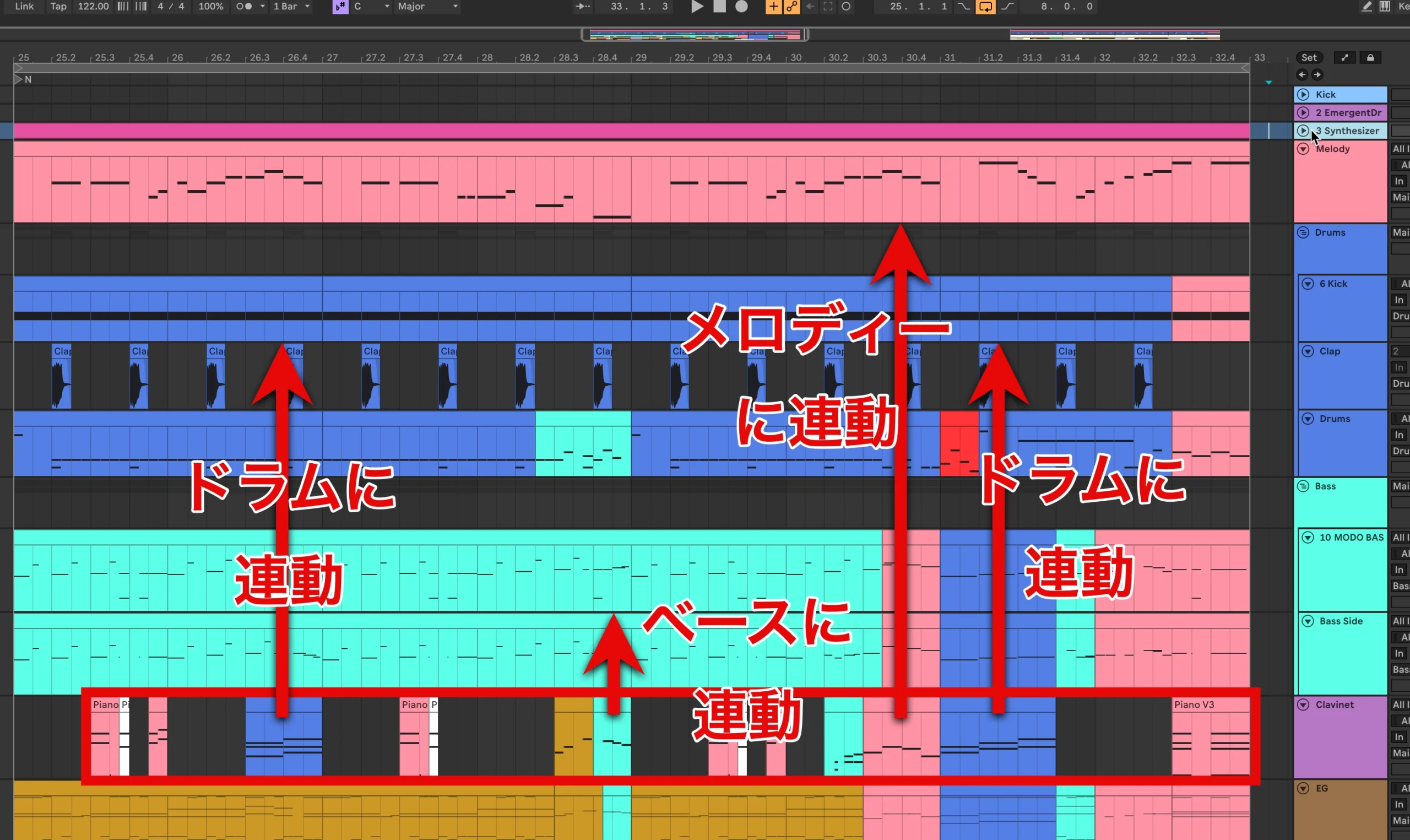
The events in the project are color-coded: pink for the melody, blue for the drums and green for the bass. You can see how often the reference changes.
Here is what that sounds like.
Clavinet and its reference parts
Changing the reference as the arrangement develops helps avoid repetition and adds color.
Which tracks make effective reference parts?
You can create interplay between all kinds of parts. Coordinating with a principal part can reinforce its presence and increase the impact of the whole song, so it is worth considering early in the arranging process.
The principal parts vary with the genre. In typical pop music, the melody, drums and bass have a particularly strong influence, so we will look at examples based on those three.
Following the melody
It is useful to distinguish two ways of following the melody:
- The whole accompaniment coordinates with the melody.
- Only decorative upper parts follow the melody.
Thinking in these two categories makes the arrangement easier to manage.
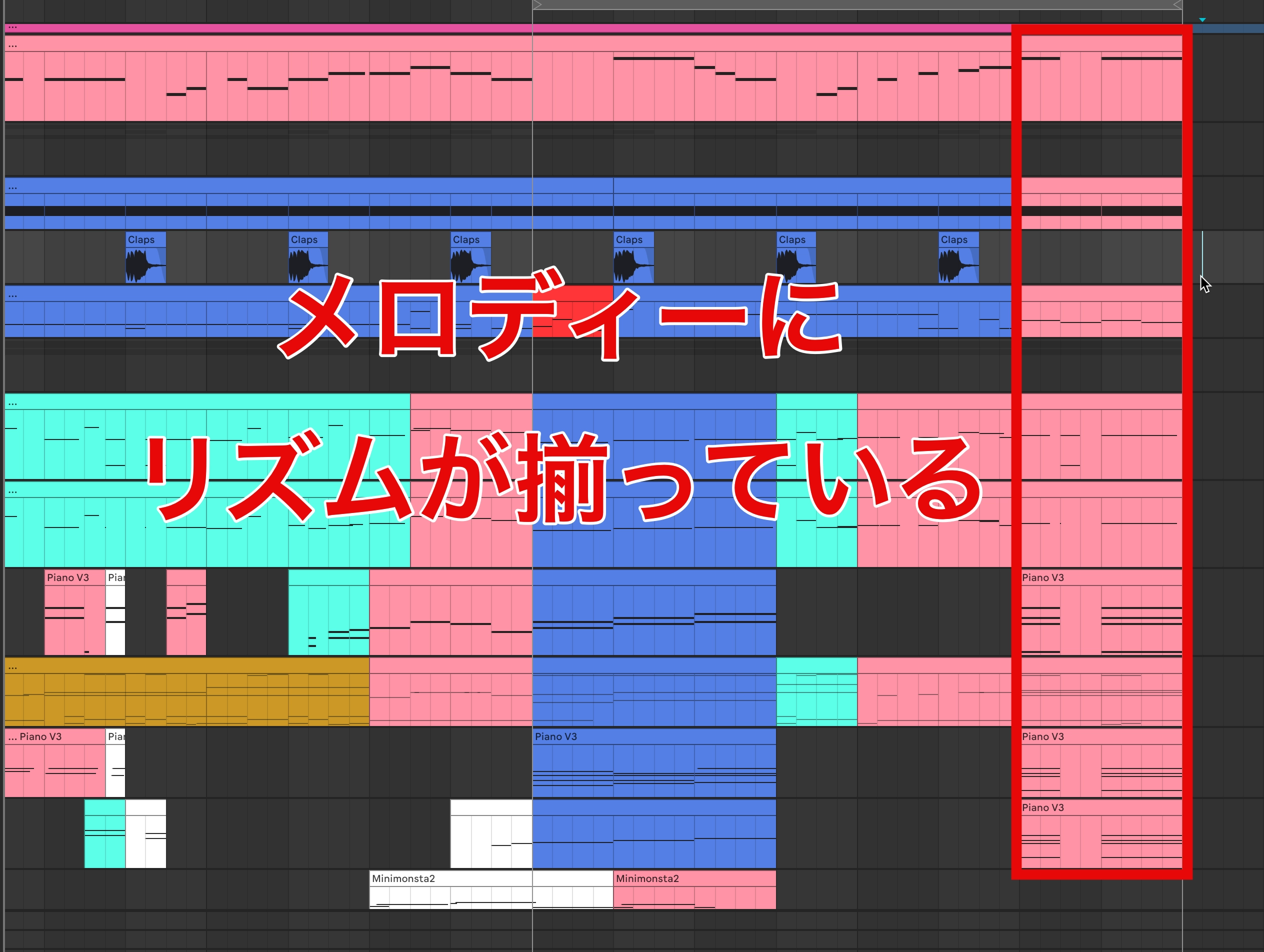
At the end of the demo, every track follows the melody's rhythm in a coordinated ensemble figure, sometimes called a “kime” in Japanese arranging. This gives that moment a particularly strong impact.

Elsewhere, accompaniment parts such as bass and guitar work together while the drums stay independent. This creates a subtler effect than the full ensemble figure.
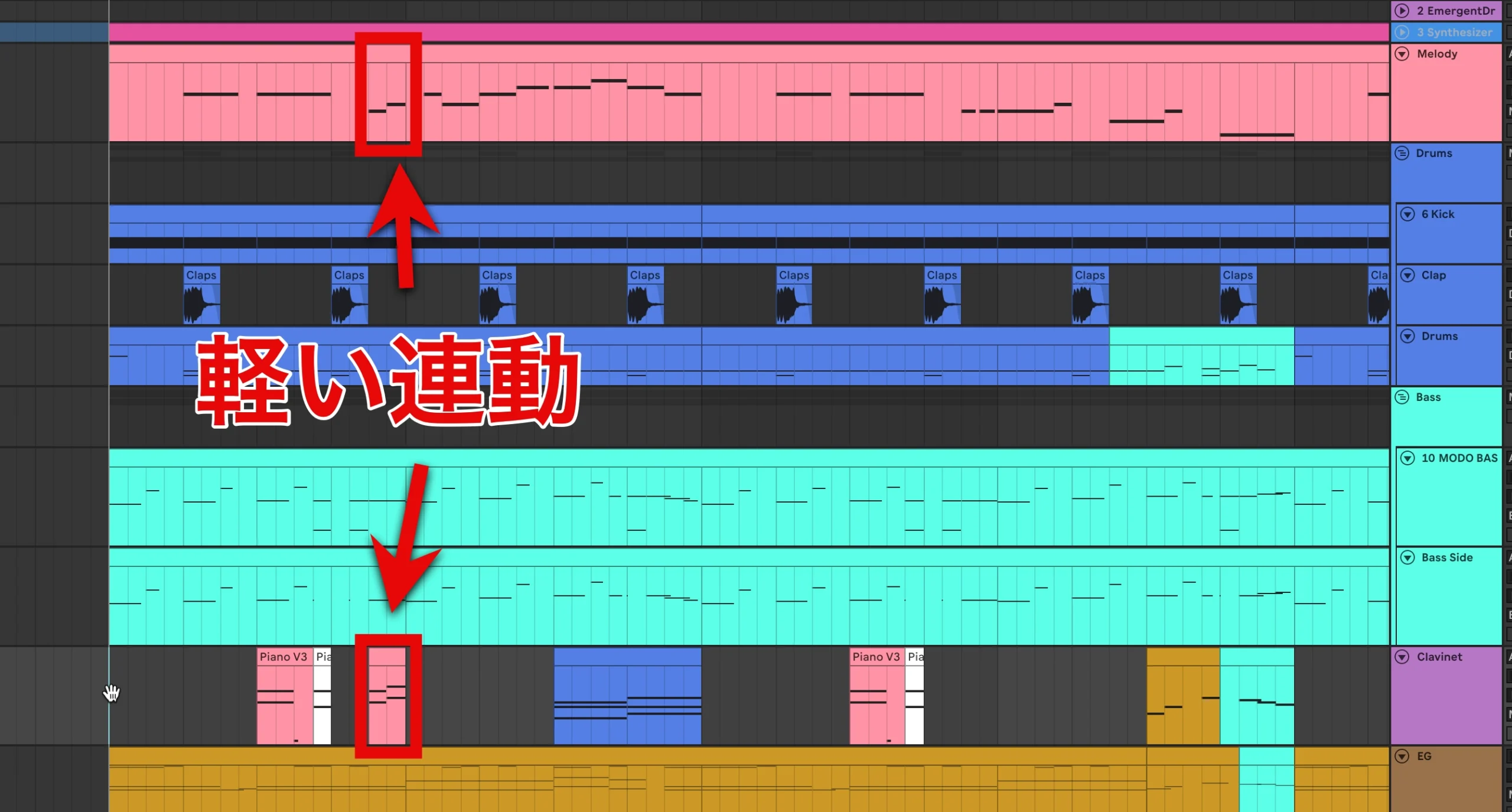
When only the Clavinet briefly follows the melody, the interplay is more understated still.
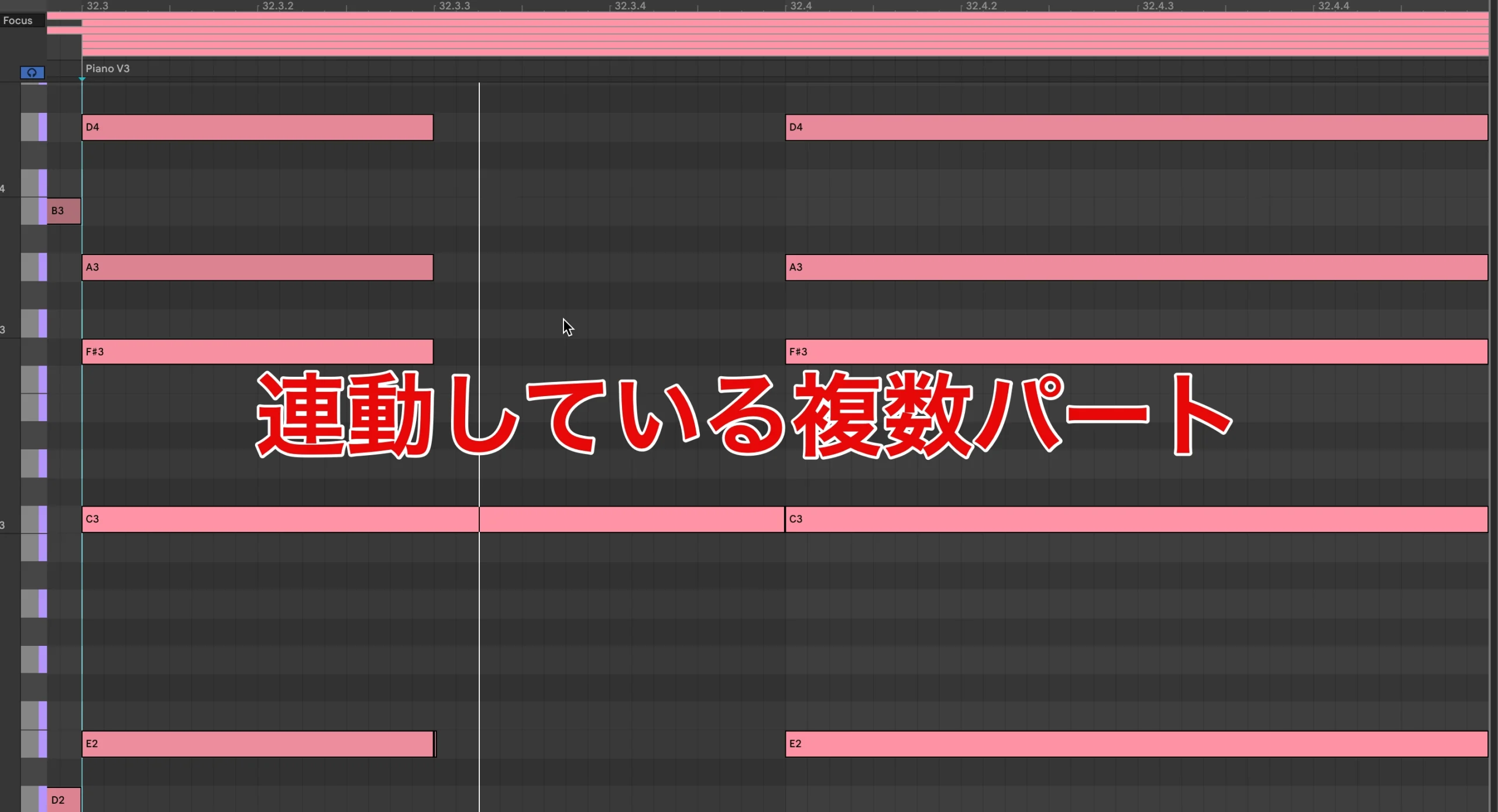
Melody and full accompaniment together
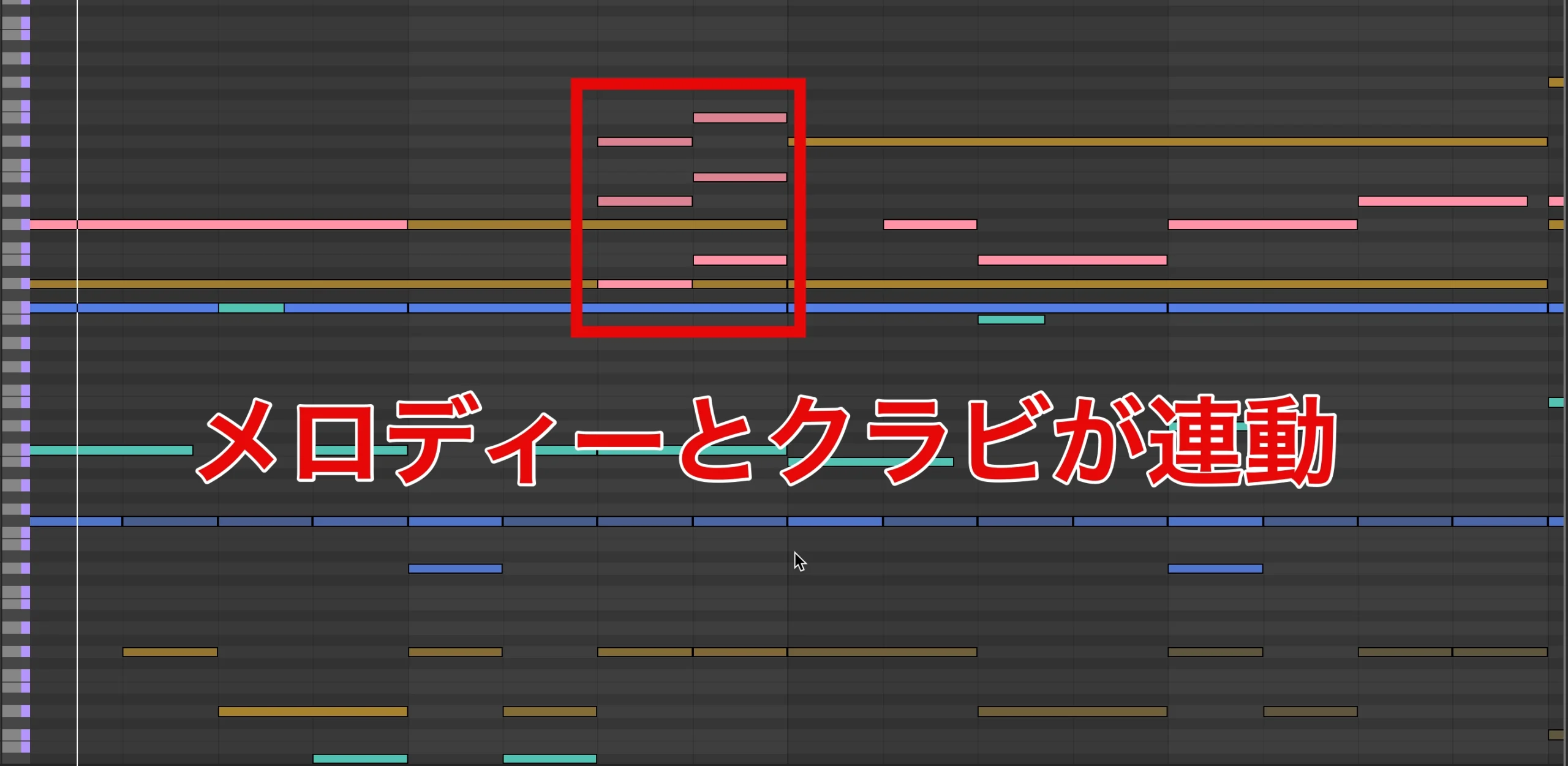
Only the decorative upper parts follow
Following the drums and bass
When other parts follow the drums, you can create different effects depending on whether:
- The coordinated accompaniment includes the bass.
- The coordinated accompaniment leaves the bass independent.
Choose between these approaches to suit the moment.
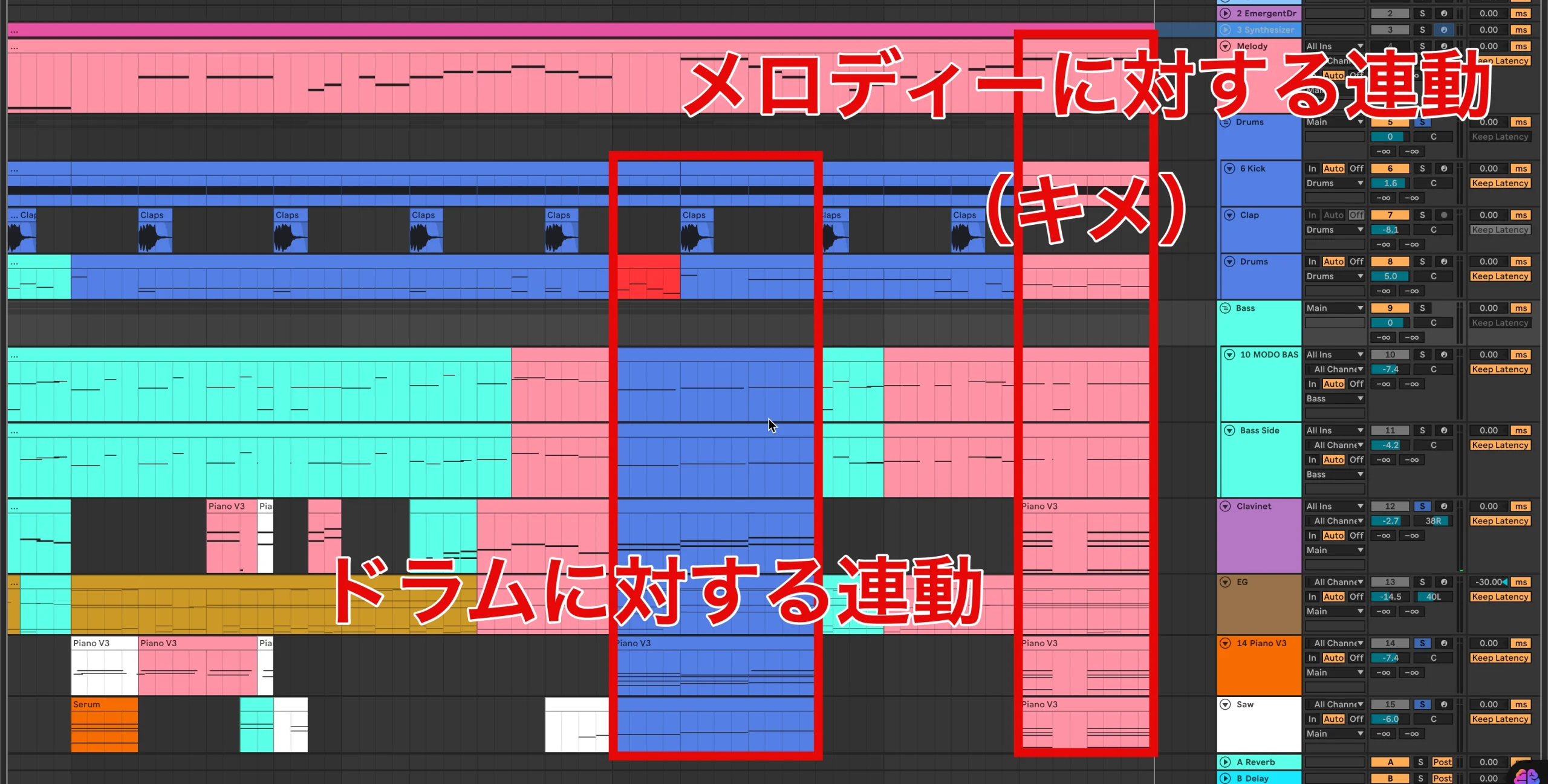
Just before the strongest ensemble figure at the end of the demo, the drums, bass, guitar, piano and other accompaniment parts coordinate with one another.
The arrangement moves from bass-centered interplay toward a melody-centered ensemble figure. As more parts join in, the section gradually builds in intensity.
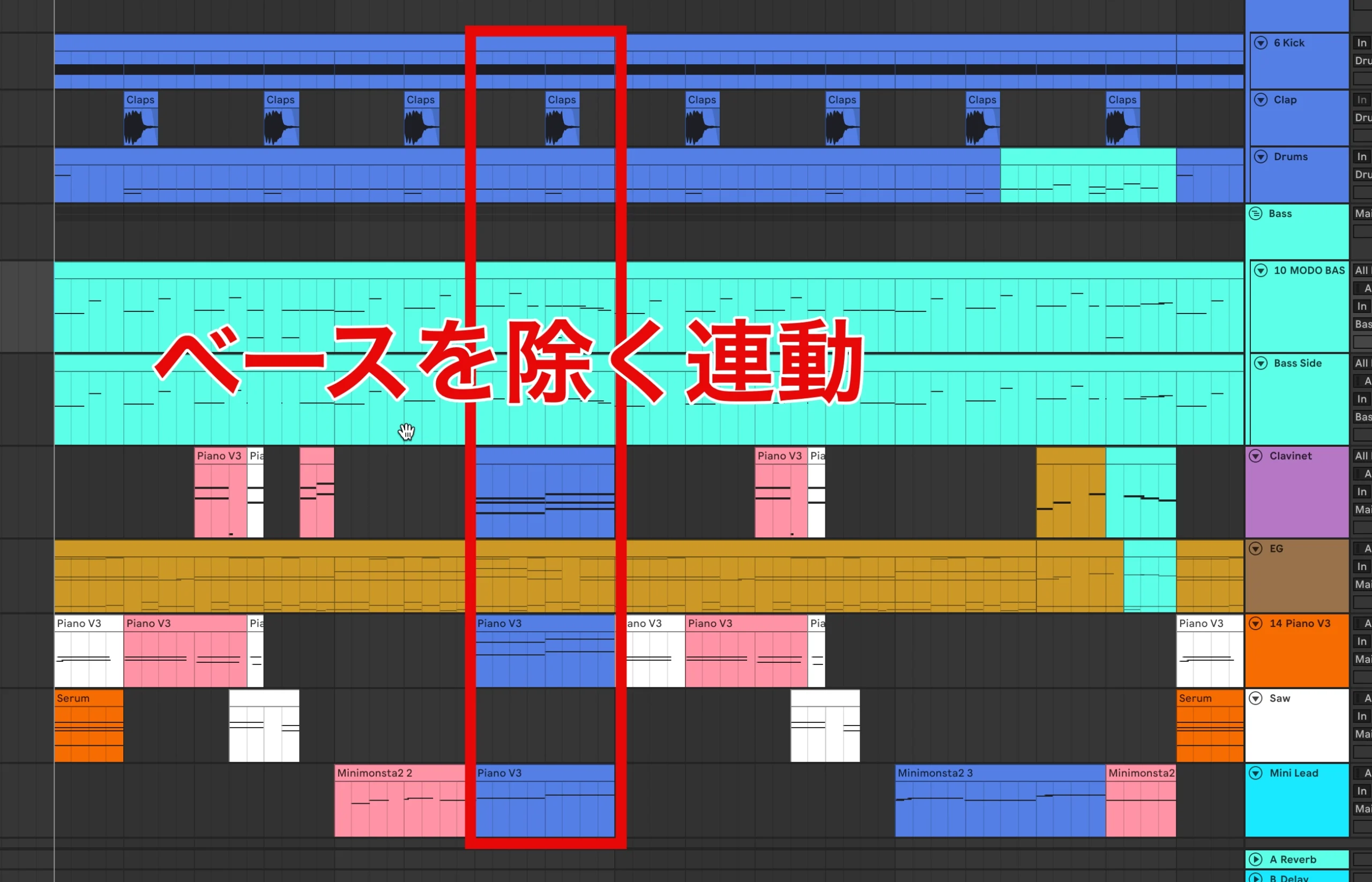
In this other section, the bass stays independent while only the piano and lead synth coordinate with the rhythm.
The kick drum and bass provide the low-frequency foundation in this arrangement. Whether those two parts work together or move independently makes a substantial difference to the strength of the overall connection.
Coordinated section including the bass
Coordinated section without the bass
There are differences in how many parts are coordinated in these two examples, but you should also hear how bringing the drums and bass together can give a section greater impact.
What do you think?
We have used “track interplay” as our own descriptive term here. The essential idea is to pay attention to how the parts move and make deliberate arranging choices about their relationships.
If your tracks feel scattered and you are struggling to organize them, try putting this approach into practice.
Frequently asked questions
Q1. What does creating interplay between tracks involve?
Use one track as a reference and coordinate the rhythm or accents of another with it. Options include doubling the notes in unison, matching only the rhythm, or aligning particular accents.
Q2. What are the benefits of this technique?
It can give the song a more cohesive, organized feel and add energy. It also makes it easier to choose an arranging direction when working with many tracks, helping the result feel less scattered.
Q3. Which parts work well as references?
In pop music, the melody, drums and bass are particularly effective starting points. The best choice depends on the genre, but look for principal parts that have the strongest influence on the listener.
Q4. Should every track follow in unison?
If all the tracks simply play in unison, you lose variety and the arrangement can become monotonous. Vary the rhythms, the accents you coordinate, and the reference part from one section to another.
NEW ARTICLES
Latest English Articles











































































