A survey of 3,222 music producers for the 2025 DAW rankings reveals trends in music production. Logic Pro and Studio One rank near the top, while Pro Tools remains a leading industry standard in professional studios. More than 70% of respondents use a DAW several times a week, and many spend over 15 hours on each song. The results also show Japan-specific preferences, with J-pop, anime songs, and Vocaloid accounting for more than half of reported genres, alongside growing use of laptops for music production.
Popular DAWs Used by Music Producers
Our year-end survey received responses from an amazing 3,222 music producers!
Thank you very much to everyone who took part. We are truly grateful.
Here are the results, ranked by the DAWs used by the 3,222 respondents.
We also asked about how often and how long people make music, so let’s take a look at these habits as well.
2025 DAW Rankings (Video)
Selected Questions and Answers from the YouTube Video

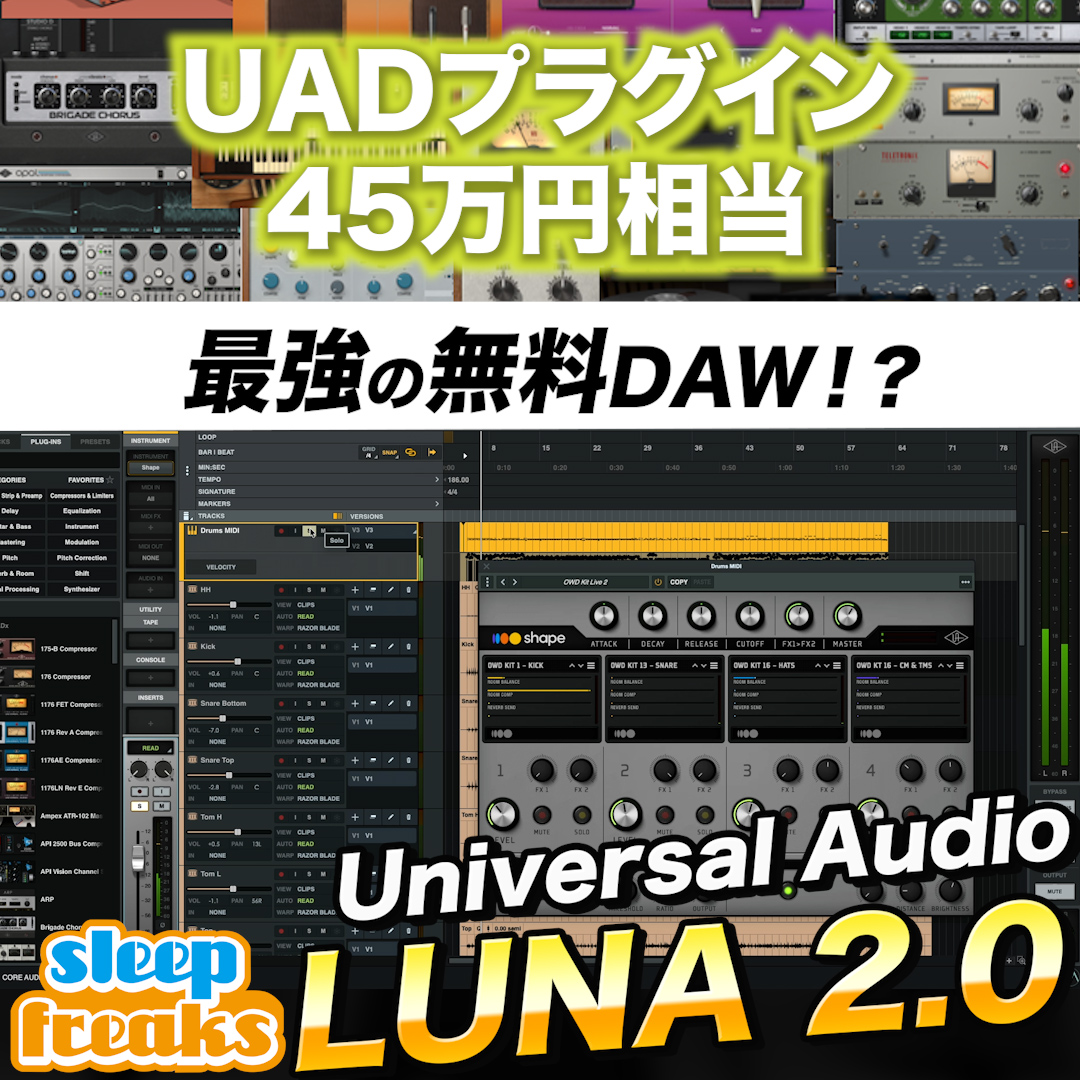
UA LUNA gets a lot of promotion, but it’s free and still didn’t make the top 10?

One possible reason is that it is not yet available in Japanese. That can be a significant hurdle, especially for beginners.
For desktop users, a laptop screen feels too small, and not being able to use two displays is really tough. Once you get used to the convenience of two screens, it’s hard to go back.
Many people keep a monitor at home and connect their laptop to it for a dual-screen setup while producing music.
I want to use my FANTOM-08 (with a built-in audio interface) as a MIDI keyboard for music production. Is there a difference between connecting it directly to my PC and connecting it through another audio interface?
Since the FANTOM-08 has a built-in audio interface, using it directly seems like the most efficient option.
A pro uses REAPER as their main DAW?
We’ve heard of professionals who extensively customize REAPER to fine-tune how it works. Once mastered to that degree, it might be the ultimate DAW...
It’s no surprise that Singer Song Writer didn’t make the list. I wonder where it would rank. Mine suddenly stopped launching today, and I’m trying to fix it. Given its track-count limits, I’m also considering switching to Ability. But changing DAWs is hard when I need compatibility with my past projects.
Only one respondent listed Singer Song Writer as their main DAW. Fourteen people used Ability, so perhaps many have made the switch.
I wonder why REAPER has such high user satisfaction and so few dissatisfied users. It also seems to have a fairly high proportion of professional users. What makes it appealing? I’d love a feature on what makes it uniquely useful in professional settings.
Common reasons included its low price, free version, high customizability, and lightweight, stable performance.
Respondent Profile
First, let’s look at the respondents.

The gender breakdown has barely changed over the past few years, and the overwhelming majority are men.
More women making music could broaden the range of products and help events thrive.
We also see encouraging more women to start making music as an area we should work on.
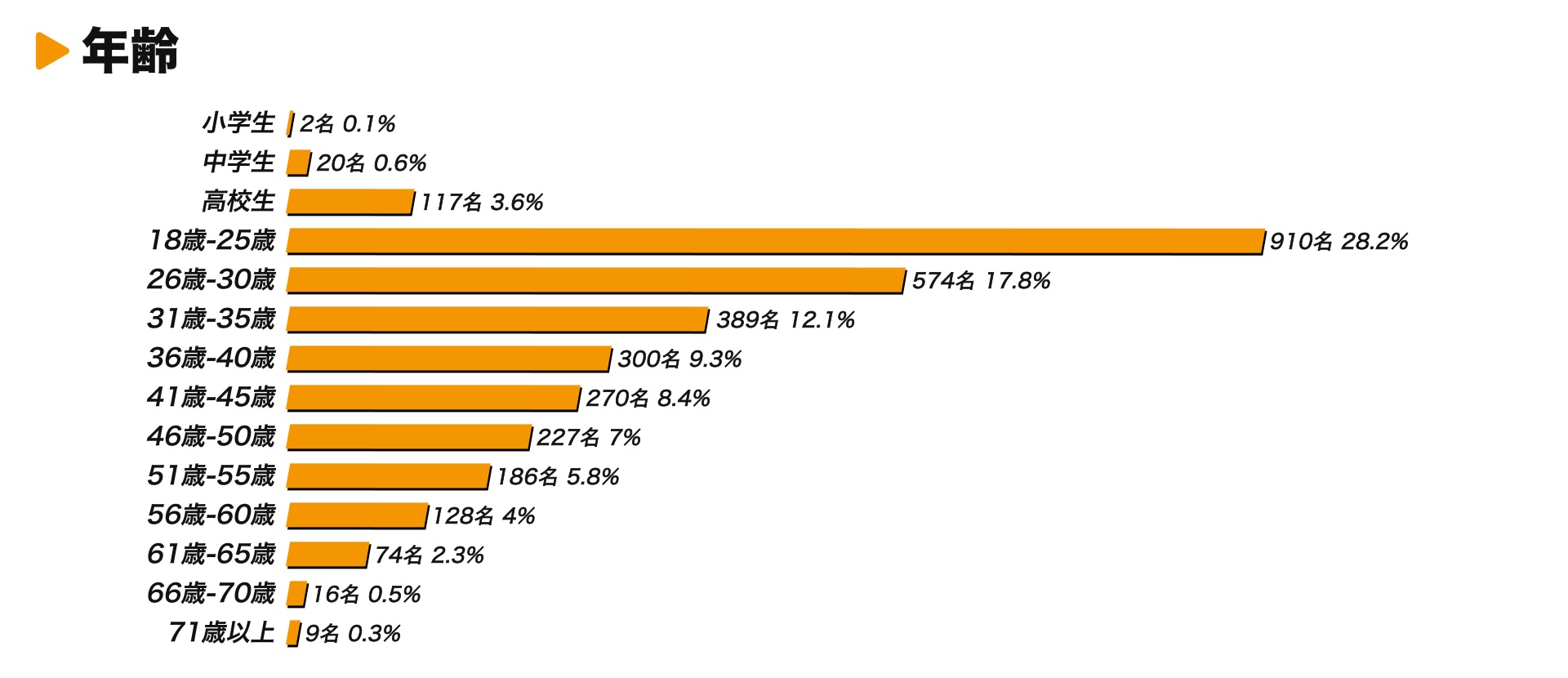
Many respondents are young, particularly those aged 30 or under.
It is also great to see nearly 100 respondents aged 60 or older.

Encouragingly, about one in ten respondents works as a professional!
We’d love to hear your comments on tutorials and products on YouTube and X.
Computers
Next, let’s look at computers, an essential part of music production.
We plan to create more detailed content on this topic later, so here we’ll cover the basics.
Mac or Windows

There has been no major change since last year.
We also found no significant differences by age.
A few years ago, Apple began using its own CPUs, Apple Silicon, across its Mac lineup.
We have been watching to see how this affects the share of Mac users, but so far it does not appear to have had a major impact on music production.
Desktop or Laptop

When we founded our company, people often said that music production required a desktop computer for adequate performance. I remember frequently experiencing that limitation myself.
But today,laptops are fully capable of handling music production and related work.

It is also interesting that younger respondents are more likely to choose laptops.
Music Production
Next, let’s look at music production, including how often people make music and which genres they work in.
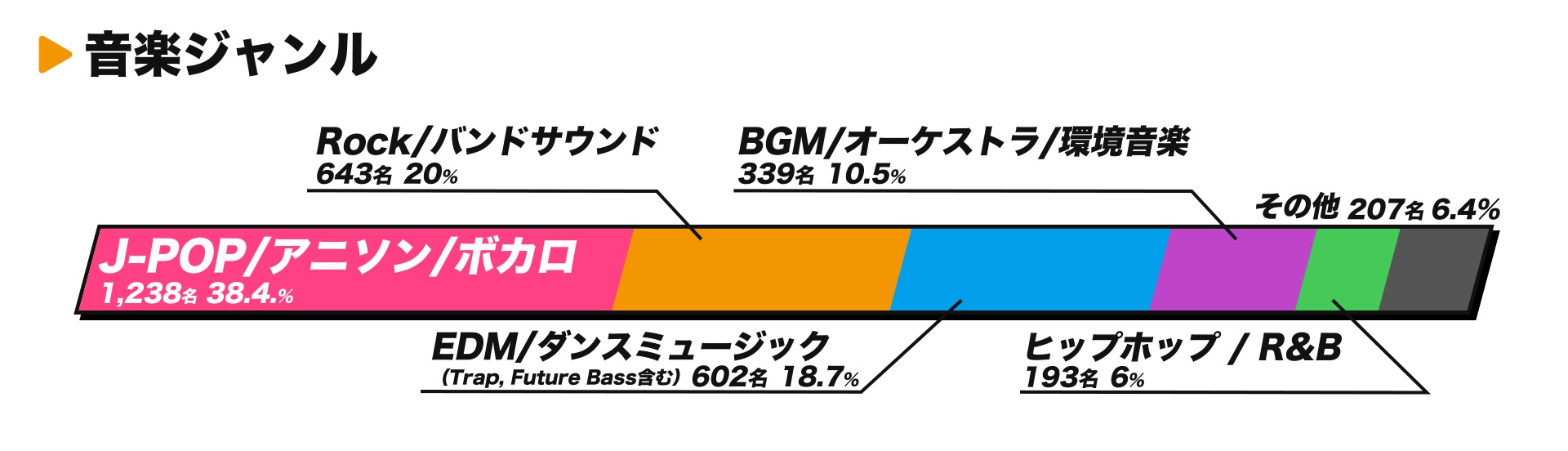
More than half of respondents make vocal-driven music, such as J-pop and band-style music.
This may be a trend specific to Japan.
Electronic music, including EDM, comes next.
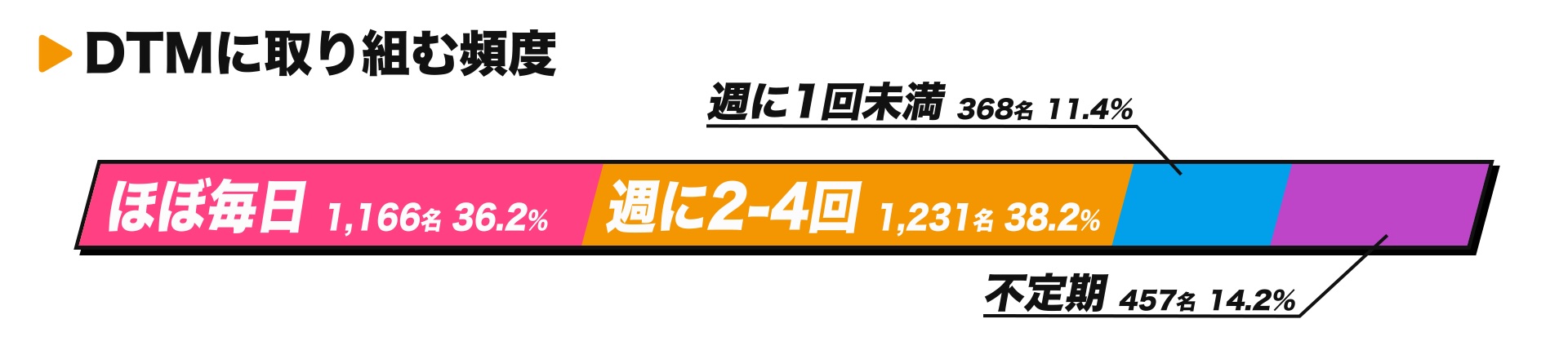
More than 70% of respondents use a DAW several times a week—an encouraging result.

Thirty-five percent spend at least three hours per session.
That gives a sense of how focused people are.
When you get into the zone, time seems to disappear—that’s one of the joys of making music with a DAW.

As for the time needed to finish one song, roughly speaking,most respondents spend 15 hours or more on a single song.
Each song clearly takes a great deal of energy and dedication.

Let’s compare production time by genre.
J-pop, anime songs, and Vocaloid tracks often have many parts and frequent arrangement changes, so they tend to take longer to produce. (They may also involve vocal recording.)
By contrast, hip-hop and background music often use fewer tracks and more repetition or loops, so they may take less time to produce than other genres.
DAW Rankings
Now, let’s get to the DAW rankings.
Until last year, we counted main and secondary DAWs together. Since the feature gap between DAWs has narrowed, this year we counted only each respondent’s main DAW.
First, let’s look at places 6 through 10.

The rankings were unchanged from last year.
One surprising result: out of 3,222 respondents, only 111 used the sixth-place DAW, Pro Tools.
That means more votes went to the higher-ranked DAWs.
About Pro Tools
Pro Tools, ranked sixth, is an industry-standard DAW.

It has a particularly high share of professional users.
Let’s take a closer look at why people chose it.

*Respondents could select multiple reasons for using a DAW.
Use in professional workplaces and studios was the main reason respondents chose it.
Many also said they valued its audio editing and recording features, soit is a DAW worth learning if you want to work as an engineer in a studio.
5th: FL Studio | 176 respondents | Share: 5.5%
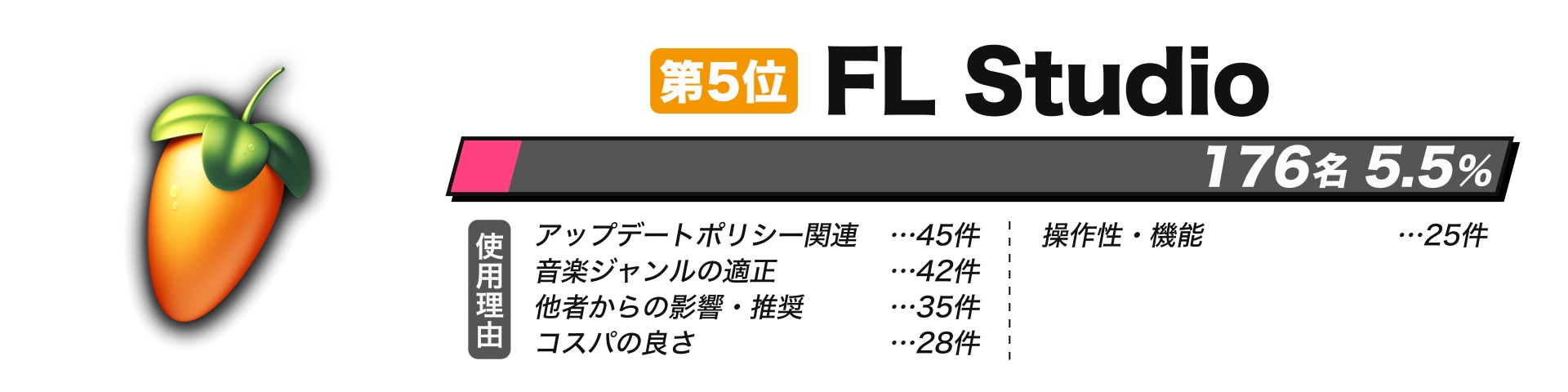
*Respondents could select multiple reasons for using a DAW.
Its policy of free lifetime updates was the most common reason for choosing it; compatibility with EDM and hip-hop was another consideration.
Beyond its value for money,it continues to add advanced features that beatmakers want—making it a DAW that strongly appeals to a particular audience.
Last year’s update finally added Japanese-language support. It may climb the rankings in the future.
4th: Ableton Live | 291 respondents | Share: 9.0%
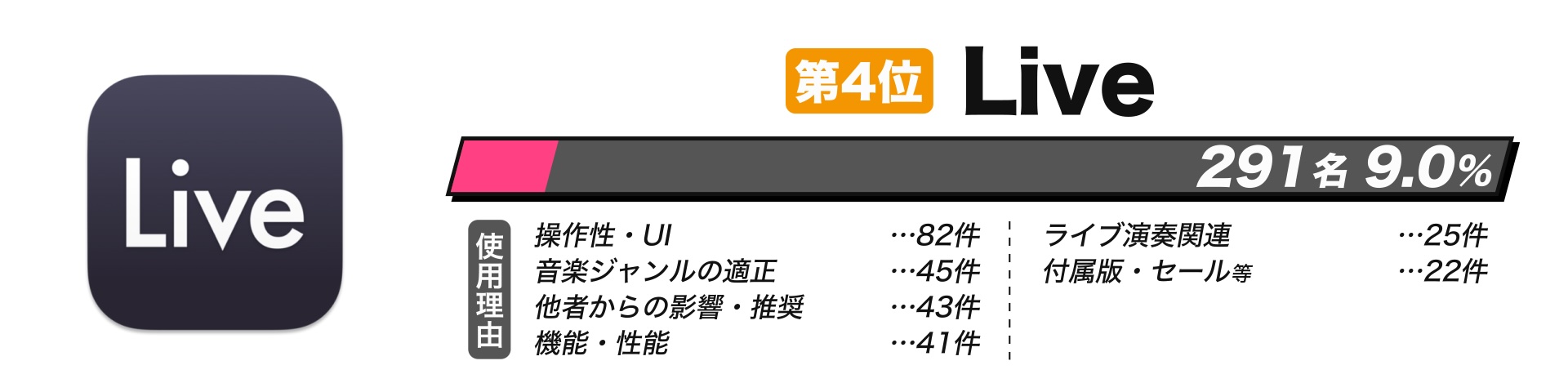
*Respondents could select multiple reasons for using a DAW.
Its workflow and design received high marks, and many respondents said they used it because their favorite artists do.
Its strong fit for electronic music and its focus on live performance were also cited as reasons for choosing it.
Its workflow is also highly refined,making it intuitive to find and use the features you need.
Last year’s update drew attention for features such as finding presets similar to a selected sound and more advanced MIDI editing.
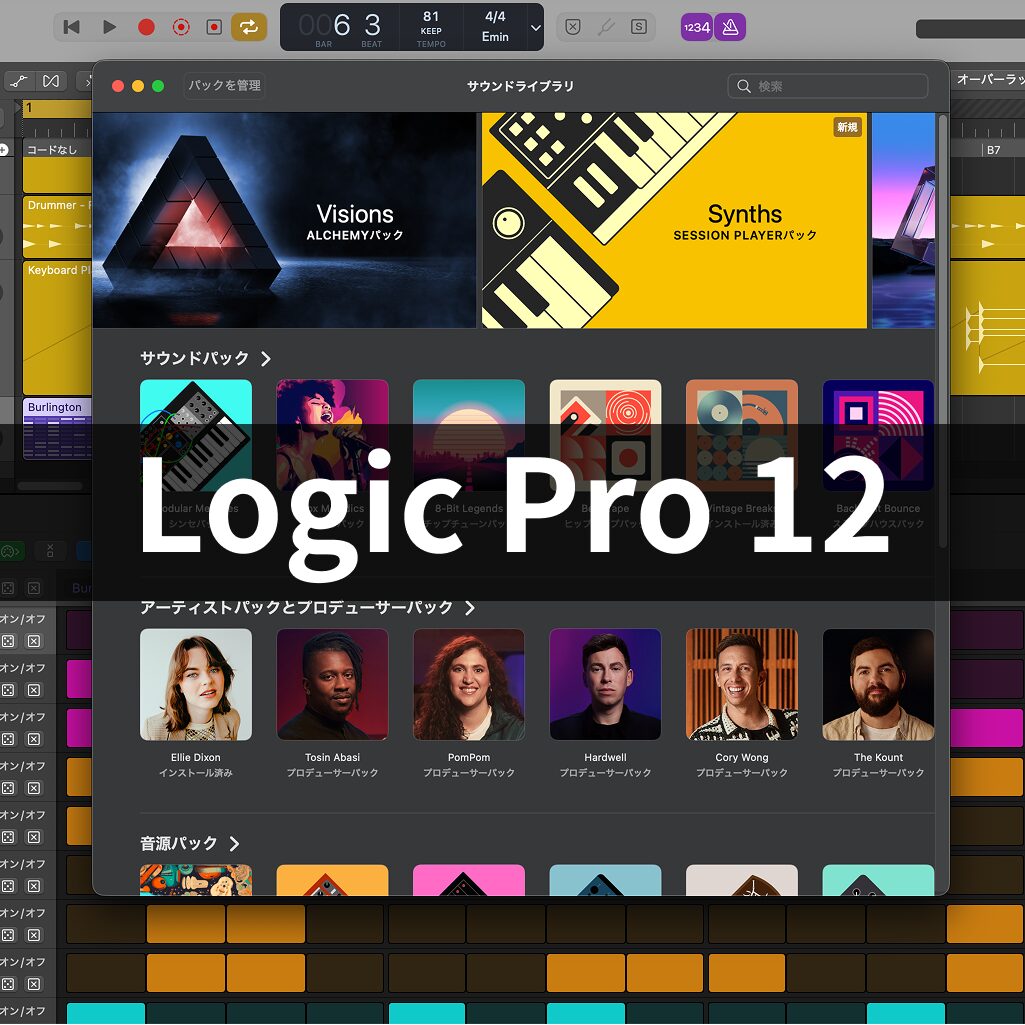
3rd: Logic Pro | 582 respondents | Share: 18.1%
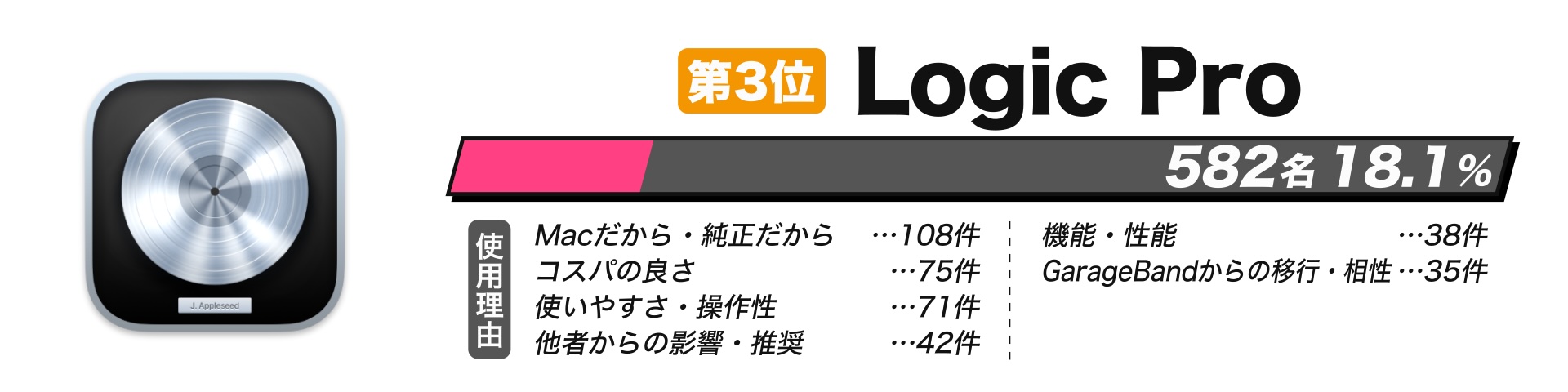
*Respondents could select multiple reasons for using a DAW.
Compatibility with Macs and other Apple products was a major reason for choosing it.
It is easy to understand why people value being able to use it reliably on a new Mac without compatibility issues.
It also ranked third despite being unavailable for Windows—a testament to the strength of the Apple brand.
Its relatively low priceand strong value for money
are also worth mentioning.
A major update released last year introduced AI-generated instrumental phrases, and the quality was impressive.It is beginner-friendly, yet it also has many advanced techniques for experienced users.
2nd: Studio One | 603 respondents | Share: 18.7%
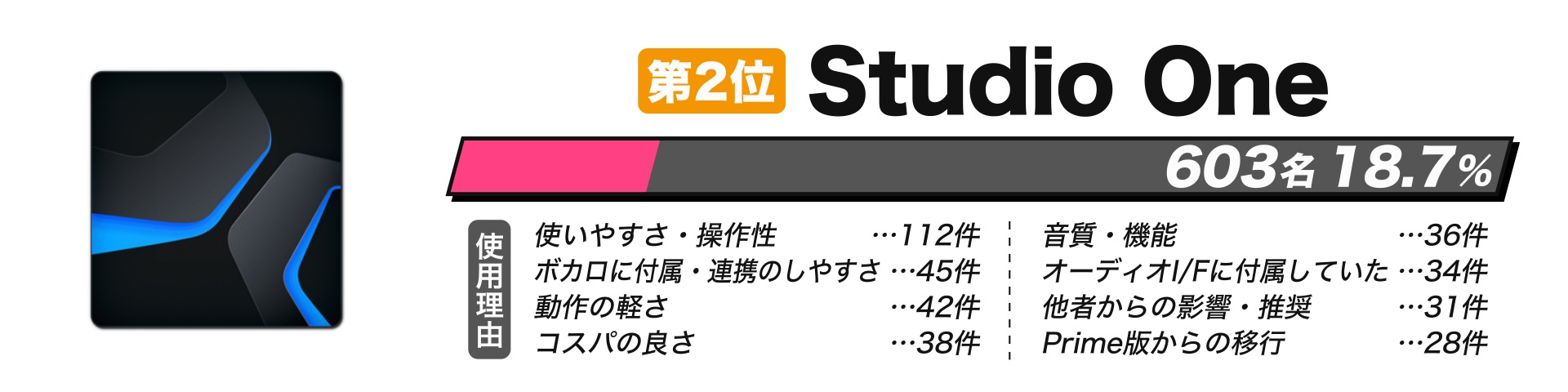
*Respondents could select multiple reasons for using a DAW.
Studio One came in second, narrowly ahead of Logic Pro in third.
It focuses on the features people really need,with a refined workflow and generally light performance—a view shared by many respondents.
Its ease of use for beginners is a major advantage.
Last year’s major update also brought attention to its integration with Splice, but at the same time,the free version was discontinued and the product moved to a subscription model. It will be interesting to see how its user base changes.
1st: Cubase | 1,190 respondents | Share: 36.9%
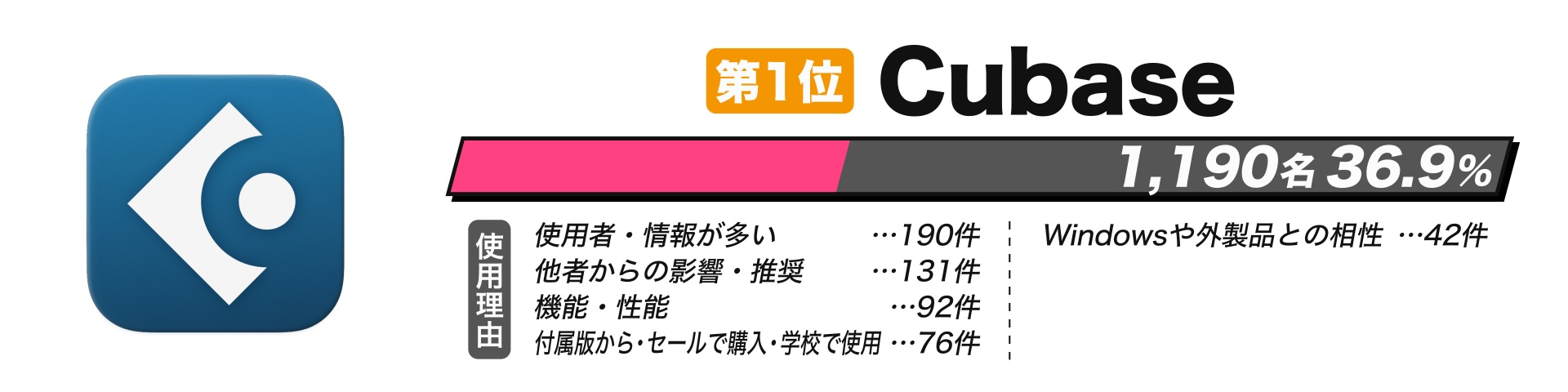
*Respondents could select multiple reasons for using a DAW.
Cubase remained on top.
It retained its position as Japan’s No. 1 DAW this year, with as many users as the second- and third-place DAWs combined.
The most common reason for choosing it was its large user base and the wealth of information available.
When choosing a DAW, it can be hard to know what you need. Having plenty of information available makes it easier to solve problems when they arise.
Other common reasons included using it because a favorite artist does, or continuing with the version bundled with previously purchased equipment.
Respondents also mentioned its features, andit seems to offer a rich feature set and consistently useful additions in updates.
It is a DAW that should serve most users well.
What did you think of the 2025 DAW rankings?
Many major DAWs received major updates in 2024, so we expected the rankings might shift. In the end, there was no change in the rankings at the time of the survey.
We’ll continue to keep an eye on how they change.
We hope these results are helpful if you’re choosing a DAW or looking for a second one.
Sleepfreaks-Supervised DTM Computers Now Available!
In collaboration with Thirdwave Corporation,we released Sleepfreaks-supervised computers designed for music production.They are configured with recommended music-production specifications, with an entry-level model for people starting out and a high-end model designed to maximize comfort and speed.
Frequently Asked Questions
Q1. Which DAW should a beginner choose?
We recommend Logic Pro or Studio One. Logic Pro offers strong value and many beginner-friendly features, and Mac users benefit from its compatibility with other Apple products. Studio One is also known for its intuitive workflow while offering a full set of professional features.
Q2. Which DAW should I learn if I want to become a professional engineer?
Pro Tools is essential to learn. It is an industry-standard DAW with a strong presence among professionals and is widely used in studios and recording environments, so aspiring engineers should make it a priority.
Q3. Which DAW is good for making hip-hop or EDM?
FL Studio and Ableton Live are strong choices. FL Studio is known for free lifetime updates and advanced beatmaking features, while Ableton Live is designed for live performance and electronic music production.
Q4. Can I make music on a laptop?
Yes. Current laptops are capable of handling music production. The survey also found that younger respondents were more likely to choose laptops, and hardware limitations have largely eased, making mobile music production commonplace.
Q5. Do Mac and Windows users have different DAW options?
Yes. Logic Pro is exclusive to Mac, which creates a significant difference in available options. Mac users can choose Logic Pro, Studio One, Ableton Live, and others, while Windows users need to choose a DAW other than Logic Pro.
NEW ARTICLES
Latest English Articles