To create natural-sounding clavinet backing, start with a memorable top-note phrase and shape its rhythm through note durations. Add a left-hand part with the key and diatonic chords in mind, then fill out the right-hand notes to establish the harmony. Adjusting velocity and choosing notes within the scale can give the part a played feel suited to funk, rock, jazz and more.
Bring Out a More Authentic Clavinet Feel
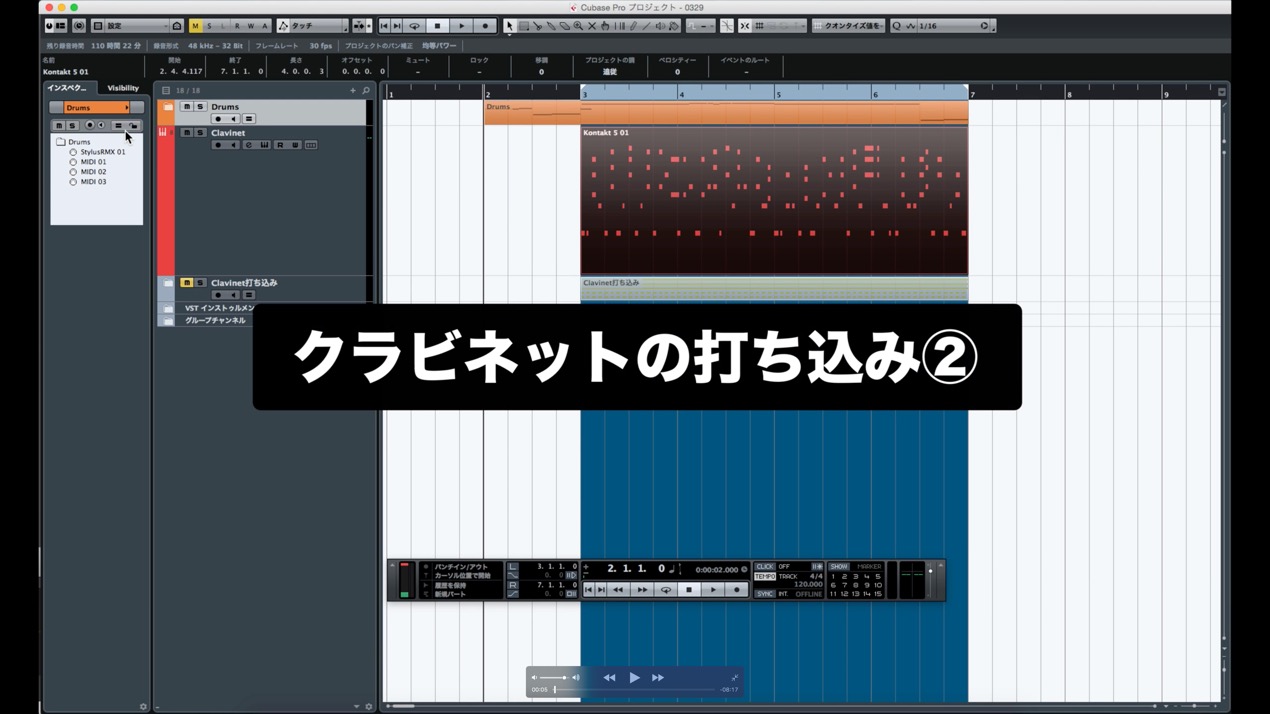
Following part 1, this second installment looks at techniques
for a more authentic clavinet feel.
We’ll work through the steps toward a finished phrase like this one.
Video Access
1. Programming Clavinet Backing, Part 1
2. Programming Clavinet Backing, Part 2 (this article)
Selected Questions and Answers from the YouTube Video

The clavinet chords changed from Am7 to several others. Can the other instruments continue playing Am7 throughout, or should they follow the clavinet chords?

The chords in this example are brief and change quickly, so keeping the other instruments on Am7 is fine if the result does not sound muddy.
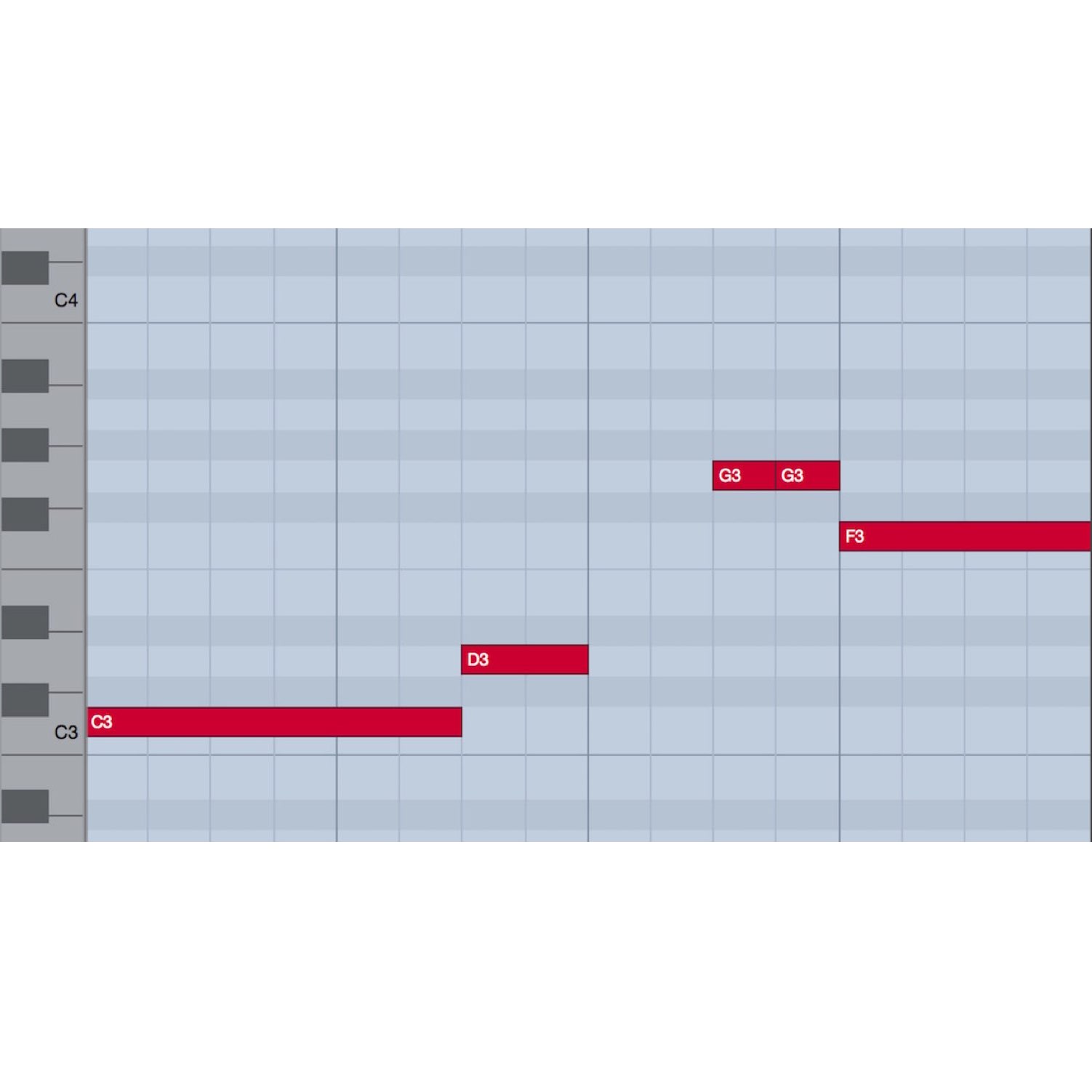
Build a Phrase with Top Notes

A useful way to program a clavinet performance is to
start by creating a phrase with memorable top notes.
This gives you a moving foundation for the backing rather than a series of simple chords.
At the same time, pay attention to the duration of each note.

As discussed last time, shorter notes generally make backing sound crisp.
But rather than making them all the same length, try lengthening notes you want to accent,
and use duration to shape the rhythm.
Conversely, you can also add particularly short notes.
Create a Left-Hand Part with the Key and Chords in Mind
If the chords are not yet decided,
first consider the key suggested by your top-note phrase.


The notes appear to use F sharp as their only sharp, suggesting G major. The same pitch collection can also fit E minor, so listen to the tonal center before deciding.
Now add the left-hand phrase.

Here we focus on Am7, the second diatonic chord in G major.
Following the paradiddle approach discussed last time,
place the notes in the gaps between the right-hand phrases.
Try mixing in the fifth as well as the root note.
Again, use note durations to build the rhythm.
Build Chords Around the Top Notes
After adding the bass part, add right-hand harmony to establish the chord sound.
Adjust the finer performance details too.

The extra right-hand notes do not have to be limited to the notes of Am7;
try combining notes from the G major scale freely.
Pay attention to how the part flows before and after each phrase, and sometimes remove notes for a lighter sound
.
Once the backing is taking shape, adjust the velocities.

Make the notes you want to accent stronger.
Keep those accents consistent with the rhythm you created using note durations.
Finally, if you want to test whether the proposed key fits,
try playing a Gmaj7 chord after the backing and listen for a sense of resolution.

That concludes our two-part guide to programming clavinet backing.
Clavinet works well in rock and jazz as well as funk,
so try incorporating it into your music.
Frequently Asked Questions
Q1. What should I prioritize first when programming clavinet backing?
Start with a phrase in the top, or highest, notes. Choosing a memorable top line first helps build the framework for moving backing rather than simply entering chords.
Q2. How does duration affect clavinet expression?
Varying note lengths helps shape rhythmic emphasis. Rather than giving every note the same duration, make accented notes longer or, conversely, shorter to create a crisp performance.
Q3. How can I work out an uncertain key?
Look at the notes in the top line and the musical context. In this example, the notes include F sharp as the only sharp, which is consistent with G major but also with its relative minor, E minor. Try a tonic chord such as Gmaj7 after the backing and listen for a sense of resolution; the notes alone do not prove a key.
NEW ARTICLES
Latest English Articles