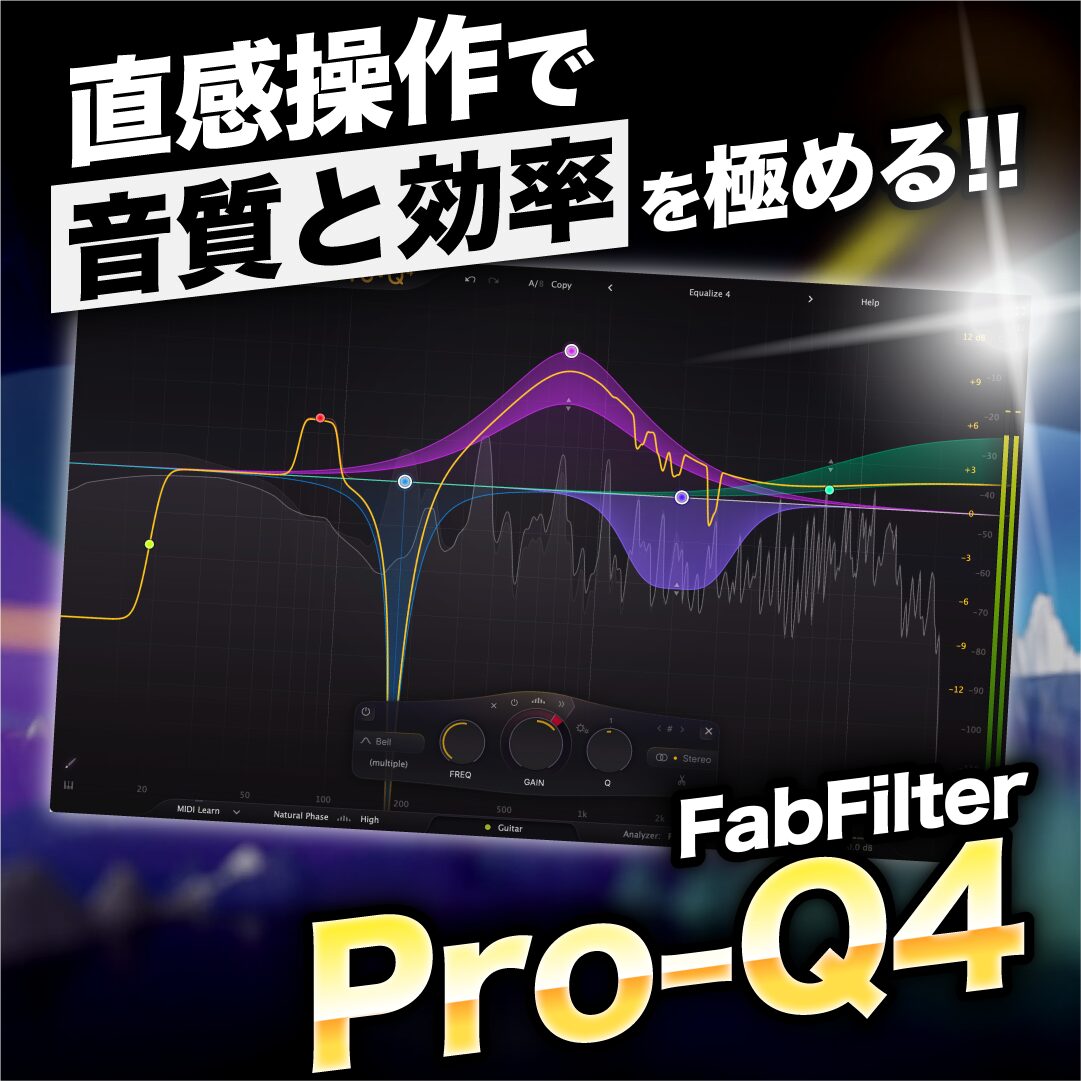
The update to FabFilter Pro-Q 3 introduced three innovative features designed to take your music to the next level: extremely sharp frequency cuts with the Brickwall slope, a Flat Tilt shape for specialized tonal tilting, and masking detection that displays the spectrum of another track. These tools make frequency clashes between tracks visible, helping you create a professional sound with better separation. They offer practical, intuitive operation for music producers of all experience levels.
Essential New Features to Help Improve Your Tracks
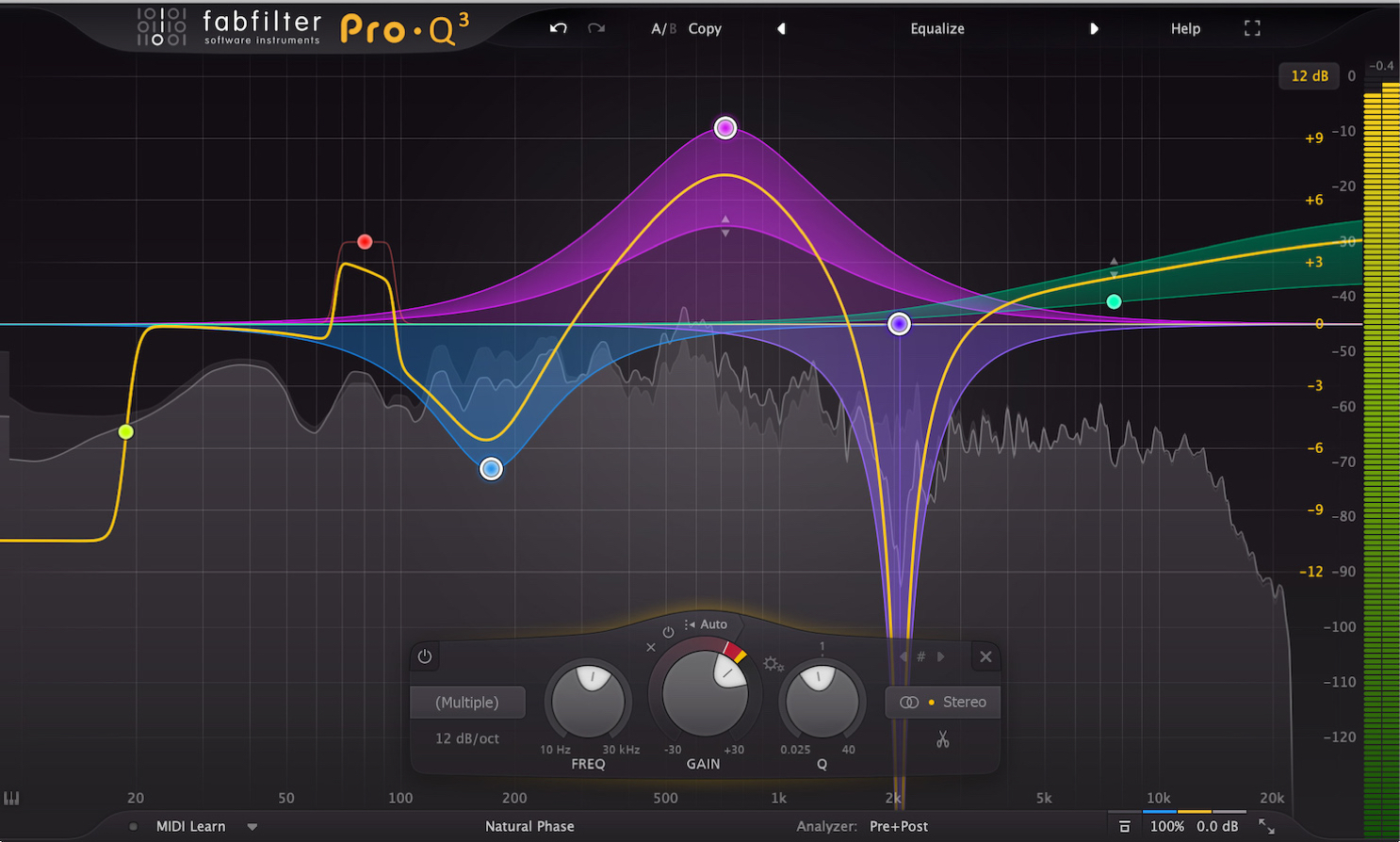
This is the final installment in our FabFilter Pro-Q 3 tutorial series.
Here, we will look at the newly added EQ shapes and filters, along with convenient features for displaying the spectrum of other tracks.
They are all appealing additions worthy of a Pro-Q update.
Let’s get started.
FabFilter Pro-Q 3: Brickwall Slope, Flat Tilt, and Masking Detection
- 1FabFilter Pro-Q
- 2FabFilter Pro-Q 2: Auto Gain and Other New Features
- 3FabFilter Pro-Q 2: Spectrum Grab and EQ Match
- 4FabFilter Pro-Q 3: Enhanced Mid/Side Mode
- 5FabFilter Pro-Q 3: Dynamic EQ
- 6FabFilter Pro-Q 3: Brickwall Slope, Flat Tilt, and Masking Detection
- 7FabFilter Pro-Q 4 Is Here: A Guide to Key New Features
Selected Questions and Answers from the YouTube Video

Great explanation, as always. I wish I could have this ease of use with the sound of a Manley Massive Passive or a 1073 EQ. Its sound does not strike me as particularly distinctive, so is it an EQ whose strengths lie more in its features than in its sonic character?

It has less coloration than a vintage EQ. As you suggest, its features and ease of use are excellent, and I think it is very thoughtfully designed.
Brickwall and Flat Tilt
First, let’s look at the newly added filter slope and EQ shape.
Brickwall Filter Slope
Brickwall has been added to the available slopes for low-cut and high-cut filters.
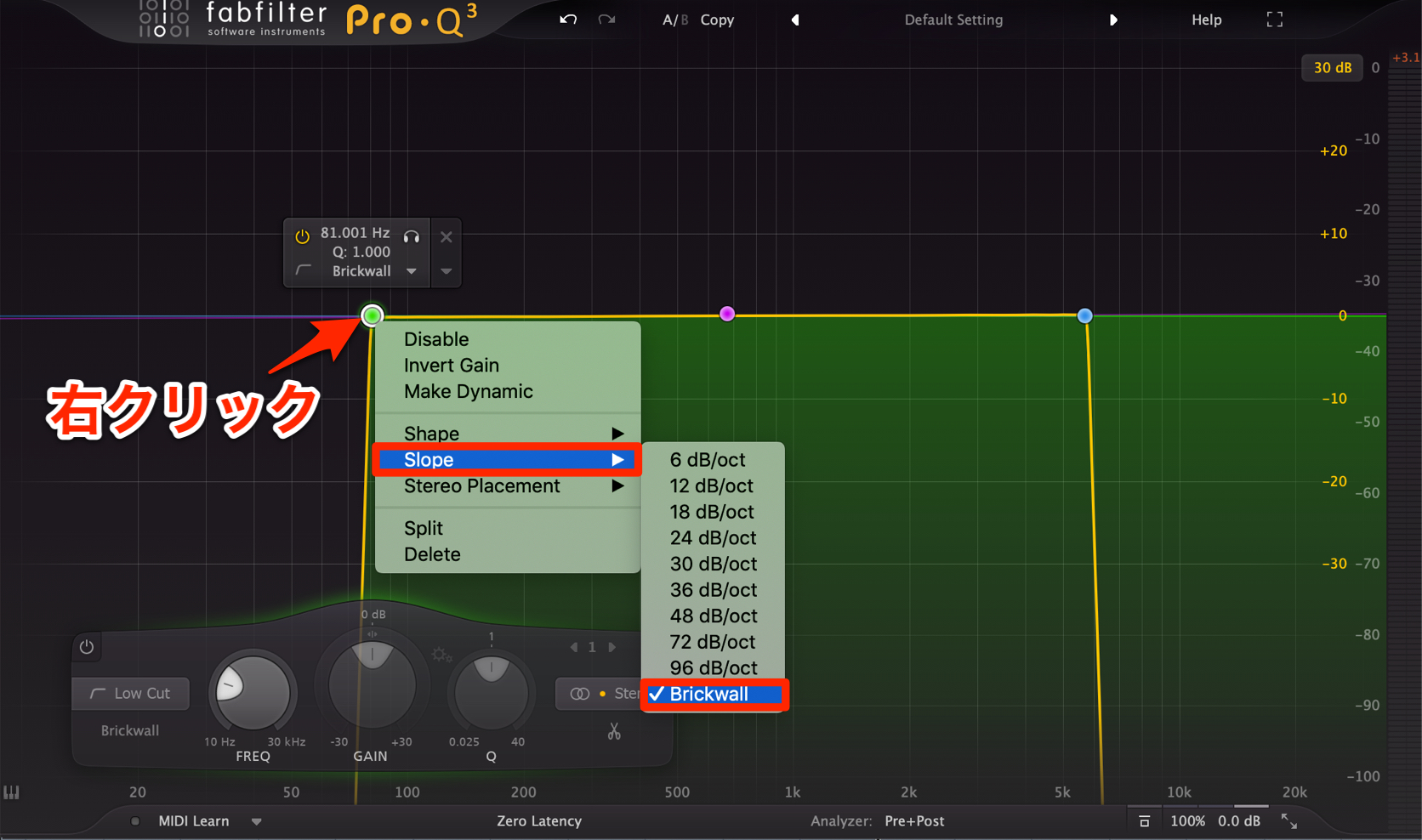
Right-click a low-cut or high-cut EQ point, then choose Slope > Brickwall.
It cuts frequencies more abruptly than any of the other slopes.
This is useful both for removing unwanted frequencies and for more assertive sound design.
Flat Tilt EQ Shape
Flat Tilt is another new addition to the available EQ shapes.
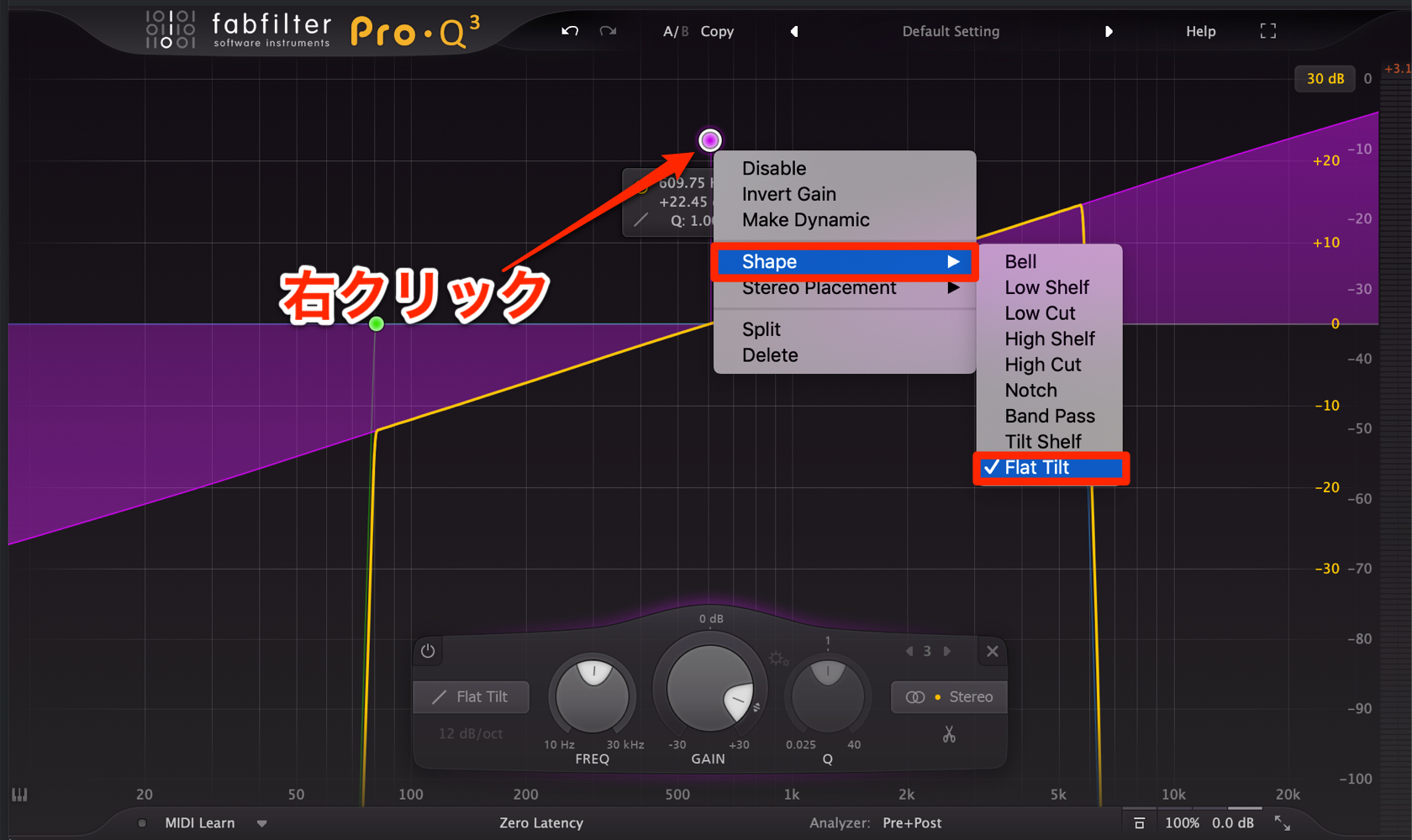
Right-click an EQ point, then choose Shape > Flat Tilt.
This special shape lets you tilt the frequency response around the selected point, as shown here.
Viewing Other Tracks’ Spectra
The newly added track spectrum feature lets you display the frequency spectrum of other tracks.
It makes overlapping frequency ranges visible, helping you create tracks with better separation.
We will use kick and bass tracks as an example.
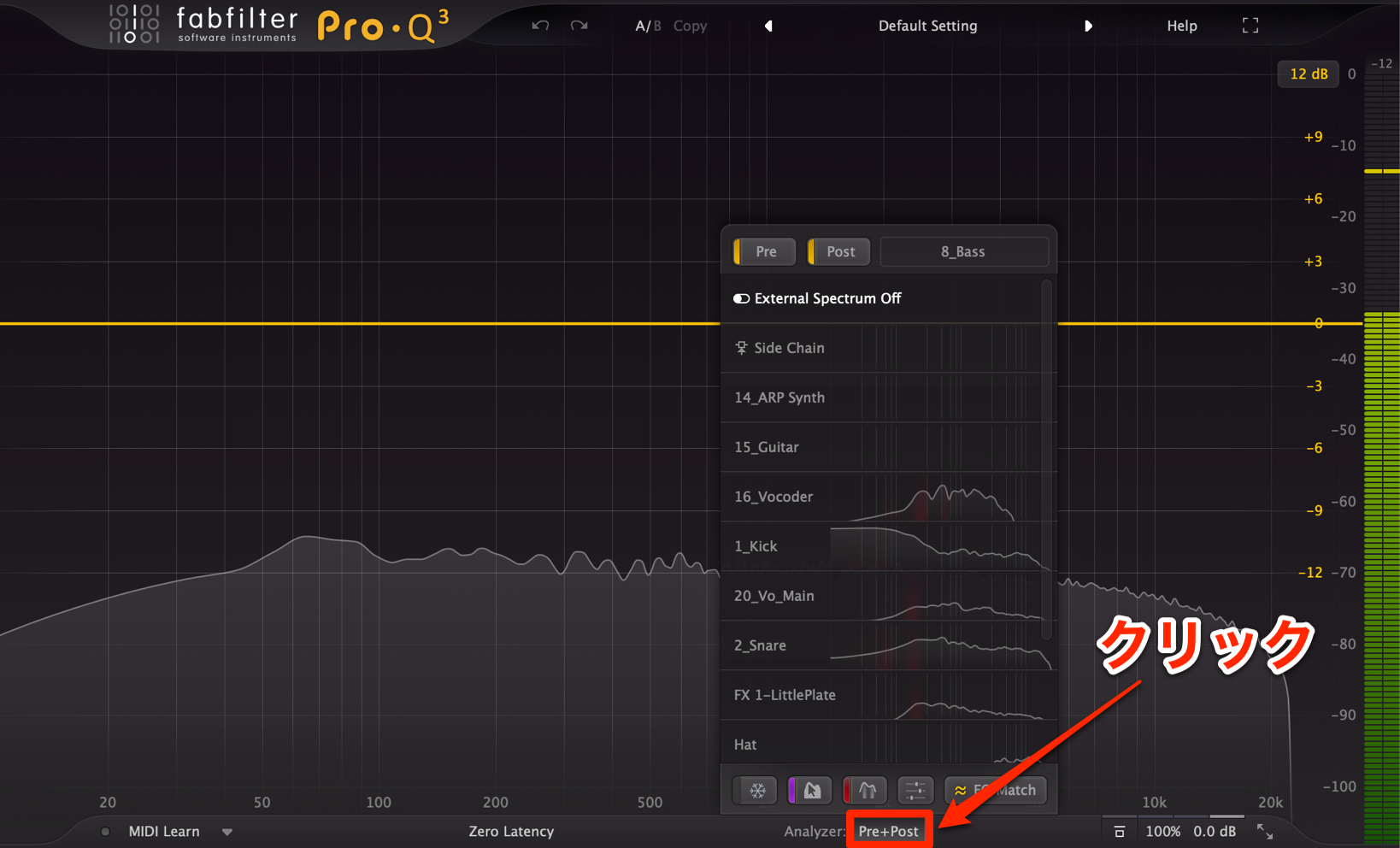
We have already inserted Pro-Q 3 on the kick track and adjusted its tone. Next, we will insert Pro-Q 3 on the bass track and EQ it as well.
Click the Analyzer area at the bottom of the interface.
All tracks with Pro-Q 3 inserted are listed, and their frequency spectra appear during playback.
Here, select the Kick track.
Masking Detection
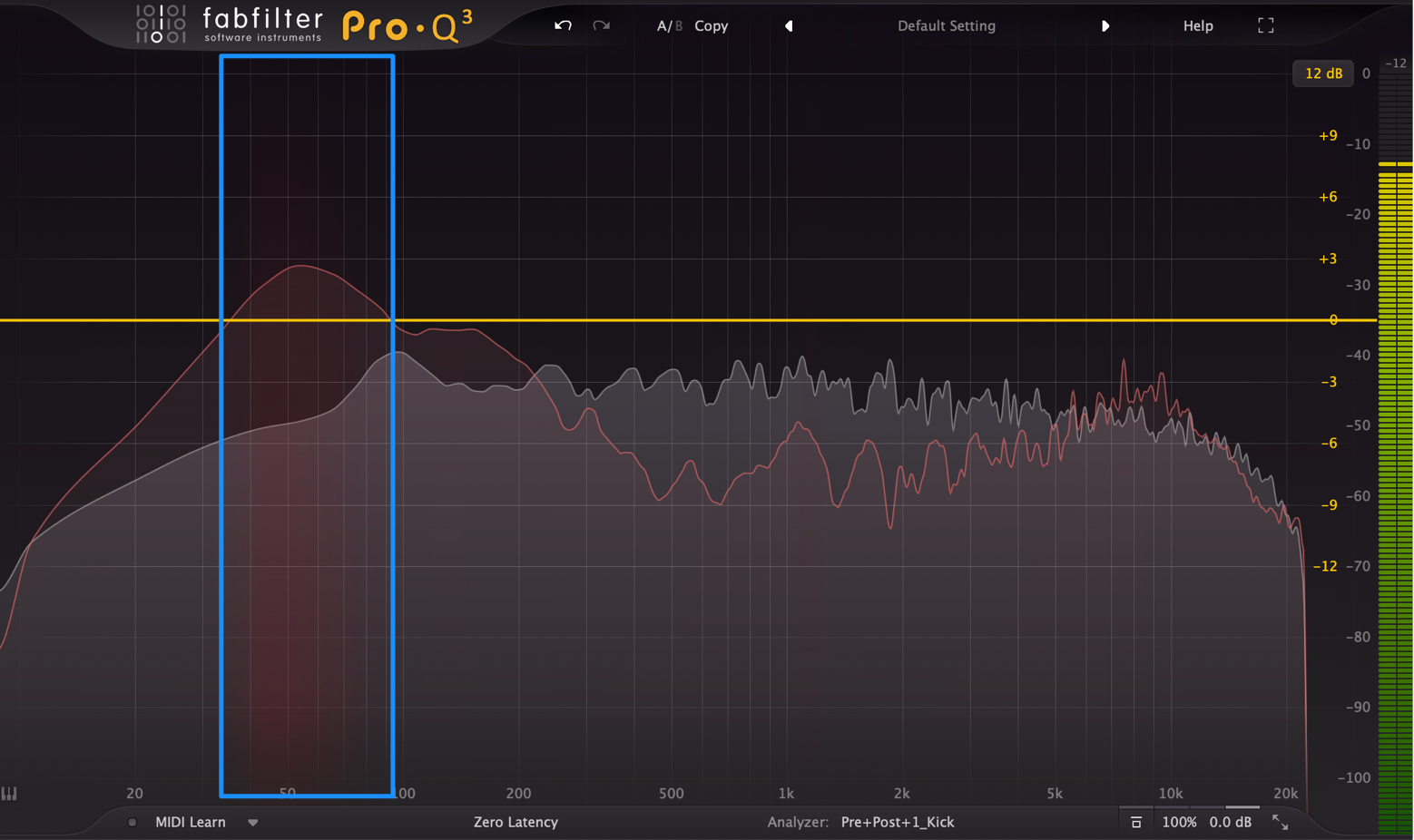
The selected kick track’s spectrum now appears as a red reference line, as shown here.
You will also notice a lightly shaded red area.
This indicates the frequency range that overlaps with the bass track currently being processed by this instance of Pro-Q.
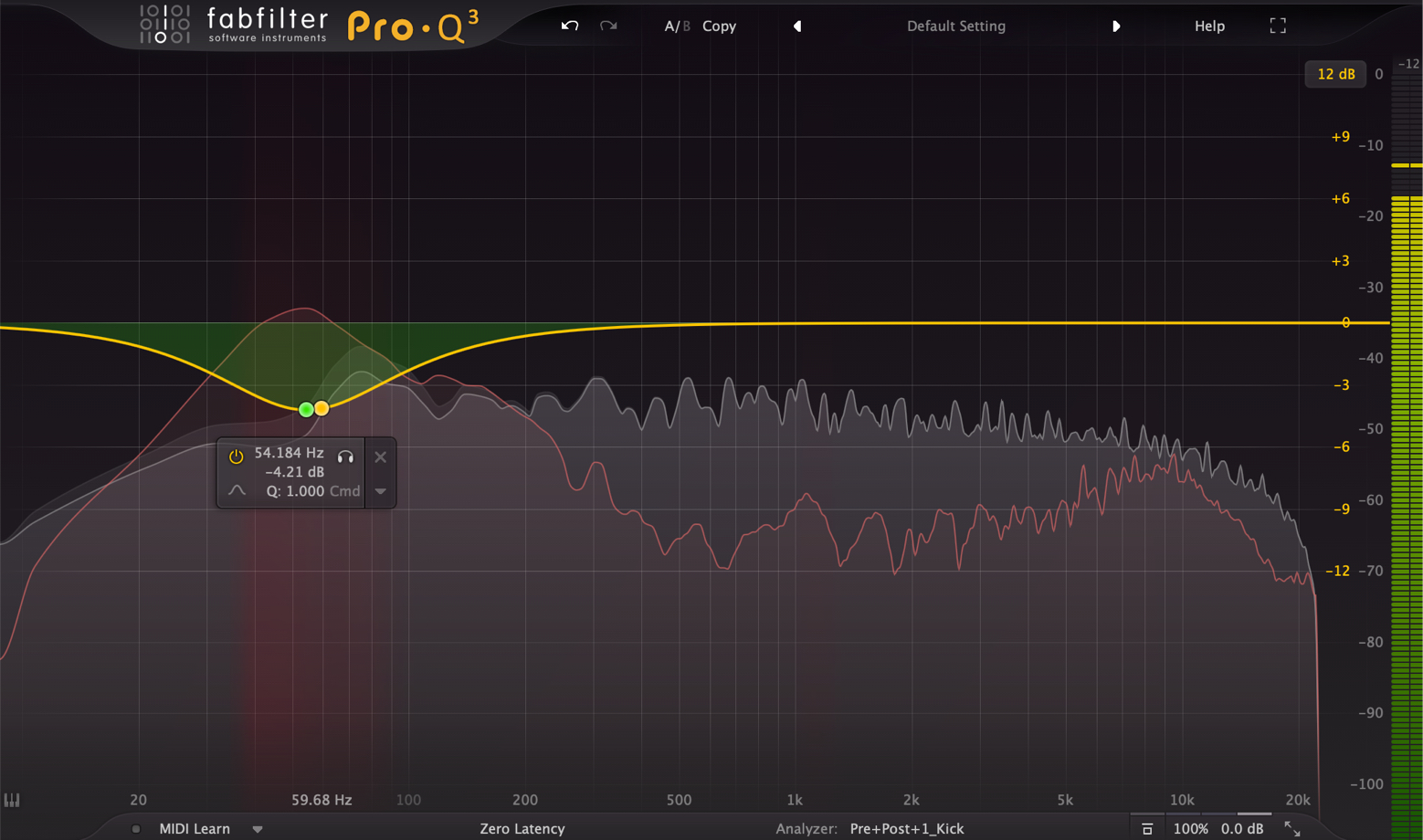
Cutting this range can help create a sound with better separation. This is an excellent feature that makes the relationship very easy to understand.
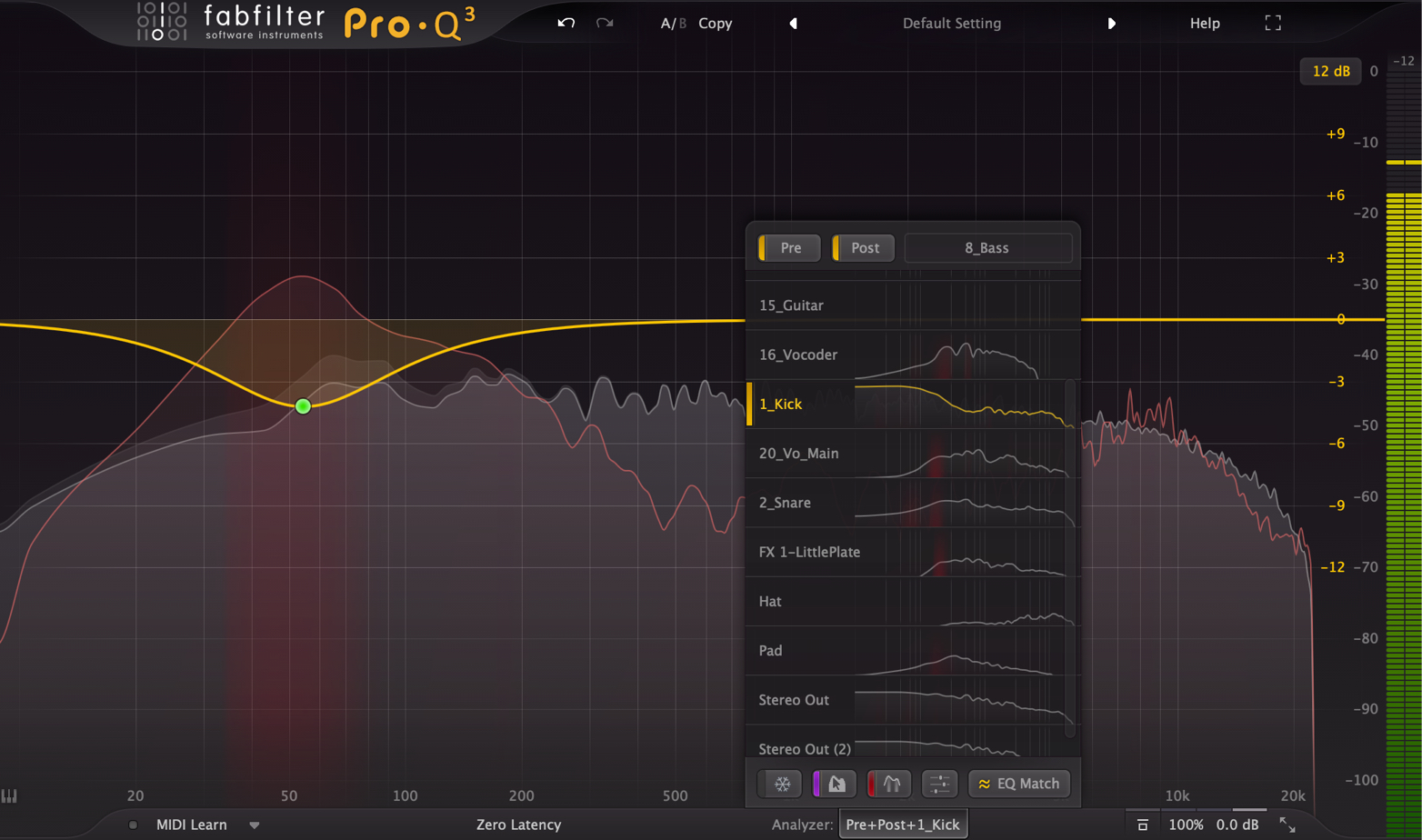
Returning to the list, you can see that frequency overlaps with each track are highlighted in red.
If a track is not cutting through the mix, checking these areas can be useful.
Improvements to Spectrum Grab
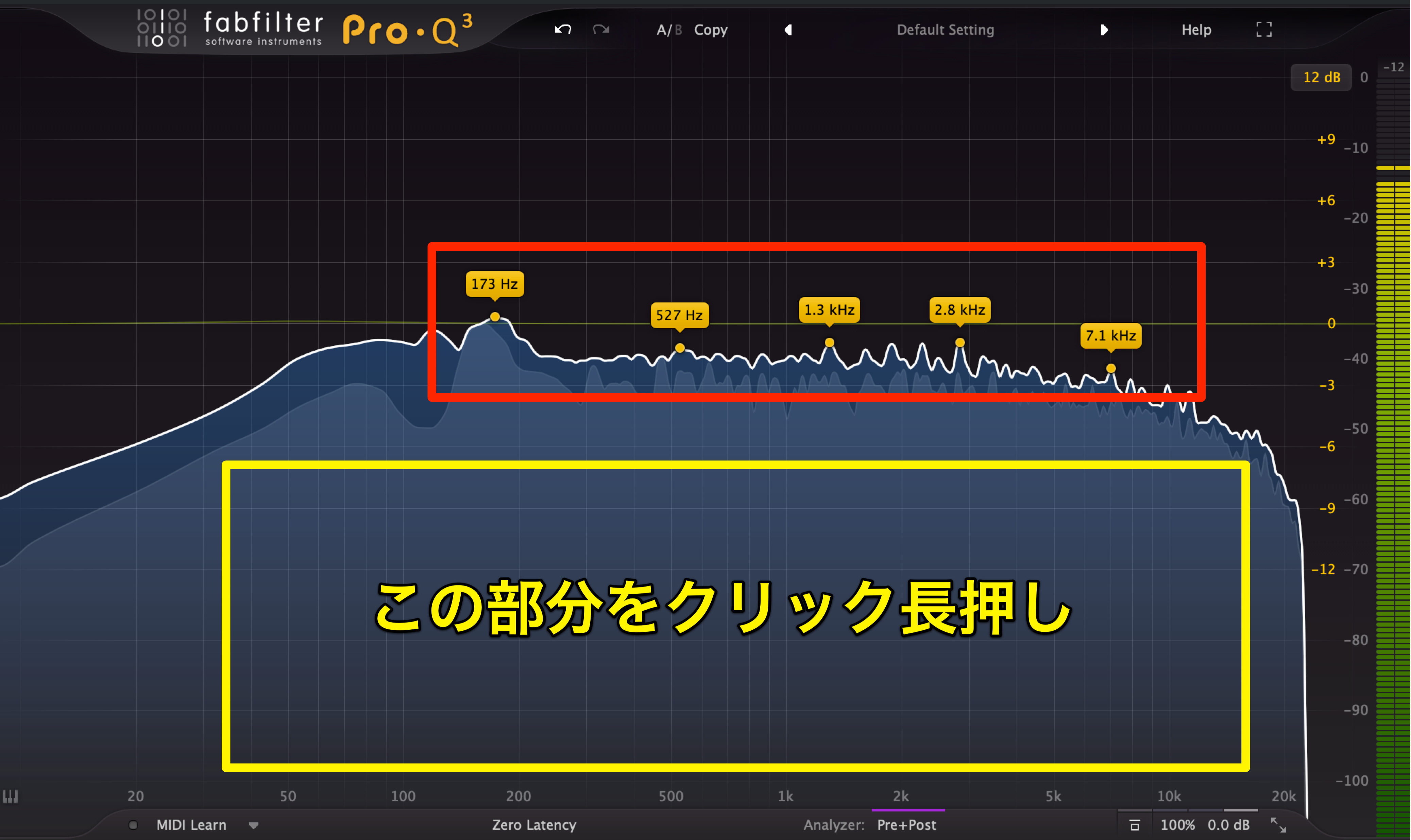
Spectrum Grab itself is not new, but it now displays frequency values when you activate it by clicking and holding in the spectrum area.
This makes editing even easier to understand.
Surround Support
Pro-Q can now be used on surround tracks as well.
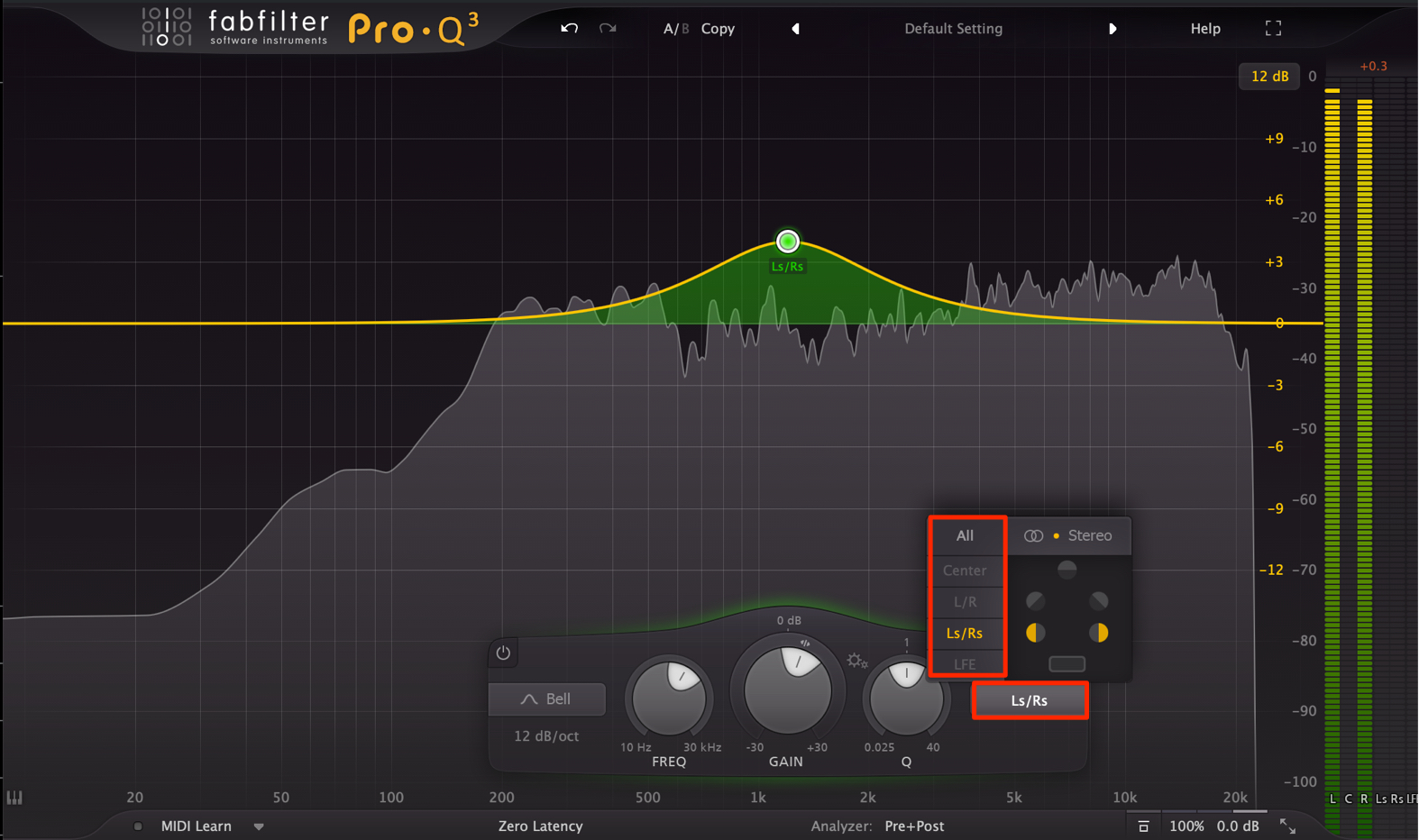
Insert Pro-Q on a surround track, then use the EQ points you create to apply equalization only to the speakers you choose.
That concludes our overview of the new features in FabFilter Pro-Q 3.
Even with the previous version, I felt there was no other equalizer as easy to use.
Yet this update is packed with convenient, practical features that make it hard to go back once you have tried them.
Give them a try and hear the results for yourself!
- 1FabFilter Pro-Q
- 2FabFilter Pro-Q 2: Auto Gain and Other New Features
- 3FabFilter Pro-Q 2: Spectrum Grab and EQ Match
- 4FabFilter Pro-Q 3: Enhanced Mid/Side Mode
- 5FabFilter Pro-Q 3: Dynamic EQ
- 6FabFilter Pro-Q 3: Brickwall Slope, Flat Tilt, and Masking Detection
- 7FabFilter Pro-Q 4 Is Here: A Guide to Key New Features
Frequently Asked Questions
Q1. When is the Brickwall slope in FabFilter Pro-Q 3 useful?
Because Brickwall cuts frequencies much more sharply than the other slopes, it is ideal when you want to remove unwanted low-frequency or high-frequency noise decisively, or when your sound design calls for a sharply defined EQ cutoff.
Q2. What are the benefits of masking detection?
By showing overlapping frequencies between tracks visually in red, it makes frequency clashes easy to identify. Addressing them can improve separation between tracks and make a mix more transparent and clear.
Q3. How does Flat Tilt differ from other EQ shapes?
Flat Tilt tilts the frequency response around a selected point. This special shape allows smooth, natural tonal adjustments that conventional bell or shelving EQ shapes cannot provide in the same way.
NEW ARTICLES
Latest English Articles