Arturia’s 3Preamps and 3Filters plug-in effects bring the sonic character of classic hardware into the digital world. 3Preamps models the preamp sections of three legendary studio consoles—Neve 1073, Telefunken V76/80, and Trident A Range—providing channel strips with distinct tonal characteristics. 3Filters turns the filter sections of Moog, Oberheim SEM, and Oberheim Matrix-12 synthesizers into plug-ins, allowing creative filtering of vocals, guitars, and other sources as well as synth sounds. Both collections use Arturia’s proprietary TAE® technology for detailed modeling, helping recreate the sonic character heard on hit songs and classic albums.
Classic Hardware Sections Recreated as Plug-ins

This time, we are looking at two products that Arturia had recently released at the time of this review: 3Preamps and 3Filters.
You may be surprised to hear about plug-in effects from Arturia. These excellent products draw on the technology the company has developed over the years, so watch the video as you read to hear what they can do.
Video Review: Arturia 3Preamps and 3Filters Plug-in Effects
- 3Preamps
https://arturia.jp/products/item/3preamps/ - 3Filters
https://arturia.jp/products/item/3filters/
Japanese contact (as listed in the original review): Korg / KID Customer Support
TEL: 0570-666-569
3Preamps
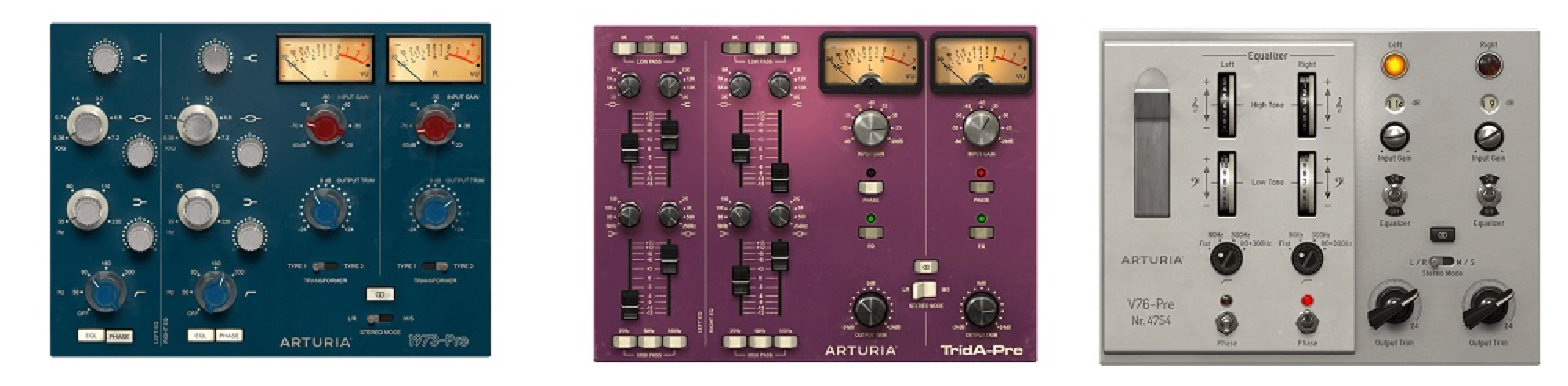
As the name suggests, this collection recreates the preamp and EQ sections of three carefully selected, legendary studio consoles as channel-strip plug-ins.
Each has its own character, so you can choose the one that suits the job.
The models use Arturia’s proprietary TAE® technology, also used in V Collection to faithfully recreate vintage synthesizers, for a high level of accuracy.
These plug-ins can therefore help recreate the sonic character heard on countless hits, landmark songs, and classic albums.
1973-Pre
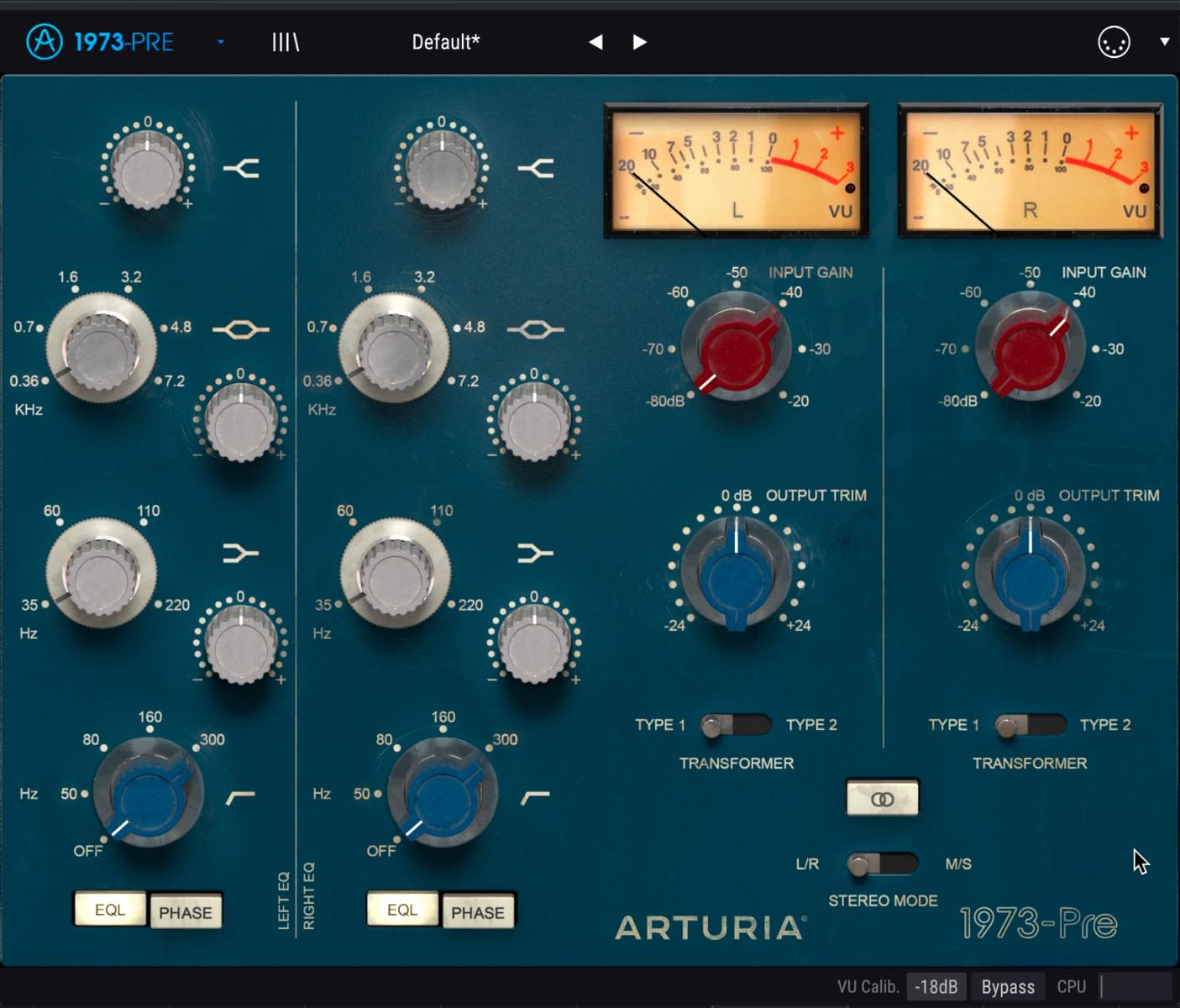
1973-Pre models the famous Neve 1073.
The red INPUT gain knobs let you vary the amount of drive and the character of the harmonics.
The responsive three-band EQ and high-pass filter are also faithfully recreated, making sound shaping intuitive.
On a stereo track, you can use two channels, with modern features not found on the original hardware, including linked or independent left/right processing and an M-S mode.
To my ears, it has the clear, forward sound you would expect from Neve. It should be useful for giving vocals, snares, acoustic guitars, sawtooth synth leads, and similar sounds a solid presence.
V76-Pre
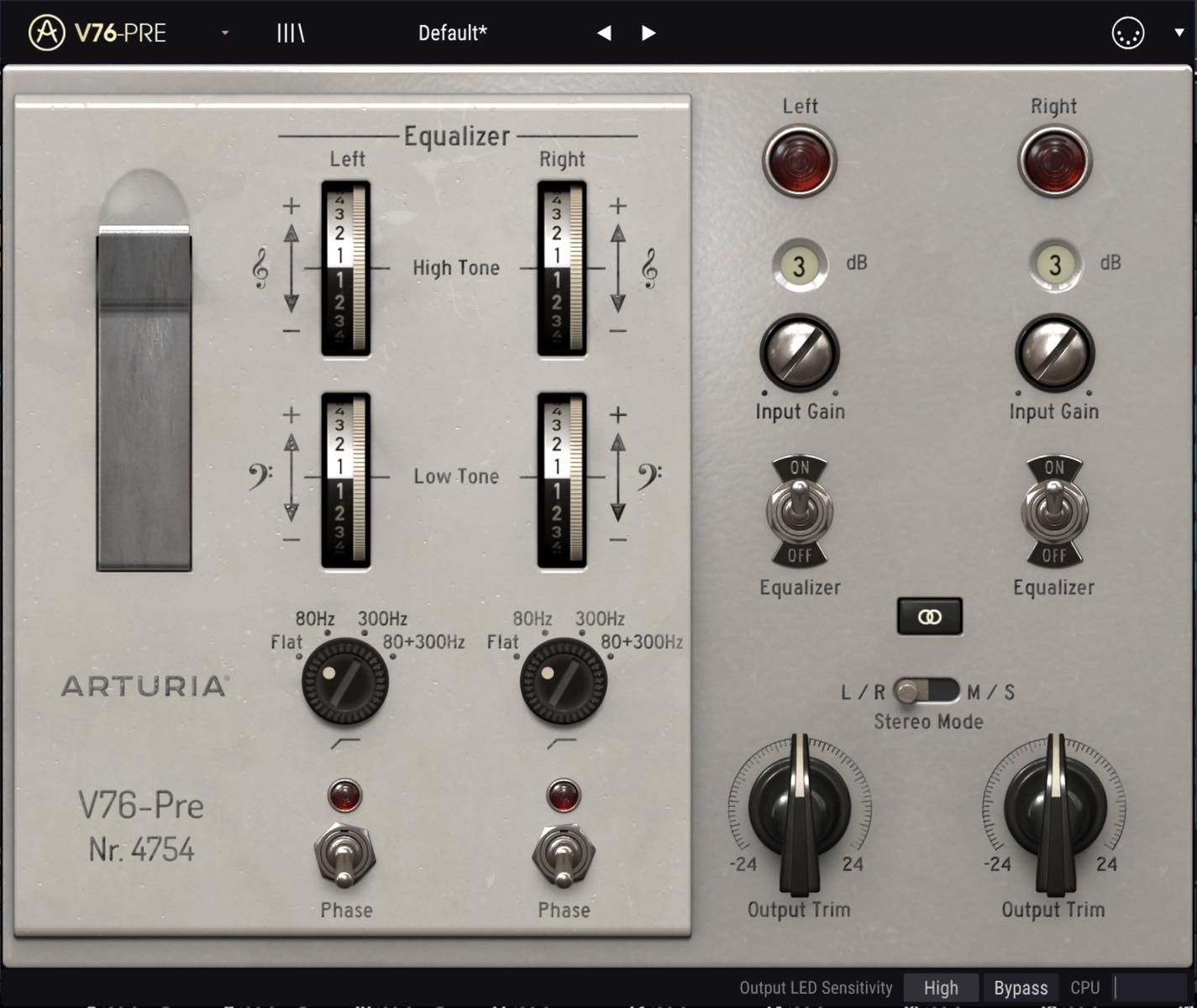
This models the vintage German Telefunken V76/80.
The hardware was used at studios such as Abbey Road in the 1960s and 1970s and, at the time of the original review, remained sought-after, high-priced vintage analog outboard gear. The plug-in combines it with the V612 EQ section.
This is a tube preamp, and increasing the INPUT gain produces characteristic tube saturation. The EQ section provides simple two-band high- and low-frequency equalization.
In stereo mode, it also offers linked or independent left/right processing, as well as an M-S mode.
It does not have the same forward character as 1973-Pre, but it delivers a warm, tube-like sound. The EQ also seems gentle in its effect. I can imagine it being useful for a retro feel or for ambient sounds.
TridA-Pre
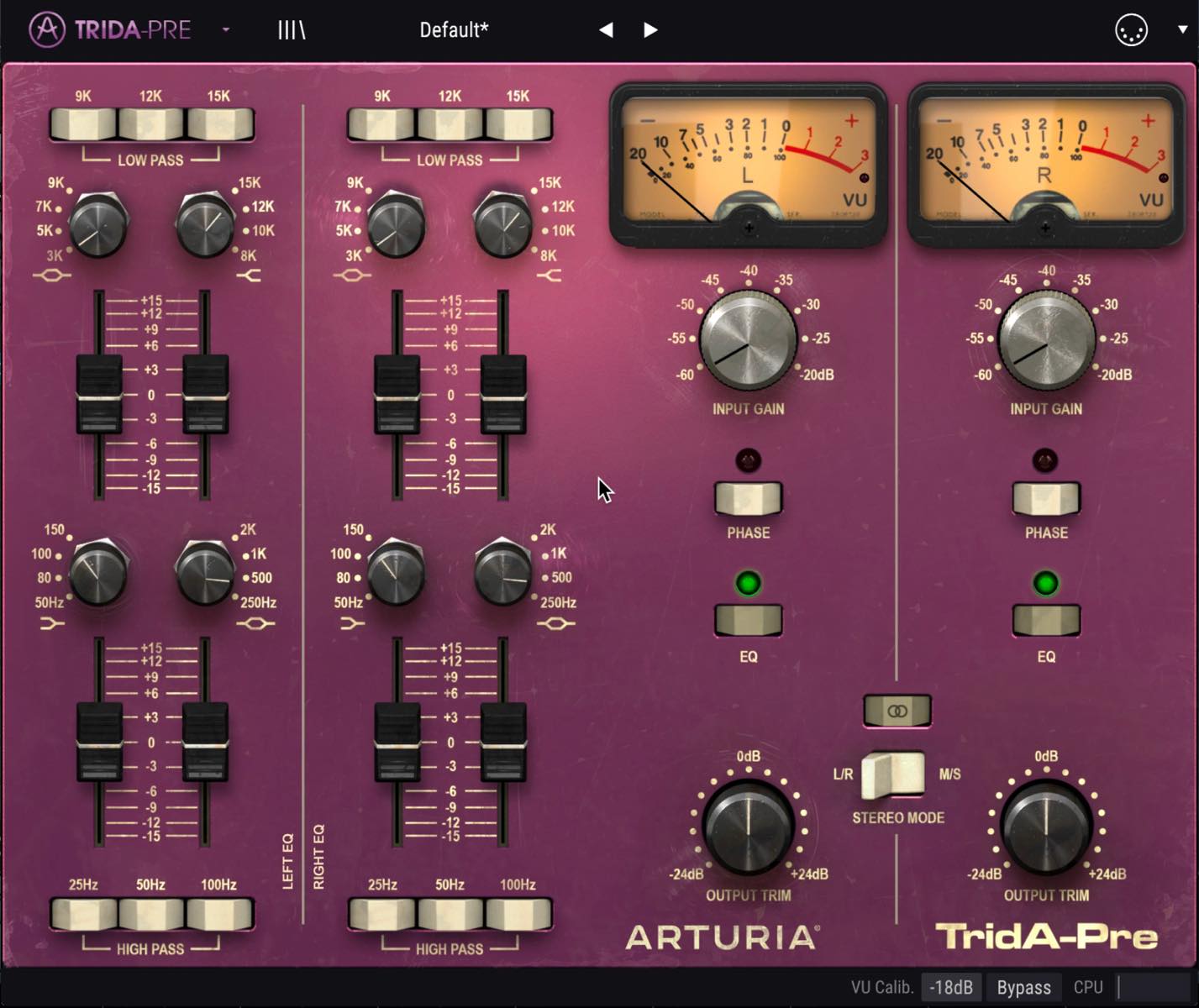
This channel strip models the Trident A Range consoles at Trident Studios, the studio behind classic British rock recordings by David Bowie, Queen, and many others.
Here, too, INPUT gain adjusts the amount of drive. Alongside a four-band EQ and high-pass filter, it also includes a low-pass filter.
Like the other two preamps, its stereo mode offers linked or independent left/right processing, as well as an M-S mode.
I find it easy to bring out subtle nuances such as a sense of air. I would like to try it on ballad vocals, strings, or nylon-string guitar. With its detailed EQ controls, this one plug-in may be enough to shape some tracks.
3Filters
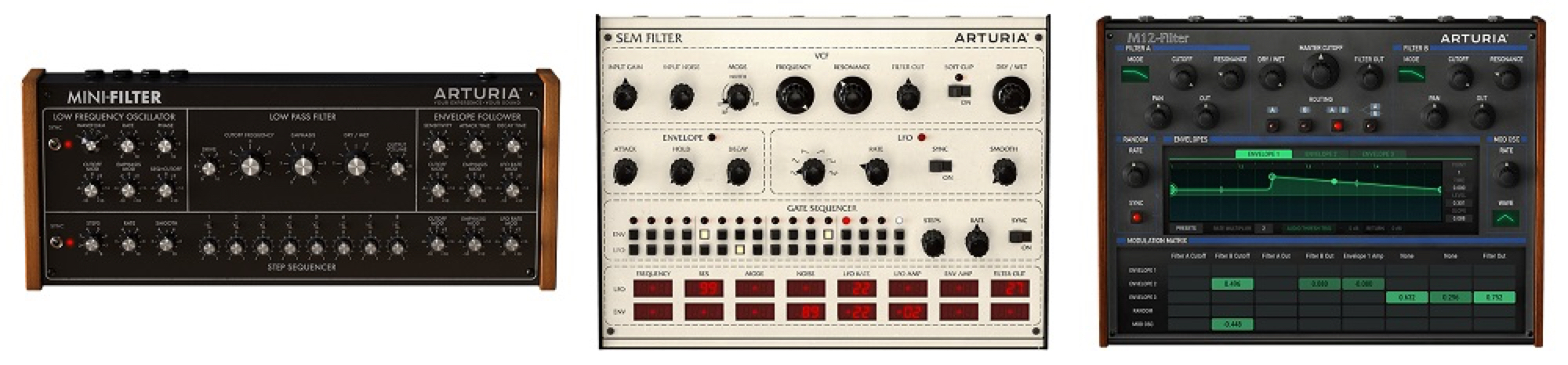
3Filters recreates the filter sections of three enduring classics from the golden age of analog synthesizers as plug-ins.
This lets you apply creative filter control to vocals, guitars, and many other sources, not just synth sounds.
These models also use Arturia’s proprietary TAE® technology, which powers the faithful recreations of vintage synthesizers and keyboards in V Collection.
Mini-Filter
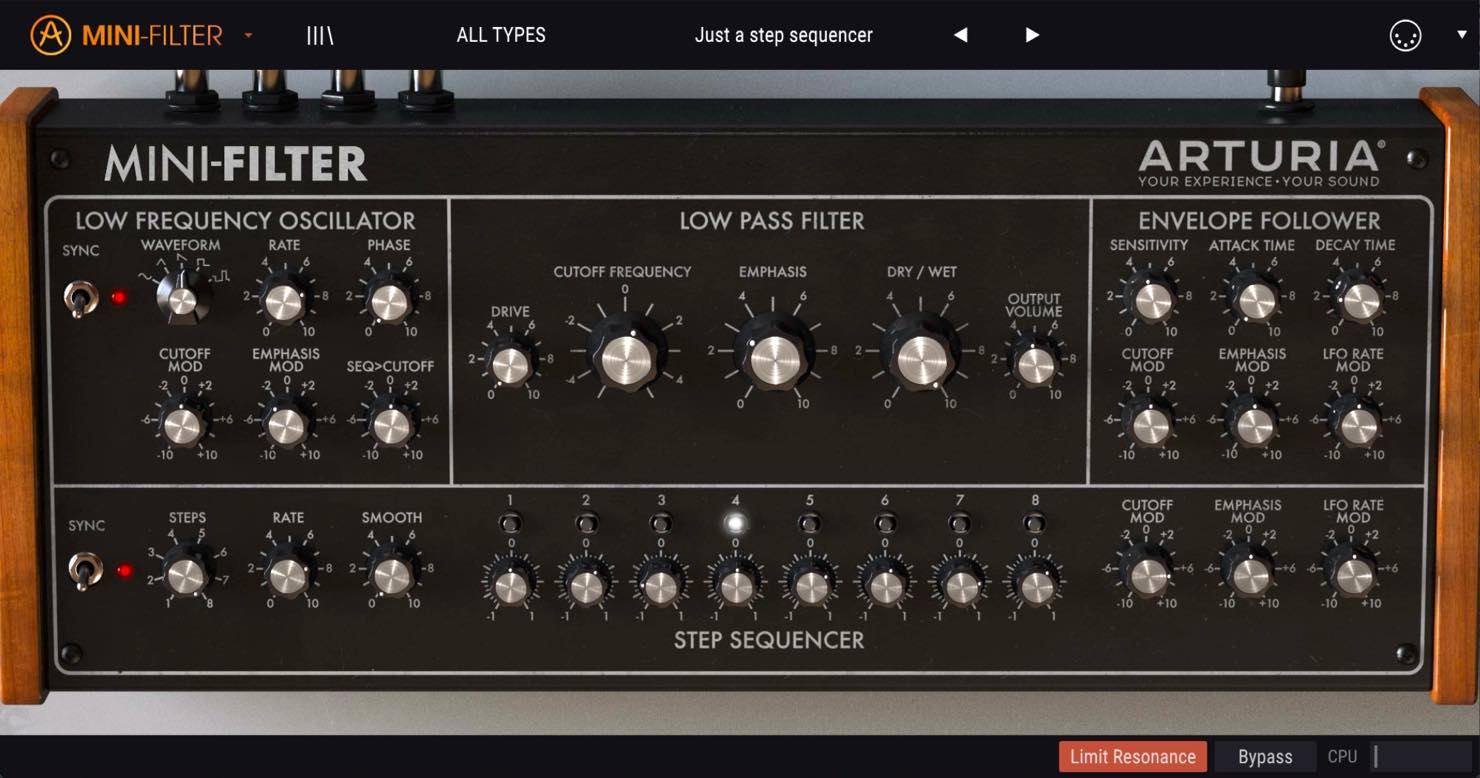
The smooth ladder filter of Moog synthesizers is faithfully recreated here, with modern features such as tempo sync.
A key feature is the ability to control the filter using an LFO, an envelope follower, or an eight-step sequencer.
The control panel is simple, but the filter responds with that distinctive Moog character. You can also add intense distortion or create rhythmic phrases with stutter-like effects.
SEM-Filter
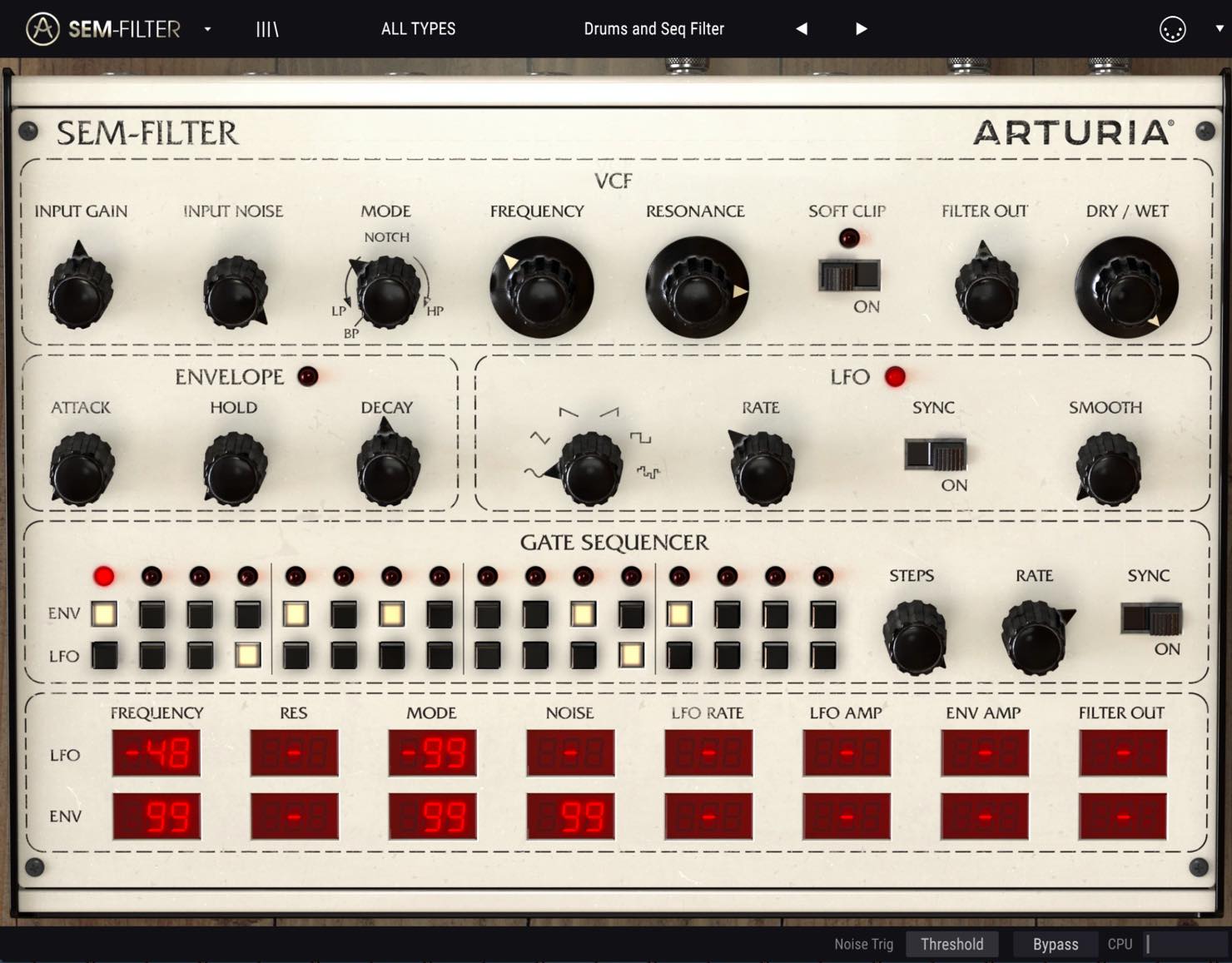
This plug-in recreates the filter from the Oberheim SEM synthesizer module, released in 1974.
Its continuously variable state-variable filter is a defining feature, and controls such as DRY/WET make it convenient to use.
Features such as soft-clipping mode allow analog-like tonal processing. It also includes a simple modulation matrix.
You can add noise, too, opening up unusual sound-design possibilities such as turning a synth sound into something resembling a rhythm loop.
M12-Filter
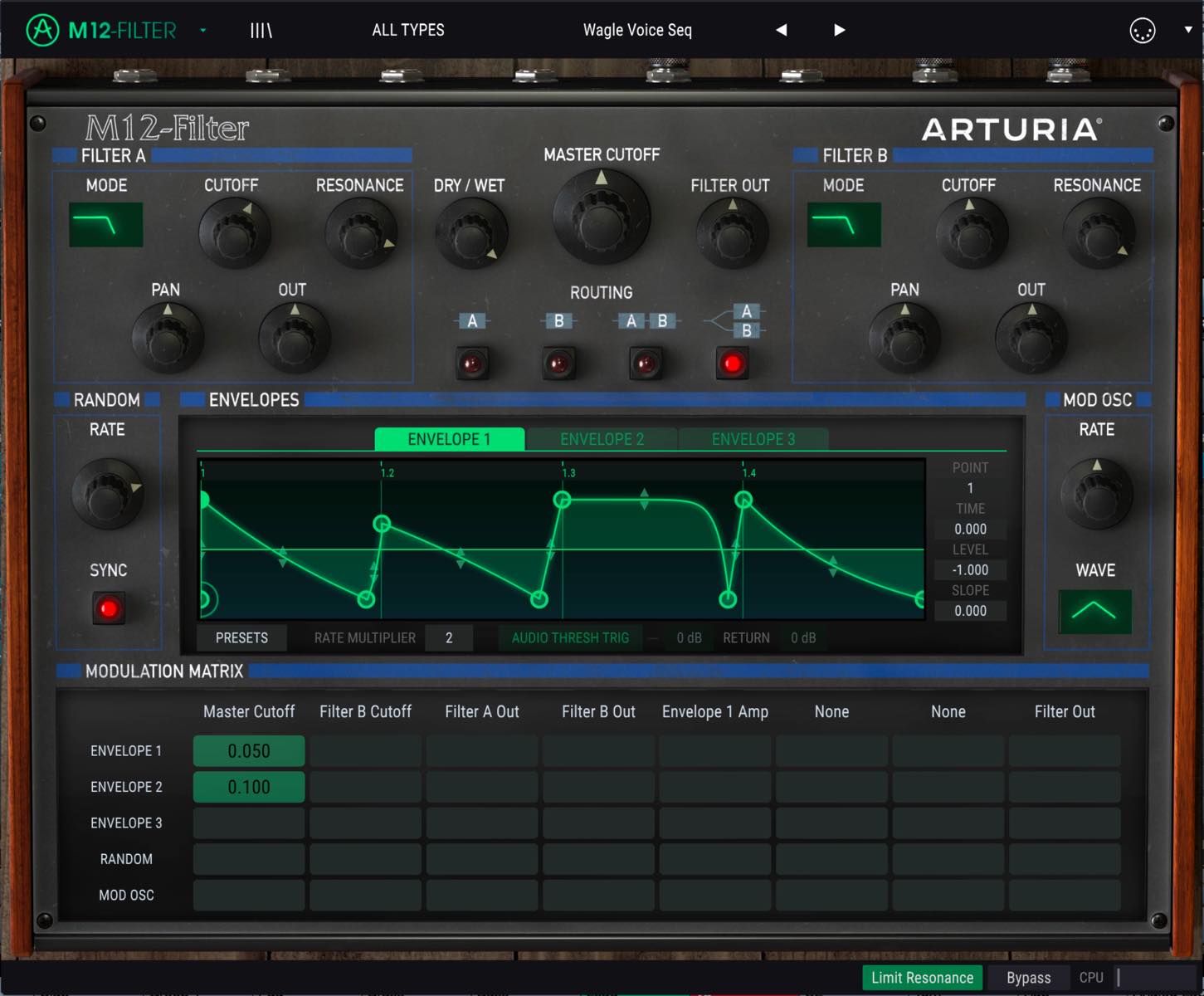
This plug-in recreates the multimode filter of the Oberheim Matrix-12, whose release is dated to 1984 in the original review.
It has two filters with switchable routing, each offering 15 filter modes.
In the center are three envelopes that you can shape graphically.
It also includes random modulation and a basic MOD OSC, which can be assigned to filter parameters through a matrix.
Compared with the other two filters, it offers much more detailed control.
Combining multiple envelopes with random modulation seems to open up endless sound-design possibilities. This filter plug-in makes me want to try it on all kinds of sources and see what unexpected combinations emerge.
That concludes our introduction to Arturia’s 3Preamps and 3Filters plug-in collections.
I think these products establish a distinctive presence among the options already available. If they interest you, give them a try.
- 3Preamps
https://arturia.jp/products/item/3preamps/ - 3Filters
https://arturia.jp/products/item/3filters/
Japanese contact (as listed in the original review): Korg / KID Customer Support
TEL: 0570-666-569
Frequently Asked Questions
Q1. What kinds of sources are Arturia’s 3Preamps and 3Filters suited to?
3Preamps can process a wide range of tracks, including vocals, snares, guitars, and synth leads. 3Filters can apply creative filter effects to vocals, guitars, bass, and many other sources, as well as synth sounds.
Q2. How do the three preamps in 3Preamps differ?
1973-Pre has a clear, forward sound; V76-Pre offers tube-like warmth; and TridA-Pre brings out subtle nuances. Their different characters suit different applications and songs.
Q3. Can I use 3Filters on any track in my DAW?
Yes. Mini-Filter, SEM-Filter, and M12-Filter can all filter vocals, guitars, bass, and various other sources, not just synth sounds.
NEW ARTICLES
Latest English Articles