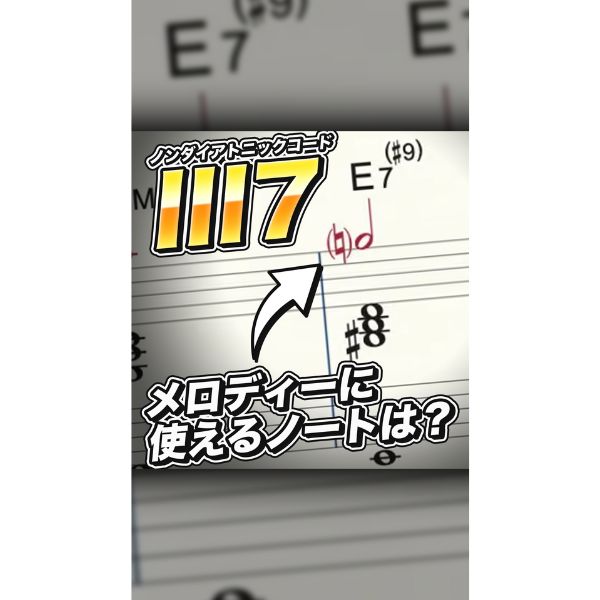
This music-production tutorial analyzes songs with high YouTube view counts in 2021–2022, looking for shared features in their melodies and chord progressions. Our study of songs including Phony, Kaibutsu, and Yowanehaki found that four of the six used progressions with scale-degree roots 4 → 3 → 6, while melodies featuring the flattened third, or blue note, were another recurring feature. Understanding these patterns offers practical ideas for writing original music with the character of the songs popular in that period.
Analyzing popular songs and applying their features to your own music
In this feature, we analyze shared characteristics—especially melodic ones—in songs that attracted many YouTube views in 2021–2022.
We also tried writing an original song using those elements to see whether it would capture the sound of that period.
Melody Analysis: Surprising Features Shared by Popular Songs
The songs selected
YouTube’s annual view-count rankings included a wide variety of songs. For this study, we selected works by individual creators in Japan that seemed to share certain characteristics.
We analyzed the following songs:
Yowanehaki — MAISONdes (Wanuka)
Phony — tsumiki
Marshall Maximizer — Hiiragi Magnetite
KING — Kanaria
Goodbye Sengen — Chinozo
Kaibutsu — YOASOBI (Ayase)
Listen to the song we created based on the features shared by these works.
Original demo song
What sounds “current” is subjective, but we hope you can hear some of the qualities shared by the songs we analyzed.
Features shared across the songs
First, let’s look at the features we found when considering the songs as a whole.
Chord-progression characteristics
Chord progressions help establish a song’s atmosphere and identity, so we examined whether the songs had progressions in common.

This table shows the opening chords of each section in each song, expressed as scale degrees relative to the major diatonic scale.
Four songs—more than half the selection—used progressions whose roots follow 4 → 3 → 6.
Marshall Maximizer: Chorus
Phony: Chorus
Goodbye Sengen: Chorus
Kaibutsu: Pre-chorus
This is a variation on the familiar progression often called the J-pop “royal road” progression. It seemed particularly popular with the creators in this selection.
By contrast, the 4 → 5 → 3 → 6 progression long associated with J-pop appeared only in Kaibutsu among these six songs. Within this selection, it felt less prevalent than its reputation as a standard might suggest.
Kaibutsu: Chorus
Another notable feature was the absence of progressions beginning on the major tonic chord (I).
Rather than brighter major-key writing, minor-oriented songs appeared to be a trend in this selection.
Melodic characteristics
The scales used in the six melodies seemed to have features in common, so we analyzed which pitches occurred most often.
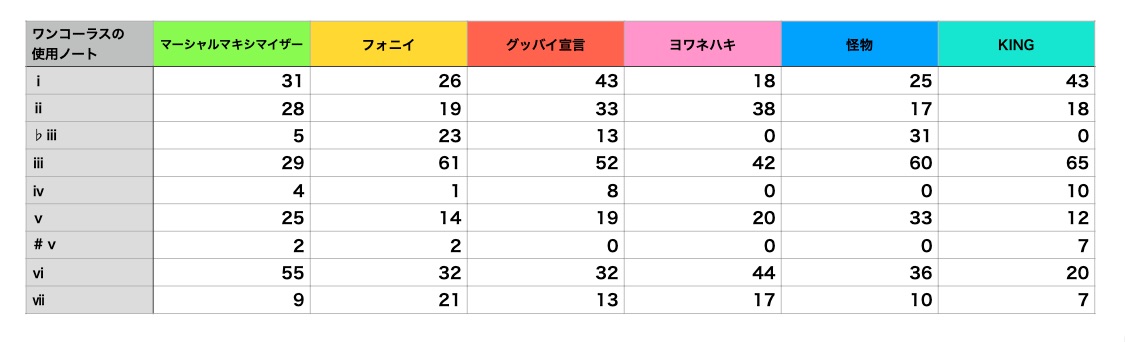
We programmed each melody and tabulated how many times each note occurred over one full verse-to-chorus cycle.
The main features were:
- Many songs used a blue note: the flattened third relative to the major scale.
- The fourth degree of the major diatonic scale—the note fa—was used relatively infrequently.
These were the recurring tendencies we observed.
The blue note
The blue note discussed here is the flattened third relative to the major scale, a note associated with the blues tradition.
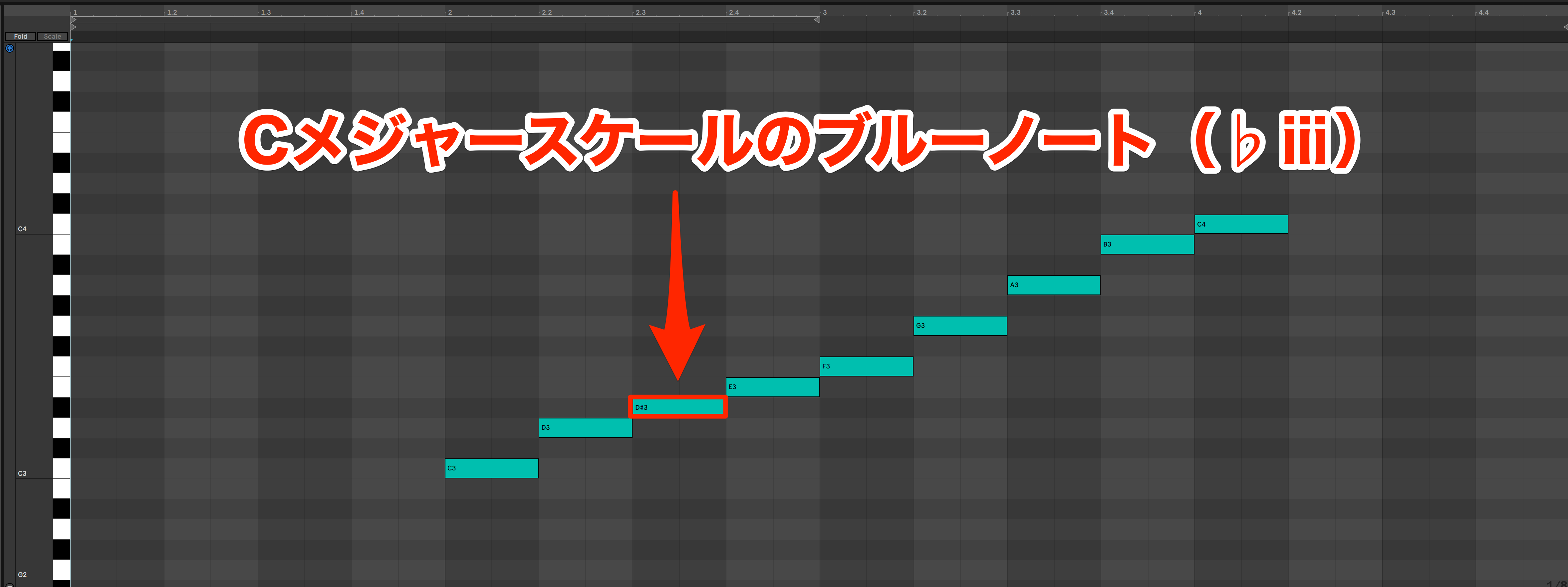
Melodies that include it are often described as bluesy. In these songs, it adds an unexpected twist to an otherwise light, pop-oriented sound.
C major scale with a blue note
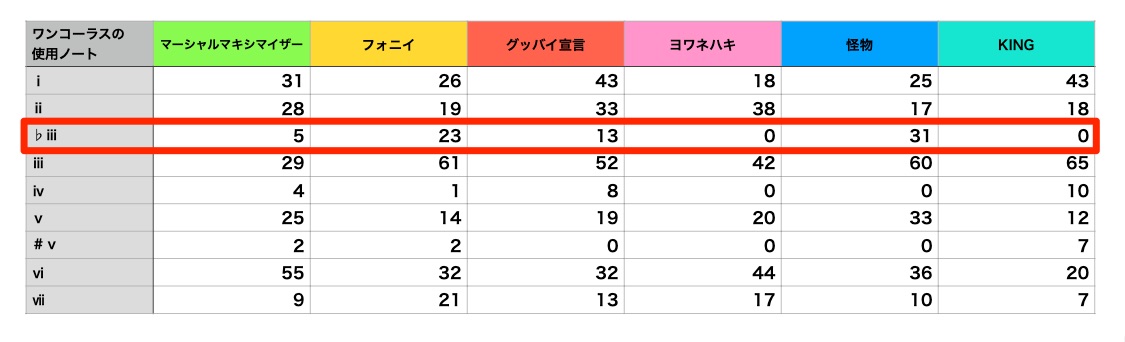
Four of the six songs used this note, making it another recurring feature in this 2021–2022 selection.
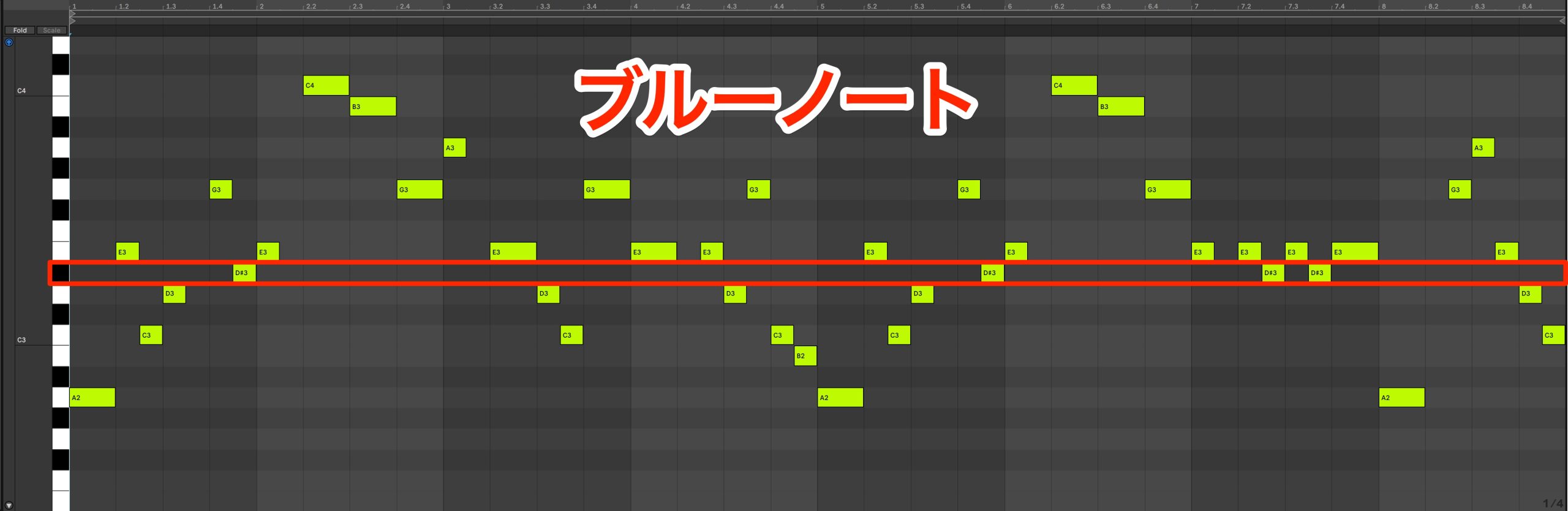
For example, the verse of Phony is analyzed here in C major. D-sharp—enharmonically E-flat, the flattened third—is outside that scale, yet it is used extensively.
The fourth degree of the major scale
It was also striking that many songs made little or no use of the fourth degree, or fa.
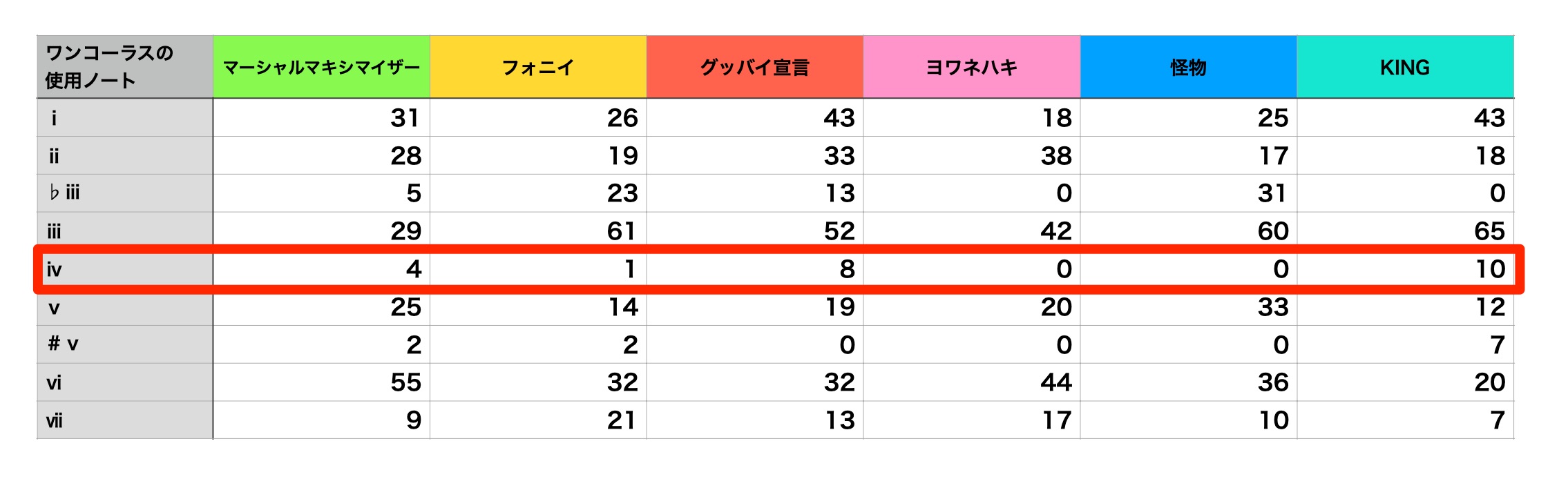
In the five songs other than KING, it tended to be the least frequently used of the unaltered major-scale notes.
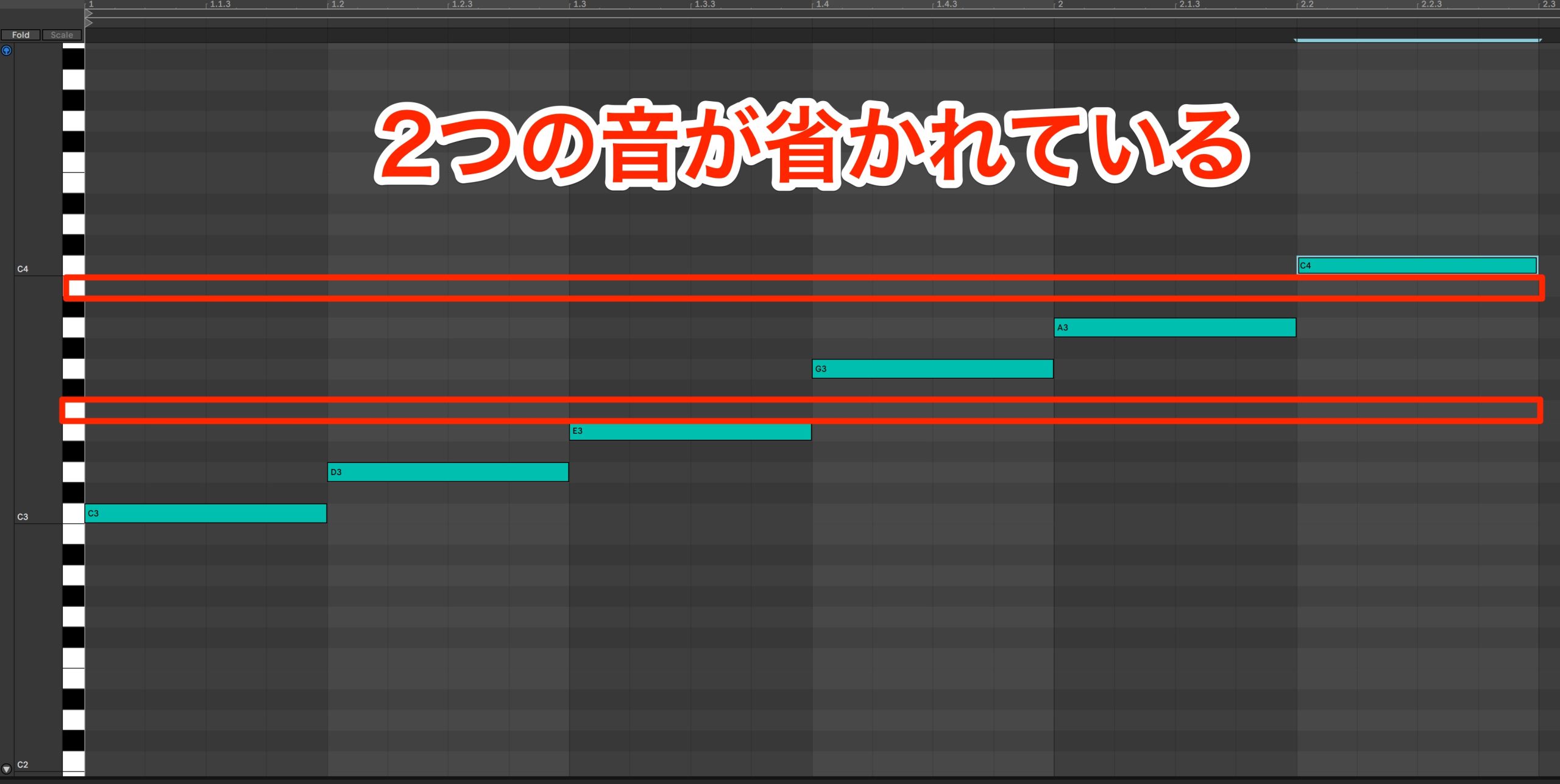
Leaving out the fourth gives the melody a quality closer to that of a five-note pentatonic scale.
C major pentatonic scale
With fewer pitch classes, pentatonic scales lend themselves to simpler, more memorable melodies.
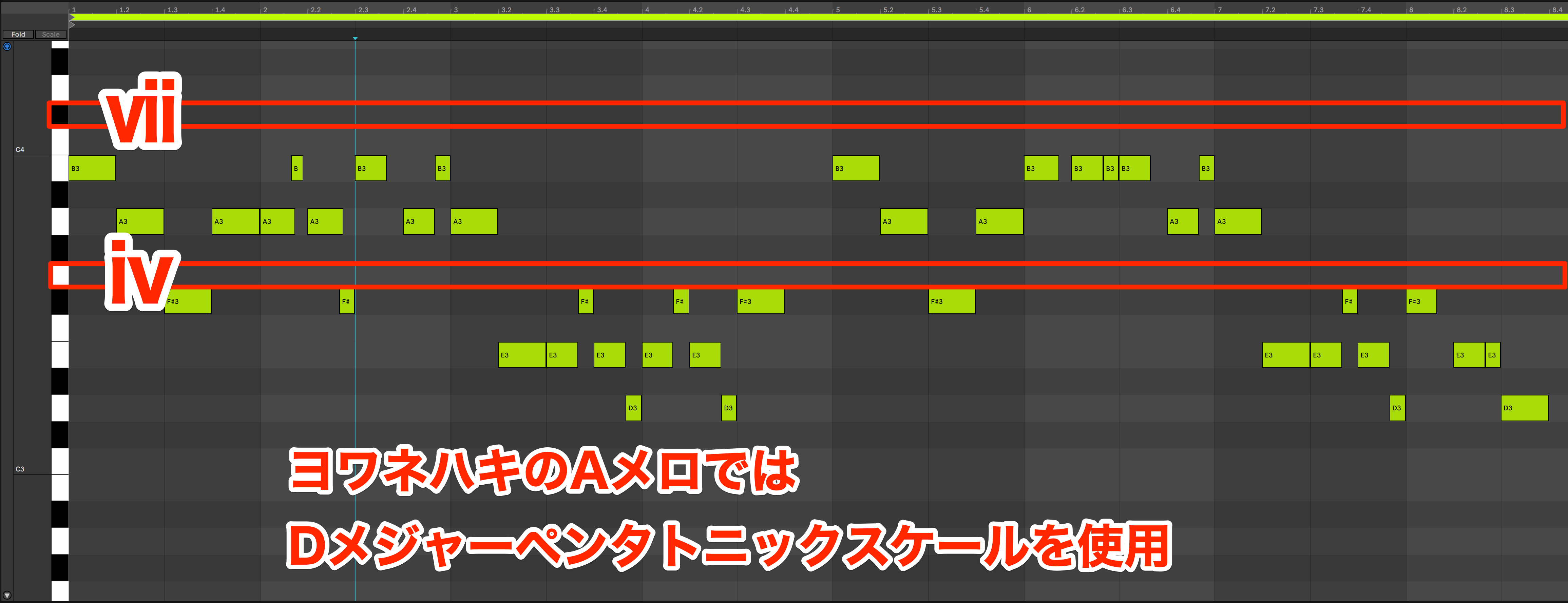
Yowanehaki’s melody uses precisely this pentatonic approach, omitting both the fourth and seventh degrees.
The other songs omit the fourth while retaining the seventh.
The seventh is the leading tone to the tonic. Because it creates tension, we suspect it was retained to provide a more strongly melodic quality.
Verse (A-melo) characteristics
Next, we will examine shared features in each section in more detail.
We will analyze melodic rhythm and melodic pitch separately.
Melodic rhythm in the verse
Looking at eight bars of each verse, we found relatively little syncopation: notes that cross the beginning of a beat.
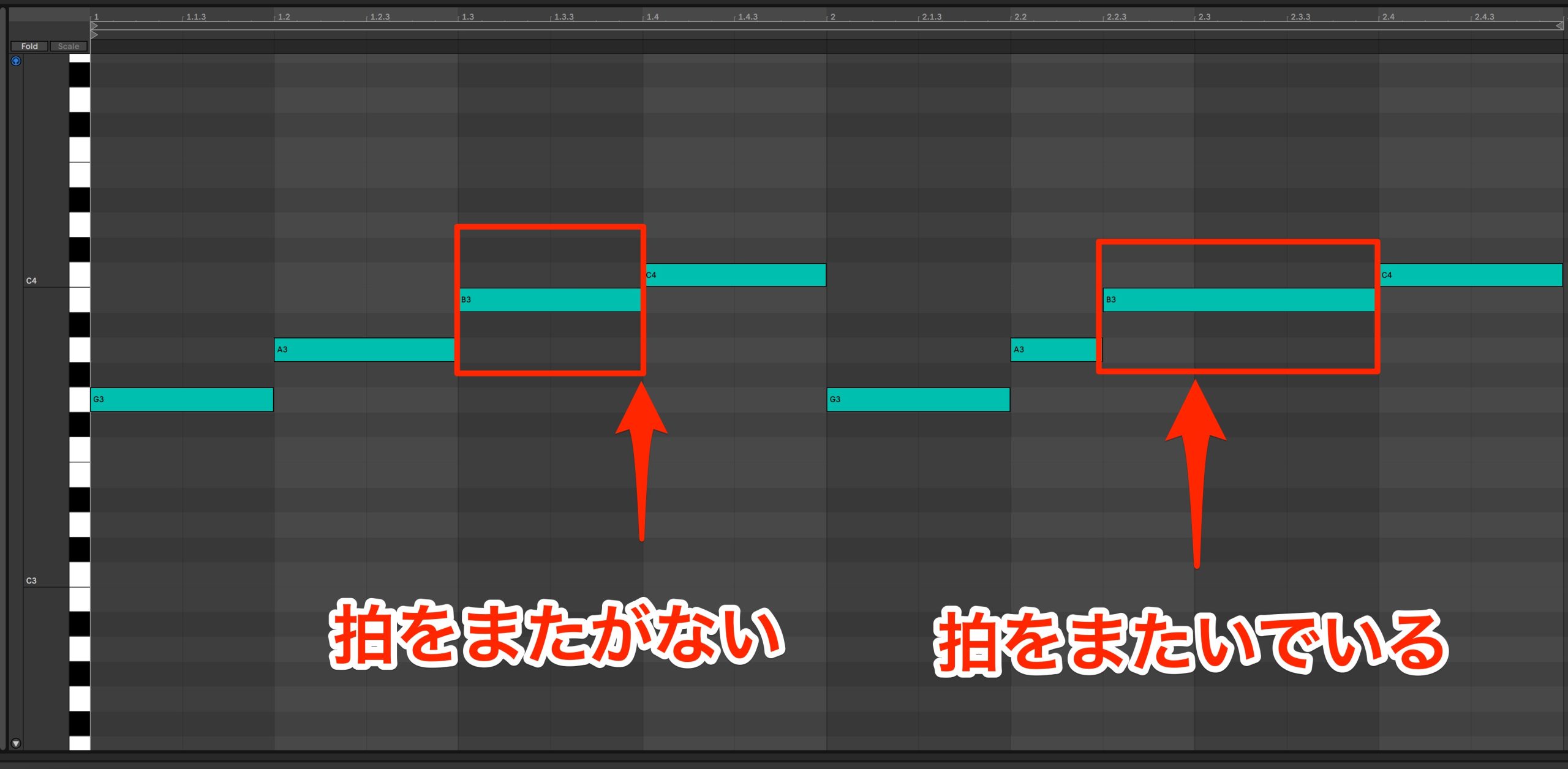
We measured how often notes crossed beat boundaries in this way.

Counting these syncopations showed very few in five of the six songs, with Kaibutsu the exception.
Less syncopation makes the melodic rhythm simpler and easier to follow, which may be one way these songs achieve their catchiness.
Melodic pitch and range in the verse
Now let’s analyze the pitches in the verse.
First, we examined the eight-bar verse to establish the range covered by each melody.

Five of the six songs used a wide range of an octave or more.
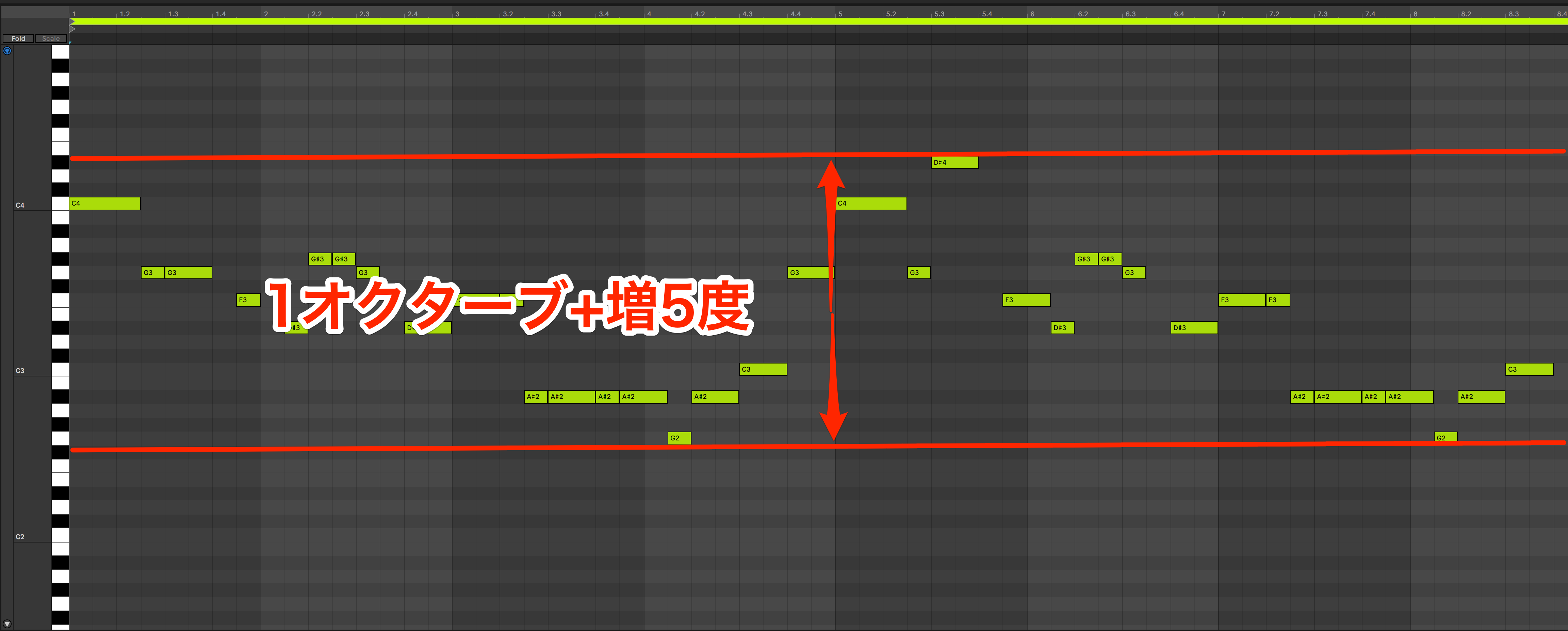
KING spans an octave plus an augmented fifth—a particularly wide range for a vocal melody.
We also counted large melodic intervals, or leaps.
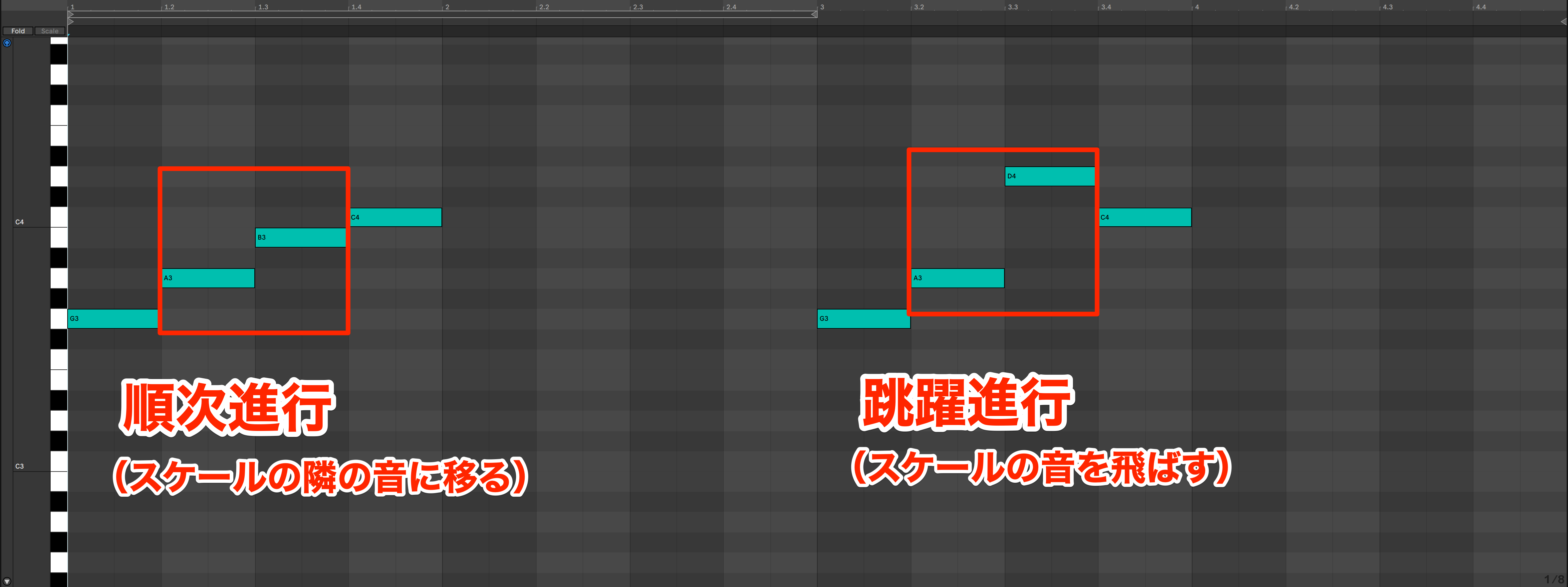
Specifically, we counted leaps of a major third or larger: intervals wider than the minor-third gaps found in a pentatonic scale.

We had expected verses to use a narrower range and fewer leaps than pre-choruses or choruses to create a calmer impression. The results were surprising.
Phony in particular contains many leaps, giving its melody a strong impact from the start.
The other songs also tended to feature dynamic pitch changes from the verse onward.
To summarize the verse tendencies:
- Little syncopation
- A wide melodic range
- Frequent leaps
These three features were common to many of the songs. Broadly, they combined simple rhythms with complex pitch movement.
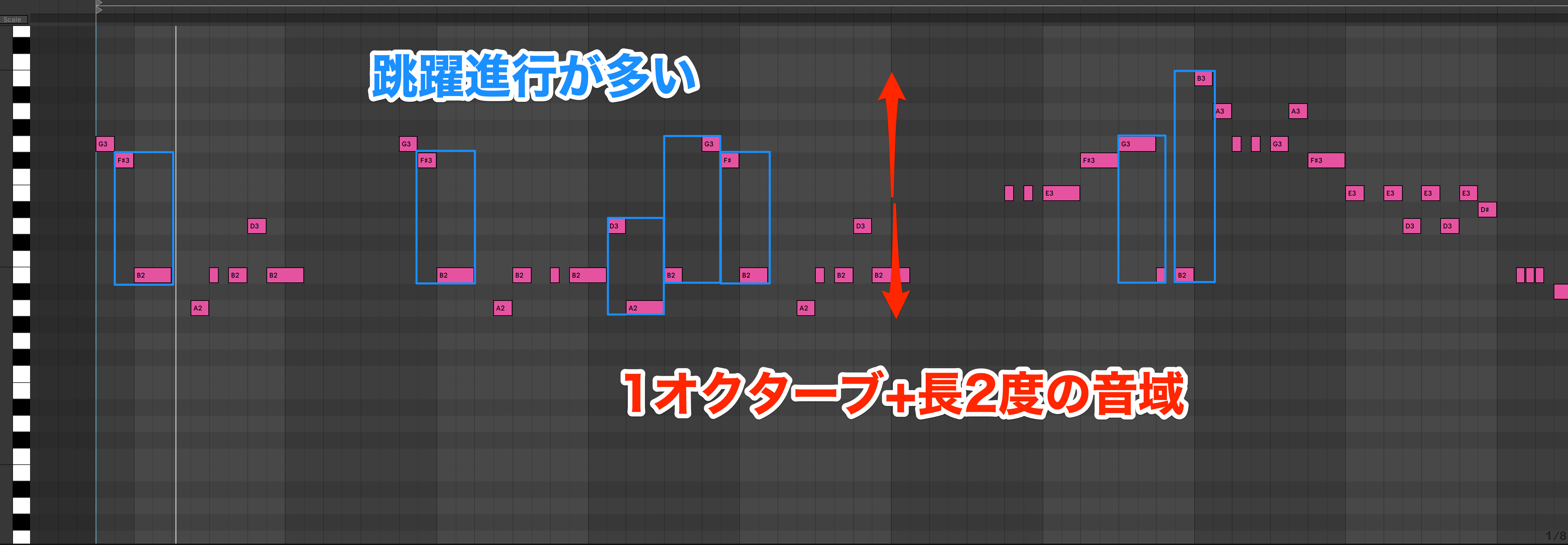
We used these features when writing the verse of our demo song.
Demo song: Verse
Pre-chorus (B-melo) characteristics
The pre-chorus connects the verse and chorus, making it important in determining how a song develops.
Here, we focus on how it changes from the verse.
Chord progressions in the pre-chorus
First, let’s look at the chord progressions.
We examined how they changed from the verse.

All the songs tended to change their chord progression in the pre-chorus.
This is also common in older J-pop, so it is not a new trend. Nevertheless, many of these popular songs actively changed their pre-chorus progressions.
We changed the progression in our demo’s pre-chorus to reflect this.
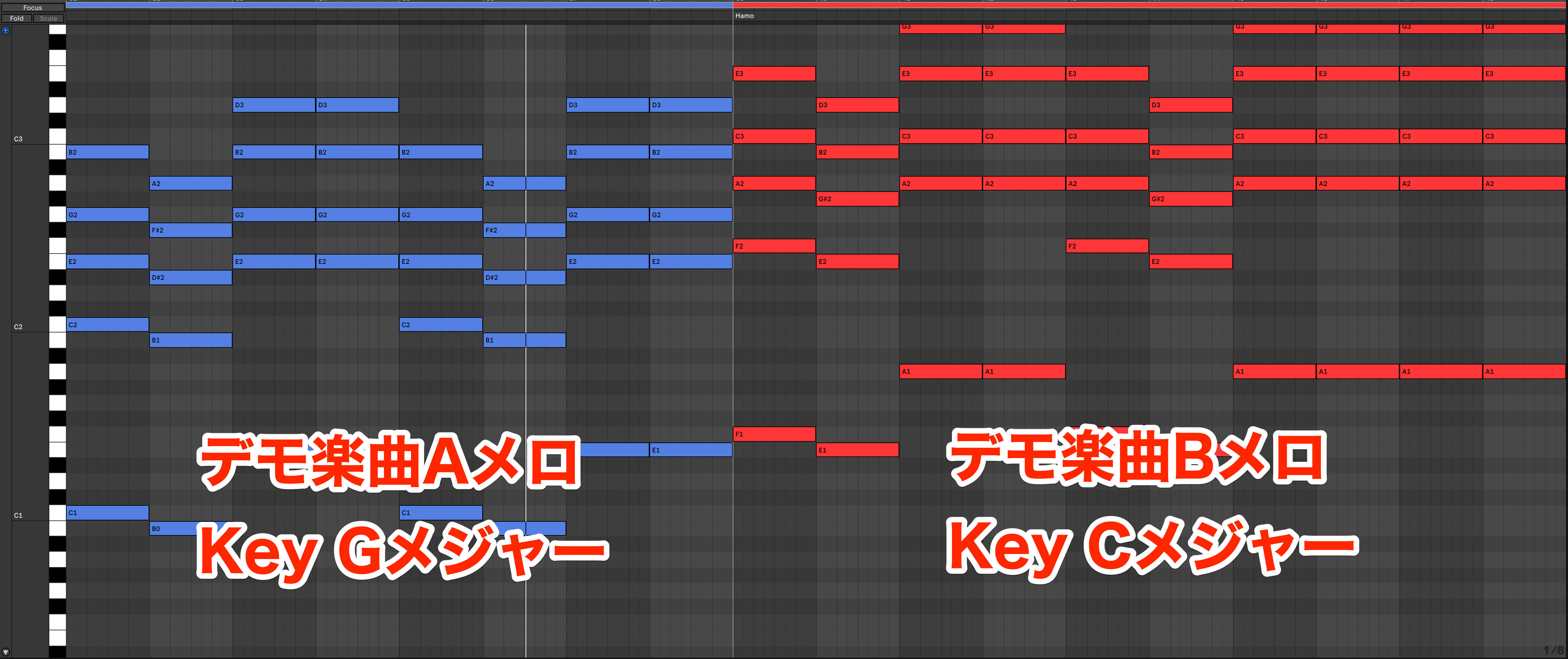
We borrowed Phony’s approach of transposing the same progression to create a contrast with the verse.
Melodic rhythm
Next, we examined the rhythmic construction of the pre-chorus melody.
In many songs, particularly at the beginning of the pre-chorus, we found rhythmic phrases that had not appeared in the verse.

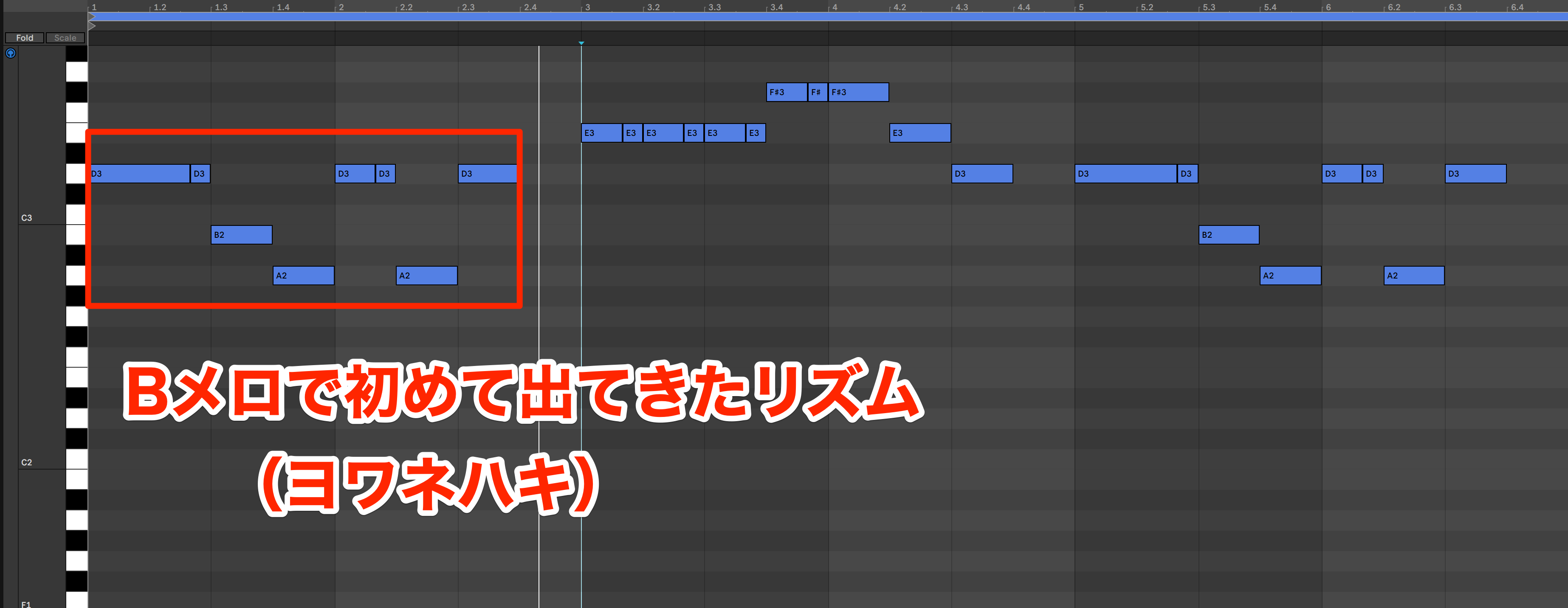
In Yowanehaki, for example, the rhythm at the beginning of the pre-chorus does not occur anywhere in the verse.
In Marshall Maximizer, the pre-chorus shifts into rap, creating a rhythmic feel very different from the verse melody.
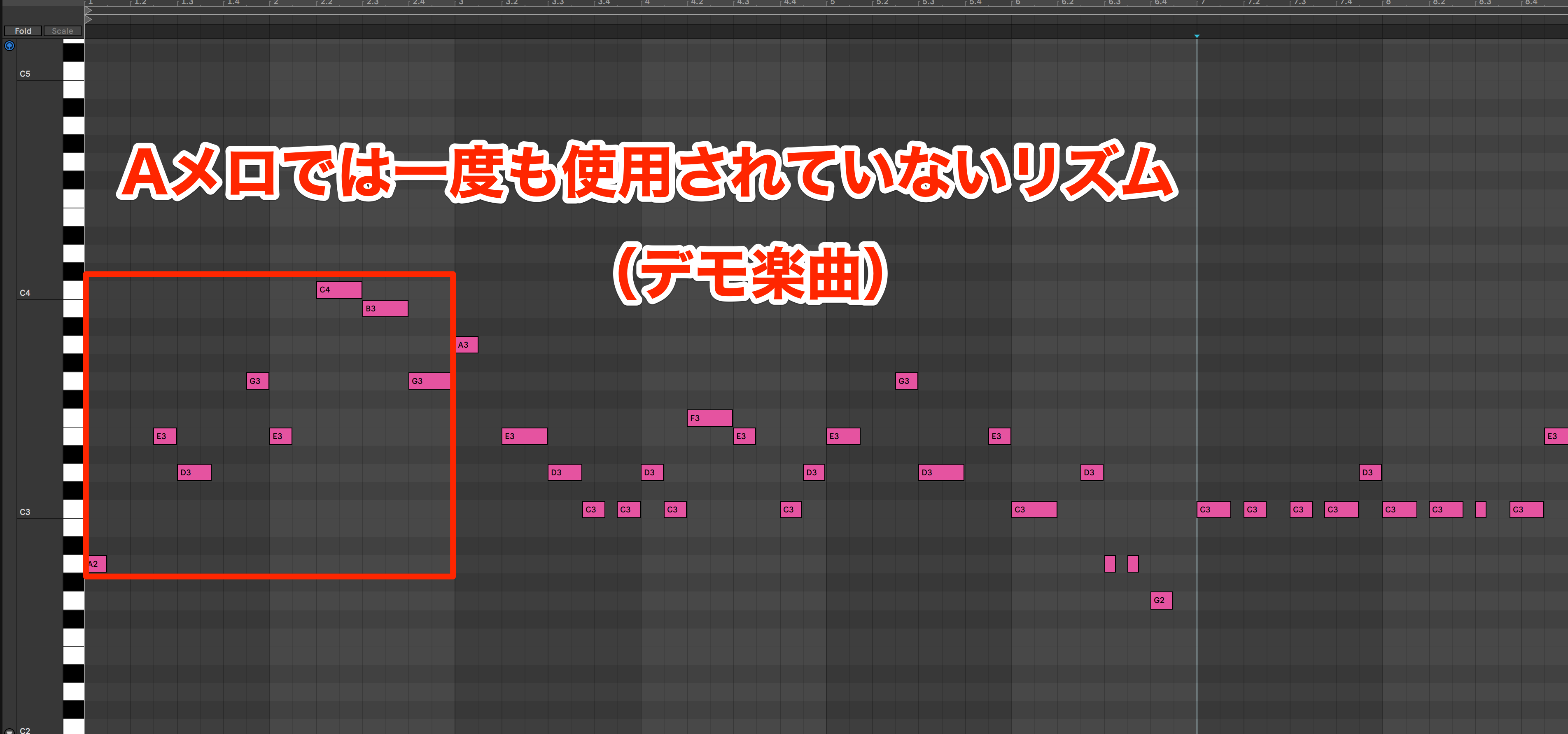
Introducing a new melodic rhythm at the transition from verse to pre-chorus helps the song feel as though it is developing.
We likewise began the demo’s pre-chorus with a rhythm not used in its verse.
Melodic pitch and range in the pre-chorus
The verses had wide ranges and frequent leaps. How did this change in the pre-choruses?

There was no consistent pattern in the change of range, suggesting that a verse and pre-chorus do not necessarily need different melodic ranges.
Changes in the blue note in the pre-chorus
We also checked whether blue notes used in the verse continued into the pre-chorus.

Four of the six songs used blue notes, but in three of those four, the blue note disappeared in the pre-chorus.
In Kaibutsu, for example, the verse’s blue note contributes to a slightly mysterious atmosphere. Removing it in the pre-chorus creates a more pop-oriented impression.
Kaibutsu: Verse
Kaibutsu: Pre-chorus
The presence or absence of a blue note can therefore help make a transition between sections more distinct.
Based on these pitch and range tendencies, we wrote the demo’s pre-chorus with two points in mind:
- Keep the same melodic range.
- Do not use the blue note.
These were the two principles we followed.
Demo song: Pre-chorus
Chorus characteristics
Chord progressions in the chorus
Finally, we come to the crucial chorus. In many songs, its chord progression changes from that of the pre-chorus.
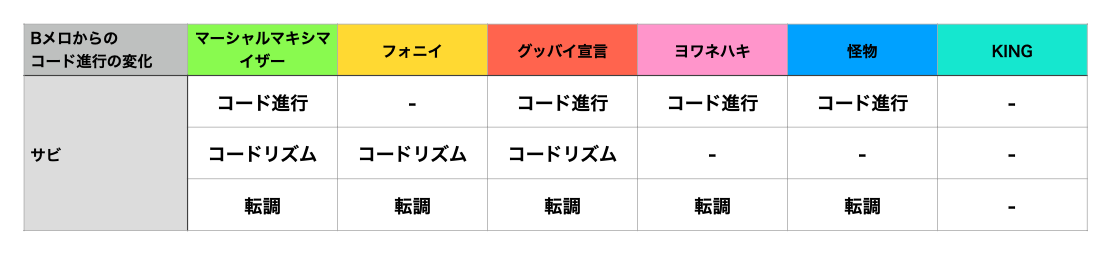
As noted earlier, many songs not only change progression but also modulate. These key changes often occur abruptly, adding impact to the start of the chorus.
We also analyzed the direction of the key change from pre-chorus to chorus.

There was no uniform pattern, but changes a whole step up or down were common in the selection.
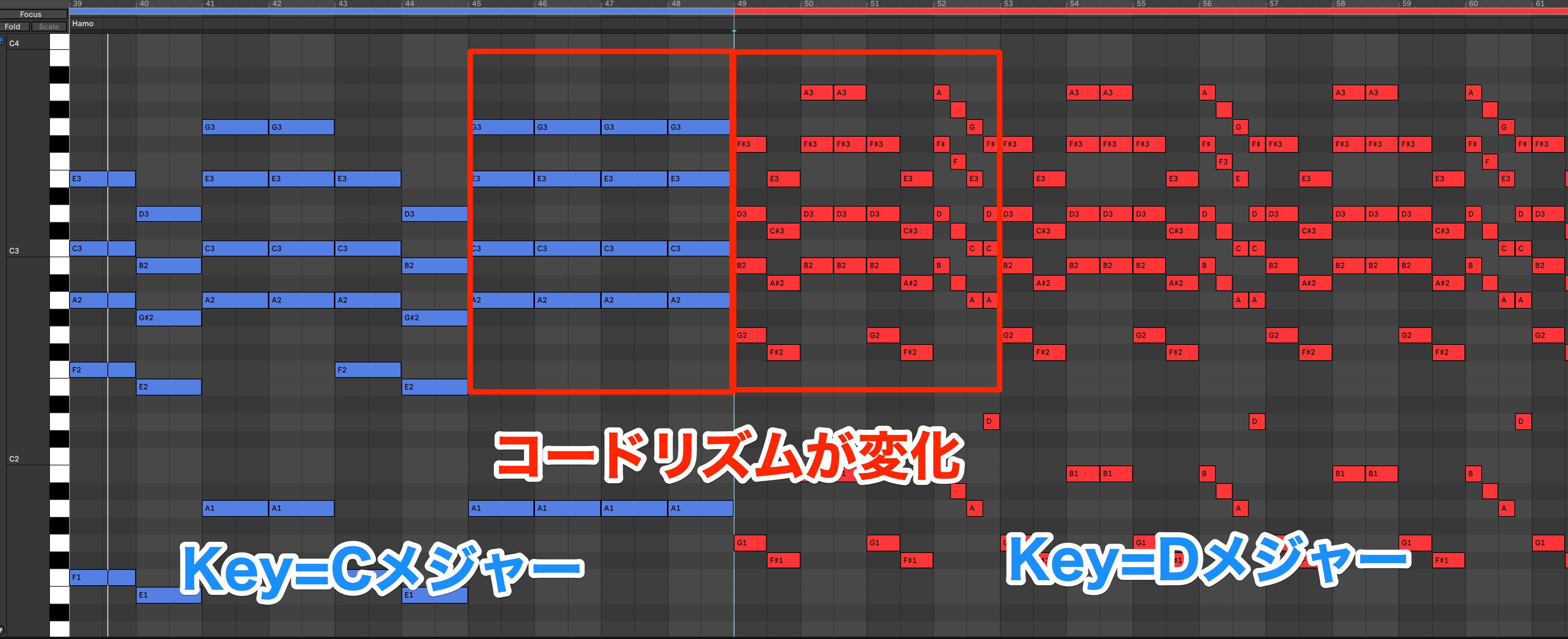
In our demo, we introduced contrast in two ways: changing the chord rhythm and changing key.
Melodic rhythm in the chorus
We investigated whether the chorus had its own distinctive melodic rhythm, just as the pre-chorus did.

All six songs began their choruses with a rhythm unique to that section.
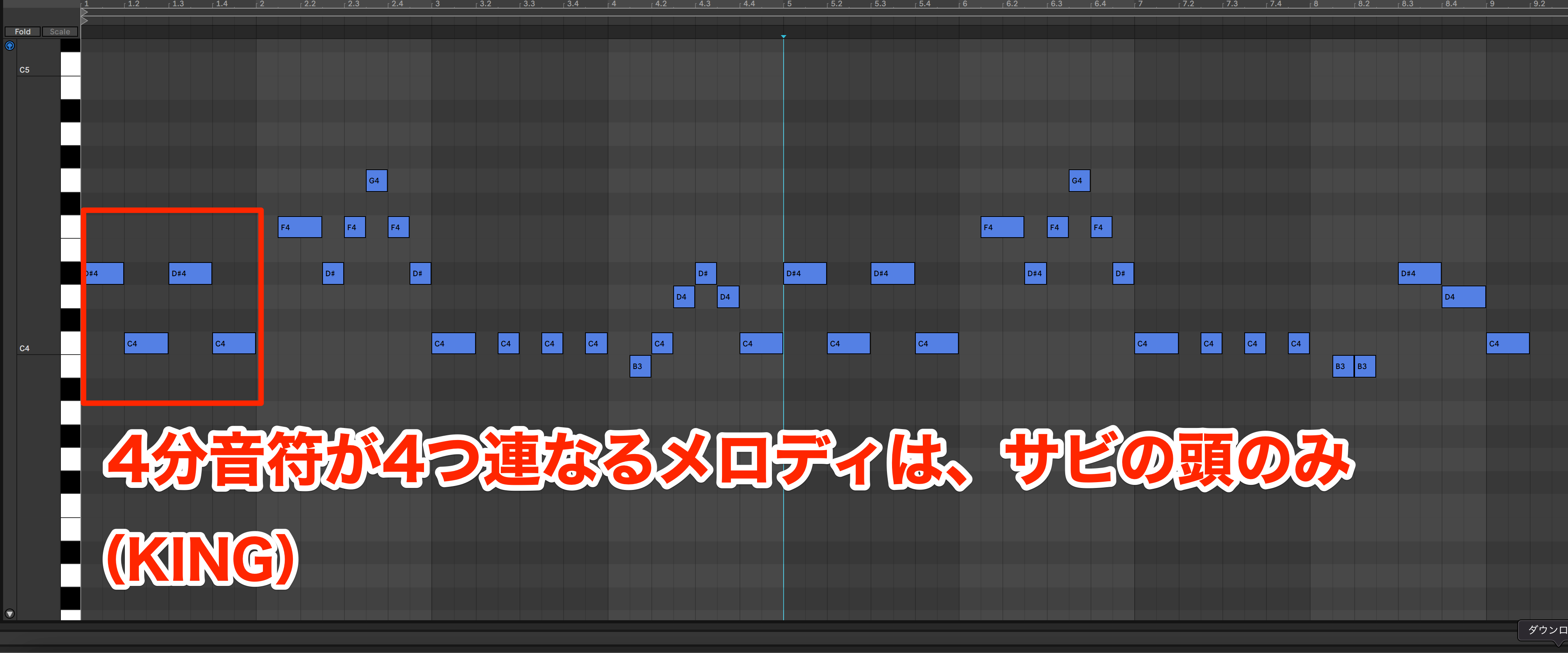
For example, KING begins its chorus with four consecutive quarter notes, a rhythm that appears nowhere else in the song.
Quarter notes on the beat are among the simplest rhythms to perceive, helping make the melody memorable.
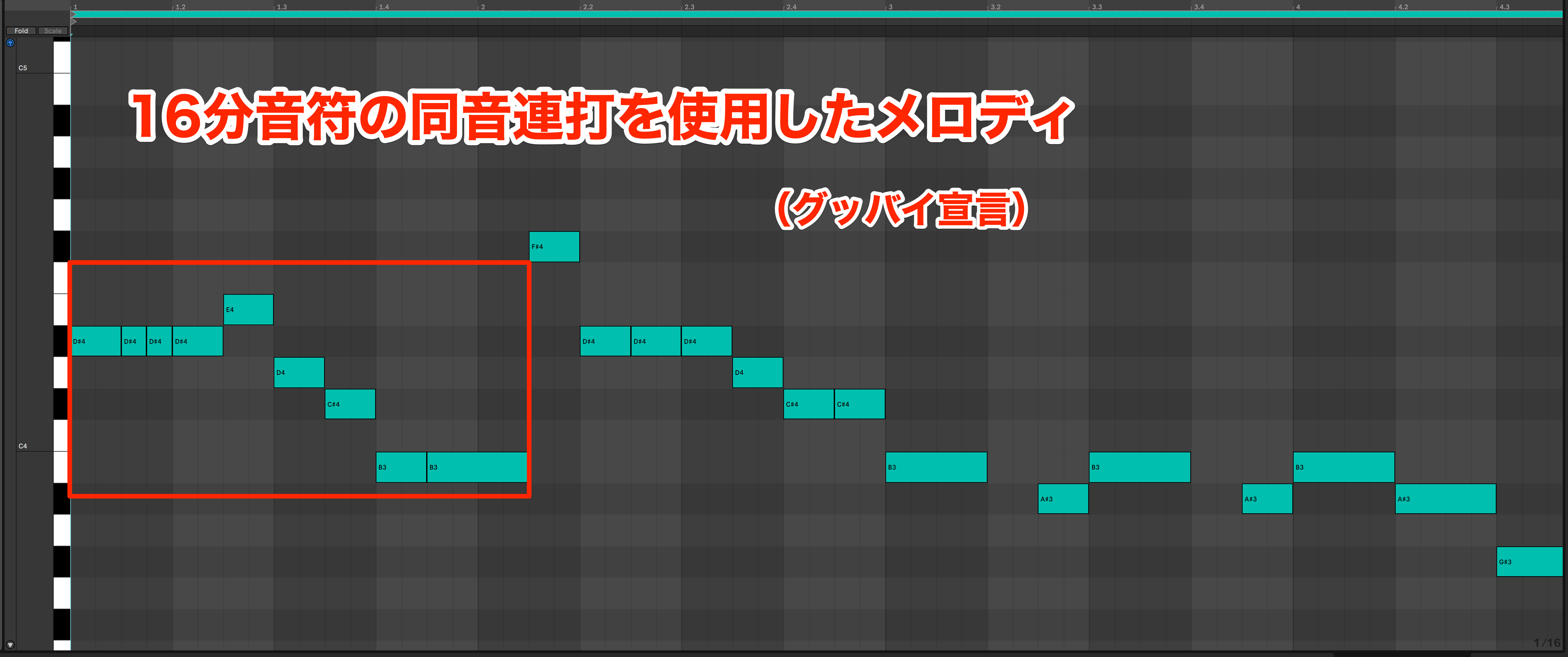
Goodbye Sengen offers a different example, opening its chorus with a busy rhythm containing many sixteenth notes and giving the section a distinct identity.
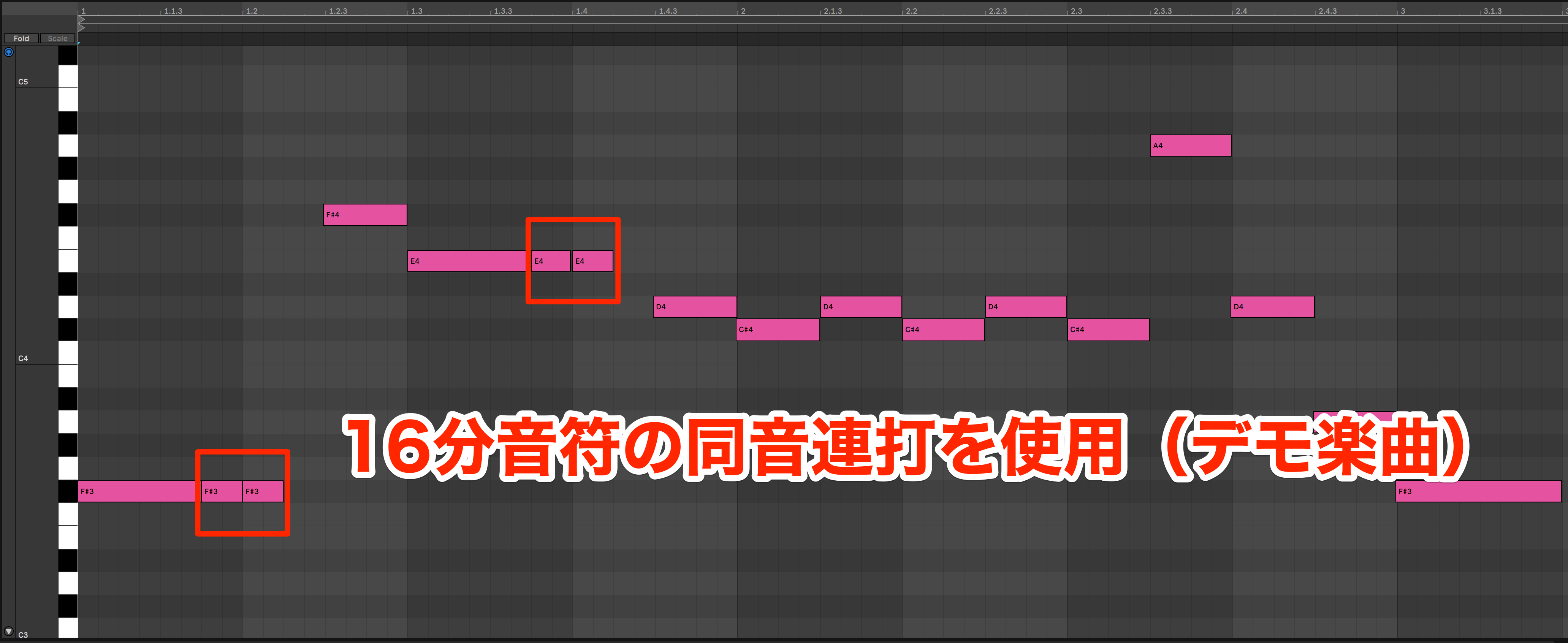
Repeated notes on the same pitch worked best in our demo’s chorus, so we adopted that approach. It gave the chorus a rhythm not found in the verse or pre-chorus.
Using a melodic rhythm at the start of the chorus that is absent from the other sections helps make the chorus stand out.
Changes in melodic pitch and range in the chorus
Next, let’s look at the chorus melodies’ pitches.

There was no consistent pattern in overall range, but the highest note in each song appeared in the chorus.
Using high melodic notes to heighten the chorus seems to be a timeless technique.
To summarize the chorus melodies:
- A rhythm unique to the section
- Use of the song’s highest note
We incorporated these features into our demo’s chorus melody.
Demo song: Chorus
The length of phrase blocks
Melodies often repeat motifs to make them memorable and catchy.
We analyzed the lengths of phrases in each section and how those phrases were combined.
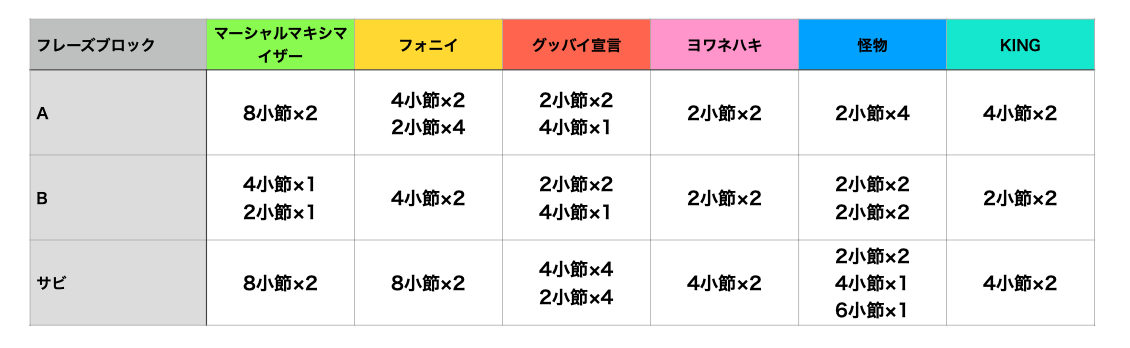
A shared feature was that the chorus used the longest melodic sentences.
Some were the same length as those in the verse, but the choruses generally did not use shorter sentences than other sections.
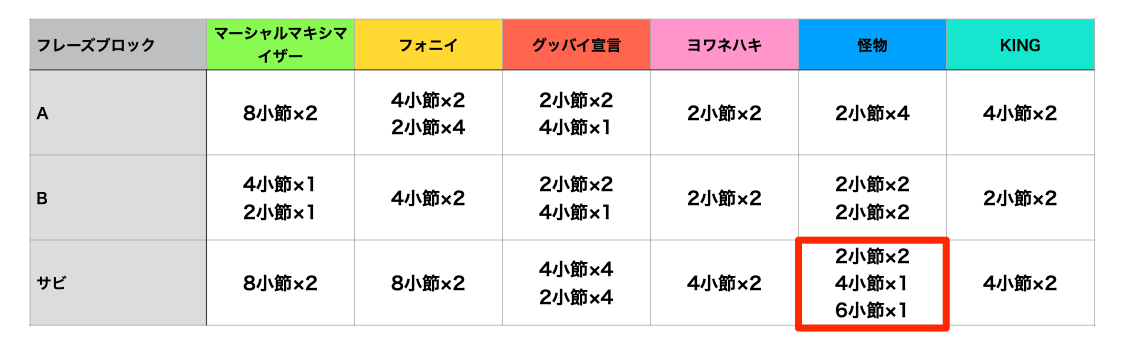
Kaibutsu may initially seem to use short phrases, but different phrases are joined together so that the chorus as a whole feels like one long melodic sentence.
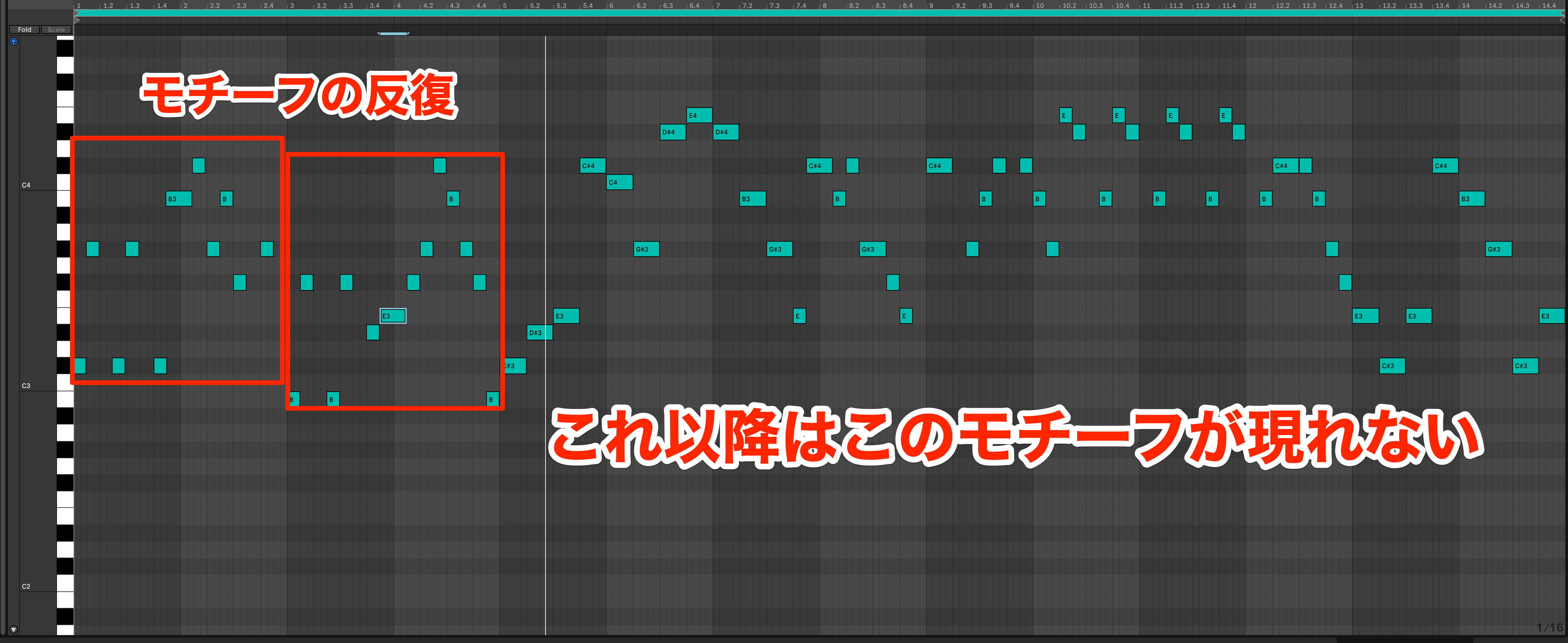
A closer look reveals a two-bar motif at the beginning of the chorus. Repeating it makes that passage particularly memorable.
After the repetition, however, another motif is added, creating an eight-bar block.
A completely new six-bar phrase follows, making a 14-bar melodic cycle in all. This creates a sense of continual development within the chorus.
Even short phrases can therefore be combined with others so that listeners perceive a longer phrase block.

With this in mind, we made the chorus the longest phrase in our demo.
Analyzing songs we normally hear casually can reveal many shared characteristics.
If you want to capture the feel of the period in which those songs became popular, these are useful points to consider.
Analyzing music is itself a way to develop your composition skills, so try doing the same with your favorite songs.
If there is interest, we would also like to analyze other kinds of songs, arrangements, and mixes.
Frequently asked questions
Q1. What chord progression do these hit songs have in common?
Four of the analyzed songs used root movement of 4 → 3 → 6, a variation of the J-pop royal-road progression. In this selection, it was more common than the familiar 4 → 5 → 3 → 6 pattern.
Q2. What is the blue note discussed here, and why is it significant?
Here, the blue note is the flattened third relative to the major scale, associated with the blues. It appears in several of these popular 2021–2022 songs and adds a bluesy expressive quality.
Q3. Can beginners in music production use this analysis?
Yes. The article includes chord-progression and melody-analysis charts. Recreating the examples in a DAW can help you learn the techniques used in these songs. Demo audio is also provided.
Melody Analysis: Surprising Features Shared by Popular Songs
We analyze shared characteristics—especially melodic ones—in songs with many YouTube views in 2021–2022.Details: https://t.co/KxW7f2ko9A #DTM #DAW #Composition pic.twitter.com/mSJxBi6Lhg
— SLEEP FREAKS (@SLEEPFREAKS_DTM) March 20, 2022
NEW ARTICLES
Latest English Articles