
How much does reverb change a mix? Three Sleepfreaks producers apply different reverb concepts to the same song, keeping its tracks, levels and panning fixed. Compare a natural J-pop space, EDM-style contrast and a groove-preserving sense of depth. Their explanations cover Neoverb, Valhalla DSP and a Bricasti M7 emulation, along with sends versus inserts, pre-delay, EQ and vocal ducking. The examples show practical ways to choose and shape reverb for a particular musical goal.
Three producers apply reverb to the same source material

In music production and mixing, reverb plays a major role in creating a sense of space. That is a familiar principle.
But you may wonder: Does it really make that much difference? Let's find out.
We prepared exactly the same material, with the track arrangement, volume levels and panning fixed, and compare three versions with reverb applied by three Sleepfreaks producers. That is the basis of this test.
Each producer also explains the thinking and techniques behind the processing.
Enjoy exploring the different approaches to reverb.
Video: Reverb Processing Techniques
The original song before reverb
First, listen to the mix before reverb is added.
Original mix without reverb
Choosing a concept for reverb
How you interpret the source material can significantly change the mixing result.
Here, the three producers explain their reverb concepts, followed by the processed versions.
Kato's approach

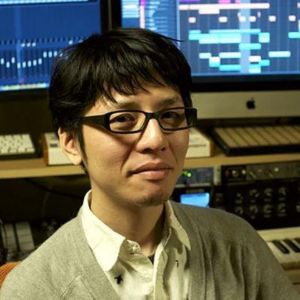
Kato
I heard a J-pop foundation, with a lo-fi feel and touches of dance music. My concept was to bring out the song's own character naturally.
Rather than exaggerating the effects, I wanted to create a natural atmosphere around the song.
Miyakawa
Which reverb plug-ins did you use?
Kato
I used Neoverb for natural depth and space, and UAD emulations of classic reverbs such as the Lexicon 224 and EMT 140 on the vocal.
Kato: processed full mix
Matsushita's approach

Matsushita
My concept was to bring an EDM-style sound into J-pop.
To define the rhythm clearly and give the mix a dance-music character,
I kept the kick and bass free of reverb,
while giving the vocal and synths deep reverb.
I wanted that contrast to be clearly audible.
Miyakawa
Which reverb plug-ins did you use?
Matsushita
I used several products from Valhalla DSP, whose reverbs are popular in EDM.
Matsushita: processed full mix
Miyakawa's approach
Miyakawa
Although the tempo is moderate, the song has a dance-like feel. I wanted to add natural depth and width while preserving as much of the groove as possible.
Kato
Which plug-ins did you use?
Miyakawa
The only reverb plug-in I used was Seventh Heaven, which recreates the Bricasti Design M7 hardware reverb.
It was a recent favorite of mine, so this was also a challenge to see what I could do using just that one reverb product.
Miyakawa: processed full mix
Processing the rhythm parts
First, let's look at how the three producers approached the rhythm parts.
Kato's processing: a J-pop concept
Kato
I used reverb on the kick too, to help it fit naturally into the song.

Kato
I wanted a tail with a little depth, so I chose a hall-oriented sound in Neoverb.
Miyakawa
How did you process the rhythm parts other than the kick?

Kato
I wanted a similar slight sense of depth, so I used Neoverb here as well.
The blend is mainly hall with reflections. I chose small- to medium-sized hall settings for a moderate sense of depth and width.
Miyakawa
Did you use reverb as an insert or on a send?
Kato
I used a send so I could reduce the low-frequency resonance while preserving the definition of the original sound.
A send lets me apply effects to the reverb signal separately. I use it for tracks where I want detailed control of the ambience.
Miyakawa
What are the key settings?
Kato
I set a slightly longer pre-delay and used EQ to cut the low frequencies in the reverb signal.
That helps prevent unnecessary energy from overlapping the kick's range and making it muddy.
Reverb on the rhythm section. Editorial note: this first comparison keeps the original A/B audio order. Its wet/dry labels are omitted because the original player labels and audio file names conflict.
Matsushita's processing: an EDM concept
Matsushita
I wanted the rhythm to remain firmly up front as the foundation of the song. I left the kick dry, while making the other rhythm parts feel as though they were resonating in a broad space.


Matsushita
For the rhythm parts other than the kick, I used three processes: Valhalla Room for depth and width, H-Delay to extend the rhythm, and EQ to remove excess low-frequency weight.
Miyakawa
Which settings were especially important?
Matsushita
I used a longer reverb pre-delay so the original attack remained audible, and a long ping-pong delay to widen the hi-hat image.
EQ cuts on the reverb signal were also important to keep the low frequencies from building up and becoming muddy.
Reverb on the rhythm section
Reverb on the bass
Miyakawa's processing: Seventh Heaven
Miyakawa
I wanted to widen the bass image to fill more of the song's space, and use low-frequency reflections to give it more weight.

Miyakawa
I used a bass-oriented ambience preset to emphasize the bass's presence, then adjusted the low mids with the built-in EQ to keep it from becoming too boomy.
Too much reverb on bass can reduce perceived dynamic range and blur its position, so controlling those effects was also part of the aim.
Bass reverb
Reverb on the vocal
Kato's processing: a J-pop concept
Kato
I used a send on the vocal so I could control the original signal and reverb separately.

Kato
I chose a plate reverb to add depth without making the sound too diffuse.
The settings were fairly conventional: a decay of about 1.7 seconds and a pre-delay of 25 ms. I reduced the low and low-mid frequencies in the reverb with EQ so the vocal would remain tight.
Vocal reverb
Matsushita's processing: an EDM concept

Matsushita
For a rich EDM-style lead vocal, I combined several reverbs and delays to build up the ambience.
However, a deep effect can make the original harder to hear. That is especially problematic for a lead vocal, whose clarity is central to its role.

Matsushita
To address that, I applied sidechain compression to the reverb, triggered by the dry vocal. When the dry vocal gets louder, the reverb is reduced, allowing a long tail without blurring the vocal's definition.
Miyakawa
What other processing did you use?
Matsushita
As on the other tracks, I used more pre-delay for longer reverbs to separate their timing from the original signal.
When extending the tail, I also used delay feedback to create a clearly audible continuation rather than relying only on diffuse reverb.
Vocal reverb
Reverb on the chord synth
Miyakawa's processing: Seventh Heaven
Miyakawa
I treated the chord track as a decorative part and wanted it to sit clearly behind the rhythm and vocal.

Miyakawa
The key was to insert the reverb and use a high wet level. I chose a chamber, using its early reflections to soften the definition and adding a long tail.
Matsushita
Why did you choose a chamber?
Miyakawa
I also considered a plate for the long decay, but chose a chamber because I wanted the width and spatial positioning created by its early reflections.
Chord-synth reverb
What did you think?
Which reverb treatment did you prefer?
The results differed, but many of the decisions were based on shared principles.
There are useful techniques here, especially for beginners. Try applying them to your own music.
Frequently asked questions
Q1. Why do the J-pop and EDM examples use different reverb approaches?
The desired sound differs. In this comparison, the J-pop approach favors a natural atmosphere that supports the song, while the EDM approach emphasizes a defined kick and stronger contrast between dry and reverberant parts. These are the producers' chosen concepts for this track, rather than fixed rules for either genre.
Q2. What changes when you put reverb on the kick or leave it dry?
Reverb can help a kick share the mix's space; leaving it dry can preserve a clearer outline and a more direct dance-music impact. The choice affects the foundation and feel of the track, depending on the material and settings.
Q3. What is the advantage of using a reverb send?
A send allows detailed EQ and effects processing on the reverb while retaining independent control of the original signal. For rhythm parts where muddiness is a concern, cutting the lows of the reverb return is one useful example.
Q4. How should you choose a reverb plug-in?
Consider the genre, the space you want to create and any hardware character you want to emulate. The examples here use Neoverb for natural space, Valhalla DSP products for an EDM-oriented approach and a Bricasti M7 emulation for its reverb character. Choose according to the specific result you want, rather than treating any product as limited to one genre.
NEW ARTICLES
Latest English Articles















































































