MODO DRUM is an innovative drum instrument from IK Multimedia that uses physical modeling to produce realistic, natural drum sounds. You can build your sound step by step, from loading presets and choosing grooves to customizing the kit, specifying playing styles and setting the room ambience. Its mixer, separate outputs and send/return effects provide detailed sound control in your DAW, making it well suited to producing professional drum tracks.
A Physically Modeled Acoustic Drum Instrument with Outstanding Sound
IK Multimedia has finally released MODO DRUM, which recreates acoustic drum sounds through physical modeling.
The company's physically modeled MODO BASS bass instrument has been a major success thanks to its realistic sound and extensive control over playing techniques.
MODO DRUM is positioned as the drum counterpart to MODO BASS, offering excellent sound and extensive customization.
Here, we will look at the product's features and how to use it.
MODO DRUM Video Tutorial
Selected Questions and Answers from the YouTube Video

How does it compare with BFD3?

Compared with BFD, I found it easier to achieve a cohesive sound and shape it as intended. The sharp attack helps the drums cut through a mix. BFD, by contrast, gives me a softer impression and seems to blend readily into the backing track.
When I drag and drop a rhythm pattern as shown at around 12:34, no MIDI appears. What am I doing wrong? I'm using Cubase Pro 10 on Windows 10. My setup looked no different from the one in the video... It's a mystery.
At the time of this reply, this appeared to be a product bug, reportedly scheduled to be fixed in the next update. We did not encounter it with Cubase 10 on a Mac, which is why we were able to record the video without any problems.
Loading Sound Presets
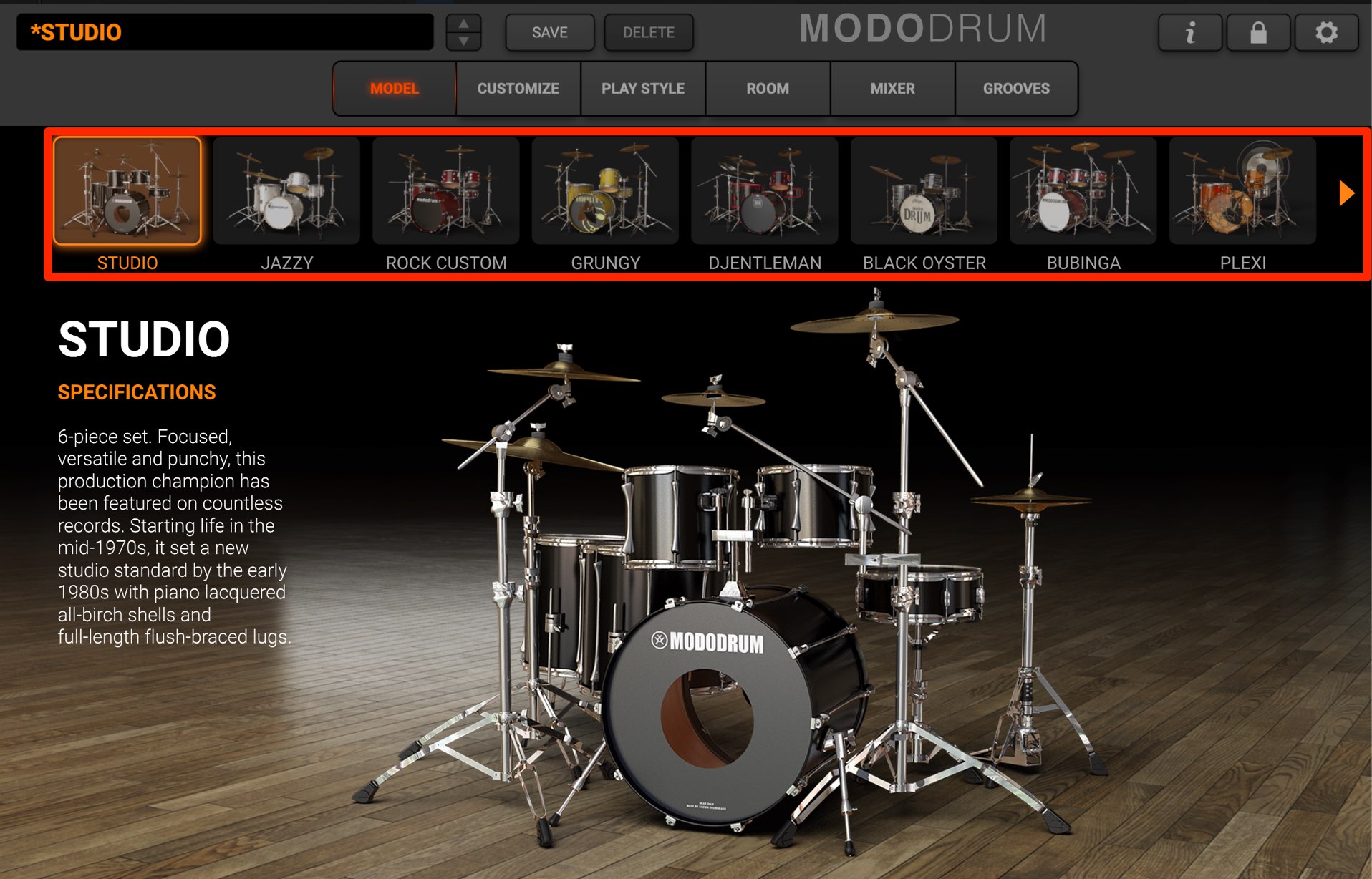
When you launch the instrument, you will see sound presets optimized for different genres and uses.
Click a preset's graphic to switch to it.
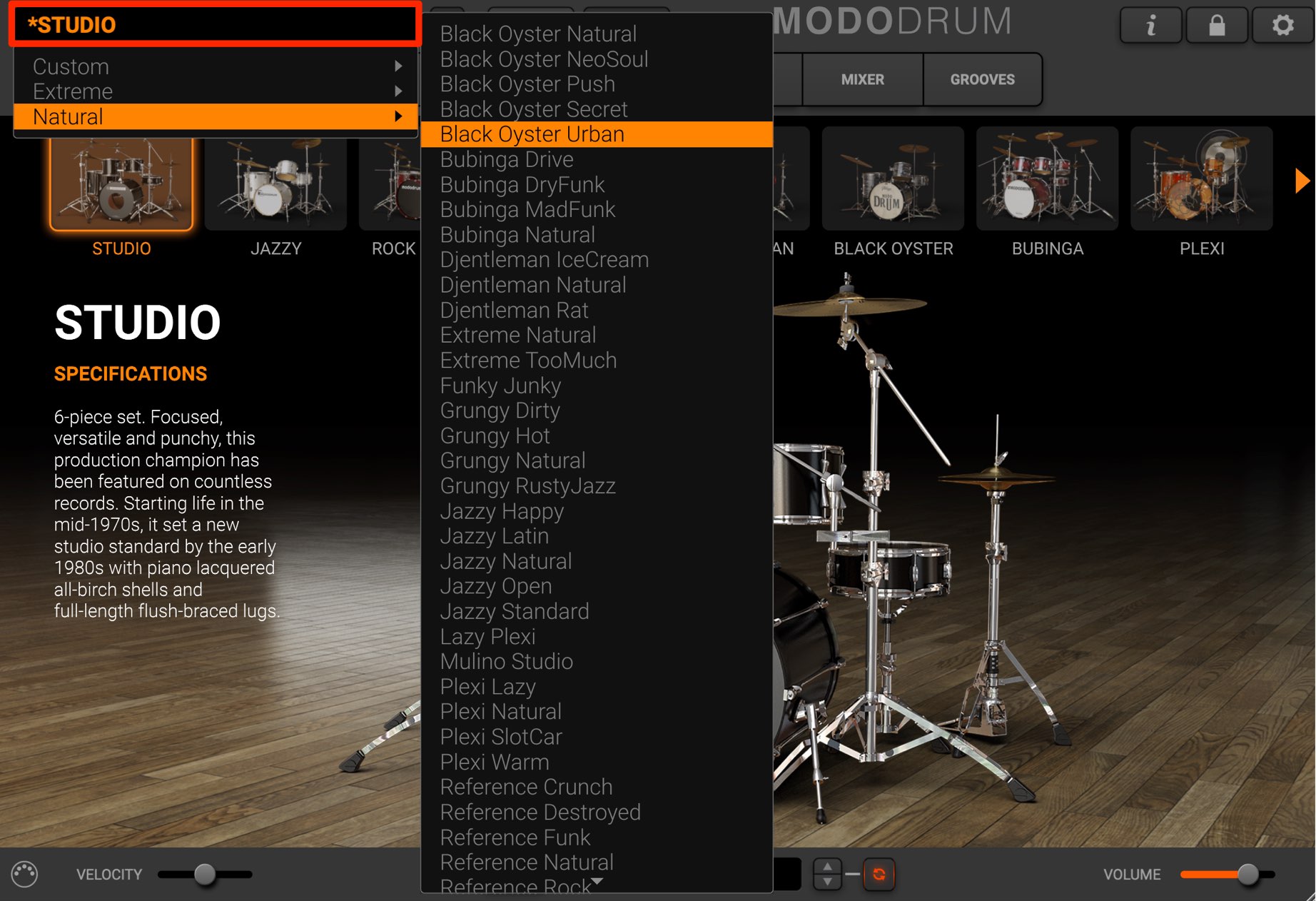
You can also access more extensively customized presets from the menu at the top.
The sound is very natural and seems likely to sit comfortably in a mix.
Another welcome benefit of physical modeling is the short preset loading time.
Loading Rhythm Patterns
MODO DRUM includes a wide selection of built-in rhythm patterns.
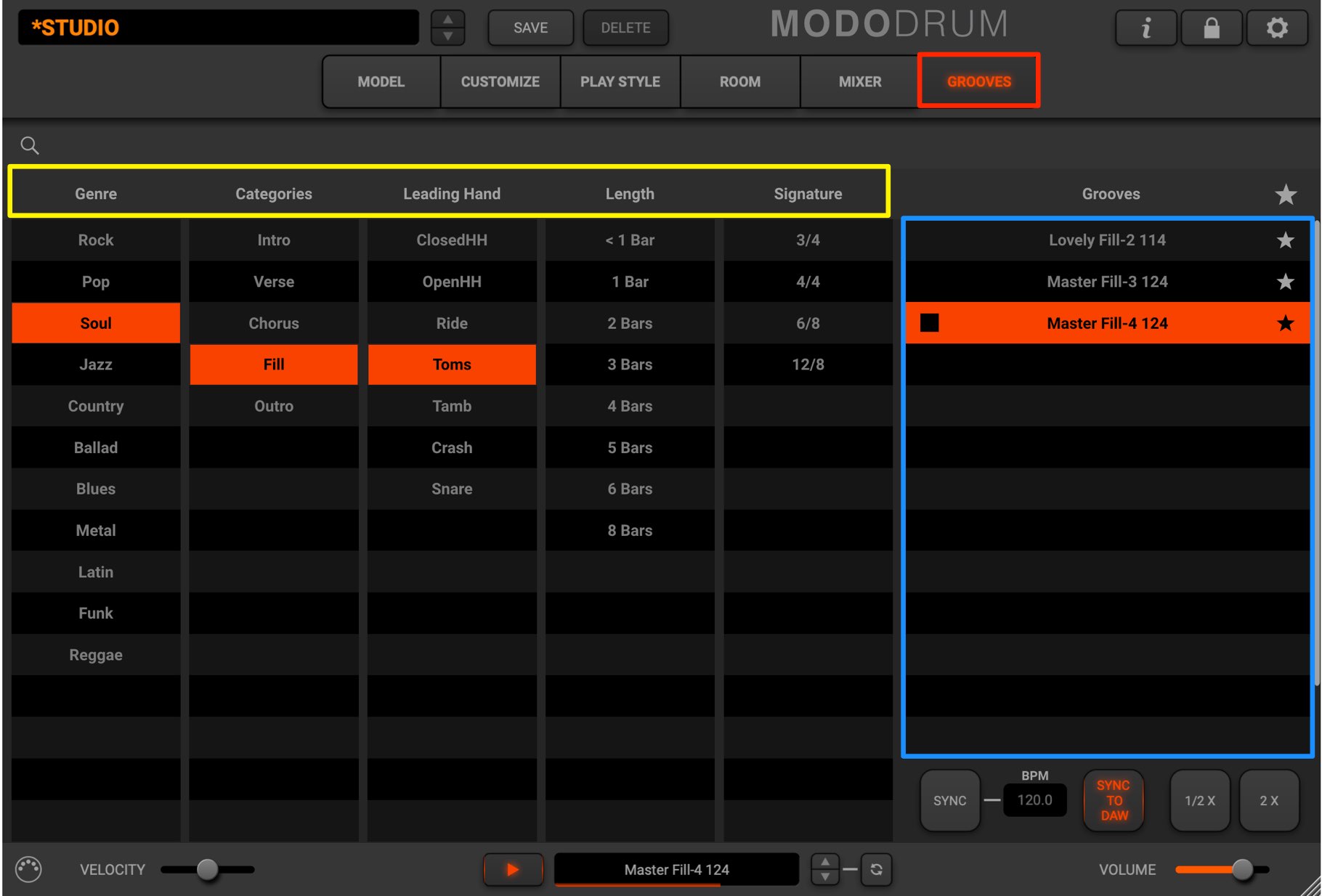
Click the GROOVES menu to open the browser.
Select the filters to display matching patterns in the section on the right.
- Genre: musical genre
- Categories: patterns suited to different song sections, such as verses, bridges, choruses and fills
- Leading Hand: the kit piece that leads the pattern
- Length: pattern length in bars
- Signature: the pattern's time signature
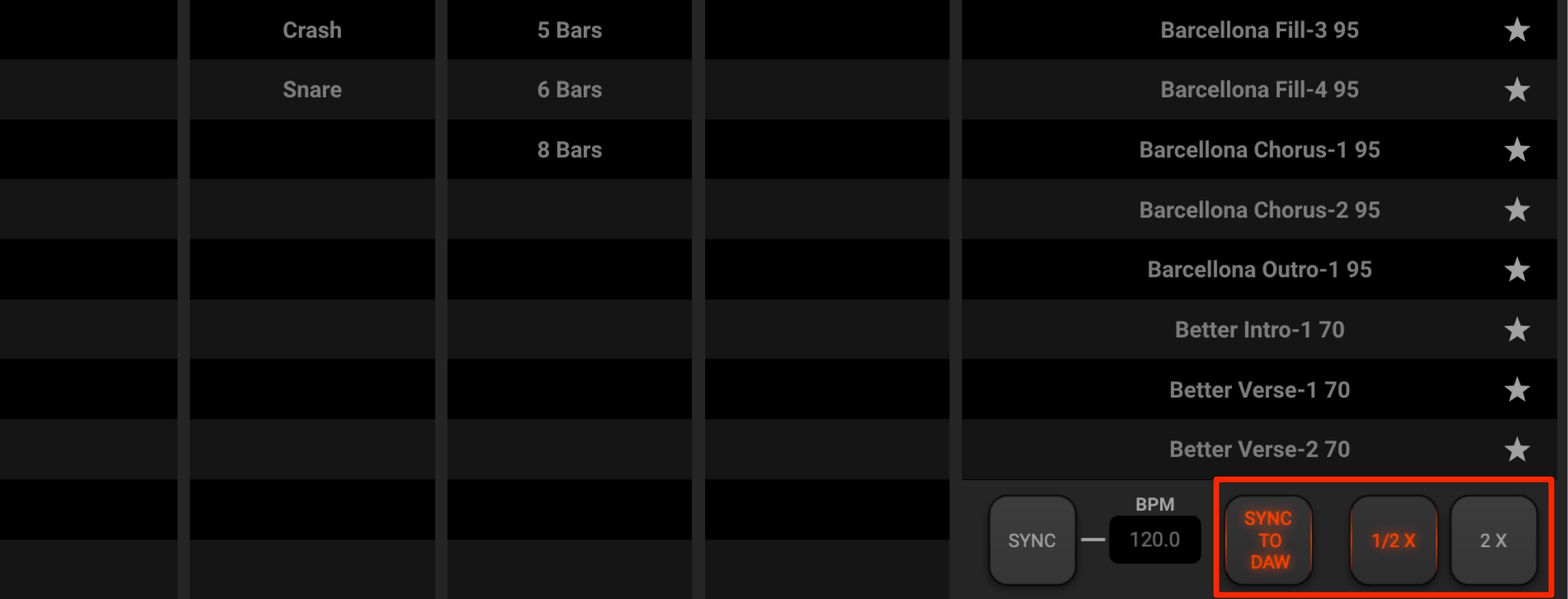
When SYNC TO DAW is enabled, pattern playback follows your DAW's tempo. This is useful when you want to hear how a groove works with the other tracks.
The 1/2× and 2× controls play the pattern at half or double speed.
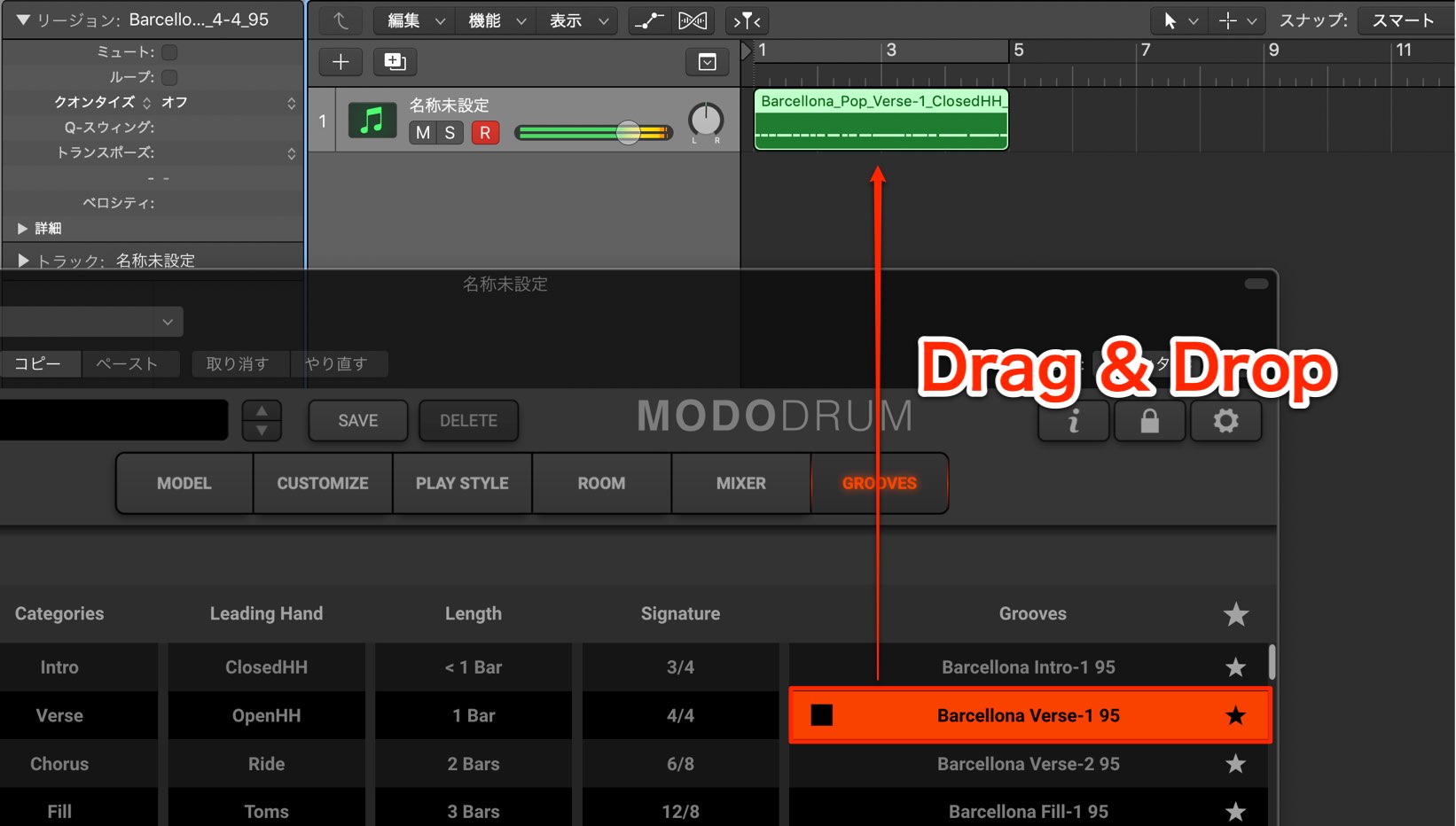
Simply drag and drop a pattern onto a track in your DAW to use it in your song.
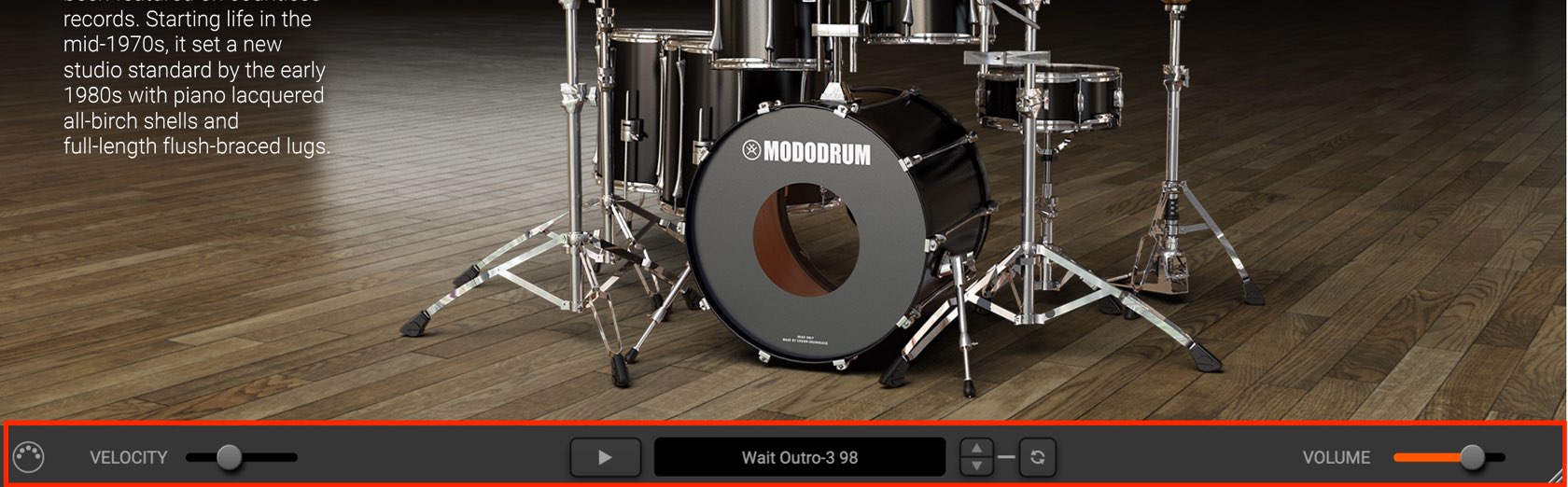
Pattern controls are always visible at the bottom of the instrument window, where you can play patterns and switch between them.
This is also useful when switching presets or customizing a kit while a pattern plays.
Customizing the Kit
You can customize the kit in your selected preset.
It is helpful to do this while previewing a pattern as described above.
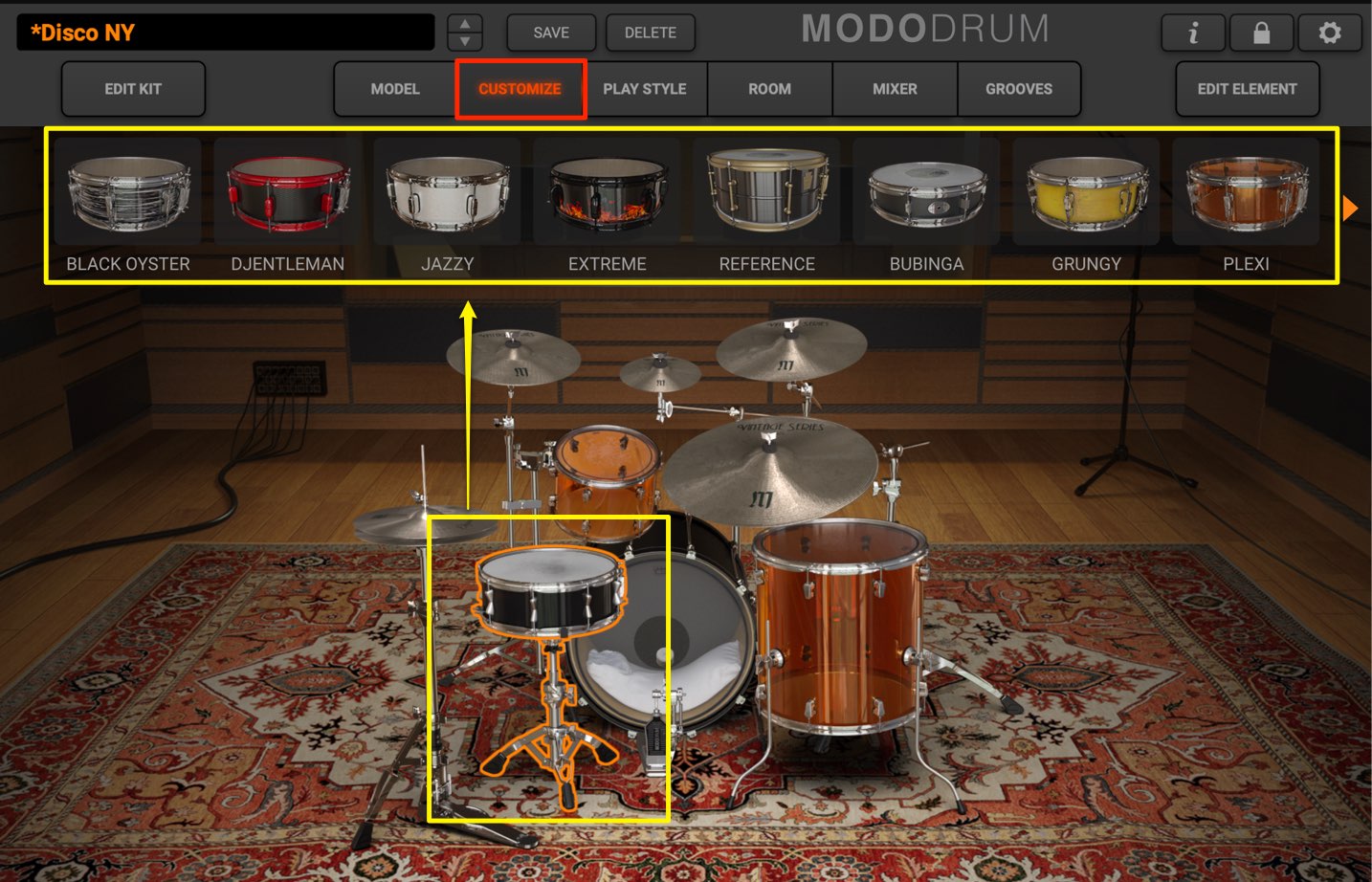
Click a kit piece to display the available alternatives above it.
Click one of these alternatives to replace the selected piece.
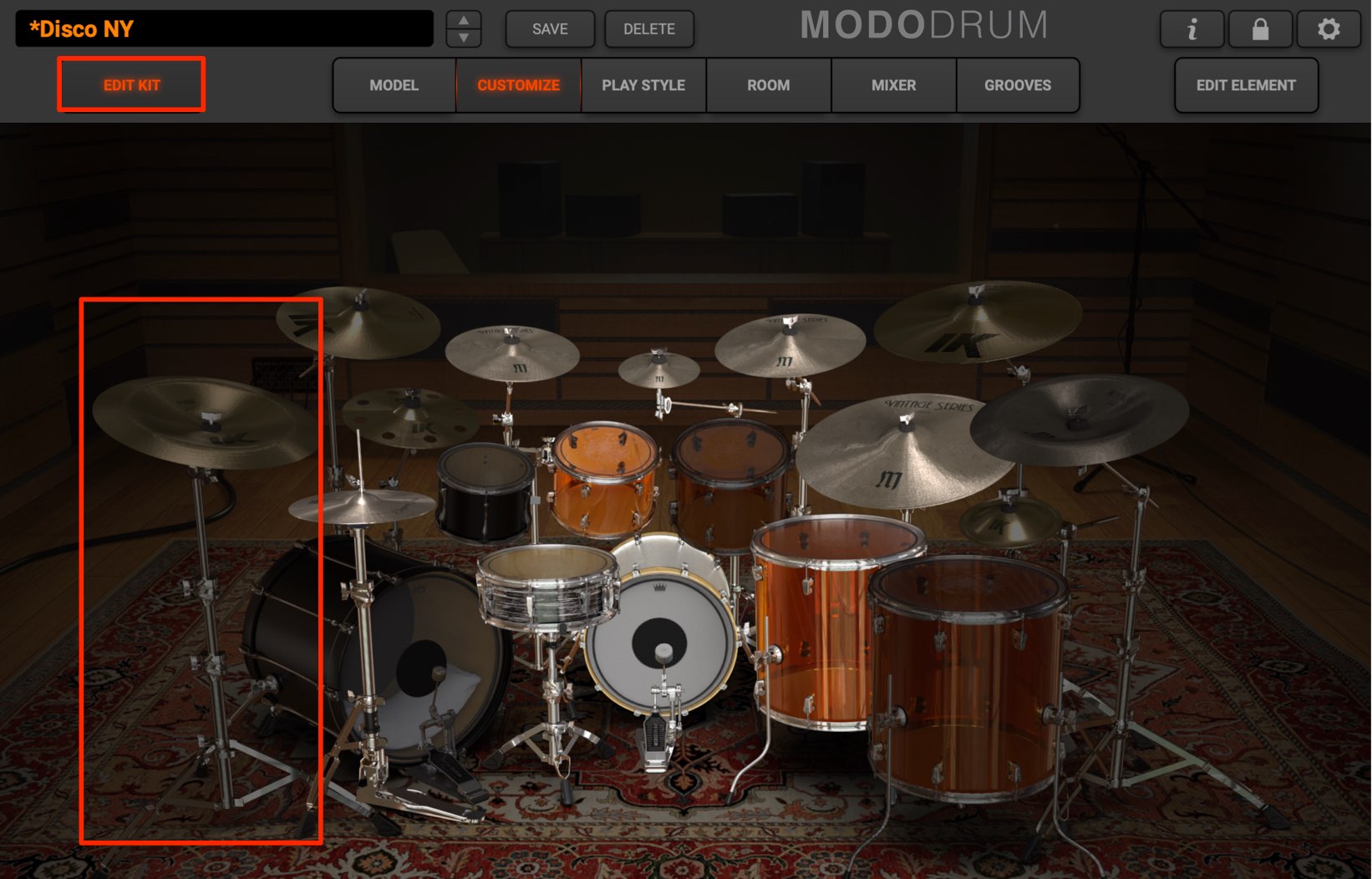
Depending on the song, you may want to add more pieces to the kit.
Click KIT EDIT to show inactive kit pieces as silhouettes.
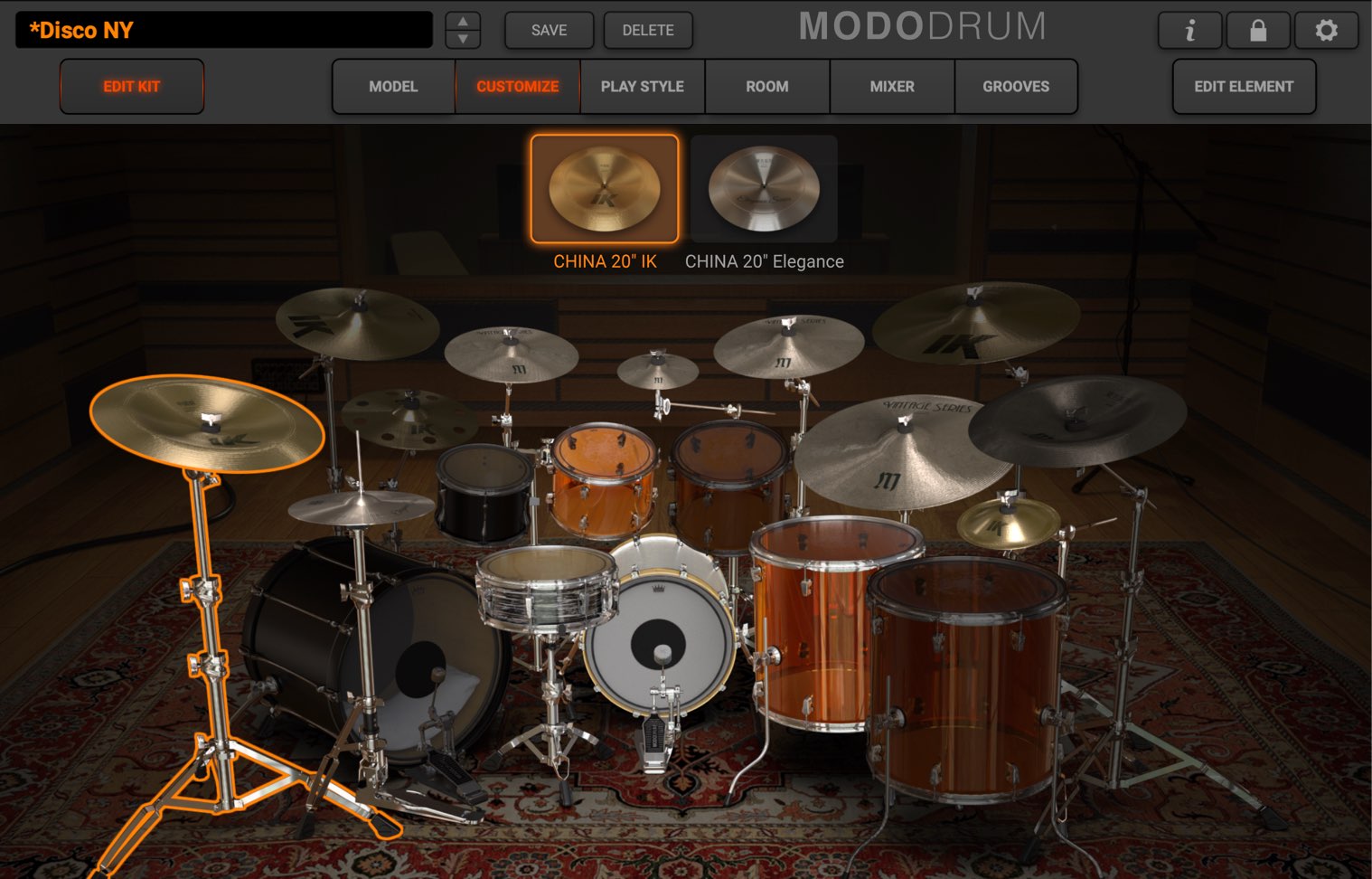
Click the desired piece and assign a model to activate it.
Customizing Kit Pieces in Detail
Physical modeling lets you fine-tune the settings of individual kit pieces.
This is a particularly enjoyable and welcome feature for anyone with a good knowledge of drums.
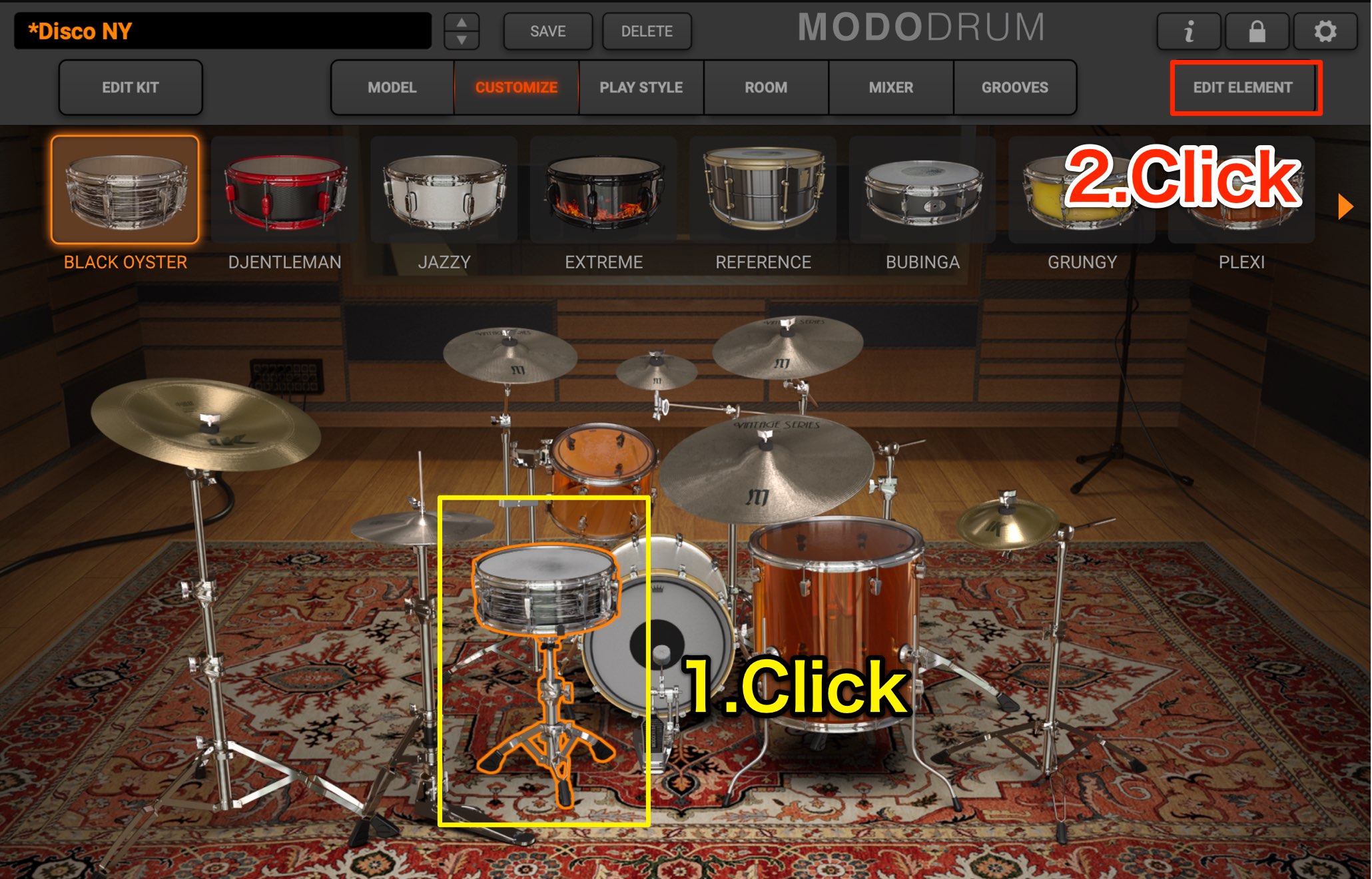
Select the kit piece you want to adjust, then click EDIT ELEMENT.
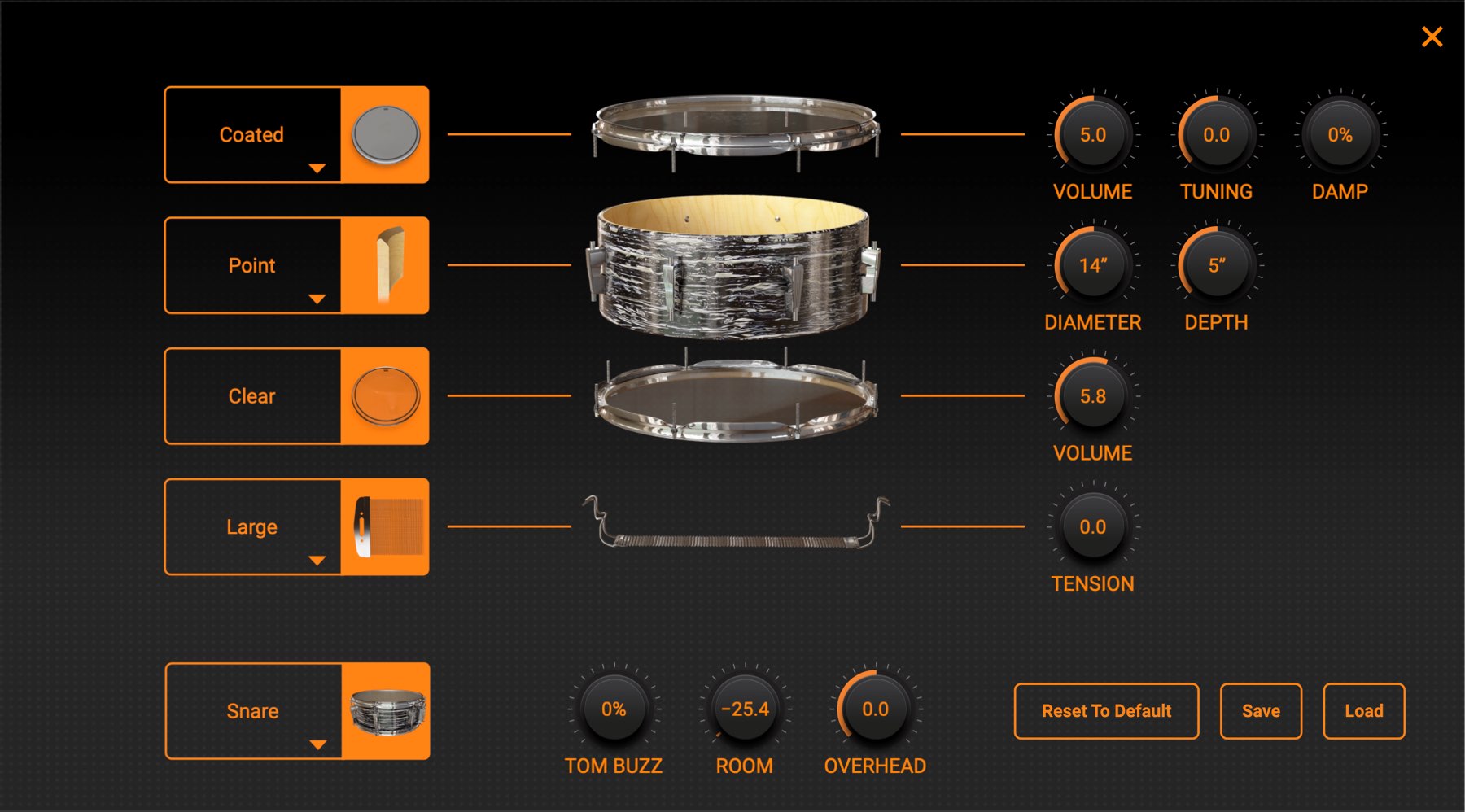
In addition to basic settings such as volume, decay and tuning, you can specify the individual components that make up the drum.
Choosing a Playing Style
PLAY STYLE lets you control the nuances of the drummer's performance.
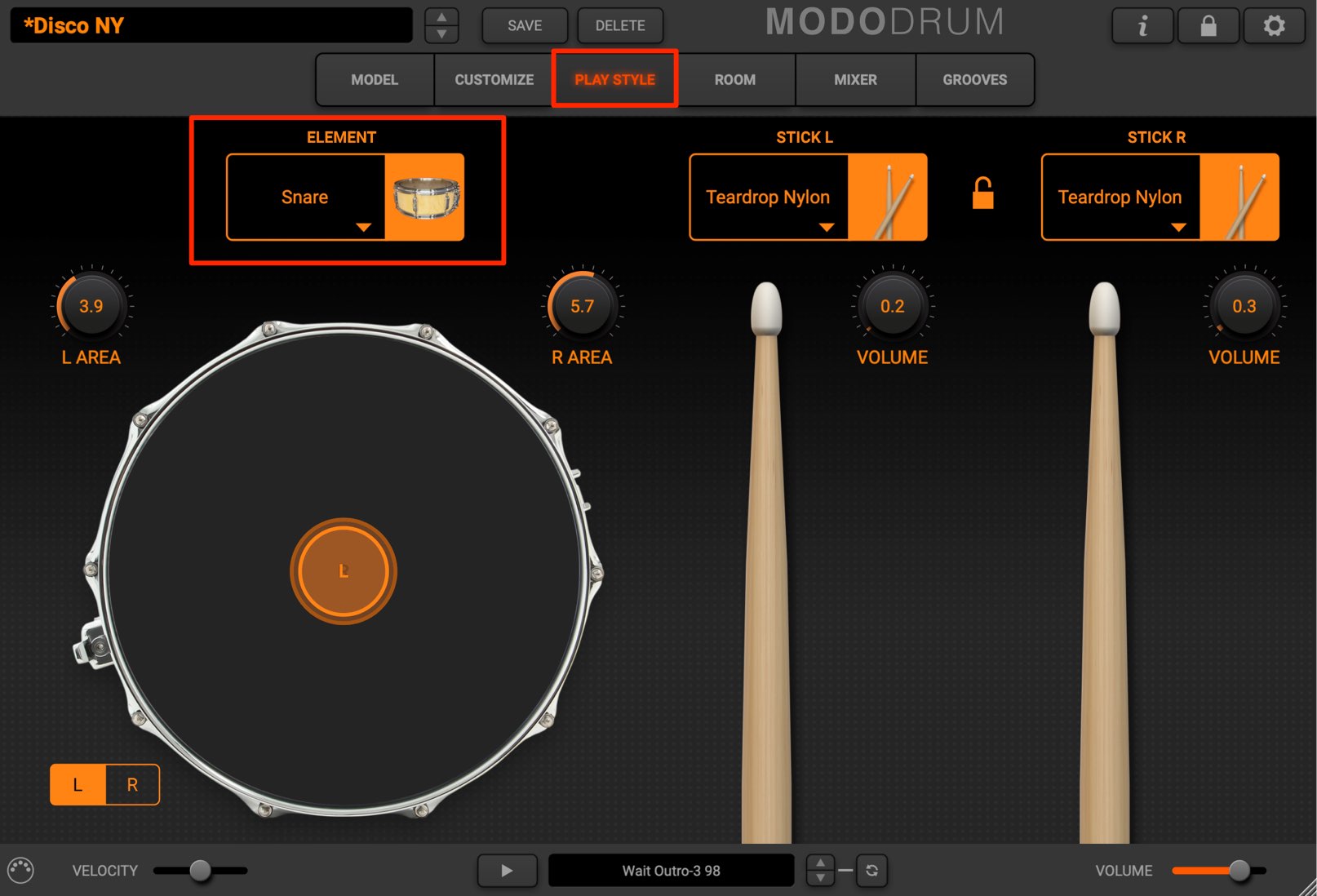
Open PLAY STYLE and select the kit piece to edit. Here, we have selected the snare.
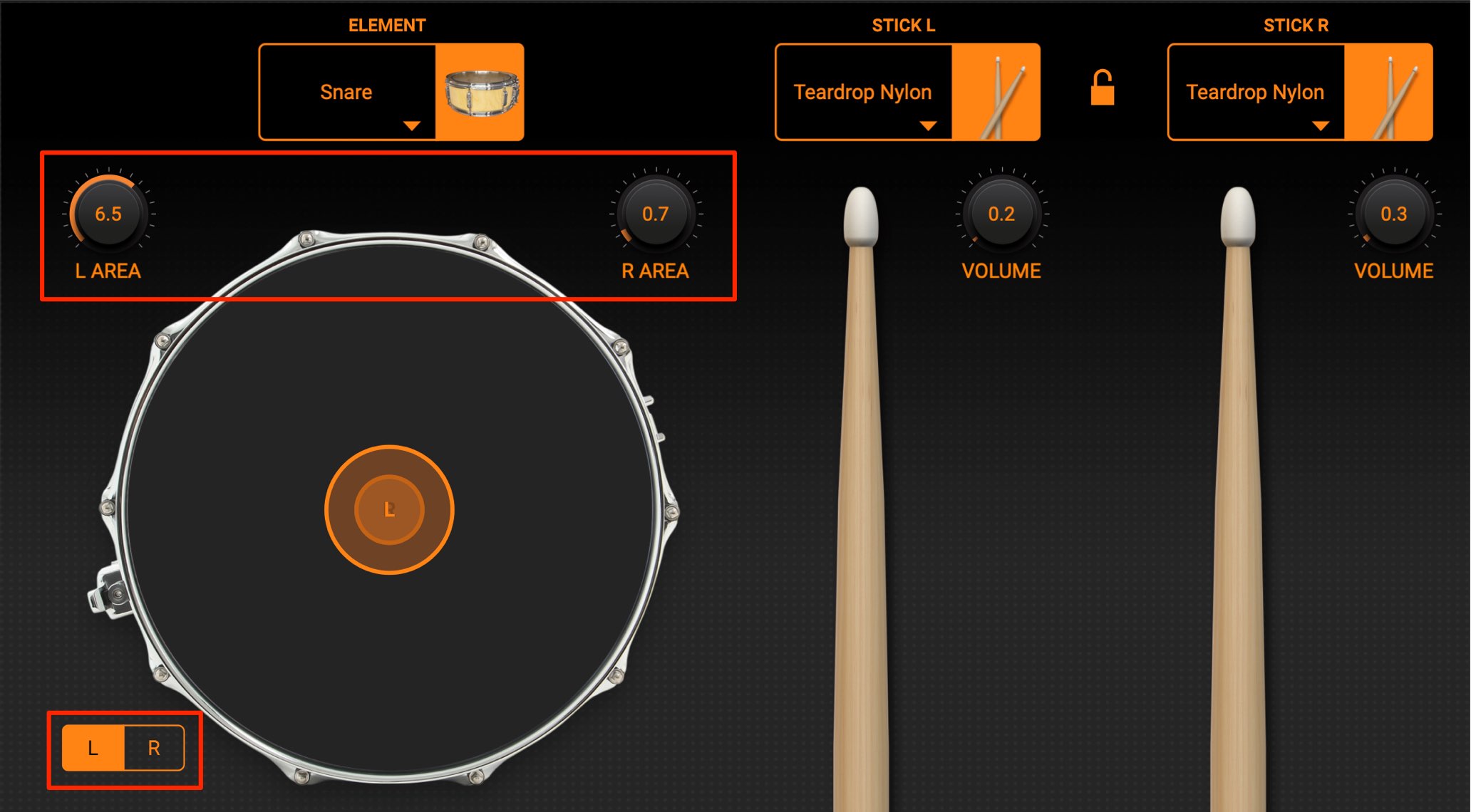
You can specify the striking areas for the left and right hands, as well as
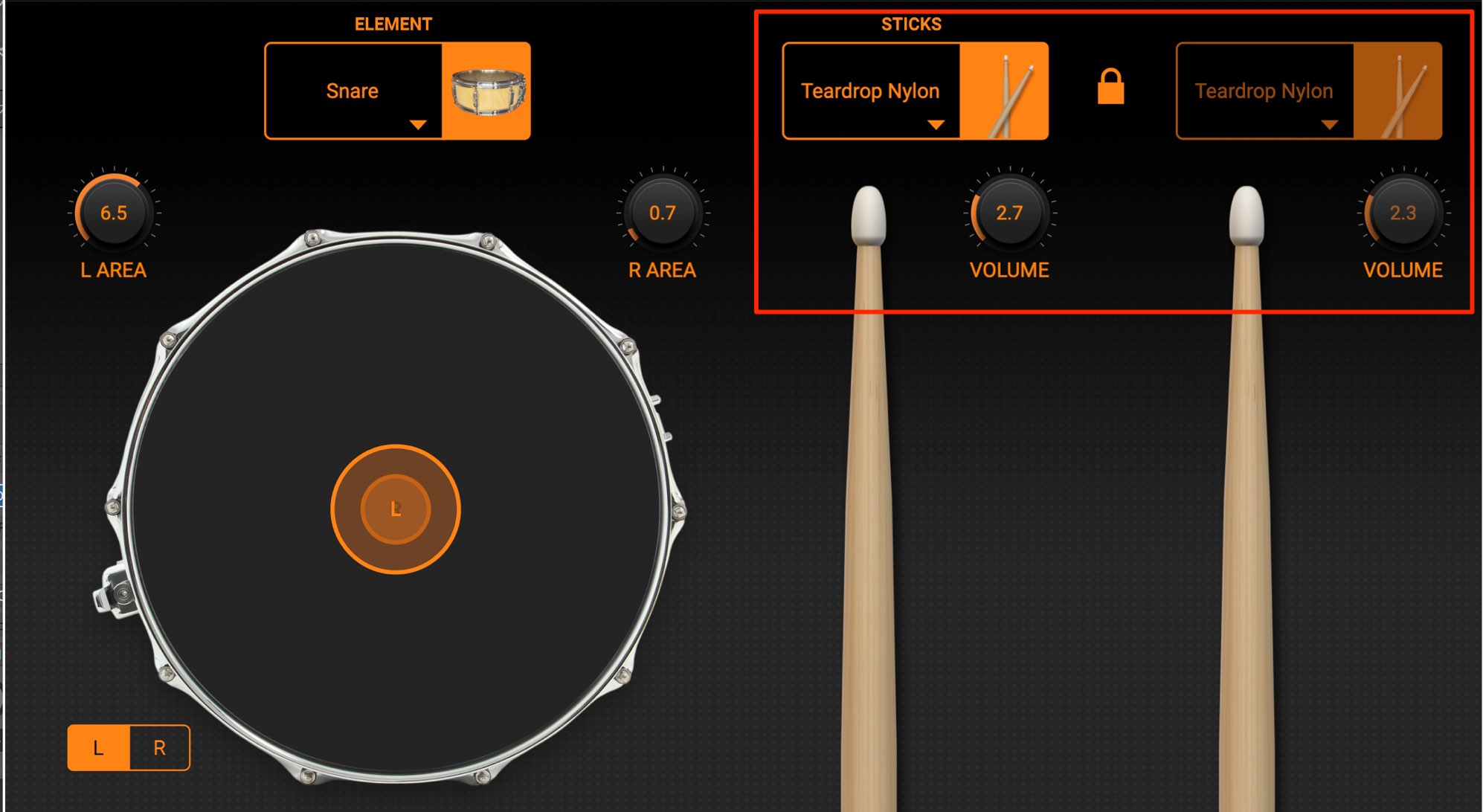
choose the sticks and set the volume for each hand.
A slight difference between the two VOLUME settings makes repeated snare hits sound more natural.
You can also control the striking areas described above while your DAW is playing.
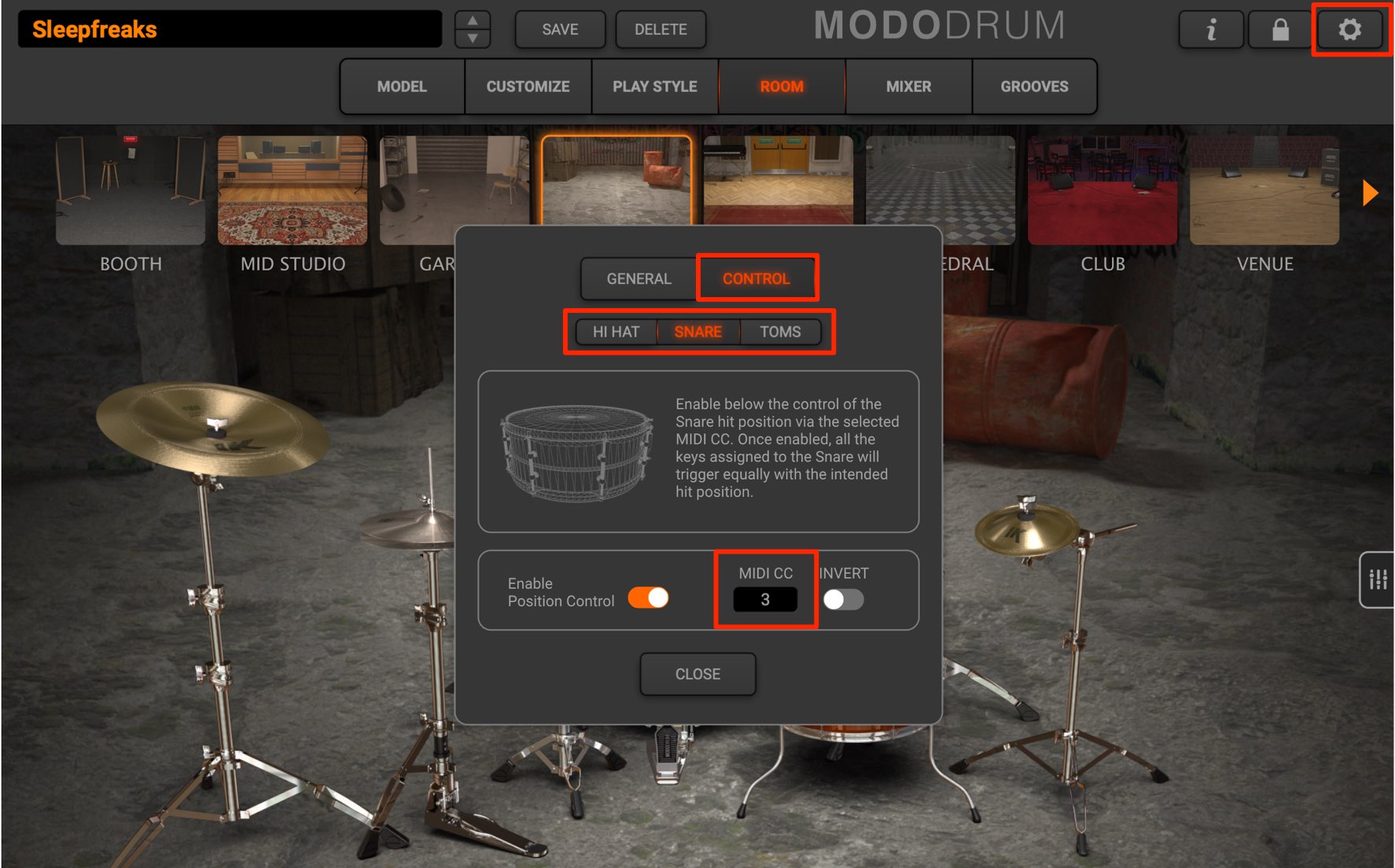
Click the settings button at the upper right, then select the kit piece under CONTROL.
Assign a MIDI CC number.
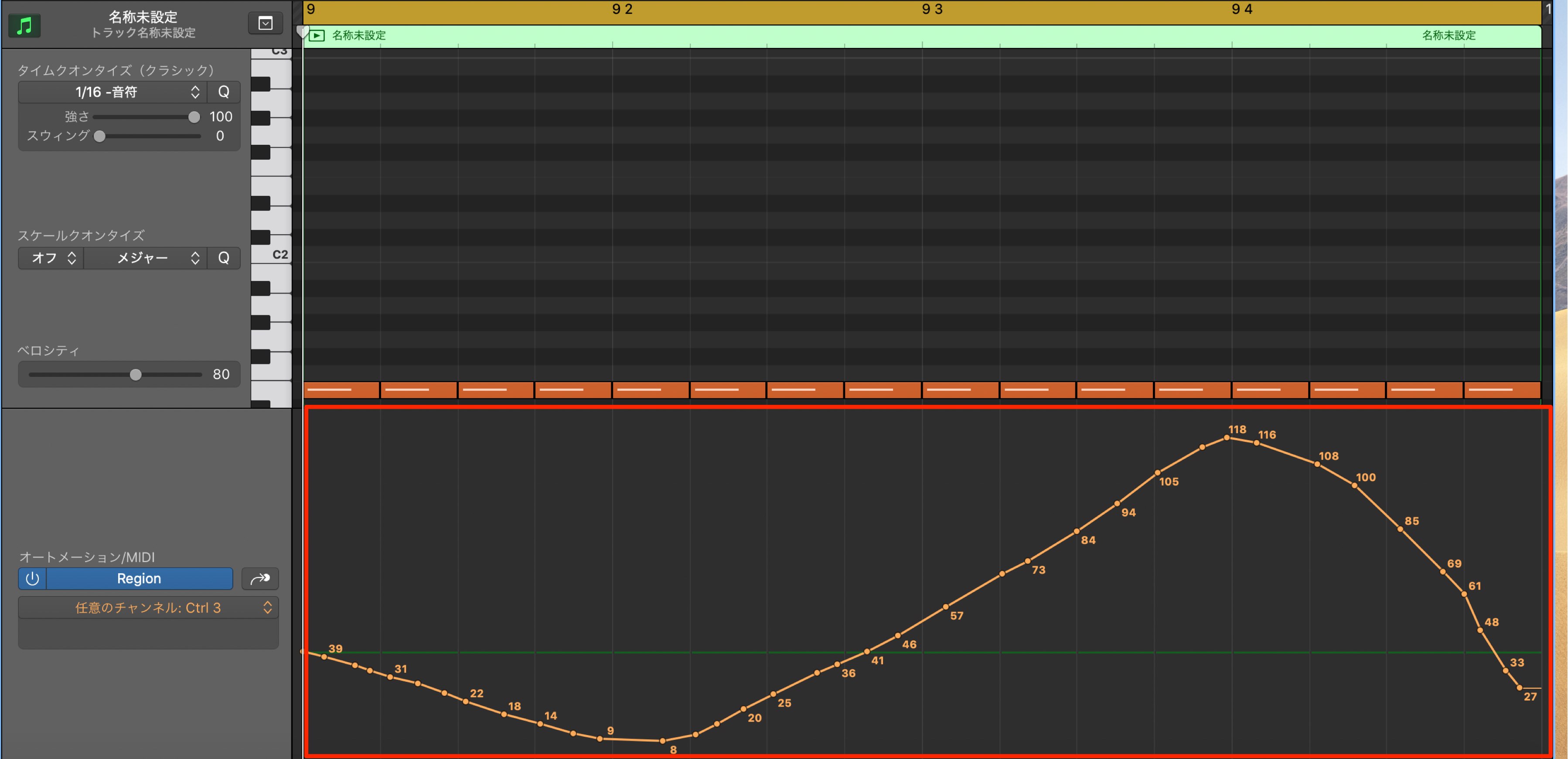
Then record the assigned CC during playback.
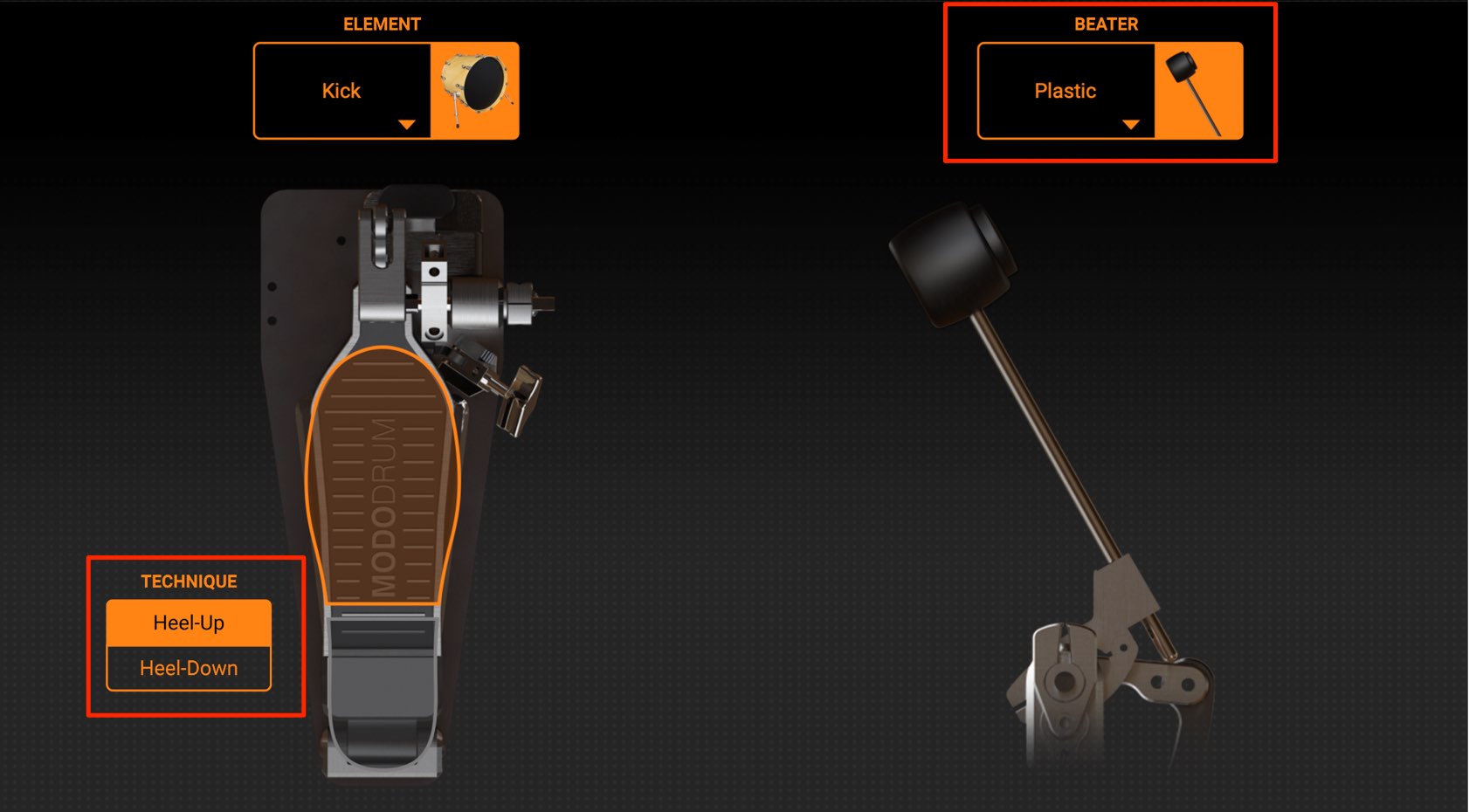
For the kick, you can also customize the playing nuances and the beater material.
Choosing a ROOM for the Ambience
You can also choose the reverberant character of the space in which the drummer is playing.
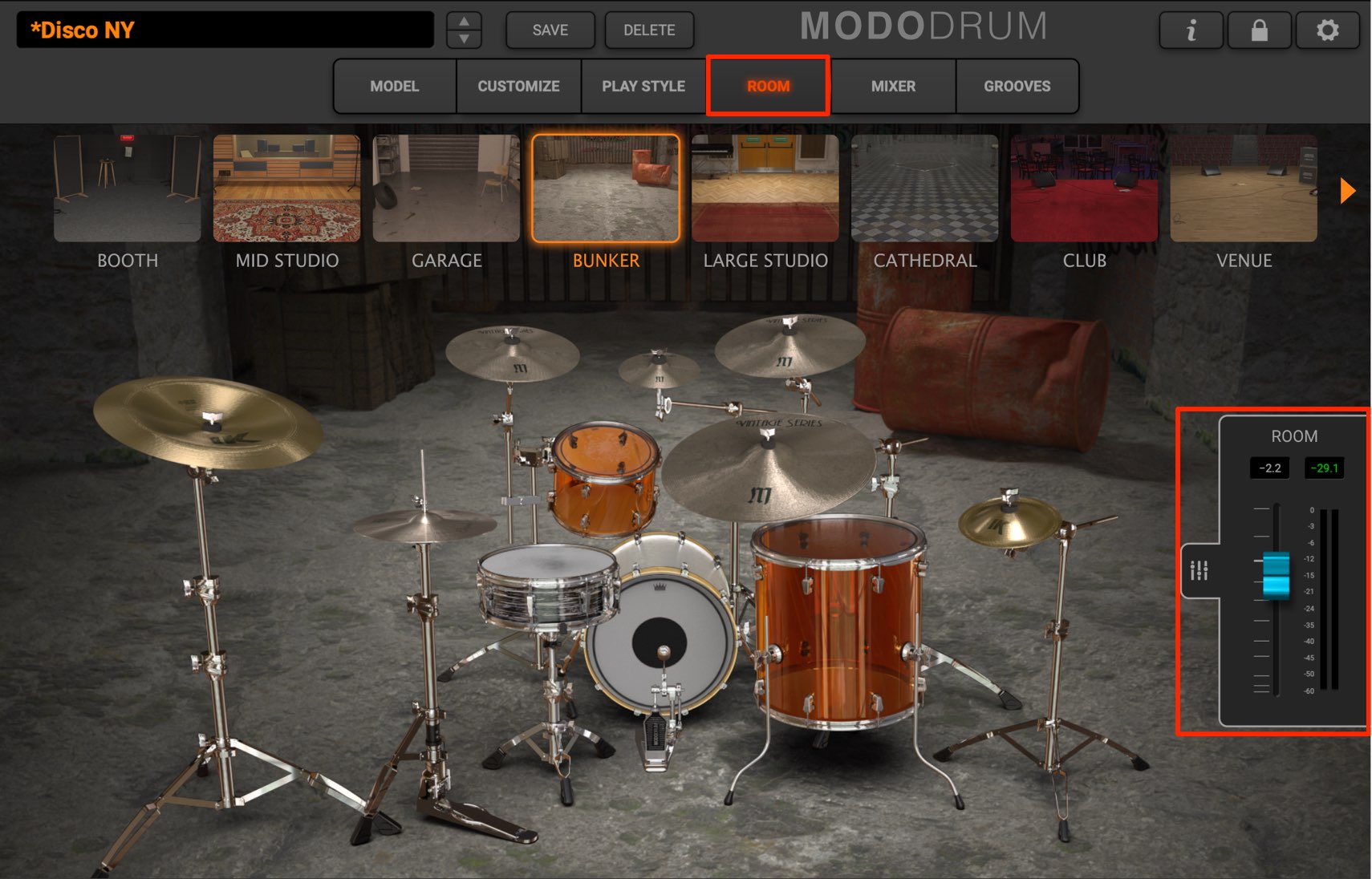
Select ROOM, then choose the room you like from the list.
Use the ROOM fader on the right to adjust the ambience level.
Shaping the Drum Sound with the Mixer
The instrument also includes a mixer for managing the volume and effects of individual kit pieces.
You can use this mixer to route kit pieces to separate outputs in your DAW.
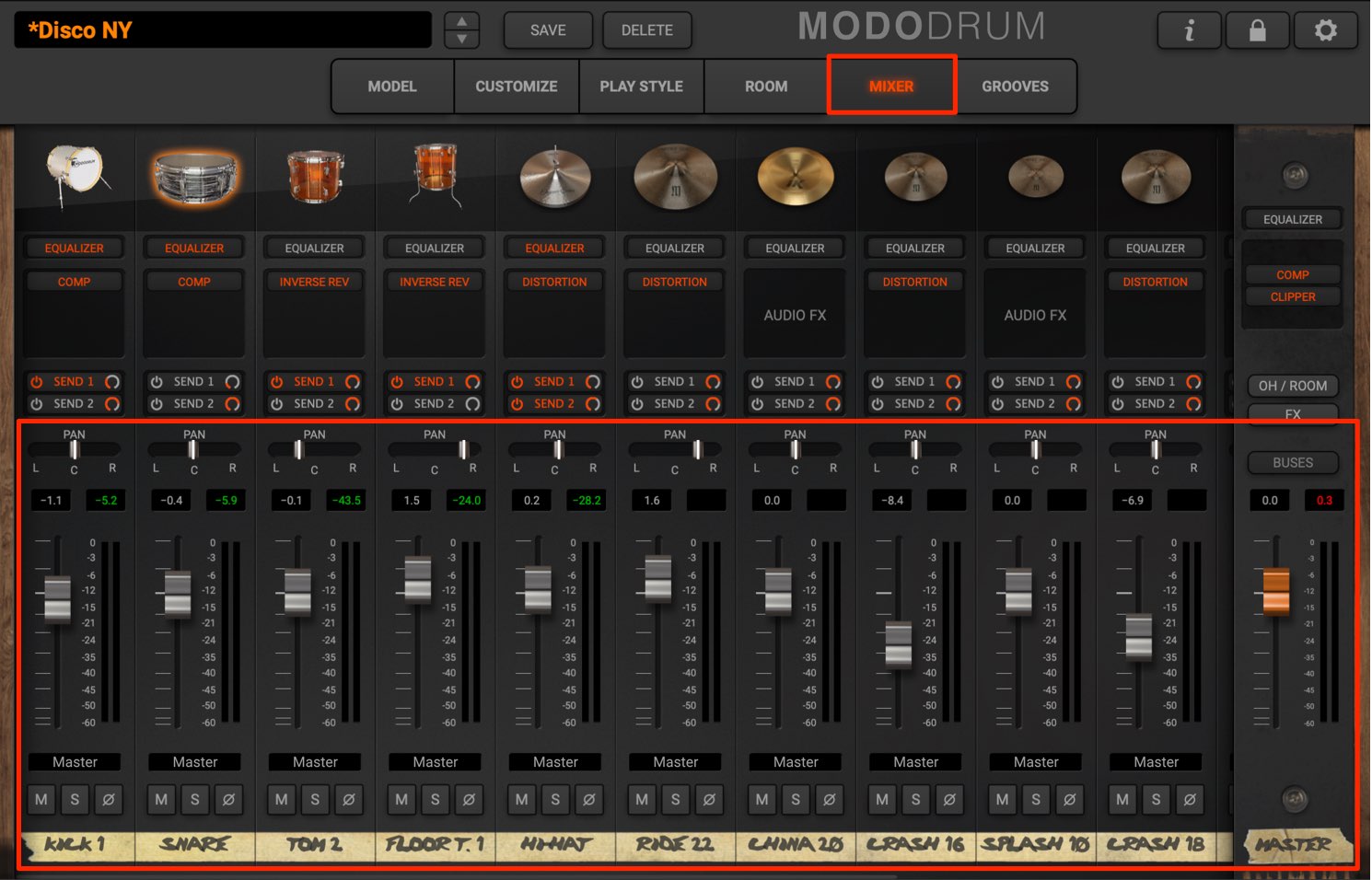
Click the MIXER tab to open it.
You can quickly adjust volume and panning, while the MASTER channel at the far right controls the sound and overall level of the drums.
Each channel also provides mute, solo and polarity inversion controls.

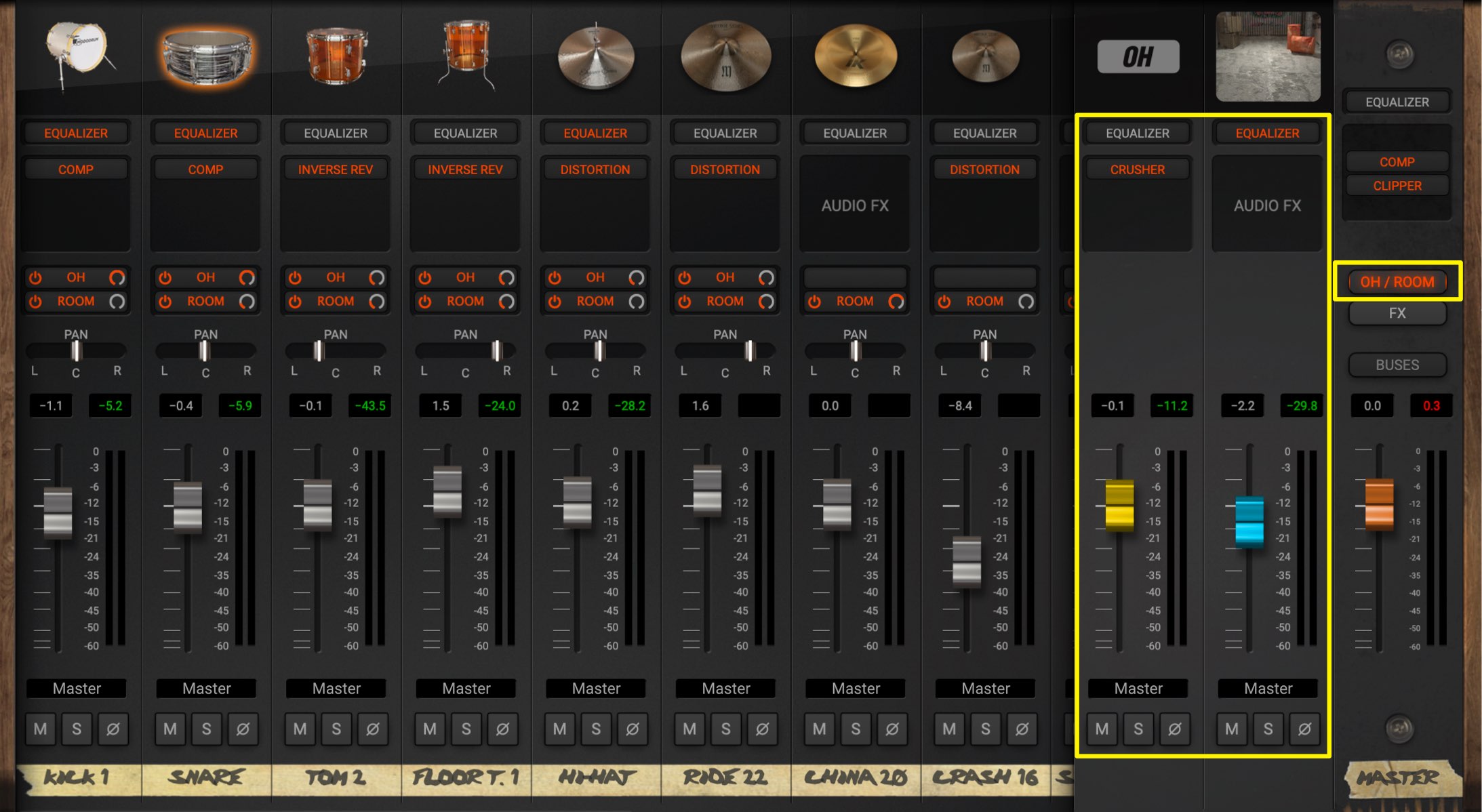
Click OH / ROOM on the master channel to adjust the overhead microphone level and effects,
and the level and effects for the room selected earlier.
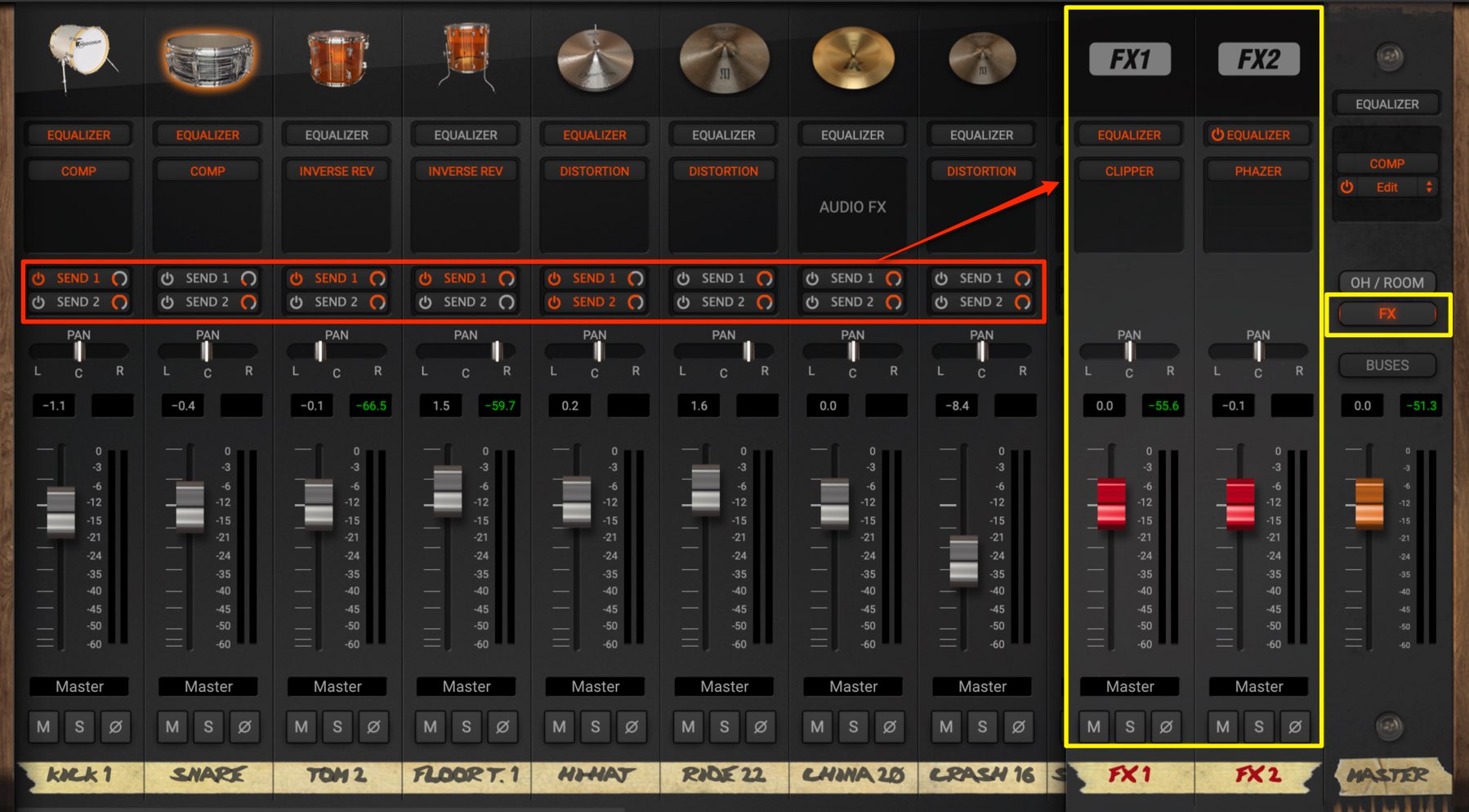
Click FX to access up to two send/return effects.
Use SEND 1/2 on each kit piece to adjust how much signal is sent to those effects.
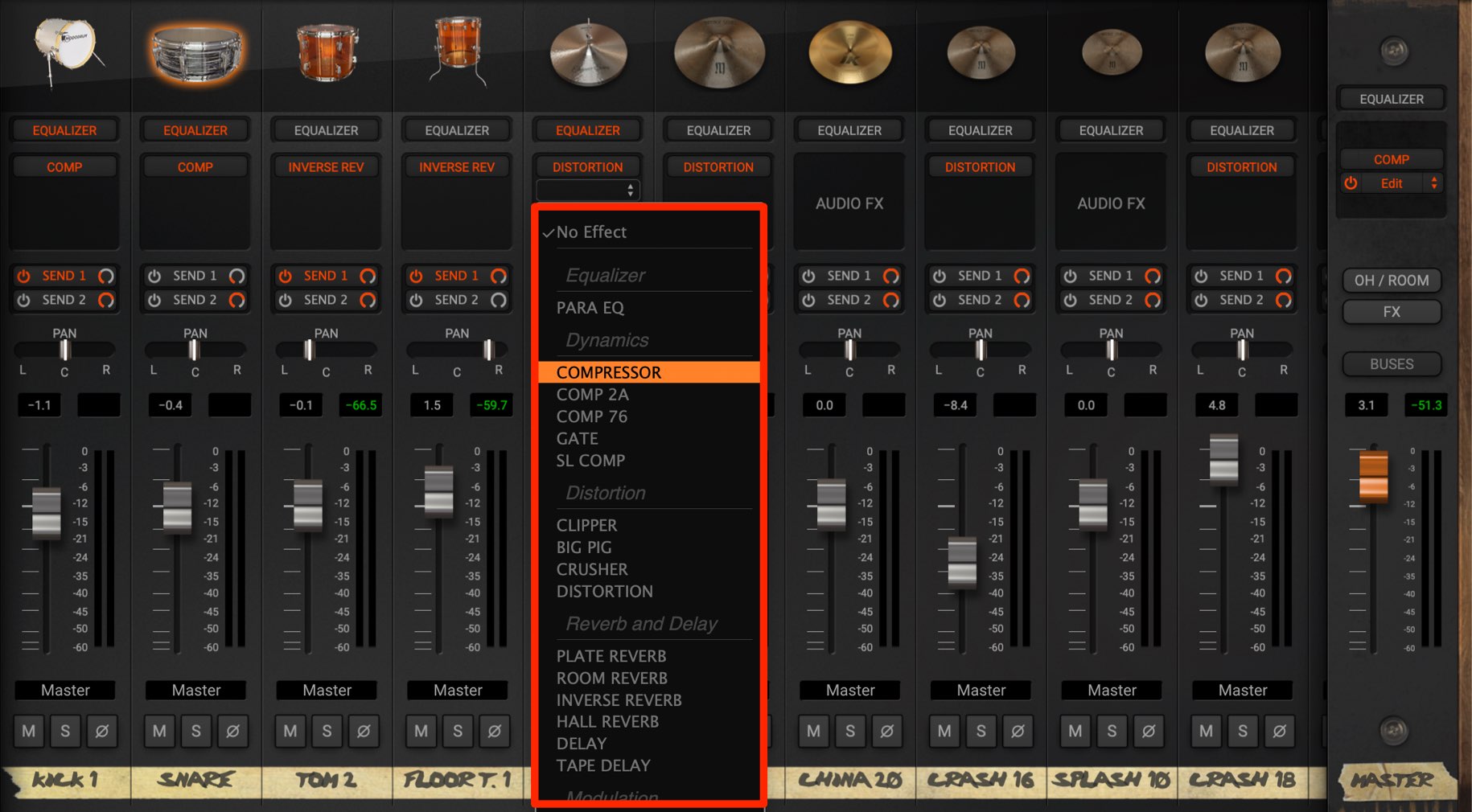
You can also apply effects individually using each kit piece's effect slots.
This allows even more detailed sound design.
Routing Separate Outputs to Your DAW
Here is how to route kit pieces individually to your DAW for separate control.
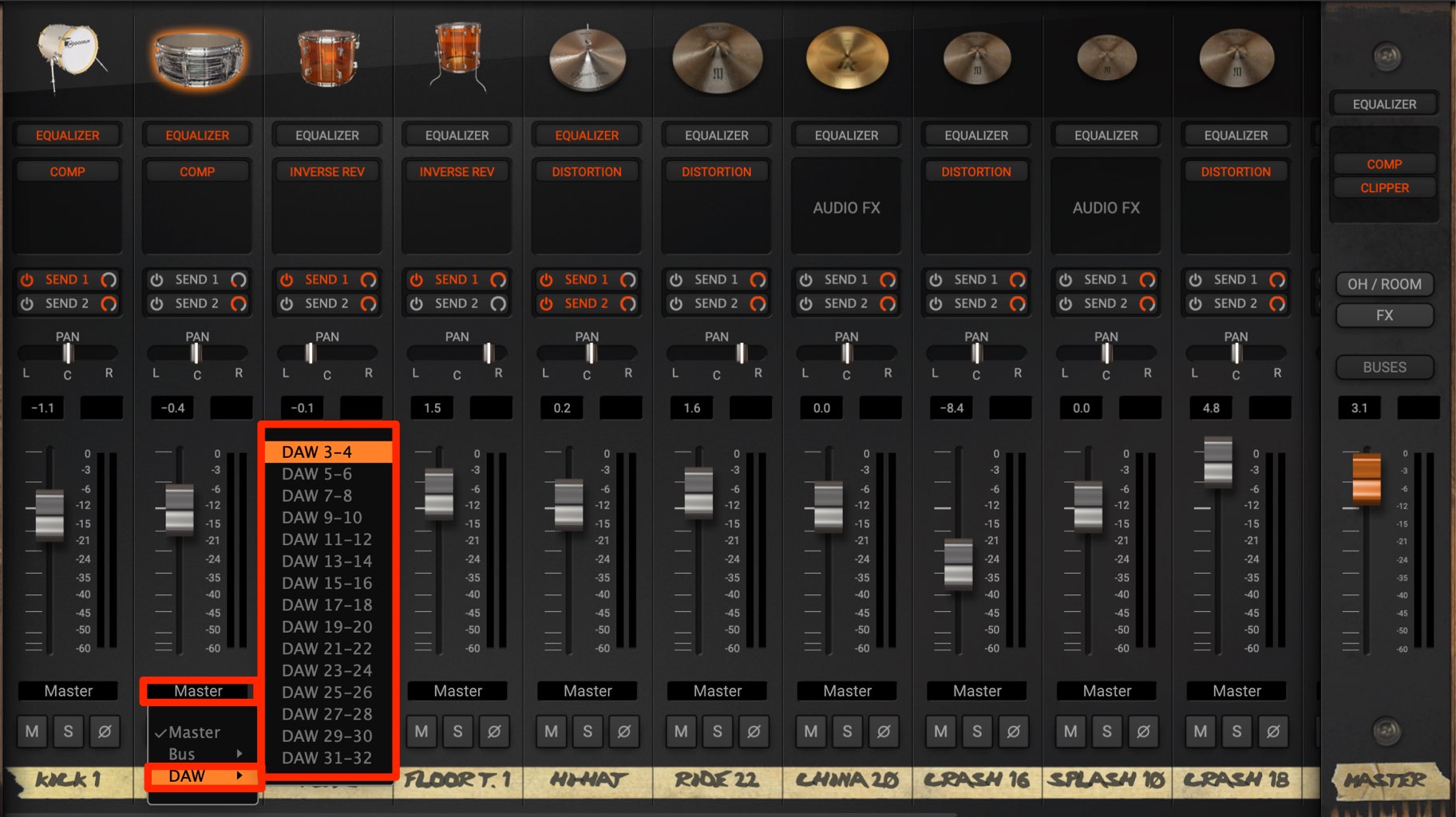
Click a kit piece's output selector, choose DAW and assign the piece to its own DAW output.
The setup on the DAW side differs between applications. See the links below for instructions.
Using Separate Outputs for Software Instruments

 Logic
 Cubase
 Ableton Live
 Studio One
 FL Studio
Saving Your Kit
Save the kit settings you have adjusted so that you can quickly recall them in other songs.
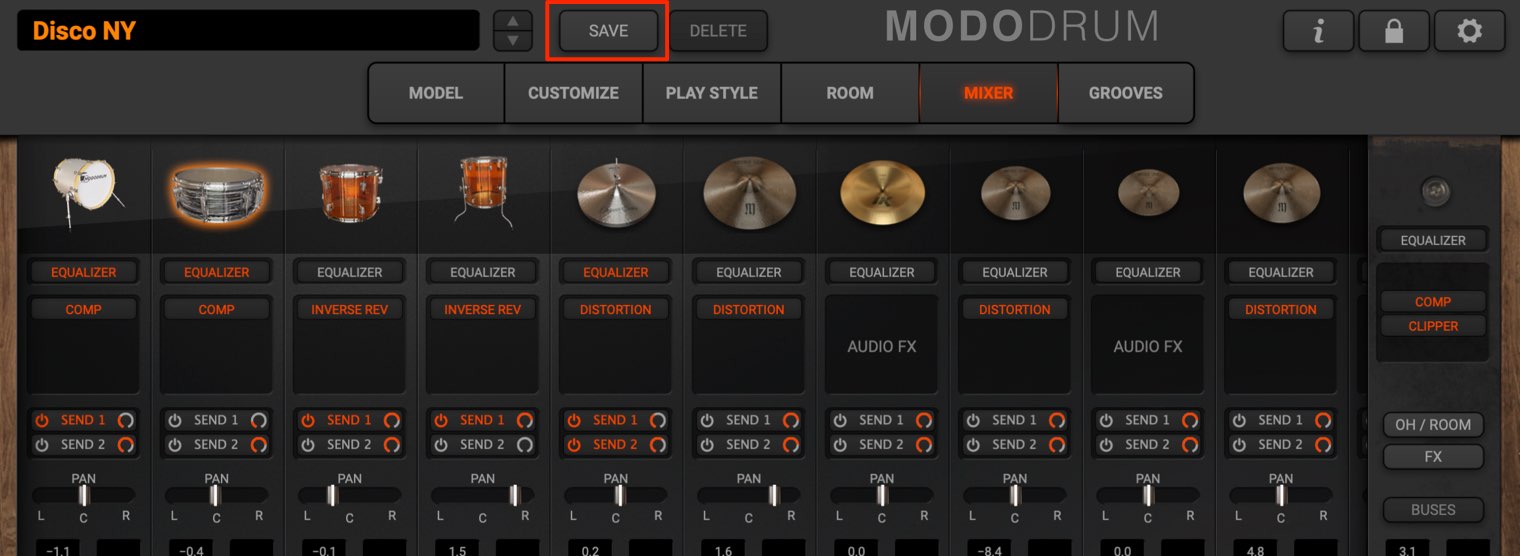
Click SAVE at the top of the window.
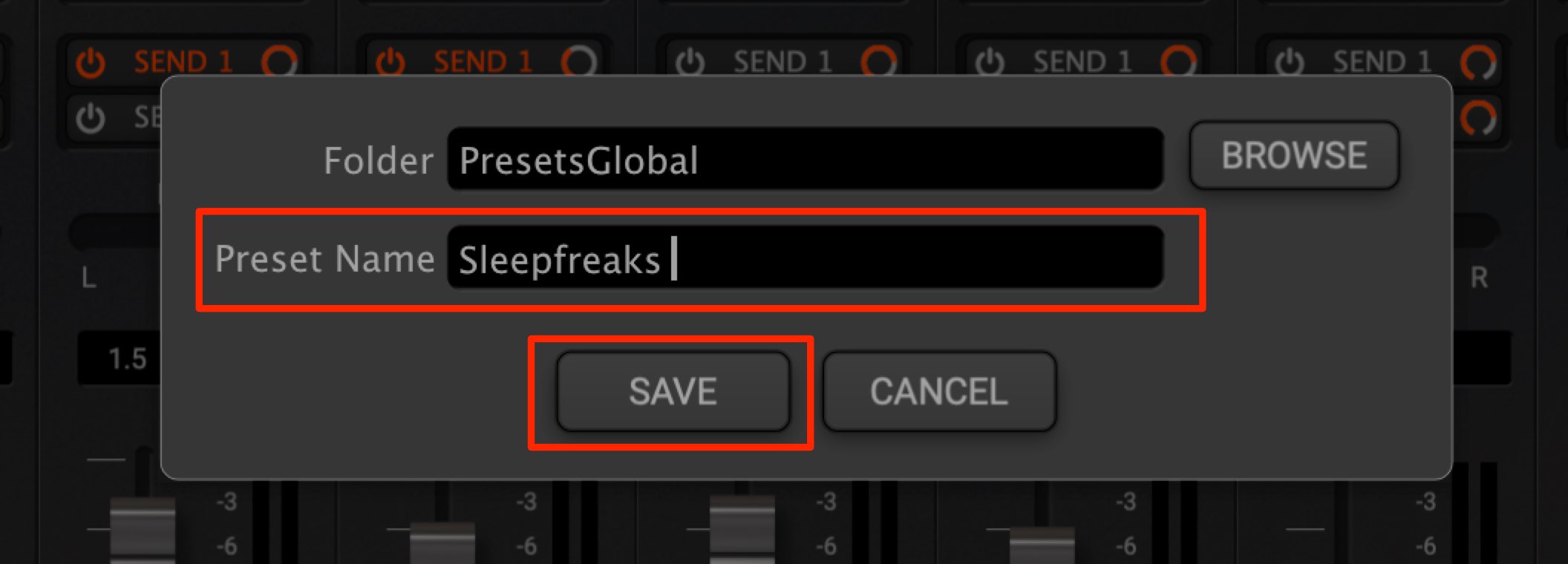
Enter a name and click SAVE.
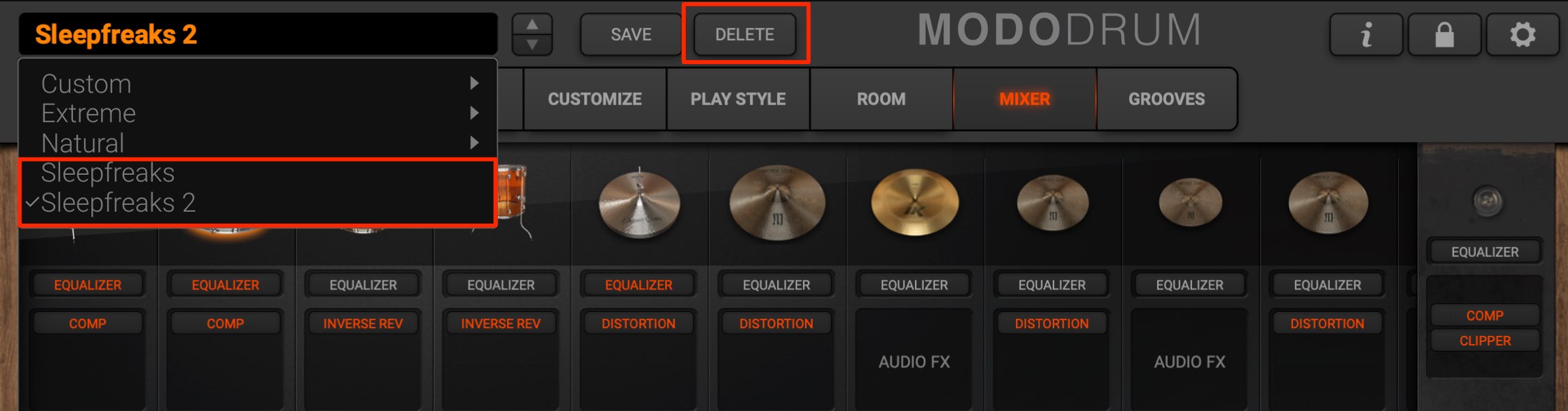
The saved preset appears in the preset menu as shown.
To remove a preset, select DELETE.
As your preset collection grows, organizing presets into folders is also a useful option.
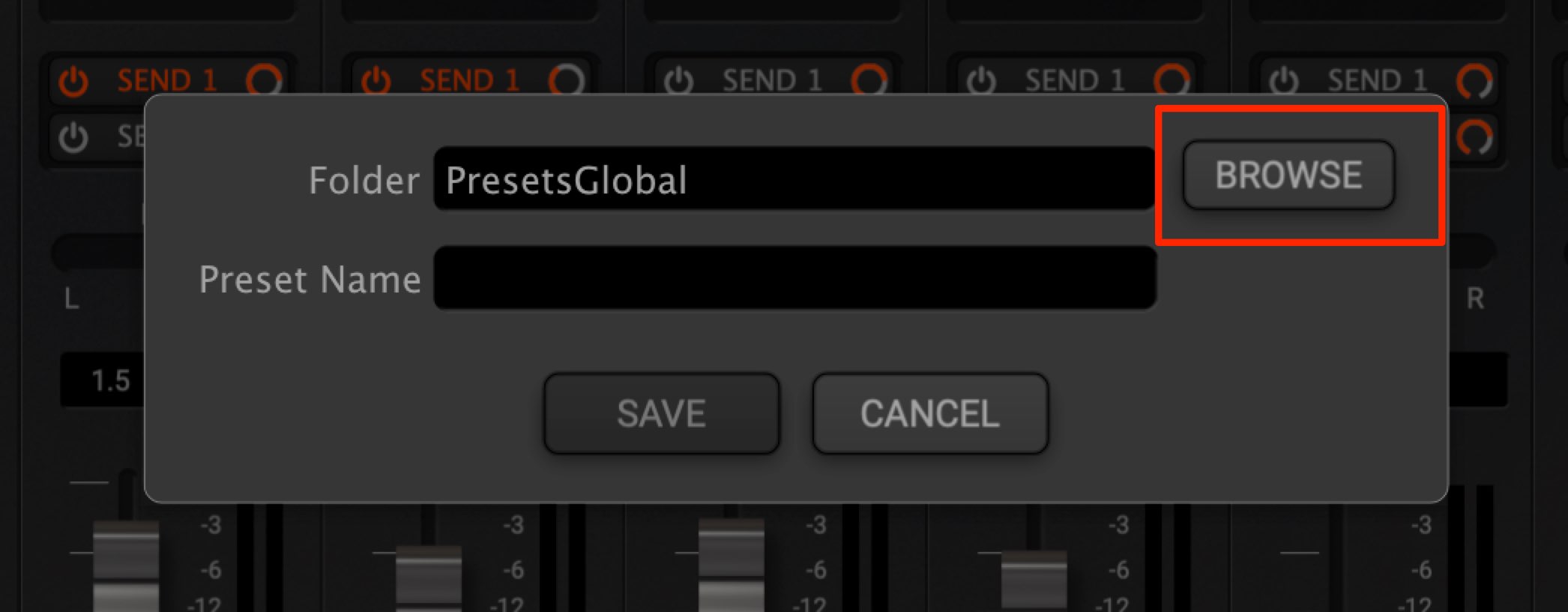
Click BROWSE in the save dialog.
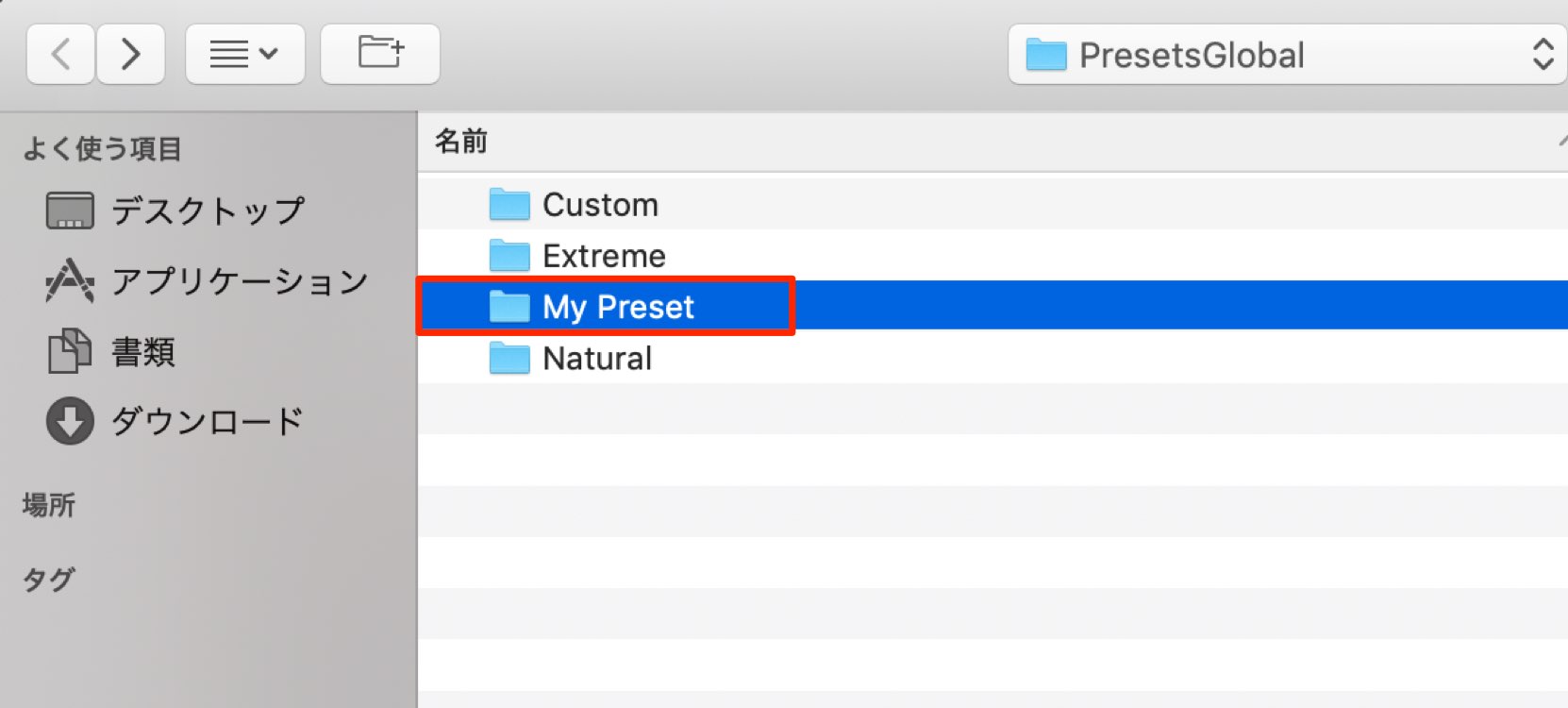
When prompted for a folder location, create a dedicated folder and select it as the save destination.
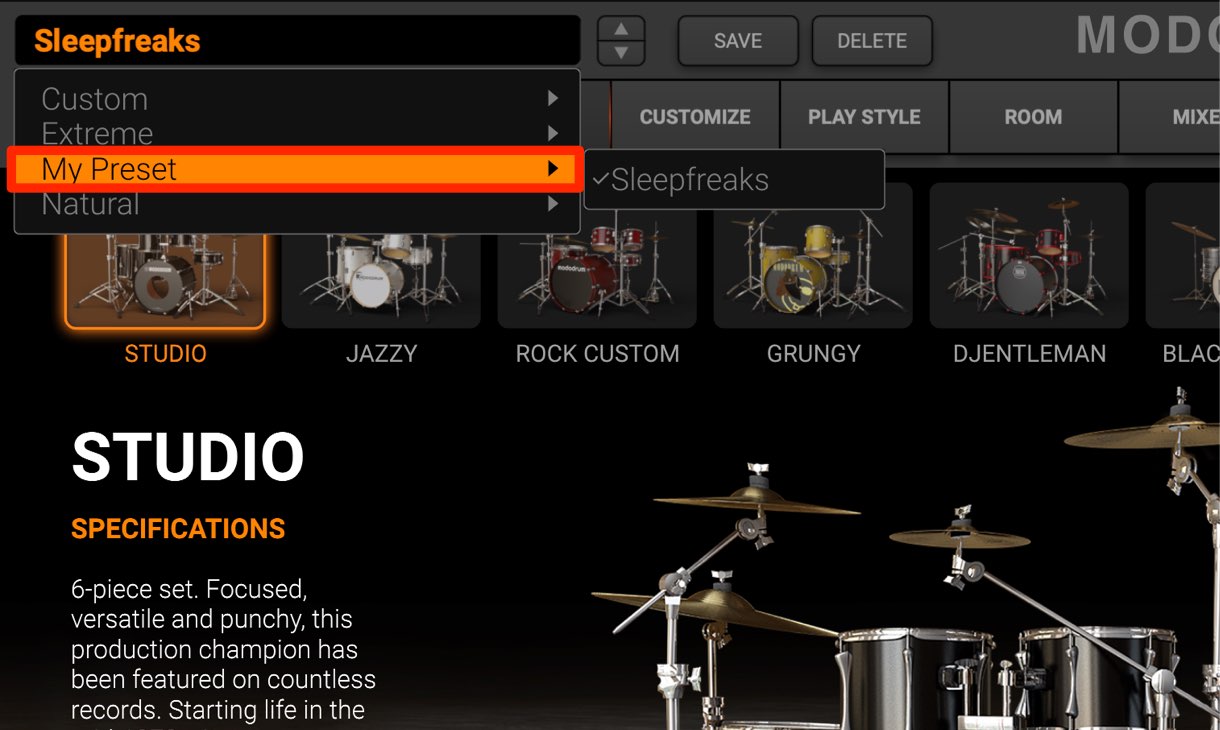
Your preset is saved in the selected folder, making it easy to organize your collection.
What did you think?
Excellent sound, responsive operation and extensive customization:
we found MODO DRUM to be a very capable drum instrument.
It is a strong option for anyone looking to improve the acoustic drum sound in their music.
At the time of the original article, owners of MODO BASS and qualifying IK Multimedia products could purchase MODO DRUM at a discounted price. Give it a try!
Frequently Asked Questions
Q1. What kind of drum instrument is MODO DRUM?
MODO DRUM is a physically modeled acoustic drum instrument, positioned as the drum counterpart to IK Multimedia's popular MODO BASS. It offers realistic sound, extensive control over playing techniques and short preset loading times.
Q2. Can beginners use it?
Yes. With a wide selection of sound presets and rhythm patterns built in, beginners can get started simply by choosing a preset. More experienced users can explore detailed physical-modeling settings and adjust the nuances of the drummer's performance.
Q3. Can it automatically follow my DAW's tempo?
Yes. Enable SYNC TO DAW to make built-in rhythm patterns follow your DAW's tempo. The 1/2× and 2× controls also let you play patterns at half or double speed.
Q4. Can I process each drum separately in my DAW?
Yes. The mixer's separate-output routing lets you assign the kick, snare, hi-hat and other kit pieces to individual DAW outputs, so you can control each on its own track.
Q5. Can I control the sound in real time during playback?
Yes. As described in the original FAQ, MIDI CC control of play-style settings, such as striking areas and beater material, lets you adjust the drummer's nuances in real time during playback.
[New release — August 2019] IK Multimedia's MODO DRUM, which recreates acoustic drum sounds through physical modeling, has finally arrived!
Positioned as the drum counterpart to MODO BASS, it offers excellent sound and customization.
A tutorial video was also planned for our YouTube channel shortly after this announcement!
📝 Article: https://t.co/qL5w81v7j9 pic.twitter.com/ZXO4mceeBl— SLEEP FREAKS (@SLEEPFREAKS_DTM) August 8, 2019
NEW ARTICLES
Latest English Articles