Sample Magic’s MAGIC AB 2 is a mixing and mastering plug-in for switching quickly between reference tracks. The version covered here supports AAX, AU, and VST formats and can hold up to nine references. Separate peak and RMS meters help compare level, while markers, looping, and presets make the comparison workflow easier. Compatibility with a current DAW or operating system should be checked separately.
Switch Between Reference Tracks Quickly
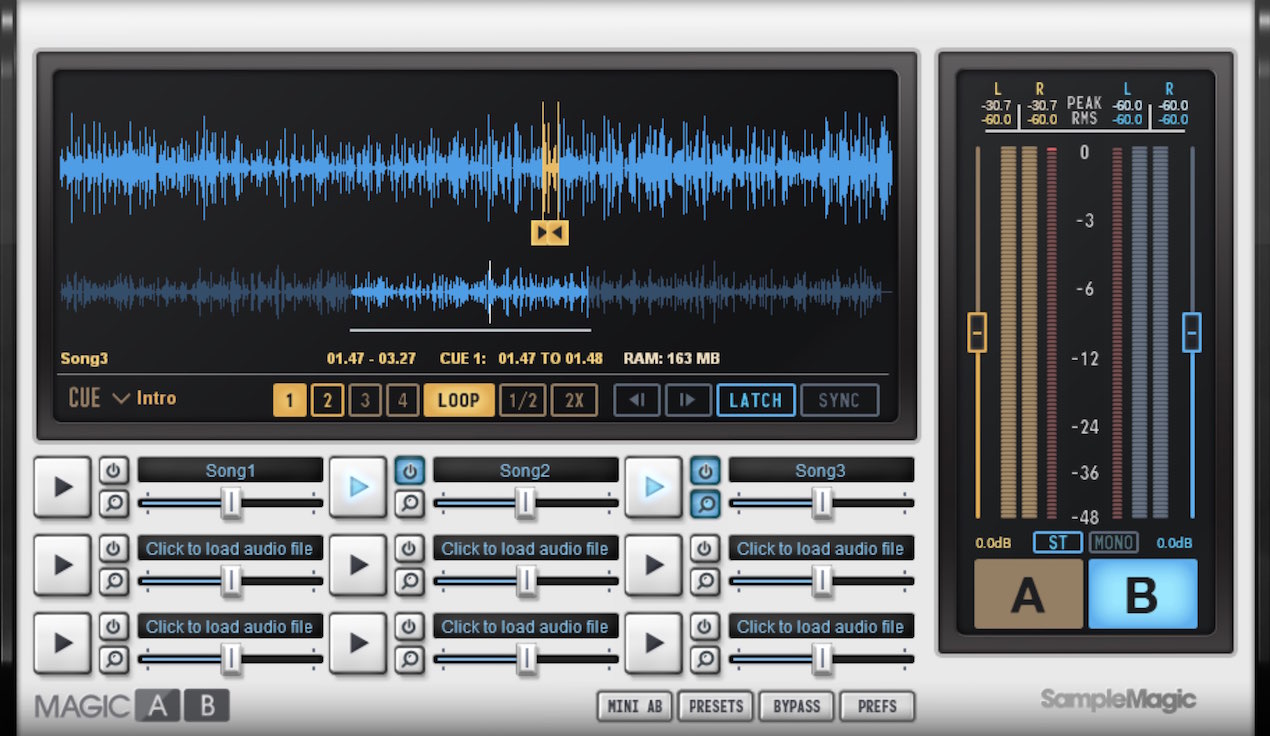
MAGIC AB 2, released by Sample Magic,
lets you switch instantly between multiple reference tracks in your current music project
and compare them.
It can be used for mixing and mastering,
or to keep arrangement references close at hand while checking your direction.
The version described here supports AAX, AU, and VST formats for compatible DAWs. Check the product’s current system requirements for your particular setup.
Let’s see how it works.
Product page: http://www.crypton.co.jp/mp/do/prod?id=99871
MAGIC AB 2 Video Tutorial
Inserting MAGIC AB 2

Insert MAGIC AB 2 at the end of the master track.
If other plug-ins are placed after MAGIC AB 2,
their processing will affect the reference sound too.
Loading and Listening to References
You can load up to nine reference tracks.
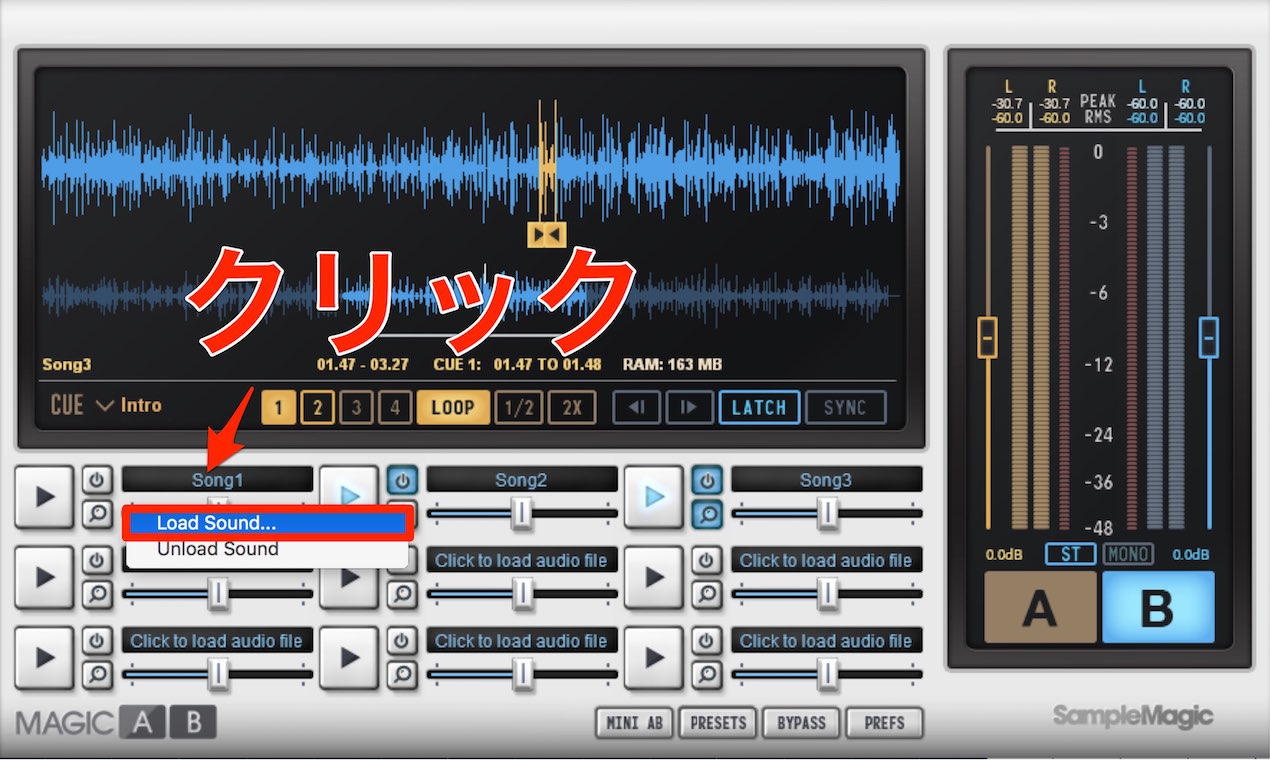
Click the file name area and select “Load Sound,”
then choose a reference audio file.
The formats listed in the original guide are MP3, AIFF, WAV, M4A, and AAC.
Files with double-byte characters in their names may cause an error,
so the original guide recommends using single-byte alphanumeric file names.
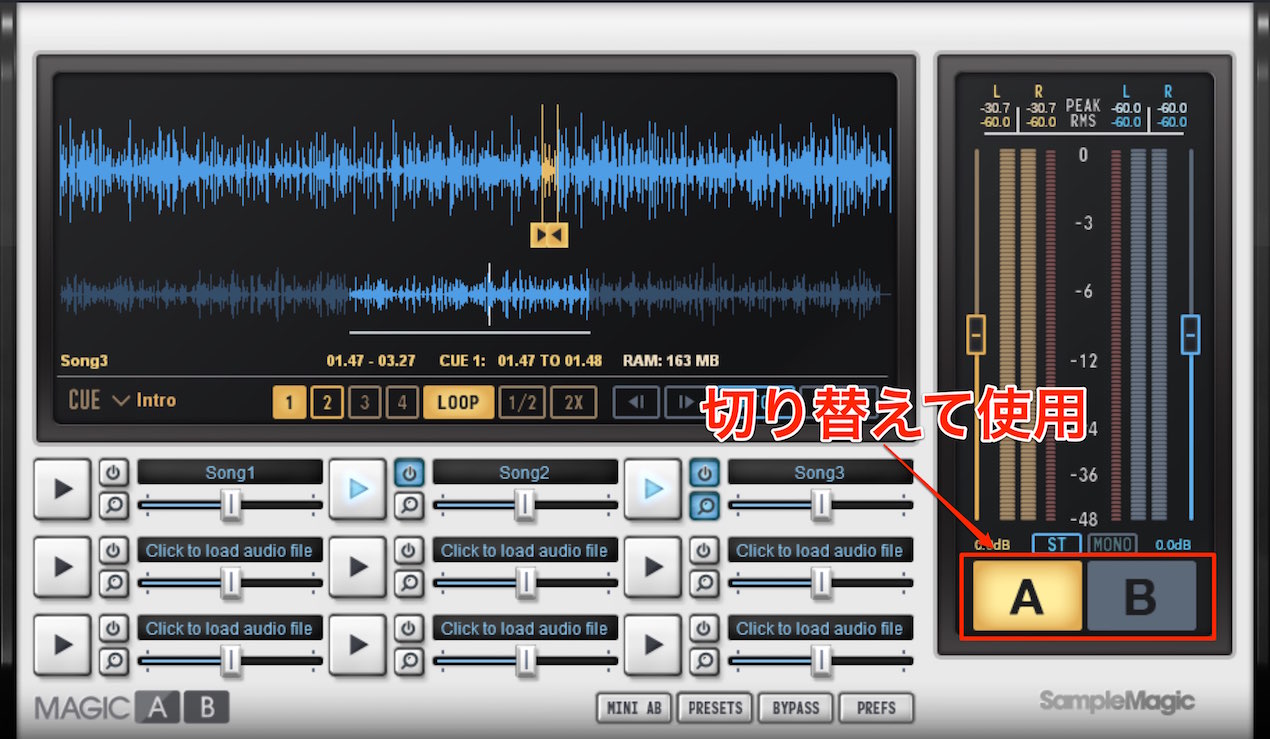
Click “A/B” to switch the source you are monitoring.
- A: the project currently open in your DAW plays as usual.
- B: the loaded reference track plays.
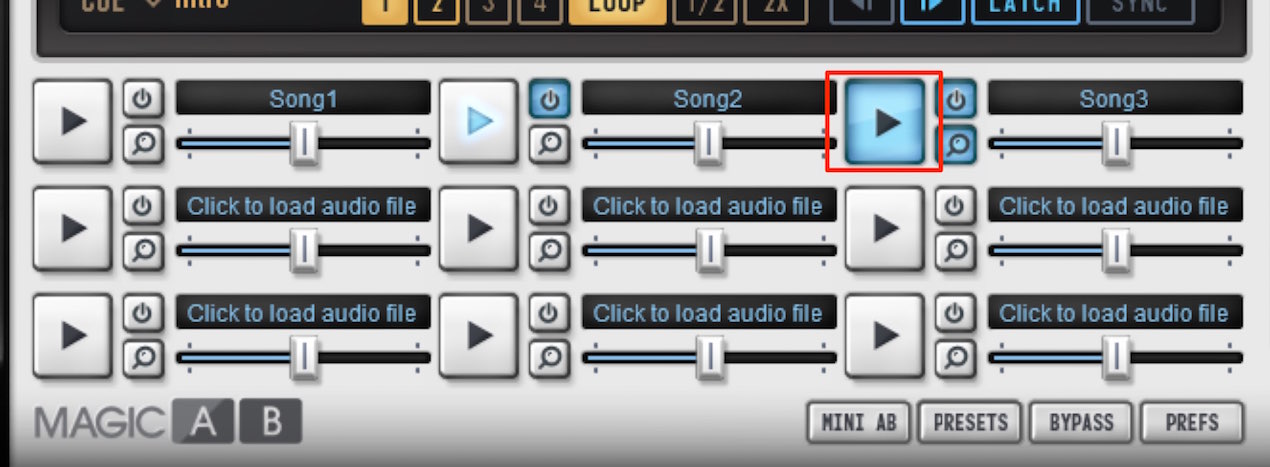
Use the play buttons to switch between reference tracks.
Level Meters
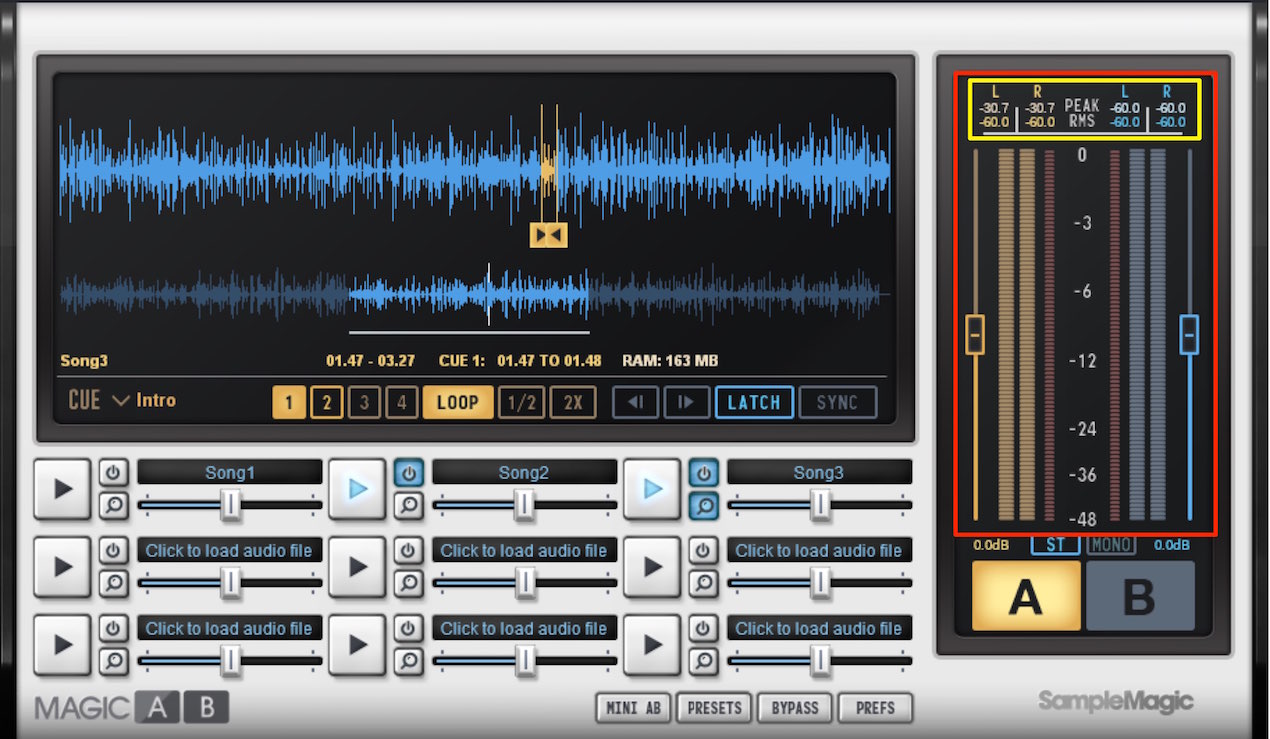
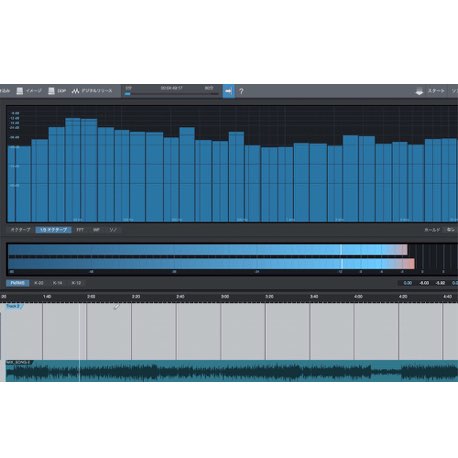
A and B have separate level meters
for measuring peak and RMS values.
This makes it easier to compare levels and perceived loudness.
Video: Peak and RMS
Choosing Playback Positions
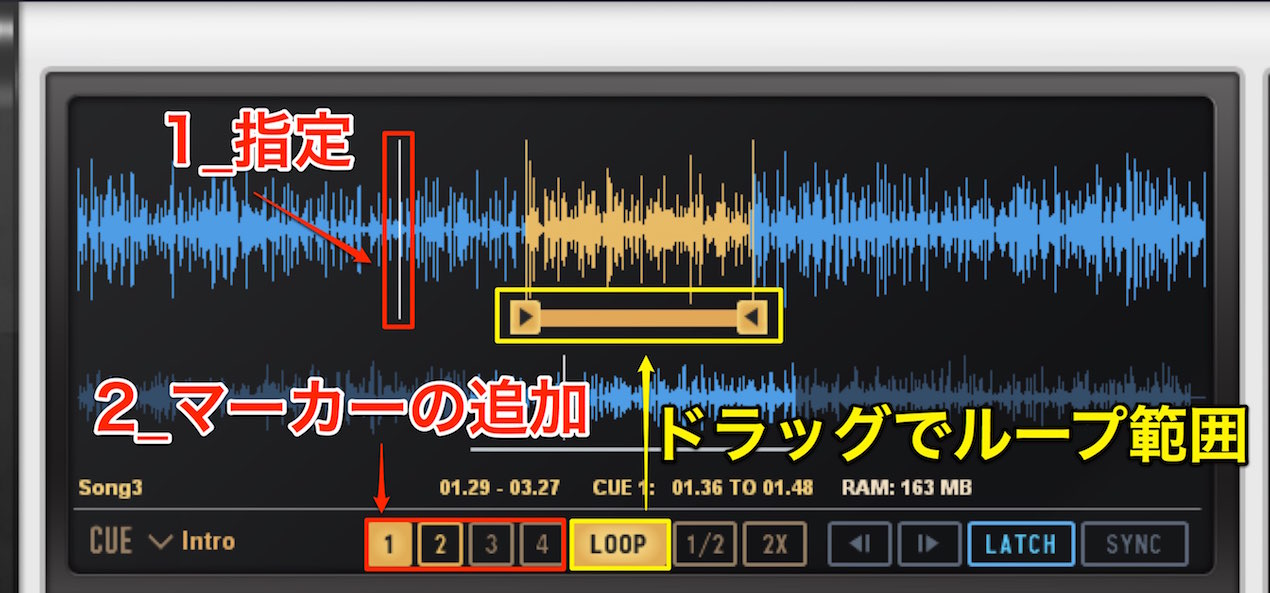
Click a position in the waveform and then click one of the numbers below
to set up to four markers.
Click a saved marker number to jump quickly to that position.
You can also enable “Loop” and drag to select a range
to play that section repeatedly.
Saving Presets
Save your reference tracks and marker settings
so you can quickly recall them in another project.
For example, you could prepare a set of nine references for each genre.
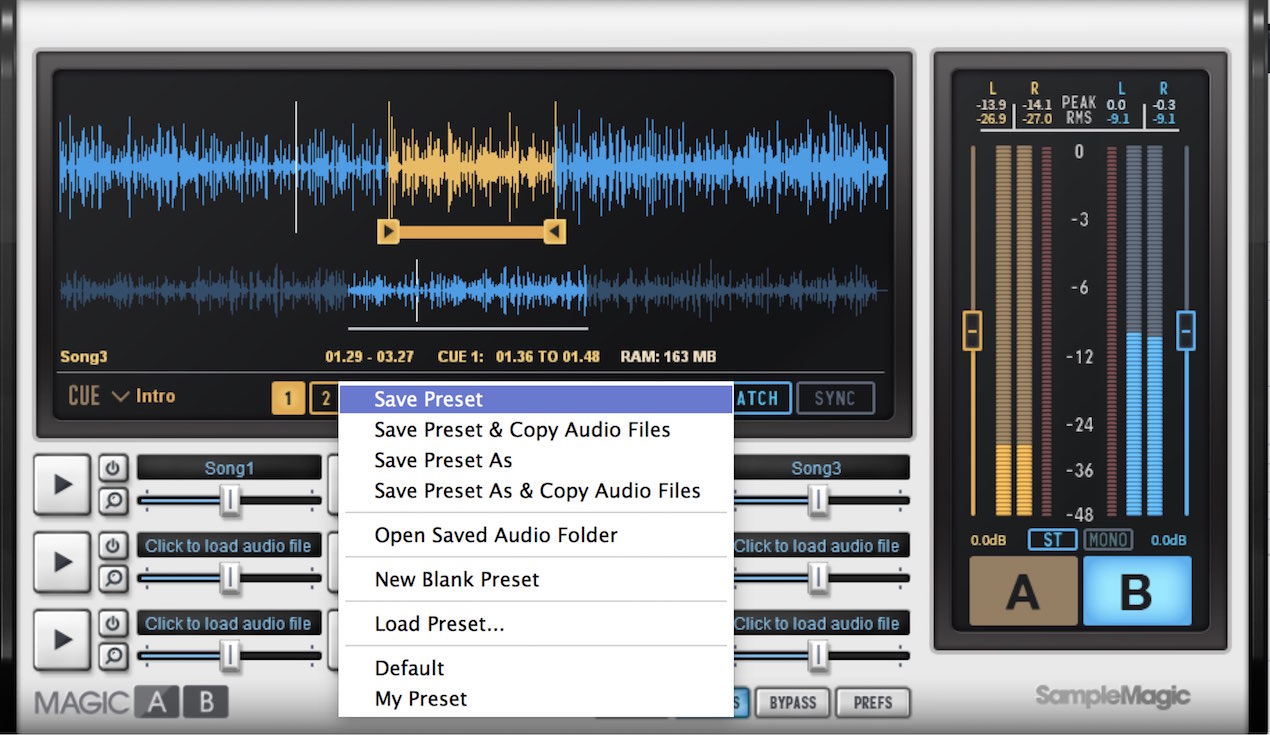
To save a preset, click “PRESETS” at the bottom of the interface.
Select “Save Preset” from the menu and save it.
To recall a saved preset,
choose “Load Preset” from the same menu and select the preset.
Frequently Asked Questions
Q1. Which DAWs can use MAGIC AB 2?
The version in this guide supports AAX, AU, and VST, formats used by DAWs such as Logic Pro, Cubase, Studio One, and Ableton Live. Check the plug-in version and current OS and DAW compatibility before installing.
Q2. Where should I insert it on the master track?
Place it last in the master chain. Plug-ins after it would also process the reference track.
Q3. Which audio formats can be loaded?
The original guide lists MP3, AIFF, WAV, M4A, and AAC. It recommends single-byte alphanumeric file names because double-byte characters can sometimes cause errors.
Q4. How many references can I load?
You can load up to nine reference tracks and save different sets as presets, for example by genre.
Q5. What are peak and RMS measurements useful for?
They provide numerical level information for comparing the current project with a reference, helping you assess level and perceived loudness during mastering.
NEW ARTICLES
Latest English Articles