Using three saturation plugins in the Waves Abbey Road Collection can make a substantial difference to your mixes. Abbey Road Saturator works well on drums: combine Input with its secret weapon, the COMPANDER, to add punch. Abbey Road Vinyl brings warm distortion to bass, while Phase Distortion produces a distinctive dirty sound. On the master bus, J37 Tape adds natural harmonics and overall sparkle without becoming destructive. Understanding each plugin's character and choosing it to suit the source and the sound you have in mind will help you work toward a professional mix.
Take Your Mix Up a Level with Distortion
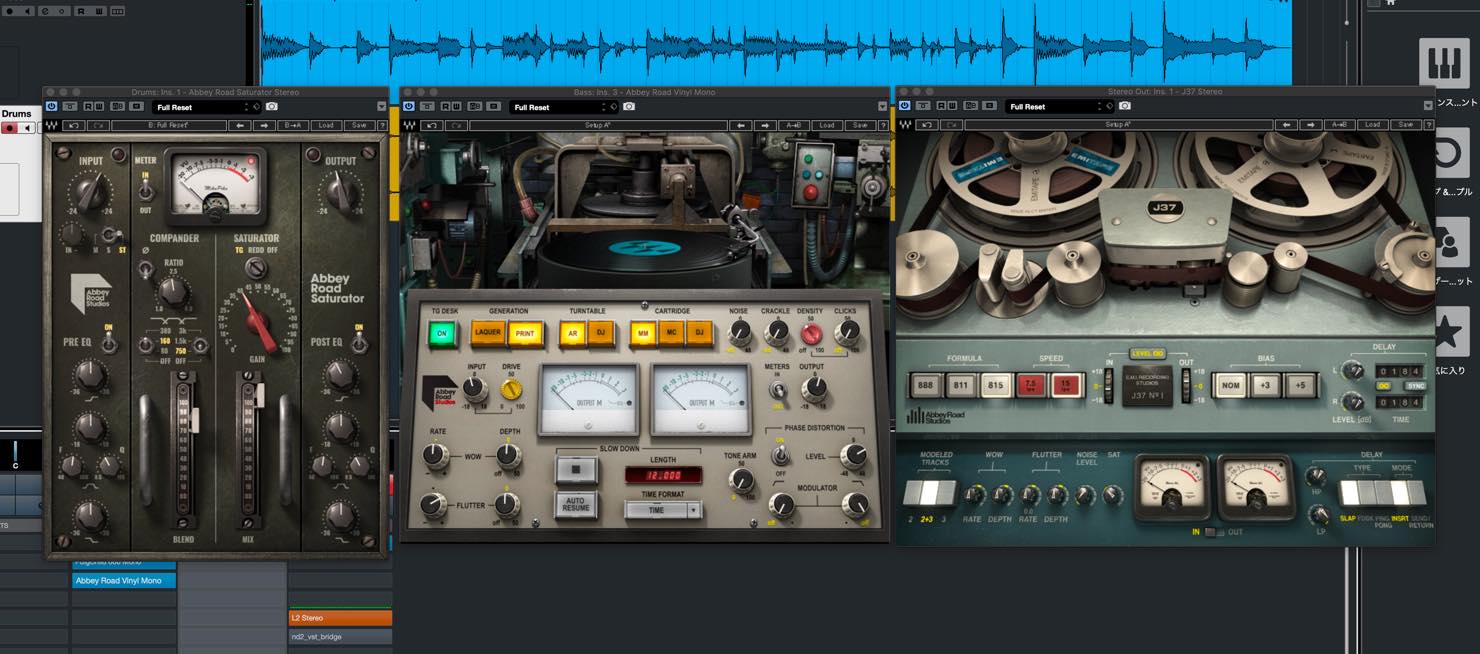
For the third installment of our Abbey Road Collection tips, we will explore three plugins that add saturation: Abbey Road Saturator, Abbey Road Vinyl, and J37 Tape. We will focus on the distinctive parameters of each one.
Let's take a closer look at each plugin.
Waves Abbey Road Collection Tips, Part 3: Saturation — Video Tutorial
Buy the product: Waves Abbey Road Collection
Abbey Road Saturator
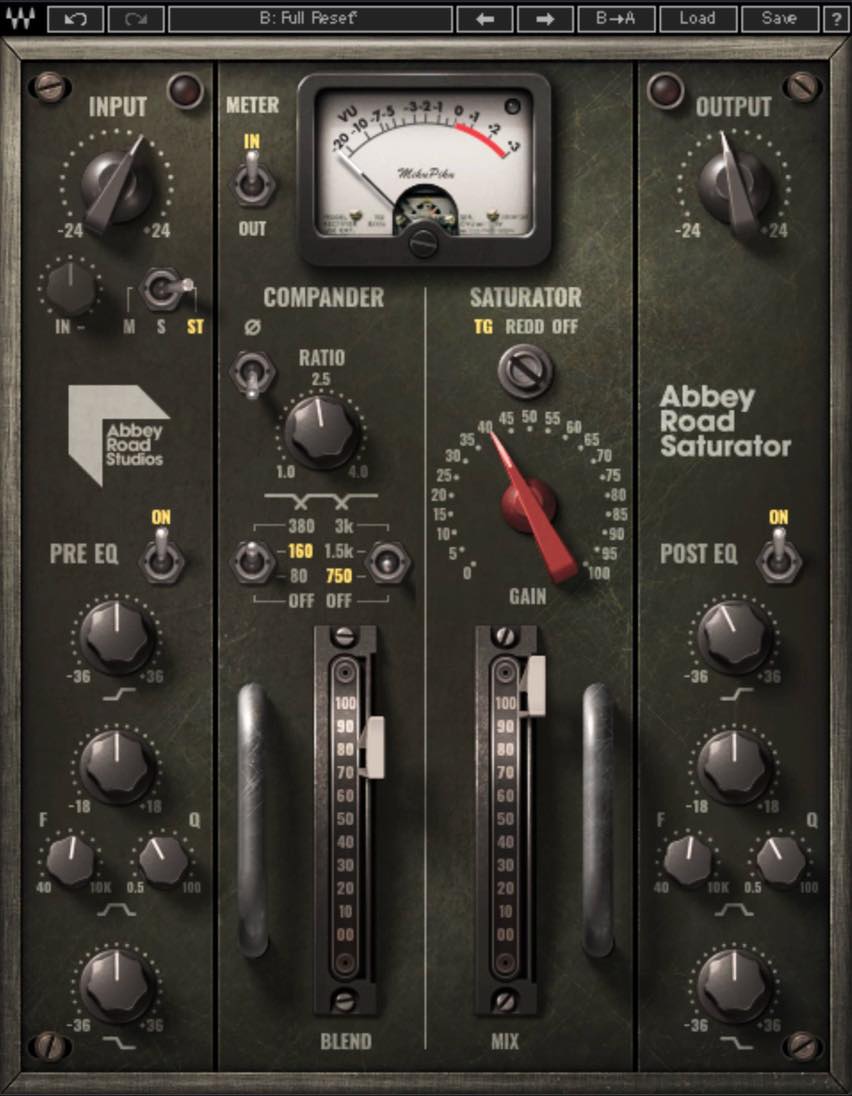
We will start with Abbey Road Saturator.
This time, we have applied it to drums. First, compare the processed sound with the bypassed version.
Bypassed
Processed
The sound changes dramatically, with an appealing result.
As its name suggests, Abbey Road Saturator specializes in distortion, but the Saturation section's Gain control is not the only parameter that affects it.
Input is another parameter to adjust alongside it.
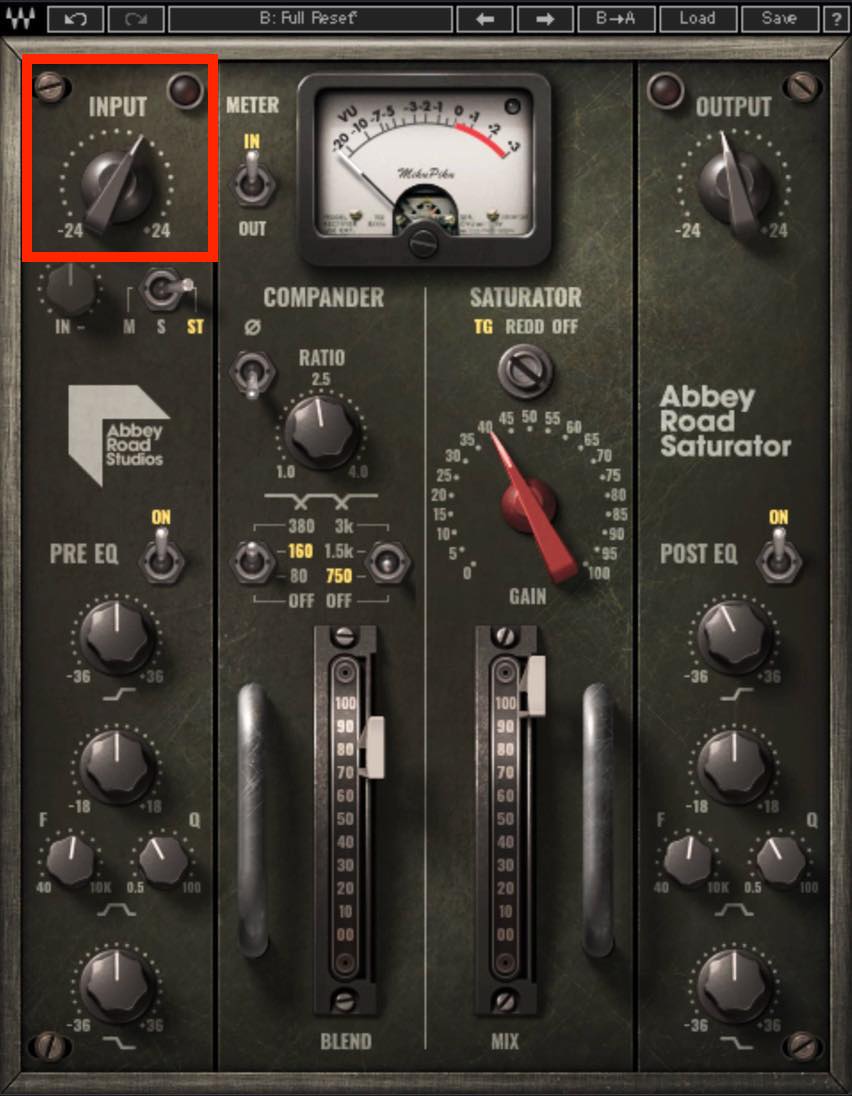
Input sets the incoming level. Normally, you would adjust it carefully to avoid clipping, but this is a saturator, so driving it hard is a valid option.
Use the indicator above and to the right of the knob as a guide: green means there is still headroom, yellow means you are near the limit, and red indicates clipping. Adjust the output at the same time so that you can focus on differences in tone.
Aim for yellow if you want pleasant saturation, or push into red for more aggressive distortion. Adjust it to suit the sound you want.
The COMPANDER is another parameter that could be described as this Saturator's secret weapon.
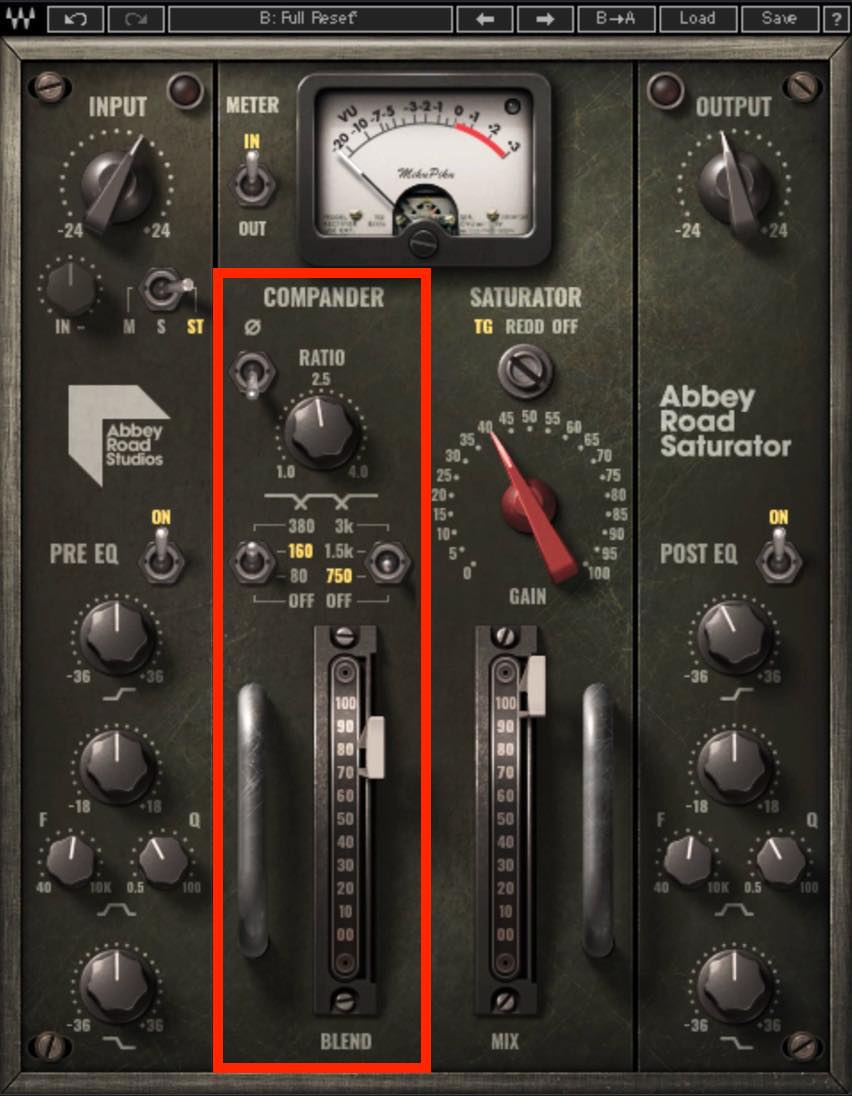
The name presumably combines compressor and expander. The processor first compresses the signal, passes it through low-pass/high-pass filters, and then expands it. The process was originally intended for tape noise reduction.
The Ratio and filter settings make a large difference to the frequency range emphasized by the distortion.
Once you have settled on those settings, try adjusting BLEND. At maximum, the sound can feel slightly squashed. With a more moderate setting, the drums regain their solidity and punch.
To our ears, this changes the sound even more than the Saturator's MIX control.
Abbey Road Vinyl
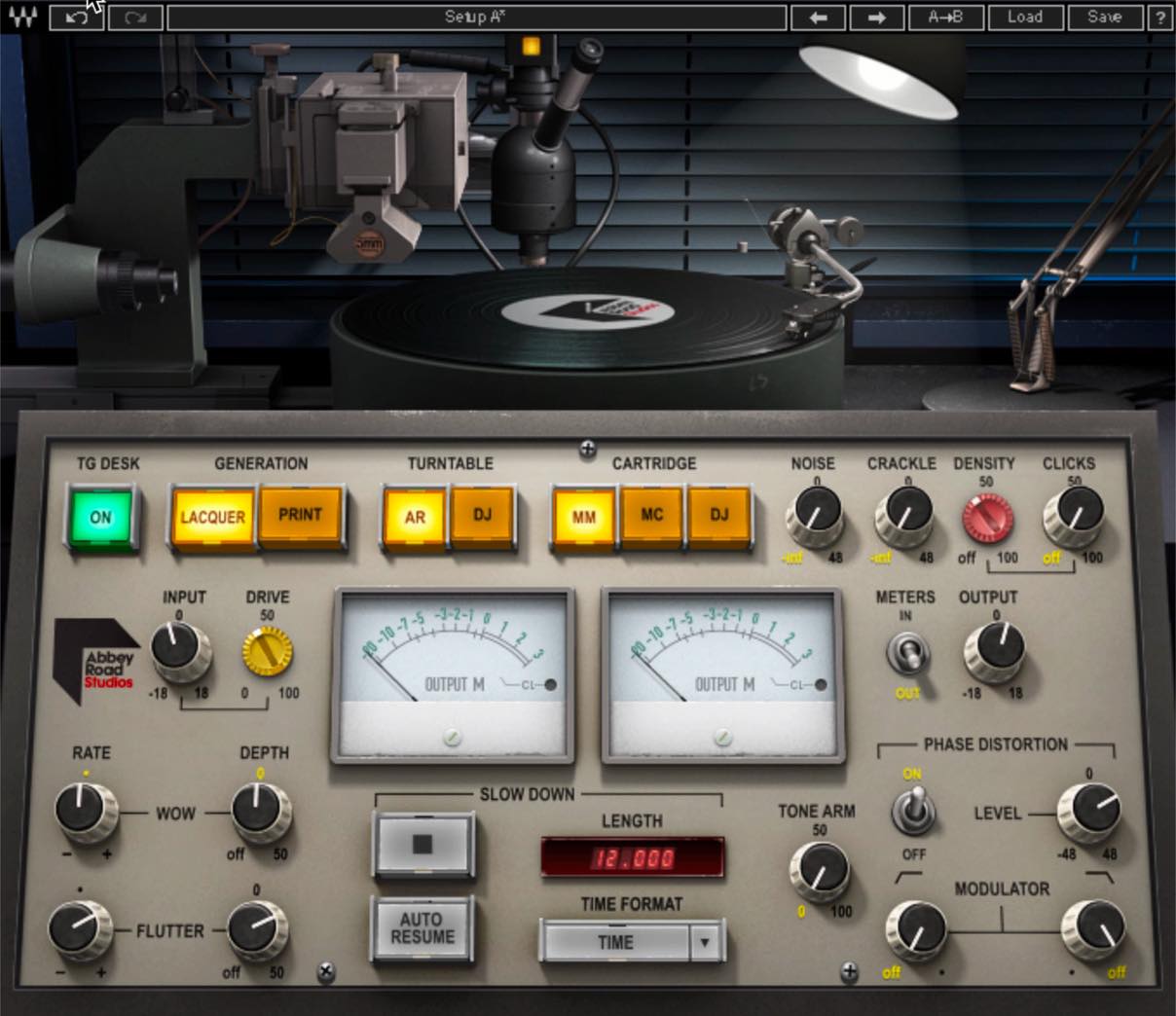
Next is Abbey Road Vinyl.
We have already set it up on the bass, so let's begin by comparing it with the bypassed sound again.
Bypassed
Processed
The sound has more presence and body.
Abbey Road Vinyl faithfully models the vinyl cutting machine installed at Abbey Road Studios. It can add the warmth and texture of an analog record, along with saturation.
Here, we will focus on the parameters related to saturation.
One of these is Drive.
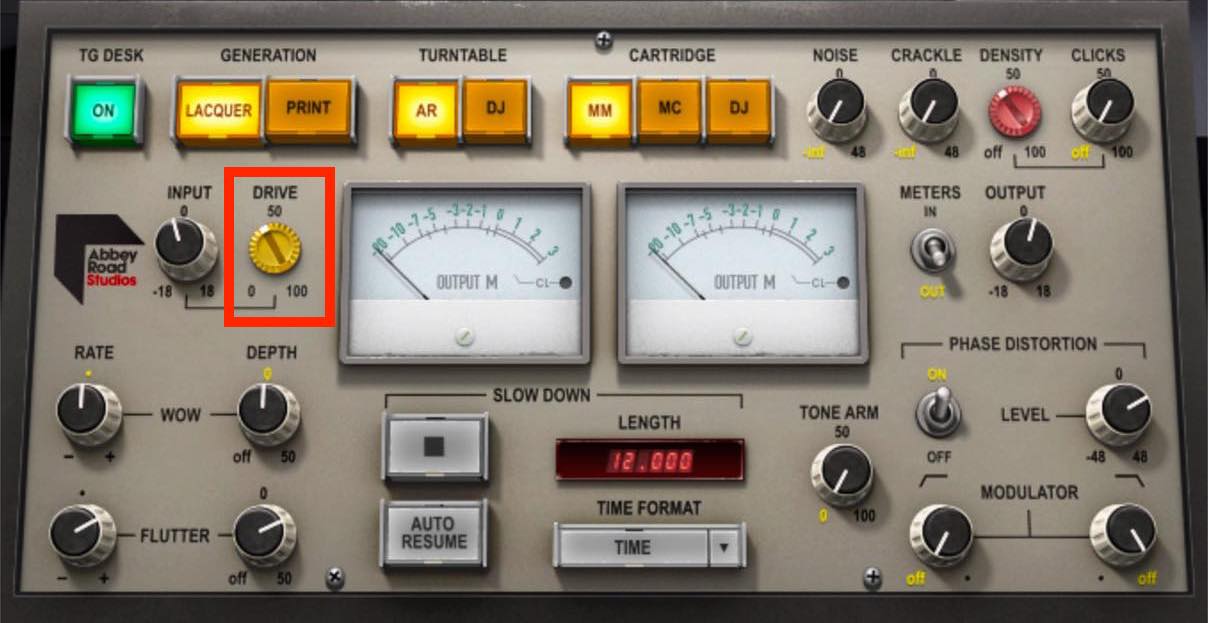
At high settings, it produces distinctly lo-fi distortion. Used lightly, its grainy texture adds character to the sound. As you increase Vinyl's Drive, the output level decreases, allowing you to focus on the distortion itself.
Combining it with TG Desk, which adds the character of passing through a TG12410 console, also changes the distortion slightly.
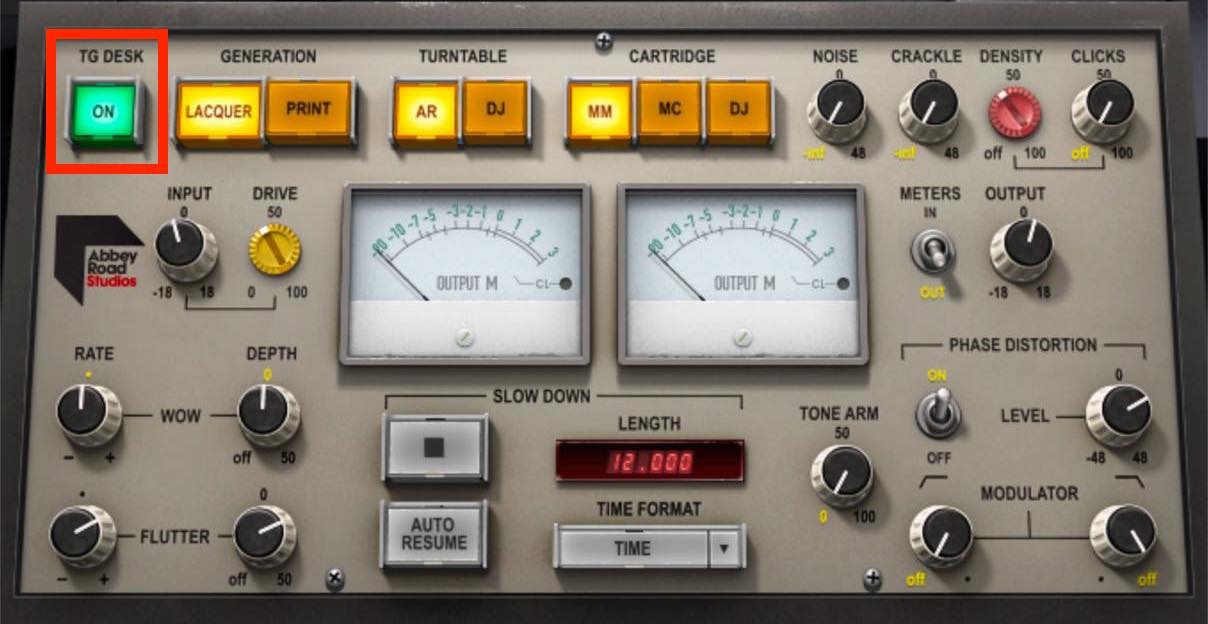
With TG Desk on, the sound is more aggressive and cuts through more clearly; with it off, the sound is more restrained. For a slap bass part like this one, switching it on seems to suit the sound better.
Another distinctive distortion parameter in Vinyl is Phase Distortion.
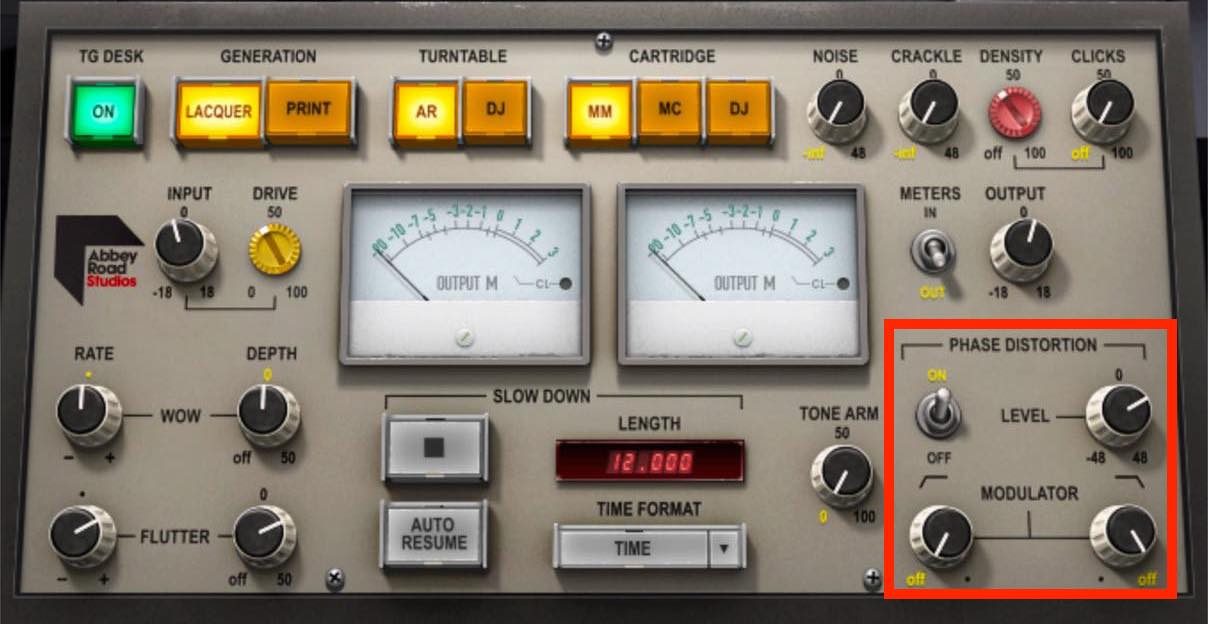
This deliberately introduces phase distortion, and the result is quite interesting.
Its dirty sound is somewhat different from fuzz, with a character you do not get from other distortion effects. It sounds good in small amounts, and at extreme settings it could work as a special effect.
Flutter is also interesting, although it is not directly related to distortion.
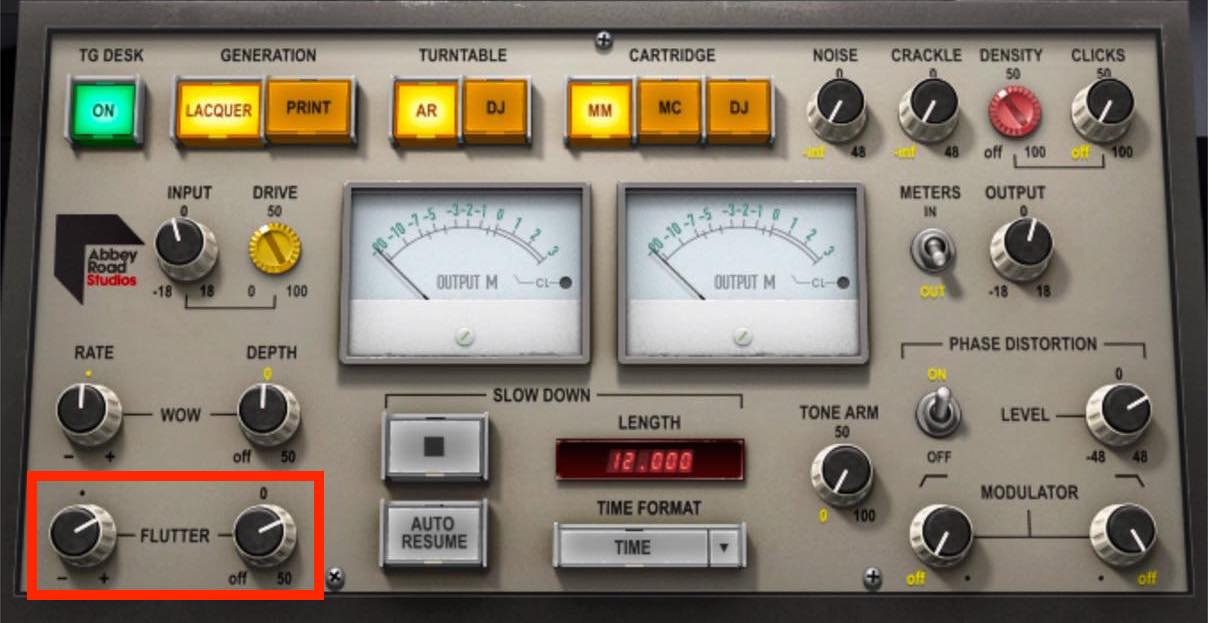
This modulator introduces changes in volume—in other words, a tremolo effect. At strong settings, it can produce a pumping feel similar to heavy compression. Used subtly, it adds the random character associated with analog playback.
J37 Tape
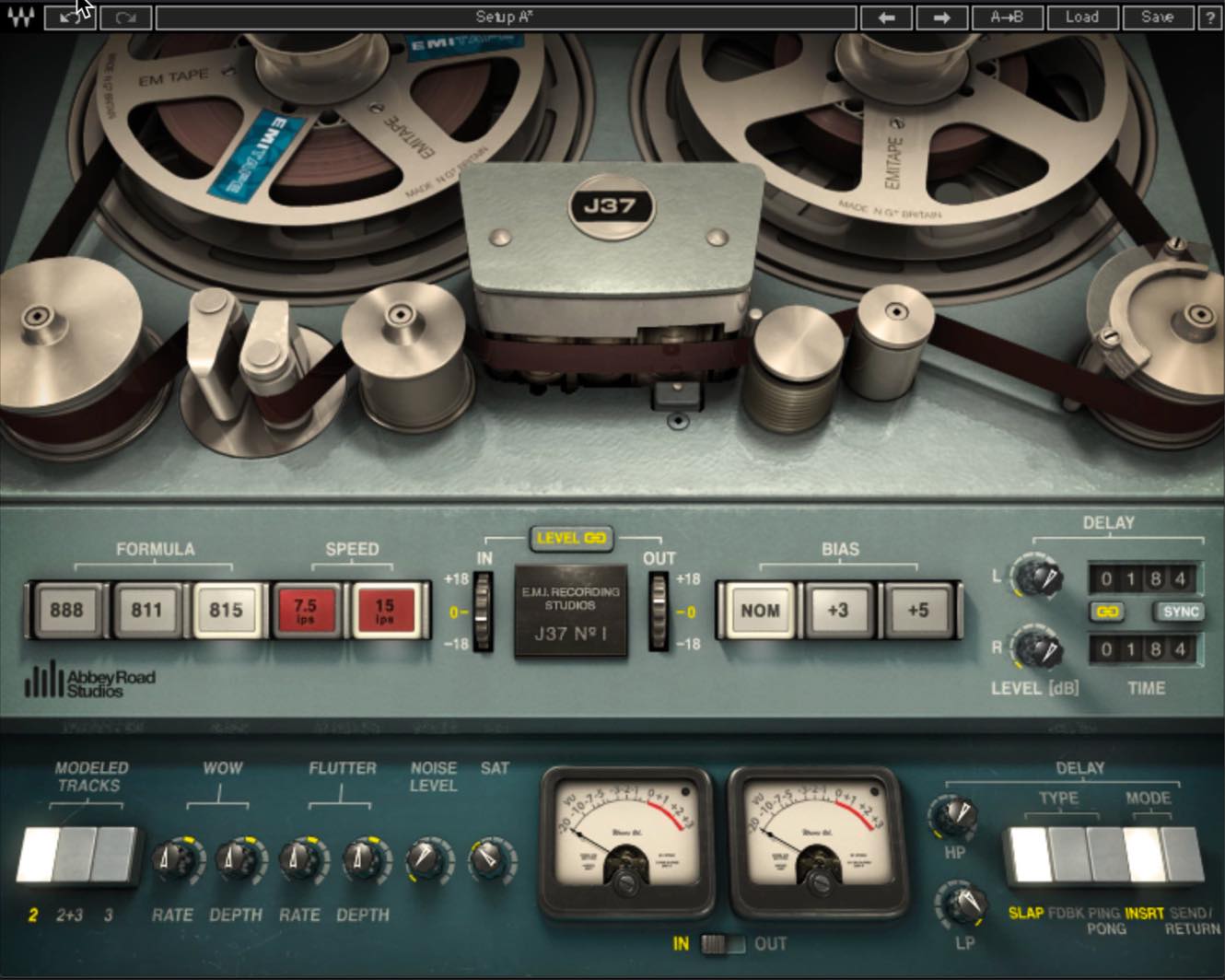
Next, let's look at J37 Tape.
We have already applied it to the master bus, so, as before, compare it with the bypassed version.
Bypassed
Processed
The moderate addition of harmonics gives the mix more punch and sparkle, with a greater sense of extension at both the top and bottom.
J37 Tape's saturation is mainly adjusted with SATURATION LEVEL, but its interaction with INPUT LEVEL also changes the sound.
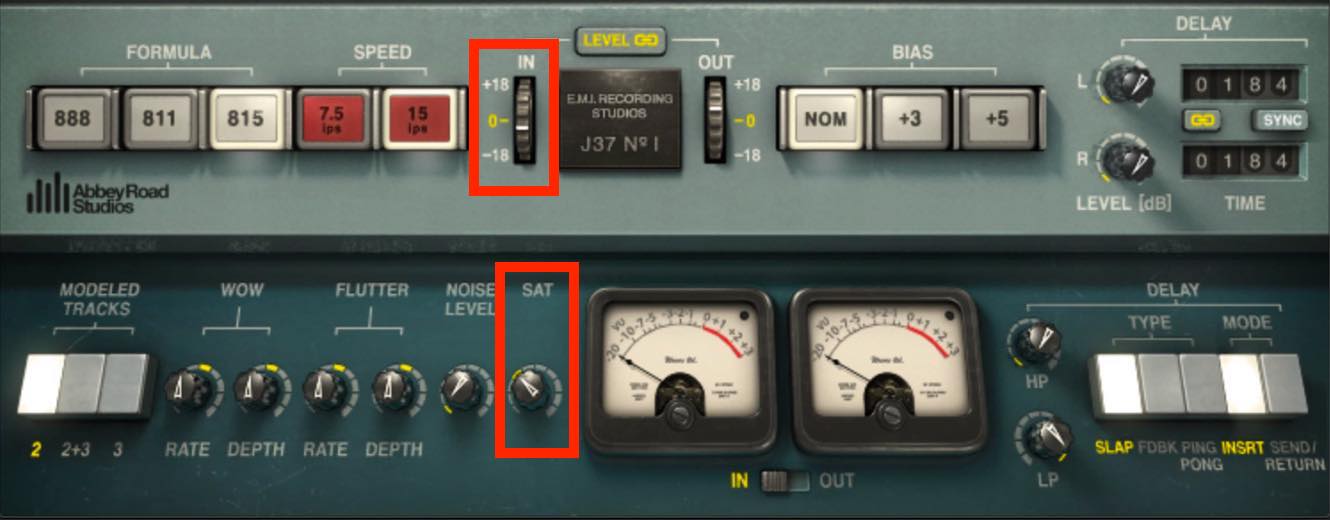
SATURATION LEVEL mainly affects strong attacks in the high frequencies. Up to a point, the harmonics seem to build gradually without becoming destructive. This makes it well suited to fine-tuning saturation on the master bus.
By contrast, pushing INPUT LEVEL adds a squashed kind of distortion, starting mainly in the low end. This seems better suited to individual tracks where you want a distorted sound than to the master bus.
Although it is not directly related to distortion, we will also look at MODELED TRACKS, a distinctive J37 Tape parameter.
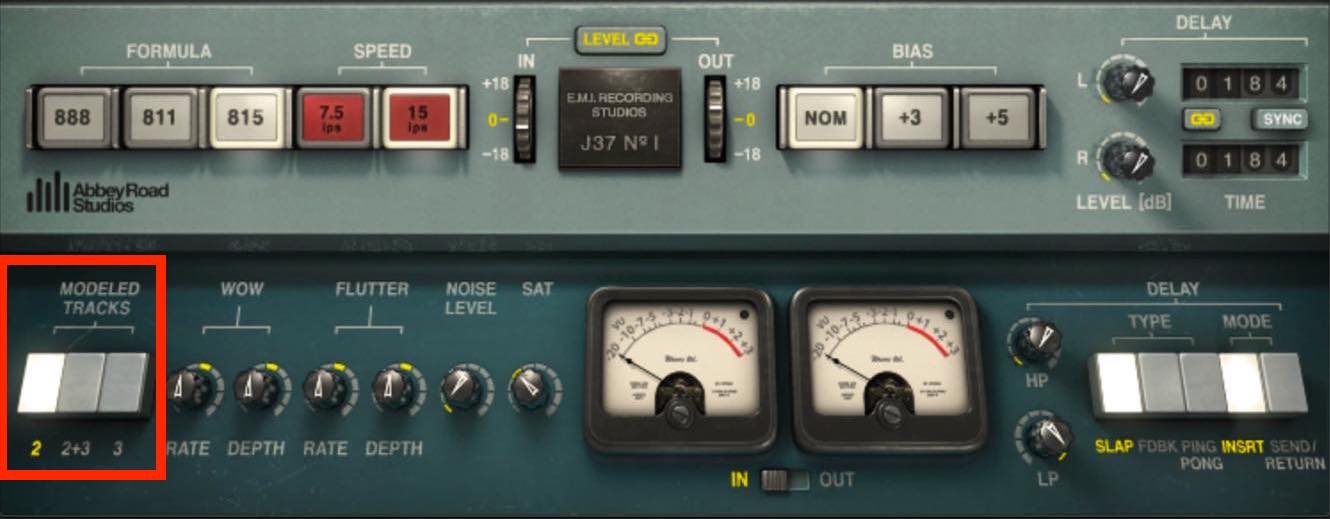
MODELED TRACKS selects which track of the original multitrack tape machine is modeled. The 2 setting represents the second track, and 3 represents the third. The 2+3 setting works in multi-mono, with the left channel modeled on track 2 and the right channel on track 3.
Comparing 2 and 3, track 3 seems to have slightly more high-frequency content. Selecting 2+3 produces a clearly wider stereo image. This could be useful on a bus when a large number of tracks makes the center of the mix feel crowded.
In this installment, we have explored three plugins in the Abbey Road Collection that add distortion.
Each has its own distortion character and tone. Choose between them with the source material and your intended sound in mind.
Product URL: https://bit.ly/3c1pfeK
In Part 3 of our Abbey Road Collection series, we explore Abbey Road Saturator, Abbey Road Vinyl, and J37 Tape, focusing on the parameters that add saturation.
🎥 YouTube: https://t.co/TgK51LOhgM
📝 Tutorial roundup: https://t.co/5YWAik4Zsd pic.twitter.com/zjJfmRrptI
— SLEEP FREAKS (@SLEEPFREAKS_DTM) February 15, 2020
Frequently Asked Questions
Q1. What input level should I aim for when mixing drums with Abbey Road Saturator?
Aim for the yellow indicator for pleasant saturation. If you need more aggressive distortion, push into red and use the output control to adjust the level.
Q2. What sources work well with Abbey Road Vinyl's Phase Distortion?
It works well on low-frequency instruments such as bass and kick. A small amount adds a gritty texture, while stronger settings create a dirty sound that differs from fuzz, making it useful on many kinds of tracks.
Q3. How should I adjust SATURATION LEVEL when using J37 Tape on the master bus?
It affects high-frequency attacks, with harmonics building gradually. Its natural addition of harmonics without becoming destructive makes it useful for subtle adjustments.
Q4. When should I use J37 Tape's 2+3 MODELED TRACKS setting?
It produces a noticeably wider stereo image, so it can be effective on buses when a large number of tracks makes the center feel crowded.
NEW ARTICLES
Latest English Articles