Choosing studio monitors is an important step for new music producers. This guide explains how they differ from listening speakers, when to use headphones, and how to choose a suitable size for your room. It covers the frequency response, powered designs, and enclosure types beginners need to understand when selecting a product, showing how an accurate listening environment can improve the quality of your music.
A Beginner's Guide to Choosing the Right Studio Monitors
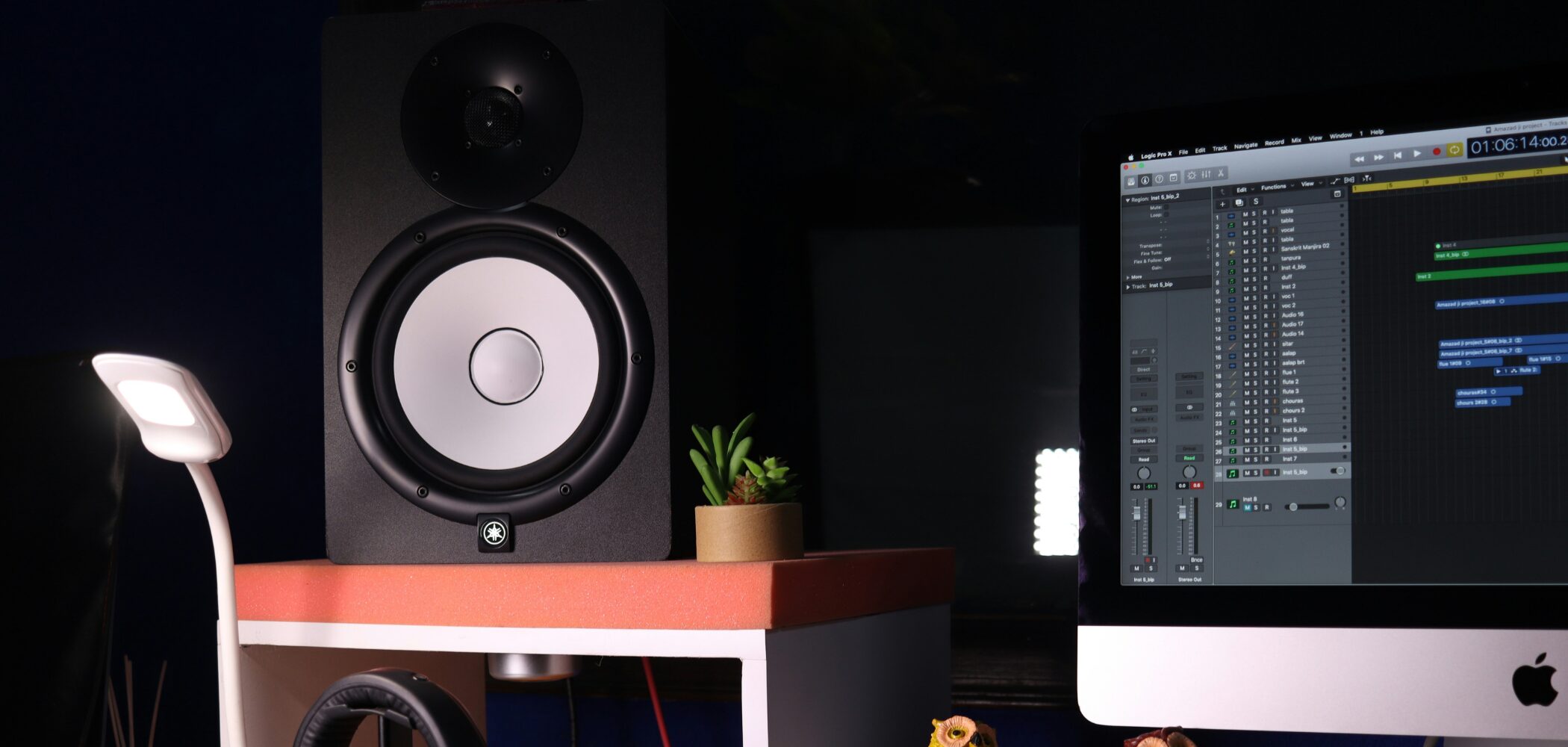
How you listen to your tracks during production has a major effect on the quality of the finished music.
An environment that lets you hear accurately is important, but we are often asked whether music production is possible without studio monitors. For beginners wanting to start with only essential equipment, speakers can be a difficult purchasing decision.
This article explains whether you need studio monitors, what to look for, and our recommended products as of 2025.
Choosing Studio Monitors for Music Production: 2025 Video Guide
Selected Questions and Answers from the YouTube Video

Do you think the much-discussed Edifier MR3 is suitable as a monitor speaker for music production?

I have not tried the MR3 myself, so I cannot say for certain. Based on its specifications, though, it looks like a candidate for desktop production or entry-level monitoring. As it is compact, checking the low end with headphones or another system would be reassuring. If I get a chance to try it, I would like to assess it from a music-production perspective!
This was very helpful, thank you. I plan to buy the iLoud MTM MKII and Babyface Pro FS. Which balanced cable should I use to connect them?
Thank you for watching! Use an XLR male-to-female cable. For good value and a flat sound, I recommend the established MOGAMI 2534. For a clearer, higher-resolution sound, I recommend the Oyaide PA-02 V2.
May I ask a question? I bought a microphone mixer for karaoke at home and am now choosing speakers. After some research I have narrowed it down, but as a beginner I cannot decide between the JBL 104-BT and Edifier M60. My living room is 14 tatami mats in size. I do not need to fill it at maximum volume, but would 66W or 50W be enough for a normal listening level? I have no frame of reference!
I have not compared them by listening, so I can only comment from their specifications. Their rated outputs suggest both should provide enough volume. However, their woofers may leave the bass feeling insufficient in a 14-tatami room. If that matters to you, I recommend speakers with 6–8-inch woofers.
I play bass and want to use an audio interface to hear it through monitors. I have just discovered ADAM Audio and am interested. With small speakers like these, would the cabinets vibrate when playing bass? I rent my home, so I cannot play very loudly. I would appreciate your advice.
The D3V reproduces a broad range from bass to treble, so it can also monitor bass guitar. It will vibrate at high playback levels, but at the sort of volume normally usable in a rental home, I think it should be usable without problems. The actual volume is important, though, so I recommend auditioning it in a store.
Thank you for your consistently informative videos. I rent a home with a lightweight steel structure, and my brother, who works for a housing company, warned me that sound carries easily in that construction. It really does. I considered the HS5, but a review said it was great value yet few homes allow it to be turned up enough to perform at its best. I hesitated, then bought it because it was affordable. I struggled to hear the bass, raised the volume, and received a complaint. Later, I switched to an iLoud MTM I happened to find on sale. The bass is easier to hear and I can use it at a lower volume than the HS5. Even so, I do not feel I can play it loudly enough for production, so I mainly use studio headphones and use the speakers to check overall balance. Budget and housing conditions made monitors seem difficult to introduce, but this video reassured me that I was not alone. Rising equipment prices seem to be raising the barrier further. I look forward to the headphone episode.
Apartment living can certainly make this difficult. Sound-insulated properties exist, but tend to cost more than ordinary homes. Another option is installing a soundproof booth offered by various manufacturers. Of course, producing mainly with headphones is also an option. I hope you find the best approach for your situation.
I am deciding between the Yamaha HS7 and HS5. Can the HS7 be heard adequately at low volume?
The HS7 is relatively well balanced even at low volume. In a small or resonant room, however, the low end can sound swollen even with the volume turned down. If that concerns you, I recommend the HS5!
What Is Monitoring? The Role of Studio Monitors in Music Production
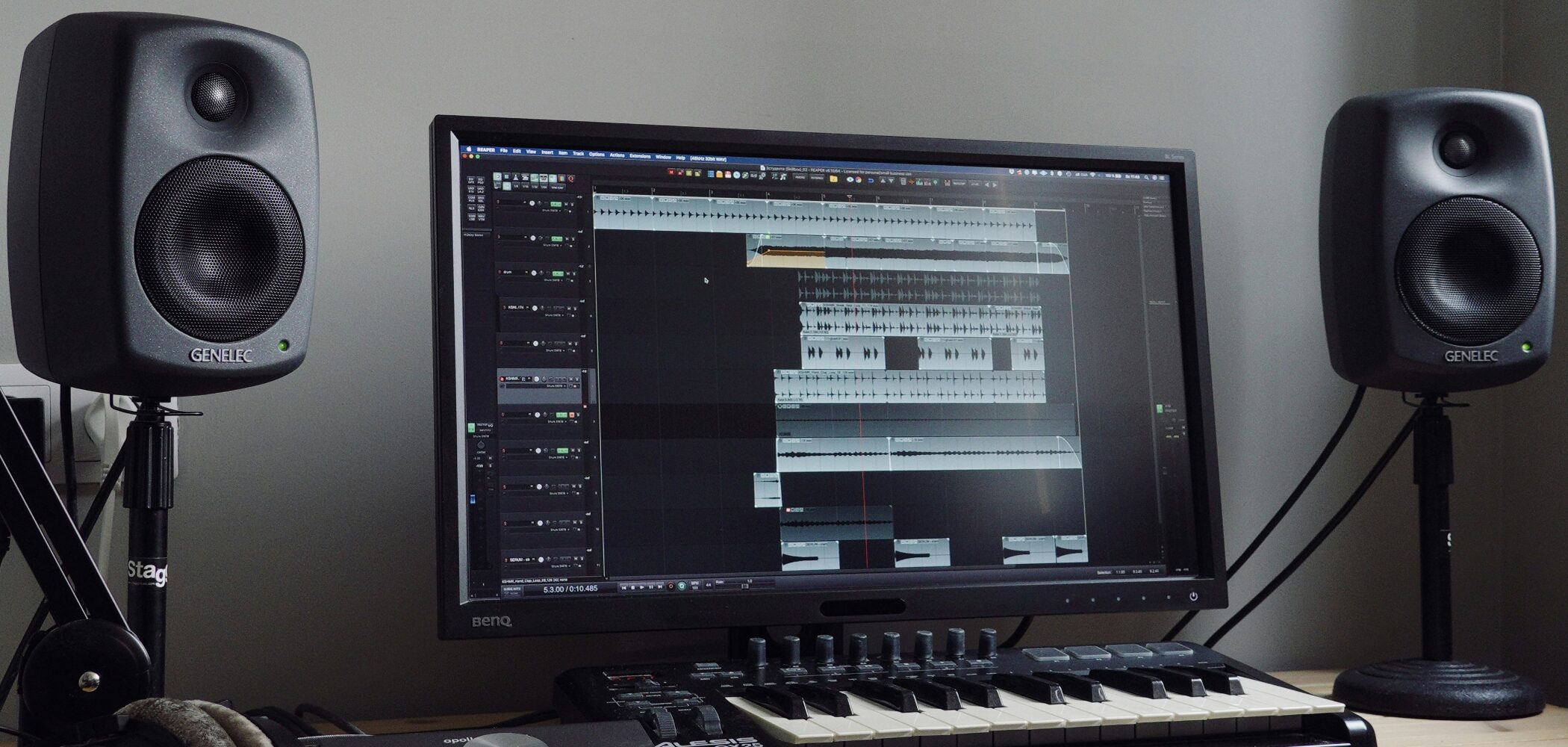
Speakers broadly fall into listening and monitoring categories. Ordinary listening speakers prioritize an enjoyable listening experience and may deliberately color the sound by emphasizing bass or treble.
By contrast, studio monitors are designed to reproduce the source faithfully, making it easier to judge the balance and fine details accurately.
For example, when producing with listening speakers, an emphasized frequency range may seem louder than it actually is, causing you to turn it down and finish with an unintended balance.
Studio monitors offer the detail needed to map the level and position of each track, allowing more appropriate level adjustments and effects processing.
Do You Need Studio Monitors? Headphones vs. Speakers
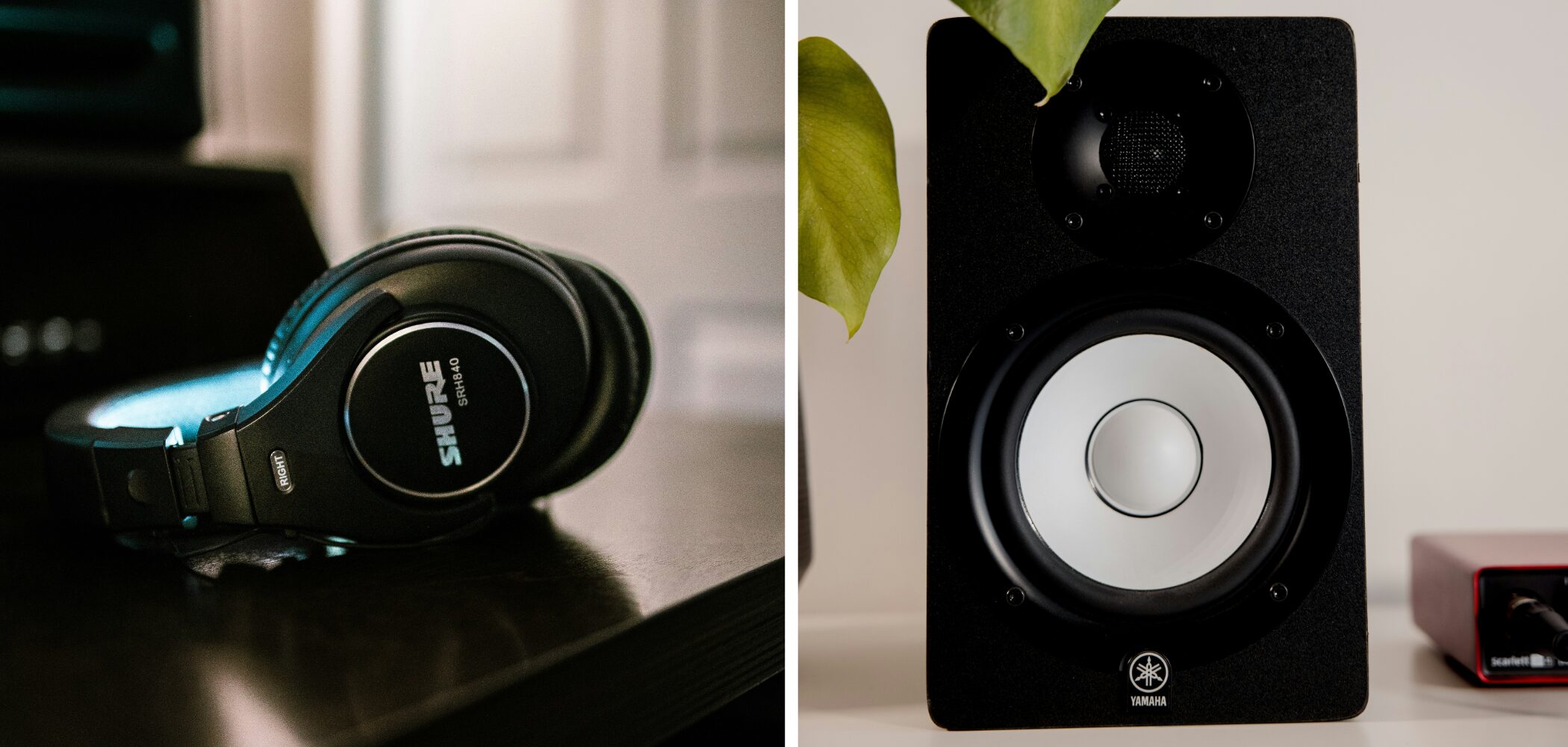
We are often asked whether both headphones and speakers are necessary and how they differ.
The short answer is that you do not necessarily need both.
Each has advantages and drawbacks. If you are starting out on a limited budget, choose headphones first.
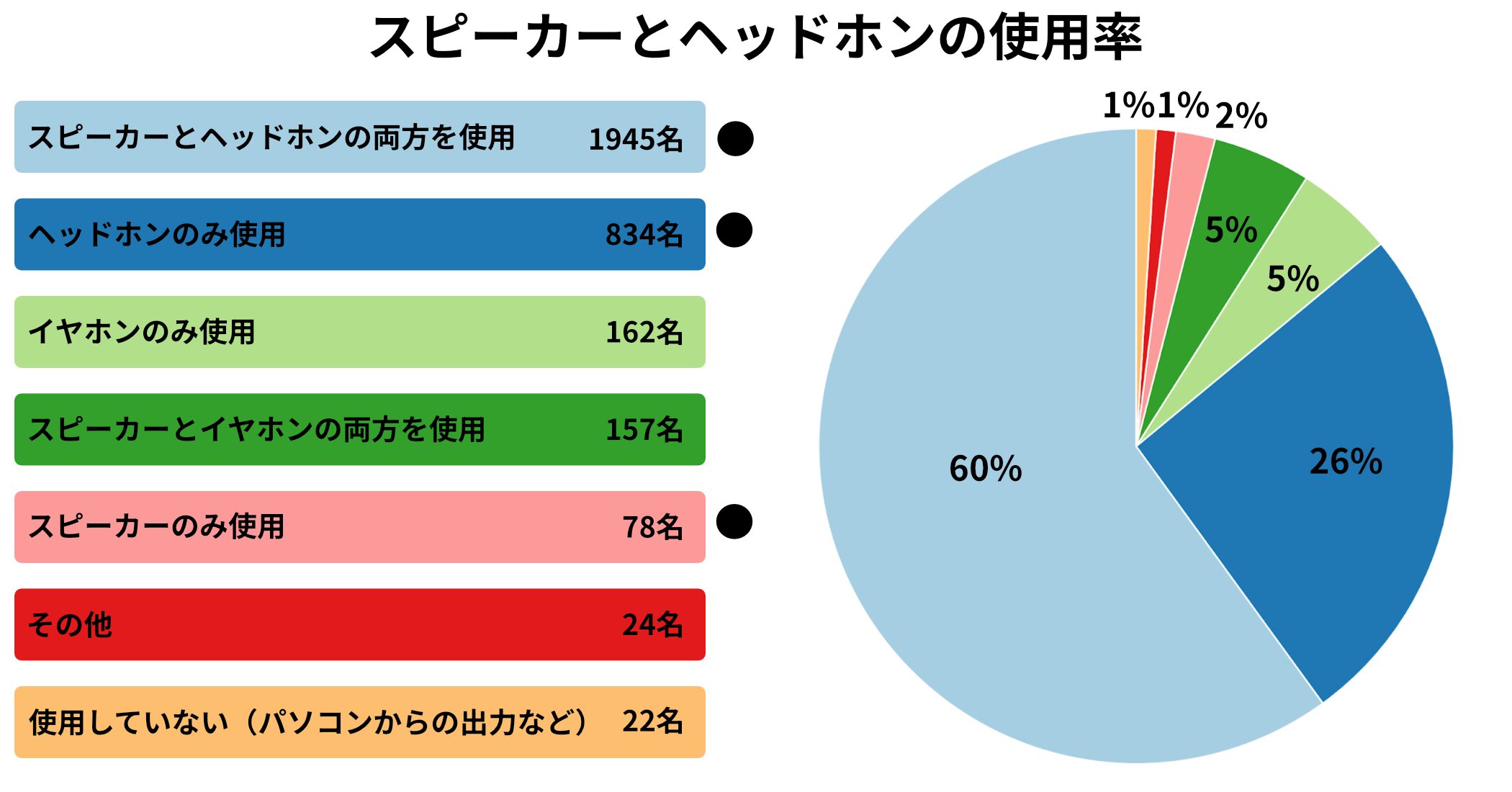
In our survey, around 60% of respondents used both, while one in four produced with headphones alone.
Few used only speakers, which also suggests that headphones are the higher priority.
Convenience is one reason people choose headphones, but the difficulty of installing studio monitors at home is a particularly important factor.
Many ordinary homes are not well suited to accurate speaker monitoring. Positioning speakers and adjusting the room can be difficult, and noise complaints are also possible.

The reason people use both headphones and speakers is that they present sound differently.
Headphones send sound directly to each ear, so the left and right channels are completely separated.
With speakers, sound travels through the air and the left and right outputs blend, producing a more natural stereo impression.
Vocals, which are often placed in the center, can sometimes seem quieter on headphones than on speakers.
Because of these differences, being able to switch between both is ultimately ideal.
What to Look For When Choosing Studio Monitors
Now that we have discussed whether you need them, let us look at the practical points to consider when choosing monitors.
Some may seem a little technical, but understanding them will help you find a suitable product.
Choosing a Size for Your Room: Speaker Size and Placement
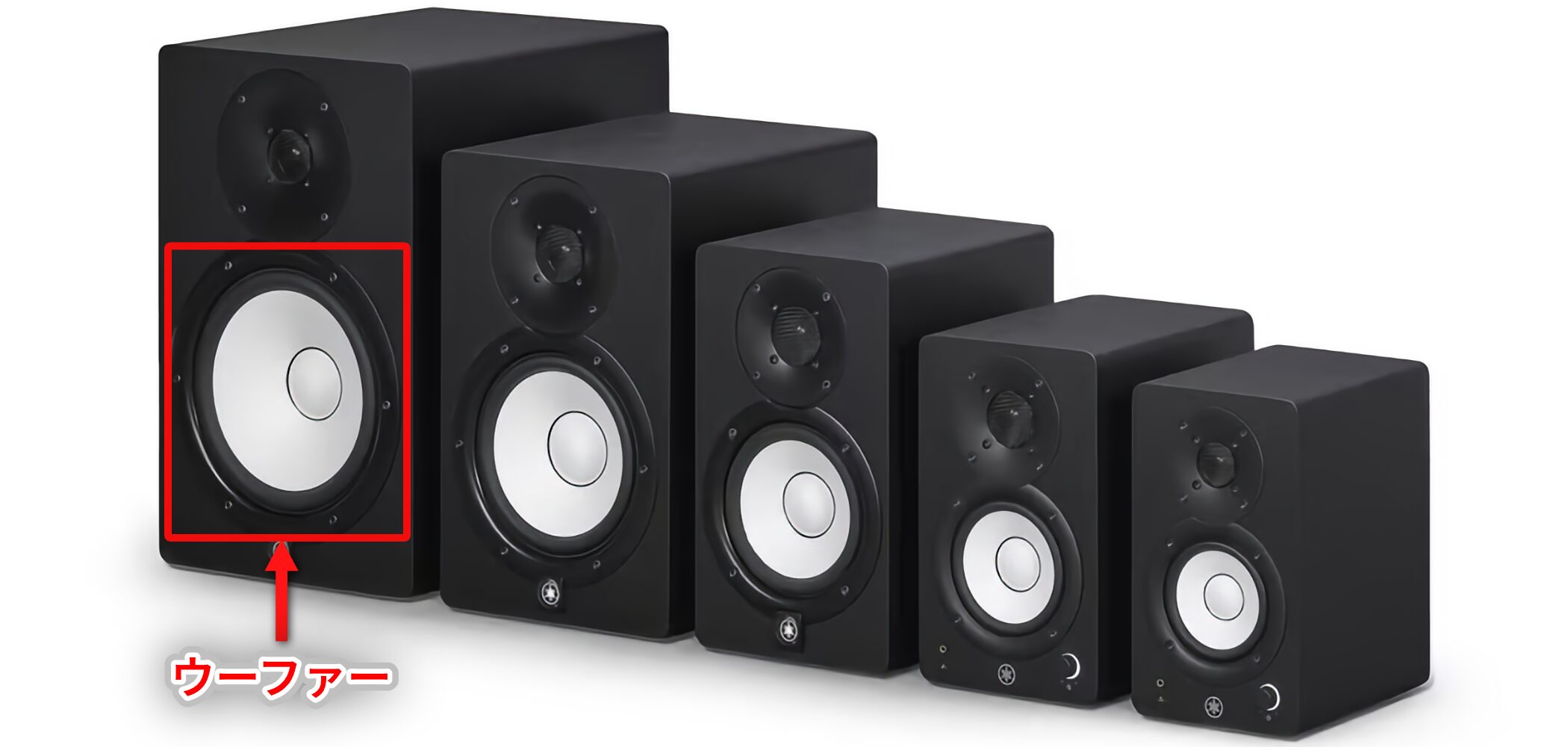
The first thing to check is speaker size.
Sizes such as 3, 4, 5, and 8 inches generally refer to the diameter of the woofer, which reproduces bass. Larger woofers tend to provide more volume and stronger bass reproduction.
The key to choosing a size is the size of the room.
Large speakers in a small room can cause bass buildup and make monitoring inaccurate. Small speakers in a large room may not provide enough volume or bass.
Use the following as a rough guide to Japanese room sizes, measured in tatami mats:
- Up to 6 tatami mats: 3–4-inch speakers recommended
- 6–10 tatami mats: Around 5-inch speakers recommended
- 10 tatami mats or more: 7–8-inch speakers recommended
Also, speaker positioning matters.
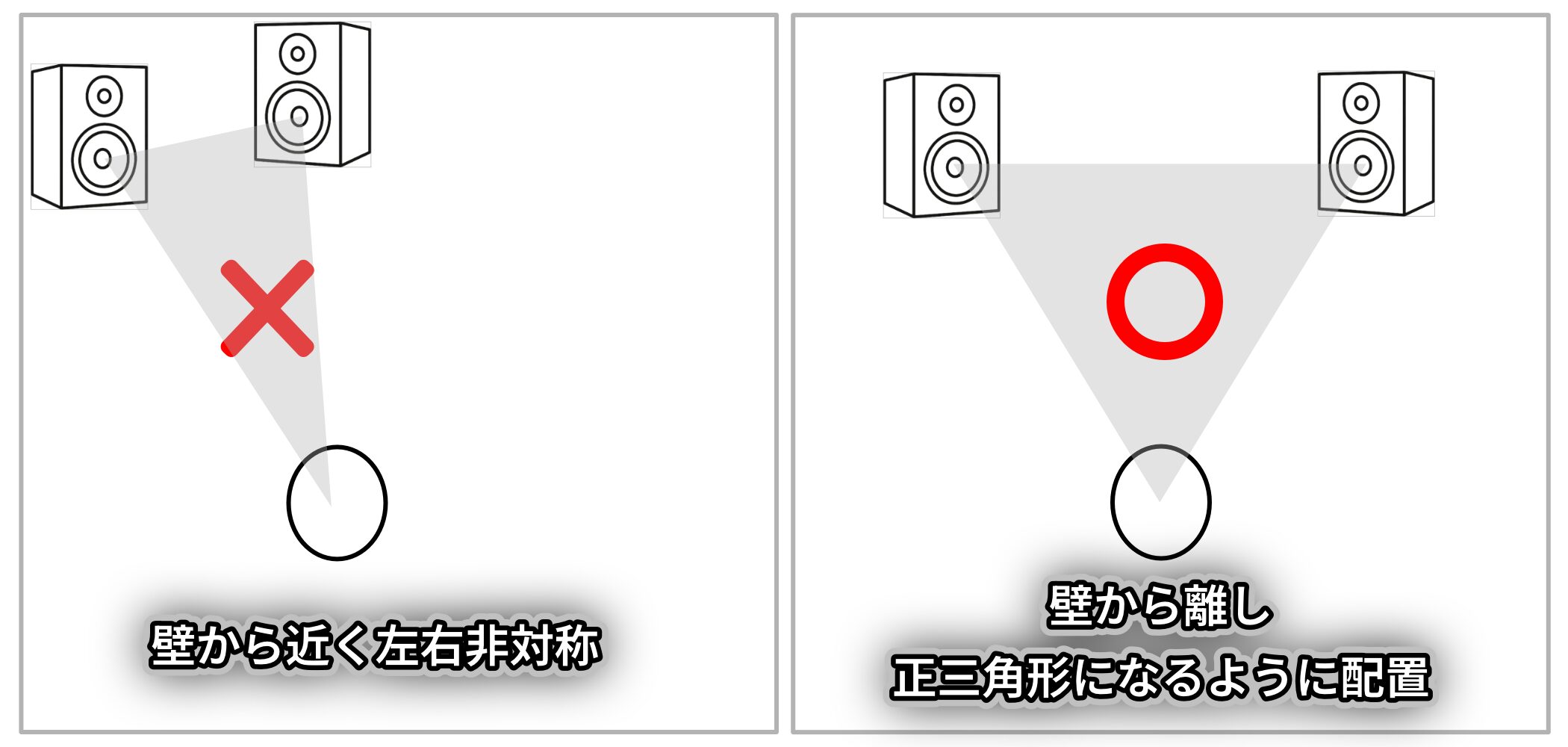
Walls and corners can emphasize bass. Leave at least 30cm between the speakers and the wall, and position them so that the two speakers and your listening position form an equilateral triangle.
Choose your speakers with the available placement in mind.
Understanding Frequency Response: A Factor in Accurate Reproduction
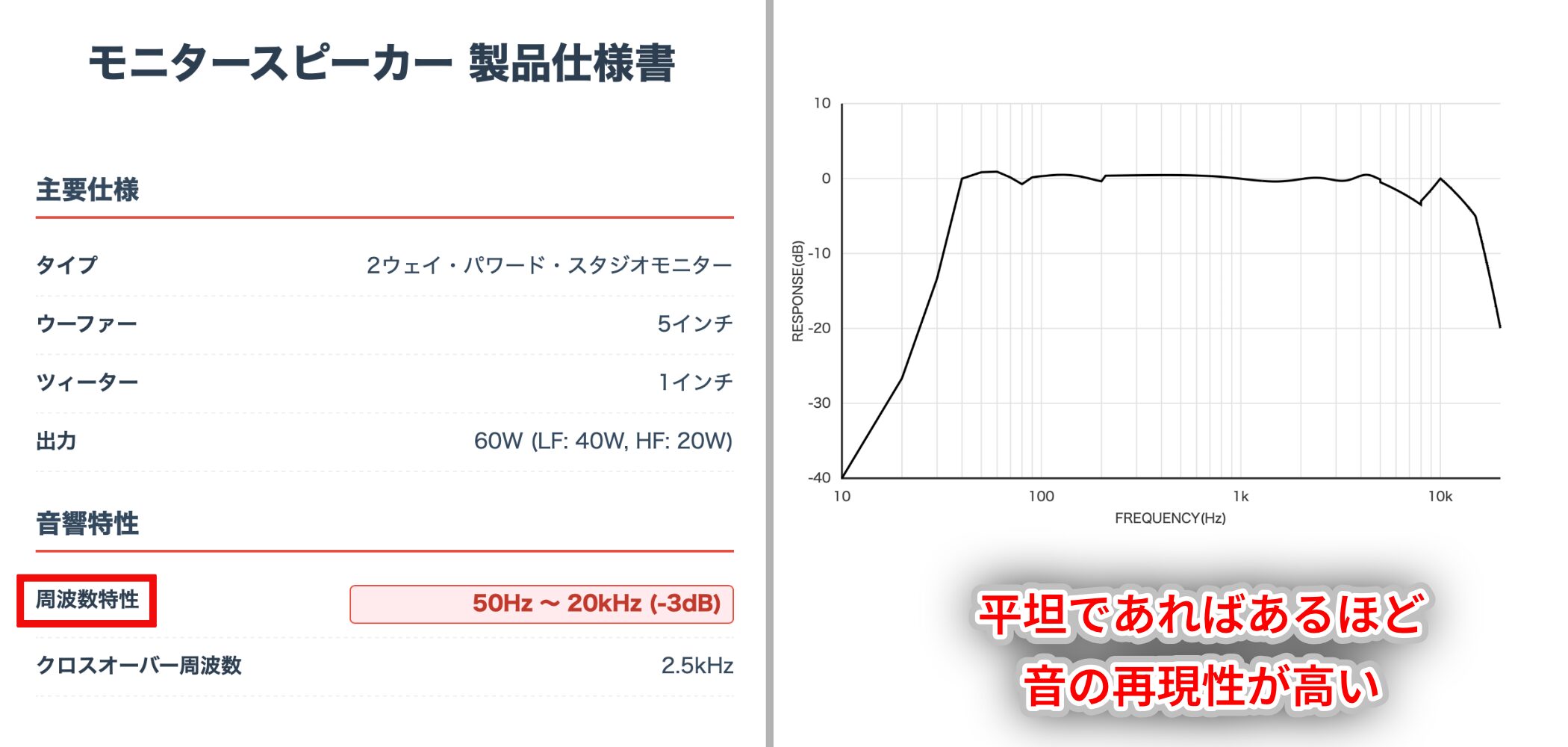
One specification to consider when choosing studio monitors is frequency response.
This describes which frequencies, from bass to treble, a speaker can reproduce and at what level. Specifications often show a range such as a number in Hz to a number in kHz.
Some products also provide a response graph. The flatter it is, the more accurately the speaker reproduces sound.
Small speakers have physical limits on bass reproduction, however. Start by choosing a speaker size suited to your room, then check frequency response as another factor in your decision.
Powered vs. Passive: Built-In and External Amplifiers
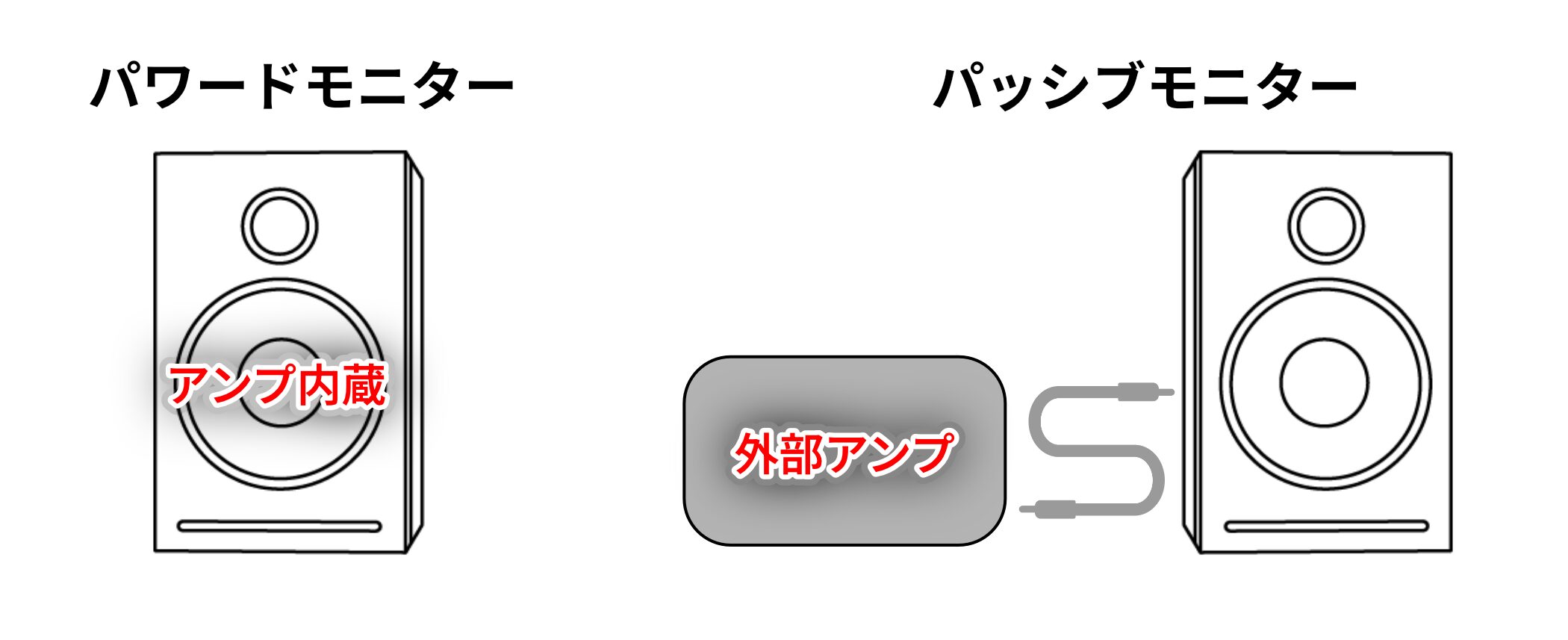
Studio monitors broadly come in two types: powered, also called active, and passive.
The difference is the amplifier: powered monitors have a built-in amplifier, so connecting their power cable supplies the amplification needed for playback.
By contrast, passive monitors have no built-in amplifier, so to reproduce sound they require a separate external amplifier.
For beginners, powered monitors with built-in amplification are generally the convenient choice, ready to use once powered and connected.
Enclosure Types and Their Sonic Characteristics
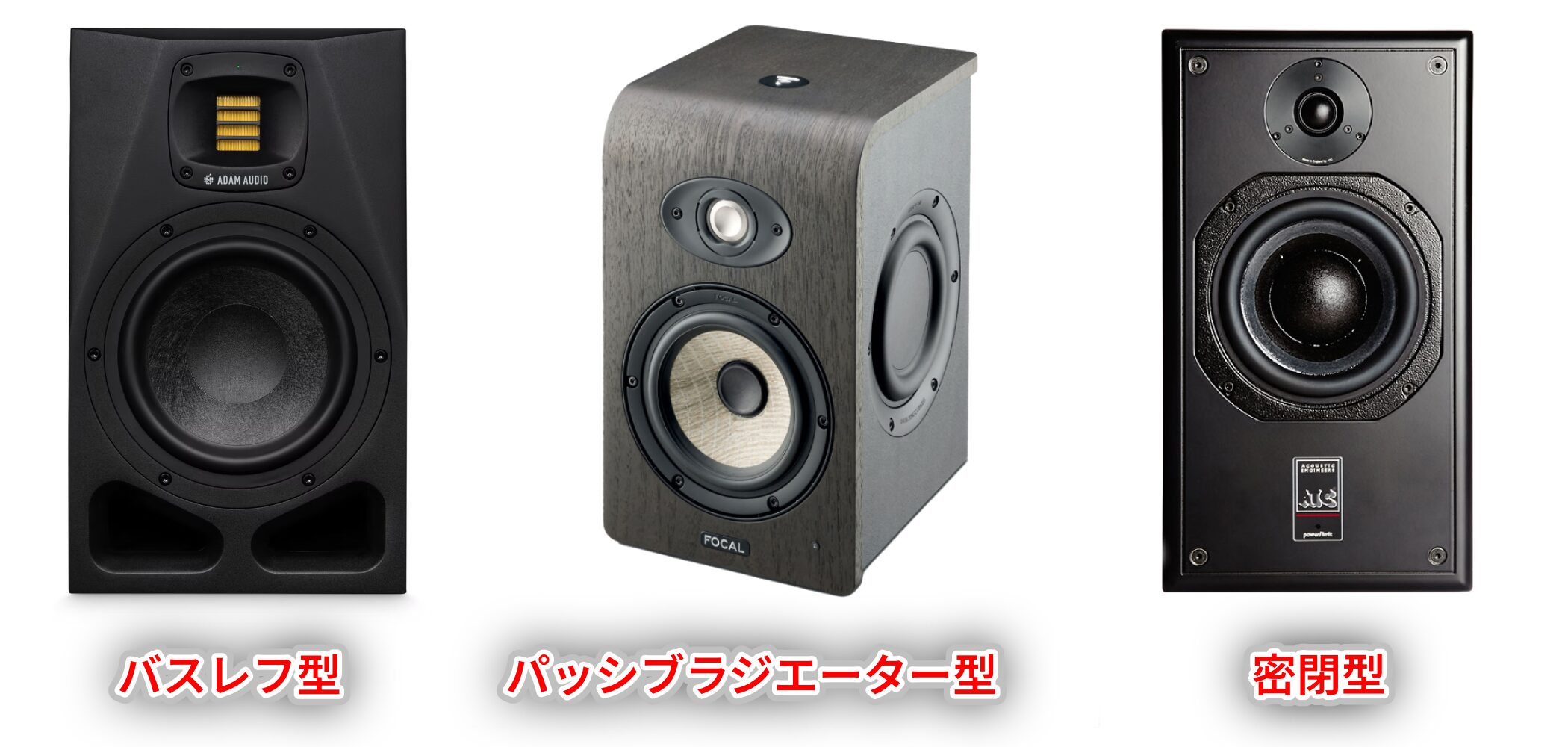
An enclosure is the speaker's cabinet or body. There are several types, and their construction affects the sound.
Beginners often start with the bass-reflex design introduced below. If your budget permits and accuracy is a higher priority, sealed designs are also worth considering.
Bass-Reflex (Ported)
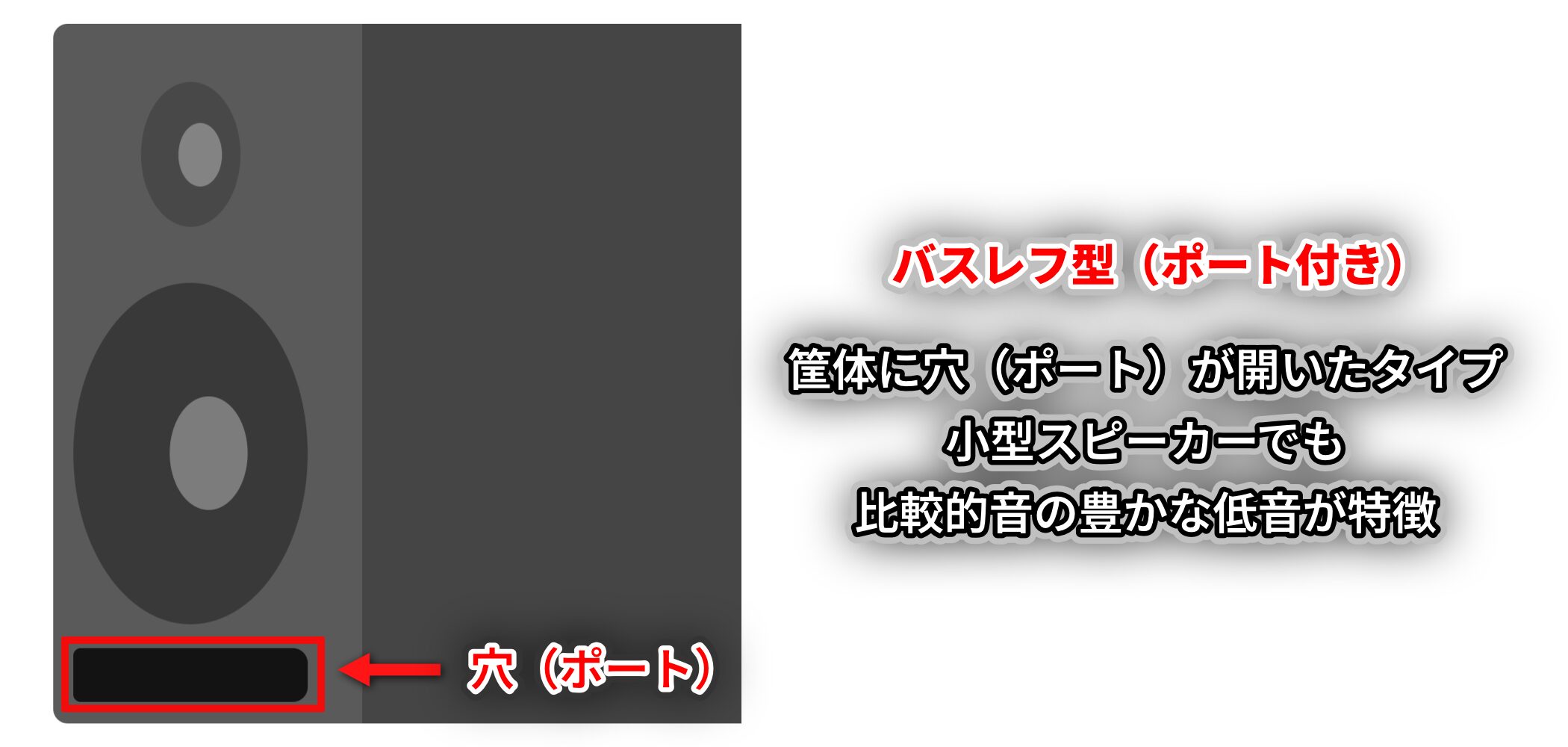
Bass-reflex enclosures have an opening called a port to reinforce bass.
Air moving through the port helps relatively compact speakers produce fuller bass. This design is common in small and medium-sized monitors suited to ordinary homes.
Ports may be on the front or rear. A front port can be advantageous when placing speakers near a wall.
- Advantages: Good bass output for the cabinet size and high efficiency
- Drawbacks: Bass accuracy may be lower than a sealed design, and port noise can occur
Sealed

A sealed enclosure is, as the name suggests, a completely enclosed cabinet designed with sonic accuracy in mind.
This design is often favored in professional environments and used in higher-priced studio monitors.
- Advantages: Fast bass transients and more accurate reproduction
- Drawbacks: Less bass output than a similarly sized bass-reflex design
Passive Radiator
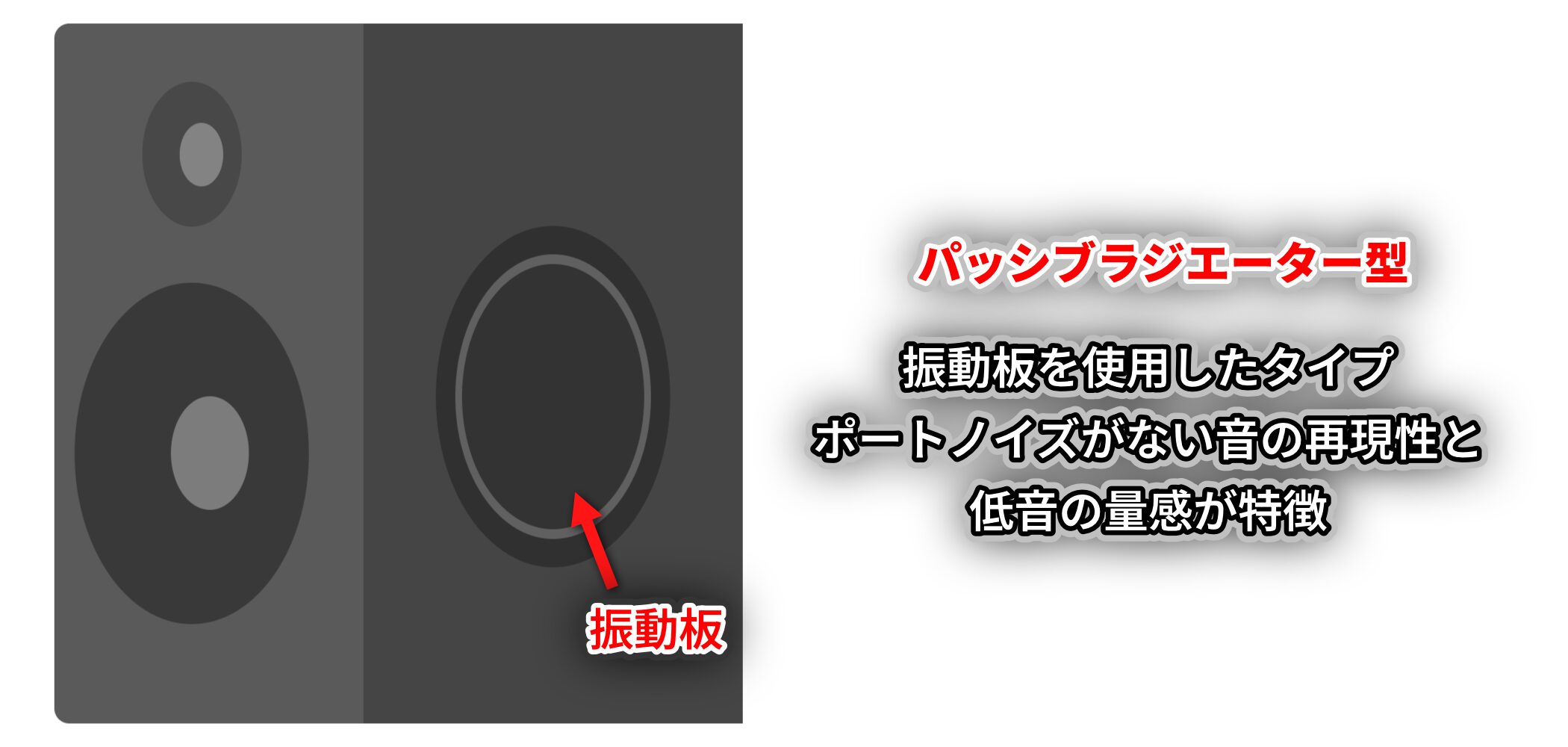
Passive-radiator enclosures have characteristics between bass-reflex and sealed designs.
Instead of a port, they use a diaphragm called a passive radiator to reinforce bass.
Often found in midrange and higher-priced monitors, they aim to combine accuracy with substantial bass.
- Advantages: Bass weight approaching bass-reflex designs with accuracy approaching sealed designs, without port noise
- Drawbacks: Complex design and higher manufacturing costs mean fewer product choices
Optional Products to Improve Your Listening Environment
Before introducing recommended monitors, here are some optional products that can help you get more from them.
Knowing these options can be useful when you want to pursue a better playback environment.
Subwoofers
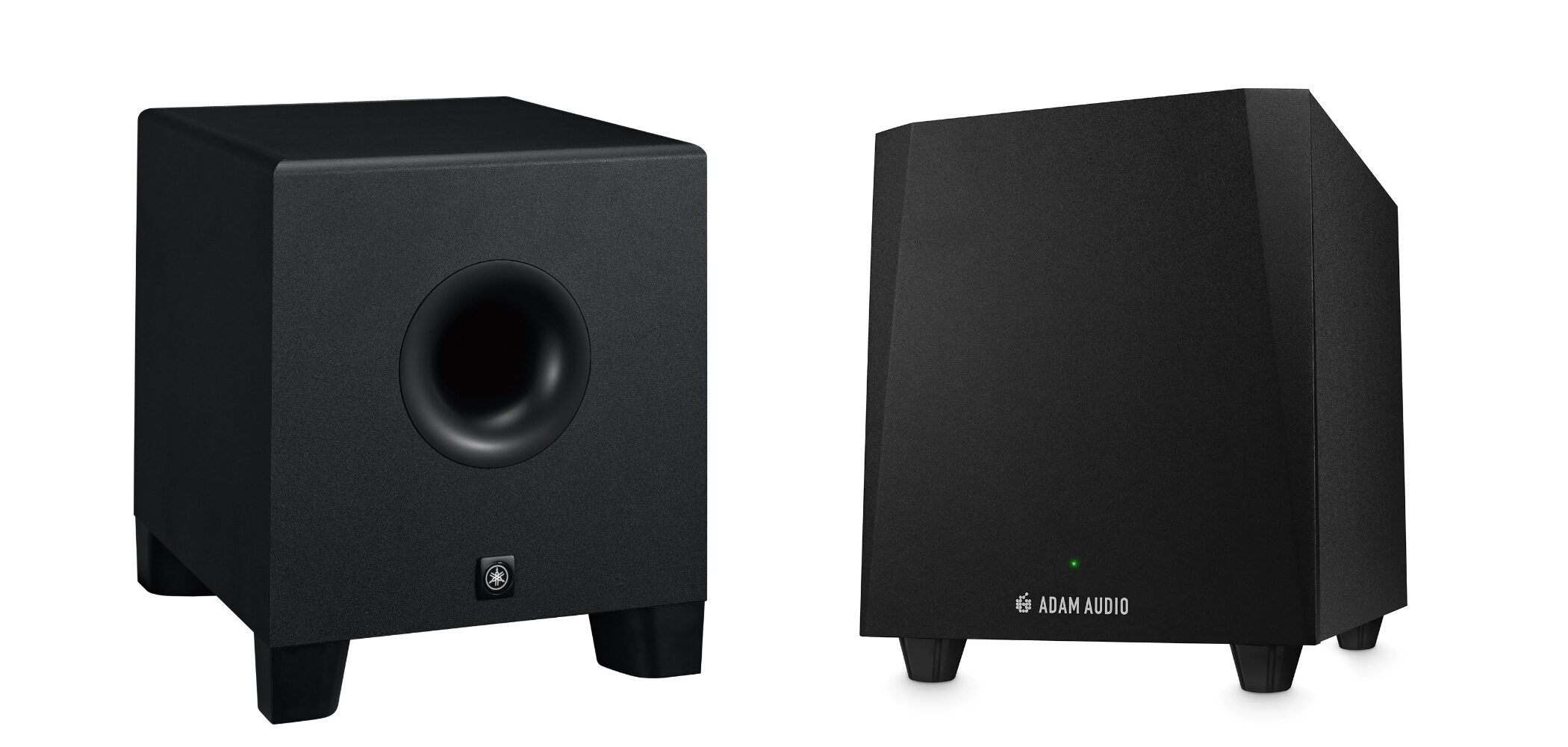
A subwoofer is a dedicated bass speaker. Combined with compact speakers that struggle to reproduce deep bass, it extends the available frequency range.
Most subwoofers can be configured and adjusted to optimize the overall balance and reinforce bass naturally. Proper setup therefore avoids simply making the bass excessively loud.
Also, if the same product range as your main monitors includes a subwoofer, its design and acoustic characteristics are often coordinated, making a matching model a recommended choice.
Calibration (Room Correction)
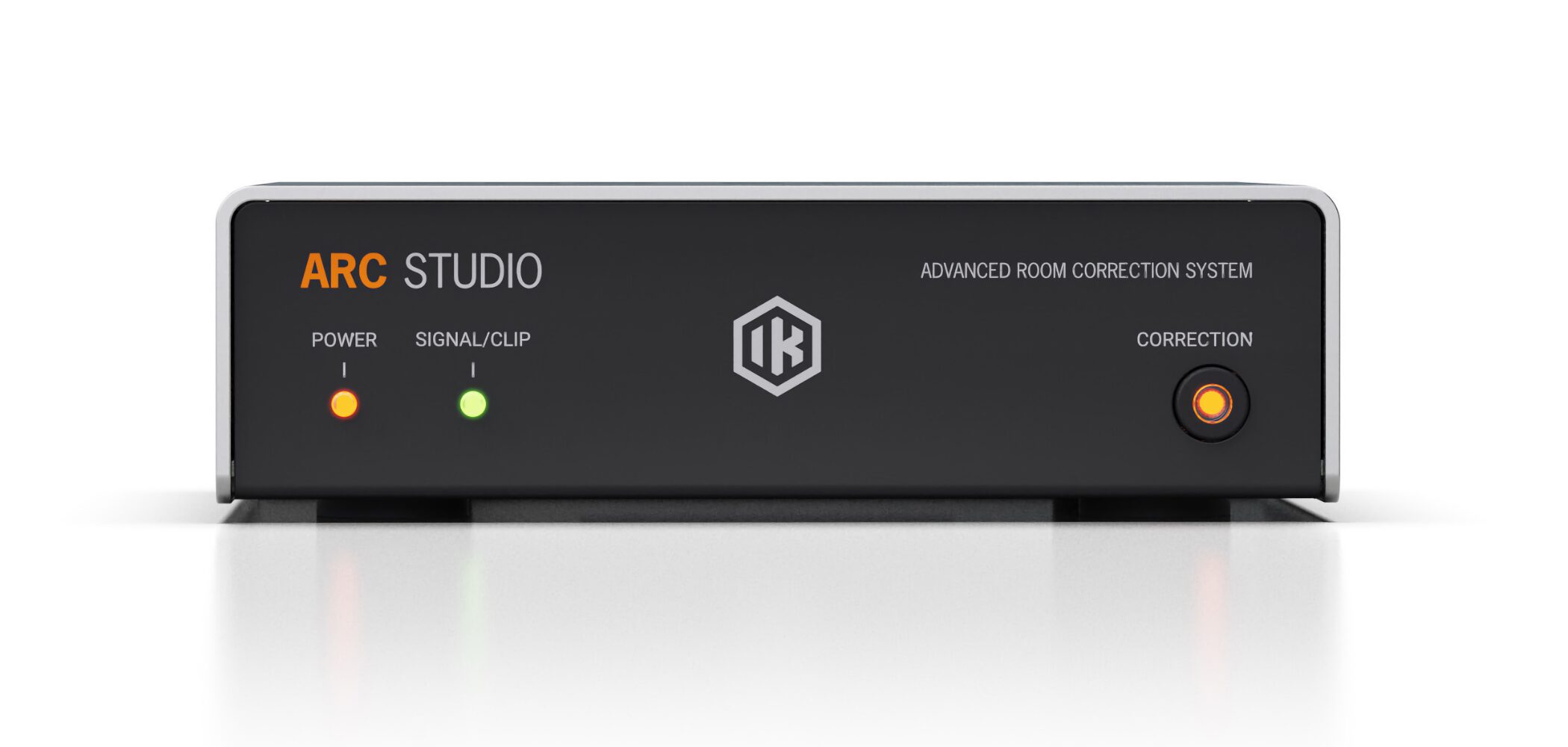
Calibration compensates for the effect of the room on speaker playback, allowing more accurate monitoring.
Some monitors include this feature, but it is also available as standalone hardware connected between your audio interface and speakers.
It can improve monitoring accuracy even when it is difficult to create an acoustically balanced room, helping you produce and listen with sound closer to your ideal.
Video: Mixing with ARC Studio On and Off — The Results
Recommended Studio Monitors for 2025, by Price Range
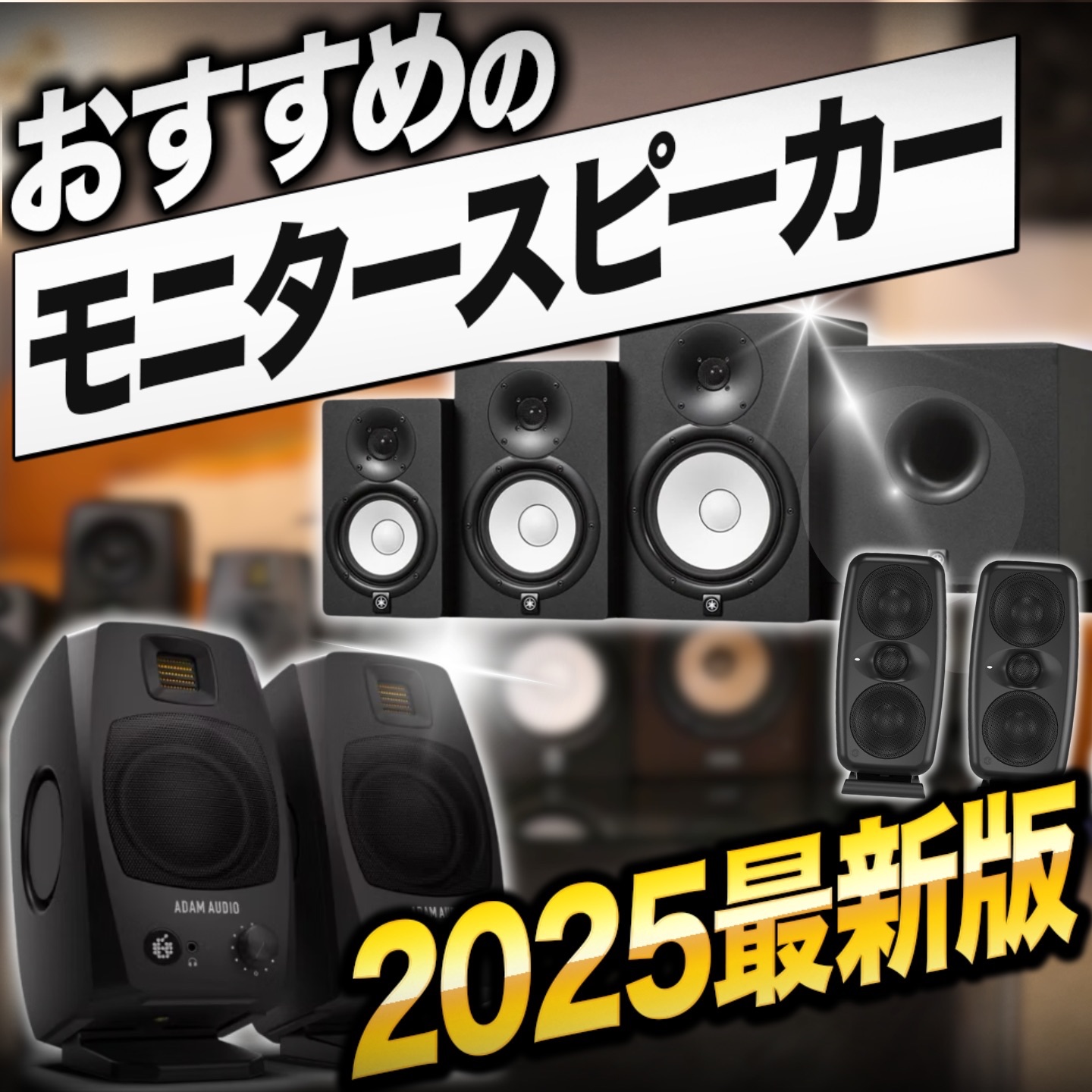
Here are our recommended monitors for home use as of 2025, mainly in the 5–7-inch class.
We selected popular products, established favorites, and models we can recommend from hands-on use!
ADAM AUDIO D3V
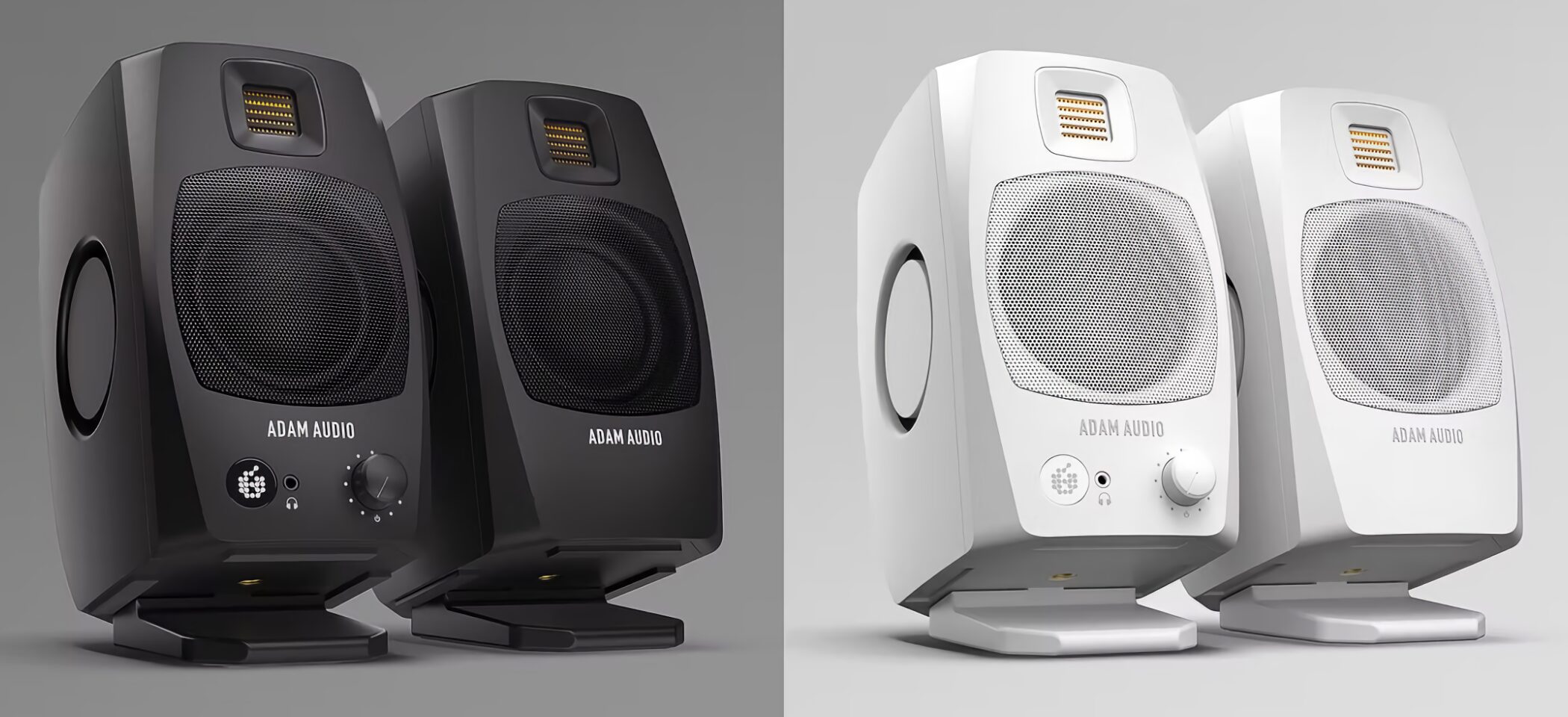
Compact desktop monitors that deliver high-quality sound.
They stand out in their price range for clear high-frequency detail and accurate, three-dimensional sound.
Their passive-radiator design also produces surprisingly full bass for their size.
They are well sized for desktop use, and USB-C makes connection to a computer straightforward. Their convenience and value make them a good choice for beginners.
- Price guide: Around ¥45,000 per pair
- Features: 3.5-inch aluminum woofer, 1.5-inch D-ART ribbon tweeter, passive radiators
- Output: 240W total (woofers: 2 × 80W; tweeters: 2 × 40W)
- Frequency response: 45Hz–23.2kHz
- Connections: A range of inputs including USB-C, RCA, and TRS
YAMAHA HS7
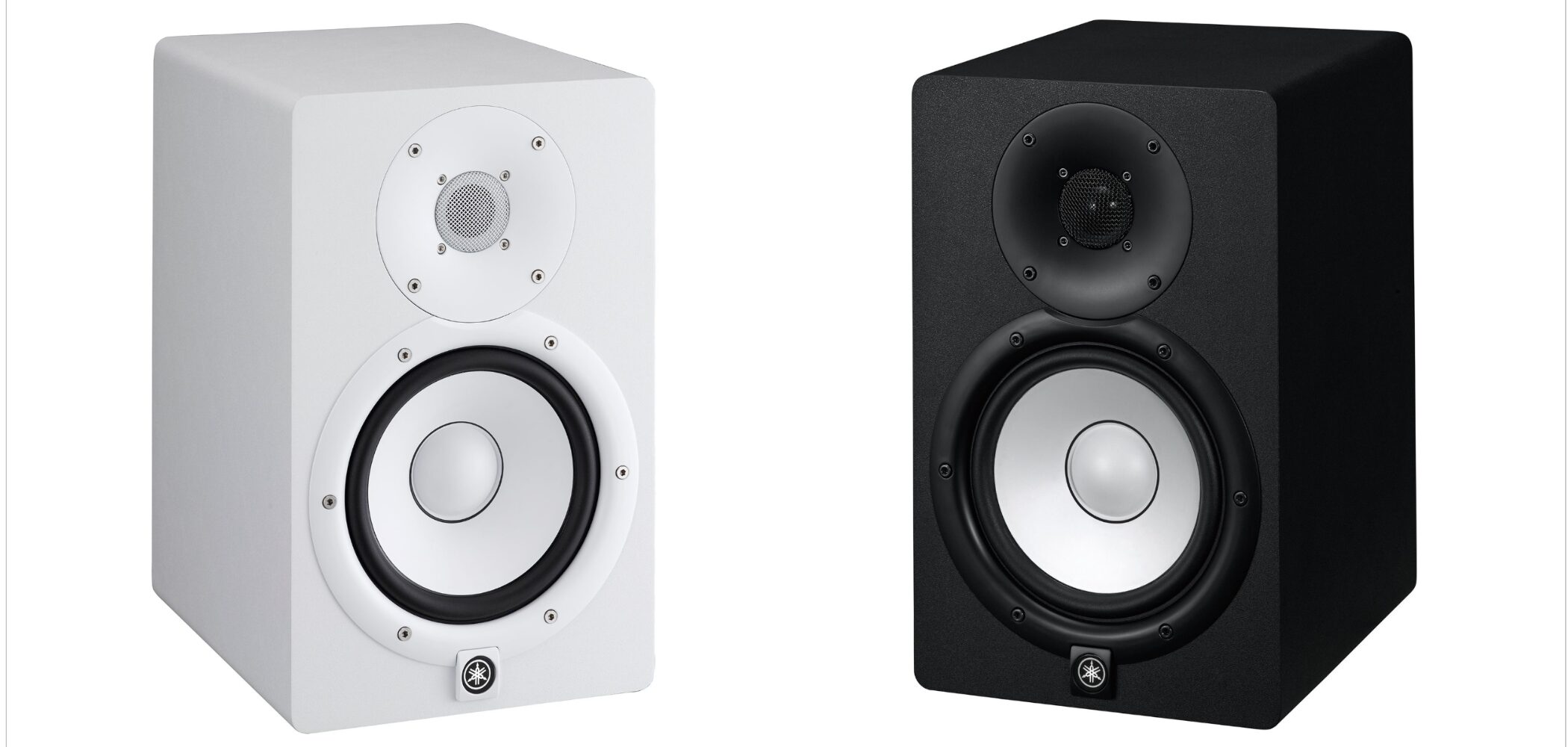
Dependable studio monitors that have been an industry favorite for years.
Their flat, uncolored frequency response has earned long-standing trust in professional production.
A 6.5-inch woofer suits medium to larger rooms of around 6–10 tatami mats. Rear-panel room controls let you adjust the bass boost caused by placement near walls.
Offering strong value, this versatile model works both as a first serious monitor and in professional production setups.
- Price guide: Around ¥55,000 per pair
- Features: 6.5-inch cone woofer, 1-inch dome tweeter, bass-reflex enclosure
- Output: 95W (woofer: 60W; tweeter: 35W)
- Frequency response: 43Hz–30kHz
- Connections: XLR and TRS (balanced/unbalanced)
IK MULTIMEDIA iLoud MTM MKII
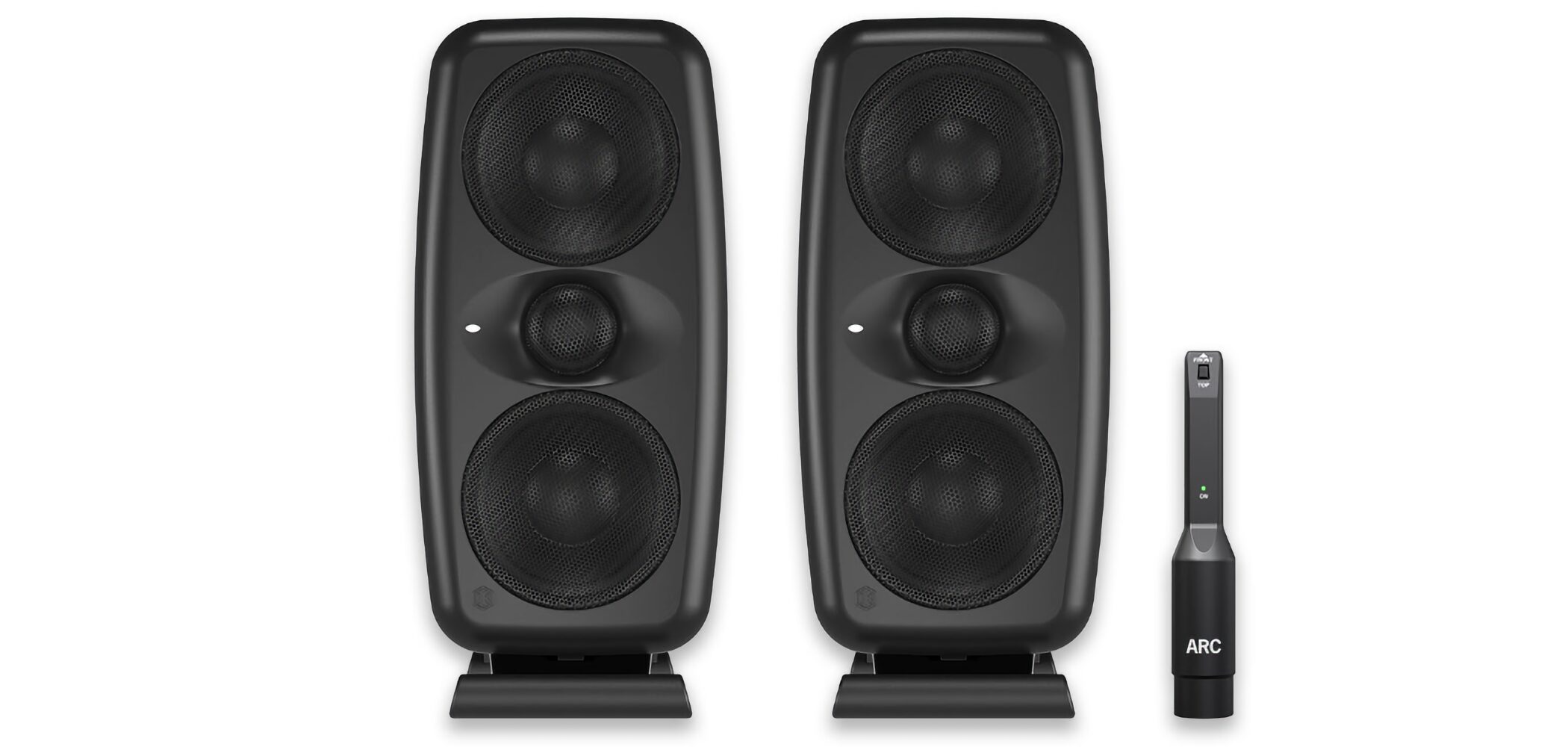
Innovative compact speakers offering precise monitoring.
Their MTM driver arrangement achieves what conventional compact monitors often struggle with: controlled directivity and accurate stereo imaging.
With the supplied microphone, they also automatically correct for room acoustics, helping to create an accurate monitoring environment even in rooms with limited acoustic treatment.
Despite their desktop-friendly size, their bass response extends to 36Hz, allowing substantial low-end reproduction without a subwoofer.
They are recommended for anyone seeking uncompromising monitoring in a limited space.
- Price guide: Around ¥100,000 per pair
- Features: Dual 3.5-inch woofers, 1-inch tweeter, MTM (midwoofer–tweeter–midwoofer) arrangement, bass-reflex enclosure
- Output: 100W RMS
- Frequency response: 36Hz–32kHz
- Connections: XLR, TRS, and RCA
- Built-in ARC (Advanced Room Correction) system
Focal Shape 50
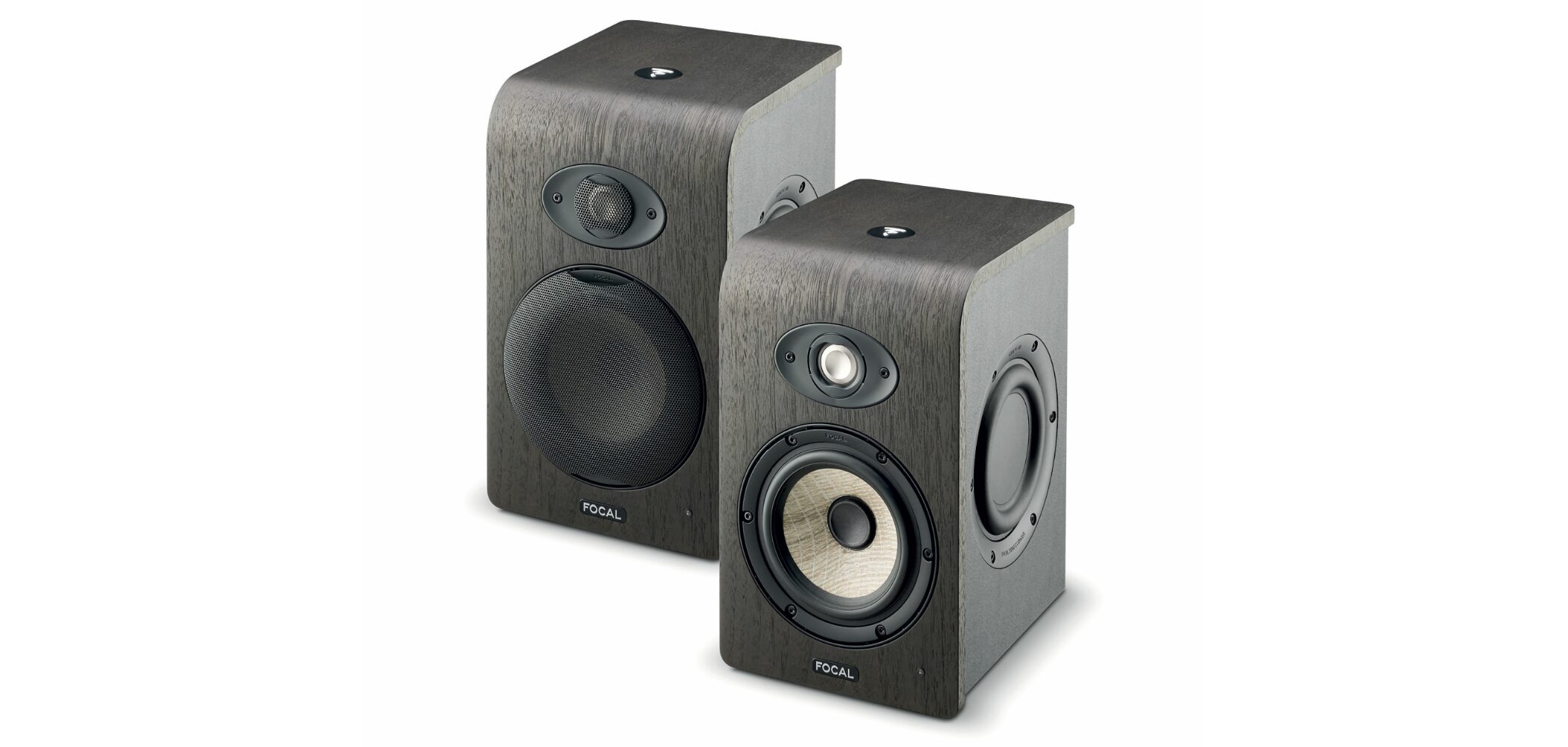
High-quality studio monitors from the established French audio manufacturer Focal.
Their proprietary flax-cone woofer and dual passive radiators on the sides provide a natural, full sound.
They offer particularly impressive midrange transparency and accurately reproduce delicate nuances in vocals and acoustic instruments.
The 5-inch woofer suits medium-sized rooms of around 6–10 tatami mats. Their low-fatigue character during long mixing sessions makes them well suited to professional production.
- Price guide: Around ¥140,000 per pair
- Features: 5-inch flax-membrane woofer, 1-inch aluminum/magnesium M-shaped dome tweeter, dual passive radiators
- Output: 85W RMS
- Frequency response: 50Hz–35kHz
- Connections: XLR and RCA
Final Thoughts
What did you think?
Studio monitors are important tools for understanding accurate sound.
Start by checking a size and output suited to your room. If possible, audition the actual speakers before choosing.
Use the points in this guide to find monitors that suit you and improve the quality of your music!
The prices listed are only guides and vary by retailer and purchase date, so always check the latest information before buying.
Frequently Asked Questions
Q1. Are studio monitors essential when starting music production?
No. If your budget is limited, we recommend starting with headphones. Around 25% of producers in our survey use headphones alone. Difficulty installing speakers in the home is another reason to postpone buying them.
Q2. What size studio monitors should I choose for a six-tatami room?
For rooms up to six tatami mats in size, we recommend 3–4-inch speakers. Large speakers in small rooms can cause bass buildup and make monitoring inaccurate.
Q3. Why use both headphones and speakers?
They present sound differently: headphones completely separate the left and right channels, while speakers create a natural stereo impression through the air. Checking both helps you make more accurate final adjustments.
Q4. What is the difference between passive and powered monitors?
Powered monitors have built-in amplifiers and can be used once powered and connected. Passive monitors require a separate amplifier, so powered models are recommended for beginners.
NEW ARTICLES
Latest English Articles