Understanding tuplets can greatly expand your rhythmic vocabulary, whether you are writing a score or programming notes in a DAW. Using a bar of 4/4 as our reference, this article explains basic note values from whole notes through thirty-second notes, then introduces subdivisions such as triplets, quintuplets and septuplets. These let you create rhythms beyond ordinary divisions into two, four or eight equal parts. Matching the DAW grid to the desired subdivision—for example, 1/12 or 1/24—helps you enter the notes accurately and gives you more freedom when making music.
Basic Note Values and Tuplets
In this article and video, we explain tuplets.
This knowledge is useful not only for writing notation but also for programming notes in a DAW, so we hope you find it helpful.
Tuplets — Video Tutorial
- 1MIDI Basics
- 2Understanding MIDI Parameters and Values
- 3Software Instruments and Plug-ins: DAW Format Compatibility
- 4What to Look for When Choosing an Audio Interface
- 5Samplers, Part 1: Sampling Material to Create Rhythm Instruments
- 6Samplers, Part 2: Creating Pitched Instruments from Samples
- 7Reading Piano Rolls and Rhythms, Part 1
- 8Reading Piano Rolls and Rhythms, Part 2
- 9Reading Piano Rolls and Rhythms, Part 3
- 10Basic Tuning: A Setting You Should Always Match
- 11Understanding Tuplets
Basic Note Values
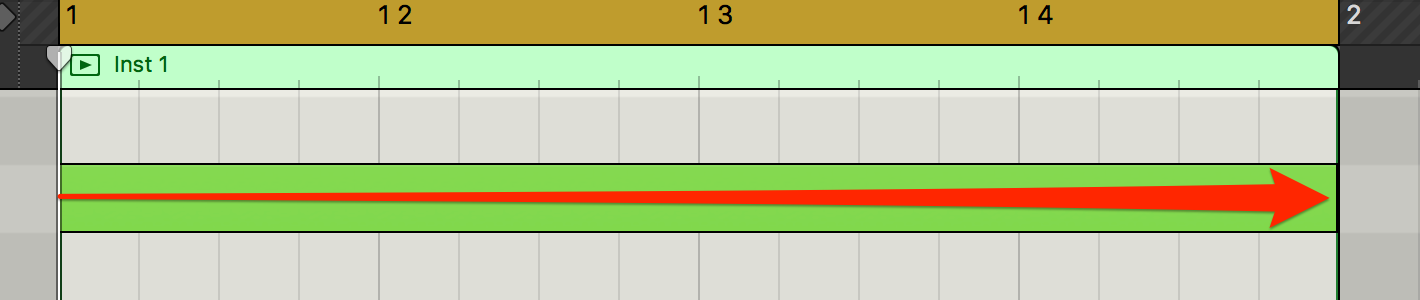
Think of one bar of 4/4 as a whole. Dividing it successively into equal halves gives us the basic note values below.

In notation, a hollow notehead with no stem represents a whole note.
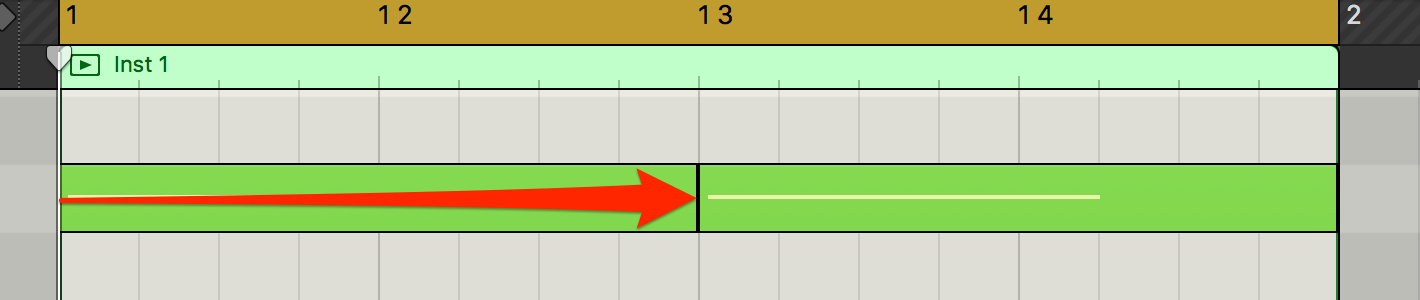
Divide a whole note (four beats) in half: each half note lasts two beats.
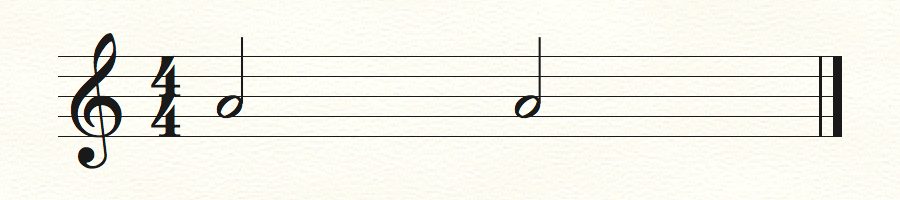
A half note is written as a hollow notehead with a stem.
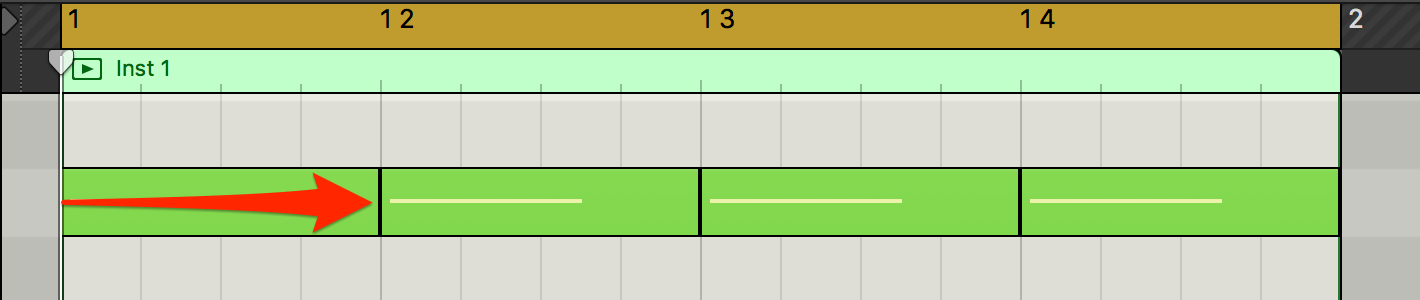
Divide a whole note into four equal parts: each quarter note lasts one beat.

A quarter note is written as a filled notehead with a stem.
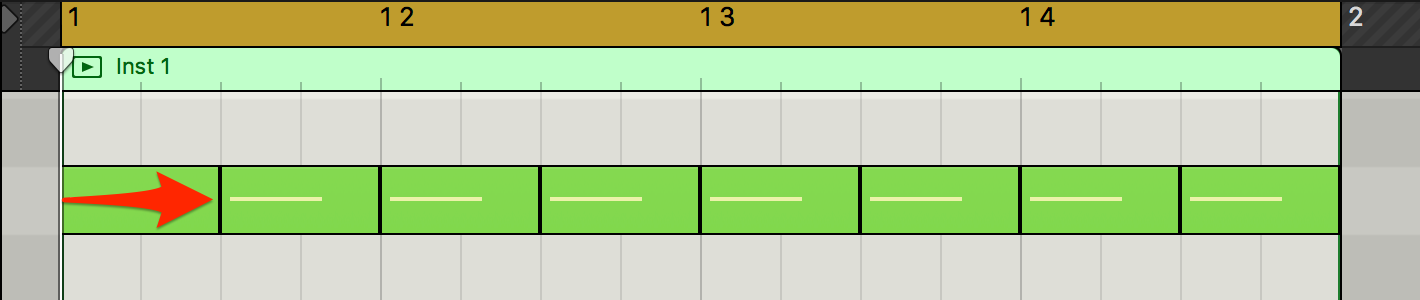
Divide a whole note into eight equal parts: each eighth note lasts half a beat (1/2 beat).
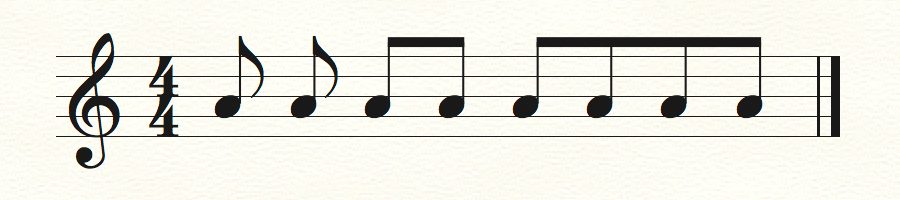
An eighth note is written as a filled notehead with a stem and one flag. Groups of two or four eighth notes can also be joined with a beam instead of individual flags.
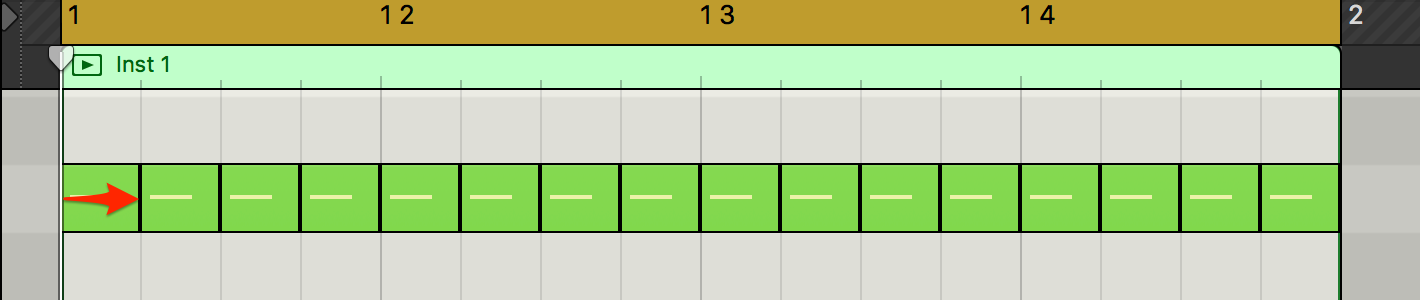
Divide a whole note into sixteen equal parts: each sixteenth note lasts a quarter of a beat (1/4 beat).
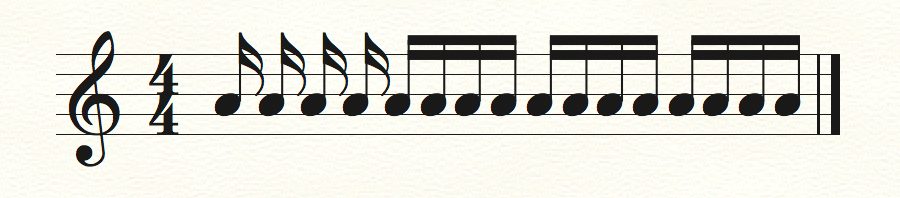
A sixteenth note is written as a filled notehead with a stem and two flags. These flags can also be replaced by beams when notes are grouped together.
Although we have not included illustrations here, the same pattern continues with thirty-second notes, sixty-fourth notes, one-hundred-twenty-eighth notes, and so on.
Tuplets: Dividing a Beat or Group of Beats into Odd Numbers of Equal Parts
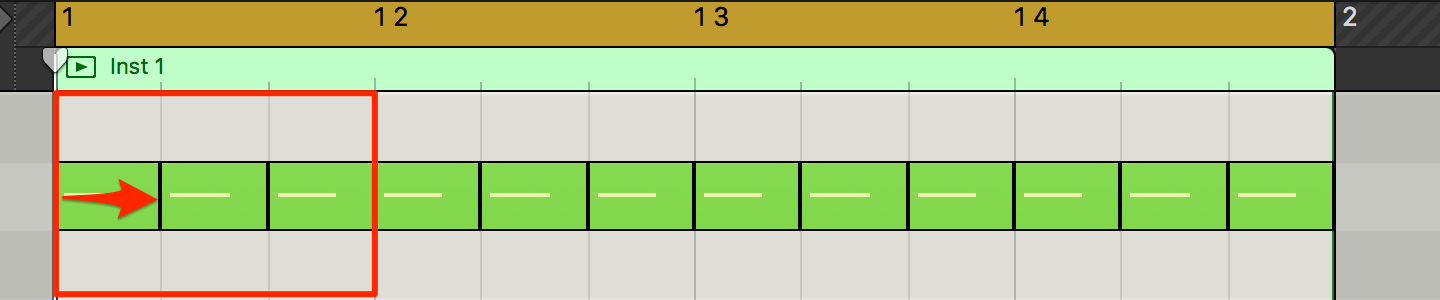
For example, dividing one beat into three equal parts gives us a triplet that spans one beat.
Set the Division grid to 1/12.
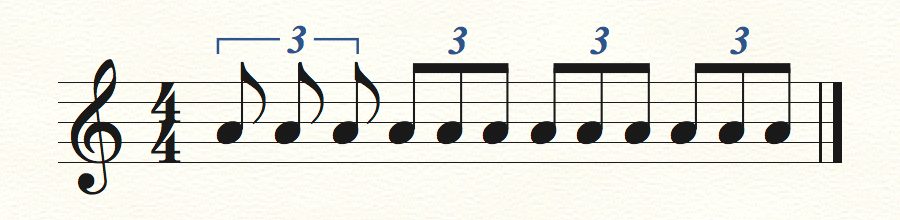
In notation, three eighth notes are grouped together and marked with a 3, so this is called an eighth-note triplet.
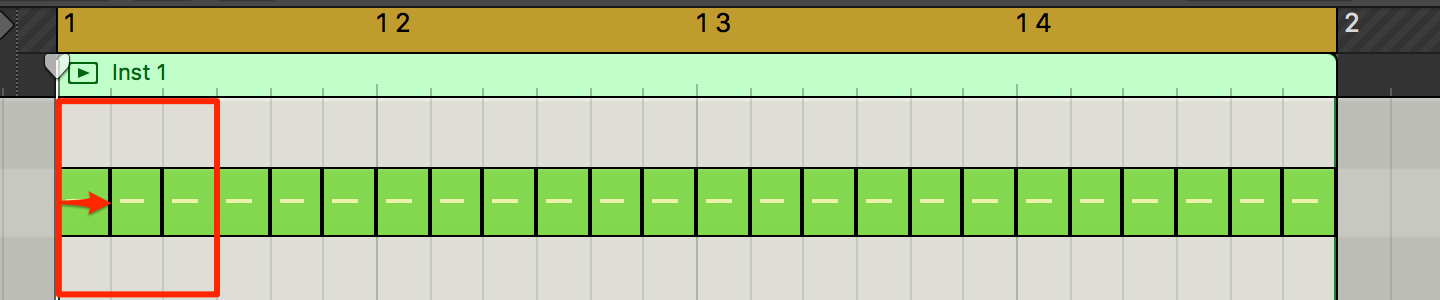
Halving that duration gives us three equal notes within half a beat: a triplet spanning half a beat.
Set the Division grid to 1/24.
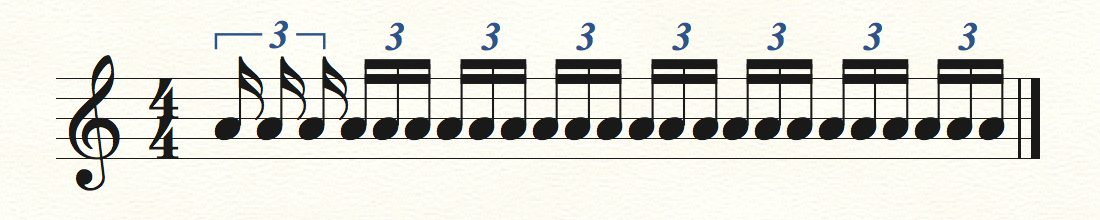
In notation, three sixteenth notes are grouped together and marked with a 3, so this is called a sixteenth-note triplet.
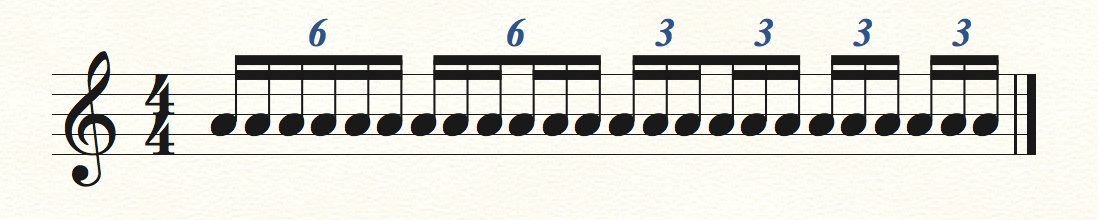
A sextuplet spanning one beat is written as six sixteenth notes grouped together and marked with a 6. Each note has the same duration as a note in a sixteenth-note triplet spanning half a beat.
The different notation affects how you interpret the accents and phrasing.
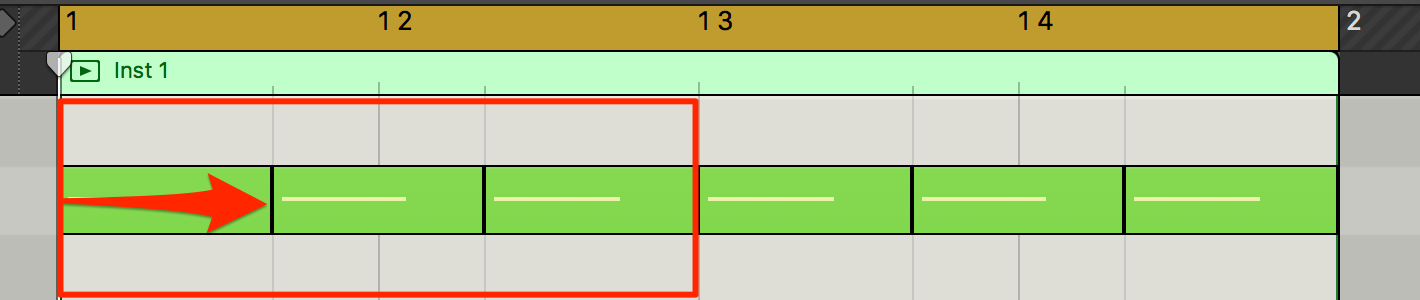
Doubling the duration of our original one-beat triplet gives us three equal notes spread across two beats: a triplet spanning two beats.
Set the Division grid to 1/6.
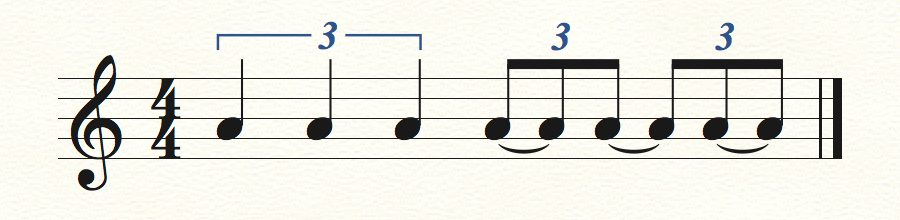
In notation, three quarter notes are grouped together and marked with a 3, so this is called a quarter-note triplet.
One note in a quarter-note triplet lasts as long as two notes in an eighth-note triplet tied together. Keep this relationship in mind when practicing rhythms.
Other possibilities include quintuplets (groups of five), septuplets (groups of seven), and more.
To learn a variety of rhythmic patterns, including tuplets,
you may find my Japanese-language book Dekiru: Zero kara Hajimeru Gakufu & Rhythm no Yomikata (a beginner's guide to reading music and rhythm), published by Rittor Music, helpful.
My advance copy of Dekiru: Zero kara Hajimeru Gakufu & Rhythm no Yomikata — Cho Nyumon (with CD), due out on the 22nd, has arrived! The book uses even more colorful words for rhythm exercises. I hope you enjoy it! pic.twitter.com/twY1KeQOOB
— Hidetoshi Takumi (H-t studio) (@hidetakumi) December 18, 2016
Frequently Asked Questions
Q1. What is a triplet spanning one beat?
It divides one beat into three equal parts. In the 4/4 examples here, it is written as three eighth notes grouped together and marked with a 3—an eighth-note triplet. A Division grid of 1/12 lets you enter these notes accurately in the DAW shown.
Q2. What should I watch out for when programming tuplets in a DAW?
Choose a grid that matches the tuplet you want to enter. In the examples here, use Division 1/12 for eighth-note triplets and 1/24 for sixteenth-note triplets. Choosing the correct subdivision helps keep the rhythm accurate.
Q3. How does a quarter-note triplet compare with two tied eighth-note triplet notes?
One quarter-note triplet note has the same duration as two eighth-note triplet notes tied together. Keeping this relationship in mind when practicing can deepen your understanding of tuplets and help you learn more complex rhythmic patterns.
Q4. What other rhythmic subdivisions can I learn?
This article introduces odd-numbered subdivisions such as triplets, quintuplets and septuplets. For more rhythmic patterns and practical exercises, see the Japanese-language book Dekiru: Zero kara Hajimeru Gakufu & Rhythm no Yomikata mentioned above.
Remember triplets with the three Japanese syllables 'me-ta-bo'!
This time, we explain tuplets. They are useful both when writing notation and when programming notes in a DAW, so take a look!
Basic Note Values and Tuplets
🎥 YouTube: https://t.co/oL2RWTjZvo📝 Article: https://t.co/nDB1iUCLWK
Presented by Hidetoshi Takumi @hidetakumi pic.twitter.com/nbdM4QFYiE
— SLEEP FREAKS (@SLEEPFREAKS_DTM) August 17, 2019
NEW ARTICLES
Latest English Articles