
Transfer speeds for sample libraries and audio files have a major impact on music-production workflow. SanDisk's portable SSD lineup includes the Extreme PRO, which supports the USB 3.2 Gen 2x2 standard and delivers speeds of up to 2,000 MB/s—reducing large sample-library load times to less than one-twentieth of those on a conventional HDD. The drives are lightweight and compact, with IP55-rated water and dust resistance and protection against drops from up to 2 meters. They suit studio expansions and mobile production alike. Three models cover different needs and budgets; if you have adequate CPU and memory but still hear audio dropouts or noise, improving storage transfer speed may help.
Fast Transfers for Your Samples and Audio Files: A Key to a Smooth Music-Production Setup
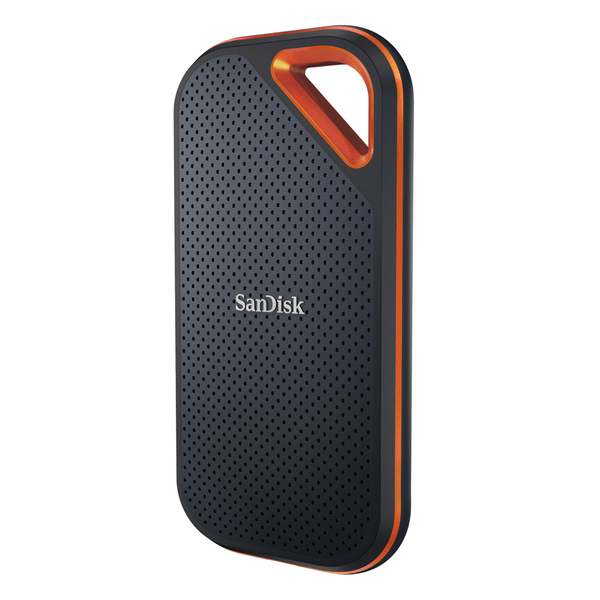
In our earlier article, A Music Producer's Guide to Choosing External Storage (2020 Edition)we introduced SanDisk's portable SSDs. A new model has since joined the lineup: SanDisk Extreme PRO Portable SSD.

SanDisk, a Western Digital brand offering storage solutions including flash memory, SSDs, and HDDs, heldthe No. 1 retail market share for flash memory cards in both 2019 and 2020.
The SanDisk Extreme PRO Portable SSD brings together that experience, track record, and technology.
- USB 3.2 Gen 2x2 support with read/write speeds up to 2,000 MB/s (about twice the previous model)
- Includes both USB Type-C and Type-A cables
- Ultra-lightweight and compact for flexible portability
- IP55-rated water and dust resistance
- Drop-tested from 2 meters for impact resistance
- Data protection with security and encryption software
These features make it an exceptionally capable option for music production.
Many of us have run short on main-drive space because of sample libraries and project files.
When that happens, an additional or external drive can help—but slow storage can significantly reduce file-reading speeds and overall DAW performance.
In this article, we'll test all three SanDisk Portable SSD models, including the Extreme PRO, in music-production workflows.
We'll compare their transfer speeds as part of the tests.
SanDisk Portable SSD Series: Test Video
Where to Buy
■ SanDisk Portable SSD (520 MB/s)
https://amzn.to/3r78YN4
■ SanDisk Extreme Portable SSD (1,050 MB/s)
https://amzn.to/3ai7RmB
■ SanDisk Extreme PRO Portable SSD (2,000 MB/s)
https://amzn.to/3cpXrEq
About the SanDisk Portable SSD Series
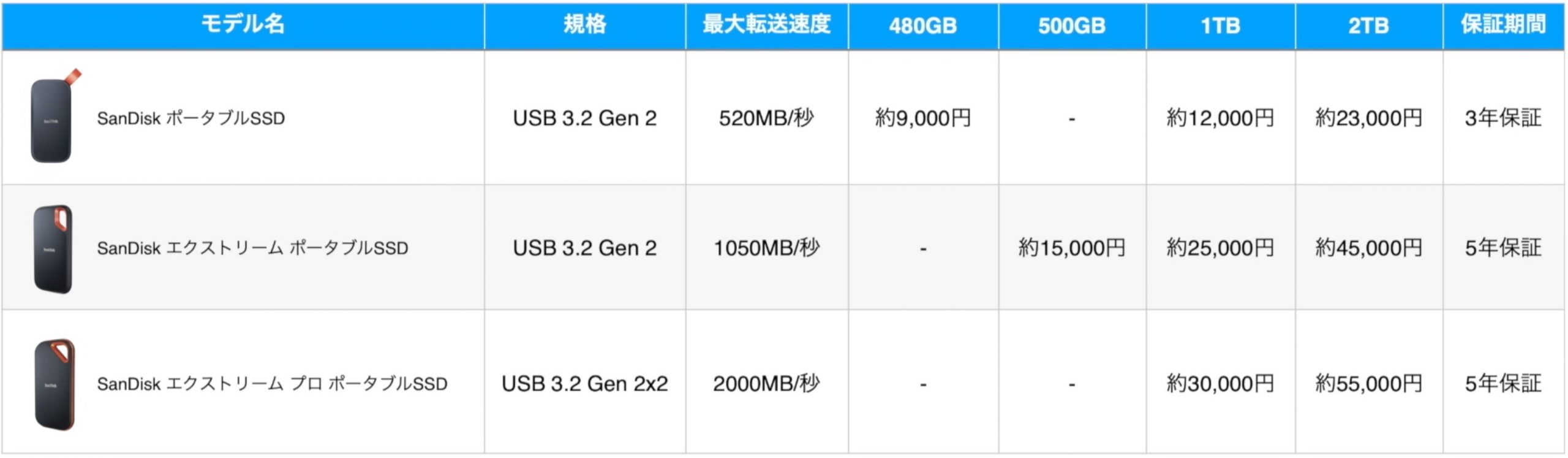
The SanDisk Portable SSD lineup offers three models, giving you options for different uses and budgets.
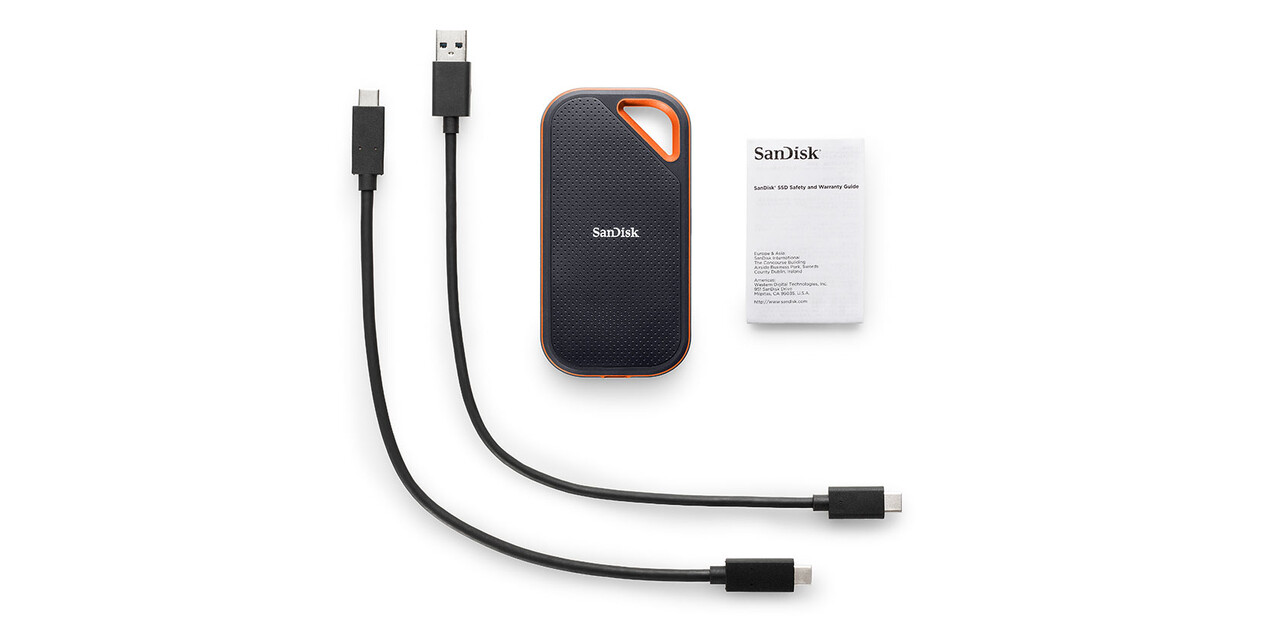
All three work with both macOS and Windows. They connect via USB Type-C.
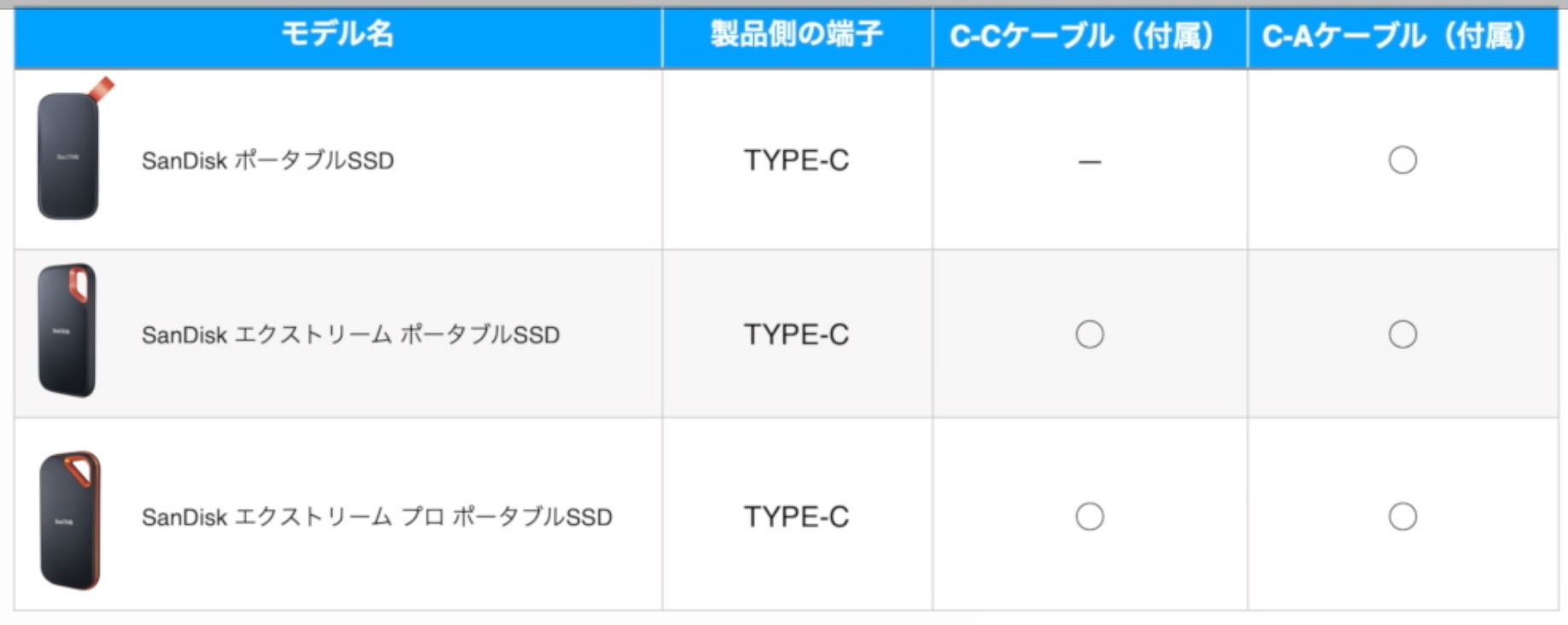
As shown in the table, the standard SanDisk Portable SSD includes a USB Type-C to Type-A cable only.
You can also use it like the other two models by supplying a USB Type-C to Type-C cable.
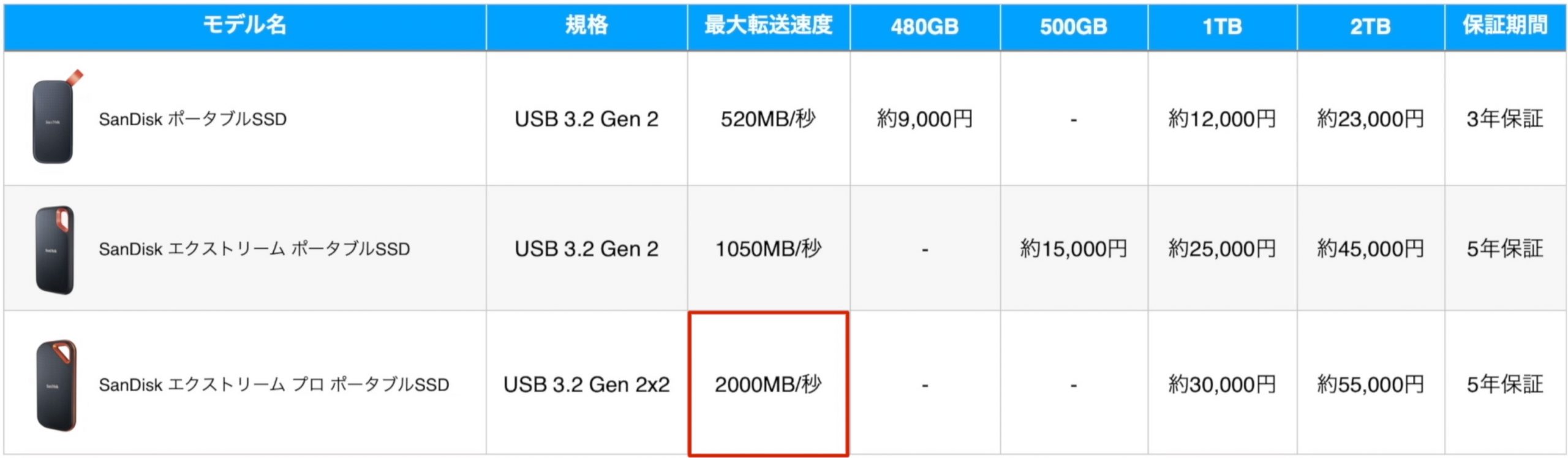
The top-of-the-line SanDisk Extreme PRO Portable SSDsupports the latest USB 3.2 Gen 2x2 connection standardand, when connected to a computer that supports the same standard,can reach transfer speeds of up to 2,000 MB/s.
What Is USB 3.2 Gen 2x2?
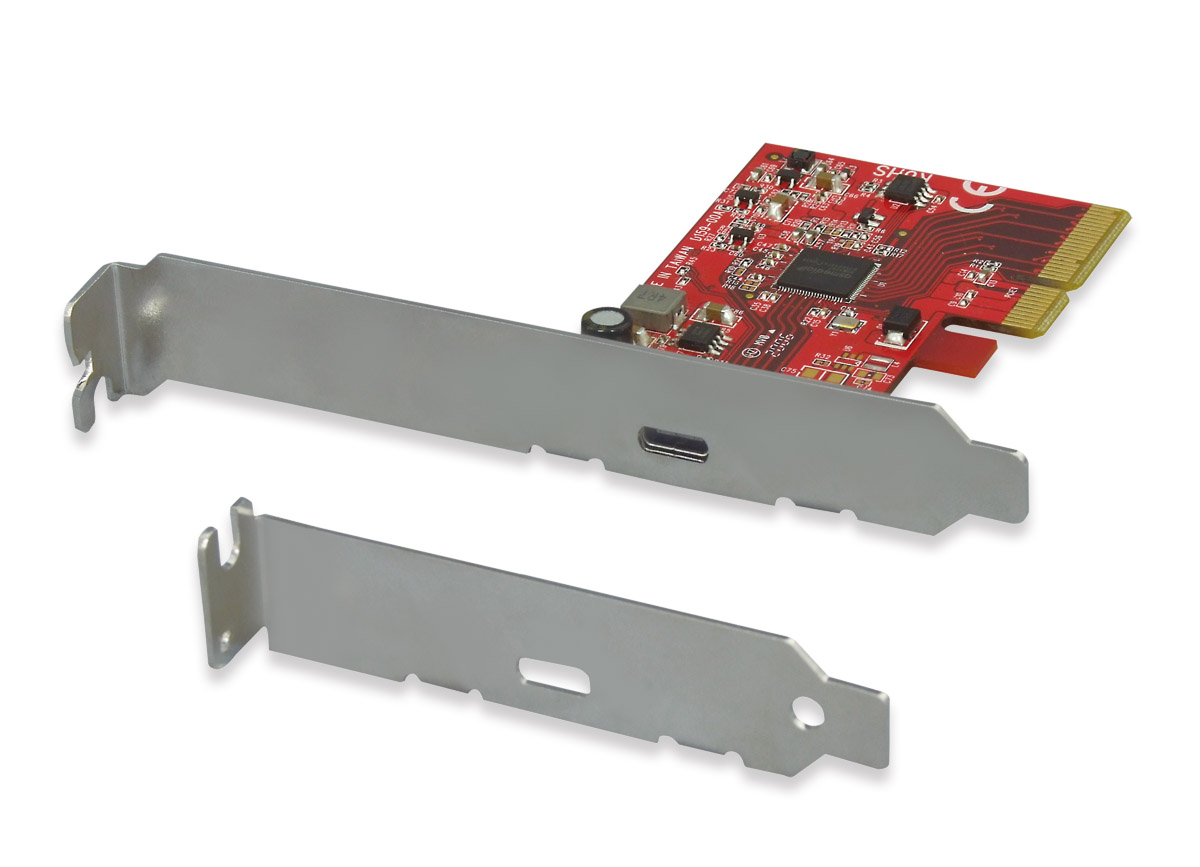
Announced in 2017, this USB standard supports data transfer speeds of up to 20 Gbps.
Totake advantage of the 20 Gbps speed, you need a USB Type-C connection.
With USB Type-A, the drive operates at USB 3.2 Gen 2, with speeds of up to 10 Gbps.
Also, keep in mind that your PC must support USB 3.2 Gen 2x2.
If your PC does not support the standard, transfers are limited to the maximum speed supported by its interface.
For example, a computer that supports the previous generation, USB 3.2 Gen 2, can transfer data at up to 10 Gbps.
As of January 2021,no Mac model supports USB 3.2 Gen 2x2.
We expect that an adapter may make this possible as USB4 and Thunderbolt 4 become more widely adopted.
Transfer-Speed Comparison
Here, we'll compare the three SanDisk Portable SSD models with a typical USB 3.2 Gen 1 external HDD.
The computer used for testing was a 2019 MacBook Pro.
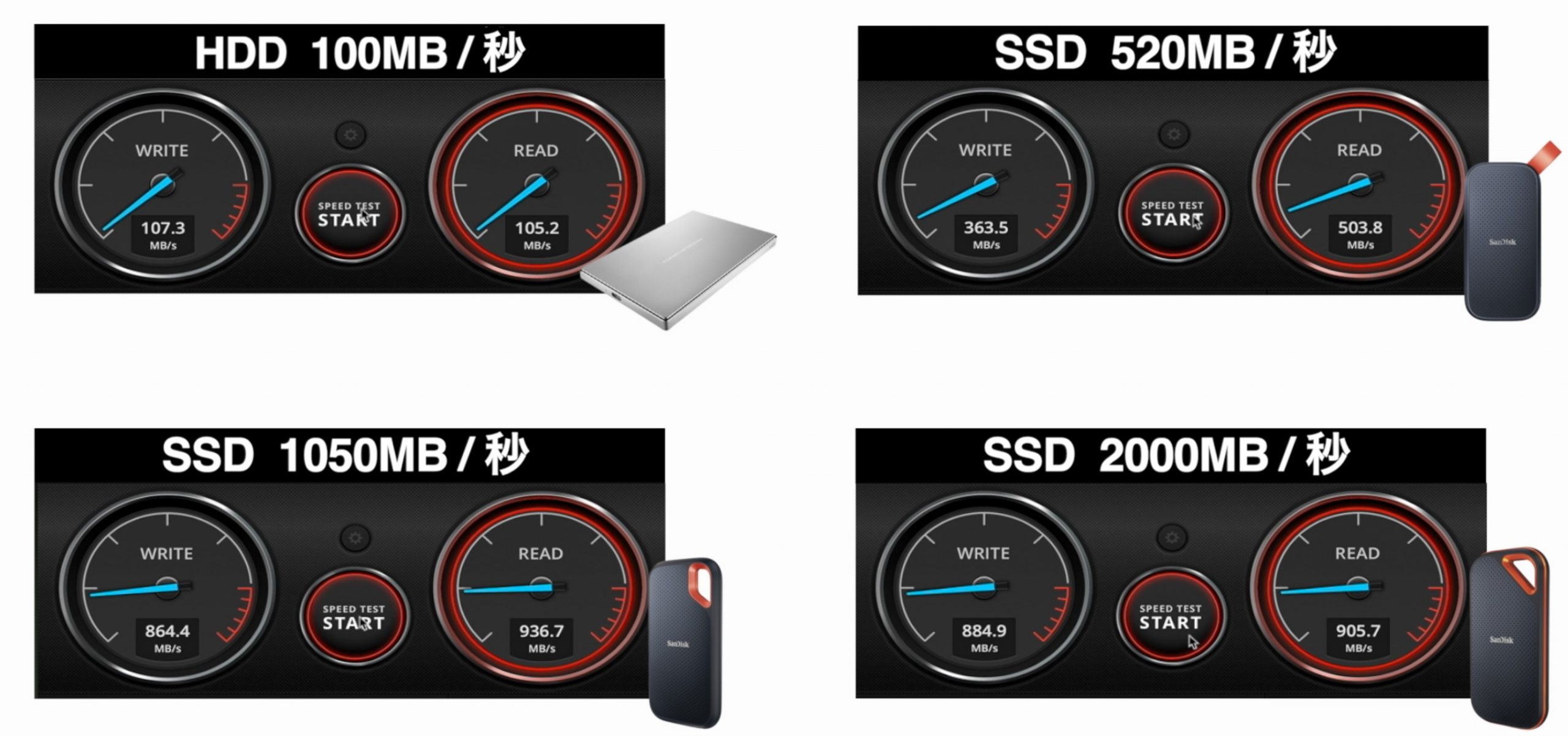
The transfer speeds differ considerably. As noted above, however, the SanDisk Extreme PRO Portable SSD at the lower right is not reaching its full 2,000 MB/s potential.
So we set up a Windows PC with a USB 3.2 Gen 2x2 card installed and ran the test again.
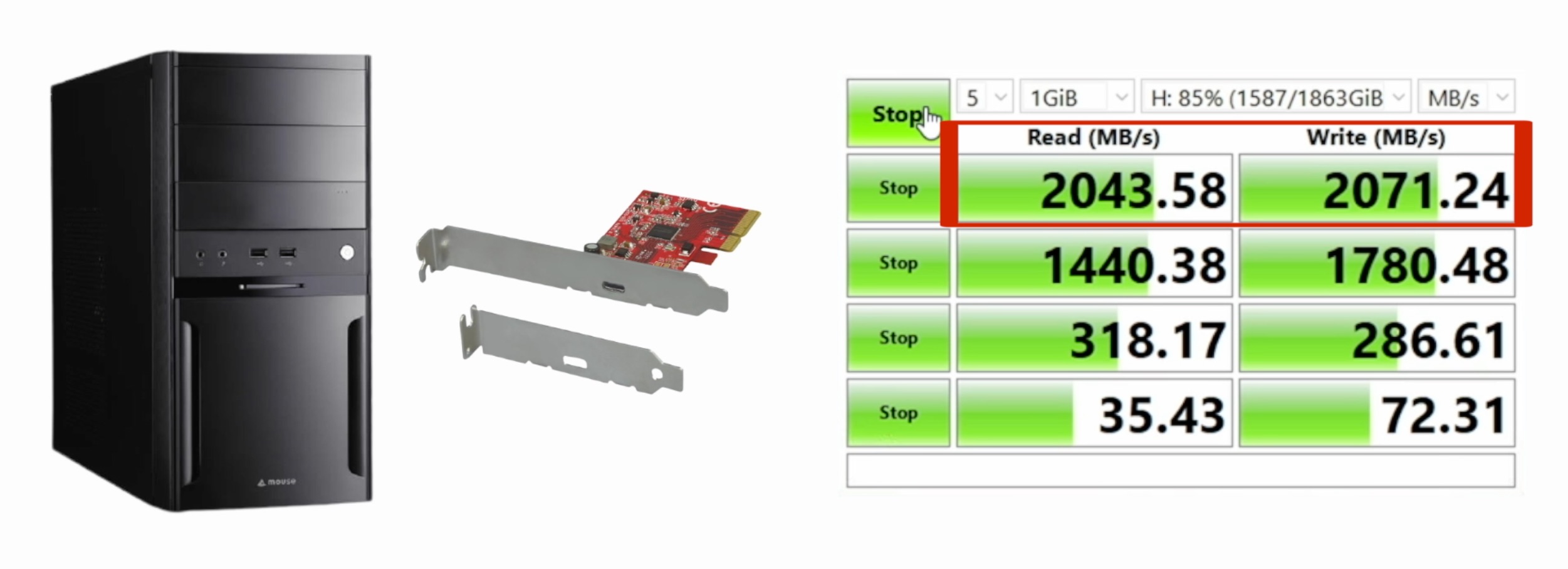
This time, it reached the full 2,000 MB/s speed.
Sample-Library Load Times
With USB 3.2 Gen 2x2 enabled, let's check how quickly the drives load the large sample libraries that are essential to music production.
First, we tested the piano library Alicia's Keys.
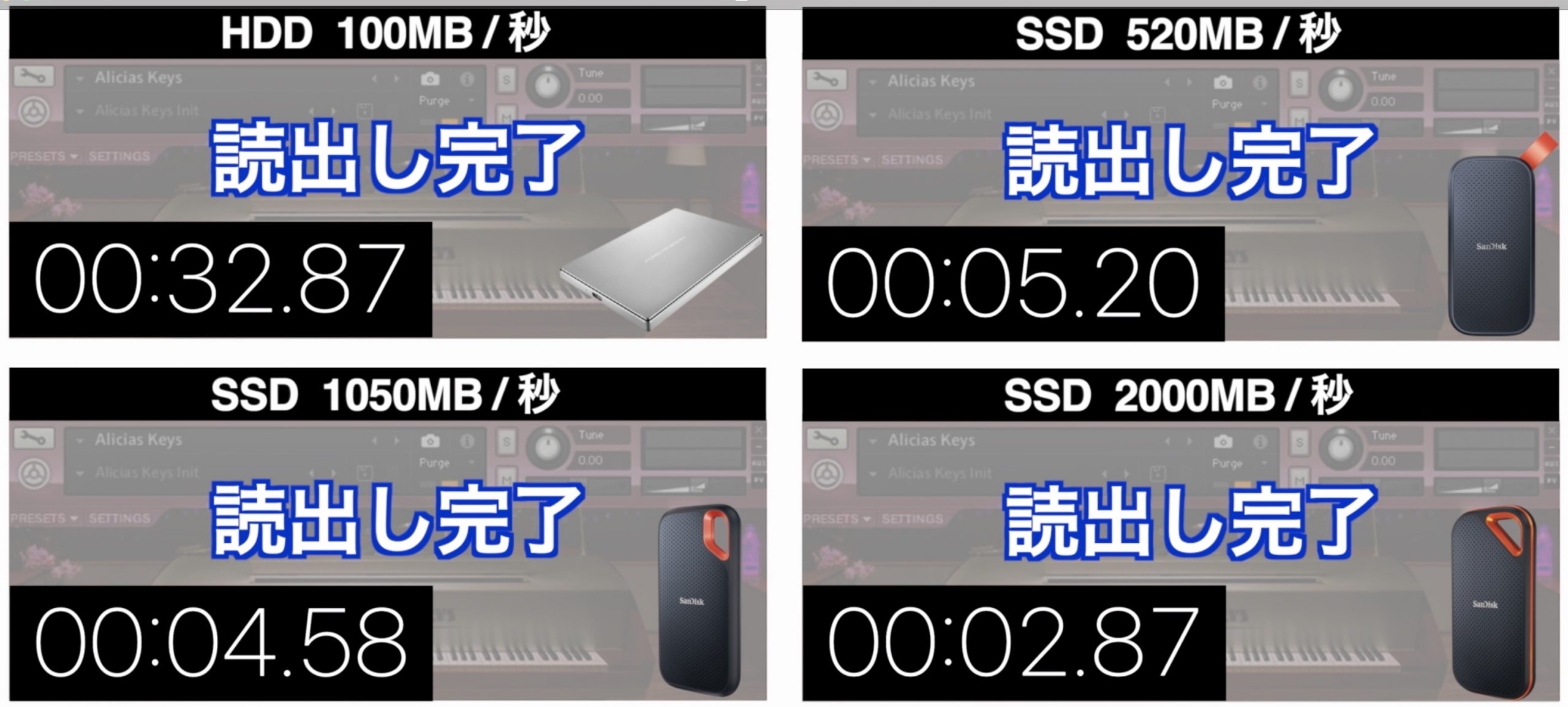
The standard 100 MB/s HDD fell well behind the SanDisk Portable SSD models—by more than we expected.
The SanDisk Portable SSD and SanDisk Extreme PRO Portable SSD also differed by about a factor of two.
Next, we tested the popular BFD3 large drum library.
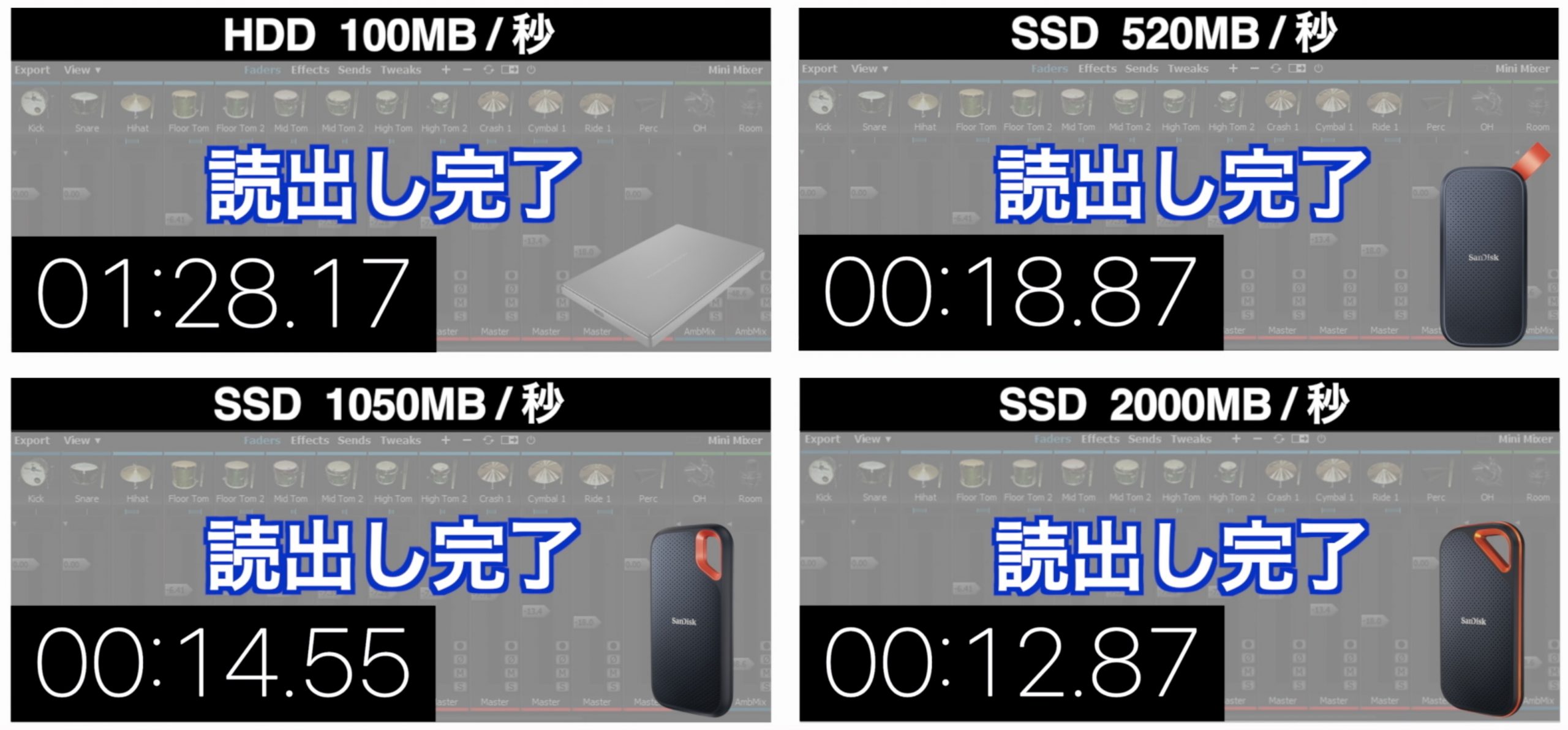
Because BFD3 loads more audio samples than Alicia's Keys, the gap was even larger.
We also confirmed that read speed depends on how the instrument software is designed.
In particular, newer software tends to be designed to load audio samples faster, so it can benefit even more from high-speed storage.
It's not unusual for a project to run dozens of software-instrument tracks, so you can imagine how much the load times add up.
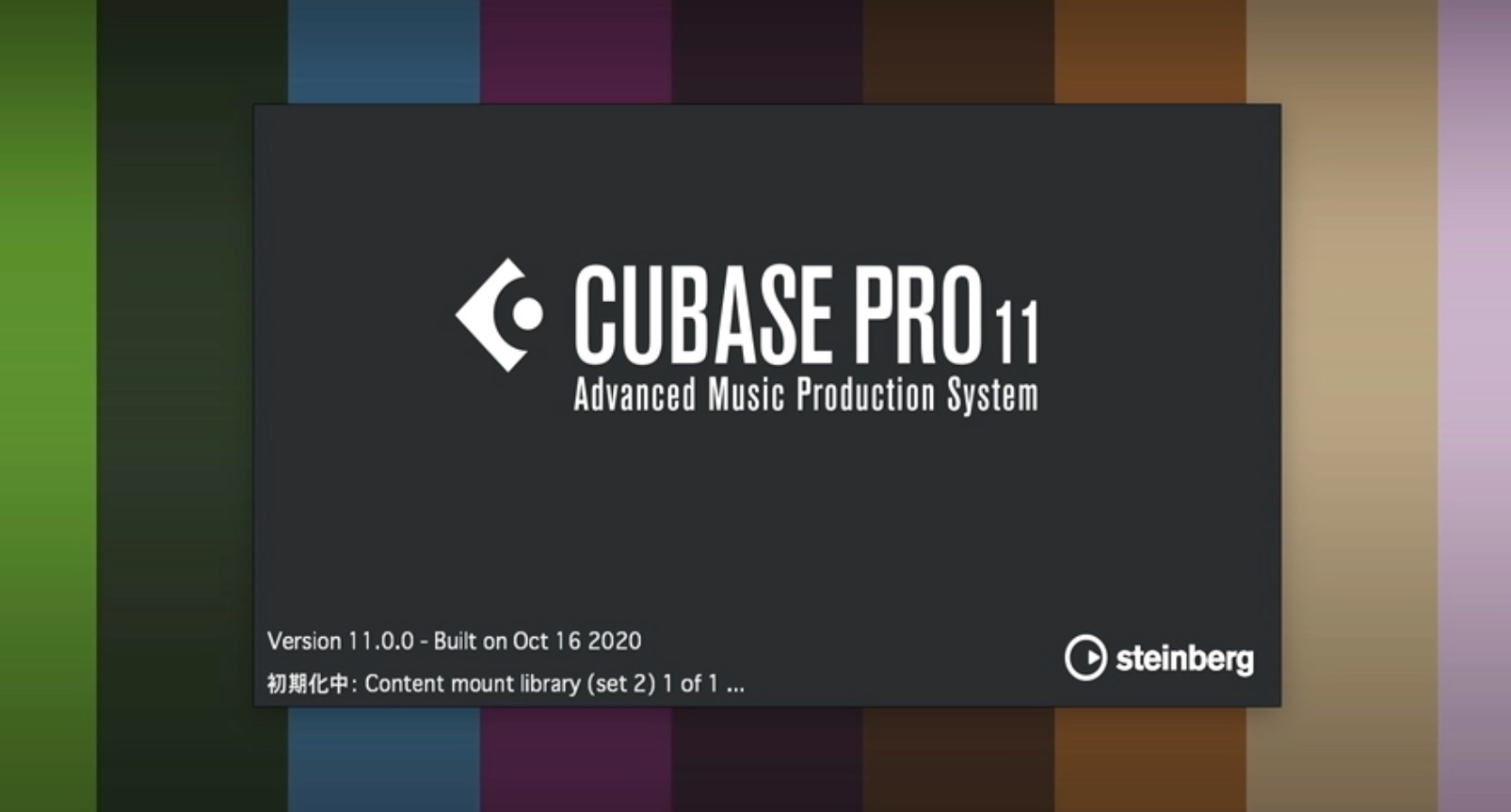
We also timed how long the same DAW project took to open.
There was little difference; this stage depended more on the CPU and memory.
Generally, the software instruments above load after the DAW project has opened.
This is one reason you may hear noise or experience playback stopping if you start a project immediately after it opens.
If you have enough CPU and memory but still hear noise or dropouts, we recommend checking your storage transfer speed.
Portability
The SanDisk Portable SSD series is designed with travel and outdoor use in mind.
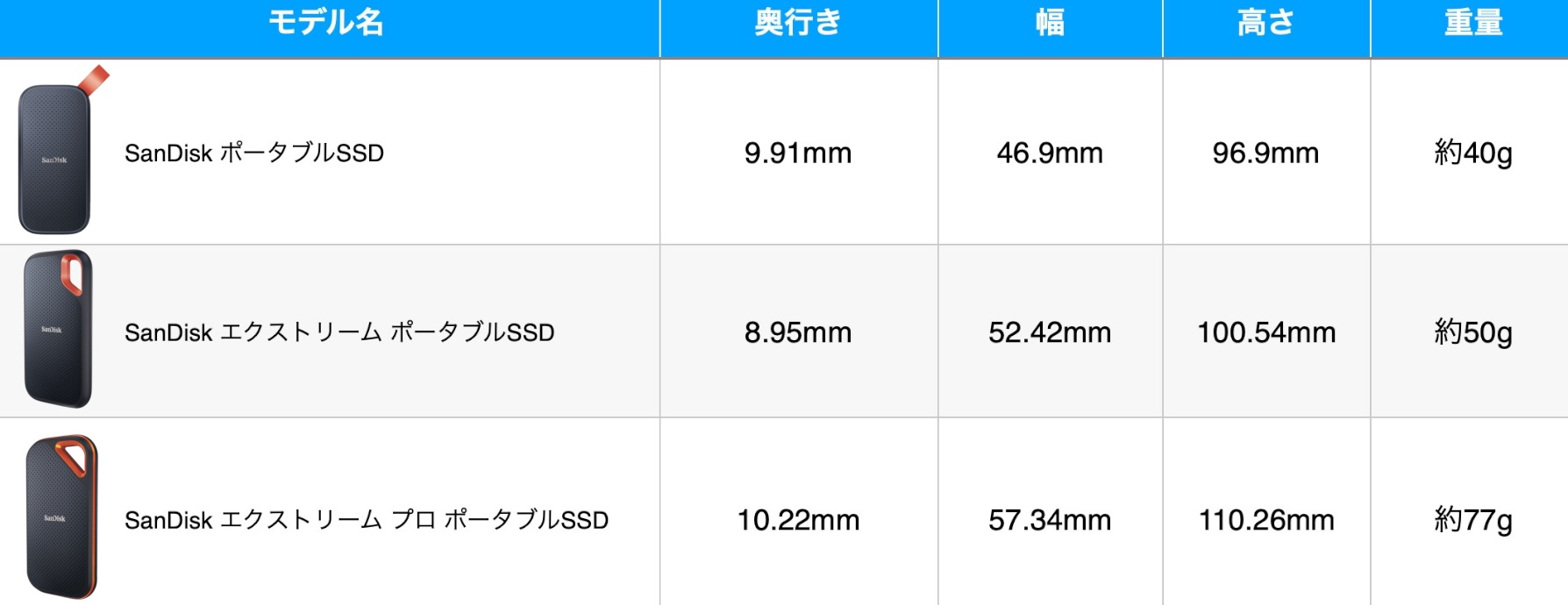
The drives are very lightweight and compact, making them easy to carry.
They pair well with laptops and can also be useful for DJ sets and live performances.
Water, Dust, and Impact Resistance
More frequent travel also means a higher risk of damage.
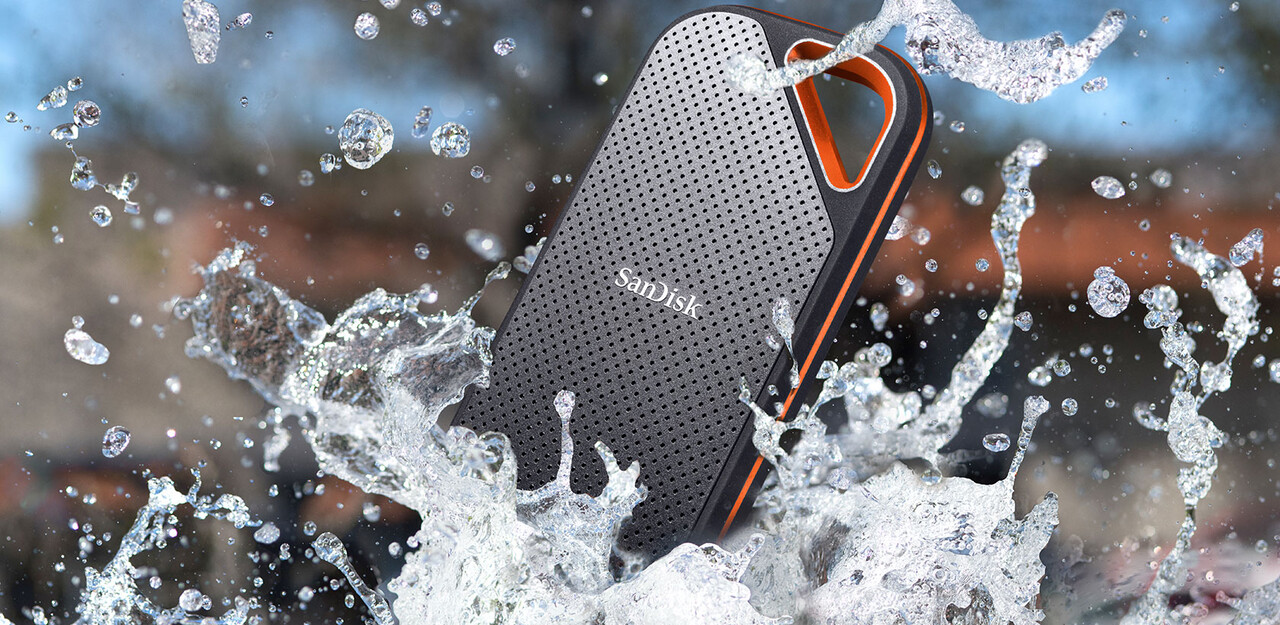
The drive passed a 2-meter drop testand offers strong impact resistance.
A typical HDD could be damaged by a single drop from that height.
It also offers IP55-rated water and dust resistance, making it reassuring to use outdoors.
Security and Encryption
You might accidentally leave a storage drive behind in a studio or on a train.
That's one scenario to consider.

The SanDisk Portable SSD series comes with security software preinstalled.
Set a password in the software, and
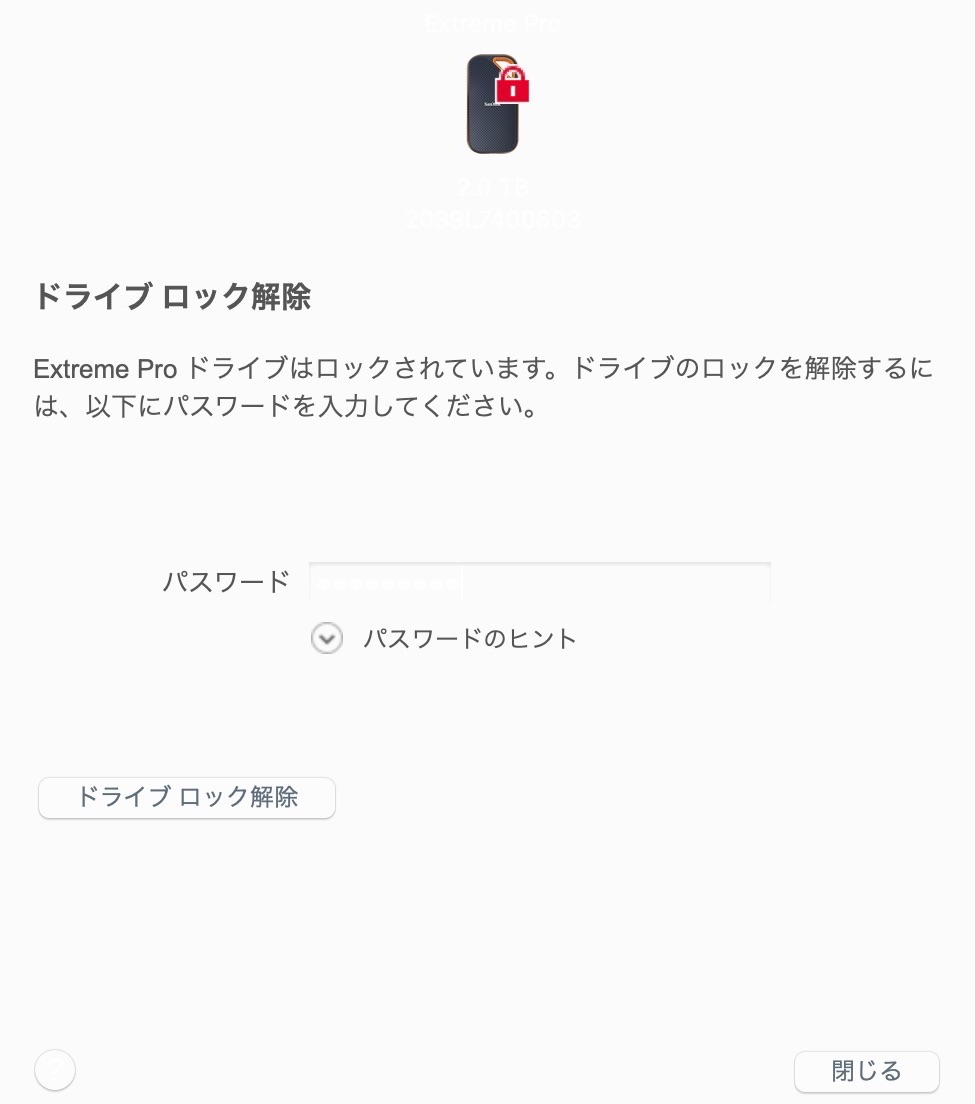
you'll be asked for it before accessing the drive when you connect it to another computer or device.
That's a thoughtful and welcome feature.
What do you think?
As you've seen, storage transfer speed has a major effect on how smoothly a music-production setup runs.
It's remarkable that technology now makes it possible to carry a drive this capable with you.
If you're considering an additional external drive, take a look at the SanDisk Portable SSD series.
Where to Buy
■ SanDisk Portable SSD (520 MB/s)
https://amzn.to/3r78YN4
■ SanDisk Extreme Portable SSD (1,050 MB/s)
https://amzn.to/3ai7RmB
■ SanDisk Extreme PRO Portable SSD (2,000 MB/s)
https://amzn.to/3cpXrEq
Frequently Asked Questions
Q1. What transfer speed do I need when choosing external storage for music production?
A typical HDD at 100 MB/s can mean long load times and reduced DAW performance. A SanDisk model rated at 1,050 MB/s or faster can load software instruments more quickly and help create a smoother production setup.
Q2. Can I use these drives with both Mac and Windows?
Yes. The SanDisk Portable SSD series works with both macOS and Windows. However, Macs do not support USB 3.2 Gen 2x2, so they cannot use the Extreme PRO's full 2,000 MB/s speed.
Q3. I'm concerned about damage while carrying a drive. How durable is it?
The drive has IP55-rated water and dust resistance and passed a 2-meter drop test. Its lightweight, compact design also makes it suitable for mobile production with a laptop and for live performances.
Q4. How many models are in the SanDisk Portable SSD series?
There are three: the standard model (520 MB/s), Extreme (1,050 MB/s), and Extreme PRO (2,000 MB/s). Choose one based on your budget and needs.
Q5. My DAW project makes noise when it opens. Could storage help?
Storage transfer speed can be one cause of noise. If your CPU and memory are sufficient but noise persists, switching to a faster SSD may help.
NEW ARTICLES
Latest English Articles




























































