
Sleepfreaks' 2024 DAW survey collected responses from 3,867 music makers. Cubase led this respondent group at 39.8%, followed by Studio One at 26.6% and Logic Pro at 21.8%. Respondents discussed learning resources, ease of use, bundled tools and production workflows. These results describe this self-selected audience, not worldwide market share. Product versions, free editions, pricing and update comments reflect the original survey period and should not be read as a current buying guide.
The DAWs our respondents chose—and why
Here are the results of the survey of music makers conducted during our Christmas campaign. Let's explore what respondents told us.
In total, 3,867 people responded. That gave us a substantial set of answers.
Thank you to everyone who took part.
We have compiled the responses to explore DAW rankings, reasons for choosing a DAW and musical genres, among other topics.
Here are the findings.
2024 DAW Survey: Top 10
About the respondents
First, let's look at the people who answered the survey.
Gender
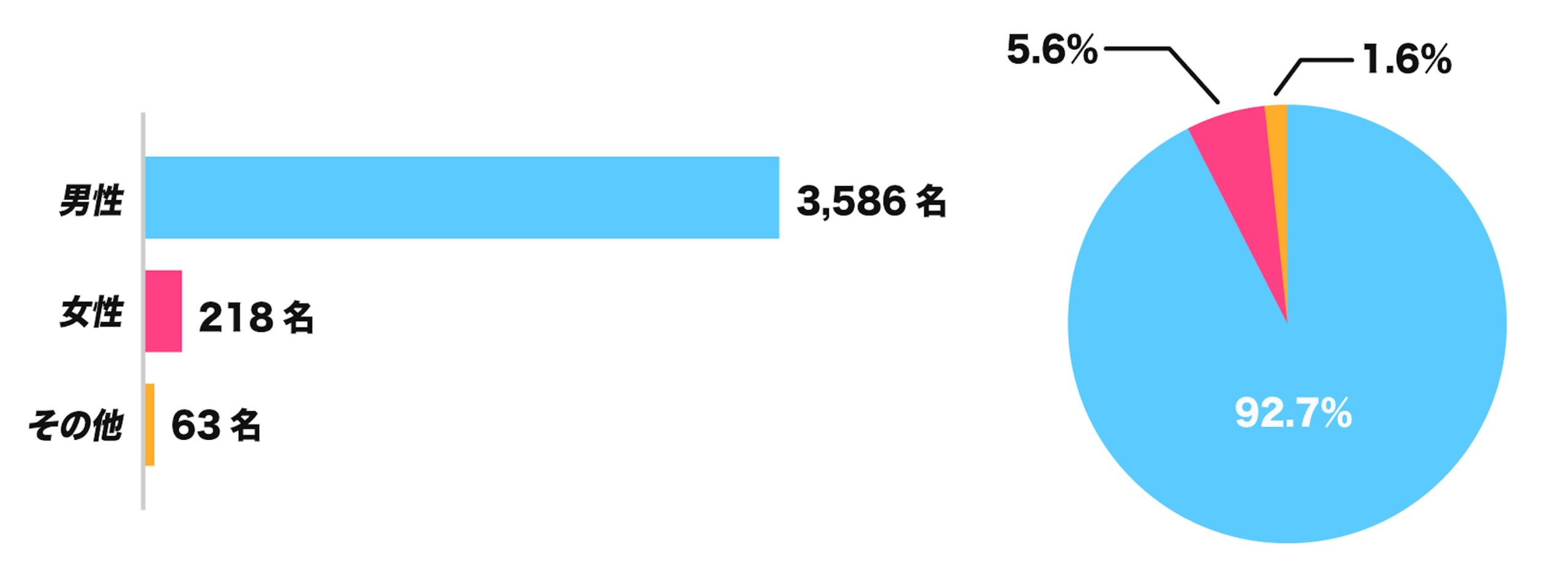
The distribution was almost unchanged from the survey three years earlier, with men making up the majority.
Age
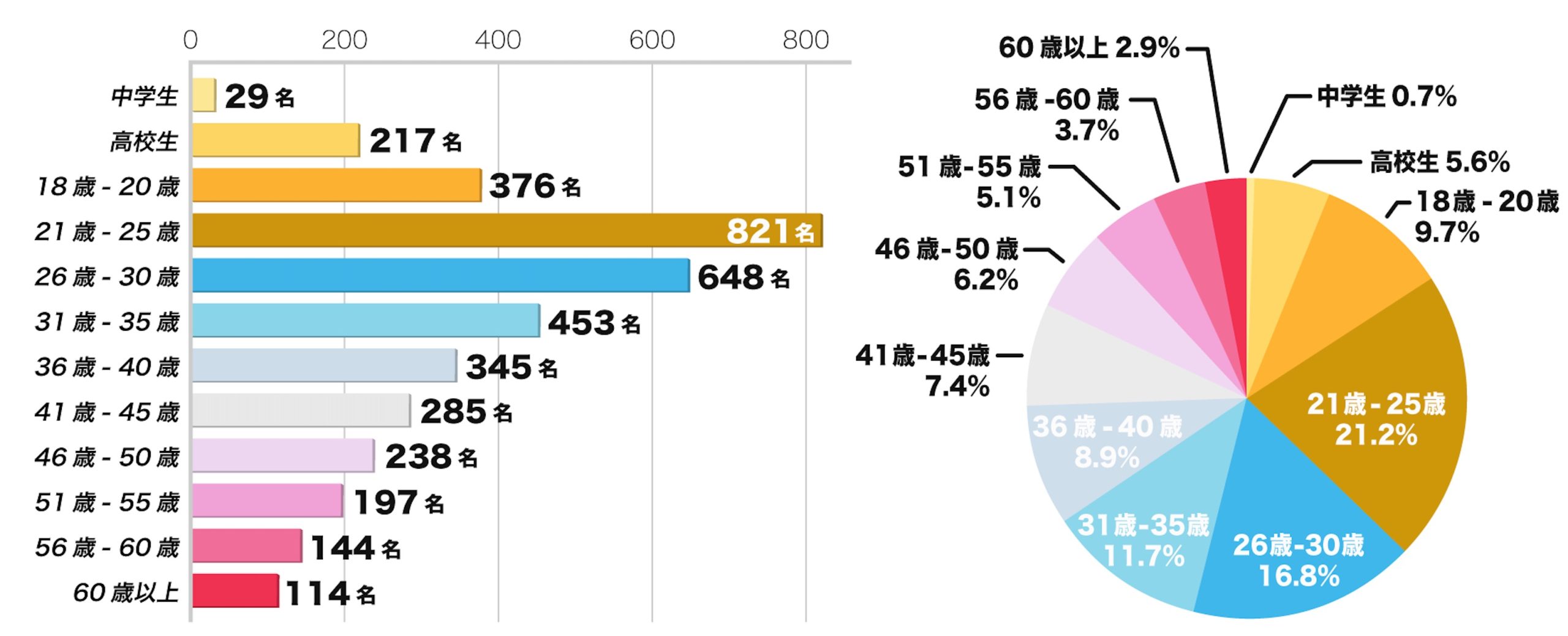
Respondents aged up to 20 accounted for 16%, and those in their twenties for 38%. Roughly half were therefore aged 29 or under.
The largest age group was 21–25, with the numbers decreasing through older age groups.
Devices used (multiple selections allowed)
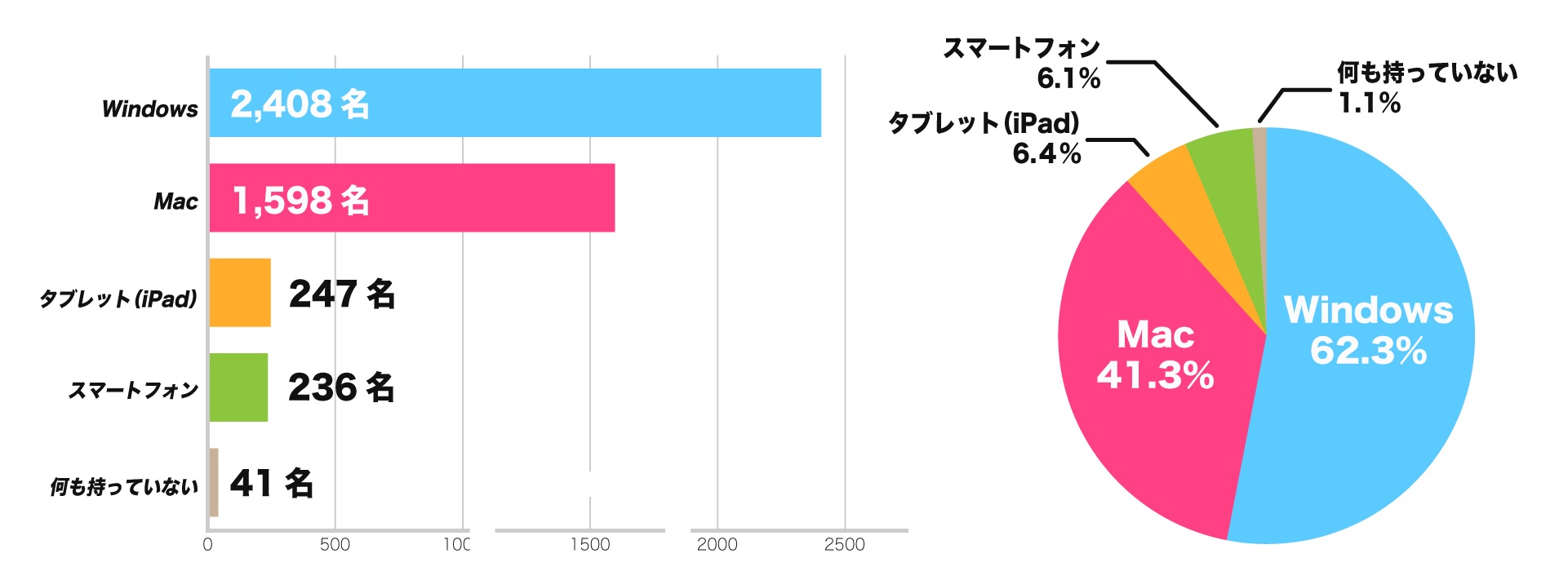
Many respondents used a computer—Mac or Windows.
Even with capable phones and tablets, completing a production on them may feel less convenient, including in terms of screen visibility. That is the article's interpretation, not a finding about device capability.
The original article also wondered how wider adoption of VR and AI might change music production.
Music-production experience
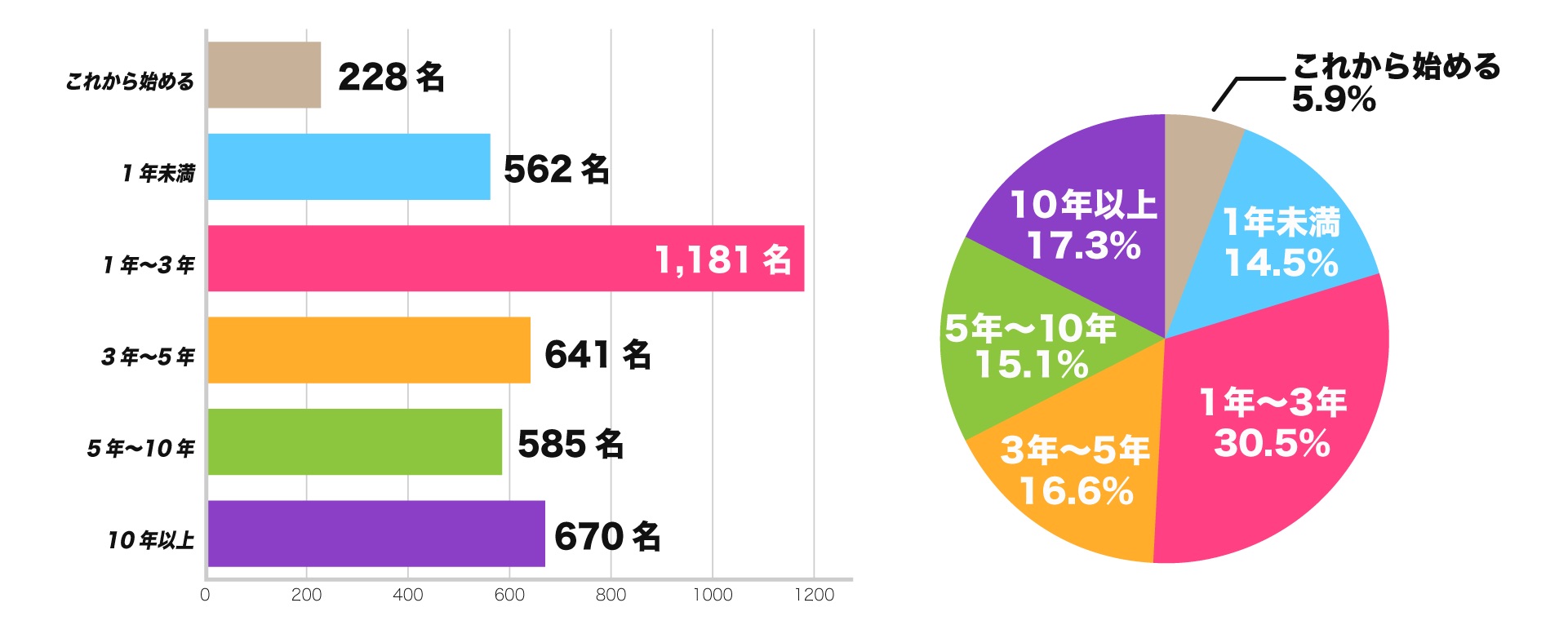
Including people planning to begin, around half had three years or less of music-production experience.
Many appeared to have started during the COVID-19 period.
The results suggest continued demand for beginner-oriented music-production content within this audience.
Music-production goals
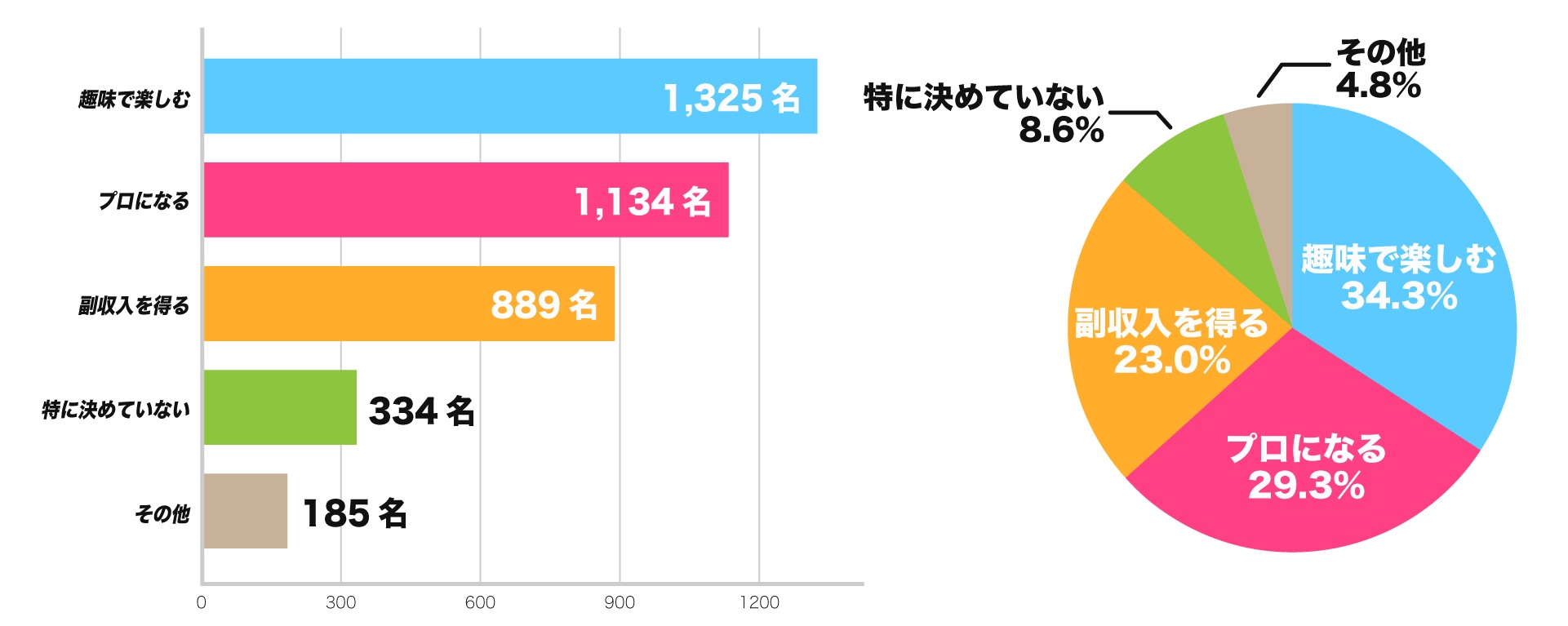
Making music as a hobby was the most common answer. However, aspiring or established professionals also formed a large group; combined with those seeking supplementary income, they exceeded half of respondents.
That helps explain why many in this audience were willing to invest in instruments and plug-ins.
Genres produced
- Pop and alternative: 1,116 respondents
- Electronic and dance music: 837 respondents
- Rock and metal: 615 respondents
- Anime and game music: 584 respondents
- Hip-hop and rap: 175 respondents
- Film scores, incidental music and orchestral music: 175 respondents
- Funk, R&B and soul: 136 respondents
- Traditional and world music: 32 respondents
Vocal pop remained a strong category.
The original article noted that advances in singing-synthesis tools such as Synthesizer V Studio made it easier to produce vocal material without a separate singer.
Electronic and dance music also rose from fifth place in the previous survey, an interesting trend to follow within this audience.
DAW rankings
Now, let's look at the rankings.
First, how many respondents used more than one DAW?
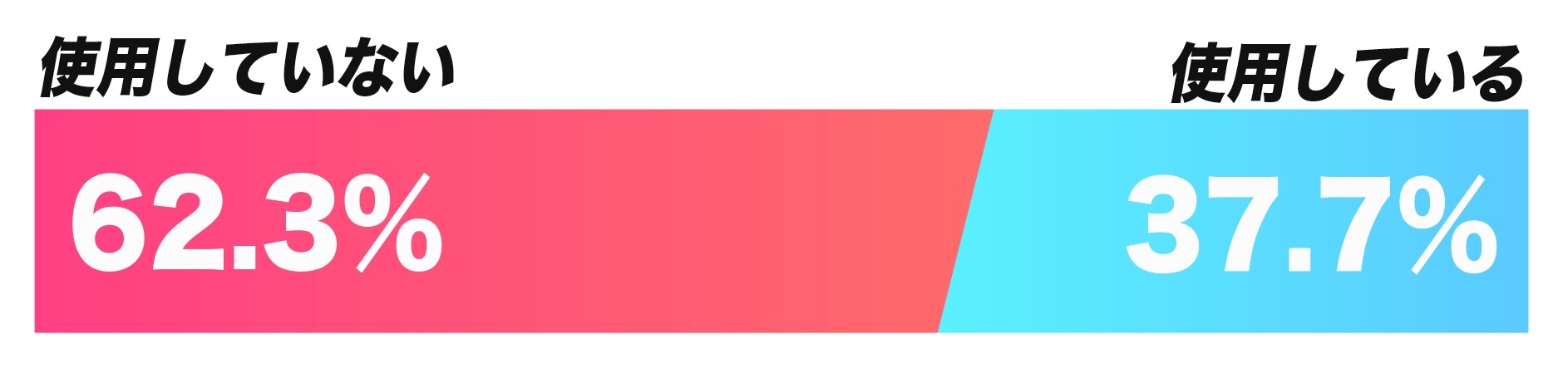
About 60% worked with a single DAW.
The equivalent figure in the previous survey was around half.
One possible interpretation is that individual DAWs had become more comprehensive in their features and capabilities.
The rankings below combine main-DAW and secondary-DAW use. A respondent can therefore count toward more than one product; the percentages are not exclusive market shares.
1. Cubase: 1,538 users / 39.8% of respondents (previously 1st)
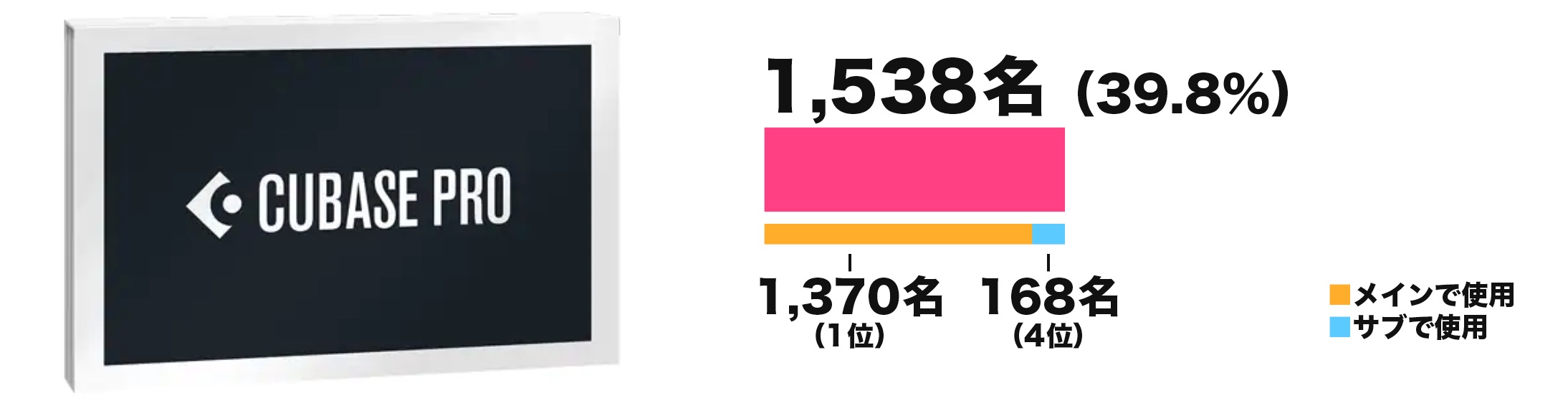
Cubase retained first place, with a substantial lead over second place in this survey.
The article highlighted changes such as the move away from USB-dongle licensing and interface improvements available at the time.
The reviewer felt these changes made the product more user-friendly.
Reasons Cubase users gave included:
- “It is very well known.”
- “There are lots of tutorials and other resources, and many people around me use it.”
- “A friend or music-store employee recommended it.”
- “My music school required it.”
- “It is easy to use, or looked easy to use, for MIDI programming and mixing.”
- “It includes VariAudio pitch correction.”
- “It works well with vocal-synthesis production.”
- “It came with equipment I bought.” (A secondary-DAW response.)
A large user community seemed to provide reassurance and access to information.
Comments also frequently praised the balance of its features.
2. Studio One: 1,029 users / 26.6% of respondents (previously 3rd)
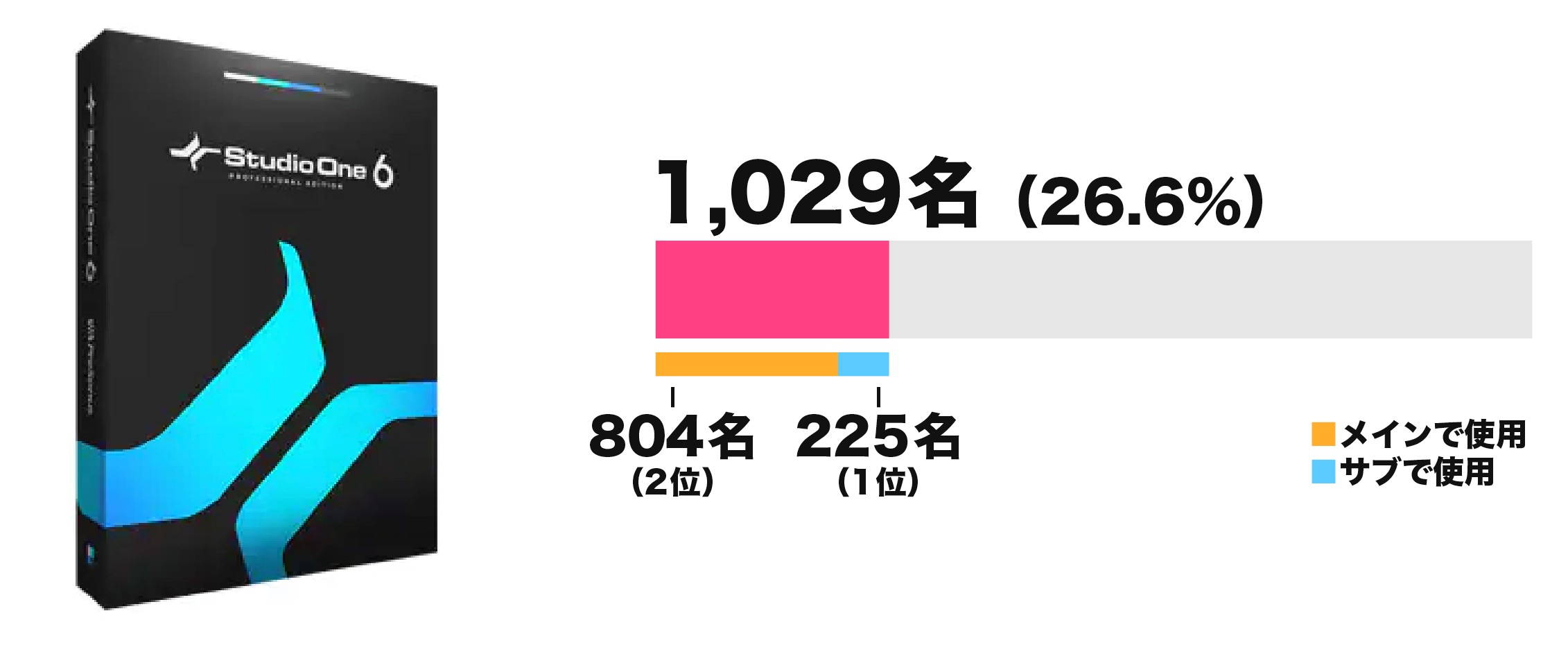
Studio One moved up one place from third in the previous survey.
The availability of a free entry point at the time was one factor respondents valued; this is a historical survey observation, not a statement that the same free edition remains available.
The article also highlighted the spatial-audio improvements in the then-recent updates as a possible attraction for future users.
Reasons Studio One users gave included:
- “It runs reliably.”
- “It integrates well and reliably with Melodyne.”
- “The sound quality is good.”
- “It has a good reputation, and a friend recommended it.”
- “The interface is clear and seems approachable for beginners.”
- “It is affordable, and there is a free edition.” (An observation from the survey period.)
- “It has mastering features.” (A secondary-DAW response.)
The original responses pointed to both the low barrier of the then-available free edition and a streamlined feature set that users found approachable.
Many also used it alongside another DAW for its mastering workflow.
3. Logic Pro: 843 users / 21.8% of respondents (previously 2nd)
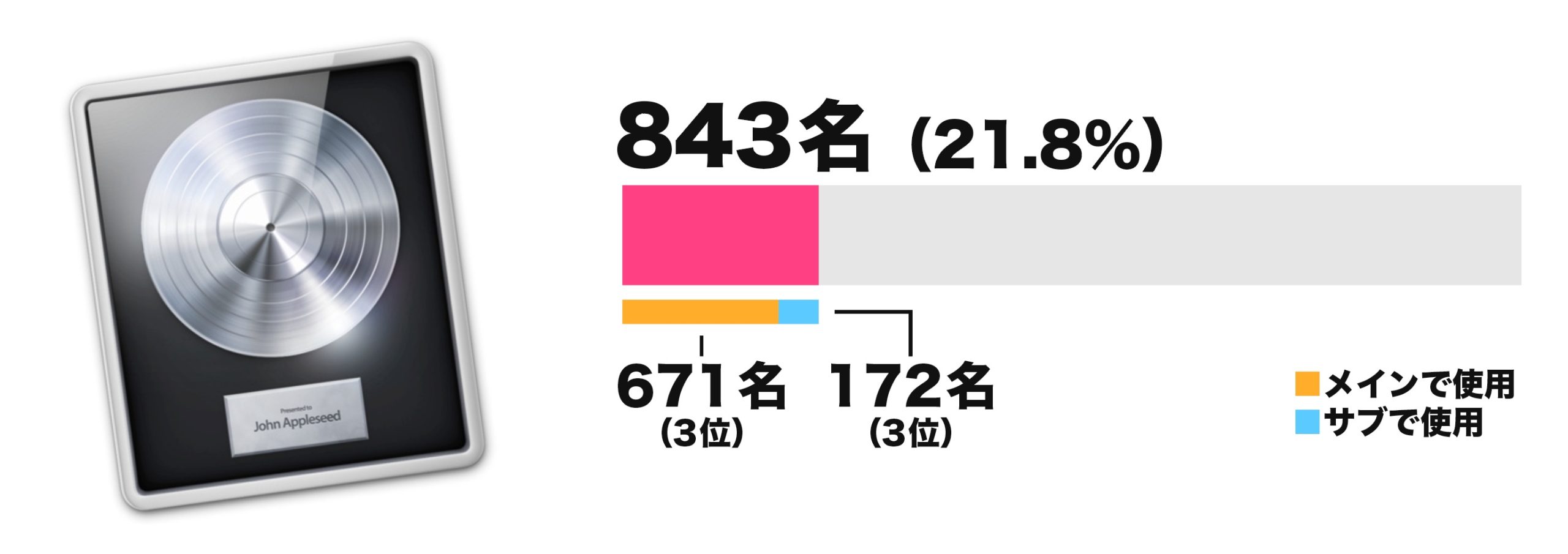
Logic Pro moved down one place from second.
At the time, the article praised its continued high placement despite the Mac-only desktop platform and a different update cycle from some rivals. Those comments describe the survey period, rather than current platform or update policies.
Reasons Logic Pro users gave included:
- “I use a Mac.” Apple brand familiarity was a strong theme.
- “It works well with the Mac and is stable.”
- “Updates are free, and there are lots of bundled instruments and loops.” (Respondents' comments at the time.)
- “I moved up from GarageBand, which came with my Mac or iOS device.”
- “It is affordable.”
Alongside praise for features and usability, many comments showed the strength of Apple's brand within this audience.
Starting with GarageBand and moving to Logic Pro at a price respondents considered accessible was a common route described.
4. Ableton Live: 402 users / 10.4% of respondents (previously 4th)
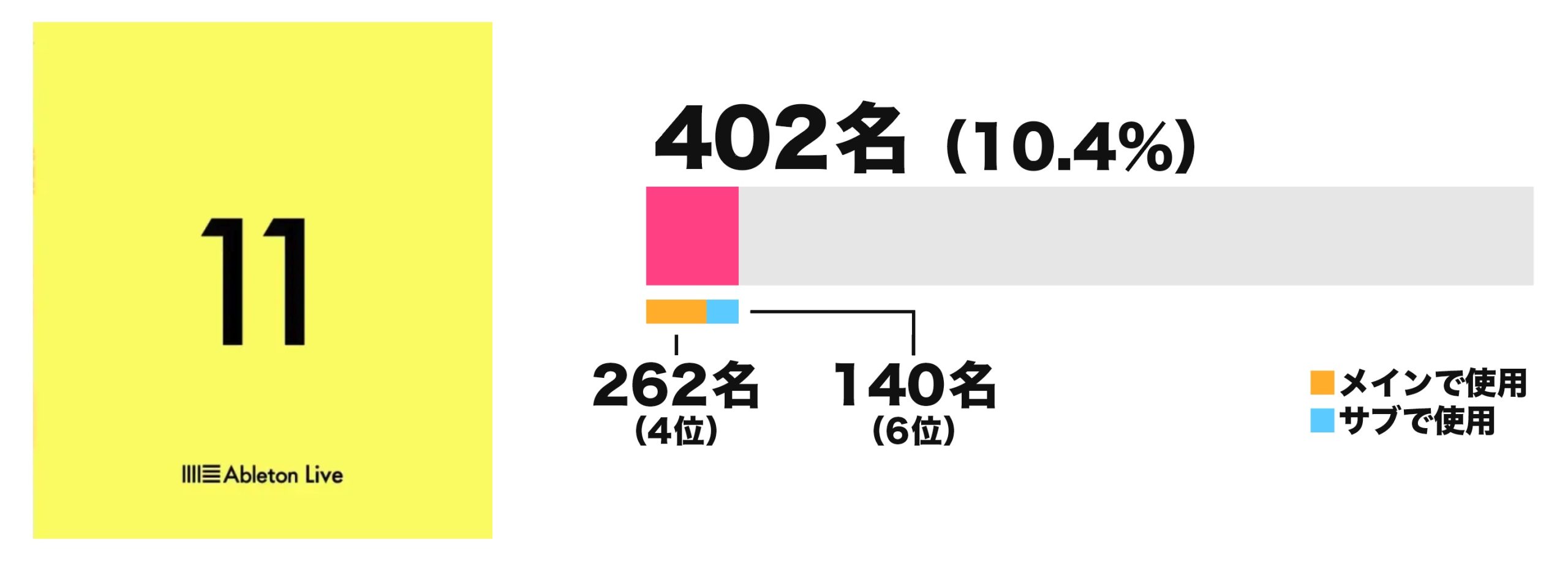
Ableton Live held fourth place.
The article linked its position to the growth in dance-music production among respondents, an area in which Live was particularly popular.
Live 12 had recently been announced when the original article was written. Its planned production features were one reason the reviewer was interested in future adoption.
Reasons Ableton Live users gave included:
- “My favorite artist or producer uses it.” This appeared for other DAWs too, but was especially common among Live responses.
- “I like the interface design.”
- “Audio editing and recording are straightforward.”
- “It is easy to develop ideas and build a workflow, including effects, automation and macros.”
- “It is easy to make electronic music and EDM.”
- “Many overseas users use Live, making useful information easy to find.” This was a respondent perception, not measured worldwide usage data.
- “I use it for Max for Live.” (A secondary-DAW response.)
Many respondents said overseas artists inspired their choice of Ableton Live.
They also praised the refined interface and the smooth process of developing a track, suggesting strong satisfaction among those respondents.
5. FL Studio: 282 users / 7.3% of respondents (previously 6th)
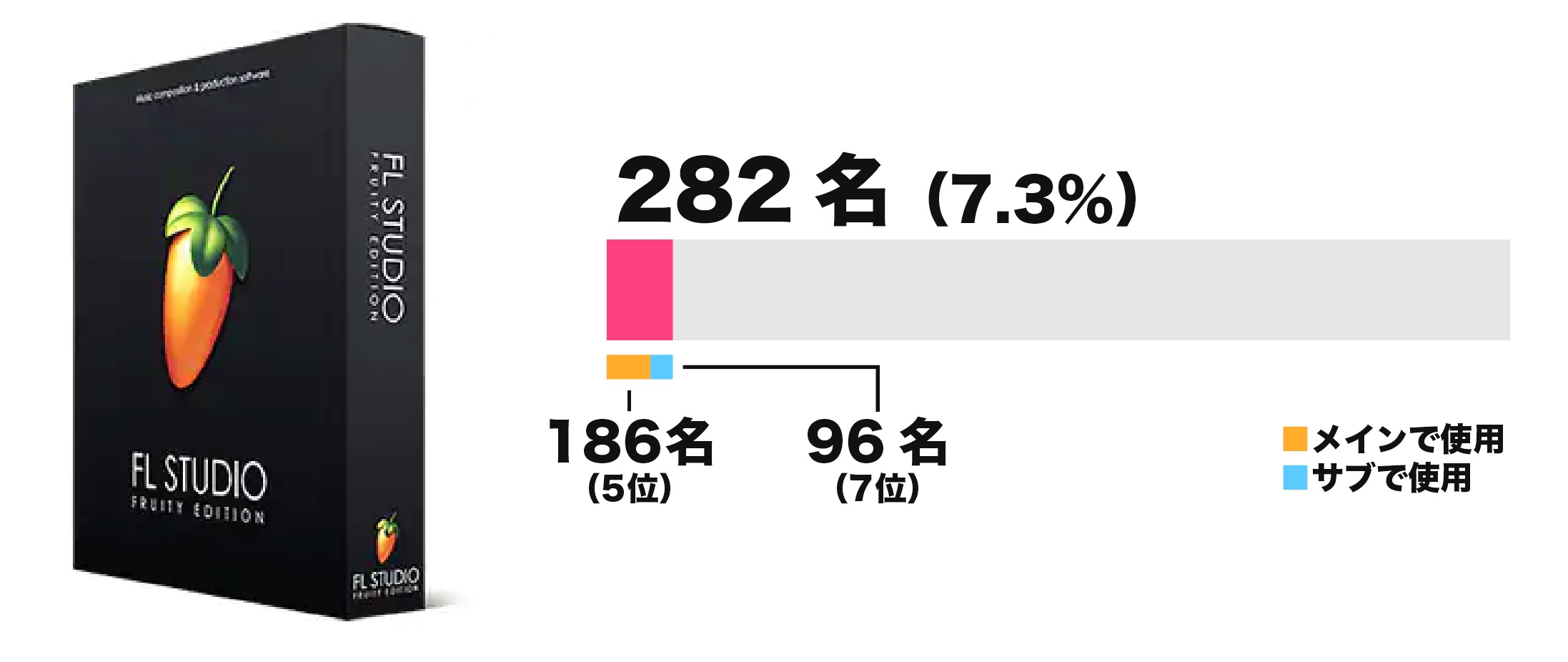
FL Studio rose one place to enter the top five.
Like Live, respondents associated it with dance-music production. What stood out about it?
Reasons FL Studio users gave included:
- “Many hip-hop beatmakers use it, including artists I like.”
- “It is easy to make EDM and hip-hop.”
- “It is affordable.”
- “Updates are free for life.” (A respondent comment about the product's update offer.)
- “It is easy to make electronic music and EDM.”
- “There are lots of overseas tutorials.”
Hip-hop and trap were especially prominent in the comments.
The article suggested that a price respondents considered accessible and the lifetime-free-update offer helped explain its appeal among younger users. Check current licensing terms when purchasing.
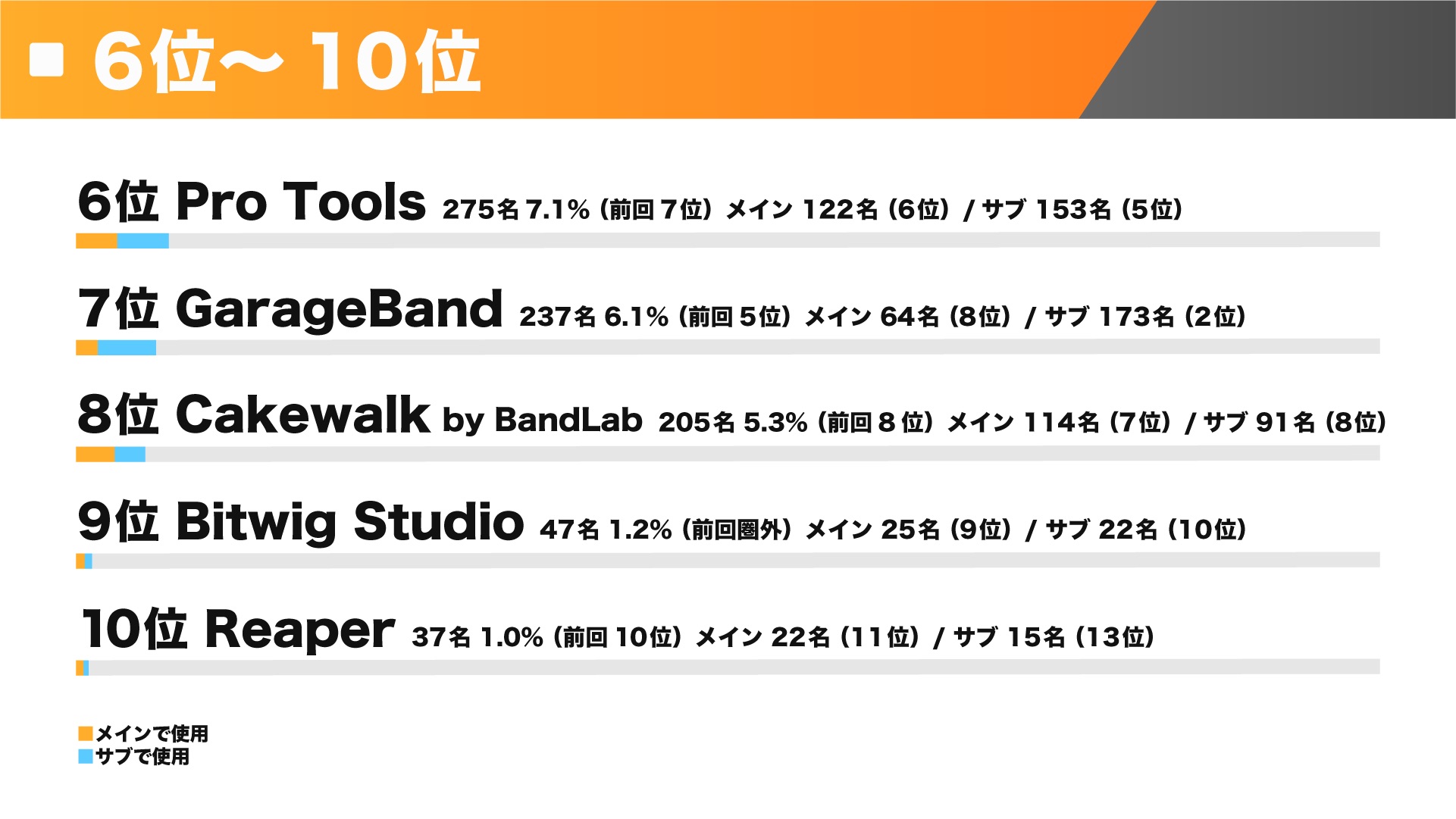
Among Pro Tools respondents, secondary-DAW use was more common, with reasons including working with recording studios and handling recording or mixing.
The original article saw familiarity with it as potentially useful for people seeking professional studio work; this was a survey interpretation rather than a requirement for every career.
GarageBand users often mentioned that it came with their Mac or served as a sketchpad on iPhone or iPad. Respondents frequently cited no-cost use for Cakewalk by BandLab and REAPER, and some praised REAPER's customization. Editorial clarification: REAPER is licensed commercial software with an evaluation period, so these responses should not be taken to mean it is freeware. The Cakewalk comments also refer to the version available in the survey period.
Several Bitwig Studio respondents praised its distinctive, advanced features. Having been outside the previous top ranking, it was a product the original article was interested to watch.
Popular DAW combinations
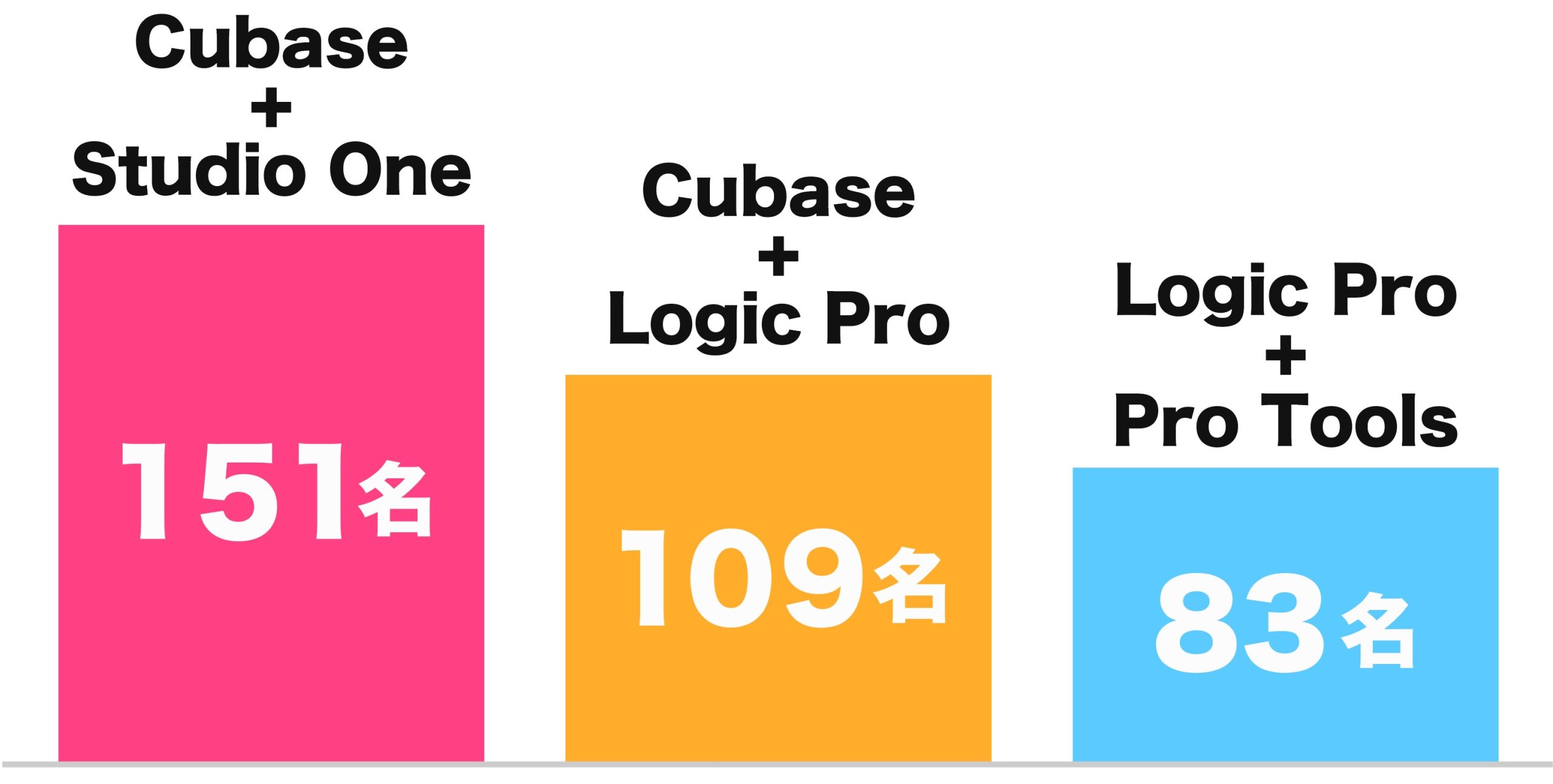
The most common main-and-secondary pairing was Cubase + Studio One.
Respondents described composing in Cubase and mixing or mastering in Studio One, whose mastering workflow and perceived sound quality they valued. This does not establish a universal sound-quality difference between DAWs.
For Cubase + Logic, many wanted access to Logic's Apple Loops and bundled instruments.
The Logic + Pro Tools pairing shown in the chart reflected a workflow using Pro Tools for audio recording.
What did you think?
The survey reveals a range of habits and preferences, alongside the features respondents associated with each DAW.
If you are beginning music production or considering a change of DAW, these historical responses may help you identify workflows and features to investigate. They are not a current product-availability or pricing guide.
Finally, thank you again to all the music makers who answered the survey.
We appreciate your participation.
Frequently asked questions
Q1. Which DAW did the article suggest beginners consider?
The original article highlighted Studio One, Logic Pro and Cubase, citing approachability, learning resources and the free entry points available at the time. Editions, trials and pricing can change, so check current product information and try suitable options before choosing.
Q2. Which DAW did respondents associate with pop production?
Cubase was frequently valued for VariAudio, vocal-synthesis workflows and its balanced features. These are reasons reported by this survey's users, not proof that one DAW is objectively best for pop.
Q3. Which DAW was associated with dance and electronic music?
Ableton Live was a prominent choice among respondents producing those styles, with praise for its workflow and artist community. The original article also discussed the then-announced Live 12. Other DAWs can produce these genres too.
Q4. Why use more than one DAW?
About 40% of respondents used multiple DAWs, sometimes to complement particular features such as mastering or to suit different projects. Around 60% used just one. Both approaches were represented in the survey.
Q5. What did the survey say about Logic Pro on the Mac?
Respondents valued its integration with the Mac, stability, bundled instruments and the route from GarageBand. Those are historical audience preferences, not a universal “best DAW” conclusion.
NEW ARTICLES
Latest English Articles


















































































