This guide explores four compressor types used in music production—FET, VCA, tube and optical—and how their characteristics can inform their use. It discusses fast FET attack on drums, natural VCA compression on the master bus, tube coloration on vocals and optical compression for vocal level control.
Improve your mixes by choosing between compressor types

Hardware-modelled compressors are available from many plug-in manufacturers and are becoming standard tools in DAW production.
At the same time, more users work with these plug-ins without having used the original hardware in a studio.“There are many types of compressor, but I don’t know how they differ” may be a familiar concern.
Here we use Slate Digital’s Virtual Mix Rack and Virtual Bus Compressor and Waves’ CLA-2A as examples to explain compressor types and their applications.
1. Using compressor types: FET, VCA and tube
Excerpt from YouTube questions and answers

I’m listening on earphones, but I couldn’t hear any difference between on and off. I’m studying mixing; does this mean I’m not suited to it?

You can’t judge your aptitude from this alone, so please don’t worry. The difference can indeed be difficult to hear. The audio examples in the article may make it easier to hear; please give them a try.
When I apply a digital compressor in Pro Tools, I dislike the hard sound it seems to produce. In GarageBand the same digital compression seems different, less hard, with a different nuance. Does a digital plug-in sound different depending on the DAW?
Changes in sound between DAWs are often debated. Personally, I think there are many cases in which the sound changes.
Purchase the products here
This article explains how to shop

2. Using compressor types: optical
FET compressors

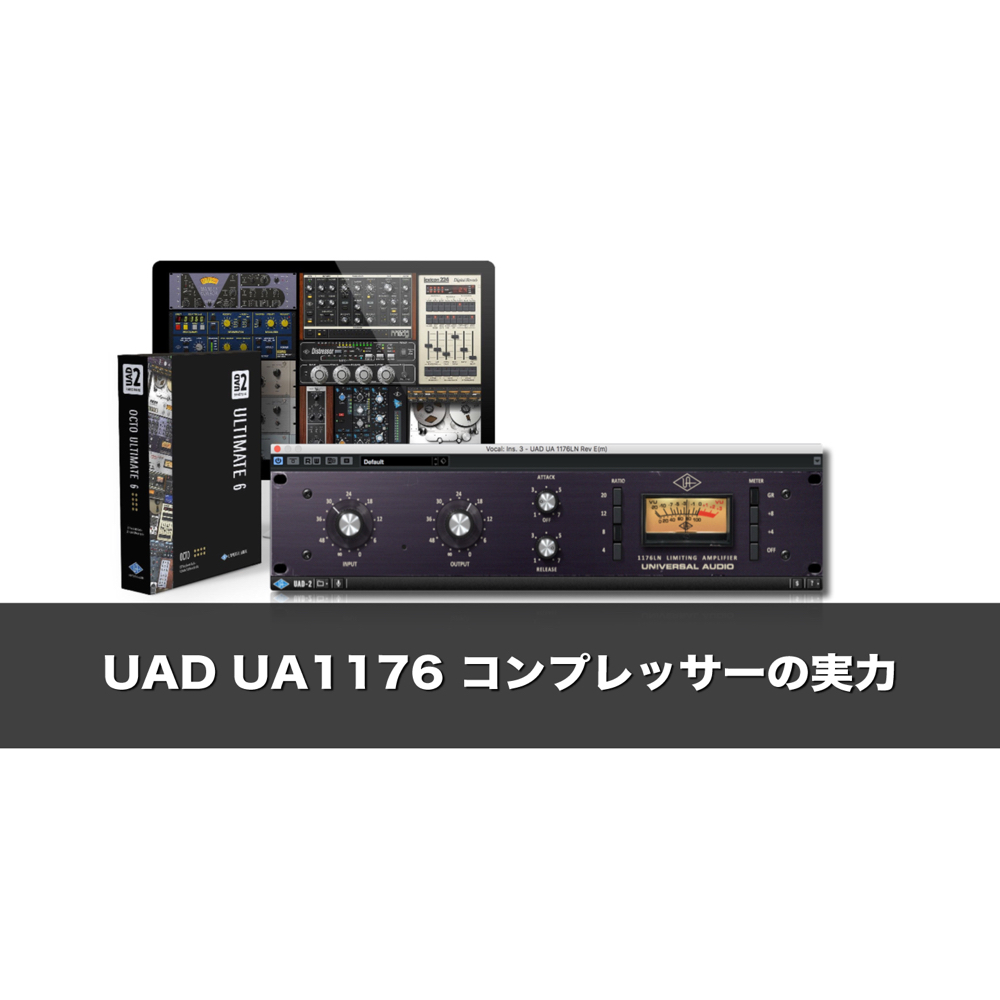
The defining feature of a FET compressor is its fast attack time.
It is used in many situations, particularly on drums, percussion and other sounds with sharp transients.

This type of compressor also typically has no threshold control; compression depth is adjusted using the input level.
For another guide to using an 1176-style FET compressor, see this article.
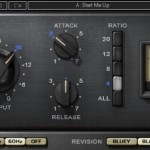

Because attack can be set quickly, you can apply deeper compression than with some other compressors.
It is a compressor well suited to actively shaping a sound.
Attack and release settings can change the nuance considerably, so listen while carefully finding a setting that suits the song.
VCA compressors

VCA compressors are characterized by natural-sounding compression.
They are mainly used on master and bus tracks to add a natural sense of cohesion and impact to combined sounds.

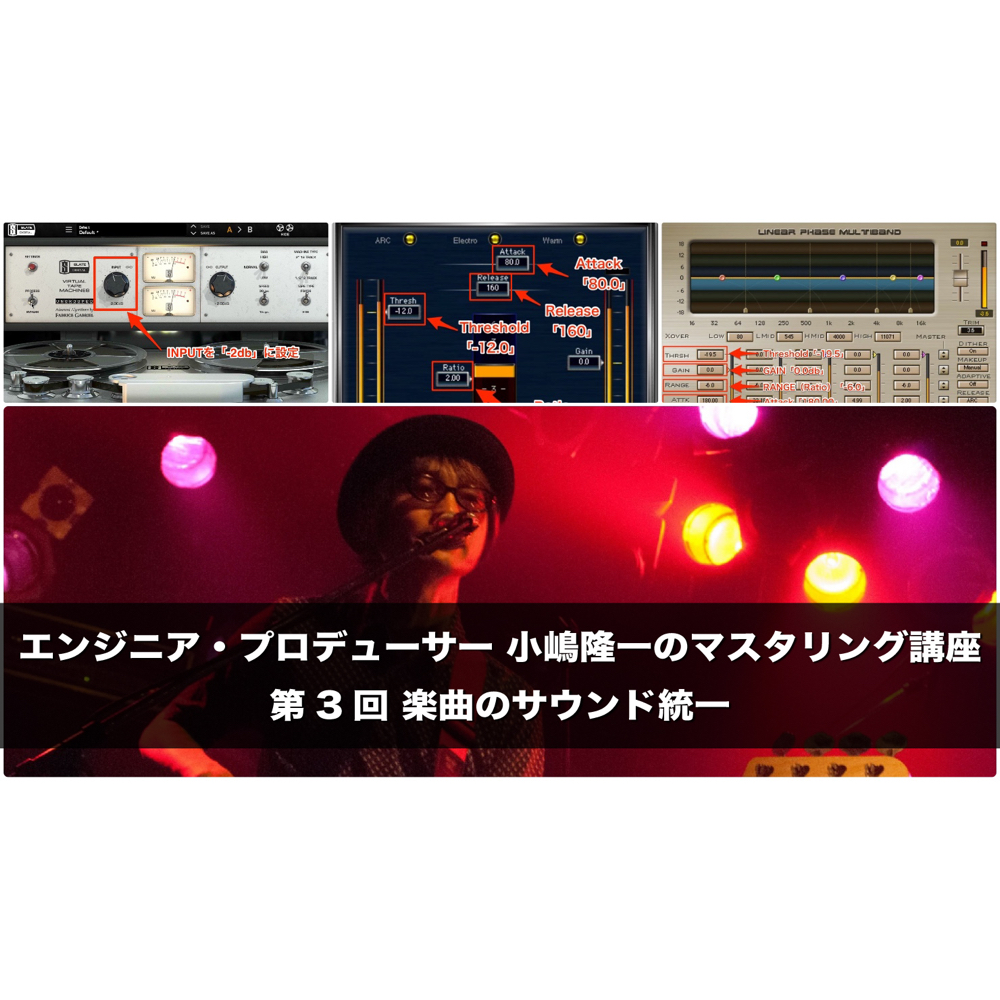
A common starting point for VCA bus compression is about 2 dB of gain reduction, with a relatively slow attack and fast release.
Use makeup gain to compensate roughly for the level reduced by compression.

Example VCA bus settings
Tube compressors

Tube compressors can add a small amount of harmonic coloration simply by passing audio through them; the result can be a bright, clear sound that cuts through.

Fairchild 670-style tube compressors such as this Fc-Mu also feature separate input and threshold controls.
One approach is to set the input level to determine the amount of harmonic coloration (distortion), adjust the output level, and then adjust the threshold to suit the input level.

They are also often used as an effect by passing audio through them without applying compression.
As shown in the second video, using one on vocals can produce an enhancer-like effect.
OPT (optical) compressors

Optical compressors use one of the earliest compression methods.
The example discussed here does not provide adjustable attack or release controls. Its fixed attack time is very slow, and this slow response produces a natural compression effect that remains useful today.

A useful approach is to keep gain reduction around 2–3 dB: too much compression can cause it to remain engaged. This is particularly useful for naturally evening out vocal levels.
For more details, see the following article.
Finally, let’s compare two contrasting types: FET and optical.

Trying an optical compressor on a sharply transient snare drum shows that its attack is too slow to produce the same effect as a FET compressor, even with deeper compression.
This is a good example of why it helps to choose a compressor based on its characteristics.
With practice, you can learn to make a quick choice for a particular sound and purpose.
Get to know each type and experiment with choosing the right one.
Frequently asked questions
Q1. What is the difference between FET and optical compressors?
FET compressors are known for very fast attack and can suit sharply transient material such as drums. The optical example discussed here has a slow fixed attack and is useful for level control on sources such as vocals. Choose according to the material.
Q2. What is a typical starting point for VCA bus compression?
A common starting point is around 2 dB of gain reduction, a relatively slow attack and fast release. Adjust makeup gain to compensate for the reduction.
Q3. Can a tube compressor be used without compression?
Yes. Simply passing audio through one can add harmonic coloration and brightness, so it is often used as an effect. On vocals it can produce an enhancer-like result.
NEW ARTICLES
Latest English Articles