
The Neumann KH series consists of studio monitors from the company renowned for its premium microphones. In this October 2021 review, we compare the KH 80 DSP, KH 120, KH 310, and KH 750 DSP subwoofer using a KU 100 dummy-head microphone costing over ¥1 million at the time. The then-new KH 80 DSP had received a price reduction and offered balanced sound with DSP-based room correction, making it well suited to small and medium-sized studios. Adding the KH 750 DSP extends low-frequency reproduction down to 18 Hz for a professional production setup.
Exploring the Features and Sound of Premium Studio Monitors
The Neumann name immediately brings high-quality microphones to mind.
But did you know that this brand, admired by music producers, also offers the KH series of studio monitors?
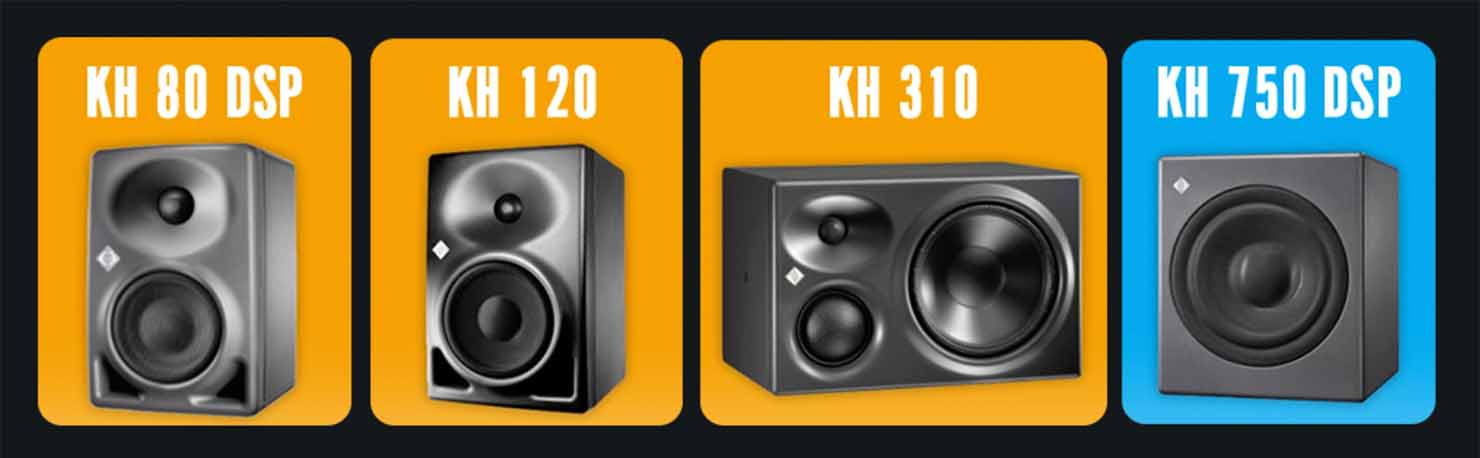
For this review, we received a product-review request from Sennheiser Japan K.K., the company handling Neumann products in Japan, and had the opportunity to compare and review the sound of these KH models.
I have to admit that Neumann's speakers had completely escaped my attention until now.
Let's explore the uncompromising sound that Neumann has worked so hard to achieve.
Comparing Neumann Speaker Models
Manufacturer website: https://ja-jp.neumann.com/
Recording the Speakers with a Neumann Microphone
We also used a Neumann dummy-head microphone to record the speakers.
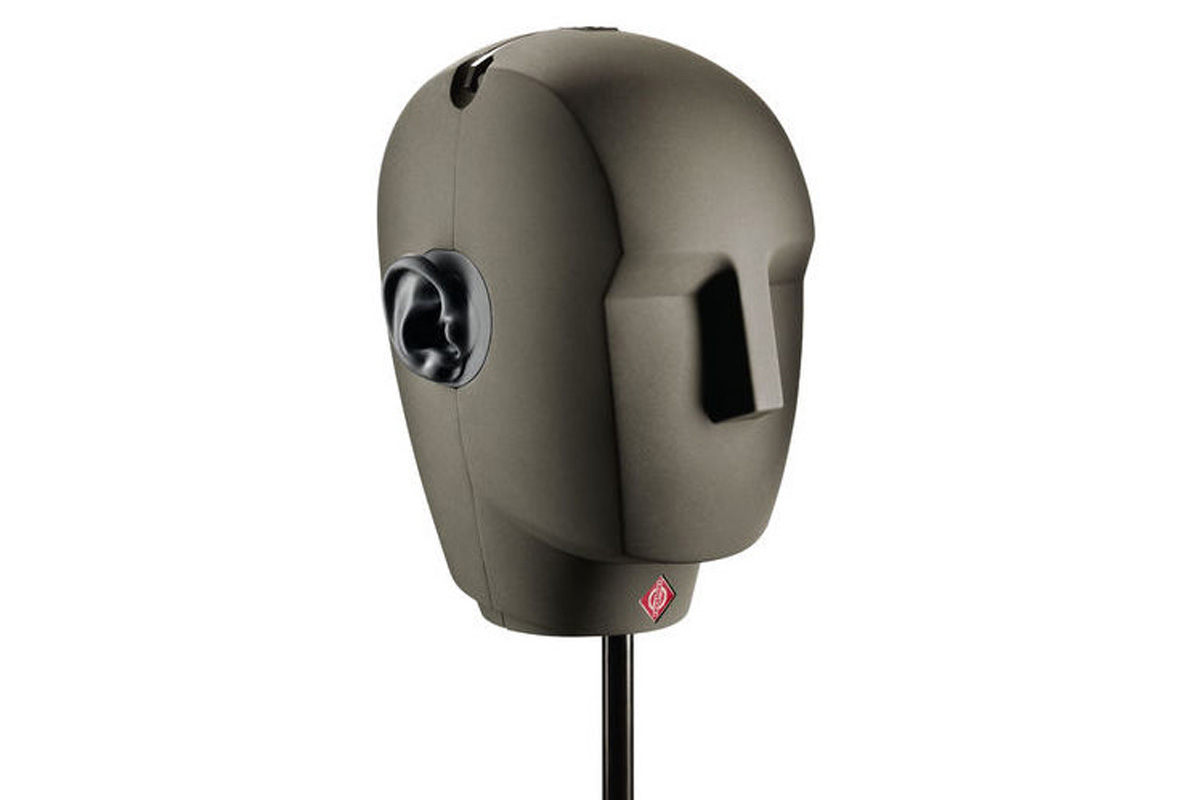
Meet the KU 100, a dummy-head microphone that cost over ¥1 million at the time of this review.
Its remarkable sense of realism left me almost speechless.
Product URL: https://ja-jp.neumann.com/ku-100
Using this microphone, we will audition four KH models: the KH 80 DSP, KH 120, KH 310, and KH 750 DSP subwoofer.
According to the manufacturer's representative, Neumann's monitors share the same tonal character; their differences lie in how far their bass extends and the maximum sound pressure level they can produce.
I was excited to hear how those differences would translate into the listening experience.
Let's listen to the examples and look at each product's features.
KH 80 DSP
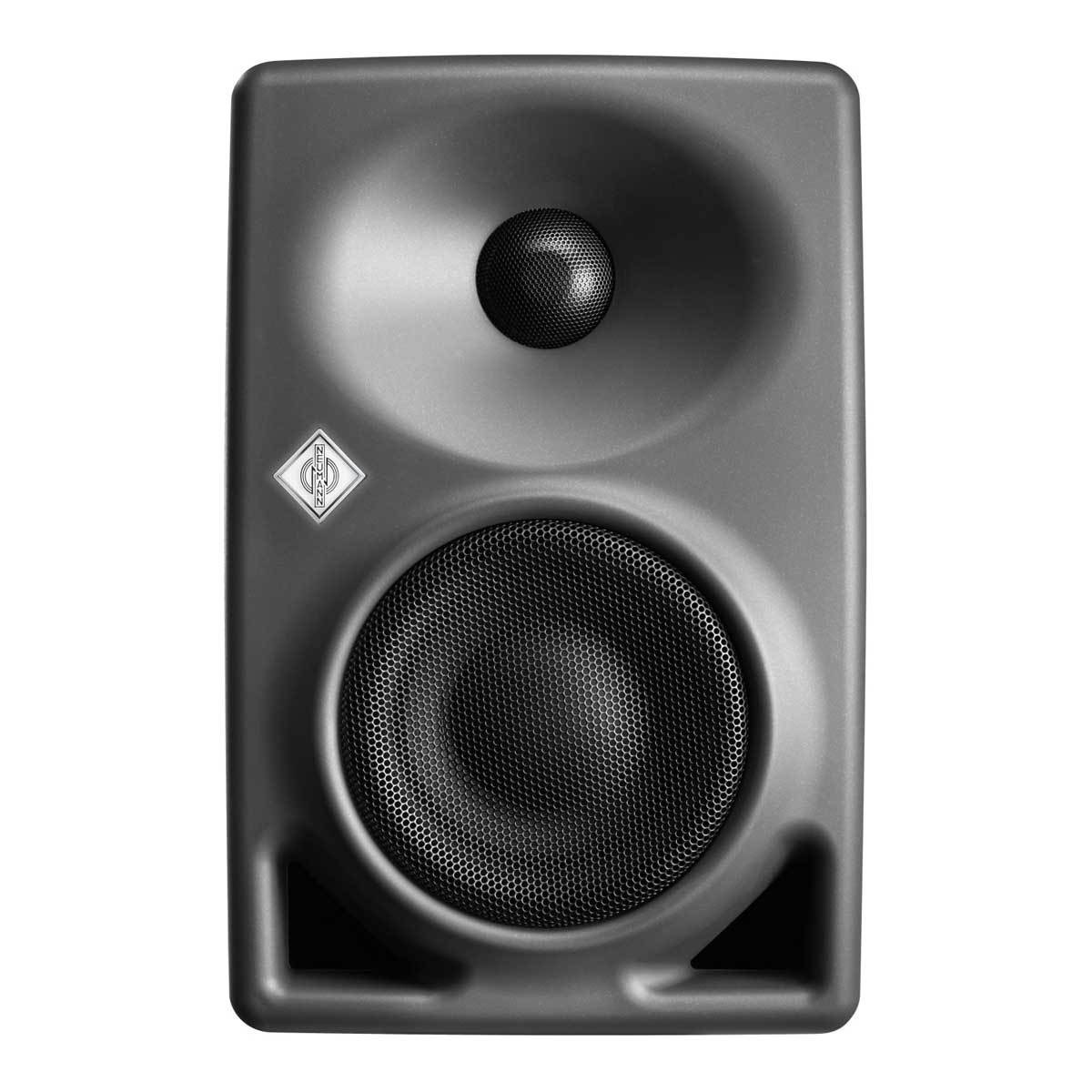
KH 80 DSP
The newest KH model at the time of this review was the first in the series to incorporate DSP.
It offers the welcome ability to analyze the room's acoustic characteristics and apply correction based on the results.
When the series' prices were revised in May 2021, the KH 80 DSP alone received an unexpected price reduction; the other models increased in price.
As you might expect from the newer model, it has a very even balance from bass to treble. Separation across the frequency range is also more than satisfactory.
I auditioned several genres, including pop and EDM, and was impressed by how consistently it maintained its tonal balance.
Its compact size and output feel just right for a room of around 6–10 tatami mats, roughly 10–16 m².
- Frequency range: 57 Hz–21 kHz
- Dimensions: 154 mm W × 233 mm H × 194 mm D
- Weight: 3.4 kg
KH 80 DSP with DSP Correction
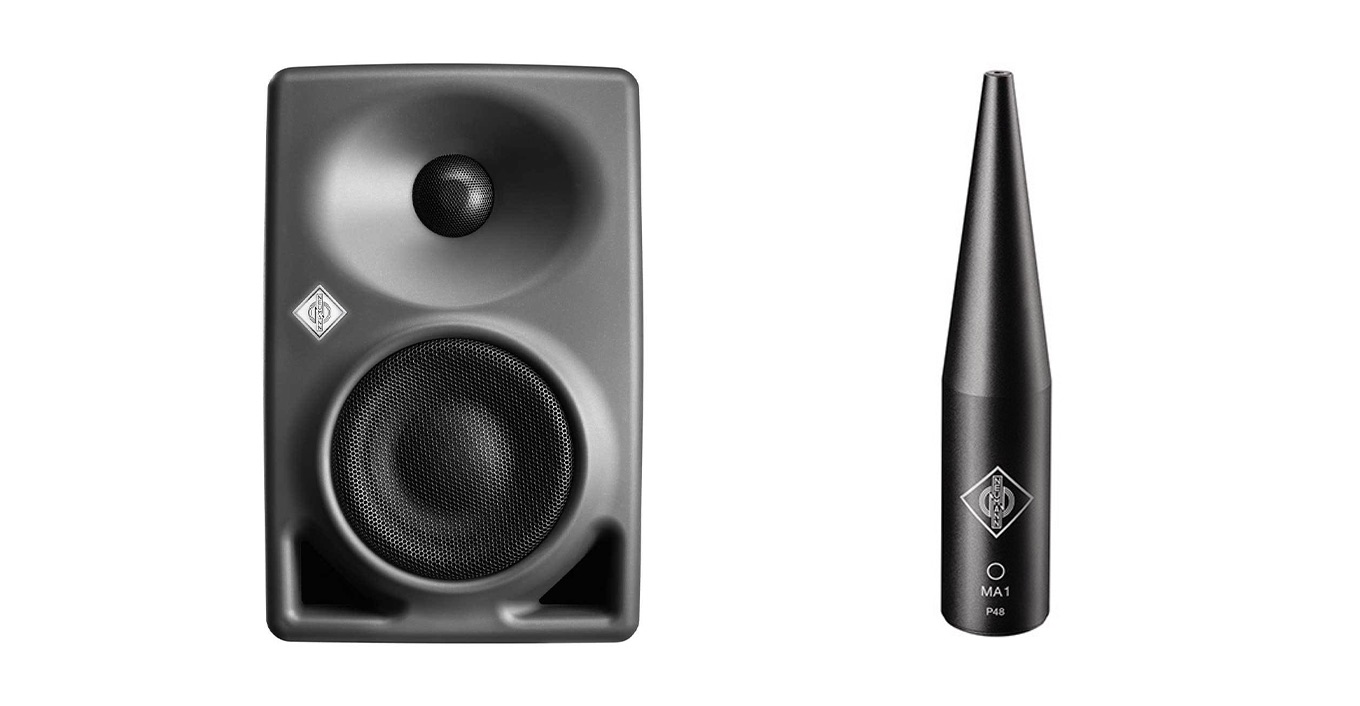
KH 80 DSP with DSP correction
This example has the DSP room-correction feature described above enabled.
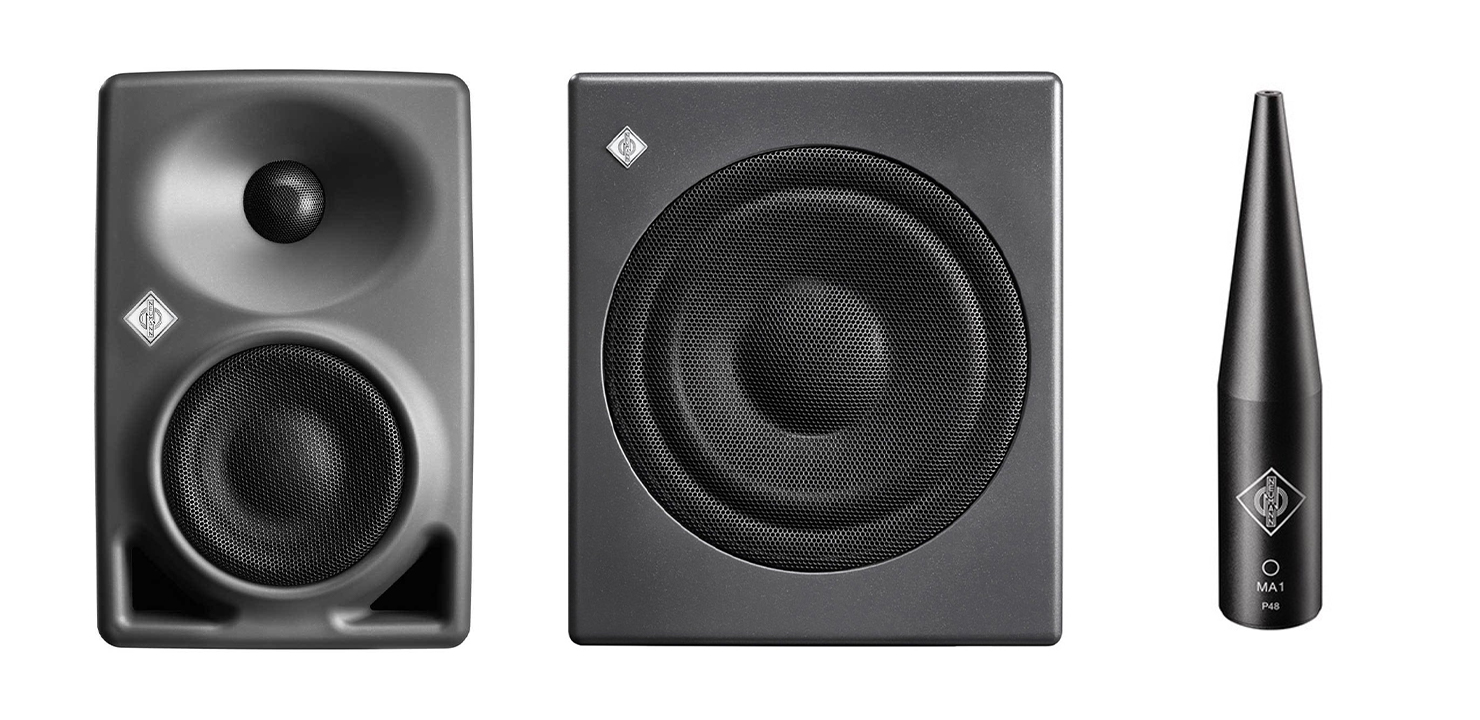
Please note that using this correction requires the dedicated MA 1 measurement microphone.
The improvement in sound quality is immediately apparent when you listen.
The definition becomes clearer and the whole sound moves forward. The correction is remarkably precise.
With the sound so clearly defined, I would expect it to be particularly helpful when checking reverb and making EQ decisions during a mix.
Details: https://ja-jp.neumann.com/ma-1
KH 80 DSP + KH 750 DSP Subwoofer
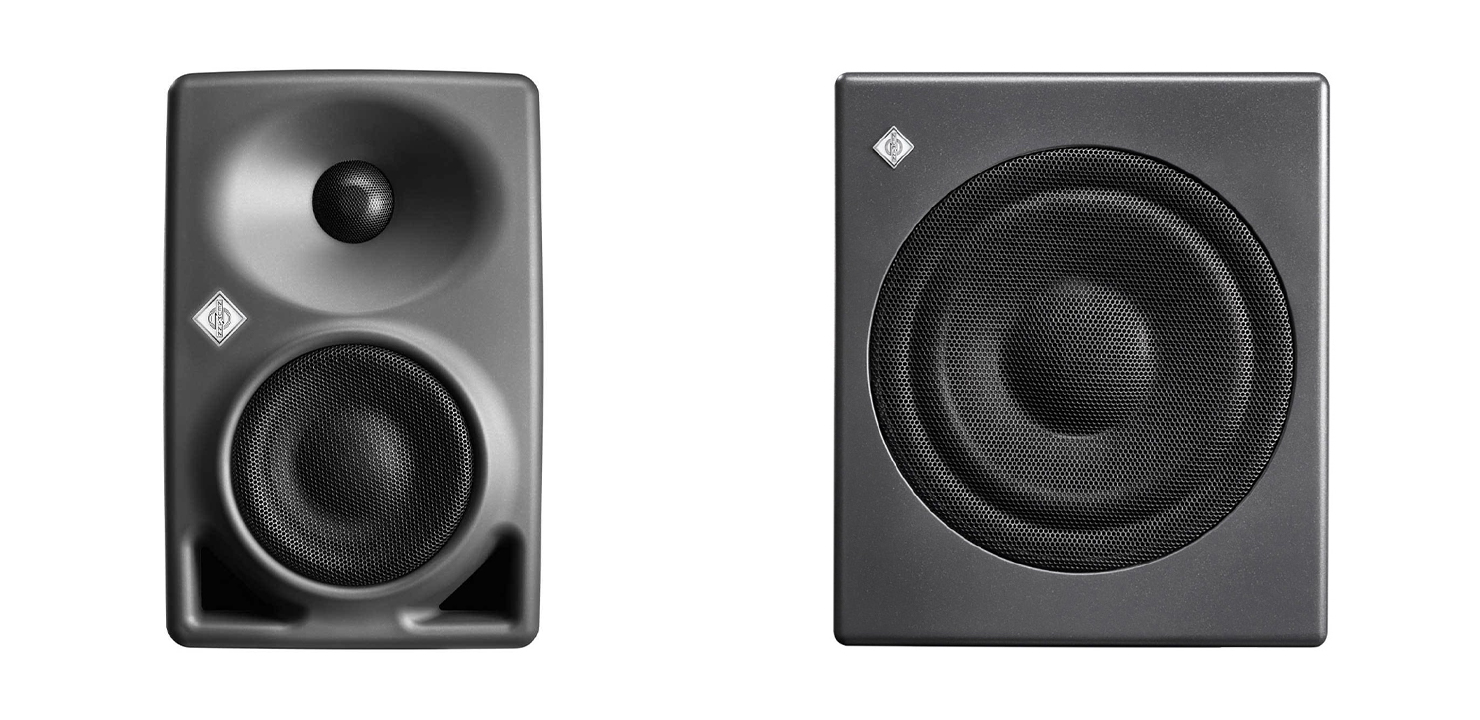
KH 80 DSP + KH 750 DSP — original source audio
Next, let's listen to the KH 80 DSP with the KH 750 DSP subwoofer added.
The KH 80 DSP's specified low-frequency limit is 57 Hz. That is understandable given its size, and compares favorably with competing models.
However, depending on your genre and intended use, you may want stronger low-frequency reproduction.
The KH series includes the KH 750 DSP, a subwoofer dedicated to bass reproduction that reaches down to an extremely low 18 Hz.
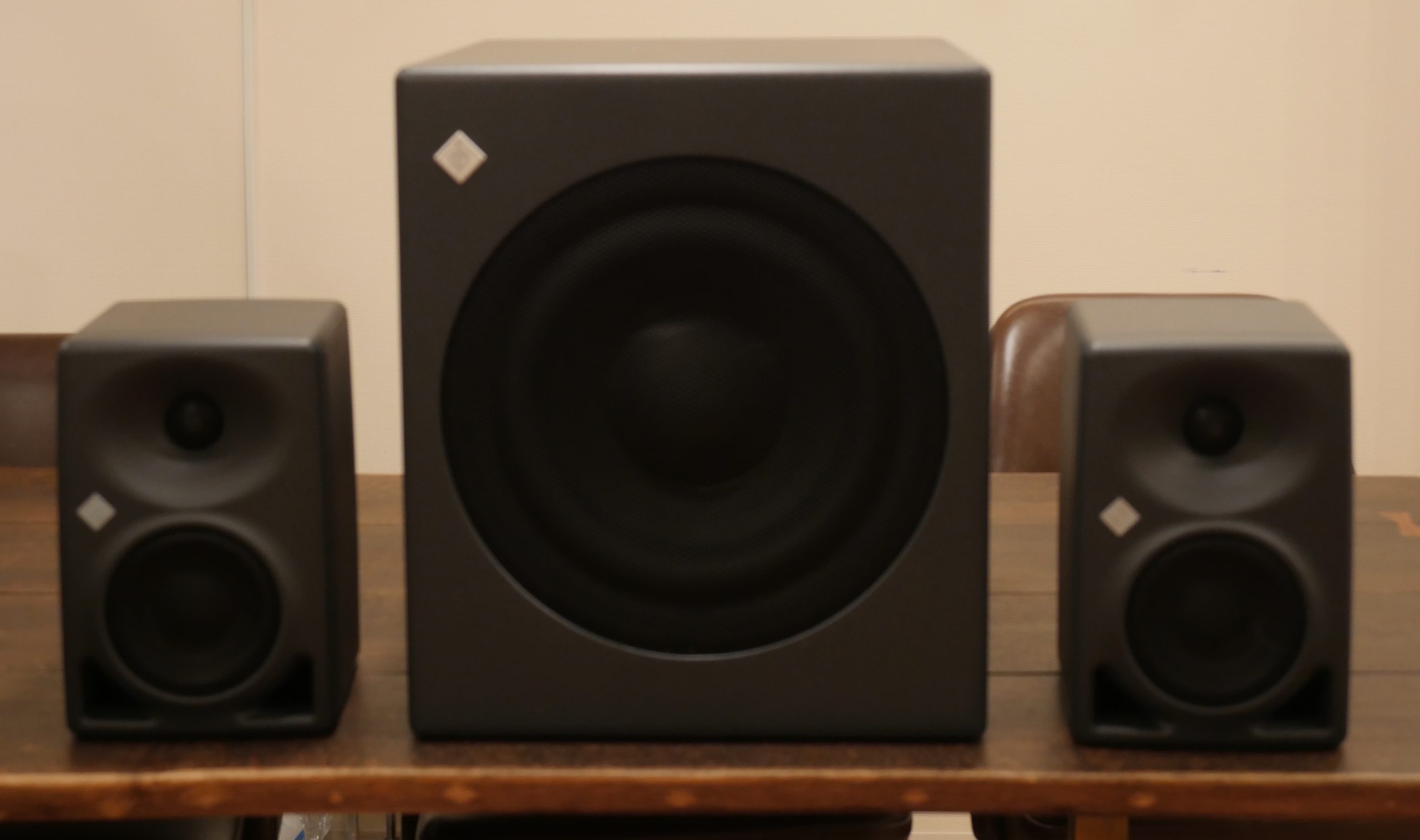
After positioning it centrally relative to the KH 80 DSP pair, we placed the KH 750 DSP on the floor and recorded the sound.
It adds the satisfying part of the low end, giving the sound weight and fullness without feeling exaggerated.
The KH 750 DSP uses a sealed enclosure, which the original review credits with addressing troublesome low-frequency phase issues.
That helps explain its popularity with professionals.
- Frequency response: 18–750 Hz (±3 dB). Editorial correction: the Japanese source says 750 kHz; Neumann specifies 750 Hz. Manufacturer specification: https://www.neumann.com/en-no/products/monitors/kh-750-dsp/
- Dimensions: 330 mm W × 383 mm H × 383 mm D. Editorial correction: the source reverses width and height; the order here follows Neumann's specification at https://www.neumann.com/en-no/products/monitors/kh-750-dsp/
- Weight: 19.5 kg
Details: https://ja-jp.neumann.com/kh-750-dsp
KH 80 DSP + KH 750 DSP with DSP Correction
KH 80 DSP + KH 750 DSP with DSP correction — same source file as preceding player
The original review presents this example as the KH 80 DSP and KH 750 DSP with DSP correction applied. Editorial note: this section and the preceding subwoofer section link to the same audio file in the Japanese source. Both references are retained, so these two players cannot independently demonstrate a before-and-after correction comparison.
The review describes the rich low end gaining definition, making the sound dramatically tighter and easier to listen to.
From that comparison, I felt that sound calibration for the KH 750 DSP was almost essential.
Another major advantage is that combining the KH 750 DSP with a non-DSP model, such as the KH 120 or KH 310, also makes sound calibration possible.
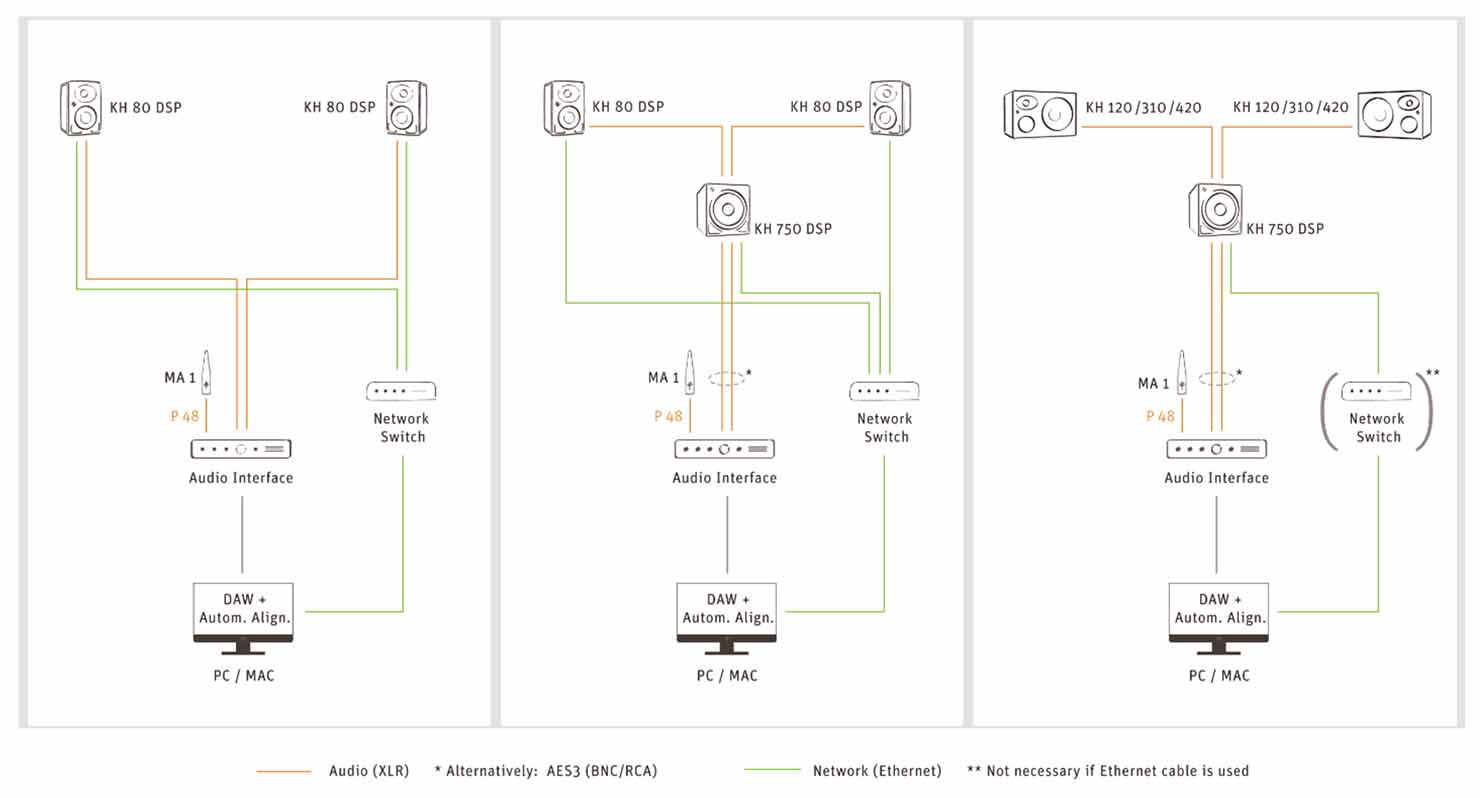
As the diagram shows, the KH 750 DSP lets you add high-quality acoustic correction to any of these models.
KH 120
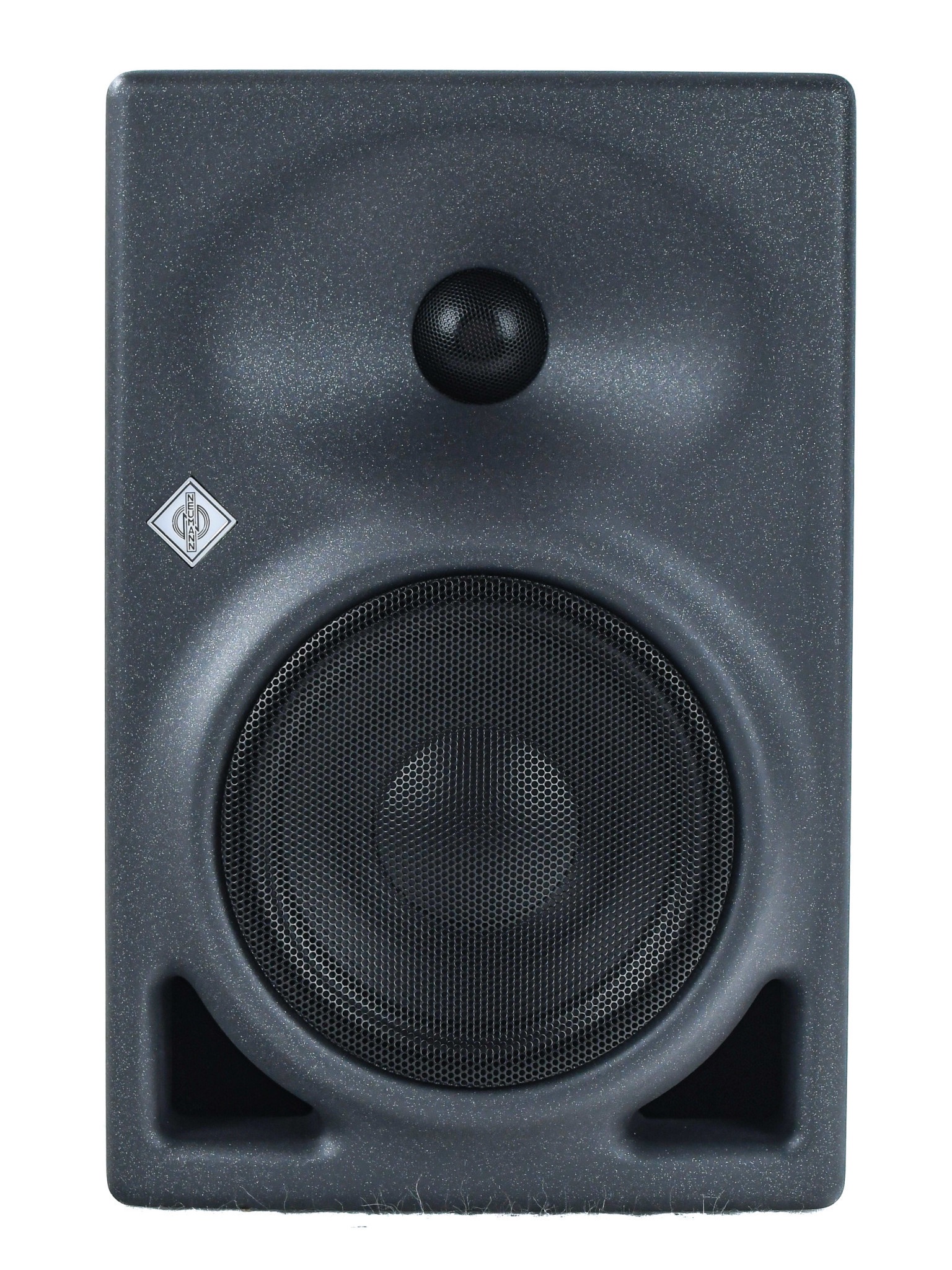
KH 120
Here is the KH 120, positioned above the KH 80 DSP in the range at the time of this review.
It sounds very refined and controlled, but I felt the midrange was less prominent than on the KH 80 DSP, especially with guitars.
The newer KH 80 DSP feels as though it was designed with modern sounds in mind.
Some listeners may therefore prefer the KH 80 DSP over this KH 120. That was my own impression.
- Frequency range: 52 Hz–21 kHz
- Dimensions: 182 mm W × 277 mm H × 220 mm D. Editorial correction: the Japanese source reverses width and height; Neumann's original KH 120 A specification confirms this order: https://www.neumann.com/en-hk/products/historical/kh-120-a-g
- Weight: 6.4 kg
Details: https://ja-jp.neumann.com/kh-120-a-g
KH 310
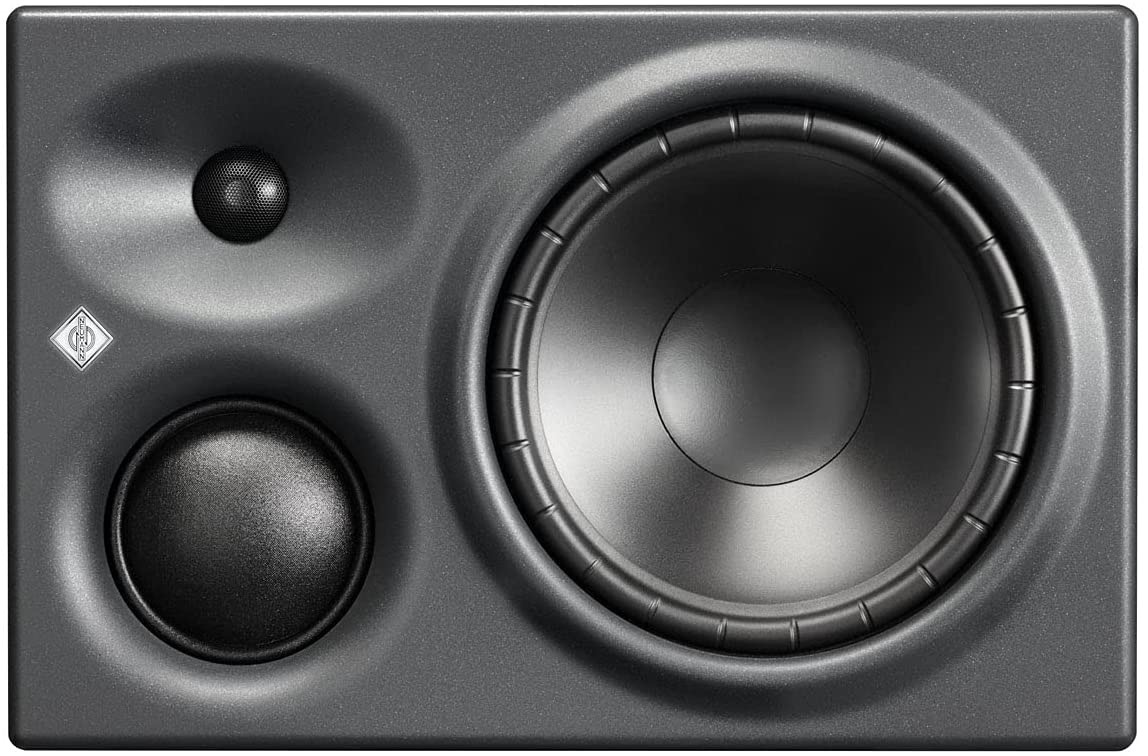
KH 310
As a bonus, we also auditioned this high-end monitor, which cost over ¥300,000 per speaker at the time.
From the moment it started playing, its sound quality was astonishing.
The low end is substantial, yet never feels unpleasantly bulky or congested.
Refined is exactly the right word: it has a smoothness that makes you want to keep listening.
Although the manufacturer describes the models as differing mainly in bass extension and output capability, I was surprised by how much the difference in bass changed my perception of the midrange and higher frequencies.
If you have a substantial budget for music production, or want speakers to keep for a lifetime, I strongly encourage you to audition the KH 310.
- Frequency range: 34 Hz–21 kHz
- Dimensions: 383 mm W × 253 mm H × 292 mm D. Editorial correction: the Japanese source reverses width and height; Neumann's KH 310 A specification confirms this order: https://www.neumann.com/en-us/products/historical/kh-310-a
- Weight: 13 kg
Details: https://ja-jp.neumann.com/kh-310-a
What did you think of the comparison?
As you would expect from Neumann, the resolution and tonal balance were exceptional.
- You want to reassess your current monitoring setup and take your monitoring quality up a level
- You want a well-built product that you can use for a long time
For listeners with those goals, these could be outstanding choices.
The KH 310, priced above ¥300,000 per speaker at the time, sounded truly moving. Its superb sound made me think, “This is definitely what I want the next time I buy speakers.”
I felt the newer KH 80 DSP offered better midrange separation and clarity than the higher-positioned KH 120. Together with its DSP features, that gives it considerable value.
If you are looking for high-quality monitors, these are well worth checking out.
Manufacturer website: https://ja-jp.neumann.com/
Neumann KH Series Speaker Sound Comparison: Equipment Worth Over ¥1 Million in Total at the Time of the Review
For music producers, Neumann usually means high-quality microphones. Did you know the company also makes speakers? This time, we audition and review its monitors.
Details: https://t.co/RCnM7UjREe #DTM— SLEEP FREAKS (@SLEEPFREAKS_DTM) October 30, 2021
Frequently Asked Questions
Q1. What are the main differences between Neumann KH series speakers?
According to the manufacturer, the models share a tonal character but differ in bass extension and maximum sound pressure level. The KH 80 DSP reaches 57 Hz, the KH 120 reaches 52 Hz, and the KH 310 is a high-end model. The KH 750 DSP subwoofer extends reproduction down to 18 Hz.
Q2. What does the KH 80 DSP's DSP correction do?
DSP correction analyzes the room's acoustic characteristics and automatically adjusts the sound based on measurement results. It requires the dedicated MA 1 microphone. Correction improves definition and provides a useful environment for mixing and EQ decisions.
Q3. Which model is recommended for a small studio?
For a room of around 6–10 tatami mats, roughly 10–16 m², the compact KH 80 DSP is a good fit. If you need more bass extension, combining it with the KH 750 DSP subwoofer can provide a professional-quality production setup.
NEW ARTICLES
Latest English Articles







































































































































