A large survey of 2,469 third-party guitar instrument users revealed the most popular guitar software of 2021. Ample Sound's Ample Guitar series took first place, praised for its balance of usability, stable performance, and affordable pricing. Electric and acoustic guitar instruments have different characteristics, with options for beginners and experienced users alike. This article presents the professional/amateur breakdown, the features of each instrument, and an additional amp simulator ranking to help you choose software that suits your production style. The rankings, product features, and prices below reflect the original 2021 comparison.
Comparing Electric and Acoustic Guitar Instruments Separately
In our survey series covering 7,526 music producers,
we now present the third-party Top 5 Guitar Instruments.
This time, we will look separately at electric and acoustic guitars, which have different characteristics. Read on for the full comparison!

Of the 7,526 respondents, 2,469 used third-party guitar instruments.
That may seem like a small proportion, but we suspect many people play guitar themselves or ask a musician they know to record it.
With that in mind, let's look at the top five guitar instruments.
Popular Guitar Instruments: Rankings and Electric Guitar Comparison
Acoustic Guitar Instrument Comparison
Most Popular Guitar Instruments
Respondents who used several guitar instruments were asked to choose their single favorite. Prices and product observations are those reported in 2021, rather than current offers.
Many respondents gave a manufacturer or series name, so we compiled the ranking by instrument series.
No. 5: Prominy Guitar Series — 142 Users; ¥32,890–¥42,790

- Professionals: 40 (28%)
- Amateurs: 102 (72%)
Guitar instruments from Prominy, a company based in Sapporo, Japan.
Although the price is relatively high, the large sample libraries deliver finely detailed sound and a wide range of expressive nuances, placing the sound quality among the strongest in this comparison.
There are also many ways to control the performance through MIDI programming.
No. 4: Vir2 Electri6ity — 161 Users; €399.95

- Professionals: 137 (85%)
- Amateurs: 24 (15%)
An electric guitar instrument that can also handle heavy guitar styles such as hard rock and metal.
Because some time had passed since its release, certain programming tasks could be time-consuming. However, its sound held up against newer instruments, and it allowed extremely detailed programming and editing.

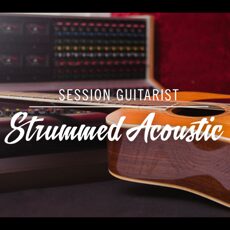
No. 3: Native Instruments Session Guitarist Series — 190 Users; ¥13,440

- Professionals: 34 (18%)
- Amateurs: 156 (82%)
Product URL: https://shrsl.com/3nx1m
Unlike the other instruments, this series is mainly built around pre-recorded performance patterns.
The guitar part in your song therefore depends heavily on the built-in patterns, but in return you get consistently high-quality sound and performances.
Since you select a pattern and let it play, you do not need guitar knowledge. This makes it a suitable option for beginners, too.
No. 2: MusicLab RealGuitar Series — 191 Users; $139–$199

- Professionals: 44 (23%)
- Amateurs: 147 (77%)
The RealGuitar series, one of the pioneers of virtual guitar instruments, came in second.
Alongside a wide selection of chord and arpeggio patterns, it supports single-note phrases and a broad range of playing techniques.
Its smaller sound library left some room for improvement in realism compared with the other instruments, but the accessible pricing made it an affordable choice.
Product URL: https://bit.ly/3FbH1LC

No. 1: Ample Sound Ample Guitar Series — 439 Users; $119–$169

- Professionals: 65 (15%)
- Amateurs: 374 (85%)
The Ample Guitar series took a clear first place.
It strikes an excellent balance, combining convenient pattern and phrase editing with convincing guitar playing techniques.
The pricing was accessible, and operation was very stable.
The thoughtfully designed interface also made us feel that people without guitar experience and newcomers to music production could use it with confidence.
Product URL: https://bit.ly/3Fcv9Jh
Ranks 6–10
Since we ranked product series this time, we also compiled sixth through tenth place.
The results were as follows.
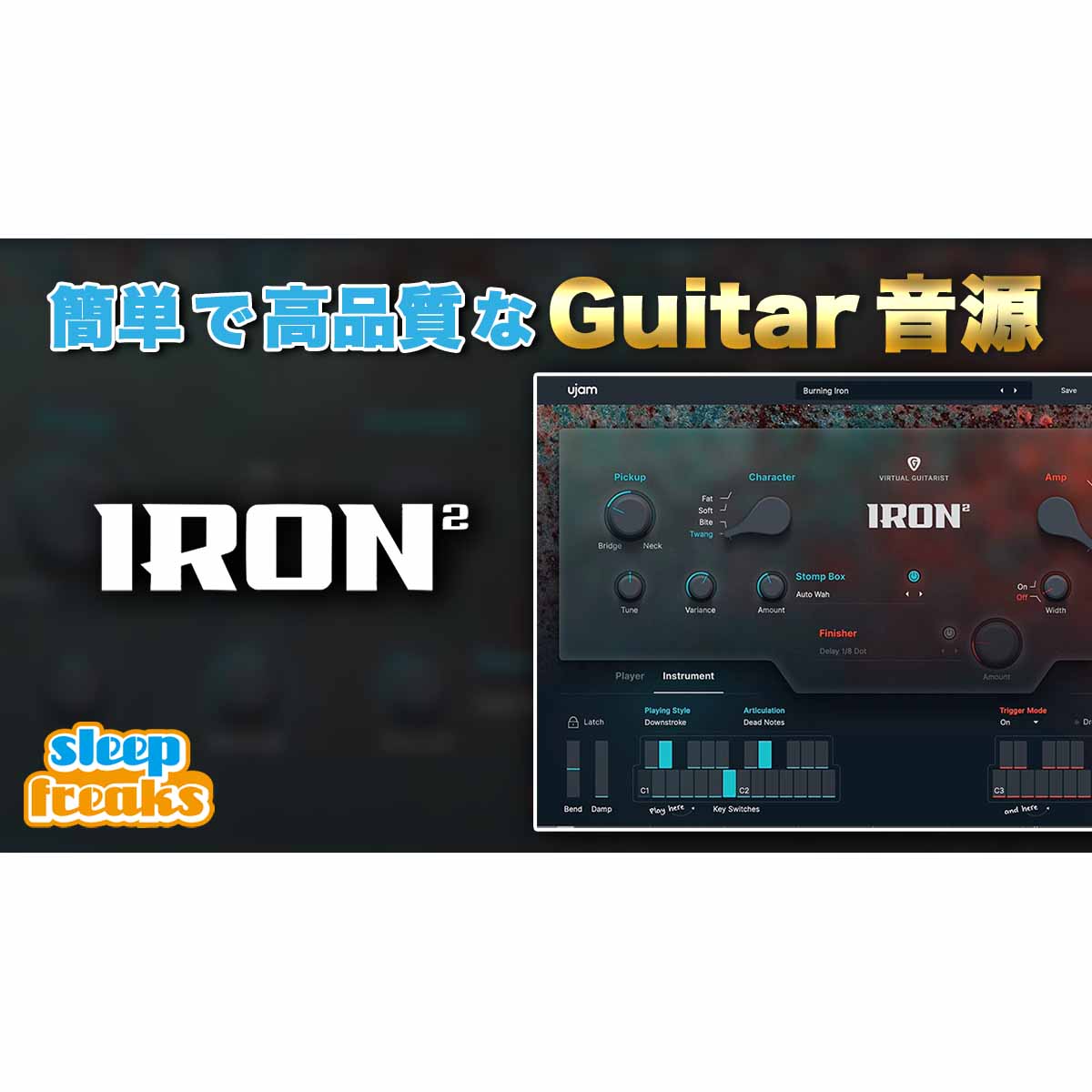
- No. 6: UJAM Virtual Guitarist Series — 83 Users
- No. 7: Acousticsamples Series — 67 Users
- No. 8: UI Standard Guitar — 64 Users
- No. 9: THREE-BODY TECH Heavier 7 Strings — 46 Users
- No. 10: IK Multimedia SampleTank — 43 Users
Amp Simulator Ranking
Many respondents listed an amp simulator rather than a guitar instrument.
These figures exclude respondents who named an instrument, so they do not constitute a comprehensive ranking, but we include them for reference.
- No. 1: PositiveGrid BIAS AMP — 143 Users
- No. 2: IK Multimedia AmpliTube — 123 Users
- No. 3: Native Instruments Guitar Rig — 81 Users
- No. 4: Waves GTR — 14 Users
Comparing Electric Guitar Sounds
First, let's listen to the electric guitar instruments.
Programming guitar tends to be more difficult and time-consuming than programming other instruments because of its physical structure and the wide range of playing techniques.
How convincingly an instrument reproduces guitar sound from simple MIDI programming is also a measure of its capabilities, so that is an important point to consider.
For this comparison, we asked guitarist Kenji Suzuki to record the real guitar parts.
Kenji Suzuki

Guitarist and Guitar Sound Designer
He has contributed to recordings and live performances by Erykah Badu, Hikaru Utada, SMAP, V6, MISIA, BoA, EXILE, Kumi Koda, Namie Amuro, Maaya Sakamoto, Ketsumeishi, Hitomi Shimatani, and many other artists.
His work includes sound production for effects and the FinalGuitar iOS app.
His DAWs include Logic Pro X, Cubase Pro, and Studio One.
He wrote the Kenji Suzuki Guitar Recording Masterclass series for Line 6 Japan's official website.
He has created factory presets for ZOOM multi-effects processors.
He wrote a series about mastering the BIAS series for Media Integration's website.
He released a guitar home-recording tutorial DVD covering recording techniques and editing.
He worked on sound production for Ovaltone's OD-Five 2 Extreme and KS-1 distortion pedals.
He has also produced many instrumental tracks for background music in recent years.
- YouTube Channel
https://www.youtube.com/c/kenjisuzuki0218 - Twitter
https://twitter.com/kenjisuzuki_ - Kenji Suzuki's Guide to Recording Guitar at Home
http://takuroku.club/
For practical reasons, we compare and discuss the fifth-place Prominy series in the acoustic guitar section below.
The instruments use Stratocaster libraries with the neck pickup sound.
For NI Session Guitarist, we use the Telecaster-based Electric Vintage library.
Real Electric Guitar: Rhythm Part
Real Electric Guitar: Rhythm Part
No. 4: Vir2 Electri6ity
No. 4: Vir2 Electri6ity
No. 3: Native Instruments Session Guitarist Series
No. 3: Native Instruments Session Guitarist Series
No. 2: MusicLab RealGuitar Series
No. 2: MusicLab RealGuitar Series
No. 1: Ample Sound Ample Guitar Series
No. 1: Ample Sound Ample Guitar Series
Comparing Chord-Playing Features
Let's start by comparing chord input, an essential feature for guitar parts.

Ample Guitar
Strength: Chords can be reproduced simply by entering the provided strum notes.
Strength: Strum speed and randomization can be adjusted, making it easy to add a human feel.
Limitation: Chord slides can be triggered with keyswitches, but you cannot specify a fret range.
You need to enter the notes individually in Solo mode, which takes more work.
Limitation: Compared with a real performance, the sound felt less realistic.
Timing, pitch, dynamics, and other details need careful adjustment.
Real Strat
Strength: The modulation wheel can be used for chord slides.
Limitation: Despite adjusting the extensive humanization settings, the sound seemed more monotonous than Ample Sound's instrument above.
We suspect this is due to the smaller sample library.
Electri6ity
Strength: Although it has no dedicated chord input function, entering notes together produces a chord automatically optimized for guitar voicing.
Strength: The sound quality is very natural and high.
Limitation: To achieve the intended chord voicing, you need to enter guitar-specific voicings or specify fret positions with CC messages, which made operation feel more demanding.
Limitation: There is no function for registering your own chords.
Session Guitarist Electric Vintage
Strength: Select a performance pattern and enter chords to make it play. The controls are simple, making it suitable for beginners.
Strength: The phrases had a human feel and sounded very realistic.
Strength: You can fine-tune timing humanization, pitch variation, and other details.
Limitation: Because the performance depends on patterns, you cannot freely specify syncopation or detailed rhythms.
Comparing Single-Note Performances
Next, let's compare single-note playing.
Here is how the instruments sound.
Real Electric Guitar: Single Notes
Real Electric Guitar: Single Notes
No. 4: Vir2 Electri6ity
No. 4: Vir2 Electri6ity
No. 3: Native Instruments Session Guitarist Series
No. 3: Native Instruments Session Guitarist Series
No. 2: MusicLab RealGuitar Series
No. 2: MusicLab RealGuitar Series
No. 1: Ample Sound Ample Guitar Series
No. 1: Ample Sound Ample Guitar Series

The arrangement uses basic articulations such as palm muting, hammer-ons, and slides. We did not hear major differences across the instruments in this respect.
However, Session Guitarist lacked a function that reproduces guitar behavior along the fretboard. Depending on the phrase, this could result in unnatural combinations of notes that would be impossible to play on a real guitar.

Here is an overview of the sound variations.
Comparing Acoustic Guitar Instruments
In pop accompaniment, acoustic guitar parts tend to require fewer articulations than electric guitar parts, which can make them easier to program.
First, let's listen to the chord performances.
Real Acoustic Guitar
Real Acoustic Guitar
No. 5: Prominy Hummingbird
No. 5: Prominy Hummingbird
No. 3: Native Instruments Session Guitarist Series
No. 3: Native Instruments Session Guitarist Series
No. 2: MusicLab RealGuitar Series
No. 2: MusicLab RealGuitar Series
No. 1: Ample Sound Ample Guitar Series
No. 1: Ample Sound Ample Guitar Series

Ample Guitar
Strength: As with the electric guitar instrument, entering the key notes reproduces guitar voicings.
Strength: It supports upstrokes, downstrokes, single-note playing for arpeggios, and patterns, making it feel versatile.
Limitation: The sound lacked elements such as string buzz and fret noise, leaving us wanting more detail.
Real Guitar
Strength: It replaces the notes of the specified chord with a guitar voicing.
Strength: In addition to four fret-position settings, the fret position can follow the pitch of the input notes.
Strength: You can register your own chords.
Strength: The right-hand techniques include upstrokes, downstrokes, and single-note playing, covering a wide range of techniques.
Limitation: The sound had a sharp attack and clear definition, but the small sample library made repeated notes sound mechanical.
Hummingbird
Unlike the two products above, you specify a chord root and then choose the chord type with keyswitches.
Strength: You can register original chords as user chords.
Strength: It also supports upstrokes, downstrokes, and single-note playing.
Strength: Several strum types are provided.
Strength: The recorded chord samples capture realistic resonance between strings and the sound of notes played together.
Limitation: Only picked samples are included.
Session Guitarist
Strength: It uses pre-recorded performance patterns.
Strength: Chord voicings differ between presets, and you can also play chords as entered using As Played.
Limitation: It has no fretboard-position concept, so you cannot specify detailed chord voicings.
Limitation: You cannot edit the rhythm patterns; you use the included patterns.
Strength: The selectable patterns are based on live performance loops, and we found the sound the most realistic in this comparison.
Comparing Arpeggio Performances
Next, let's listen to patterns containing arpeggios and hammer-ons.
Real Acoustic Guitar: Arpeggio
Real Acoustic Guitar: Arpeggio
No. 5: Hummingbird
No. 5: Hummingbird
No. 3: Native Instruments Session Guitarist Series
No. 3: Native Instruments Session Guitarist Series
No. 2: MusicLab RealGuitar Series
No. 2: MusicLab RealGuitar Series
No. 1: Ample Sound Ample Guitar Series
No. 1: Ample Sound Ample Guitar Series
These sounded more natural than the chord performances we heard above.


Ample Guitar
Strength: Even when entering MIDI notes without considering guitar technique, it translates them into playable guitar parts and fret positions.
Limitation: For hammer-ons, we needed to specify which string would be played.
Real Guitar
Strength: Like Ample Guitar, it translates MIDI notes into playable guitar parts and fret positions.
Strength: Techniques such as hammer-ons can be assigned to the modulation wheel.
Limitation: Dynamic expression was weak, making the sound feel monotonous.
Hummingbird
Strength: It also translates MIDI notes into playable guitar parts and fret positions.
Strength: It sounded very realistic, with high sound quality.
The fret noise was particularly impressive.
Limitation: It was disappointing that only picked playing was included.
Session Guitarist
Strength: Using arpeggio patterns made programming very easy.
Limitation: On the other hand, we could not edit those arpeggio patterns into our own lines.
Limitation: In this 2021 comparison, libraries other than Picked Acoustic did not support single-note playing, so this was something to check before buying.
Strength: The sound was very realistic and had convincing dynamics.
Overall Impressions of Each Product
What did you think of the comparison?
Here are our impressions based on these results.
Ample Sound
The excellent UI provides a good balance of usability, features, and price.
We felt this was probably the main reason for its popularity.
It is also useful that additional libraries can be operated in much the same way.
Real Guitar
Its operation felt similar to Ample Sound's, so it should take relatively little time to learn.
It also had the most extensive guitar techniques and humanization features in this comparison.
However, the smaller sample library left us wanting more sound quality and expression.
Electri6ity
It includes several electric guitar models, making it feel like good value.
The many parameters and older GUI do not make it particularly easy to use. However, its detailed performance control suits users willing to spend extra time programming a high-quality guitar sound.
Session Guitarist
Its simple operation produces very realistic sound, making it a strong choice if you do not need to customize performance patterns in detail.
We also felt it suited beginners in guitar and music production.
However, its limited pattern editing makes it less suitable for songs with lots of syncopation or rhythmic accents.
That concludes our comparison.
We hope it helps you when choosing a guitar instrument.
Next time, we will move on to the piano instrument ranking. Stay tuned!
Top 5 Guitar Instruments of 2021 for Music Production
Part 1 presents the ranking and compares the features of electric guitar instruments.
Guitarist Kenji Suzuki (@kenjisuzuki_) kindly recorded the real guitar parts for us. Thank you!Details: https://t.co/IBmEHBE1po #DTM #DAW #Guitar pic.twitter.com/d6z1mWqn3j
— SLEEP FREAKS (@SLEEPFREAKS_DTM) September 4, 2021
Frequently Asked Questions
Q1. What should I consider when choosing a virtual guitar instrument?
The main considerations are ease of pattern editing, sound realism, price, and stability. In this comparison, a pattern-based instrument such as Native Instruments Session Guitarist suited beginners, while Ample Sound offered detailed control of playing techniques for experienced users.
Q2. Why did the Ample Sound Ample Guitar series rank first?
It was praised for its balance of pattern and phrase editing, reproduction of guitar techniques, accessible pricing ($119–$169 as reported in 2021), stable operation, and a clear interface suitable for beginners.
Q3. Which instruments suit beginners in guitar?
The article recommended Native Instruments Session Guitarist (¥13,440 in 2021) and the Ample Sound Ample Guitar series ($119–$169 in 2021). The former is easy to use by selecting performance patterns, while the latter offers intuitive operation without requiring guitar knowledge.
Q4. Should I use different instruments for electric and acoustic guitar?
Yes. Their characteristics differ: electric guitar may require heavy tones and distortion, while acoustic guitar calls for a natural, warm sound. Choosing an appropriate instrument for each is effective.
Q5. Do I need to buy an amp simulator separately?
The included amp features vary by instrument. For more fully developed guitar tones, it may be worth considering a separate amp simulator, such as PositiveGrid BIAS AMP, which ranked first among the amp simulator responses, or IK Multimedia AmpliTube.
NEW ARTICLES
Latest English Articles