One way to develop a track's arrangement is to vary the way its chords are voiced and colored. This article compares four approaches built around a basic progression: power chords, triads, seventh chords and extensions, and non-diatonic chords. Audio examples demonstrate the energy of power chords, the clearer major/minor identity of triads, the richer color of extensions, and the added pull of secondary dominants. These options can help create contrast between sections and broaden your harmonic palette.
Change the Mood with Chord Voicings and Embellishments

This time, we focus on chord progressions and ways to add flavor to your chords.
Even with the same underlying progression, the notes you layer can dramatically change a track's character. Building a repertoire of ways to harmonize is an important part of music production.
We will apply four different harmonic treatments to one basic progression and compare their sound and atmosphere.
Chord Techniques to Develop Your Arrangements
The Demo Before Adding Chords
The demo uses the notes of F major and its relative minor, D minor,
and is based on the following progression. The Roman numerals below are referenced to F major:
IV → V → vi → I → ii → iii → vi → vi
Original Demo Before Adding Chords
We will explore four ways to harmonize this basic progression and examine what each contributes.
1. Power Chords
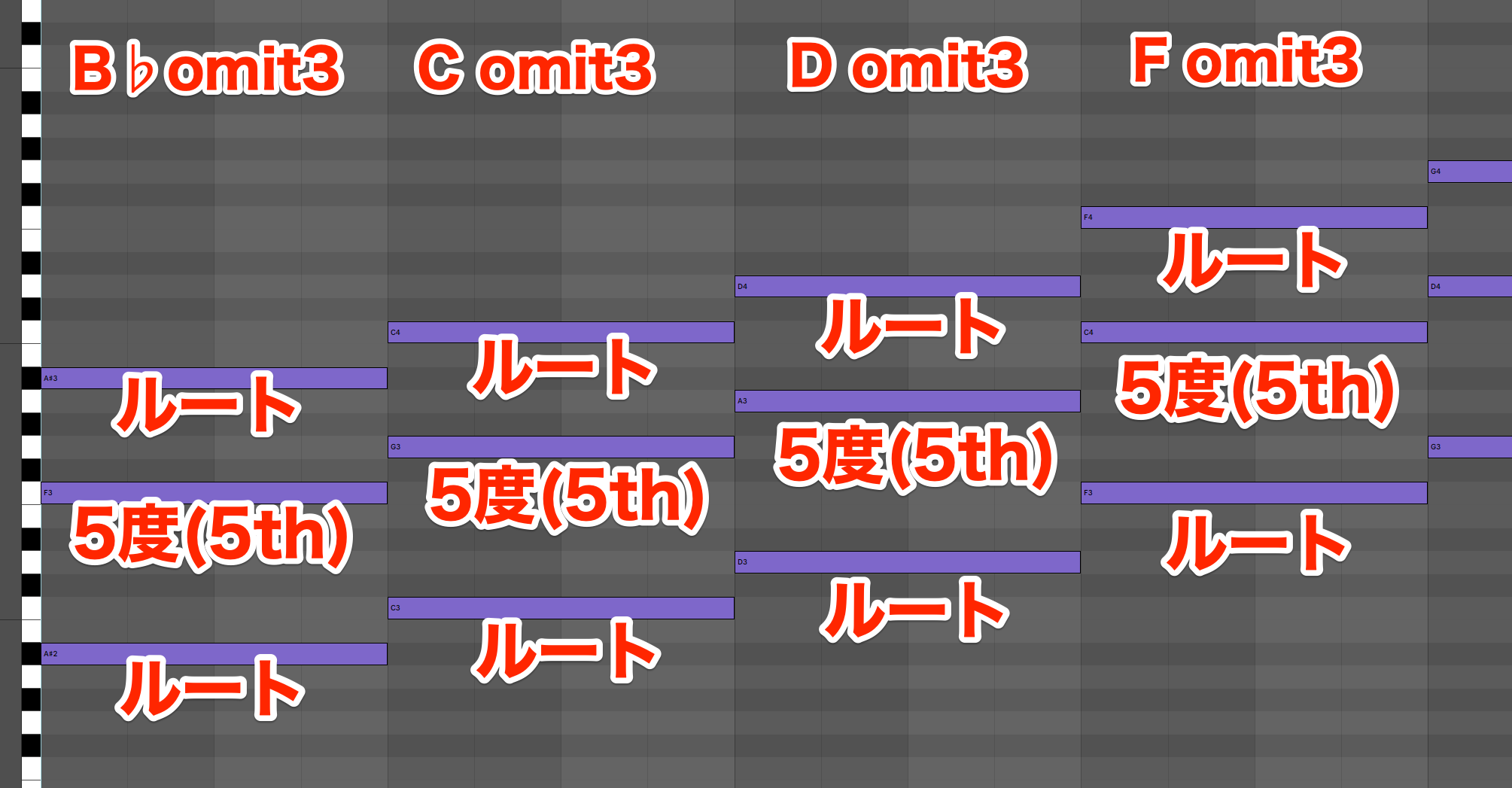
Power chords consist of a root and its perfect fifth, sometimes with octave doublings.
As the name suggests, they can sound powerful. Rather than explicitly defining major or minor harmony, they tend to emphasize the strength and energy of the music as a whole.
Demo with Power Chords

2. Triads
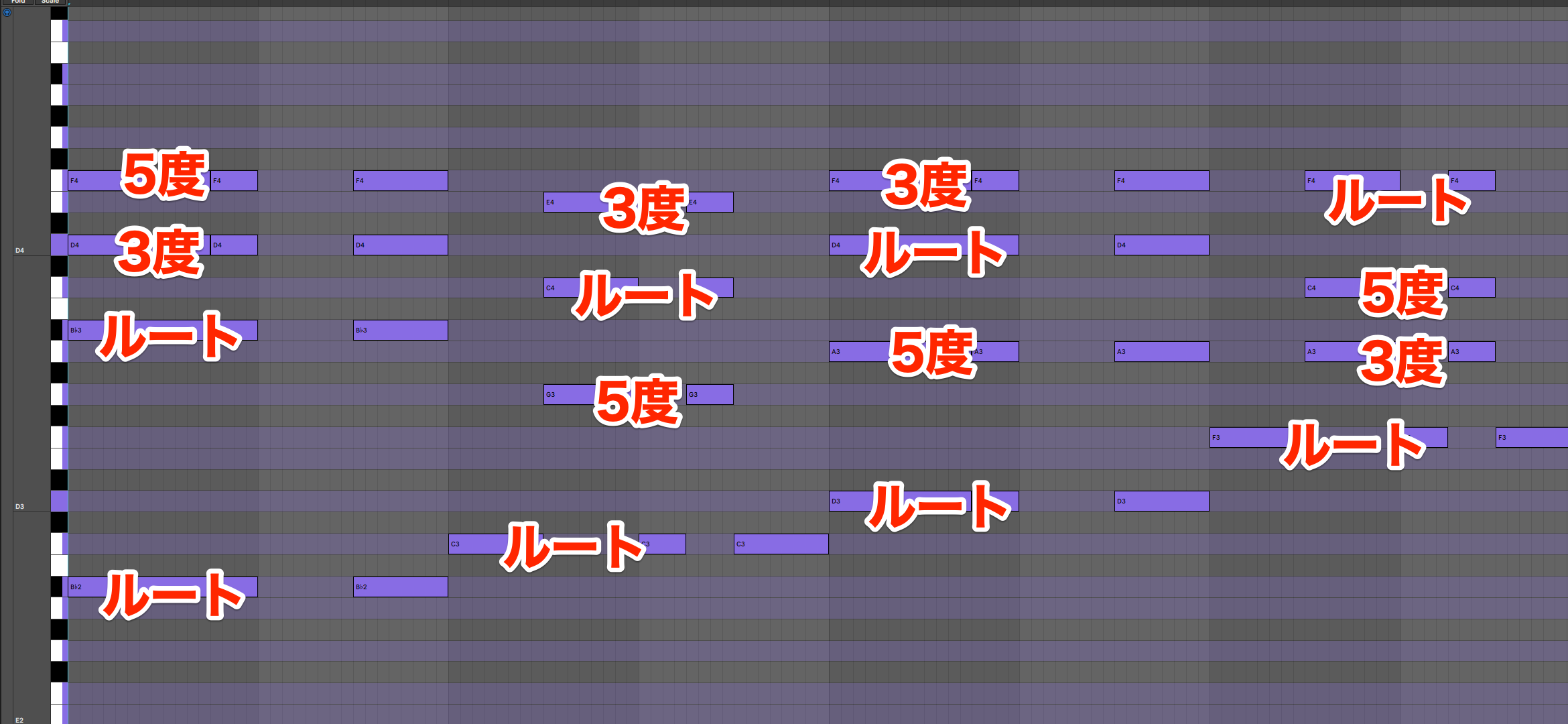
A triad is a three-note chord. Triads are fundamental building blocks of harmony and appear across many musical genres.
Compared with a root-and-fifth power chord, adding a third makes the chord's major or minor character clearer, suggesting a brighter or darker color.
Demo with Triads

3. Seventh Chords and Extensions
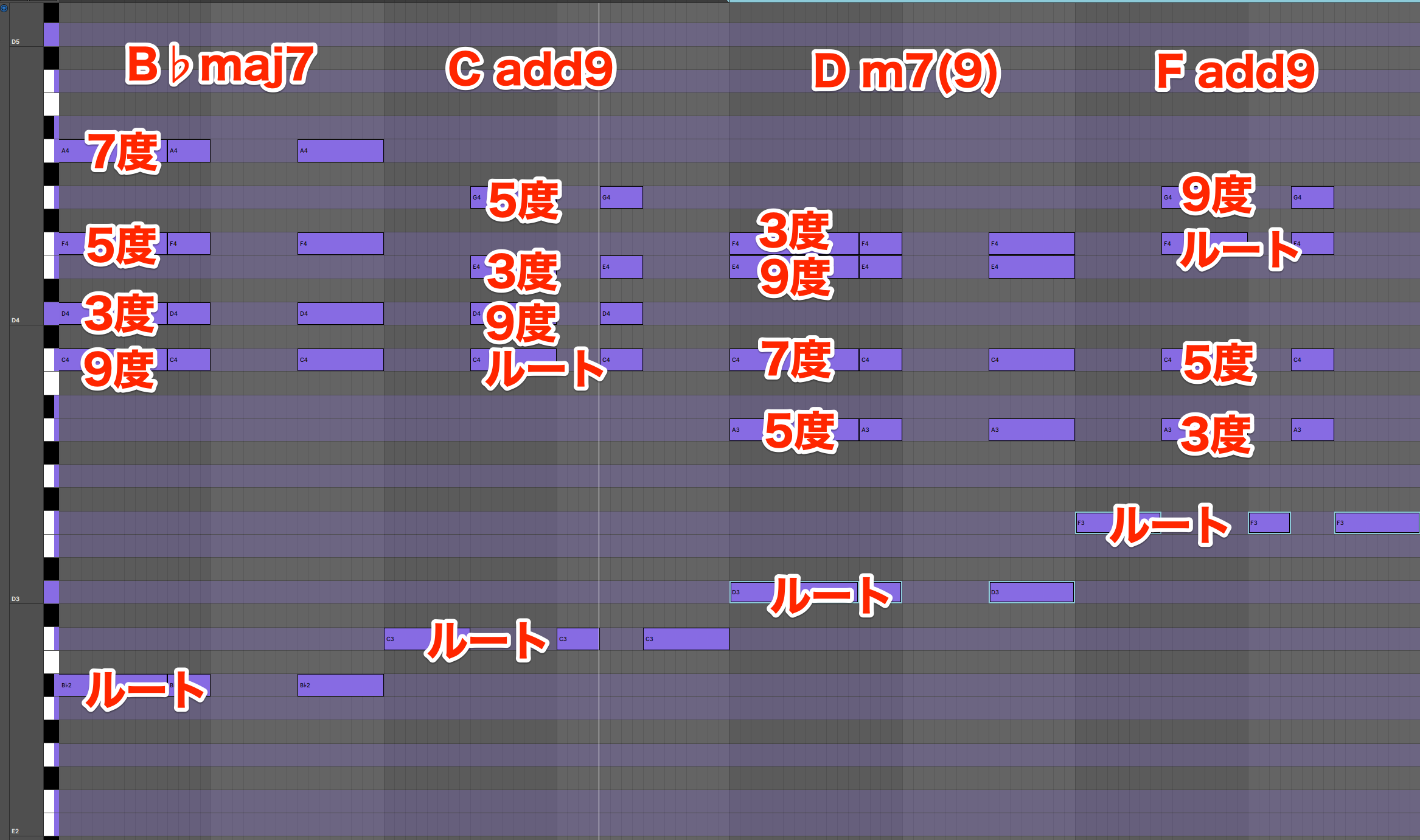
A seventh chord adds a note a seventh above the root to a triad.
Extended chords use one or more notes a ninth, eleventh or thirteenth above the root. Both sevenths and extensions can add further tension or color.
These harmonies are often described as sophisticated, giving the overall harmony a richer, more complex character.
Demo with Seventh Chords and Extensions

4. Non-Diatonic Chords
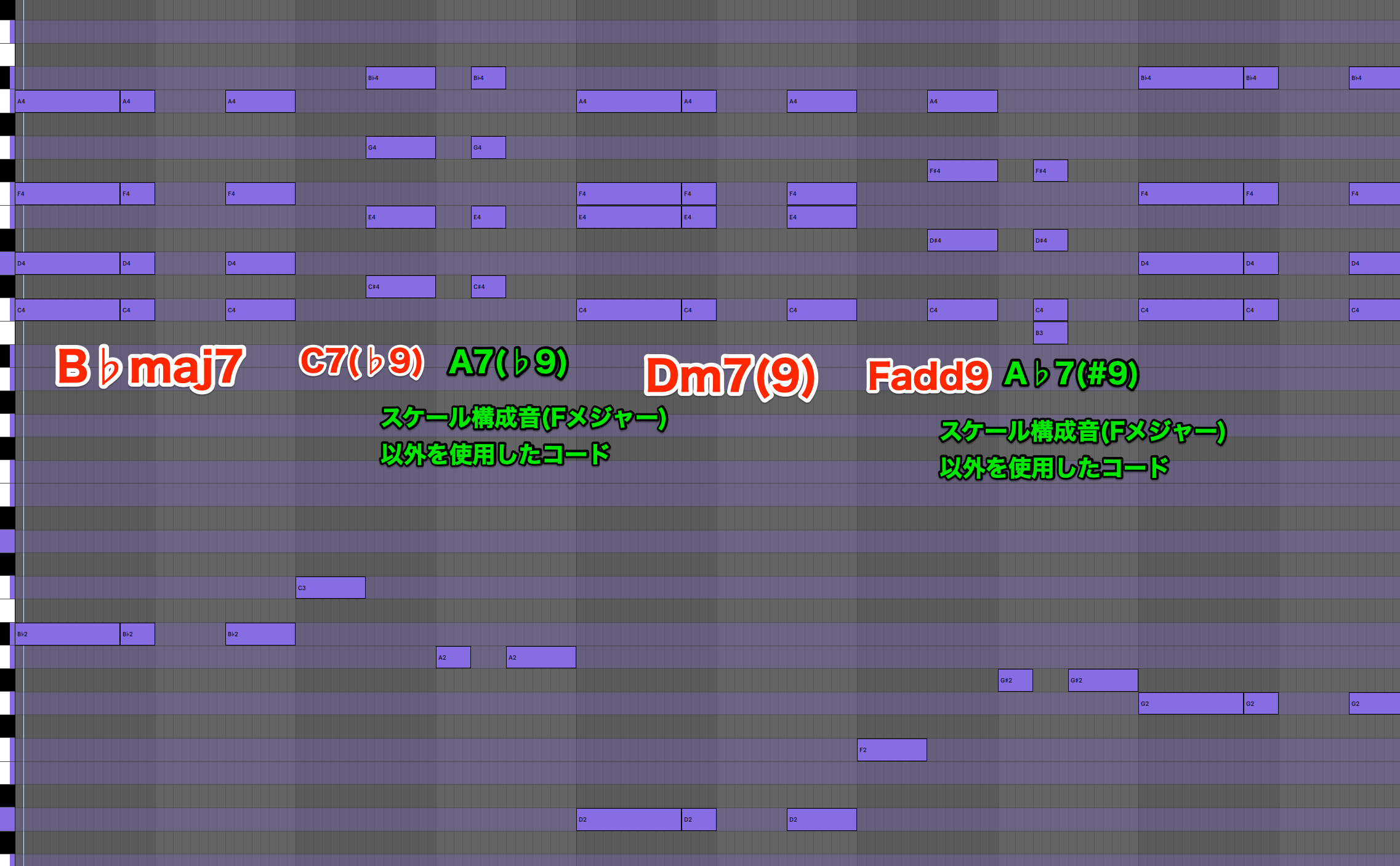
A non-diatonic chord contains one or more notes outside the key or scale being used for the piece.
These chords can bring unexpected changes and surprises to a progression, giving the music a fresh character.
When working with a progression that is already established, secondary dominants are a relatively accessible way to introduce non-diatonic harmony, including for beginners.
To create a secondary dominant, temporarily treat a suitable diatonic chord as a local tonic and place its own dominant chord immediately before it. This creates a brief tonicization rather than necessarily a full change of key.

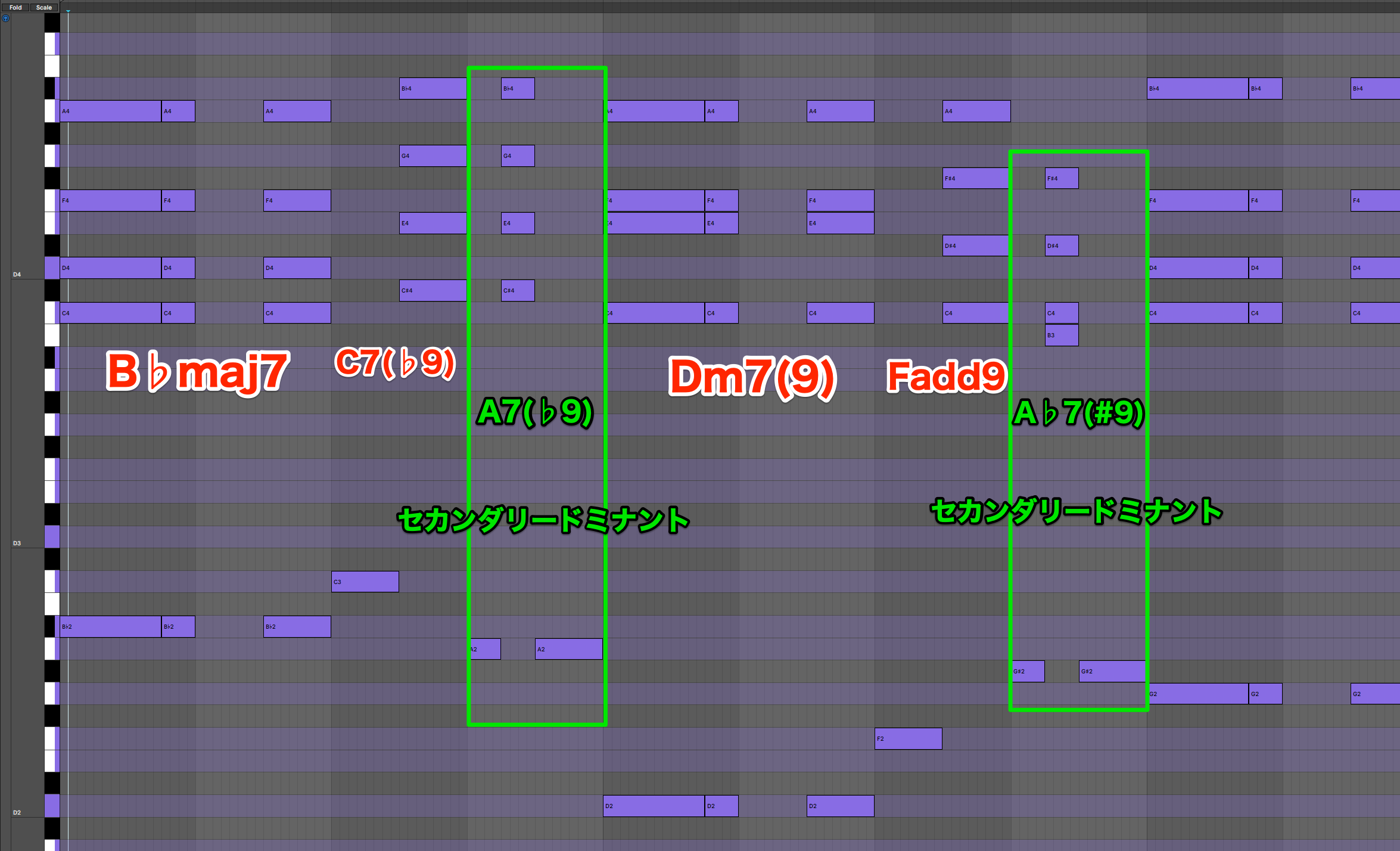
In this example, the A7 chord immediately before Dm7(9) acts as the secondary dominant. The source prose calls it A7(9), while the piano-roll diagram labels it A7(♭9). These have different ninths but the same dominant root and third.
Dm7(9) is rooted on the sixth degree of F major. Temporarily hearing D as a local tonic lets A7 act as V7/vi. A7 and the diagram’s flat ninth, B♭, fit D harmonic minor. This explains the dominant function, rather than placing every note of both chords in that scale: Dm7(9) contains C natural, while D harmonic minor contains C♯. If a natural ninth is used on A7 instead, that note is B natural.
Demo with Non-Diatonic Chords
The article compares the original C7 with the substituted A7: both are dominant-seventh chord types, but C7 is V7 of F and A7 is V7 of D. Their targets differ. In this arrangement, the substitution preserves the broad shape of the phrase while adding a stronger local pull toward D minor.
The four approaches can be switched between sections to create contrast in an arrangement. You can also move between simpler and more elaborate harmonies within a single progression.
Learning some theory can make it easier to build these chords deliberately. For a closer look, explore our music theory tutorials.

Frequently Asked Questions
Q1. What is the difference between power chords and triads?
A power chord uses a root and perfect fifth, giving a simple, forceful sound without a third to define major or minor. A triad has three notes; major and minor triads include a third that makes their contrasting colors clearer. Triads are basic harmonic building blocks across many genres.
Q2. When would I use seventh chords?
Seventh chords and extensions can give a track a richer or more sophisticated character. They add harmonic color and, depending on context and voicing, tension. Choose them for the sound the arrangement needs rather than assuming more notes always improve it.
Q3. What is a secondary dominant, in simple terms?
Temporarily hear a chord other than the home tonic as a local destination, then place its dominant before it. In this example, A7 leads toward Dm. This introduces a fresh harmonic pull and is a relatively approachable way to use a non-diatonic chord.
Q4. How can I use these four approaches in an arrangement?
Switch treatments between sections, or alternate simpler and more elaborate harmonies within a progression. These contrasts can give the arrangement a clearer shape and expand its expressive range.
NEW ARTICLES
Latest English Articles