This article analyzes the final four bars of “Heavenly Flight” from Dragon Quest III through the lens of music theory. We focus on the descending chromatic bass line, a technique known as a bass-line cliché, and compare the first and second halves to explore diatonic and chromatic movement and the use of chord tensions. Understanding this classical, sophisticated game-music writing can inspire your own arrangements and chord progressions.
Analyzing the Final Four Bars of “Heavenly Flight”

This is part six of our practical music theory analysis of “Heavenly Flight” from Dragon Quest III.
Previously, we examined the opening four bars.
From this installment onward, we focus on the final four bars.
The Piece

Video Tutorial
1. Song Structure
2. Key and Tonality
3. Chord Progression
4. Focusing on the Bass Line
5. Tritone Substitution
6. Bass-Line Cliché (This Article)
7. Pedal Point
8. The Picardy Cadence
The Second Half: A True Bass-Line Cliché
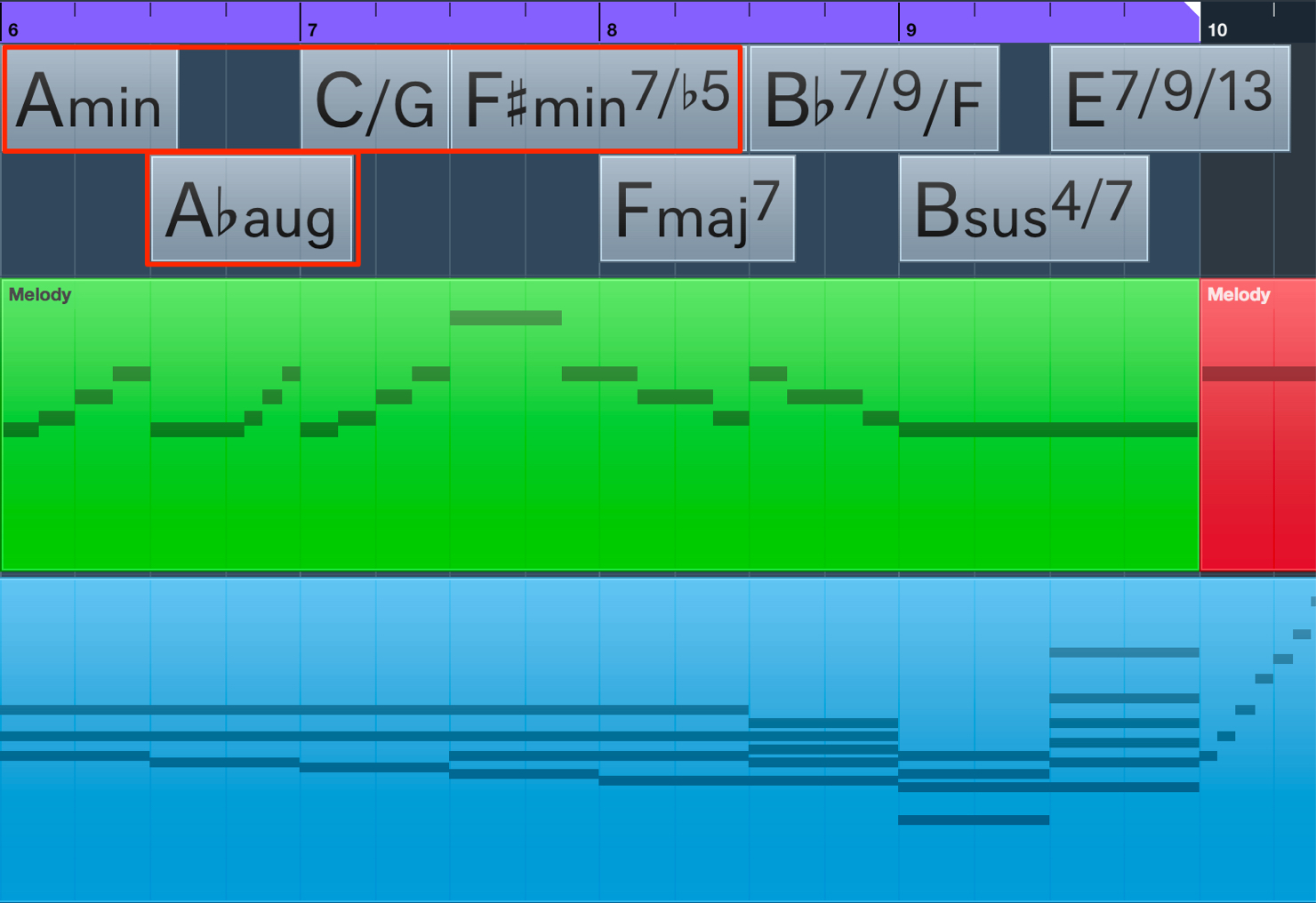
Let’s look at the chord progression in the first two bars of the final four. We have simplified the accompaniment into chords and labeled them to reflect their notes.
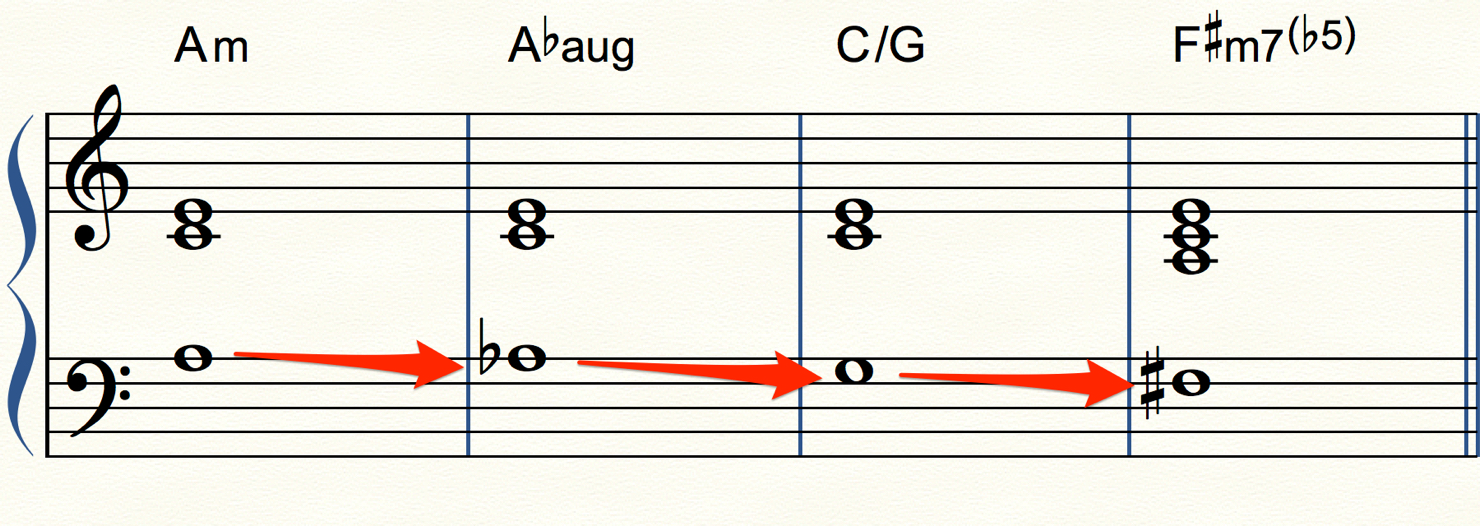
The key point here is the bass line descending by semitones.
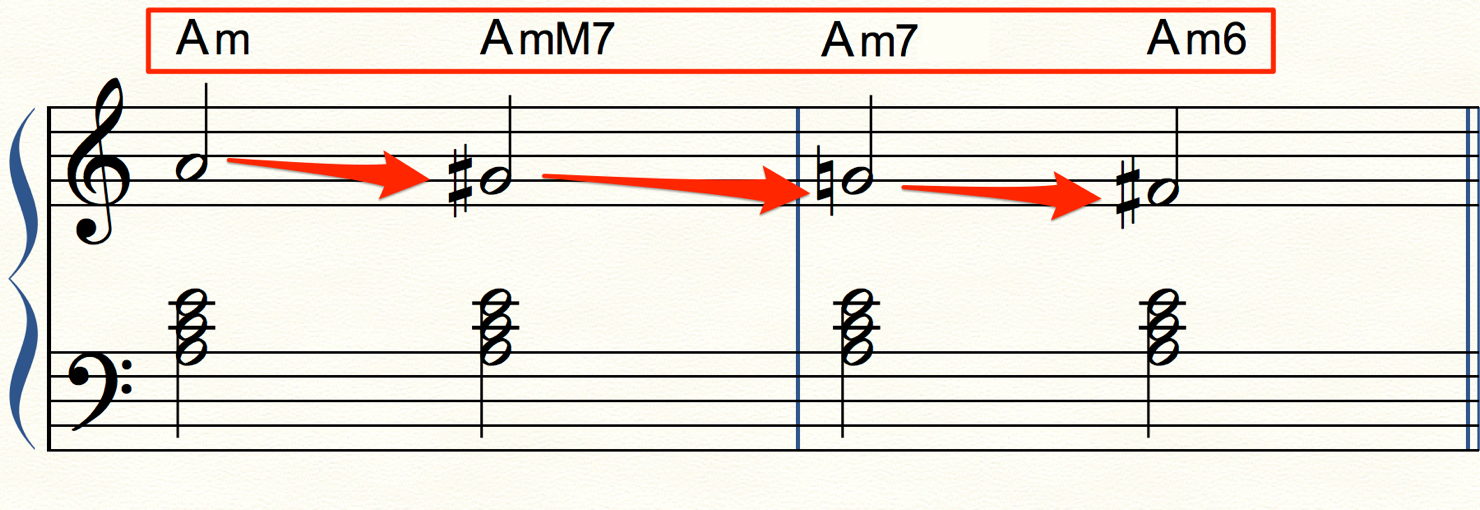
This descending chromatic line is called a cliché. If we move it to the top voice of the chord and consider the chord symbols, the result looks like this:
The example follows.
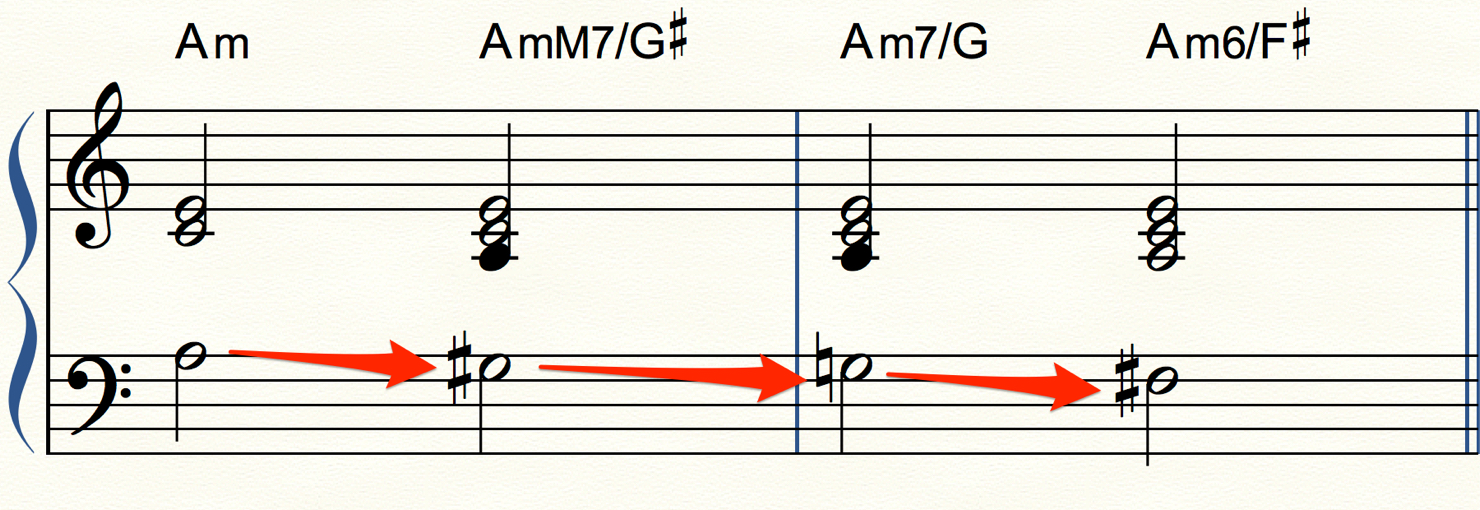
With the cliché in the bass, these alternative chord names are also possible. The black noteheads in the example represent chord roots that may be omitted in relation to the bass notes.
Comparing Two-Bar Passages in the First and Second Halves
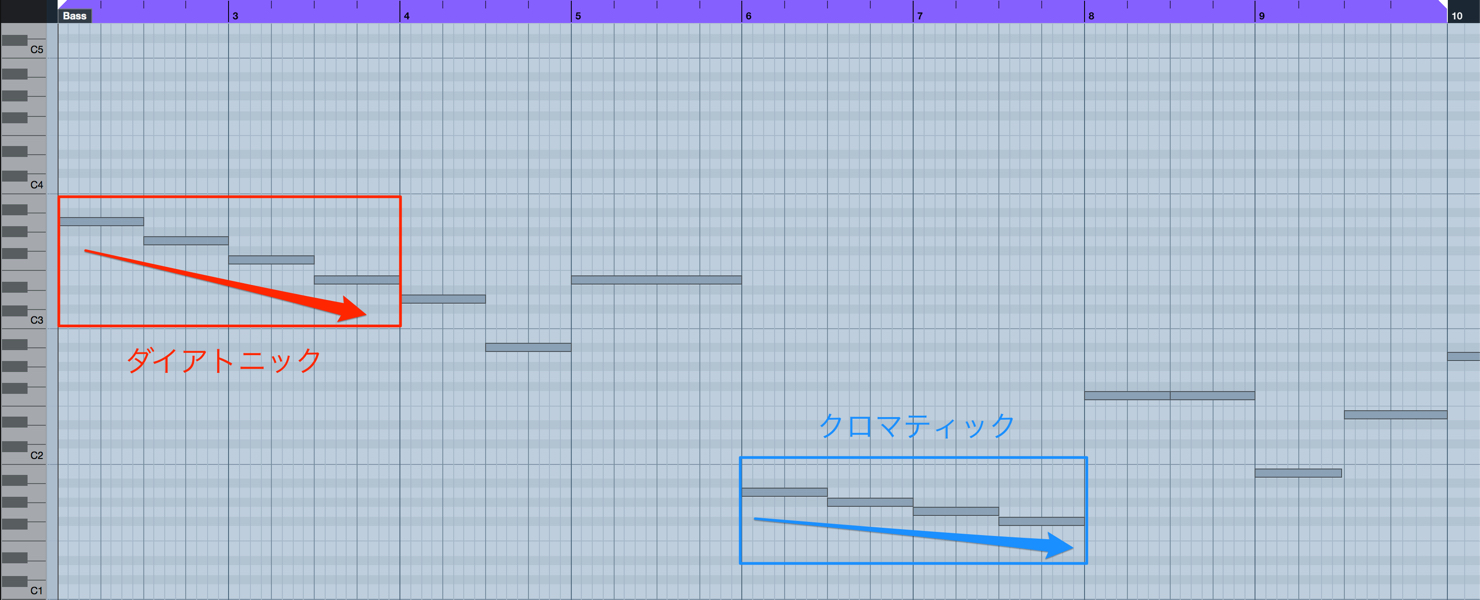
Compare the opening bass line of the first four bars with the opening bass line of the final four bars:
The first descends through a diatonic scale, creating a line reminiscent of a bass-line cliché,
while the second descends through a chromatic scale.
This contrast feels as though it may well be deliberate.
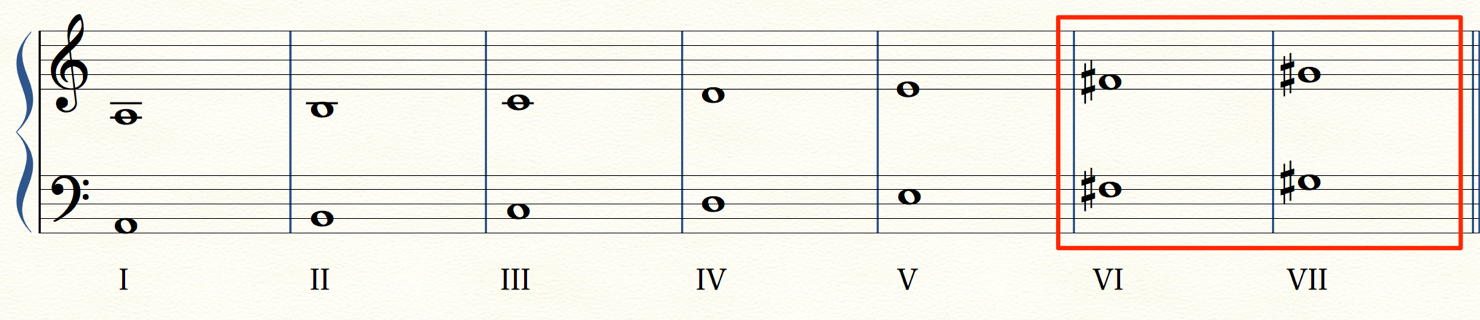
The chromatically descending pitches are also notes that vary between the A natural minor and harmonic and melodic minor scales. This shifting quality contributes to the classical, melodic character.
The relationship between melody and harmony also contrasts between the two halves.
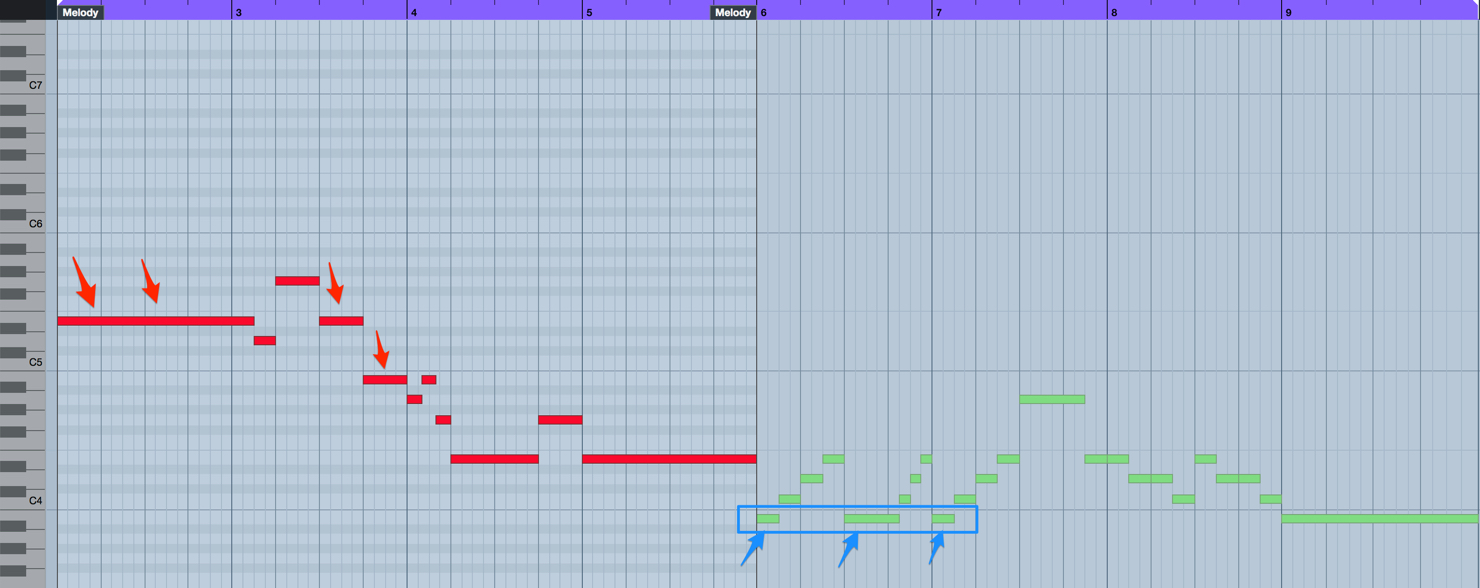
The opening melody of the first four bars mainly uses chord tones, while the melody of the final four bars is dominated by the ninth as a tension note over the Am chord.
The first half feels clear and resolute, whereas the latter centers on the hollow sound of the tension, creating another contrast in nuance.
Frequently Asked Questions
Q1. What is a bass-line cliché?
In this example, it is a compositional technique in which the bass descends chromatically beneath a continuing harmony. The stepwise motion can make a repeated chord sound more melodic and sophisticated. Related line clichés can also move in other directions or voices.
Q2. What is the difference between diatonic and chromatic scales?
In this passage, the diatonic line descends using notes from the key, while the chromatic line moves in semitones. The former gives a sense of cohesion; the latter provides a smoother, more colorful sound. The contrast in “Heavenly Flight” may have been intentional.
Q3. What are the benefits of using tension notes?
Adding tensions such as the ninth can give a simple chord greater complexity and depth. In the final four bars, the tension contributes to the hollow, floating atmosphere and adds nuance.
NEW ARTICLES
Latest English Articles