
There are three important points to consider when writing melodies for current J-pop, such as music by YOASOBI. First, using the major pentatonic scale, also known in Japan as the yonanuki scale, as a foundation helps you create memorable, catchy melodies. Second, varying the entrances and rhythms of sections such as the verse, pre-chorus and chorus gives the song contrast and a sense of development. Third, thinking of melodies in rhythmic blocks and making their cycle differ from the chord progression helps avoid monotony. Putting these ideas into practice can help address melodies that always sound the same and arrangements that feel unfocused, allowing you to create more memorable and polished J-pop melodies.
A Closer Look at Today’s J-pop

In this series, current J-pop serves as a starting point for exploring song analysis and production techniques.
In this first installment, we focus on J-pop melodies and take a detailed look at three points to consider when writing them.
- My melodies always sound the same
- My arrangements and song development feel unfocused
—if either sounds familiar, this guide is for you. Let’s take a look!
We used Cubase Pro 11 to produce every track except the vocals and guitar with stock instruments and effects.
Lyrics and vocals: Yui Mugino
Website: http://www.yui-mugino.com/
Composition and arrangement: Tomoki Miyakawa
Twitter: https://bit.ly/3qMyJ5R
Current J-pop: Melody-Writing Video
- 1 Three Tips for Writing Melodies in Current J-pop
- 2 Analyzing Drum and Rhythm Tracks in Current J-pop
- 3 Analyzing Supporting Instrument Tracks in Current J-pop
Download the Cubase project for this song here!
Tip 1: Write Memorable Melodies with the Pentatonic Scale
One useful consideration when writing a catchy melody is choosing a scale before you begin.
The melody in this track is built around the five-note major pentatonic scale with that scale as its foundation.
The major pentatonic scale is also known in Japan as the “yonanuki” scale. It consists of the major scale with its 4th and 7th notes removed.

For example, from the seven notes of the C major scale,
“C, D, E, F, G, A, B,”
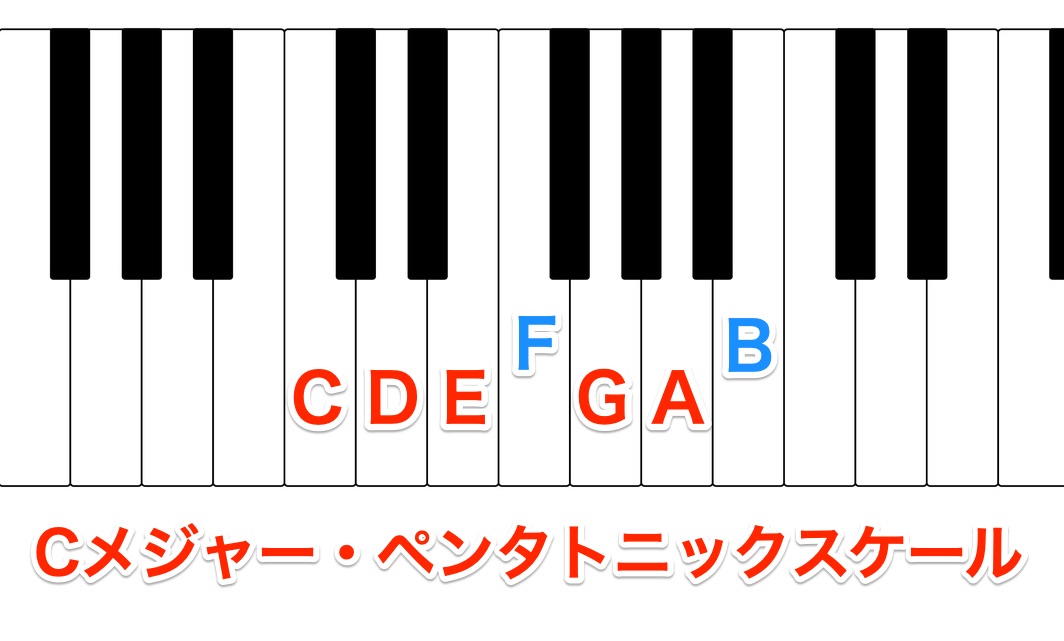
the 4th note, F, and the 7th note, B, are omitted, leaving “C, D, E, G, A.” This five-note scale is the major pentatonic scale.
Because a melody is built around a smaller set of notes, it can be easier to write a melody that listeners remember.
Many songs are based on the pentatonic scale.
Two well-known hit songs that use it are Yumi Matsutoya’s “Haru yo, Koi” and Masaharu Fukuyama’s “Sakurazaka.”
Both have memorable melodies that make a strong impression.
Use Cubase’s Scale Assistant to Identify the Scale
Cubase Pro 11 introduced a feature called Scale Assistant.
When you select a key and scale, the corresponding notes are highlighted in the piano roll, making it a useful composition aid.

Select the lower zone, open Scale Assistant in the Inspector, and check Use Editor Scale.
Then, under Editor Scale, set the song key (E-flat in this example) and choose the scale you want (Pentatonic here).
Finally, set the note color mode to Scale/Chord.

Notes in the piano roll that belong to the selected scale appear in blue.
Notes outside the scale appear in red.
This makes scale tones easy to spot, which can be helpful if music theory is unfamiliar or you are writing in a less familiar key or scale.

After applying the colors, you can see that the melody uses the pentatonic scale in many places.
You could write the entire melody using only pentatonic notes, but this song also uses some notes from the full major scale to add variety.
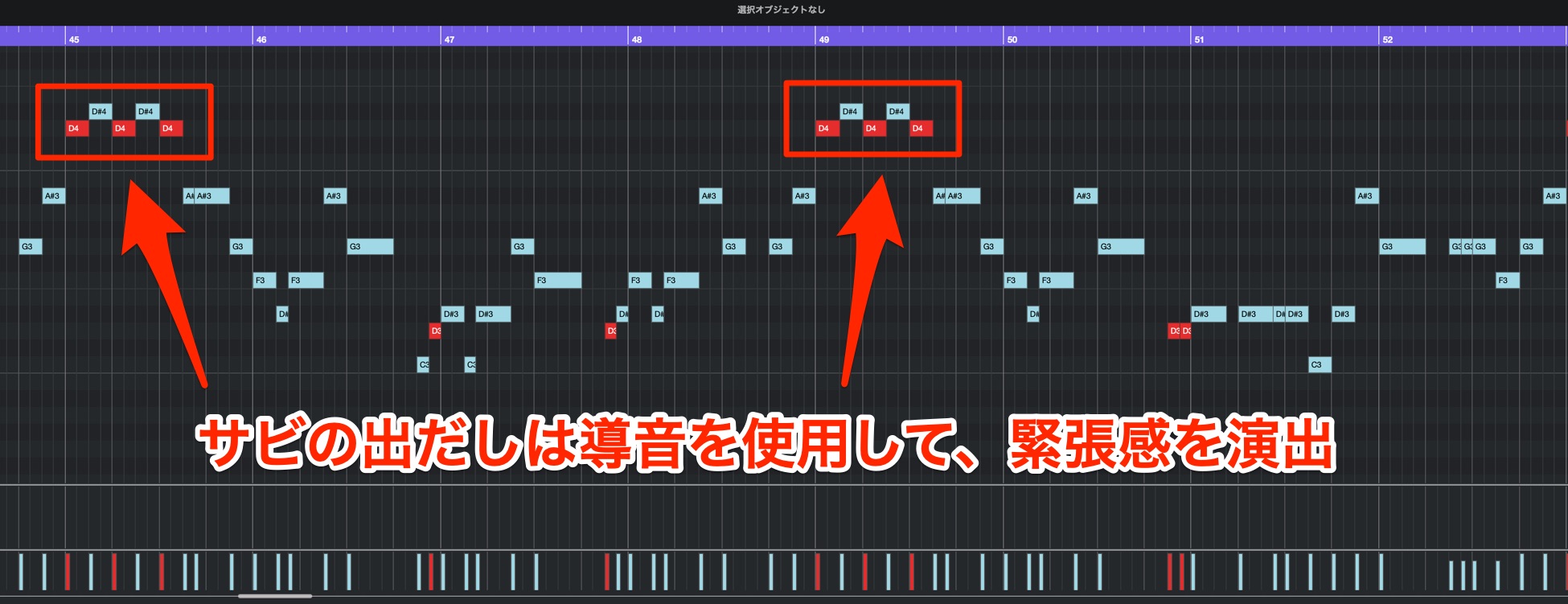
The pentatonic scale makes phrases easy to remember, but the absence of the leading tone, the seventh scale degree, can reduce the sense of tension.
At the start of the chorus, the melody deliberately uses D—the seventh scale degree, which is outside the pentatonic scale—to add tension.
Tip 2: Shape the Entrances of Each Section
The start of a section—such as a verse, pre-chorus, or chorus—often makes a particularly strong impression.
Varying the timing and rhythm of each section’s entrance can give the song a more defined sense of movement.
Choose When Each Section Begins
The melody enters at a different point in each section, as shown below.
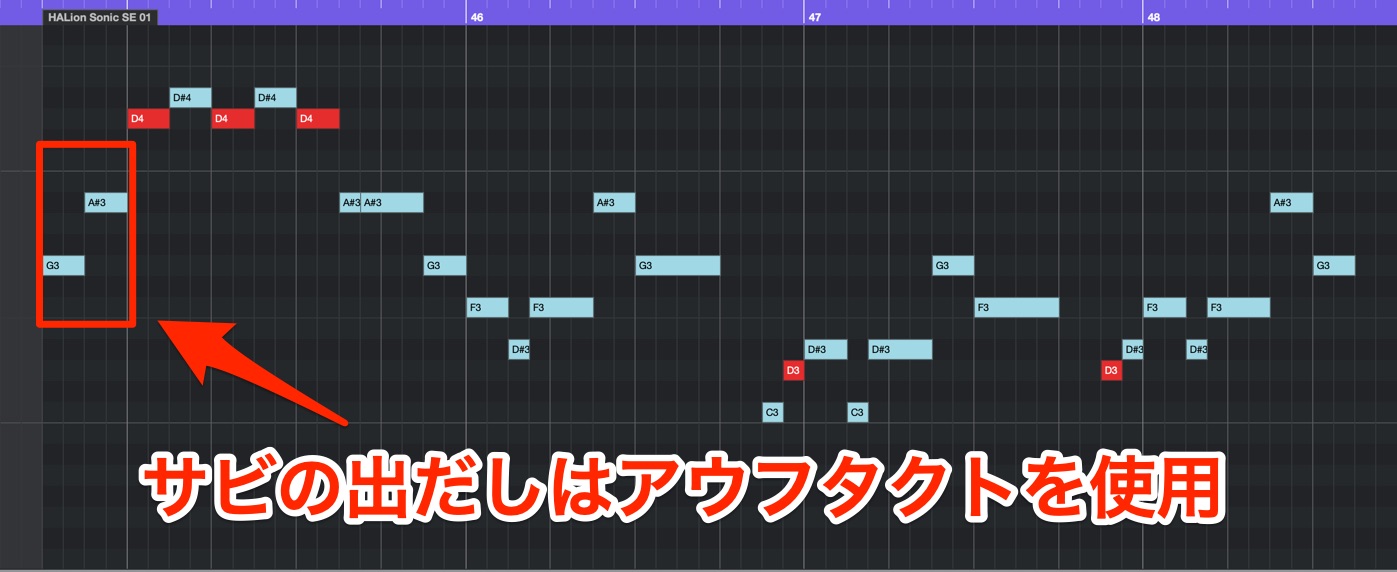
The chorus begins with an anacrusis (a pickup).

The pre-chorus begins with a note on the downbeat.
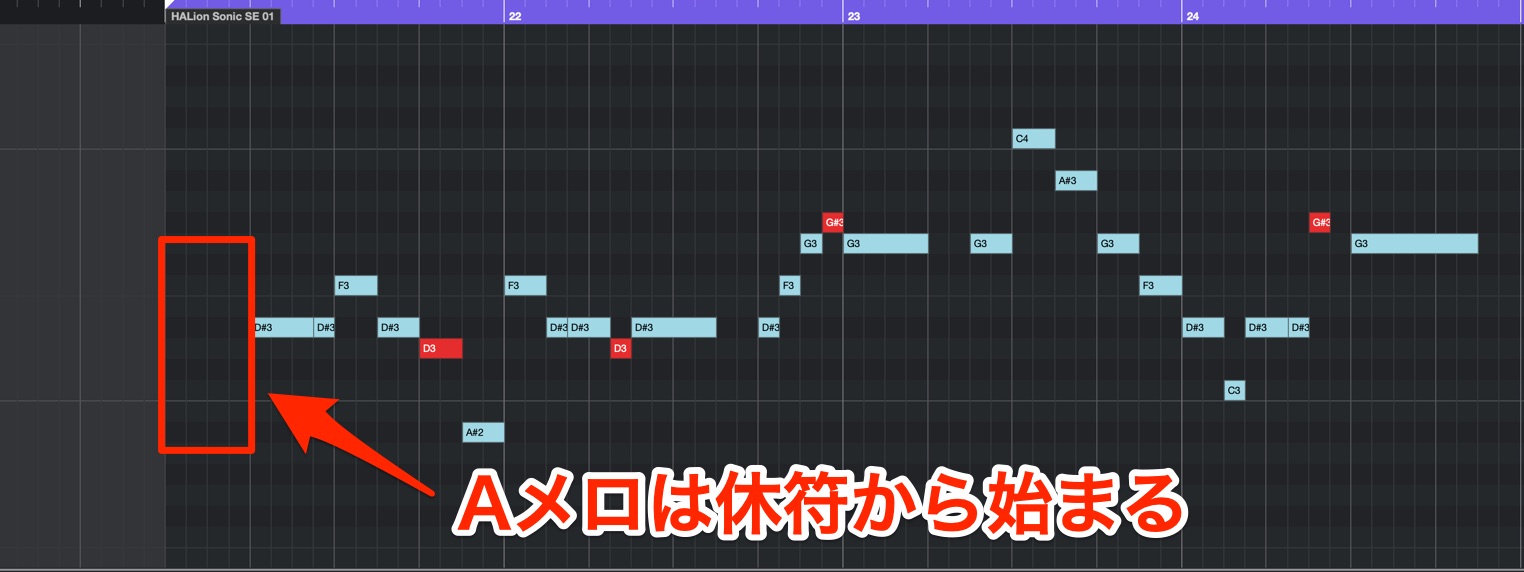
The verse begins with a rest.
Here is what it sounds like when every section uses the same pattern.
- Verse
- Pre-chorus
- Chorus
The result feels flatter, with less contrast between sections.
Listen to a few different ways the chorus can begin.
- Original chorus
- Without a pickup
- With a rest at the start of the bar
You can hear how much the impression changes.
None of these approaches is inherently wrong, but it is important to
- vary the way phrases enter and
- shape the melody in relation to the other sections
to create a more dynamic melodic line.
Give Each Section Its Own Rhythmic Character
You can also add rhythmic details within a phrase to give it a distinctive feel.
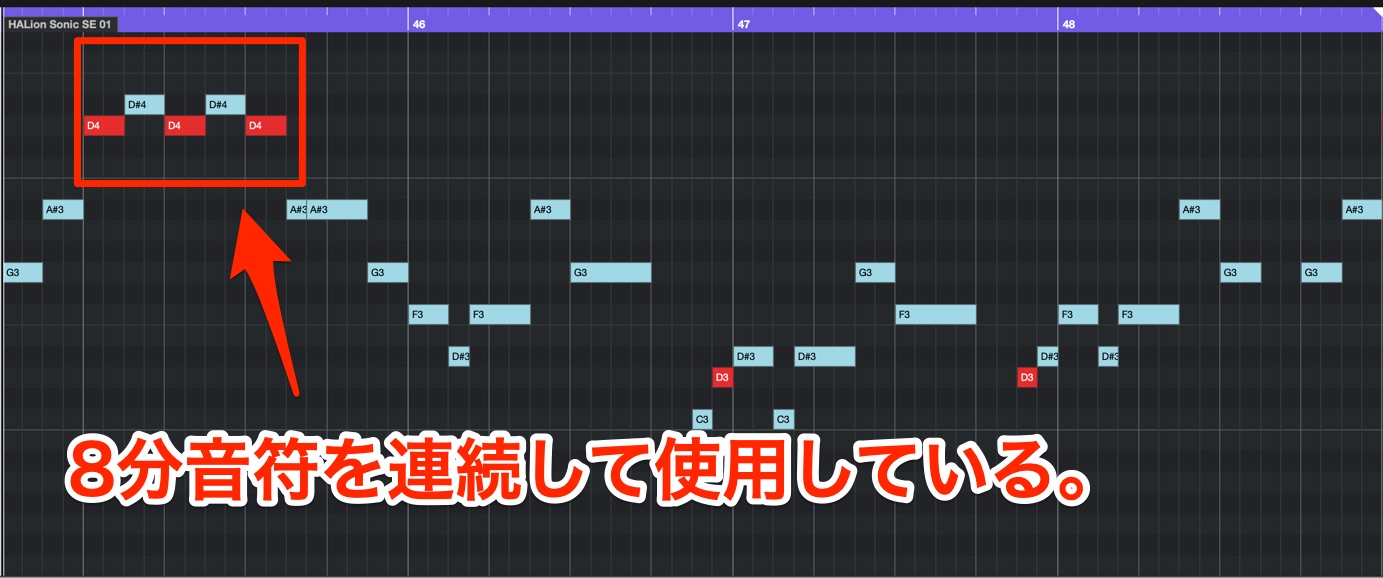
The first bar of the chorus uses a run of eighth notes.
A melody placed on the beats can feel memorable and easy to follow.
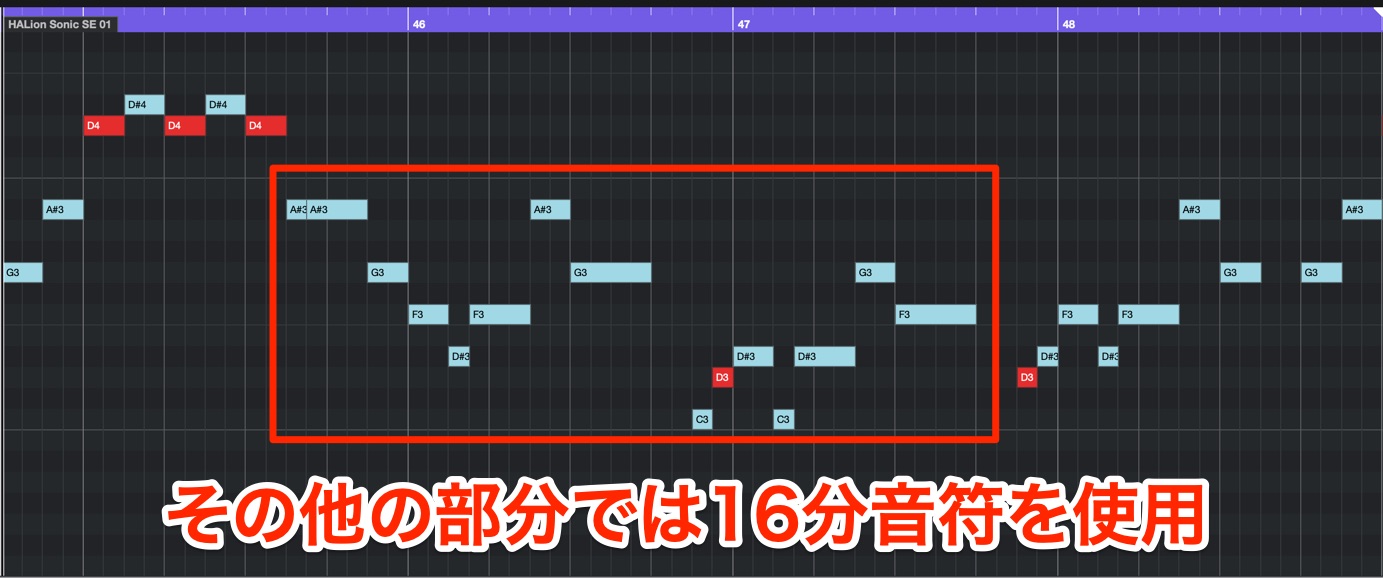
Conversely, adding accents on the offbeat sixteenth notes makes the notes on the beats stand out more.
This creates a stronger sense of contrast in the melody.
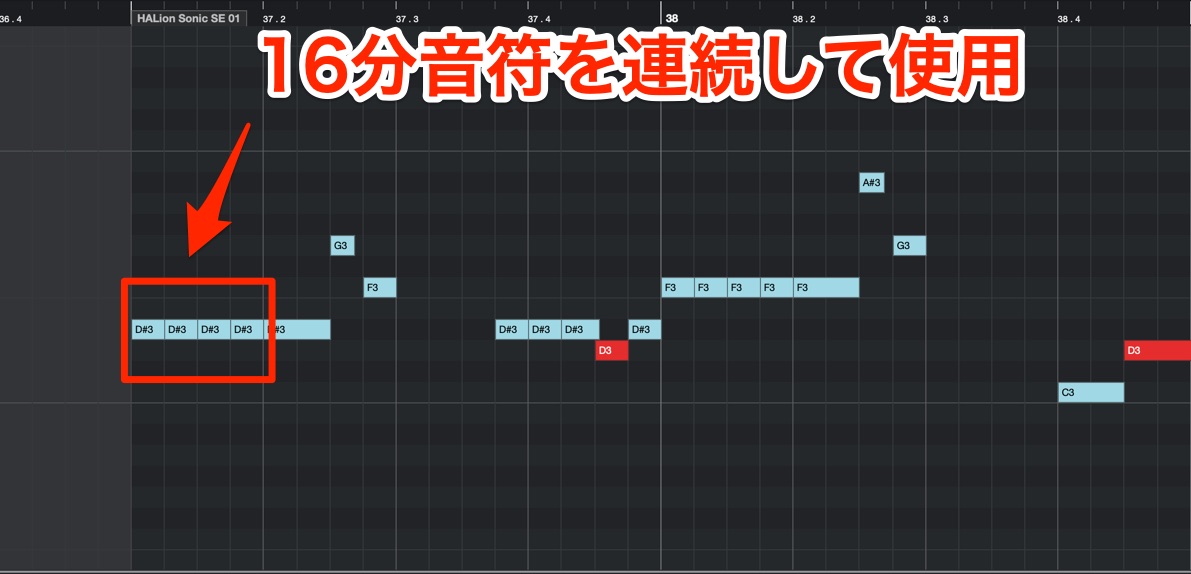
Next, let’s look at the pre-chorus.
The pre-chorus usually acts as a bridge between the verse and chorus.
If it feels too similar to the other sections, the song can lose some of its contrast
so we made a point of giving the pre-chorus its own melodic identity.
In the pre-chorus, the same pitch repeats in a run of sixteenth notes.
The other sections do not use this same melodic idea.
This helps the pre-chorus make a distinct impression.
Tip 3: Think of Melodies in Rhythmic Blocks
A melody is usually made up of several phrases joined together.
Pay attention to the rhythmic patterns in those phrases and how they connect as you write; doing so can help you avoid a monotonous result.
Vary the Phrase Cycle Against the Chord Progression
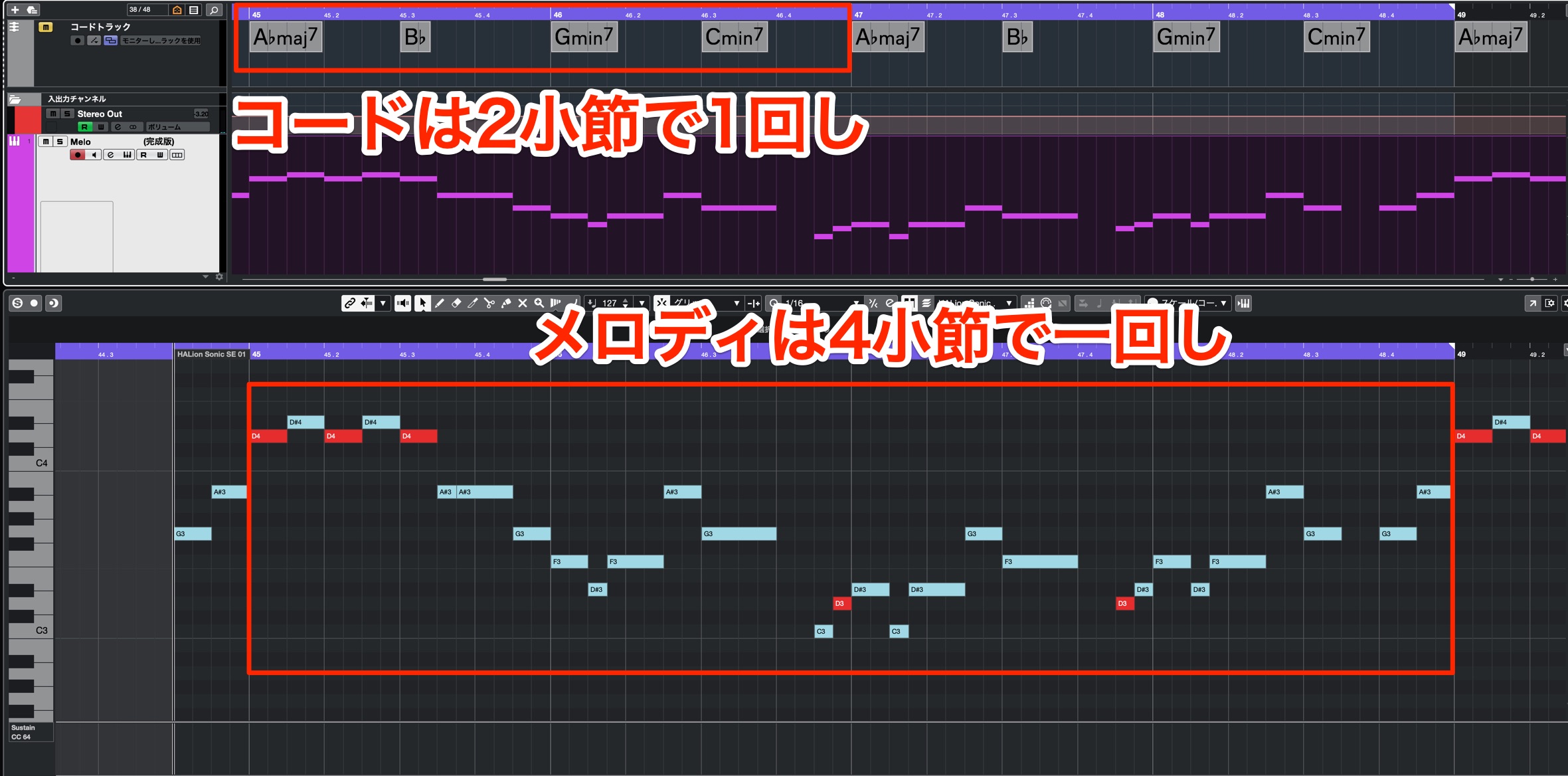
The chord progression in the chorus repeats every two bars.
When you listen to the accompaniment alone, the second half of the chorus can start to feel repetitive.
Repeating the melody every four bars instead softens that sense of repetition and keeps the overall section from feeling monotonous.
What happens if the melody repeats every two bars, just like the chord progression?
Here is an example.
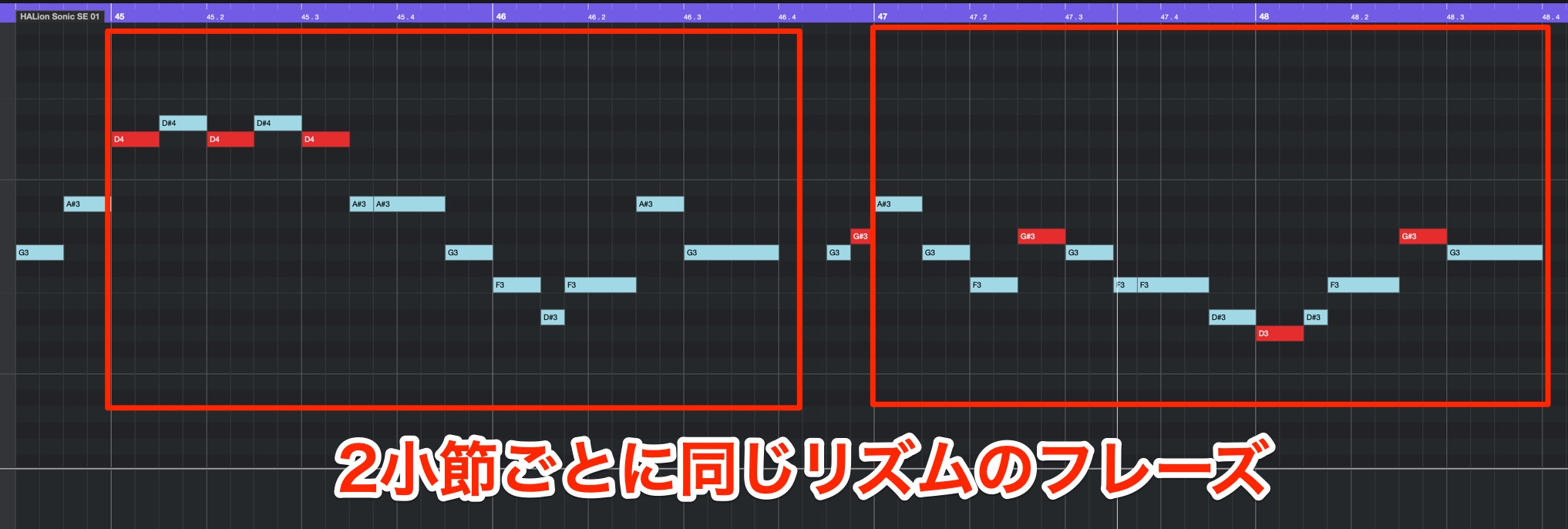
- Original melody
- Melody with a two-bar rhythmic pattern repeated
The pitches change in the repeated section, but the same rhythm returns, giving the passage a flatter feel with less movement.
When the same chord progression repeats throughout a song, varying the cycle lengths of the chords and melody can help keep the arrangement engaging.
Vary the Length of Each Phrase Block
Let’s look at the chorus and focus on the rests that create breathing points.

The first four bars can be divided into phrase blocks of two bars, one bar, and one bar.
Combining phrases with different block lengths can give the melody a more varied pace.
How would it feel if those four bars were instead divided into two-bar and two-bar blocks?
Listen to the comparison.
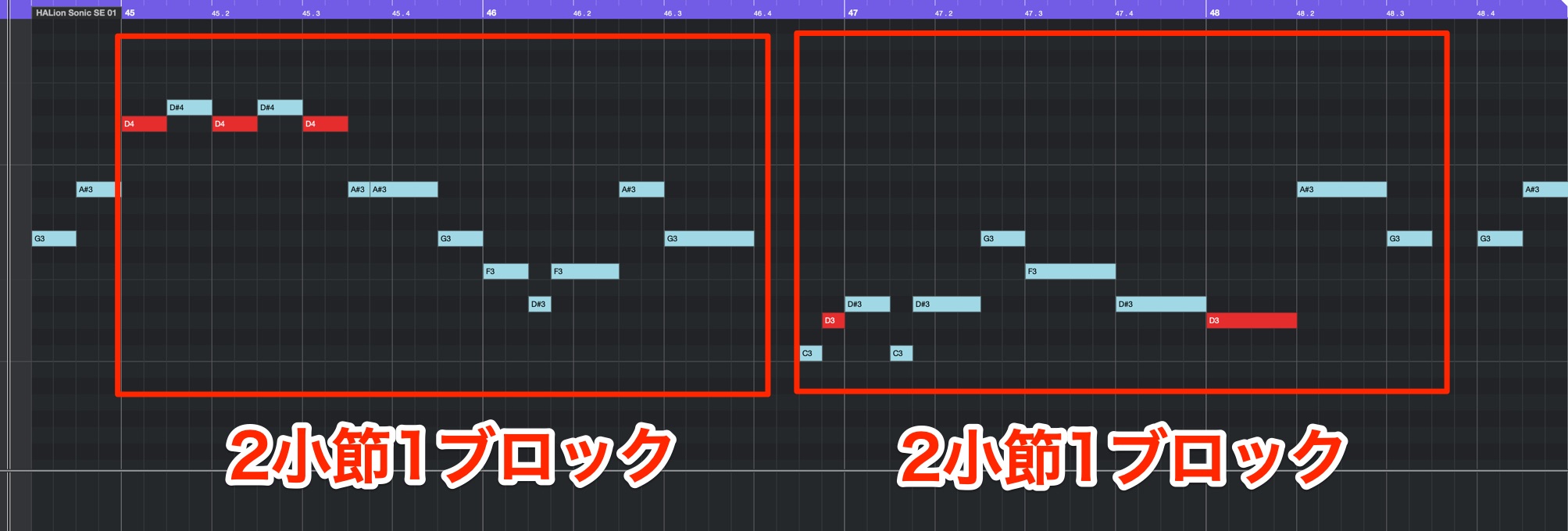
- Original melody (2 bars + 1 bar + 1 bar)
- Melody with a one-bar phrase repeated (2 bars + 2 bars)
There is nothing wrong with this melody, but compared with the original it feels less distinctive and flows by without the same points of emphasis.
Varying phrase-block lengths can be an effective way to make important moments, including the chorus, stand out.
Make the Pre-Chorus Distinct from the Verse and Chorus
Next, let’s look at the pre-chorus.
As mentioned above, the pre-chorus sits between the verse and chorus, making it an important section that shapes how the song flows.
Giving it a character that differs clearly from the other sections can make the overall arrangement feel more cohesive.
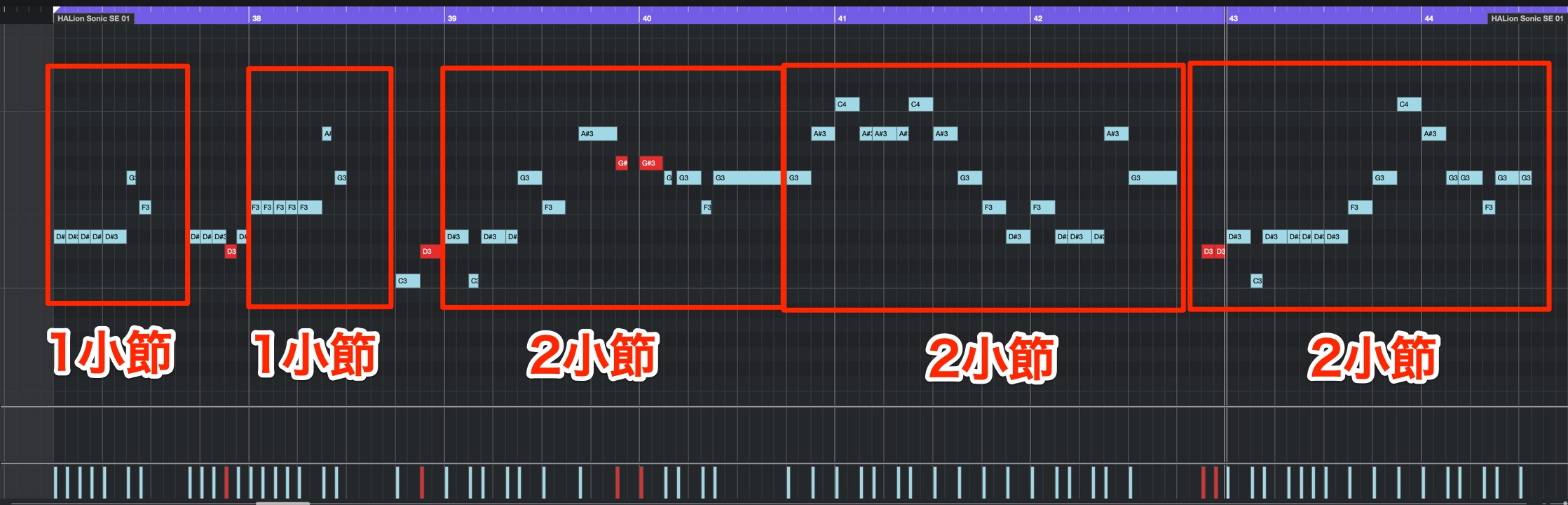
Its phrases can be divided into blocks of one, one, two, two, and two bars.
Rather than repeating every four bars, the section develops as a single eight-bar phrase.

The verse and chorus, by contrast, repeat every four bars.
This deliberate contrast adds variety to the flow of the song.
Change the Later Part of a Repeated Melody
There is another point to keep in mind when repeating a melody in four- or eight-bar blocks.
Unless repetition is a deliberate choice for a particular effect, repeating a phrase without variation can feel monotonous.
In that case, try changing the latter part of the repeated melody to avoid a stale feel.

Let’s use the chorus as an example.
Because the four-bar block repeats twice, we changed the melody in the second block.
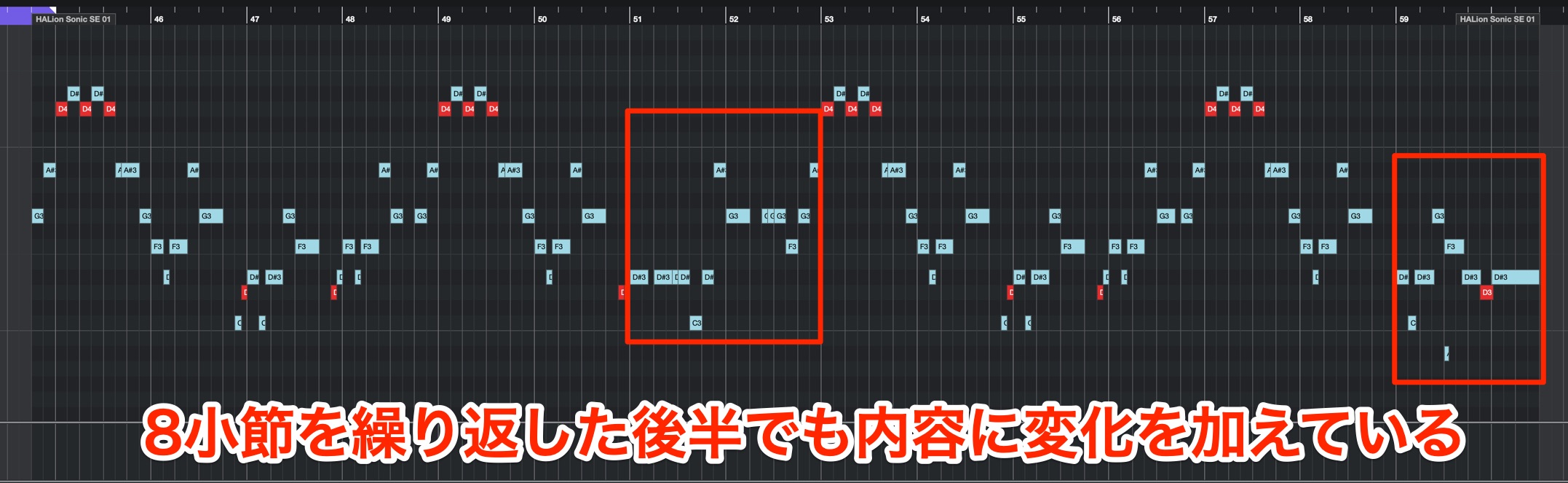
The full chorus can also be heard as two repeated eight-bar blocks, so we changed the melody again at the end of the chorus.
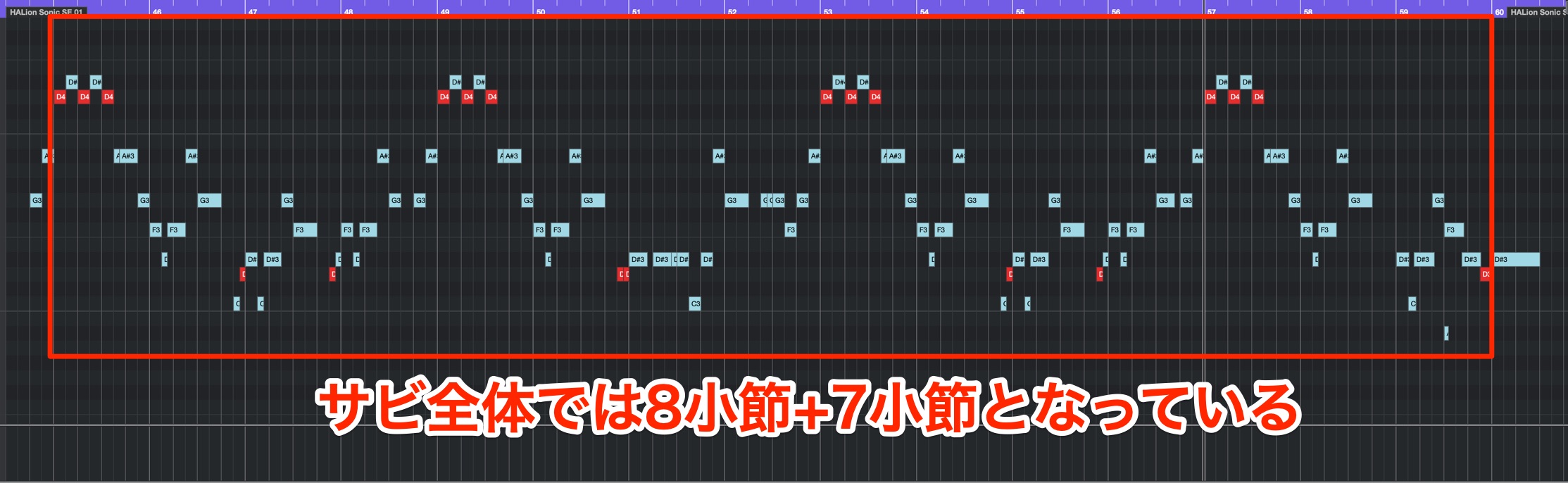
The final phrase is also one bar shorter than the original, which is another detail to note.
This example makes a more substantial change to the repeated section later in the melody.
Listen to the two versions.
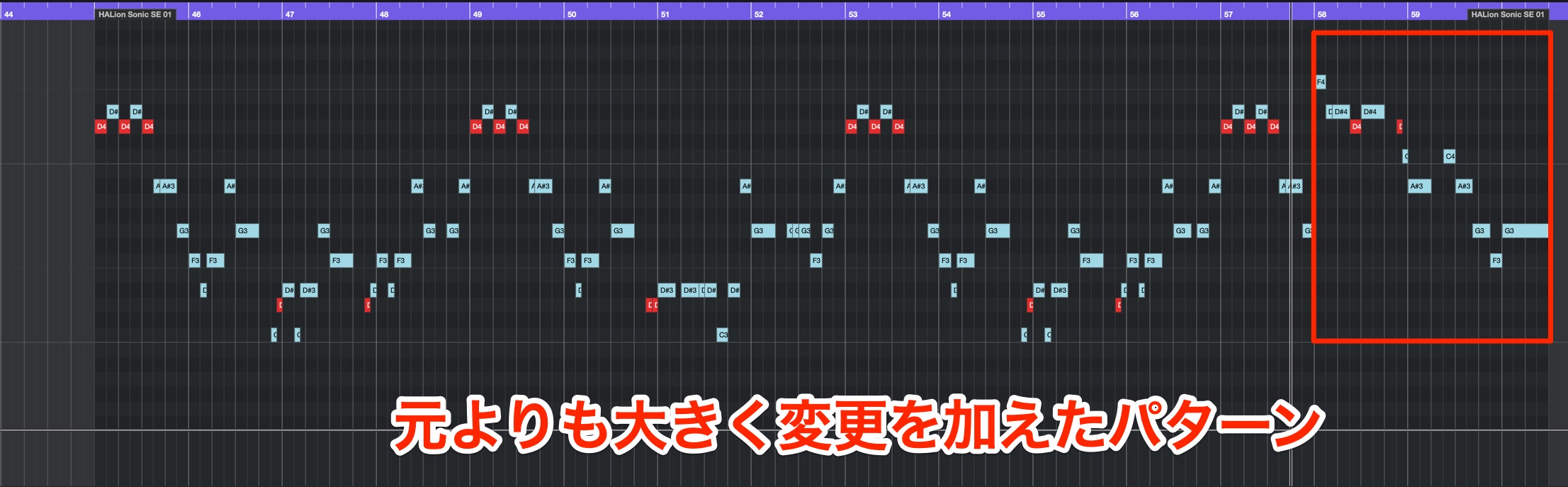
- Original melody
- Version with a more substantial variation
Making the fourth repetition change more than the second can give the impression that the song is building toward its later section.
This is just one possible approach to melody writing.
It is not a technique you need to use every time; you may choose to leave it out when the music does not need to build.
That wraps up our melody-writing tips.
POP songs are often written to appeal to a broad audience, so they may avoid especially unconventional melodies. Even so, many releases use subtle ideas to keep familiar-sounding lines engaging.
If a melody does not flow well or a section feels less memorable than you would like, try applying the ideas from this article.
Frequently Asked Questions
Q1. Is the pentatonic scale inferior to the major scale for writing melodies?
No. The major pentatonic scale, also called the “yonanuki” scale in Japan, uses only five notes, which can make melodies easier to remember. Many hit songs use it, including Yumi Matsutoya’s “Haru yo, Koi” and Masaharu Fukuyama’s “Sakurazaka.” Adding notes from the full major scale in selected places can create more variety and tension.
Q2. Can I use the pentatonic scale in DAWs other than Cubase?
Yes. Pentatonic-scale theory applies in any DAW. Cubase 11’s Scale Assistant is convenient, but other DAWs can achieve a similar result with scale settings and note-coloring features.
Q3. What does “anacrusis” mean when talking about a melody entrance?
An anacrusis is a melody that begins partway through a bar, on a weak beat. Compared with starting on the downbeat, it can create a more flowing entrance and add contrast to the song’s development.
Q4. Do all sections need different rhythms?
No. It is not required, but giving the verse, pre-chorus, and chorus different rhythmic characteristics can make each section more memorable and strengthen the song’s overall contrast. Consider how each part works with the others as you write.
NEW ARTICLES
Latest English Articles





























































