Waves Doubler is a useful plug-in for adding a doubling effect to vocals, synthesizers, guitars and other tracks. It can add thickness and widen the stereo image to help a track blend naturally into the backing. By choosing two or four voices, selecting mono or mono-to-stereo processing, and adjusting Gain, Pan, Delay and Detune, you can create anything from a tight, energetic sound to a wide image.
Doubler: Create a Doubling Effect Quickly and Precisely
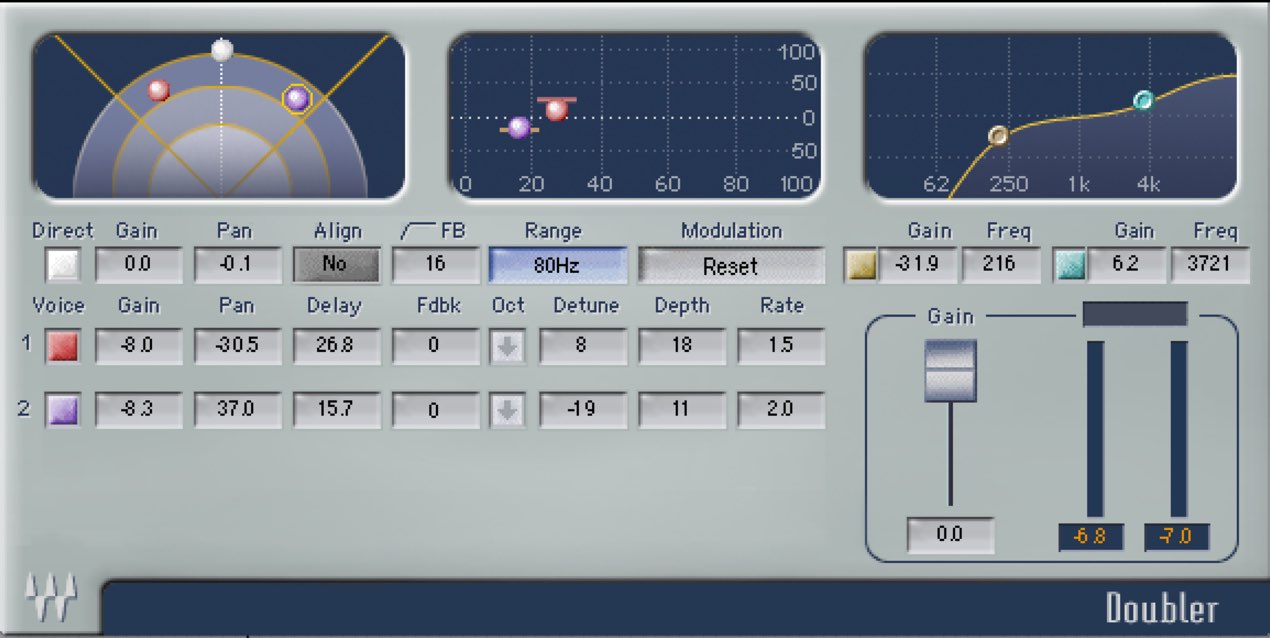
Waves Doubler is a plug-in that adds a doubling effect to a track.
- Add thickness to a track
- Help a track blend into the backing
- Widen the stereo image
These are just some of the effects it can produce.
We will use a vocal track as an example,
but it can also be used on synthesizers, guitars, backing vocals and many other tracks.
Try putting this useful plug-in to work in your own mixes.
Waves Doubler Tutorial Video
Questions and Answers from the YouTube Video

This is very helpful! I am still getting used to working in a DAW and would appreciate some advice. In Cubase, when mixing harmonies recorded on a mono track, I duplicate the track, pan the two copies hard left and right, and delay one by a few milliseconds for a wider stereo sound. Since I use separate tracks for each part, the track count makes the project hard to manage. Could I achieve a similar effect with Waves Doubler by removing the direct sound and keeping only the left and right voices? From the video, it seems I would need to change the mono recording to a stereo track in Cubase. Would I do that by creating a new stereo track and moving the harmony event to it? Is there a more efficient method? Are there any problems I should be aware of when changing from a mono to a stereo track?

How about creating a stereo FX track with Doubler on it, then sending the mono track to that FX channel?
When I use Doubler in Cubase, why does only the right channel become louder?
Could the mono/stereo configuration of the track and Doubler be mismatched?
Purchase the product: https://bit.ly/2RpOaAL
Video Highlights: Understanding the Plug-in Versions
Doubler comes in several versions.
Understanding the differences will help you use it effectively.
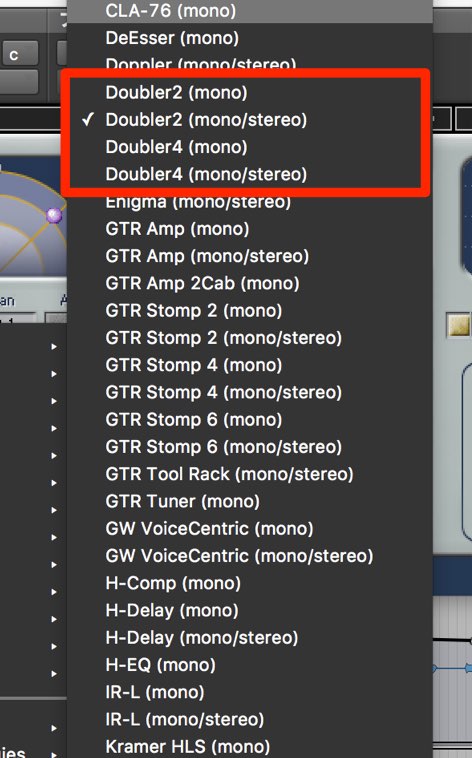
First, consider the versions labeled “2” or “4”.
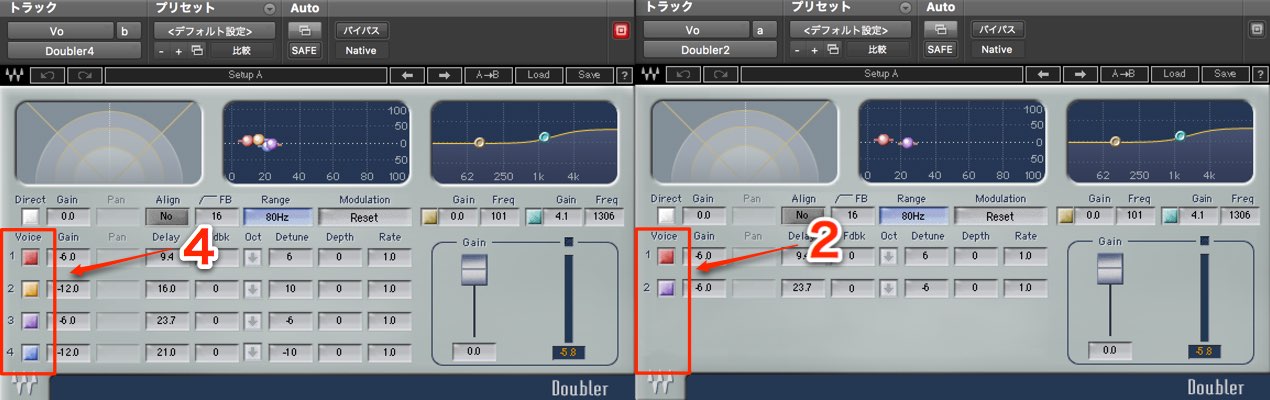
These indicate how many voices can be layered onto the track.
More voices make a thicker sound, but can also blur its definition.
Choose according to whether you want the track to blend into the backing or sound tight.
Also note the “mono/stereo” mode.
This appears for mono tracks, such as the vocal track in this example.
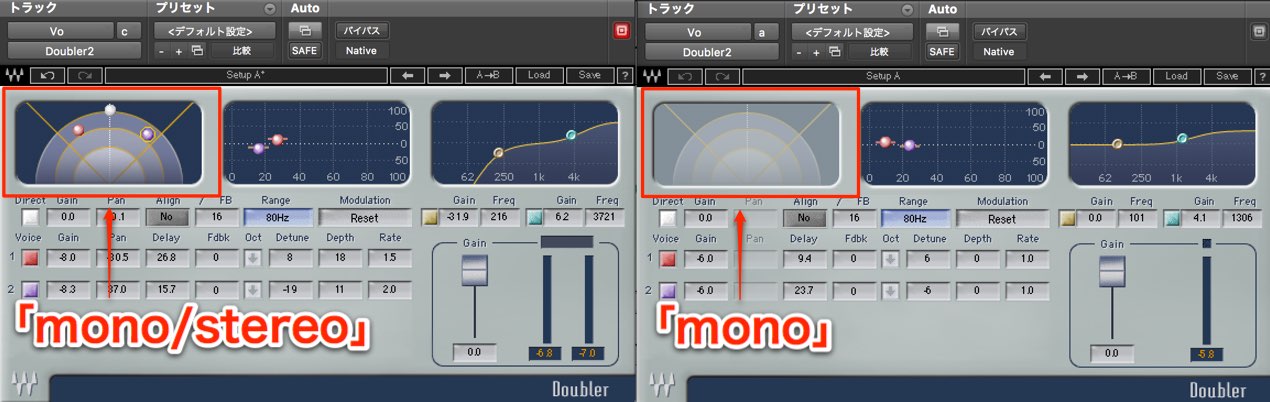
Selecting mono/stereo makes the signal stereo from Doubler onward.
You can adjust the pan position of the layered sounds, called Voices,
to create a wide image.
In mono mode, all Voices share the same position,
producing a tight, energetic sound.
Note: In Cubase, inserting mono/stereo on a mono track does not make the processing stereo.
To apply a stereo effect to a mono source, place the audio on a stereo track
or route it through a stereo group channel.
Then insert the stereo version of Doubler.
Video Highlights: Doubler Parameters
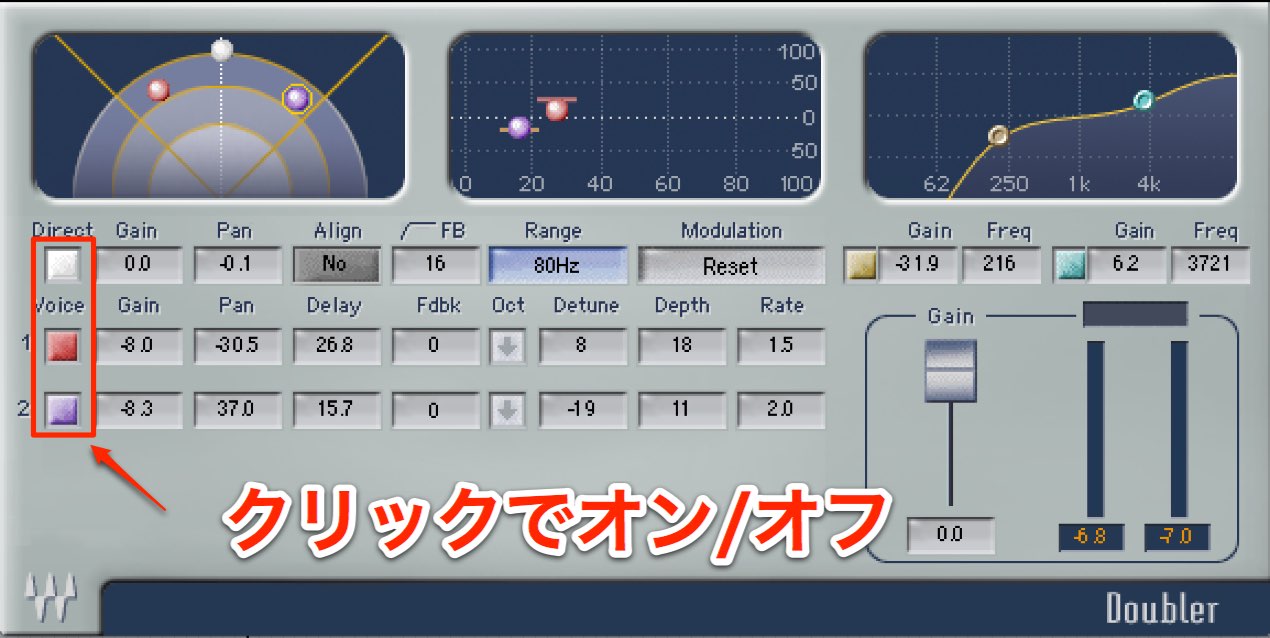
Click the colored buttons at the left to turn Direct (the original sound) and each Voice
on or off independently.
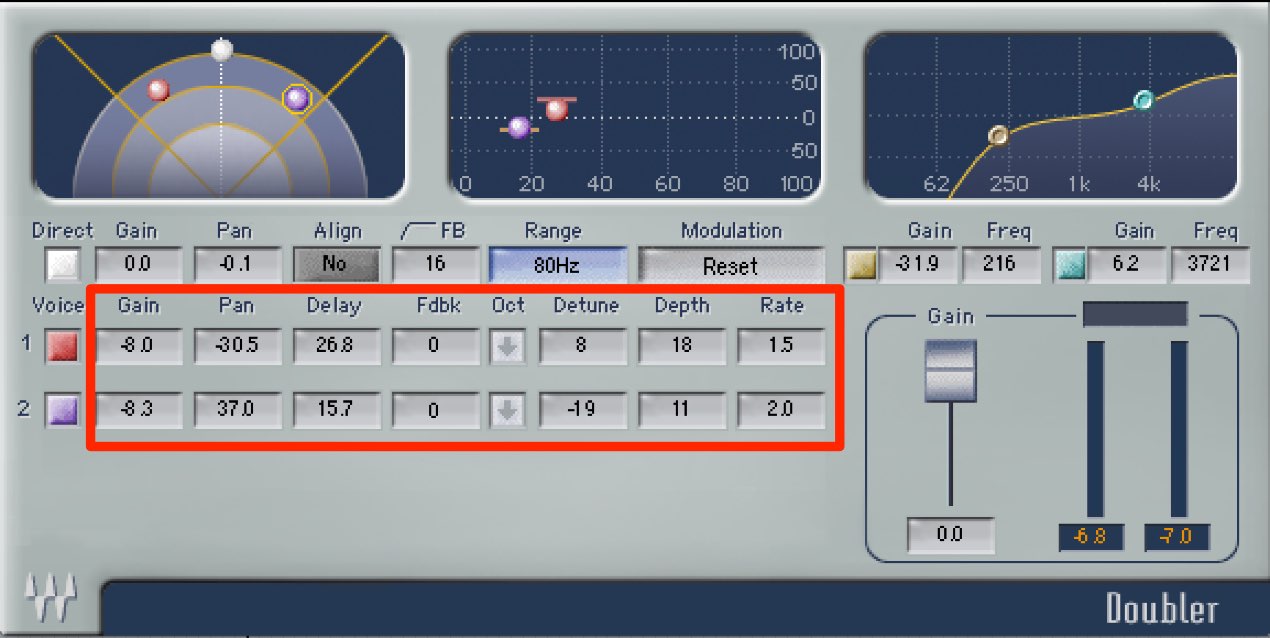
For each Voice, you can adjust the parameters
to choose how it differs from the Direct signal.
- Gain: Controls volume.
Balance Direct and each Voice. - Pan: Sets the left/right position.
Use it to adjust the width of the image. - Delay: Delays the sound in milliseconds.
Too much delay creates an echo effect.
For doubling, keep the value relatively low. - Fdbk: Sets the feedback ratio for repeated Voices, affecting how many times they repeat.
Set it to 0 for a typical doubling effect. - Oct: Lowers the Voice by one octave.
This can be used to thicken the sound, for example. - Detune: Changes the pitch of the sound,
letting you control the character of the doubling effect.
It is adjustable in cents (100 cents equals one semitone), but
large values can produce dissonance, so use care. - Depth and Rate: Add pitch modulation.
Depth sets the amount of pitch variation; Rate sets its speed.
A subtle setting can create a chorus-like effect.
Frequently Asked Questions
Q1. What is the difference between mono and mono/stereo modes in Waves Doubler?
Stereo processing lets you pan Voices individually for a wide image. Mono places all Voices at the same position for a tight, energetic sound. In Cubase, inserting a stereo version on a mono track does not produce stereo processing; use a stereo track or route to a stereo group.
Q2. What settings are recommended for a doubling effect?
As a starting point, keep Delay low and set Fdbk (feedback) to 0. Excessive Delay creates an echo rather than a doubling effect. Subtle pitch changes with Detune can make the doubling sound more natural.
Q3. What tracks besides vocals can use Doubler?
It can be used on almost any track, including synthesizers, guitars and backing vocals. Choose the two- or four-voice version and adjust its parameters to suit the instrument and application.
NEW ARTICLES
Latest English Articles