Interview with Hideki Kenmochi, the Creator of VOCALOID
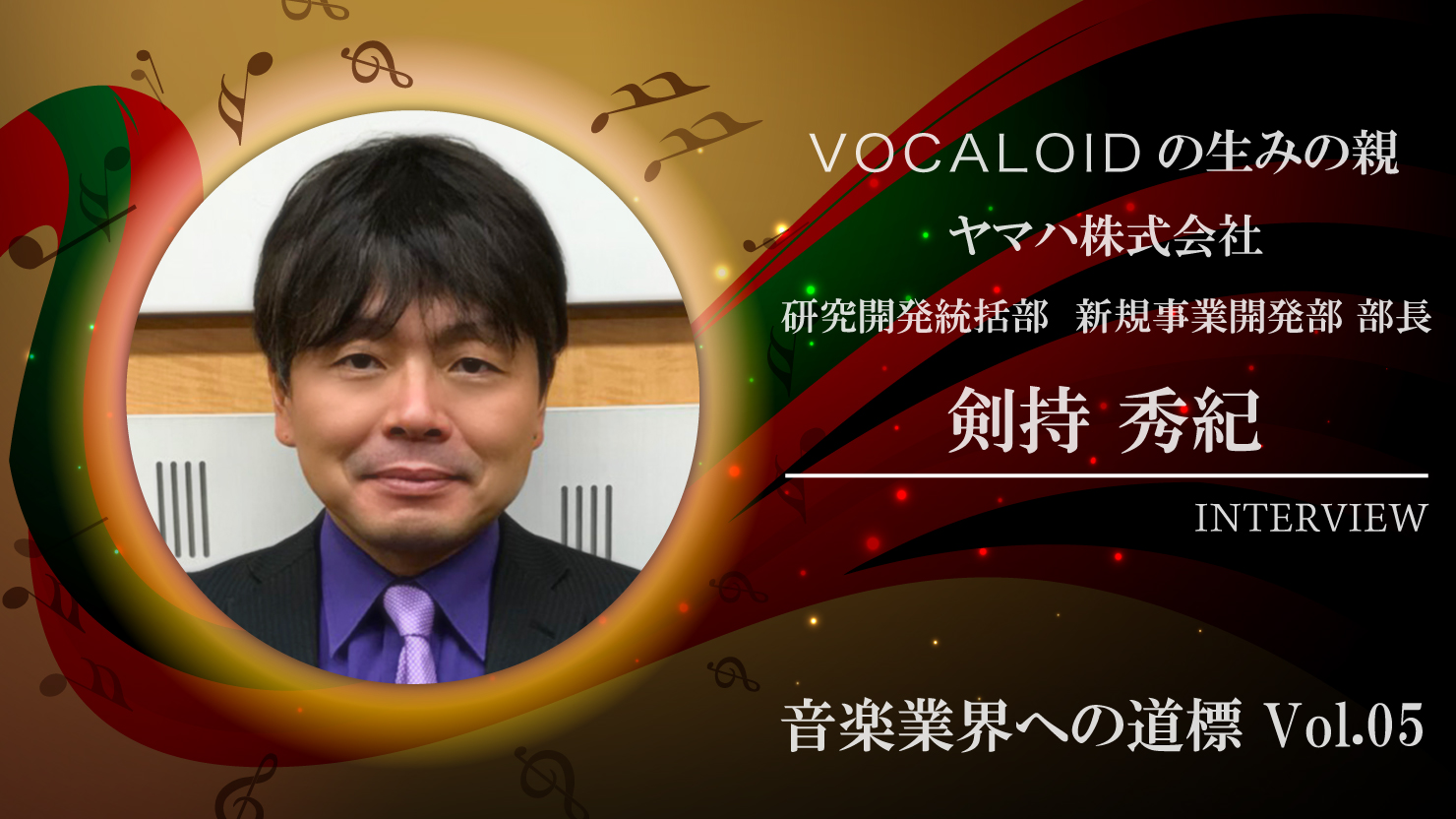
For the fifth installment of Pathways into the Music Industry, we interviewed Hideki Kenmochi, also known as the “father of VOCALOID.”
“VOCALOID™” is Yamaha Corporation’s singing-voice synthesis technology: enter lyrics and a melody, and a computer or smartphone can produce a singing performance. Crypton Future Media released Hatsune Miku, which uses this technology, in 2007, sparking a VOCALOID boom across Japan. Many creators known as “Vocaloid producers” began making music with the technology. VOCALOID has since become a culture in its own right and continues to evolve. In this interview, Kenmochi shares his journey, from the story behind VOCALOID’s creation to a new project he was working on at the time.
— You worked on VOCALOID at Yamaha and are known as its father. What originally led you to join Yamaha?
Hideki Kenmochi (hereafter Kenmochi:) I took piano lessons from childhood, and our piano at home was made by Yamaha. At university I played violin in the school orchestra and had long wanted to work in music. I also studied radio waves, specifically signal processing, in an electrical and electronic engineering laboratory. Since my home prefecture, Shizuoka, is also where Yamaha is headquartered, I thought, “This is the place for me!” and joined in 1993.
— Did you ever want to work as a performer?
Kenmochi: No. At university I was surrounded by many people who were vastly better than me, and I came to understand my own limits. I never really considered performing as a career.
— What did you work on when you first joined Yamaha?
Kenmochi: I researched active noise control, which reduces noise by adding sound in the opposite phase. Today noise cancellation is used in familiar products such as earphones and headphones, but my research was about controlling noise in large spaces.
— How did you move from that to developing VOCALOID?
Kenmochi: Before working on VOCALOID, I was seconded to a company called L&H Japan in 1996 at my supervisor’s invitation. It was a joint venture funded by Yamaha, another company, and Lernout & Hauspie, a Belgium-based company with speech synthesis and recognition technology. After the secondment I traveled back and forth between Japan and Belgium.
— So that is where you researched speech synthesis?
Kenmochi: Yes, although the research then was not about singing. It involved recognizing and reading text aloud. We analyzed recordings of a woman’s voice and studied many aspects of speech, such as how to achieve natural intonation and pronunciation and how consonants and vowels relate to each other.
— Even with the same reading, intonation changes depending on the surrounding words, doesn’t it?
Kenmochi: For example, the Japanese word “onsei” (voice) has an accent on the o. But in “onsei gosei” (voice synthesis), the accent moves to “go” and the “o” becomes flat. I studied rules like these and implemented them in the system. As a result, I became quite familiar with Japanese accent and pronunciation.
— That sounds like painstaking work.
Kenmochi: I also gained expertise in speech through a range of research and development, including looking at waveforms and spectrograms. The joint venture ended after about three years, and I returned to Yamaha in 1999.
— How did VOCALOID research and development begin at Yamaha?
Kenmochi: Singing-synthesis software and systems existed before VOCALOID, but none could practically be used for music production at the consumer level. So, to create higher-quality, more practical software, we started a joint development project with Pompeu Fabra University in Spain in March 2000.
At the time, it was called the “Daisy Project” within the company. The name paid tribute to “Daisy Bell,” the song sung in 1961 by an IBM 7094 at Bell Labs, the first computer to sing.
First computer to sing – Daisy Bell
— Were there particular difficulties during research and development?
Kenmochi: At the beginning, vowels were relatively easy to reproduce, but consonants were much more difficult. Deciding on the input interface was also hard. Pursuing ease of use—such as pronunciation parameters and making lyrics easy to enter—required a different set of skills.
Development continued, and the product was announced in 2003. In 2004, the first VOCALOID products, LEON and LOLA, were released by UK company ZERO-G.

— VOCALOID2 was announced in 2007, and Hatsune Miku, which used it, became an enormous hit. What contributed to that?
Kenmochi: I think there were many reasons. We renewed almost all the speech-synthesis technology and improved the quality, and the availability of Nico Nico Douga as a place to share work was another factor.
Our licensee Crypton Future Media also made the bold decision to give the software a character. I was surprised when I first heard the idea! (laughs)
These different elements came together and helped it spread.
— Where did the name “VOCALOID” come from?
Kenmochi: We had many candidates, and “VOCALOID” was initially the third choice. The first was “Synvocal,” a coined combination of “synthesis” and “vocal.” A trademark search found no issue in most countries, including Japan, the US and the UK, but a similar trademark existed in Belgium, so we could not use it. Another candidate was “Ebeamo,” derived from ebi-imo, a local taro specialty of the Iwata area of Shizuoka, where the research division is based. In the end, VOCALOID was the name that remained.“OID” means “something like,” so VOCALOID suggests “something like a vocal.” The name embodies the hope that it would increasingly approach a real vocal and that one day the “OID” could be removed, leaving a genuine “VOCAL.”My supervisor at the time named VOCALOID.
— By the time of this interview, more than 100,000 VOCALOID songs had been uploaded. Do you listen to them often yourself?
Kenmochi: I checked every day when it first came out. Eventually there were too many to hear them all, but I still look at the rankings occasionally. I often sing “World is Mine” at karaoke—in the original key, too. (laughs)
[Hatsune Miku] World is Mine / ryo (supercell)
— VOCALOID continues to evolve. Where do you think it will go from here?
Kenmochi: I have already left the VOCALOID project, so I cannot speak about specifics, but I think it will develop in two directions.
One is the pursuit of realism. There are already VOCALOID songs so high in quality that you might mistake them for human voices, but one direction is to make the voice even more human and closer to the real thing.
The other is what makes VOCALOID distinctive. Just as human voices have different characteristics, I think VOCALOID has voices that only VOCALOID can express. Both making it sound like a human and developing new forms of expression are important. The same can be said in many fields, including computer graphics.
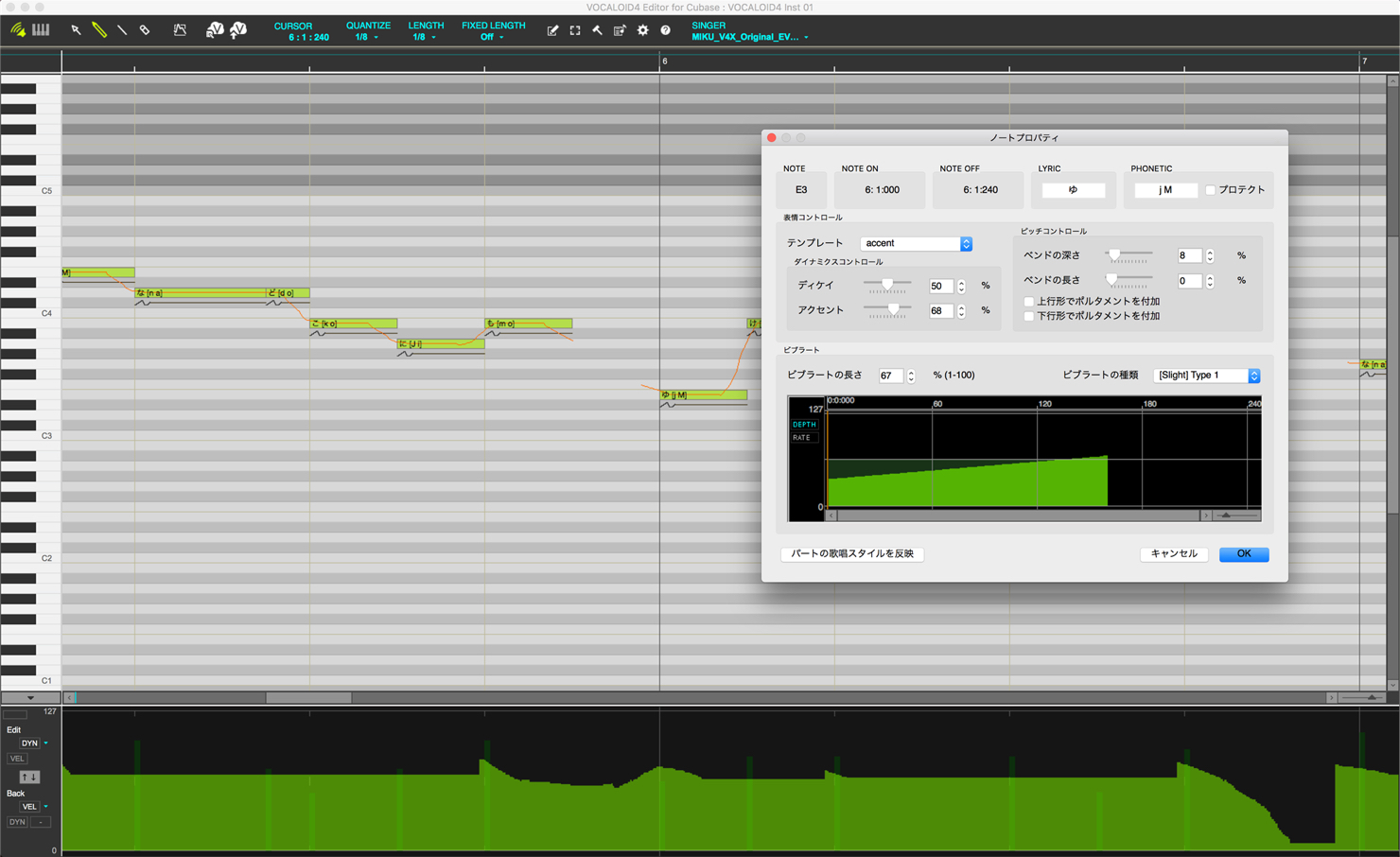
— That connects with your explanation of the name. You left the VOCALOID project in 2015; what work are you doing now?
Kenmochi: I launch and support new Yamaha businesses that go beyond existing musical-instrument and audio fields. One prominent example is Omotenashi Guide. It is a service for international visitors to Japan and people with hearing impairments. At supported locations such as airports, railways, and commercial facilities, a smartphone can listen to an announcement or narration and display corresponding text in various languages. At the time of this 2018 interview, full operation at various locations was scheduled to start that April.

Yamaha “Omotenashi Guide”
— Starting something new, as with VOCALOID, must take courage. What mindset do you bring to a challenge?
Kenmochi: As with VOCALOID, there are mentally difficult times when I worry whether it will succeed. But things will ultimately turn out as they will, and I believe that if you keep believing, a path will eventually open.
— What would you recommend to aspiring developers, students, or people embarking on a new challenge?
Kenmochi: Many things that seem unrelated at the time become useful at some point.I played in an orchestra as a student, and there I experienced how change over time is essential to music. That way of thinking greatly influenced VOCALOID research and development. I also read a lot as a student, including a period when I read almost nothing but law books. That later helped when I worked on contracts and trademarks, sometimes in unexpected ways. I encourage people to read widely, even outside their own specialty.
— So it is important to gain broad knowledge and experience rather than fixating on one field.
Kenmochi: I have had many different experiences, but I still face plenty of uncertainty. Of course, people worry about the future, but even so, I think it is important to keep picturing the future you want for yourself.
— Thank you very much.
Co-authored by Hideki Kenmochi and Ken Fujimoto
Article author

Interview and text: momo (Mamoru Tanoue)
Born in 1995, Tanoue is a Digital Performer user. After graduating from music school, he moved from Fukuoka to Tokyo to pursue composing.
In August 2017, he made his professional debut as a songwriter and arranger on Tsukikura’s “STARDUST.”
His motto is “songs that touch the heart,” and as a multi-instrumentalist he handles everything from lyrics, composition and arrangement to recording.
He also composes and arranges for the art unit Shiro.
Twitter ID: @momo_tanoue
Shiro website: https://www.shiro.space/
Shiro Twitter ID: @shiro_unit
NEW ARTICLES
Latest English Articles