
Munute combines an evolved AI mastering engine with human mastering engineers. In the update reviewed here, its AI processing delivered a more forceful, loudness-focused sound, with results available in seconds and an unlimited plan quoted at US$12 per month. Its AI-assisted Studio Mastering adds professional fine-tuning after the initial AI processing, offering high-quality results at a lower cost than the engineer-only service, with prices starting at US$50. A free trial let users compare mastering results and judge whether the service suited their music. This review describes our 2024 test; prices, free allowances, service availability, and turnaround times reflect that test period and are not current guarantees.
Testing the Updated AI Engine and a New Service with Human Engineering
AI has been adopted across many areas of music production in recent years. Mastering has been particularly active, with numerous AI services appearing.
Our earlier feature, “AI Services vs. a Mastering Engineer: A Blind Listening Comparison,” received a strong response. One of the services featured there, Munute, received a major update, so here we explain its new features and improved sound quality.

Munute Video Overview
An Evolved AI Mastering Engine
Munute's updated AI mastering engine represented a substantial step forward from the previous version, with more musical and precise processing.
To demonstrate how much the sound had changed, we prepared samples processed with the mastering services themselves.
Compare LANDR, one of the longest-established AI mastering services, with the earlier Munute and the updated Munute.
Compared with the previous version, the updated Munute's sound changed significantly, producing a more loudness-focused result with noticeably stronger compression.
In our comparison, LANDR sounded more restrained, while Munute seemed to aim for the powerful sound often sought in contemporary pop and EDM.
An AI mastering service's sonic tendencies depend heavily on the types and quantities of music used to train it.
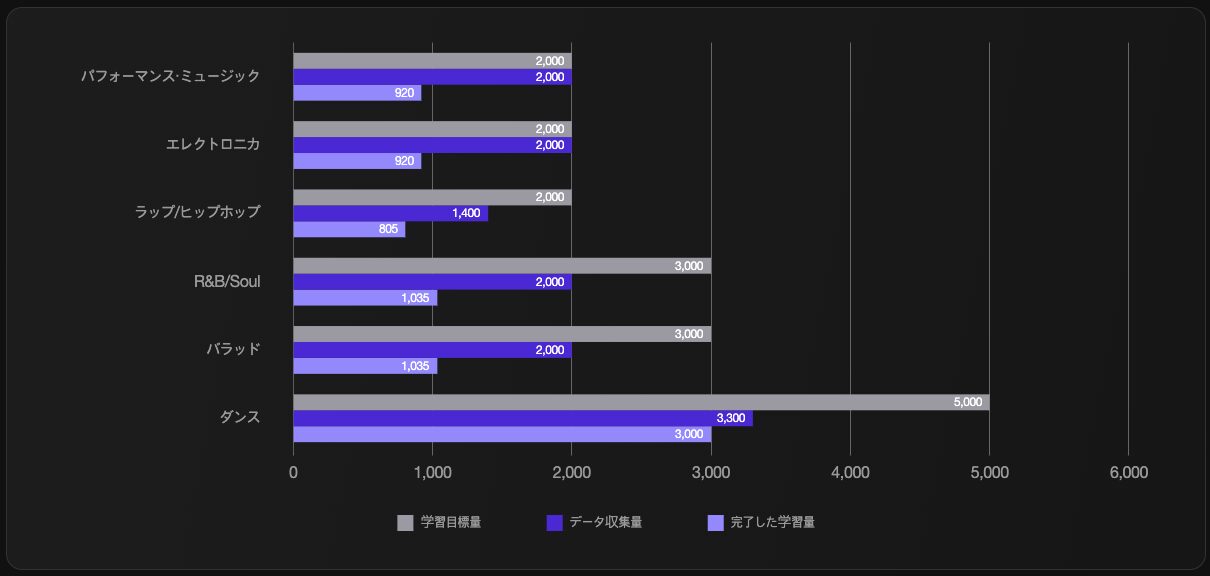
At the time of the review, Munute's website listed both the number of training tracks for each genre and its target training volumes, with dance music accounting for the largest training set.
We believe this had a significant influence on the results heard here.
Another difference from competing services was how quickly Munute completed processing after an upload.
Within just a few seconds of loading a track, we could preview and download the mastered result.
The trade-off was the absence of options for customizing the mastering settings: the result was left entirely to the AI.
Considering these characteristics, we found it very useful for affordably mastering tracks that suit Munute's sound, or for quickly raising the loudness of demo tracks.
Munute's low price was another attraction.
After registering an account, users could obtain:
- Free AI mastering for up to three tracks per account at the time of this review
- Unlimited AI mastering for US$12 per month at the time of this review
under the plans described here.
The free allowance made it possible to compare several mastered results before choosing one. Unlimited use on the monthly plan also allowed a workflow of repeatedly adjusting the mix and mastering it again.
Hybrid Mastering with AI and an Engineer
Next, let's examine Munute's standout feature: AI-assisted Studio Mastering.
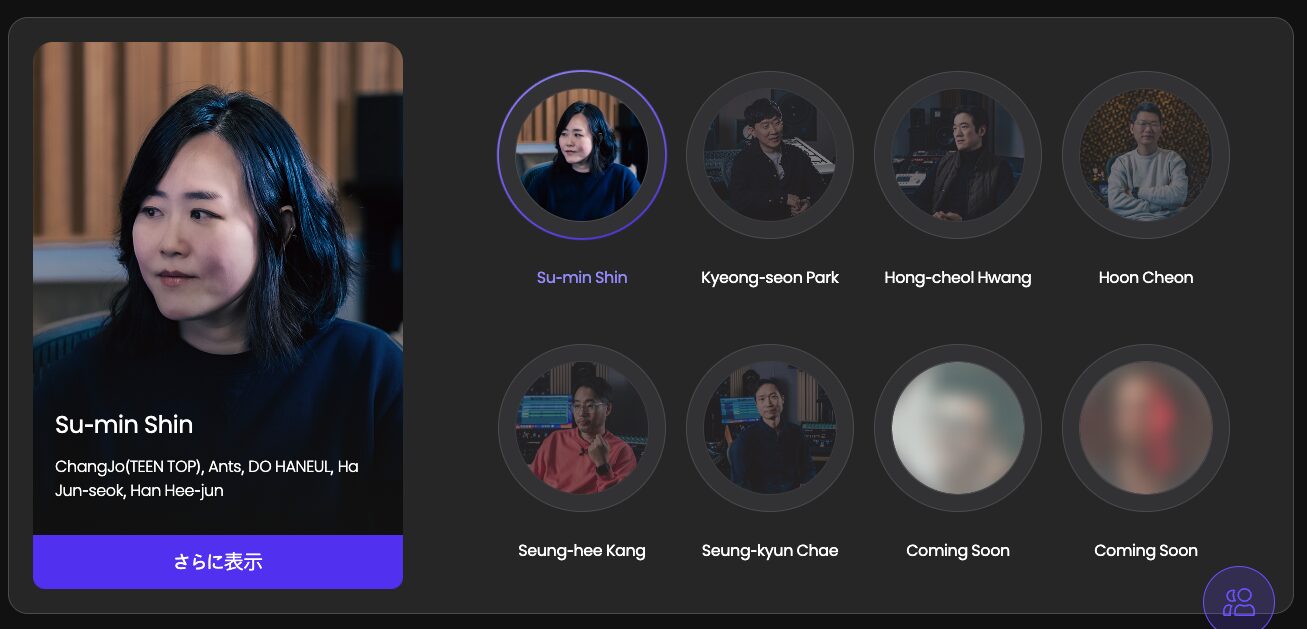
AI-assisted Studio Mastering was offered as a service in which leading Korean engineers fine-tuned the initial AI-processed master, combining rapid AI processing with an engineer's trained ears to produce high-quality mastering.
Munute offered two services involving real engineers: Studio Mastering, where an engineer mastered the track without AI, and AI-assisted Studio Mastering. The latter's most notable differences were its price and turnaround time.
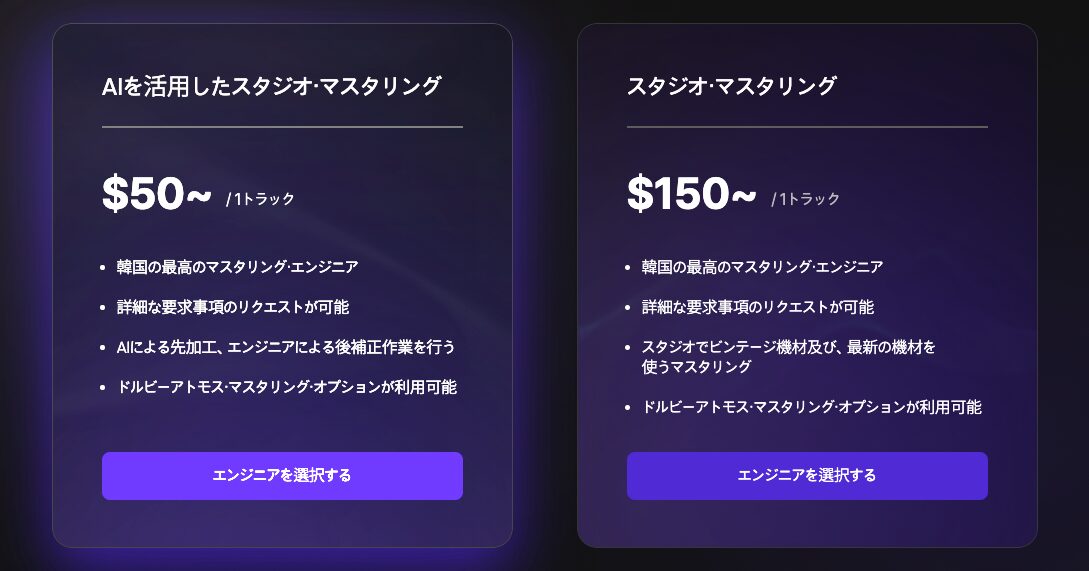
- Engineer-only Studio Mastering: from US$150 at the time of the review
- AI-assisted Studio Mastering: from US$50 at the time of the review
AI-assisted Studio Mastering therefore provided human engineering input at a lower price.
In our test, one track was completed in 36 hours—faster than we had expected. This was the observed turnaround for that order, not a guaranteed delivery time.
Let's compare the actual results.
We prepared versions mastered by AI alone, by AI-assisted Studio Mastering, and by LANDR.
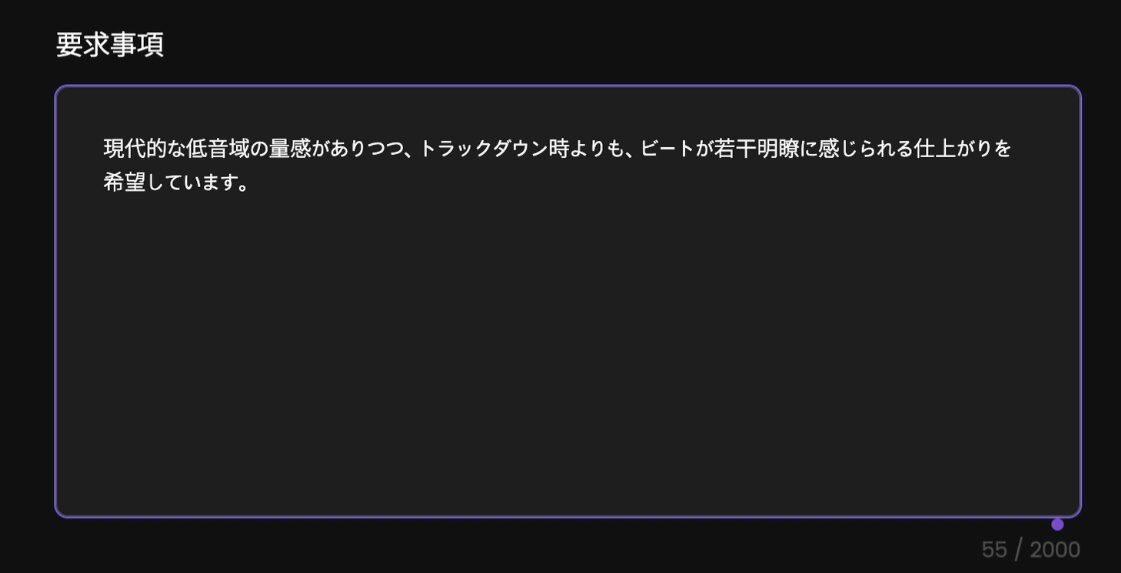
When ordering AI-assisted Studio Mastering, users could also send specific written requests, as shown in the screenshot.
We submitted our request in Japanese and felt that the finished master accurately reflected our intentions.
The ability to make requests in words—something AI-only mastering struggles to accommodate—was particularly appealing at this price.
What did you think?
From its updated AI engine to the hybrid approach combining AI and an engineer, Munute offered a broad range of choices that we felt would suit more users.
At the time of our test, simply registering an account provided a free trial. If you are interested, check the service's current availability and terms before trying it.
Thank you for reading!
Frequently Asked Questions
Q1. What did Munute's free plan include?
At the time of our 2024 review, registered users could master up to three tracks per account for free. This allowed them to compare several mastered results and assess whether the service suited their music. Check the current terms before relying on that allowance.
Q2. How did AI-assisted Studio Mastering differ from engineer-only mastering?
The prices quoted in the review started at US$50 for AI-assisted Studio Mastering and US$150 for engineer-only mastering. The hybrid service added an engineer's fine-tuning to the initial AI result, balancing price and quality.
Q3. What genres did Munute's mastering suit?
Dance music accounted for the largest training set reported at the time. In our listening comparison, the results seemed particularly suited to genres seeking a modern, powerful sound, such as pop and EDM. Suitability still depends on the individual mix.
Q4. How long did mastering take?
AI mastering completed in a few seconds in our test. Our AI-assisted Studio Mastering order took 36 hours. The latter is an observed example, not a guaranteed turnaround.
Q5. Could users send specific requests for AI-assisted Studio Mastering?
Yes. Written requests could be submitted with the order. In our test, a request written in Japanese was reflected in the result. Being able to explain the desired sound in words was a major strength; this observation does not establish a current language-support guarantee.
NEW ARTICLES
Latest English Articles






































































