
A clear EDM low end starts with more than EQ and effects. This article introduces three practical ways to improve the relationship between kick and bass: choosing sounds that work together, removing unnecessary sub-bass, and adjusting programmed note lengths. Try these techniques to make your track feel more cohesive and improve its groove. The results depend on the sounds and arrangement, so judge each change in context.
Low-End Techniques
In episode 9 of EDM Recipes, we explore simple techniques for the low end.
They are quick to put into practice, so try them in your own productions.
Techniques for a Clearer Low End
- 1STEP 1 — Choose Sounds That Work Together
- 2STEP 2 — Remove Unnecessary Low Frequencies
- 3STEP 3 — Adjust Note Lengths
First, listen to the sound before and after applying the techniques.
Original loop
Loop with the techniques applied
In this example, the untreated sounds feel disconnected, while the processed version has a more cohesive groove.
Let us work through the process step by step.
Choose Sounds That Work Together
Your choice of sounds can make a substantial difference to the groove of a track.
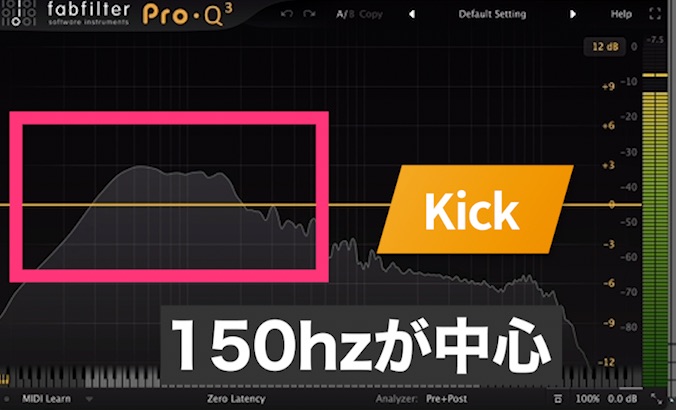
Here, we compare two kick drums.
First, listen to each sound and look at its spectrum.
Kick 1
Kick 1 and bass
▶ Spectrum of Kick 1
Kick 2
▶ Spectrum of Kick 2
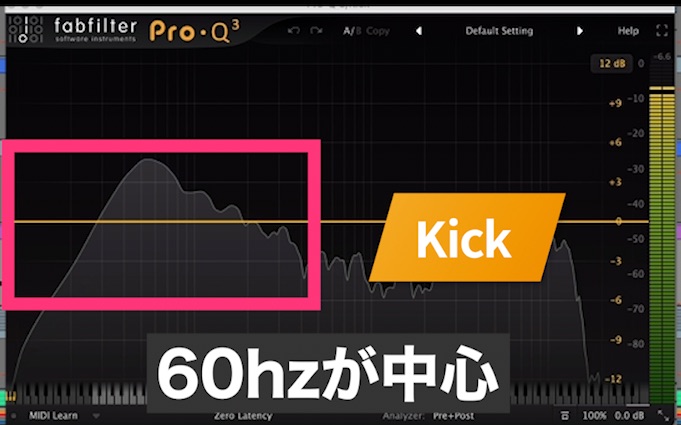
Kick 2 and bass
Next, listen to the bass and look at its spectrum.
Bass
▶ Bass Spectrum
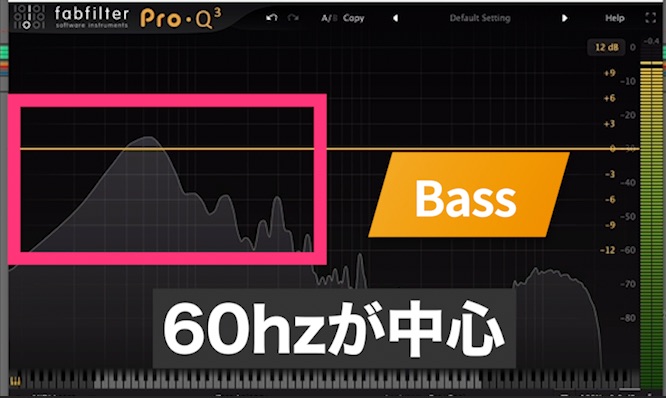
In this example, Kick 2 and the bass occupy a similar frequency range. This particular combination of sounds produces a more cohesive groove. That is a result to assess in context, not a rule that overlapping low frequencies always work well together.
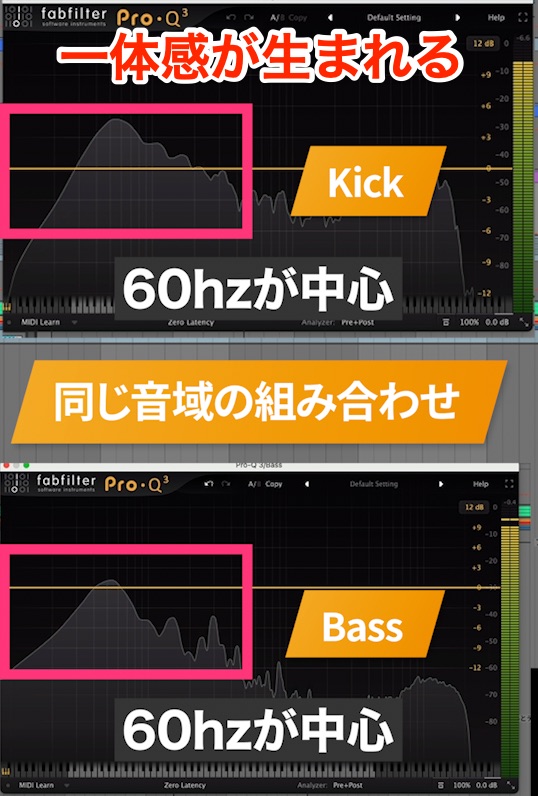
As this comparison shows, sound selection has a strong influence on how cohesive the track feels.
It is easy to focus on MIDI programming and EQ, but trying different sound combinations first can improve the result before further processing.
Take time to experiment with a range of combinations.
Remove Unnecessary Low Frequencies
The next technique is removing low-frequency content that the sound does not need.
In this example, it helps the rhythm stand out and makes the low end sound clearer.
Depending on the genre and the source, a useful area to check is below 20 Hz. Remove it only if it is unnecessary; this is not a fixed cutoff for every sound.
▶ Cutting Unnecessary Low Frequencies
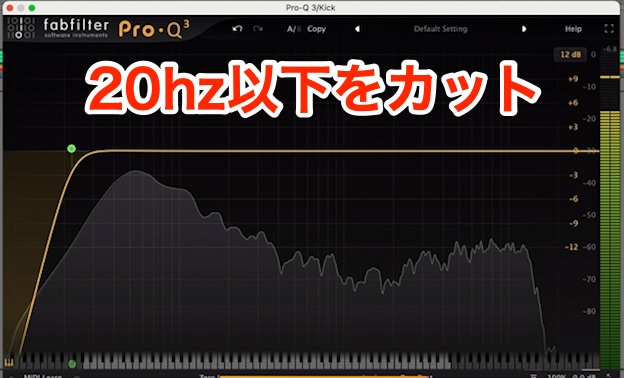
Before cutting low frequencies
After cutting low frequencies
Adjust Note Lengths
Next, try changing the lengths of your programmed notes.
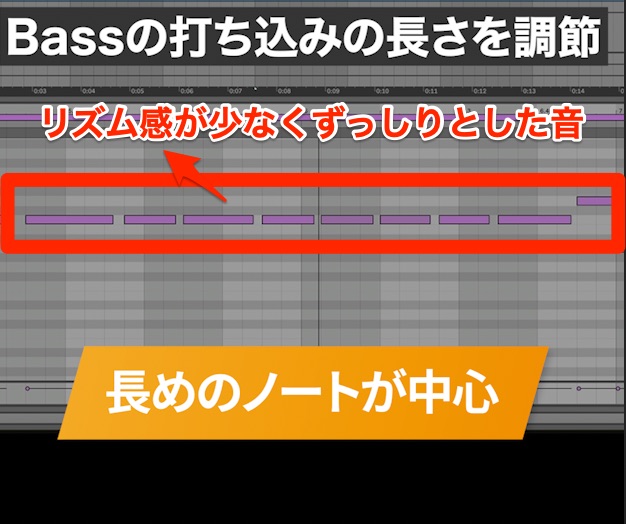
Here, we compare different bass-note lengths.
Bass pattern using mainly longer notes
Bass pattern using mainly shorter notes
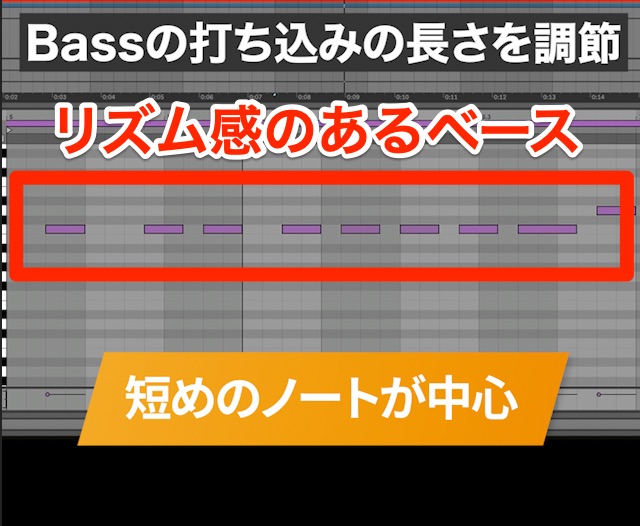
As these examples show, note length can greatly change the rhythmic feel of a sound.
Adjusting the lengths to suit the track can improve the result.
How did those examples sound?
The low end plays an especially important role in dance music.
Plug-ins and effects can help, but before reaching for them, examine each individual sound more closely. This can be a straightforward and effective way to improve your track.
Try these techniques in your own music and listen for a stronger, more coherent groove.
See you in the next EDM Recipe.
Frequently Asked Questions
Q1. Where should I start if the low end of my EDM track sounds unclear?
Start by checking how the kick and bass work together. In this article's example, the chosen sounds in a similar frequency range create a more unified groove. This does not mean that all overlapping sounds will blend well: compare combinations in context before moving on to EQ and effects.
Q2. What frequencies should I consider cutting from the low end?
The article suggests checking unnecessary content below 20 Hz, depending on the genre and source. This very low content can be difficult to hear and may consume headroom without helping the track. Cut only what is not needed, and compare the result by ear; a 20 Hz cut is not mandatory for every sound.
Q3. Why does changing bass-note length affect the groove?
Note length changes the timing of a sound's release and the space between notes. Shorter notes can create a tighter, more clipped rhythm, while longer notes can feel smoother and more connected. Adjust the lengths to suit the track and the instrument's envelope.
NEW ARTICLES
Latest English Articles



























































































