A countermelody is a secondary melodic line played alongside the main melody, adding color and depth to a song. This article explains four ways to make the parts work together: separating their registers, contrasting their rhythms, fitting the chord progression, and coordinating melodic movement. These approaches help keep the arrangement clear rather than cluttered. By getting comfortable with one idea at a time, beginners can develop their arranging skills and improve the overall quality of their productions.
Four Ways to Organize Your Countermelodies More Clearly
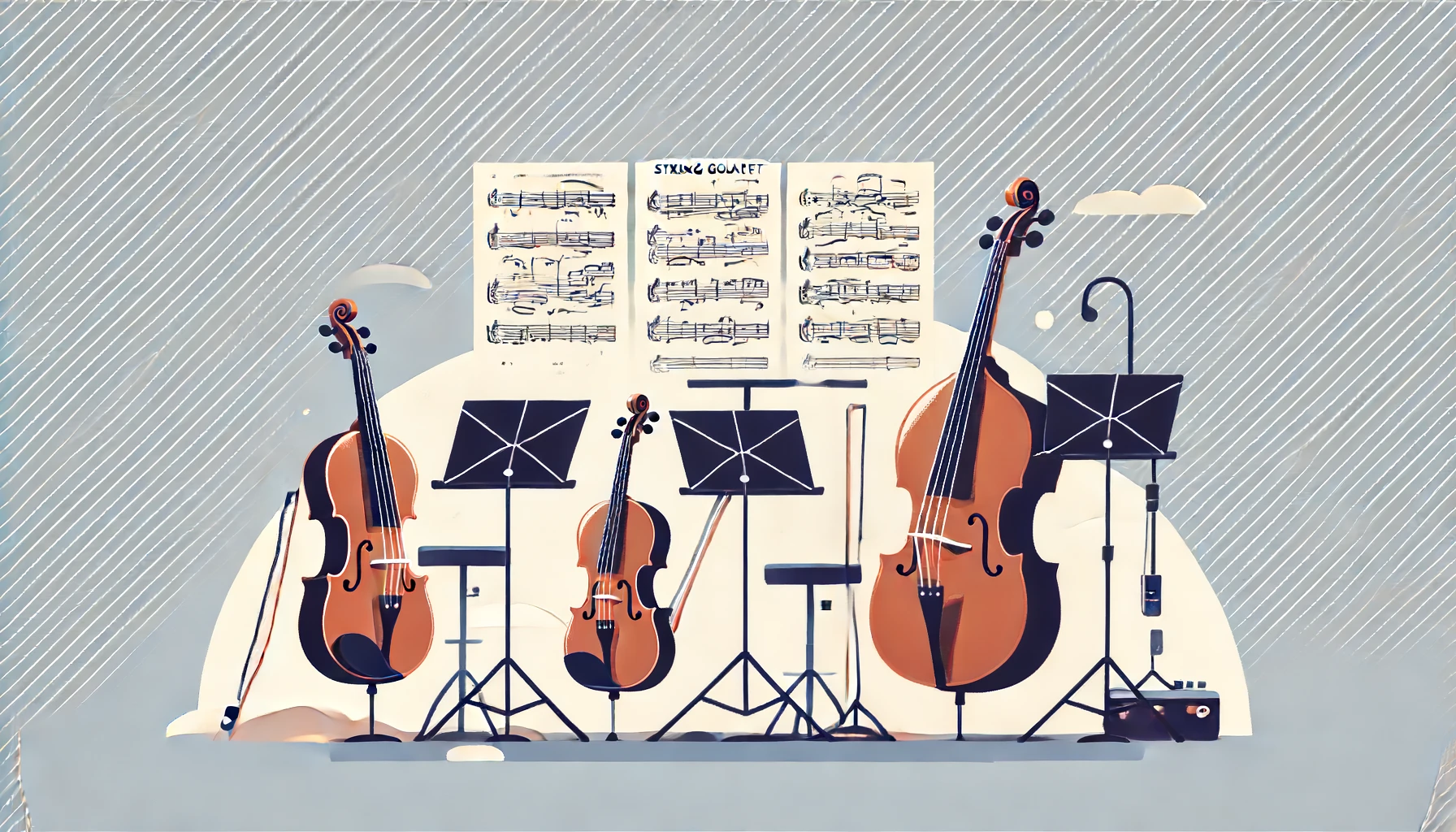
One important element for adding color to a song is the countermelody.
Depending on its role, it may also be described as a secondary melody, an obbligato, or another accompanying melodic line. It appears in many styles of music.
Let's explore four practical points for working with countermelodies.
Countermelodies That Bring Out a Song's Character: Video Tutorial
What Is a Countermelody?
First, let's review what a countermelody actually does.
Listen to this pop example using strings, one of the most familiar choices for a countermelody and the instrument used throughout this tutorial.
Pop example: string countermelody
Simply adding another melodic element like this can give the whole song more color and depth.
However, when several melodies play together, you need to manage them so they do not clash or make the arrangement muddy.
Here are several ways to combine two melodies while keeping them clear.
Tip 1. Separate Their Registers
Placing the main melody and countermelody in different registers helps prevent them from getting in each other's way and makes each easier to hear.
One of the simplest approaches is to keep the countermelody at least an octave away from the main melody.
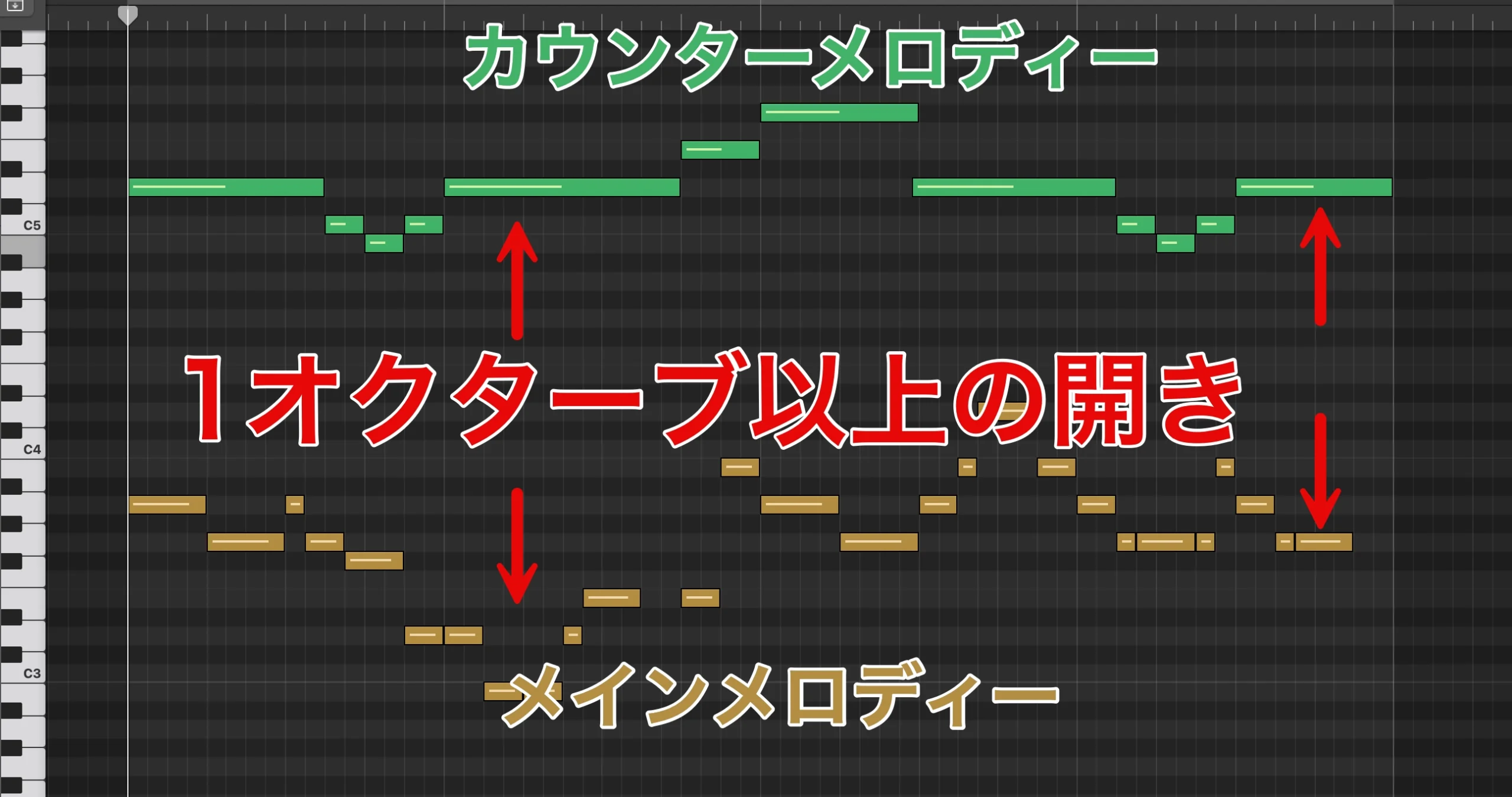
It can sit either above or below the main melody. Giving the lines plenty of space lets you write with a degree of freedom.
Example: separated registers
Working Within a Narrower Range
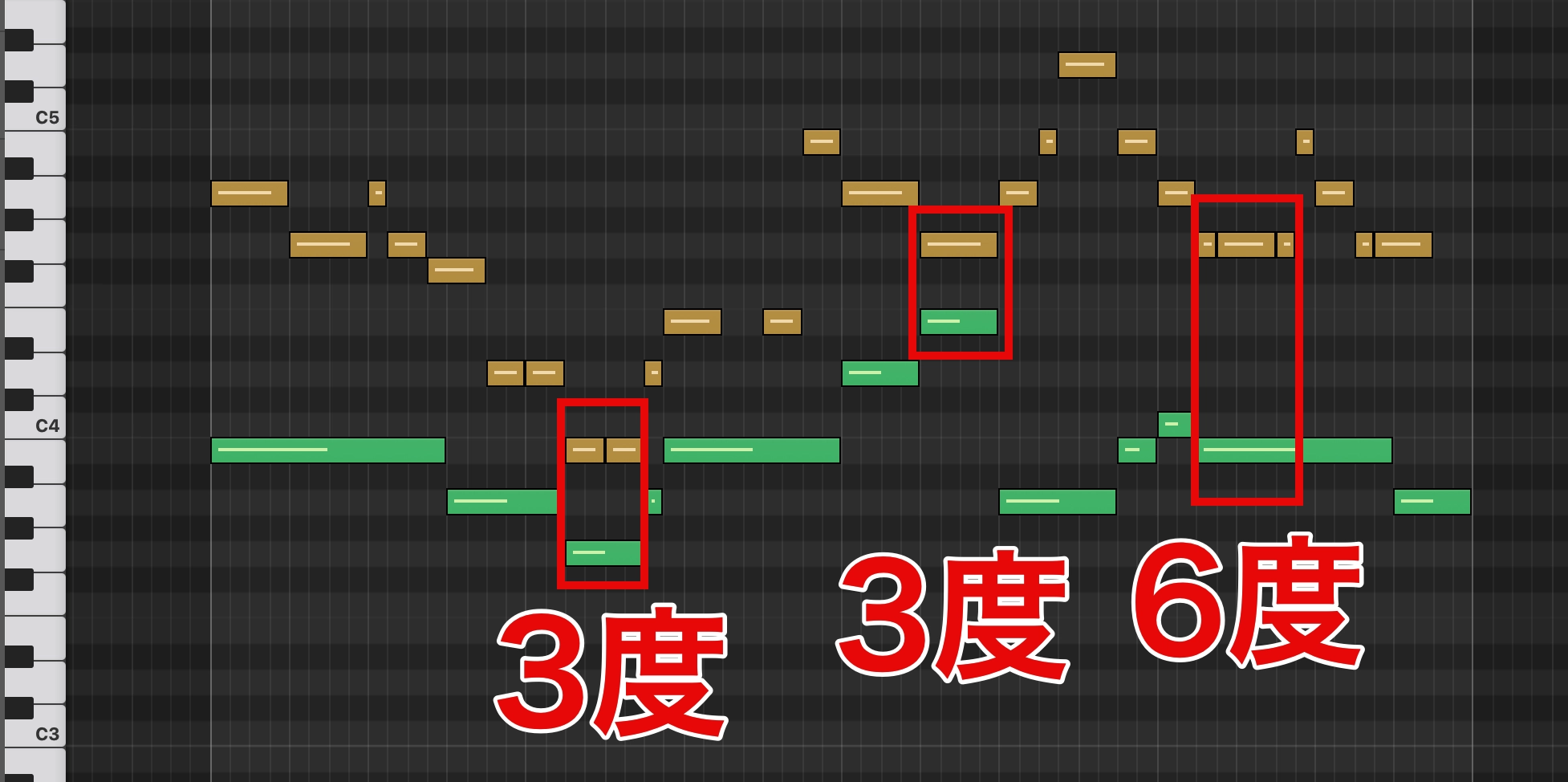
Writing the phrase becomes more challenging when the parts are closer together, but using intervals such as thirds and sixths can create a harmonized relationship and enrich the harmony.
Example: thirds and sixths
Tip 2. Create Rhythmic Contrast
Contrasting the rhythms of the main melody and countermelody is another important way to make the two lines feel organized.
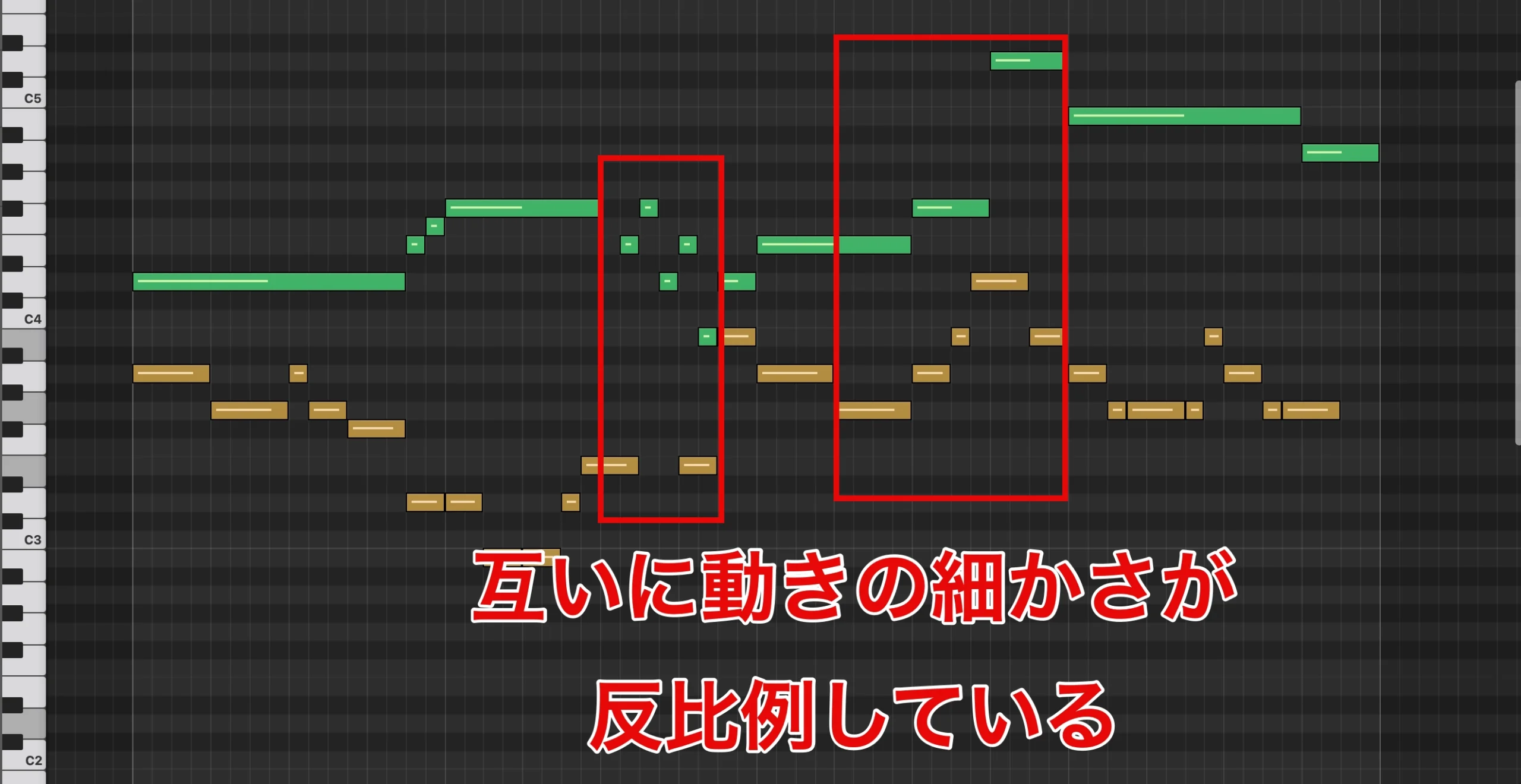
When the main melody is busy, let the countermelody move more slowly. Conversely, when the main melody rests or becomes less active, give the countermelody more movement. This helps the two lines avoid competing with each other.
Example: contrasting rhythms
Add Syncopation
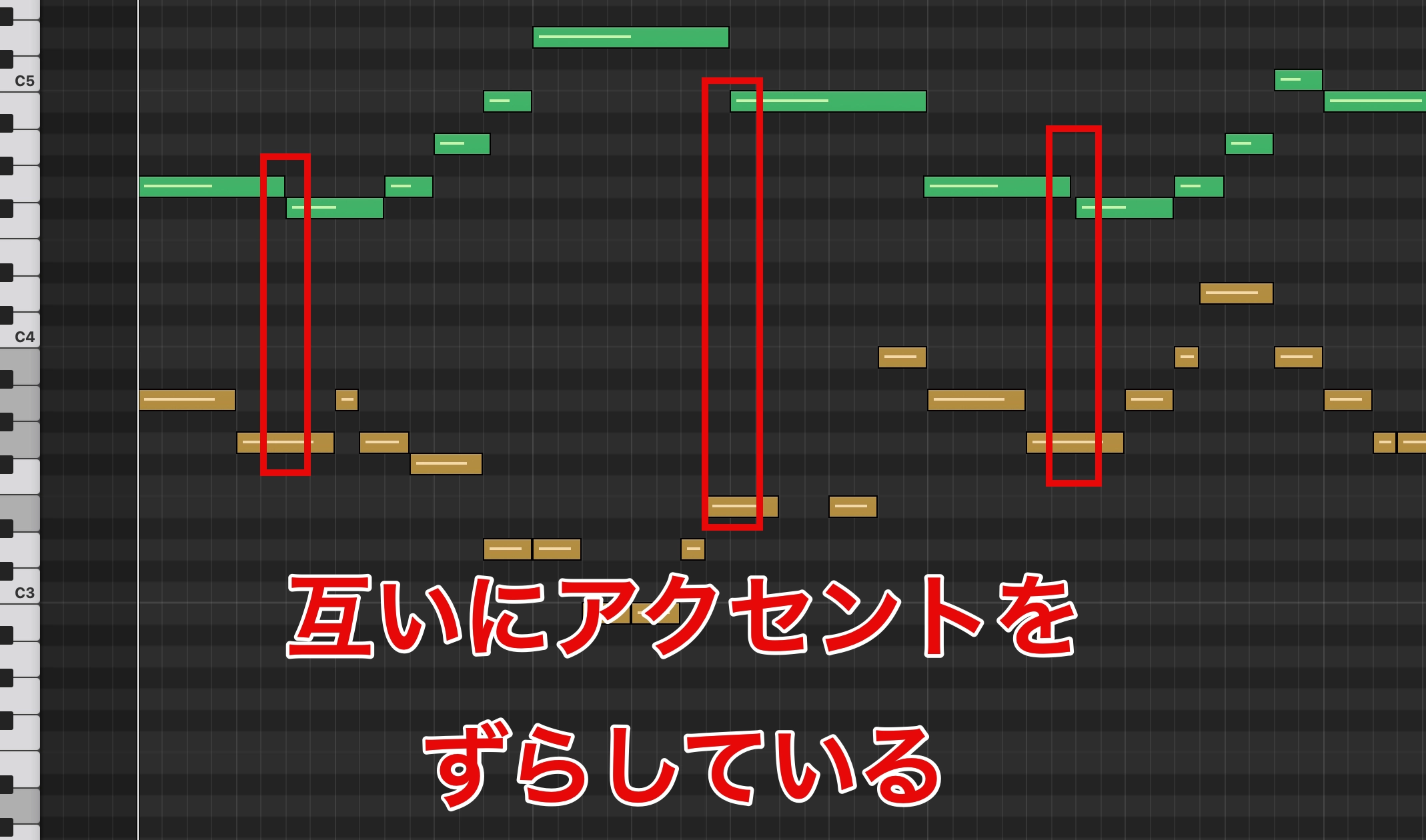
Using syncopation in one of the parts shifts its accents away from the other, giving each line greater independence.
Example: syncopation
Tip 3. Fit the Chord Progression
In popular music, melodies are often built largely around notes contained in the accompanying chords.
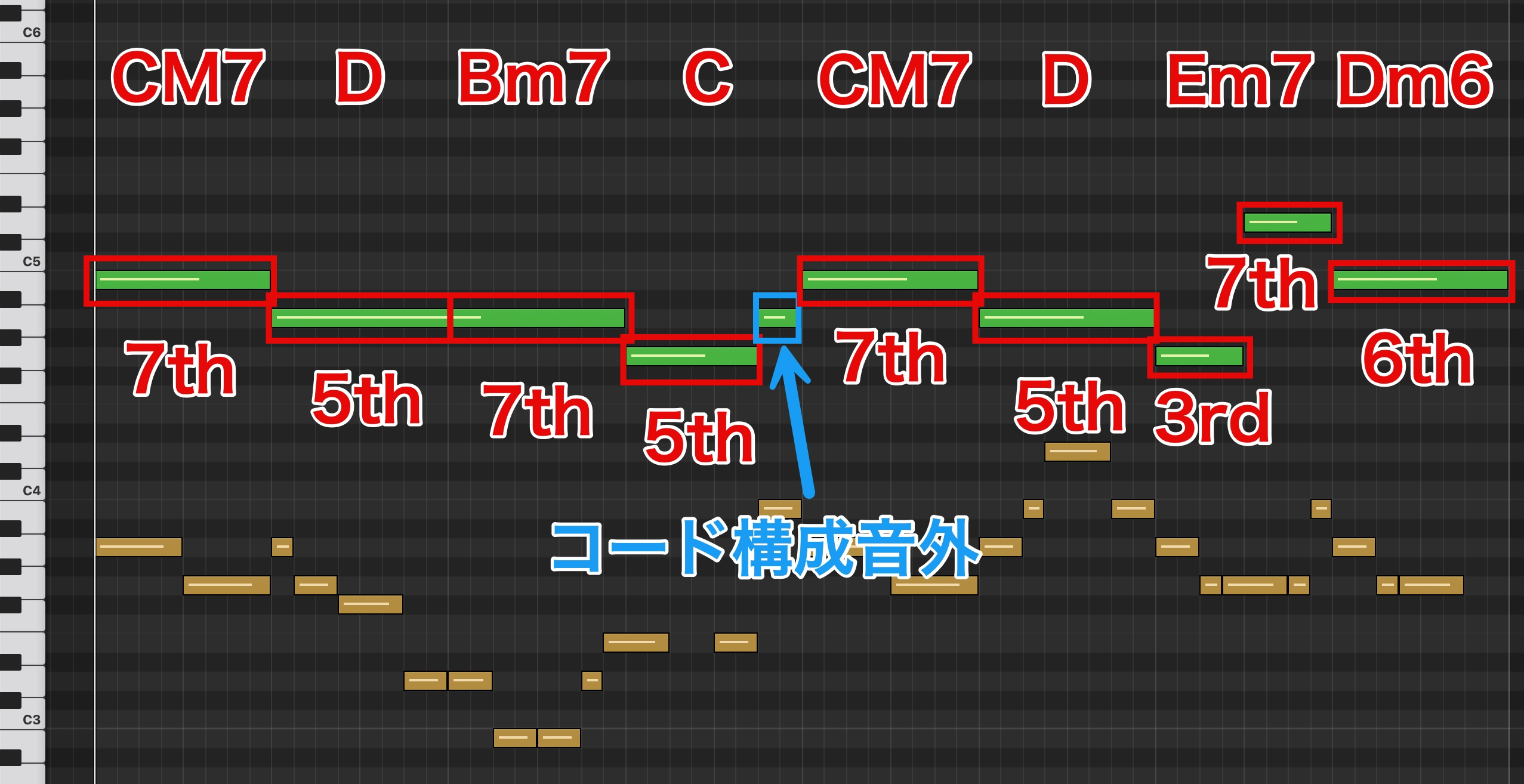
Chord tones sound stable over the accompaniment, so building the countermelody primarily from chord tones can reduce clashes with the main melody.
Example: chord-tone-based countermelody
Tip 4. Coordinate the Melodic Movement
When writing a longer countermelody, you do not always need to contrast the rhythms. At certain points, it is common to deliberately match the rhythm of the main melody.
When both lines play the same rhythm, pay attention to whether their pitches move in parallel or in contrary motion.
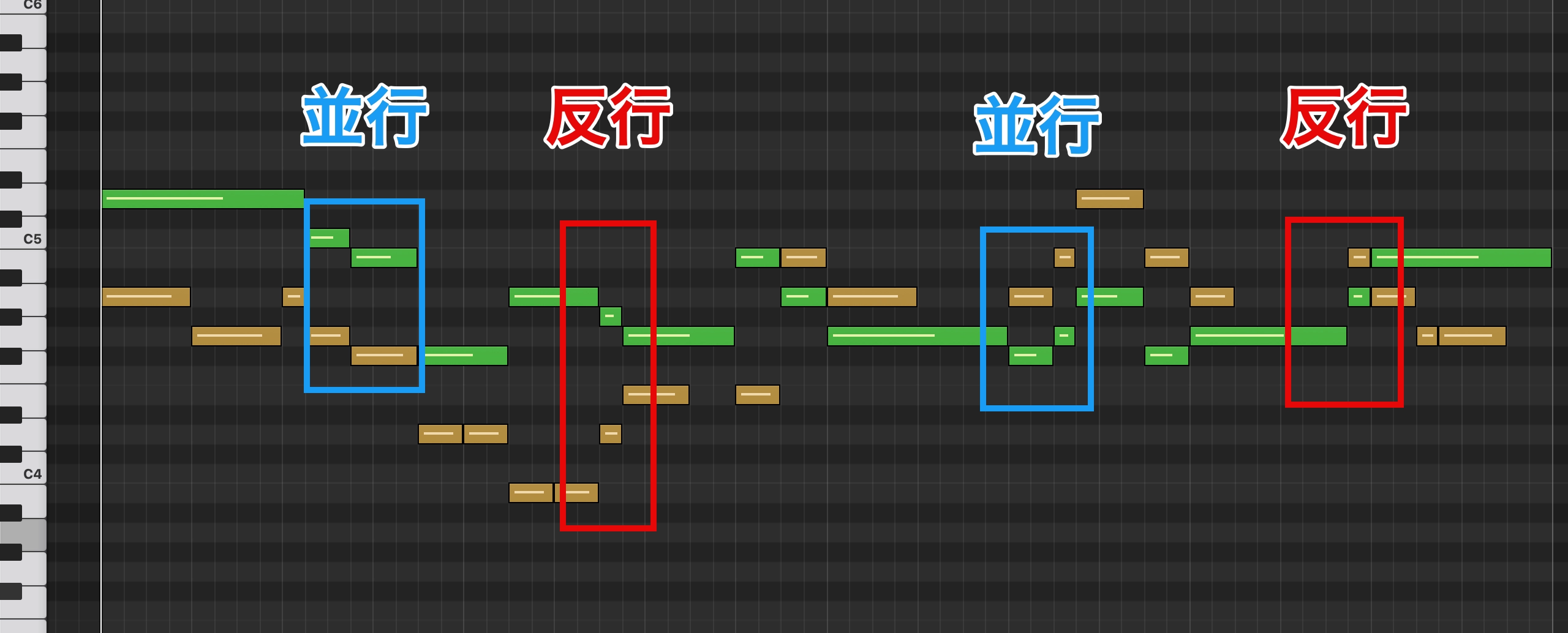
Parallel motion means the two lines move up or down together by the same interval, giving them a stronger sense of unity.
Contrary motion means the two lines move in opposite directions, regardless of the size of their individual intervals. This makes their differences more distinct and brings out the countermelody's independence.
Example: parallel and contrary motion
Vary the Rhythm and Phrasing
We have looked at several patterns. In actual arrangements, it is common to combine these approaches within a single countermelody to create variety.
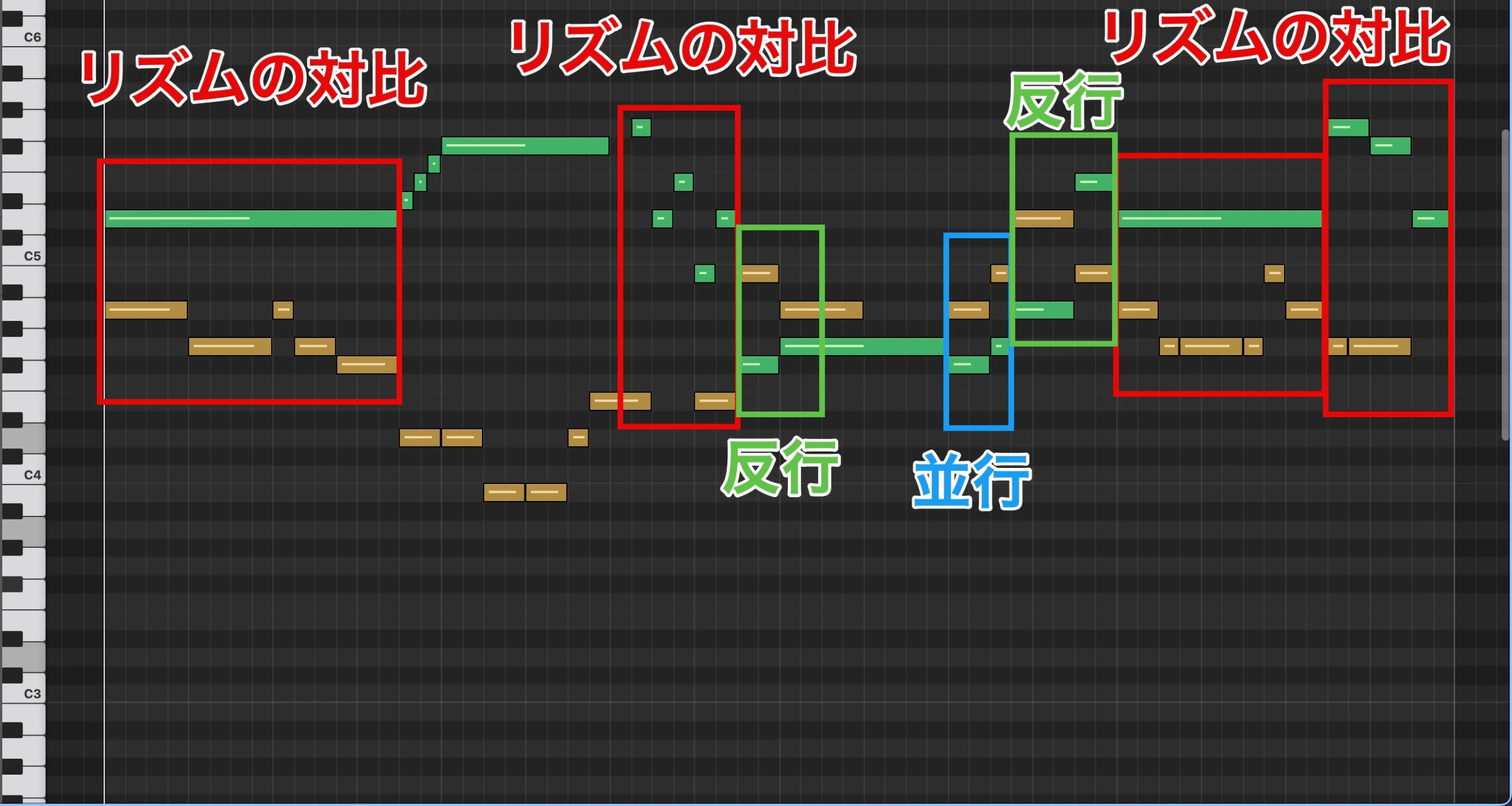
Example: varied rhythm and phrasing
Changing the type of movement within one countermelody can create a stronger sense of contrast and pacing.
Although the examples here use one part to carry the countermelody, you can also pass the phrase between different instruments or introduce it only in selected sections.
As with music production in general, it is important to keep a broad perspective and explore different possibilities.
What did you think?
We have kept these countermelody-writing tips simple so that beginners can try them. Even so, considering every point at once can be difficult when you are starting out.
Get comfortable with one idea at a time, then gradually bring the others into your productions.
Frequently Asked Questions
Q1. How far apart should the main melody and countermelody be?
A simple starting point is an octave or more. Closer intervals such as thirds and sixths can instead create a harmonized relationship and enrich the harmony. Adjust the spacing to suit the style and character of your song.
Q2. What should I watch for when both melodies use the same rhythm?
Pay attention to parallel and contrary motion. Parallel motion helps the lines feel unified, while contrary motion emphasizes their independence. Choose between them according to what you want the arrangement to express.
Q3. Do I need to think about all four points at once?
Start by getting comfortable with one at a time. Considering several points simultaneously can be difficult, so gradually bring familiar approaches into your work and build experience.
NEW ARTICLES
Latest English Articles