
Borrowing chords from a parallel minor key can add drama to music in a major key. This article uses a familiar video-game course-clear fanfare to explore harmony beyond a single set of diatonic chords. Moving between parallel major and minor can bring contrast and a satisfying sense of arrival, expanding your options for composition and arranging.
Parallel-key chords for dramatic musical effects
Diatonic chords are one of the essentials you encounter when studying chord theory.
This time, we will explore chords borrowed from the parallel key to create more dramatic progressions beyond the diatonic set.
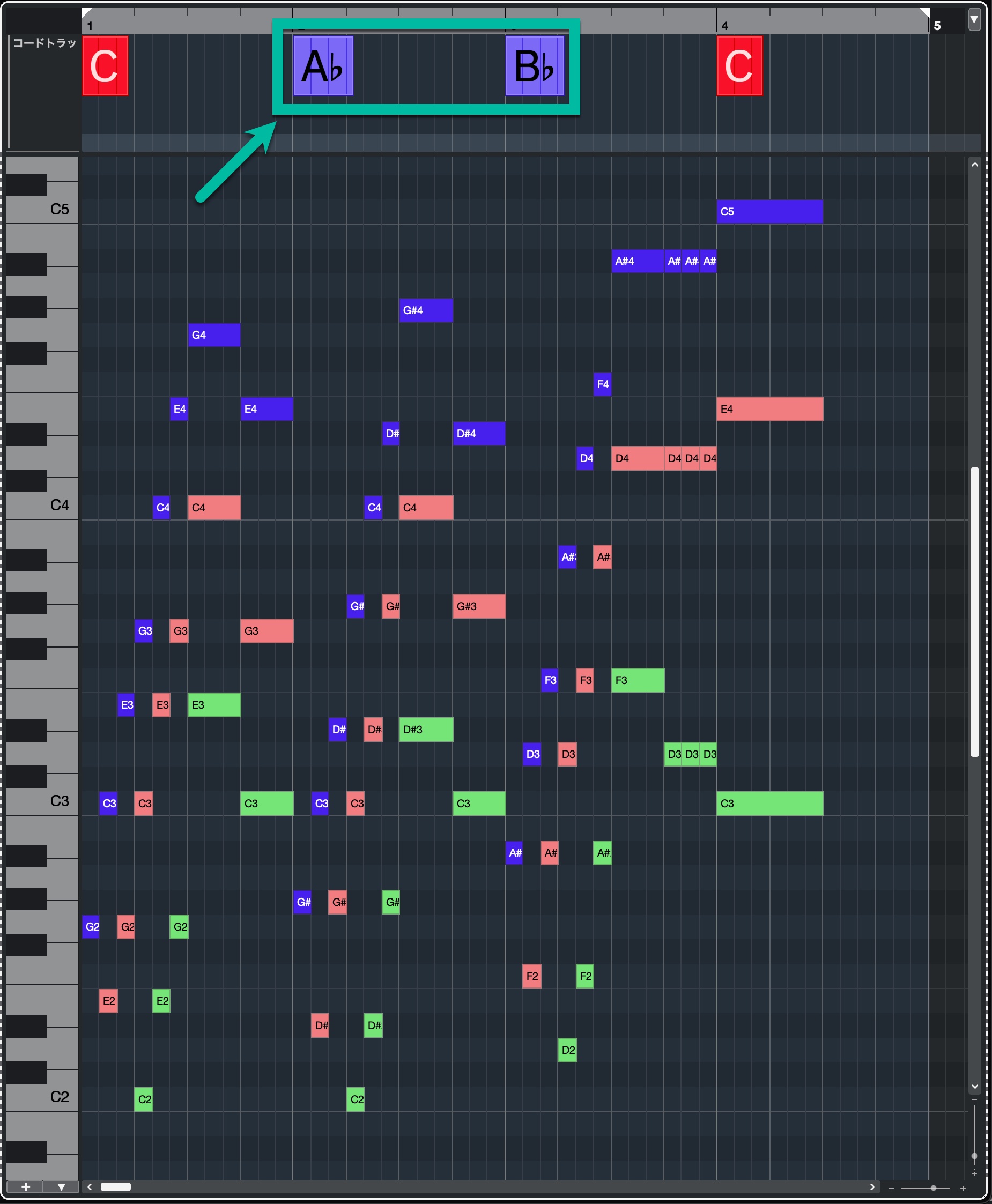
You may recognize this course-clear fanfare from a world-famous video game.
Example 1: Course-clear fanfare
It begins and ends on C major, and its overall key is C major.
Where do the two middle chords, which fall outside C major's diatonic set, A♭ and B♭, come from?
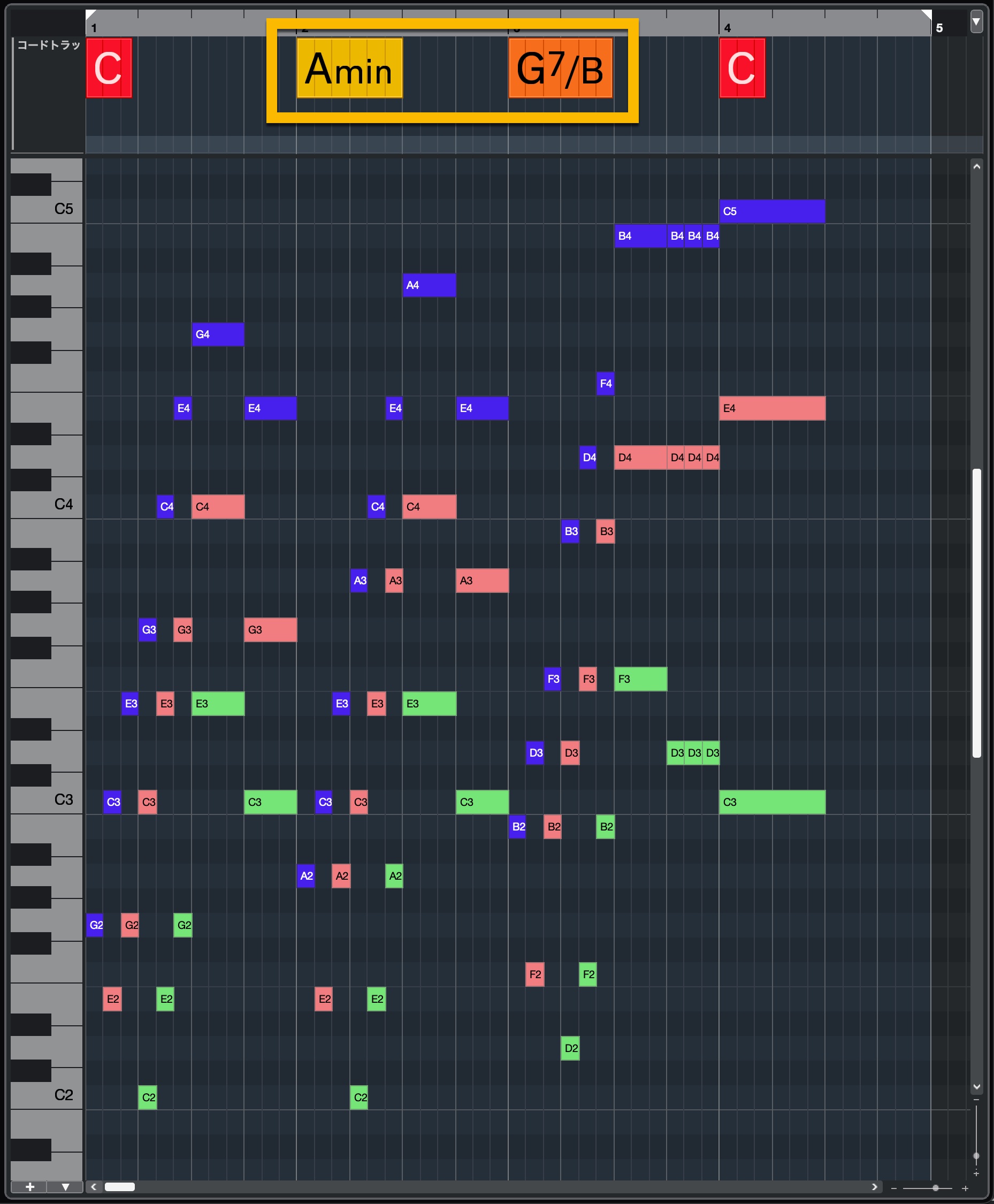
For comparison, replacing them with chords drawn from C major gives this progression: C → Am → G7/B → C.
Example 2: Diatonic alternative — C → Am → G7/B → C
There is nothing wrong with this version, but to the author it sounds conventional and makes a weaker impression.
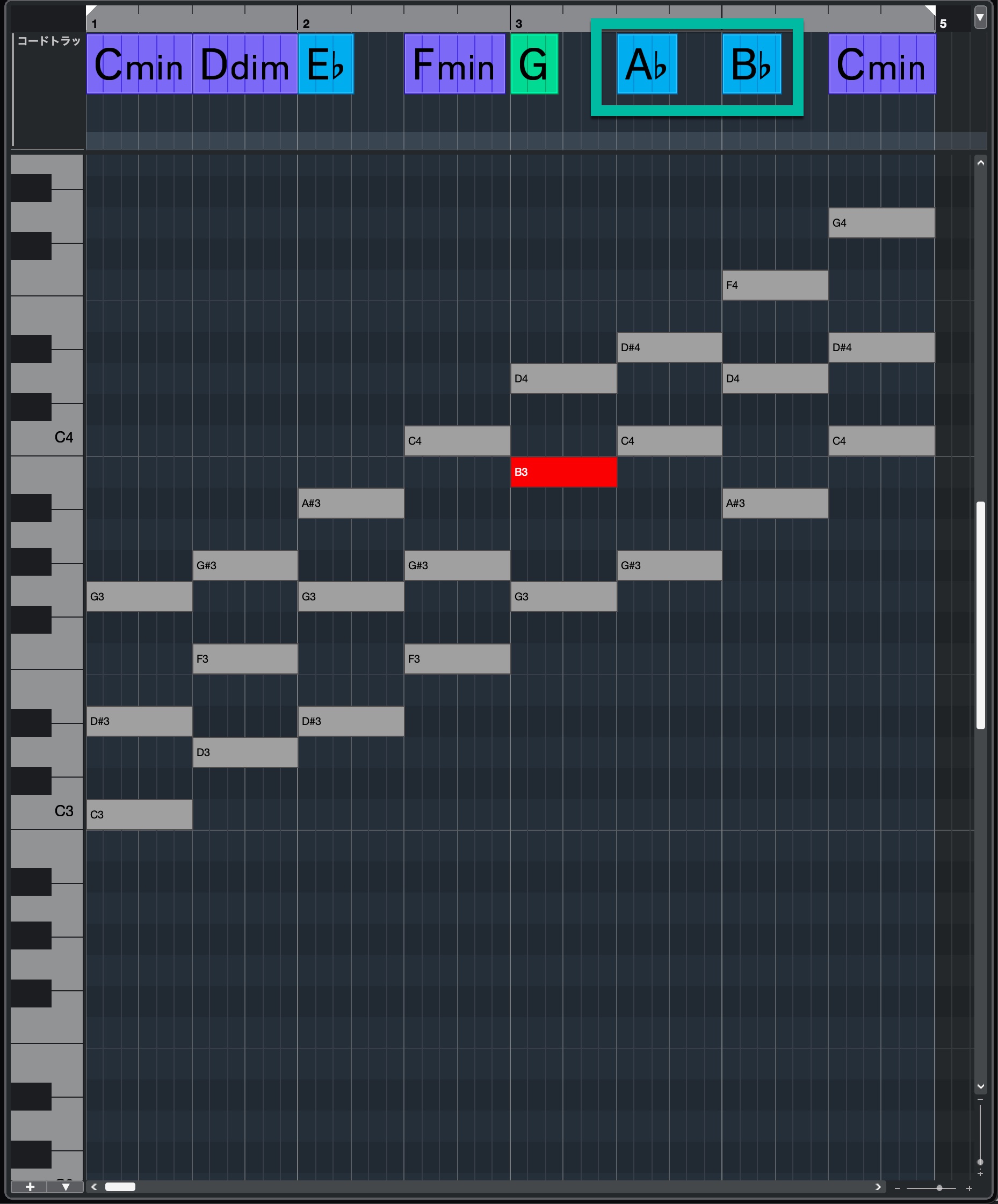
A♭ and B♭ are both diatonic chords in C natural minor.
The note B, the third of a G major chord, is found in C harmonic minor, whose raised seventh provides that major dominant chord.
Example 3: Minor-key harmony demonstration
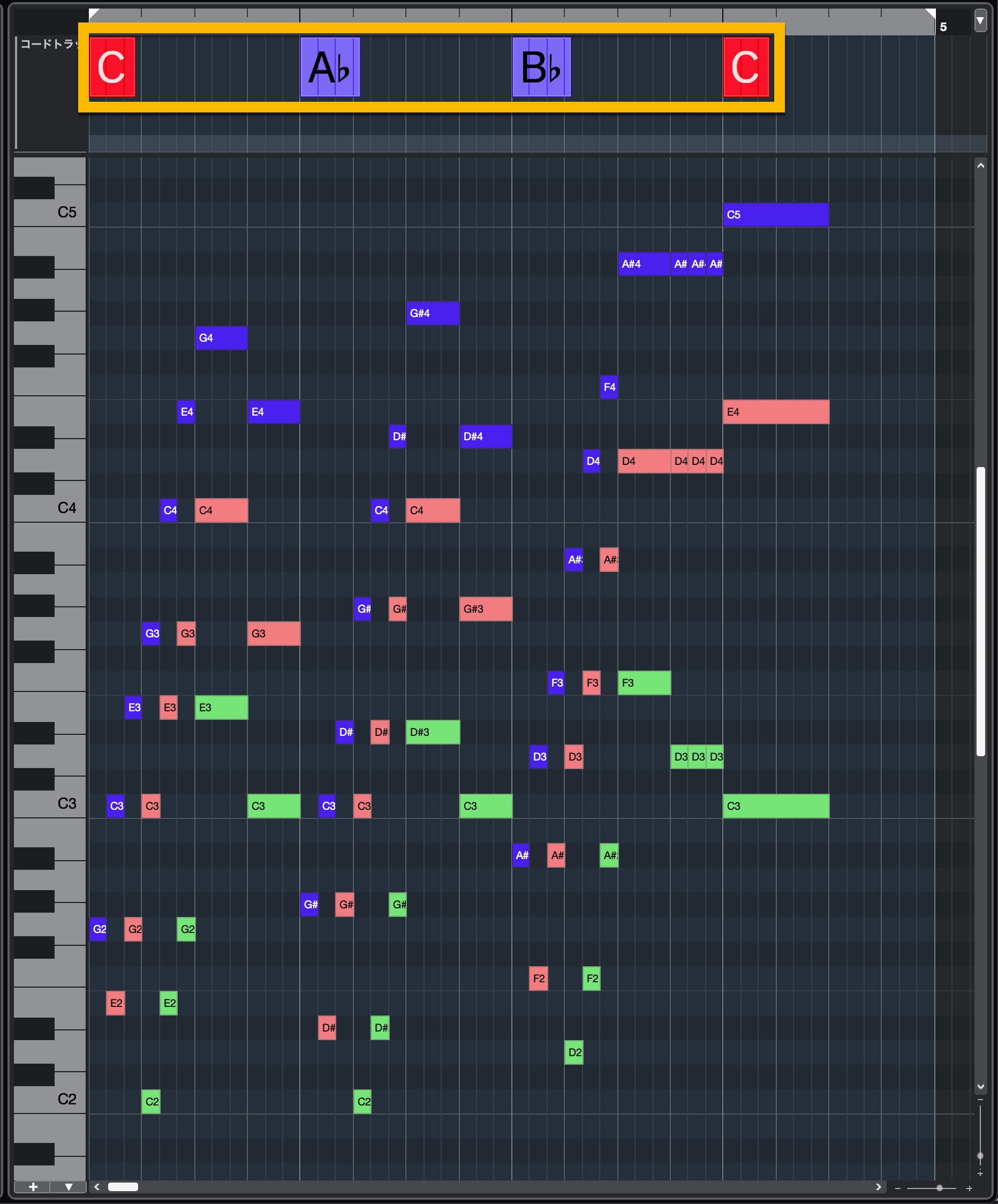
Example 4: Parallel-key harmony demonstration
Starting on C major, the progression moves forcefully through major chords available in C minor, then returns to C major.
All four chords are major chords.
Crossing between these parallel musical worlds produces a dramatic contrast and a satisfying sense of arrival.
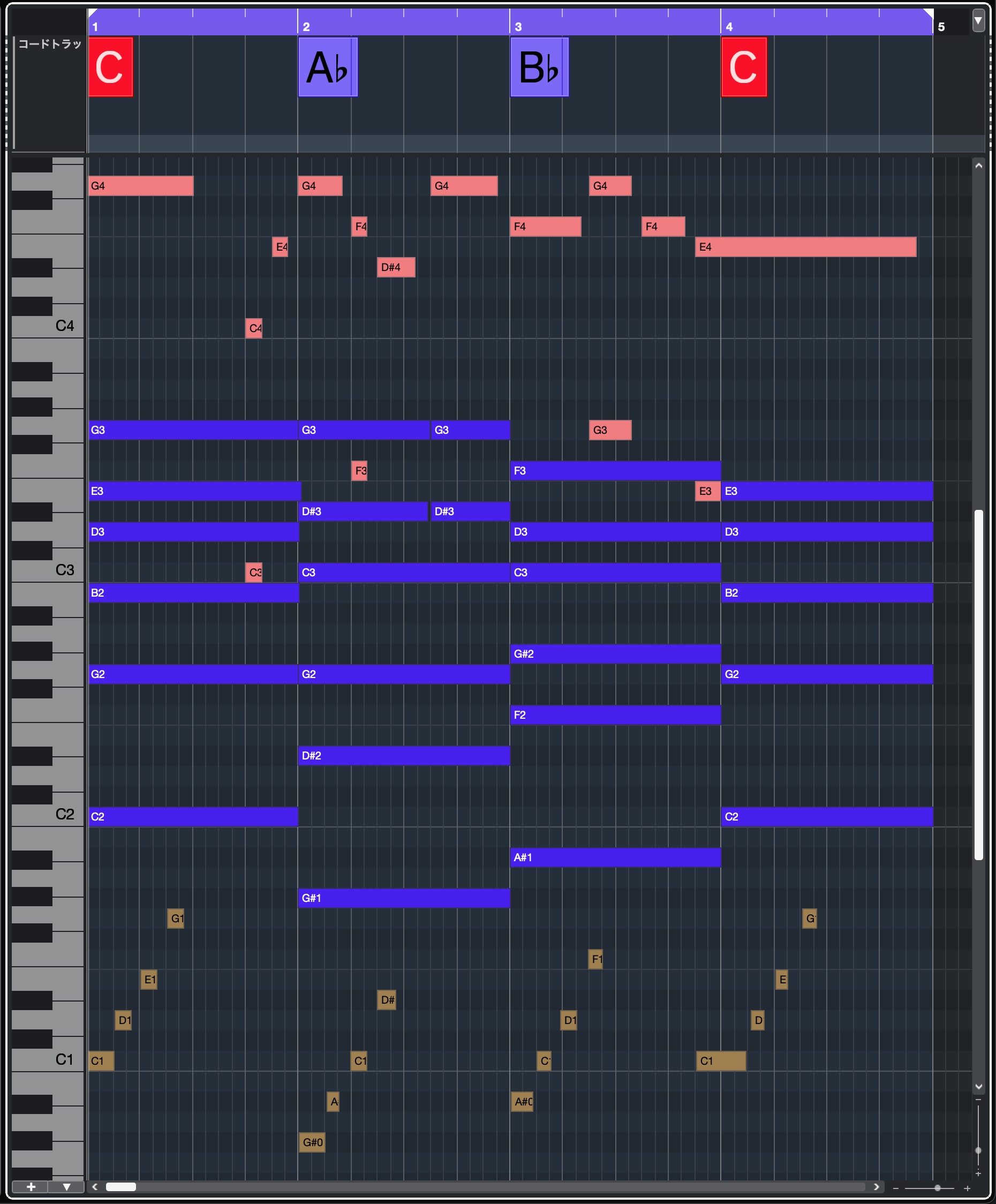
Example 5: Return to major — final demonstration
You can also view the passage as parallel movement of major chords. The C-to-A♭ relationship, in particular, can be understood as a chromatic-mediant relationship.
Deliberately borrowing between scales or modes is also known as modal interchange.
Using a minor subdominant chord borrowed from the parallel minor in a major key is another example of modal interchange in a broad sense.
Theory helps make sense of the sound and clears up the mystery.
Enjoy your musical explorations!
Frequently Asked Questions
Q1. What are diatonic chords?
Diatonic triads are built using only the notes of a scale. In C major, the seven triads are C, Dm, Em, F, G, Am and Bdim. They form a foundation for harmony within the key. The Japanese FAQ lists B♭dim; this is a typographical error, corrected here to Bdim.
Q2. Why can modal interchange sound dramatic?
Borrowing chords from a parallel key, such as C minor while in C major, creates contrasts between major and minor colors. This can add harmonic variety and tension, making a passage more memorable or dramatic.
Q3. Can beginners use modal interchange in their music?
Yes. Start by understanding the diatonic chords, then try borrowing a chord from the parallel minor and listen to the result. Combining theory with these practical experiments can help develop your composing skills.
NEW ARTICLES
Latest English Articles

























































































