This February 2022 comparison examines a survey of 3,067 music producers who had bought additional string libraries, drawn from a wider survey of 7,526 respondents. Native Instruments led with 901 users, with the Session Strings series included in KOMPLETE particularly popular. Spitfire Audio placed second, followed by IK Multimedia, EastWest, and Vienna Symphonic Library. Listen to the examples and compare the reviewed editions’ storage requirements, prices, articulations, and professional/amateur user counts. Prices, specifications, and recommendations below describe the original 2022 review, not current offers or versions.
The survey finale: Popular virtual strings
Our survey series asked 7,526 music producers about their software instruments.
For the final installment, we present the string-library rankings.

Of the 7,526 respondents, 3,067 had purchased additional string libraries.
These instruments can be expensive, so many producers may hesitate to try a product that interests them.
We will explore each product’s sound and features to help you find your bearings when choosing a string library.
Popular string libraries: Video ranking
Selected questions and answers from YouTube

I was looking forward to the strings comparison. Could you share the YouTube link to the live orchestra recording?

The reference track is based on music created for this project: “Professionals Come Together! Behind the Scenes of Music Production: Recording, Mixing and Mastering”—Part 3 of our documentary following composer Yusuke Shirato. https://youtu.be/hhZEWCDcOG4?t=962 The string-recording session begins at 16:02. Please take a look.
Popular string-library brands: Survey rankings
Let’s turn to the survey results.
Many respondents did not specify a product or edition; some provided only the manufacturer’s name.
For that reason, these are rankings by manufacturer rather than individual product.
First, listen to the live recording used as the reference.
We will use the string track from “TOMORROW,” produced through our crowdfunding project.
Original live recording
Live reference: TOMORROW
5th — Vienna Symphonic Library: 157 users; €580 (2022 price)
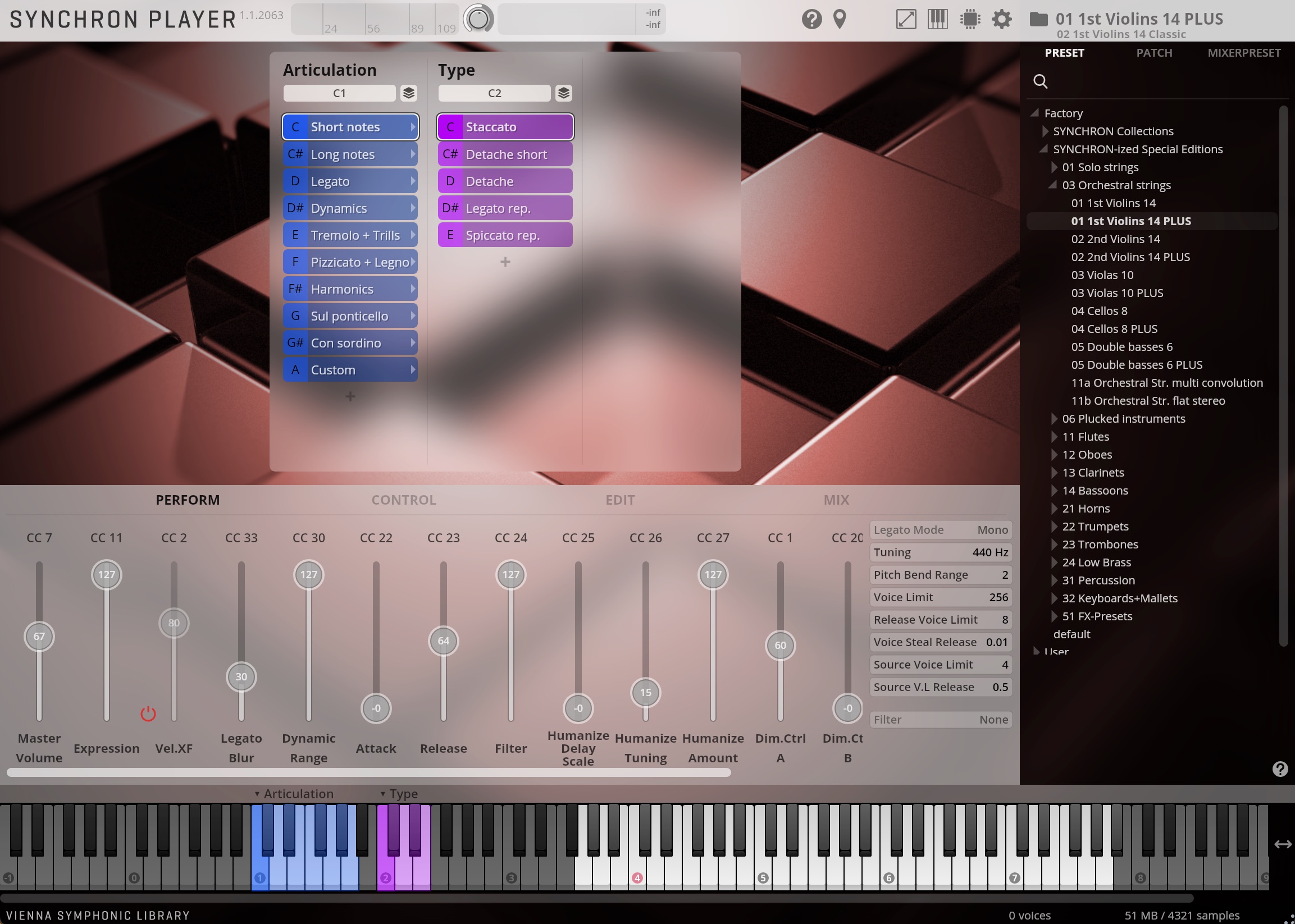
Vienna: Synchronized Special Edition
- Professionals: 50
- Amateurs: 107
Special Edition was the most widely used product, with 59 respondents, followed by Chamber Strings with 52.
For this comparison, we use the then-new Synchron Player sampling engine.
The library occupies 63 GB, or 76 GB with the Plus articulation expansion.
Its neutral, uncolored samples make it easy to shape the sound to suit a song.
Product URL: https://sonicwire.com/product/vienna/special/product_list_sp
4th — EastWest: 213 users; $995 (2022 price)
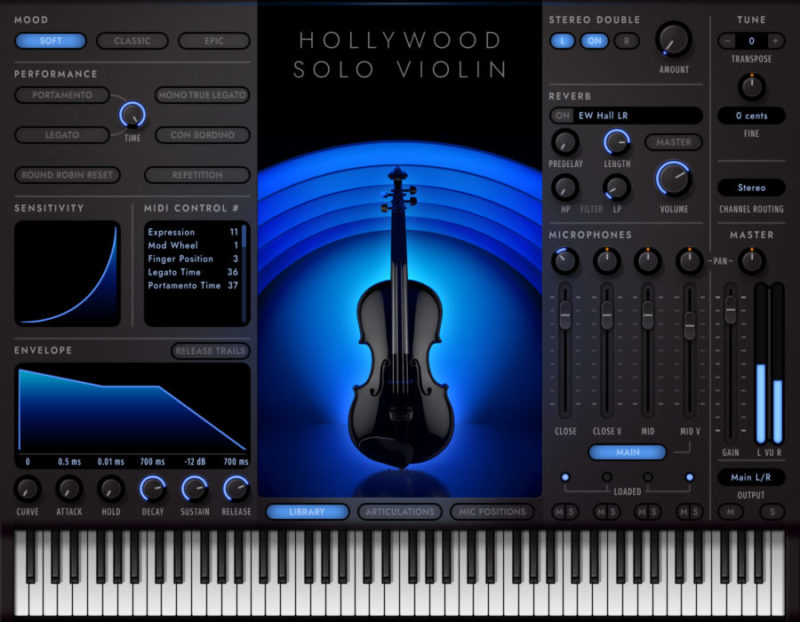
EastWest: Hollywood Orchestra
- Professionals: 66
- Amateurs: 147
The Hollywood series was the most popular, followed by the Symphonic series.
At the time of this review, the Composer Cloud subscription offered access to EastWest’s catalog with a lower initial cost.
The full collection, including instruments beyond strings, occupies 330 GB. The strings alone account for 125 GB and offer many articulations.
We use the Opus sampling engine, which had recently been released when this comparison was made.
Product URL: https://www.soundsonline.com/
3rd — IK Multimedia: 384 users; €499.99 (2022 price)
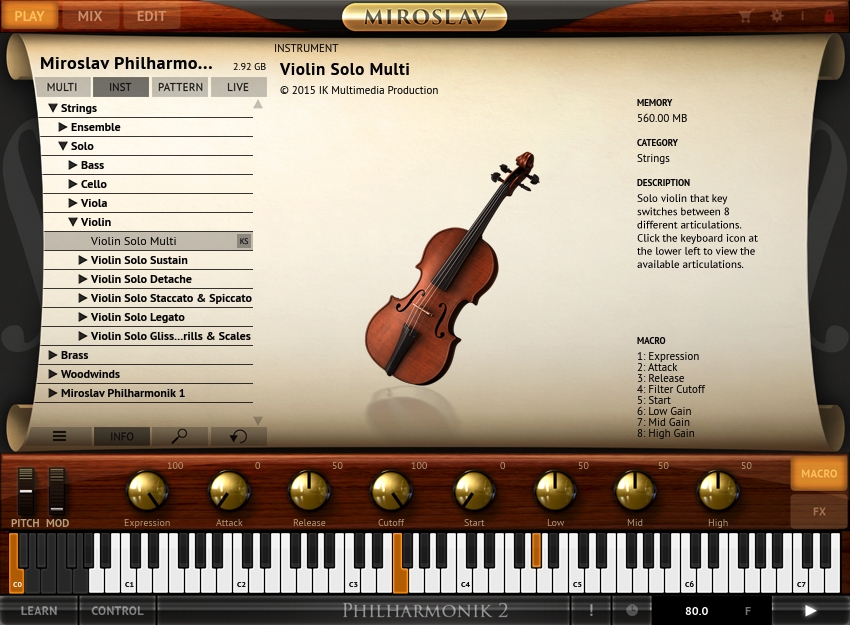
IK Multimedia: Miroslav Philharmonik 2
- Professionals: 46
- Amateurs: 338
Miroslav Philharmonik had 272 users and SampleTank had 100.
Miroslav Philharmonik was released in 2015. Although it was no longer new at the time of the review, its frequent sales made it an accessible option.
At 58 GB including instruments other than strings, it is relatively compact for an orchestral library.
We use Miroslav Philharmonik 2 for the comparison.
Product URL: https://beatcloud.jp/product/585?atag=007
2nd — Spitfire Audio: 471 users; $999 (2022 price)
We include two Spitfire Audio products in the comparison.
BBC Symphony Orchestra
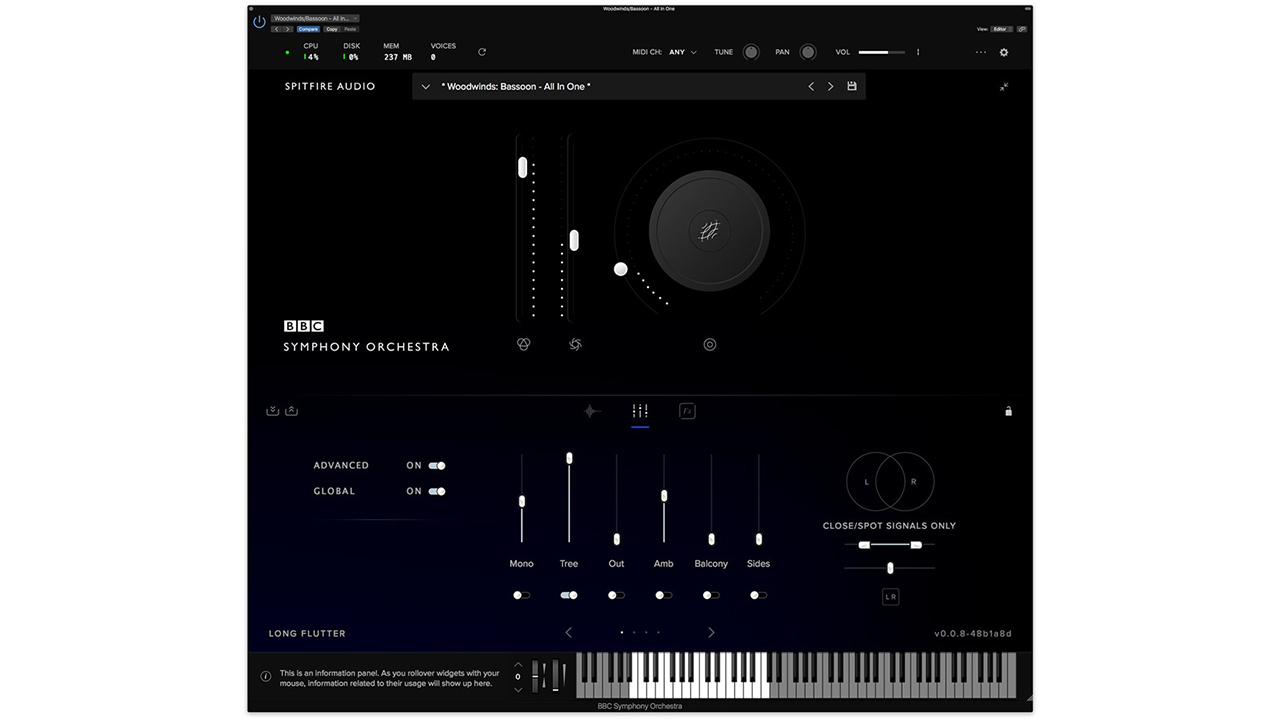
Spitfire: BBC Symphony Orchestra
Product URL: https://sonicwire.com/product/A8338
This comprehensive orchestral library runs in its own dedicated sampler.
Including instruments beyond strings, its compressed library occupies 631 GB—a large footprint compared with the other products here.
Its articulation selection is not especially large, but the many microphone positions provide a broad range of sound variations.
Sound quality, ease of use, and visual clarity all struck us as above average.
Chamber Strings
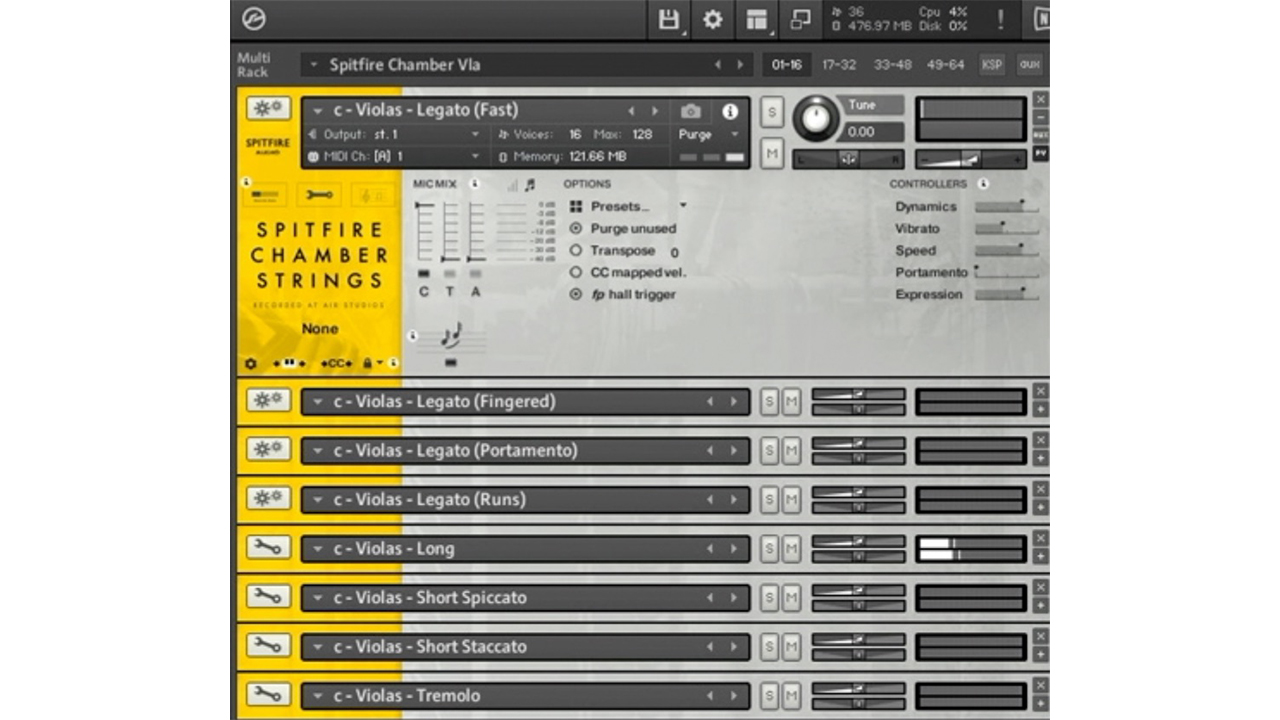
Spitfire: Chamber Strings Professional
Product URL: https://sonicwire.com/product/A1015
Running in Kontakt or Kontakt Player, this string library specializes in small ensembles.
It occupies 107 GB compressed, or 312 GB uncompressed, making it the largest dedicated string library in this comparison.
It makes excellent use of its small ensemble: responsive attacks, clear delivery of detailed phrases, and a wide selection of articulations.
These characteristics also make it popular for J-pop production.
- Professionals: 131
- Amateurs: 340
The BBC Symphony Orchestra series had 150 users, Chamber Strings had 100, and the LABS libraries had 90.
Our comparison uses BBC Symphony Orchestra and Chamber Strings Professional.
1st — Native Instruments: 901 users; ¥40,300 (2022 price)
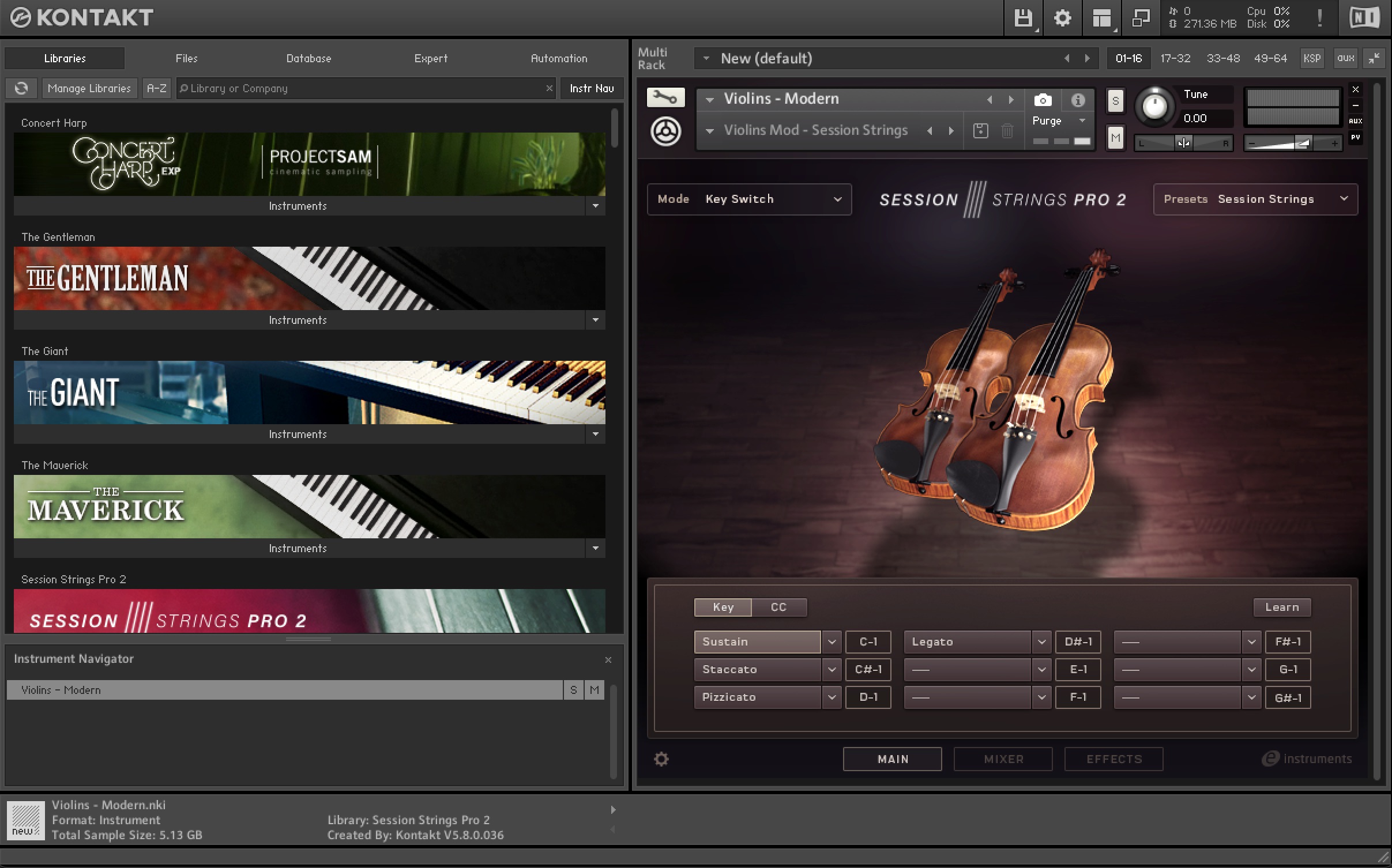
Native Instruments: Session Strings Pro 2
- Professionals: 161
- Amateurs: 740
The Session Strings series was the most widely used, with 613 respondents.
Its inclusion in the popular KOMPLETE bundle may help explain that result.
The reviewed library captures a medium-sized string ensemble with a tight, responsive attack.
Its 69 GB of uncompressed samples provide a variety of playing techniques.
We use Session Strings Pro 2 for the comparison.
Product URL: https://shrsl.com/3djnd
Two additional products tested
We also added two recently released, much-discussed products to the original comparison.
LA Scoring Strings — €599 (2022 price)
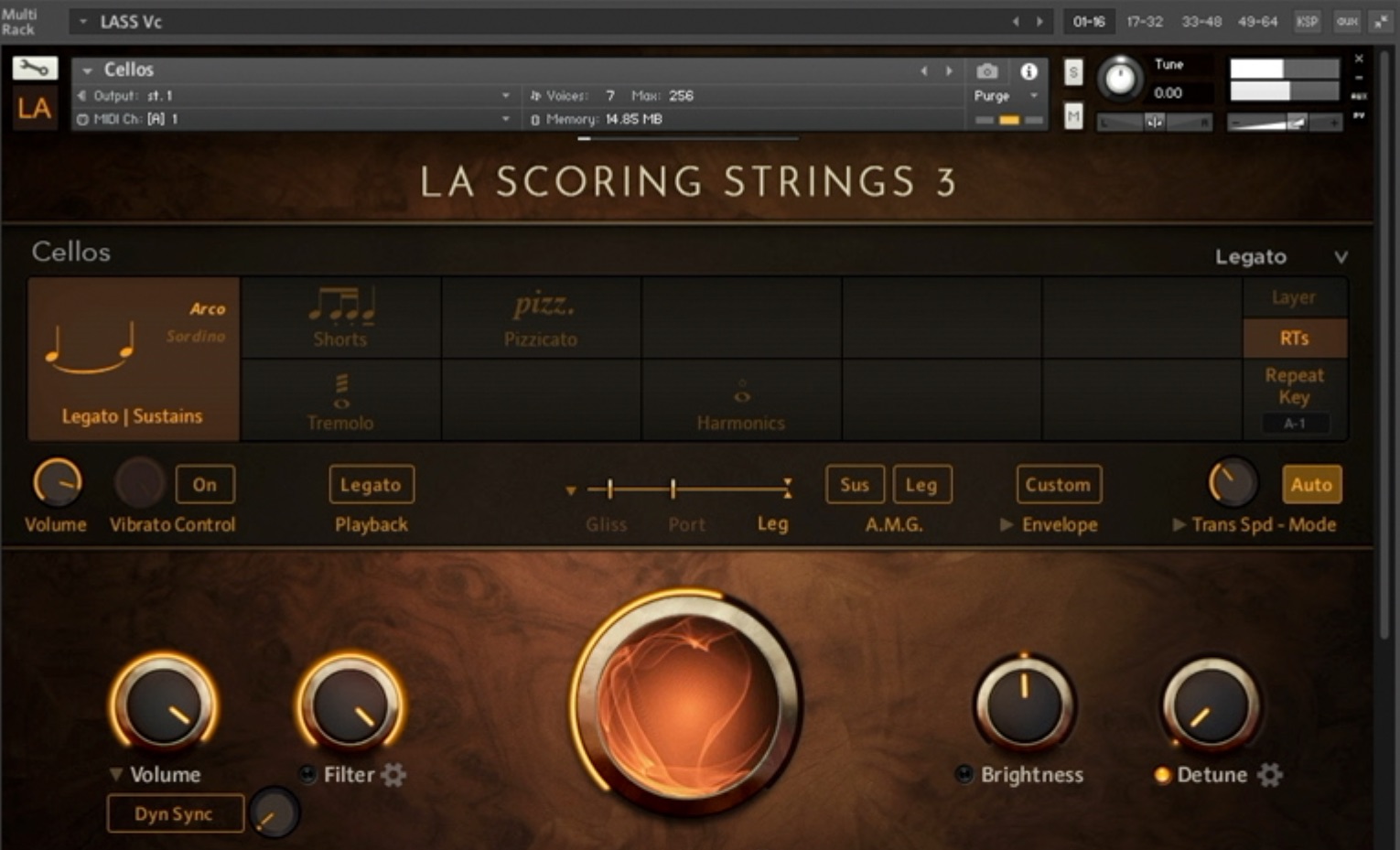
Audiobro: LA Scoring Strings 3
This string library runs in Kontakt or Kontakt Player.
It was released as a new version of LA Scoring Strings, known for its lifelike sound and clear definition.
Improved usability and a substantial price reduction suggested it could become popular, so we added it to the comparison.
At 23 GB compressed, or 33 GB uncompressed, it is relatively lightweight while supporting detailed articulation choices.
It was positioned below the same developer’s Modern Scoring Strings.
Product URL: https://www.audiobro.com/la-scoring-strings-3/
Tokyo Scoring Strings — $499 (2022 price)
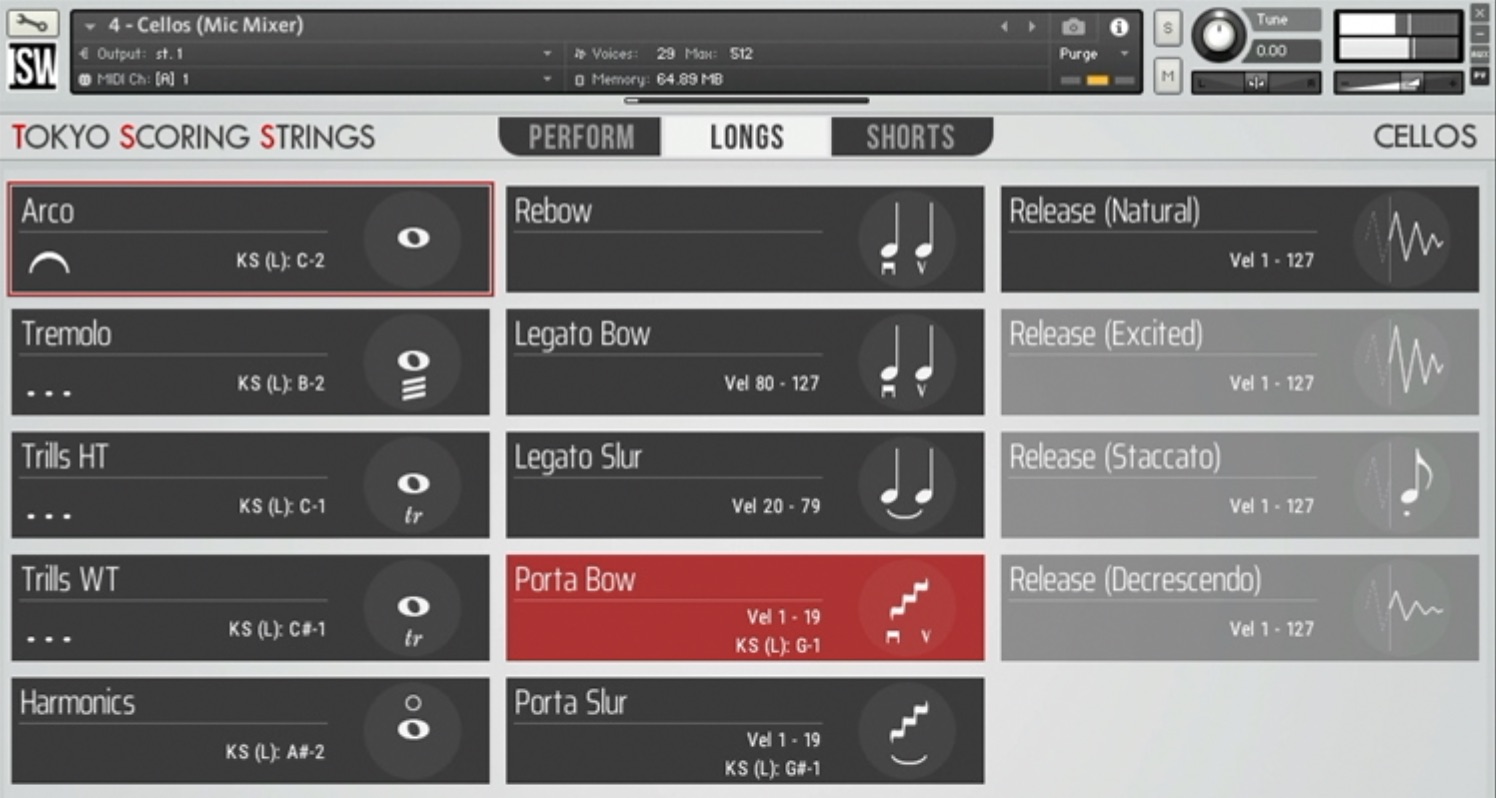
Impact Soundworks: Tokyo Scoring Strings
This string library runs in Kontakt or Kontakt Player.
It samples the Koichiro Muroya Strings ensemble, whose performances feature in anime, games, and J-pop. It attracted attention as the first library to capture this Japanese string-ensemble sound.
The compressed library occupies 90 GB. It offers varied, detailed expression while keeping the interface straightforward and easy to use.
The live reference recording above was also performed by Koichiro Muroya Strings.
Listen for how closely a library sampled from the ensemble can approach their actual performance.
Product URL: https://sonicwire.com/product/B2606
Ensemble sizes
The number of players in a string library is an important part of its sound character.
We also compare support for basic expressive controls such as vibrato and dynamics.
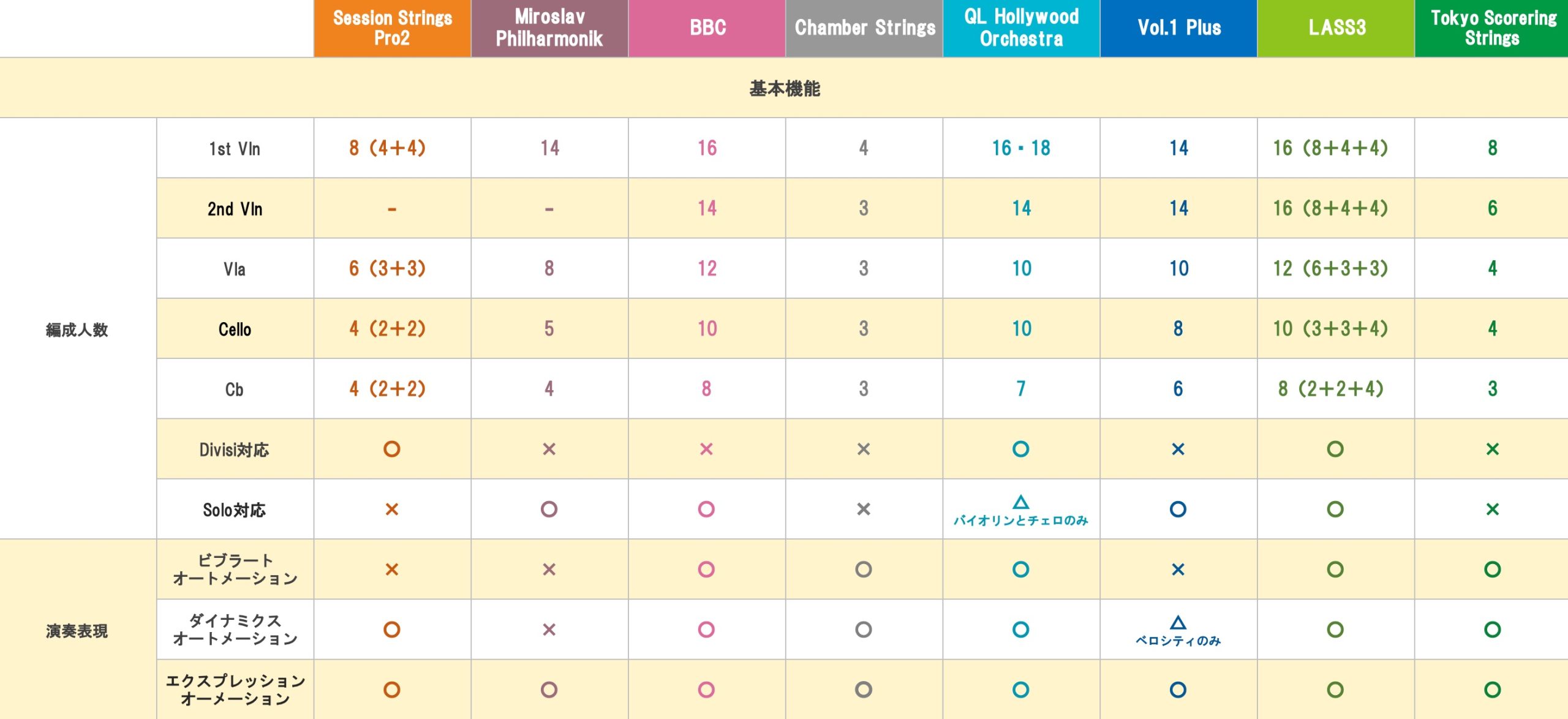
The live reference ensemble
The live recording uses the following ensemble.
- First violins: 4 players
- Second violins: 3 players
- Violas: 3 players
- Cellos: 2 players
- Double basses: 0 players
This is a common, established string-section setup for pop productions.
There are no double basses because the song’s bass track covers that role.
Session Strings Pro 2
- First violins: 8 players
- Second violins: 8 players
- Violas: 6 players
- Cellos: 4 players
- Double basses: 4 players
△ No dedicated second-violin samples; the first-violin samples must also cover that part.
○ Divisi is supported, allowing each section to be split into halves.
Miroslav Philharmonik
- First violins: 14 players
- Second violins: 14 players
- Violas: 8 players
- Cellos: 5 players
- Double basses: 4 players
△ No dedicated second-violin samples; the first-violin samples must also cover that part.
△ Divisi is not supported.
BBC Symphony Orchestra
- First violins: 16 players
- Second violins: 14 players
- Violas: 12 players
- Cellos: 10 players
- Double basses: 8 players
○ Dedicated second-violin samples allow first and second violins to play in unison.
○ Solo patches are included.
△ Divisi is not supported.
Spitfire Chamber Strings
- First violins: 4 players
- Second violins: 3 players
- Violas: 3 players
- Cellos: 3 players
- Double basses: 3 players
○ The small ensemble provides sharp attacks and clear delivery of detailed phrases.
○ Dedicated second-violin samples allow first and second violins to play in unison.
△ Divisi is not supported.
Hollywood Orchestra
- First violins: 16 players
- Second violins: 14 players
- Violas: 10 players
- Cellos: 10 players
- Double basses: 7 players
○ A large orchestral ensemble provides a full, thick sound.
○ Solo violin and cello patches are included.
○ Divisi is supported, allowing each section to be split into halves.
Synchronized Special Edition
- First violins: 14 players
- Second violins: 14 players
- Violas: 10 players
- Cellos: 8 players
- Double basses: 6 players
○ Solo patches are included.
△ No dedicated second-violin samples; the first-violin samples must also cover that part.
△ Divisi is not supported, so section sizes cannot be split.
LA Scoring Strings 3
- First violins: 16 players
- Second violins: 16 players
- Violas: 12 players
- Cellos: 10 players
- Double basses: 8 players
◎ The most flexible divisi options in this comparison: sections can be split into halves or quarters.
○ Solo patches are included.
△ No dedicated second-violin samples; the first-violin samples must also cover that part.
Tokyo Scoring Strings
- First violins: 8 players
- Second violins: 6 players
- Violas: 4 players
- Cellos: 4 players
- Double basses: 3 players
○ Dedicated second-violin samples are provided.
△ Divisi is not supported.
△ No solo patches are included.
Basic expressive controls
Bowed instruments such as violin and cello can change playing intensity or add vibrato while a note is sounding.
- Vibrato (pitch variation): Can you change the amount of vibrato during a sustained note?
- Dynamics (including changes in tone): Can you change playing intensity during a sustained note?
- Expression (volume only): Can you change volume during a sustained note?
Support for these controls is important when aiming for lifelike expression.
Session Strings Pro 2
△ Vibrato control is not supported.
○ Dynamics control is supported.
○ Expression control is supported.
Miroslav Philharmonik
△ Vibrato control is not supported.
△ Dynamics control is not supported.
○ Expression control is supported.
BBC Symphony Orchestra
○ Vibrato control is supported.
○ Dynamics control is supported.
○ Expression control is supported.
Spitfire Chamber Strings
○ Vibrato control is supported.
○ Dynamics control is supported.
○ Expression control is supported.
Hollywood Orchestra
○ Vibrato control is supported.
○ Dynamics control is supported.
○ Expression control is supported.
Synchronized Special Edition
○ Vibrato control is supported.
○ Dynamics control is supported.
○ Expression control is supported.
LA Scoring Strings 3
○ Vibrato control is supported.
○ Dynamics control is supported.
○ Expression control is supported.
Tokyo Scoring Strings
○ Vibrato control is supported.
○ Dynamics control is supported.
○ Expression control is supported.
Switching articulations
Live string players use many different techniques within a phrase to make it more expressive.
Articulation switching is essential when recreating those nuances with MIDI programming.
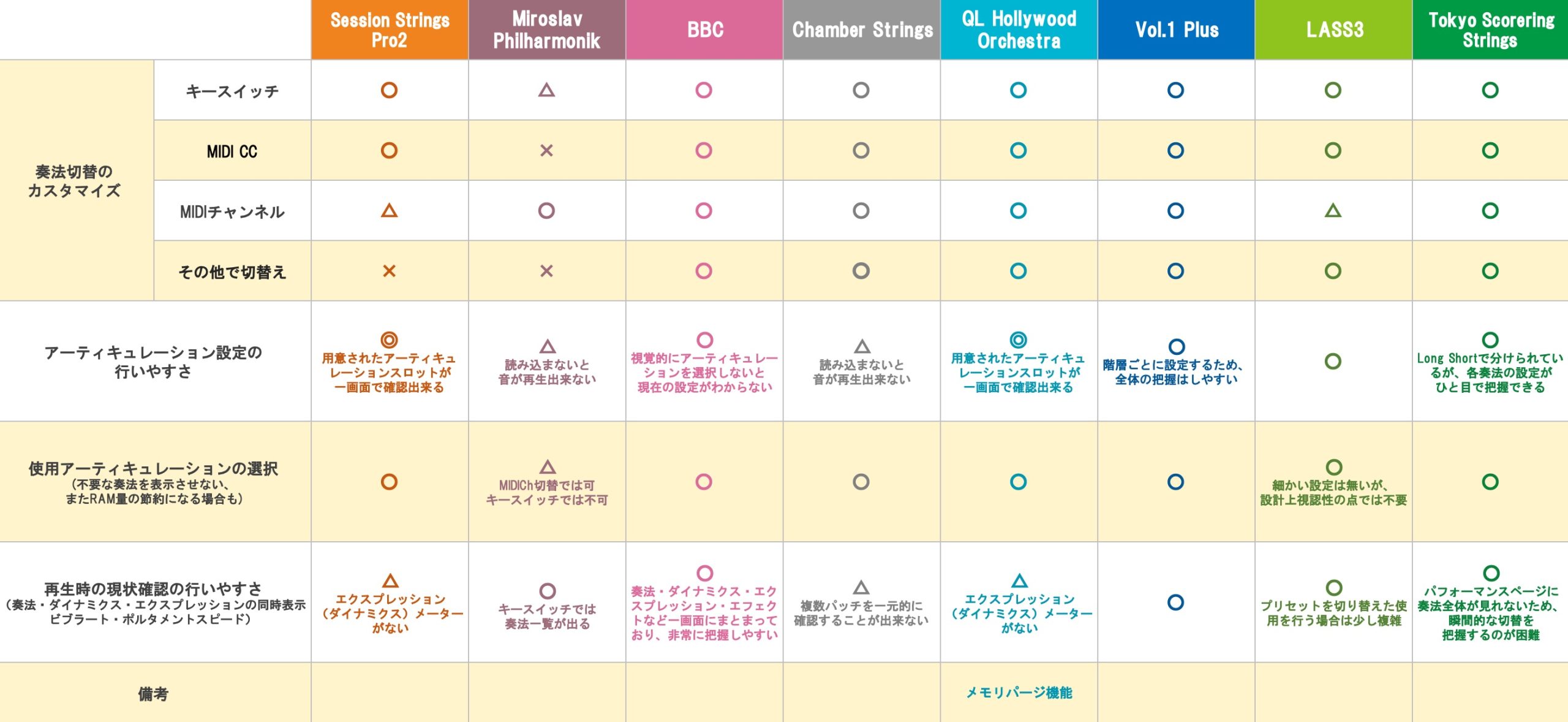
Here, we compare customization and ease of use when switching articulations.
Session Strings Pro 2
○ Keyswitch switching is supported.
○ MIDI CC switching is supported.
△ MIDI-channel switching is possible, with limitations.
Articulations can be switched using keyswitches or MIDI CC, with user-configurable assignments.
It is also possible to load different articulations on separate MIDI channels, although this was not officially recommended in the setup reviewed.
Miroslav Philharmonik
△ Limited keyswitch switching is supported.
× MIDI CC switching is not supported.
○ MIDI-channel switching is supported.
Keyswitches are available only in the supplied patches and cannot be customized.
Articulations are split into many patches according to factors such as note length, which made the full selection difficult to keep track of.
BBC Symphony Orchestra
○ Keyswitch switching is supported.
○ MIDI CC switching is supported.
○ MIDI-channel switching is supported.
The flexible configuration and simple interface make articulations easy to understand.
In terms of ease of use, we felt it was the strongest of the products here.
Spitfire Chamber Strings
○ Keyswitch switching is supported.
○ MIDI CC switching is supported.
○ MIDI-channel switching is supported.
You can combine several parameters, including keyswitches and MIDI CC, for highly customizable assignments.
That freedom also means many functions, and we found operation relatively complex.
Hollywood Orchestra
○ Keyswitch switching is supported.
○ MIDI CC switching is supported.
○ MIDI-channel switching is supported.
The newer sampler offers plenty of flexibility and a clearly presented articulation list.
We found it very easy to work with.
Synchronized Special Edition
○ Keyswitch switching is supported.
○ MIDI CC switching is supported.
○ MIDI-channel switching is supported.
The articulation list uses a column-based hierarchy designed for quick navigation.
LA Scoring Strings 3
○ Vibrato control is supported.
○ Dynamics control is supported.
○ Expression control is supported.
Vibrato, dynamics, expression, and articulations can all be checked on one screen, making the current playing technique easy to understand.
Articulations can be changed within a preset or by switching presets themselves.
Tokyo Scoring Strings
○ Vibrato control is supported.
○ Dynamics control is supported.
○ Expression control is supported.
Like LA Scoring Strings 3 above, it displays vibrato, dynamics, expression, and articulations on one screen.
The articulation list is organized by category, making the interface feel clear and user-friendly.
Articulation variety
The table provides a detailed overview of the available articulations.
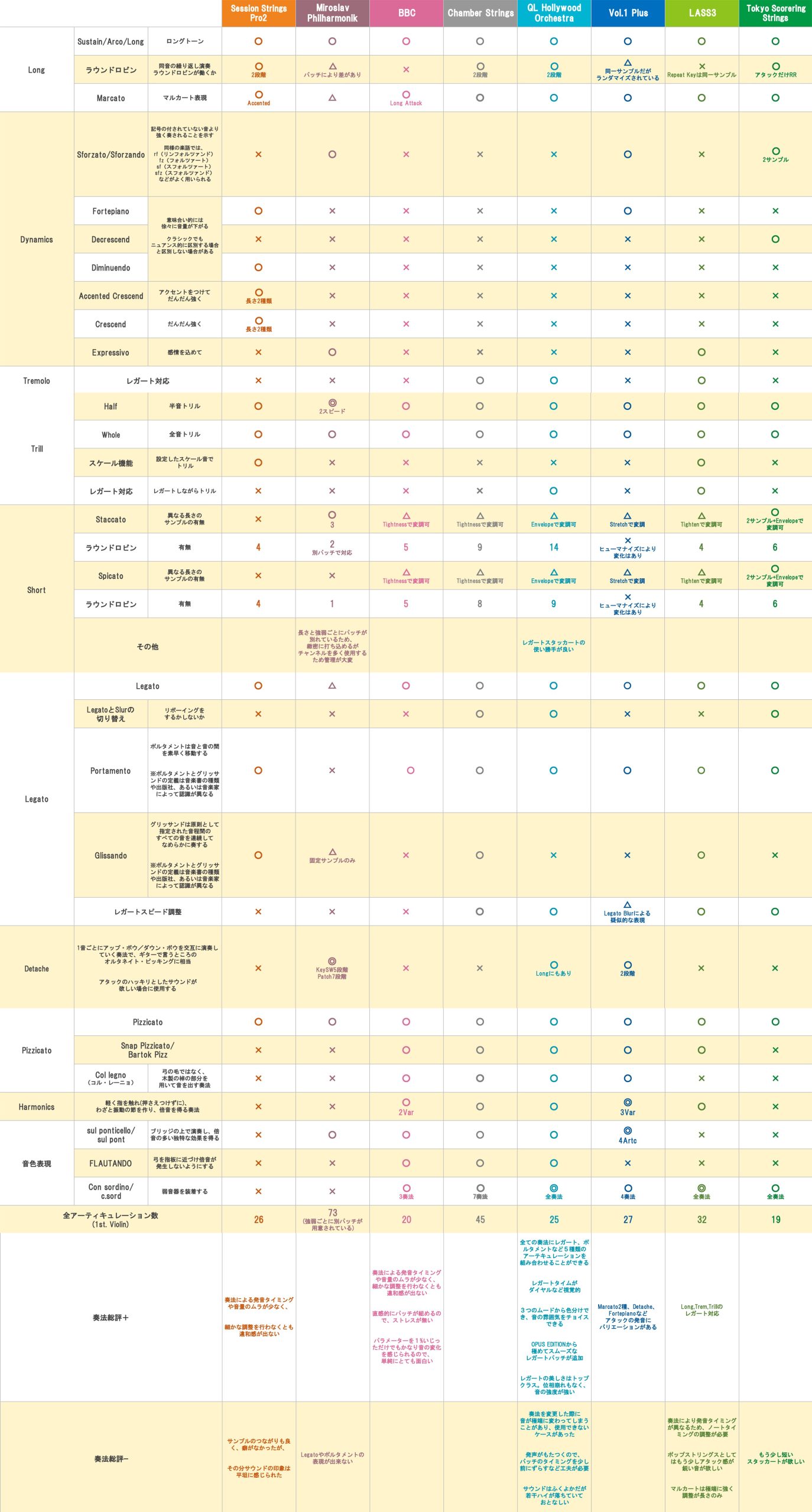
We focus on four frequently used types.
- Sustained articulations
- Short articulations
- Legato articulations
- Tremolo and trill articulations
Session Strings Pro 2
Total articulations: 26
○ Scale-aware trills are supported.
○ Glissando is supported.
× Spiccato and staccato each have only one note length, which cannot be changed.
× Legato speed cannot be adjusted.
Miroslav Philharmonik
Total articulations: 73 (including separate patches for dynamics and bow direction)
○ Staccato and spiccato each offer three note-length variations.
× No round-robin support.
× No marcato patch is provided for emphasizing the attack.
△ Legato patches are included, but they do not provide smoothly connected pitch transitions between notes.
× No portamento is provided; glissando is limited to fixed samples between two notes.
BBC Symphony Orchestra
Total articulations: 20
○ Staccato and spiccato each have one note length, but Tightness lets you adjust the tail.
× Legato speed cannot be adjusted.
× No glissando articulation is provided.
Spitfire Chamber Strings
Total articulations: 45
○ Staccato and spiccato each have one note length, but Tightness lets you adjust the tail.
○ Legato speed can be adjusted.
○ Separate slurred articulations are available alongside legato.
○ Glissando is supported.
Hollywood Orchestra
Total articulations: 25
○ Legato trills and tremolos are supported.
○ Legato speed can be adjusted.
○ Separate slurred articulations are available alongside legato.
○ Staccato can be played while using legato.
○ The largest selection of staccato and spiccato round-robin variations in this comparison.
△ Staccato and spiccato each have one note length, but the envelope lets you adjust the tail.
Synchronized Special Edition
Total articulations: 27
△ No legato-speed control, but Legato Blur adjusts the connections between samples.
△ Staccato and spiccato each have one note length, but time stretching lets you change it.
△ No staccato/spiccato round robins, but humanization can add variation to the sound.
LA Scoring Strings 3
Total articulations: 32
○ Legato trills and tremolos are supported.
○ Legato speed can be adjusted.
○ Glissando is supported.
△ Staccato and spiccato each have one note length, but Tighten lets you adjust the tail.
Tokyo Scoring Strings
Total articulations: 19
○ Staccato and spiccato each provide two sampled note lengths.
○ Slurred articulations are available alongside legato.
Although the products offer broadly similar types of articulation, Miroslav Philharmonik and Synchronized Special Edition felt more limited in the techniques available.
Other distinctive features
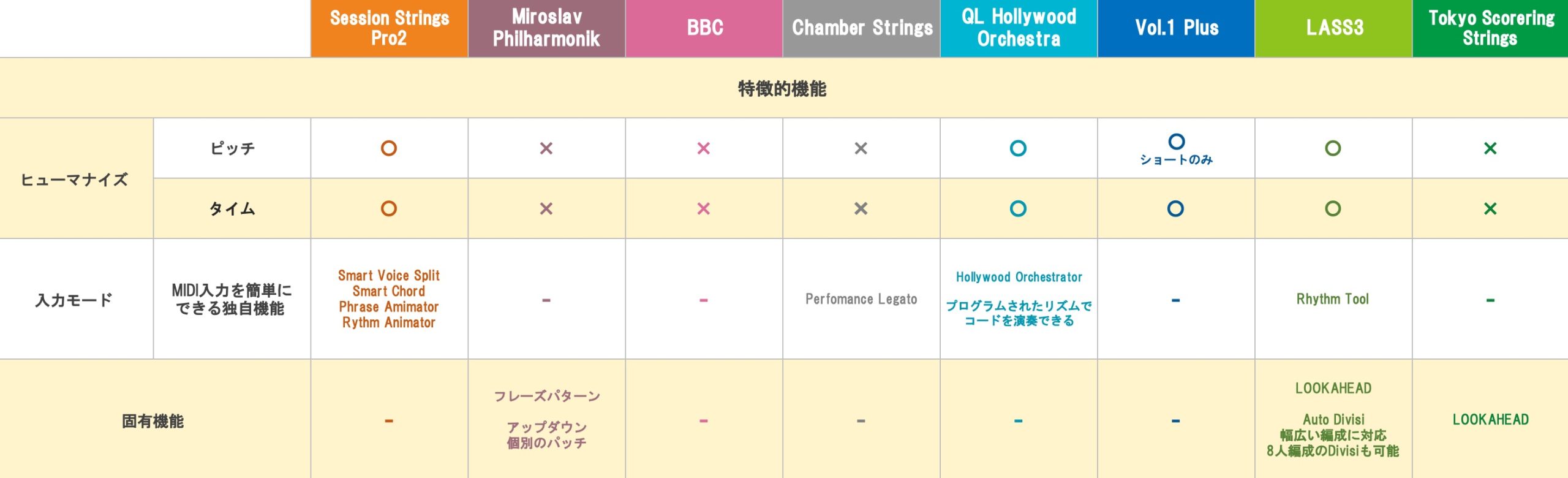
We also look at special features such as humanization, which adds subtle pitch and timing variation, and tools that make MIDI programming easier.
Session Strings Pro 2
○ Humanization is supported.
○ Pattern sequencing is included.
○ Smart Chord assists with chord input.
○ Smart Voice Split assigns notes in a chord to instruments according to their ranges.
Spitfire Chamber Strings
○ Legato Performance uses velocity to vary legato transitions.
Hollywood Orchestra
○ Humanization is supported.
○ Pattern sequencing is provided through Hollywood Orchestrator.
Synchronized Special Edition
△ Humanization is supported only for articulations in the Short category.
LA Scoring Strings 3
○ Humanization is supported.
○ Pattern sequencing is provided through Rhythm Tool.
○ Auto Divisi automatically divides the players when a section plays multiple notes.
○ Look Ahead compensates for variations in note-on timing during rendering.
Tokyo Scoring Strings
○ Look Ahead automatically sets articulations and legato timing during rendering.
Alongside the other features, Look Ahead was particularly interesting.
Even with notes entered straight onto the grid, it analyzes upcoming phrases and switches to suitable articulations.
We found it very useful for quickly adding nuance to a phrase.
Sound editing
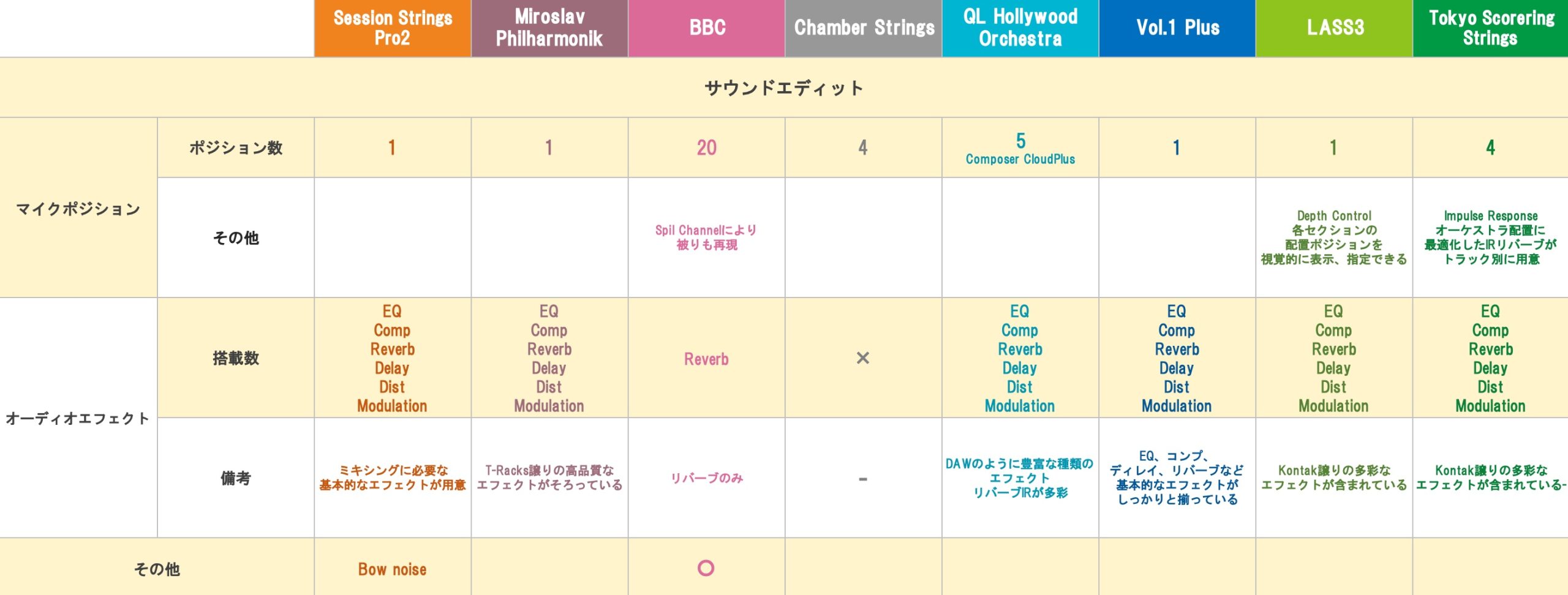
Microphone positions and effects are important in shaping string sounds. Here is how the products compare.
Session Strings Pro 2
Microphone positions: 1
A variety of effects allows mixing within the instrument.
Miroslav Philharmonik
Microphone positions: 1
A variety of effects derived from T-RackS allows mixing within the instrument.
BBC Symphony Orchestra
Microphone positions: 20
A wide selection of microphone positions is provided; reverb is the only included effect.
Spitfire Chamber Strings
Microphone positions: 4
No built-in effects.
Hollywood Orchestra
Microphone positions: 5
A variety of effects allows mixing within the instrument.
Synchronized Special Edition
Microphone positions: 1
A variety of effects allows mixing within the instrument.
Dedicated impulse-response reverbs for each section help reproduce the ambience of its position in the orchestra.
LA Scoring Strings 3
Microphone positions: 1
Only one sampled microphone perspective is included, but Depth Control lets you drag instruments into different positions across the stereo field and in depth.
A wide range of effects also enables mixing within the instrument.
Tokyo Scoring Strings
Microphone positions: 4
A variety of effects allows mixing within the instrument.
Spitfire appeared to prioritize microphone perspectives rather than effects.
The other products provide a standard set of effects for mixing.
String libraries: Overall impressions
Here are our impressions after using each product in the original comparison.
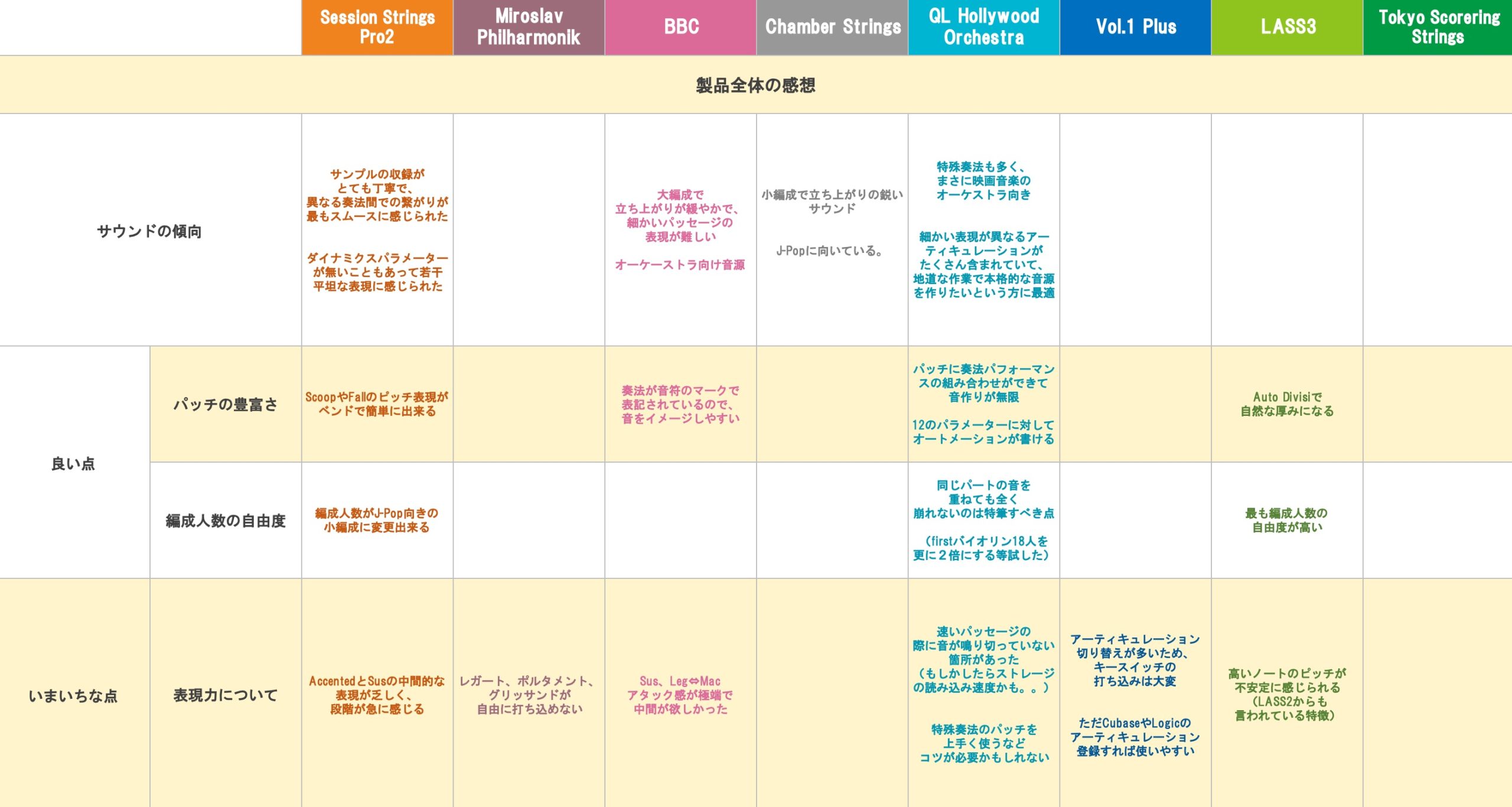
Session Strings Pro 2
Its straightforward, neutral sound and MIDI-input assistance make it approachable for producers who are new to programming strings.
With fewer articulations and fewer tools for fine-tuning performance nuances, however, it felt less suited to exceptionally detailed, realistic string programming.
Miroslav Philharmonik
Keyswitch access is limited. To make full use of the library, you need to load separate articulation patches on different MIDI channels.
The reviewed setup also lacks vibrato and dynamics controls, and does not provide the connected legato behavior described above.
These limitations made it feel less capable than the other products in several respects.
However, frequent sales offered affordable entry points. It was an option to consider when moving beyond a DAW’s bundled instruments.
BBC Symphony Orchestra
The polished interface makes the current playing state easy to understand and offers substantial usability advantages.
The sound is excellent, but the orchestral focus gives it a relatively slow attack.
For pop production, our preference in this comparison was Spitfire Chamber Strings below.
Spitfire Chamber Strings
A versatile product with a wide range of articulations and considerable flexibility.
We would recommend it to those seeking a close-sounding, small-ensemble library with detailed control.
That customization can also make setup complex, which may be challenging for less experienced MIDI programmers.
Hollywood Orchestra
A versatile all-rounder with many articulations and good usability.
Its sound has a distinct character rather than being completely neutral. Listen to that character before deciding whether it suits your music.
Of the products in this comparison, it was the only one available by subscription, offering a lower initial cost for a full-featured string library at the time.
Synchronized Special Edition
Articulations are easy to inspect, switch, and customize, making this a very usable product.
The neutral sound is easy to shape, with natural connections between notes.
The original conclusion nevertheless says that vibrato and dynamics control were unavailable. Editorial note: this conflicts with the support listed earlier in the same source article; the source is inconsistent on this point.
LA Scoring Strings 3
Flexible section sizes and distinctive tools such as Auto Divisi and Depth Control give this product considerable scope.
It covers most playing techniques and feels well balanced overall.
One point to watch: some notes showed slight pitch instability in our tests.
Pitch correction may therefore be needed for certain uses or genres.
Tokyo Scoring Strings
The clear single-screen presentation of articulations, dynamics, vibrato, and other controls is excellent.
The sound is neutral and seemed suitable for many genres. It is approachable for beginners and useful even for those who already own other libraries.
Look Ahead, which anticipates the performance and optimizes phrases including articulation choices, is another strength worth exploring if you want to work faster.
Our software-instrument survey series ran for more than a year.
We hope you enjoyed it.
At the time of this 2022 article, I had been making music on a computer for about 20 years. The improvement in sound quality over that period was remarkable.
Earlier, MIDI-programming techniques for making instruments sound real were a central concern. By this review, software features were handling many of those tasks.
Being able to realize the phrases and songs you imagine with high-quality sounds also makes it easier to focus on composing.
We hope the tests and comparisons in this series will be useful when choosing your instruments.
Thank you for reading to the end!
Which string library came out on top? Survey rankings and feature comparison
Thank you for waiting! This is the final installment of our ranking videos.
We explore each product’s sound and features to help you choose a string library.Details: https://t.co/Rff5nbZUbV #DTM #DAW #DTMer pic.twitter.com/GxvSoj2eF2
— SLEEP FREAKS (@SLEEPFREAKS_DTM) February 25, 2022
Frequently asked questions
Q1. Which string library is best for DAW production?
It depends on the intended use. In this 2022 comparison, Spitfire Chamber Strings was a choice for small-ensemble J-pop, while Native Instruments Session Strings was popular among survey respondents. EastWest’s Composer Cloud offered a subscription route for those prioritizing initial cost. Consult the detailed articulation comparisons above for the differences between the tested editions.
Q2. How much did these string libraries cost?
The original review quoted prices such as €499–€599 and $499–$999, depending on the product, with Native Instruments listed at ¥40,300. Some products were accessible through a monthly subscription, reducing the initial outlay. These are historical review prices, not current offers or directly comparable currency amounts.
Q3. Are there accessible options for beginners?
The original review highlights IK Multimedia Miroslav Philharmonik’s frequent sales and Session Strings’ inclusion in KOMPLETE as comparatively accessible routes. Availability, bundle contents, and offers may differ from those described in the 2022 review.
Q4. How much storage do string libraries need?
It varies by product and edition. The reviewed LA Scoring Strings library occupies 23 GB compressed, while the reviewed BBC Symphony Orchestra package, including instruments beyond strings, occupies 631 GB. If SSD space is limited, consider the storage footprint when choosing.
NEW ARTICLES
Latest English Articles