“Heavenly Flight” from Dragon Quest III is a celebrated piece by composer Koichi Sugiyama. Working within the Famicom version’s three simultaneous pitched voices, it evokes a vast world with a simple melody and arpeggios. This article examines its 16-bar loop, A–B–A–B′ melodic form and the dramatic tempo changes connecting the first and second phrases: ritardando, accelerando and a return to tempo. These classical elements offer insight into game music composition and music production.
About “Heavenly Flight”

This is one of the background music pieces used in
Dragon Quest III: The Seeds of Salvation, released by Enix, now Square Enix.
It was composed by Koichi Sugiyama, who created many celebrated works.
“Heavenly Flight” is particularly popular among the series’ music;
some listeners may also have heard it in a television commercial for Toyota’s AQUA hybrid.
In the original Famicom version, the music was limited to three simultaneous pitched voices plus one noise channel.
Yet its beautiful melody and arpeggios conveyed a majestic world.
Perhaps the essence of a great piece can be found in simplicity.
In this series, we recreate the Famicom version of “Heavenly Flight” faithfully and explain how it works.
The Music in This Analysis
Tutorial Video
1. The Structure of the Piece (this article)
2. Key and Tonality
3. The Chord Progression
4. Focus on the Bass Line
5. Tritone Substitution
6. Bass-Line Cliché
7. Pedal Points
8. The Picardy Cadence
The Structure of the Piece

As game background music, the piece is designed to loop.
The loop discussed here is 16 bars long.
It consists of two nearly identical eight-bar phrases
(an eight-bar unit is sometimes called a period).
Only the final bar and two beats of the second phrase differ from the first.

Dividing it into four-bar blocks (sometimes called phrases),
A → B → A → B′
is the resulting melodic structure.
Tempo Changes in the Piece

The piece features a striking change of tempo
at the transition from the end of the first eight-bar phrase into the second.
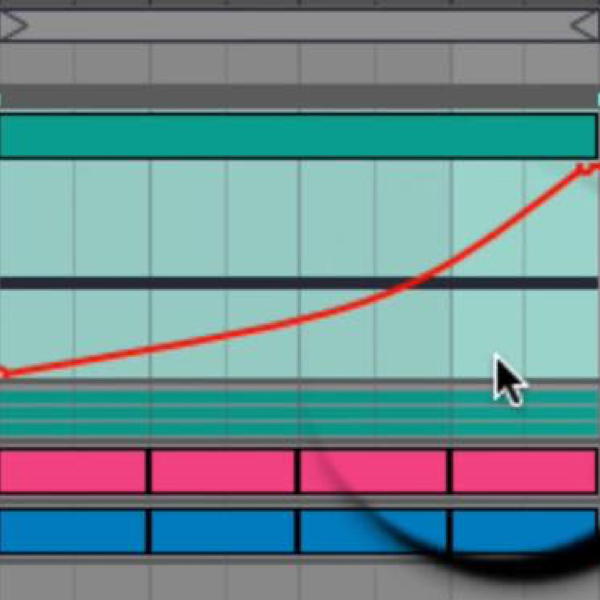
During the first three beats of bar 8: rit. (ritardando), gradually slower.
On beat 4 of bar 8: molto rit. (molto ritardando), very slow.
During the first two beats of the next bar: accel. (accelerando), gradually faster.
From beat 3: a tempo, back to the original tempo.
Instead of immediately returning to the original tempo at the start of the next phrase,
the gradual return creates a distinctly classical and unique effect.
Frequently Asked Questions
Q1. Which game is “Heavenly Flight” from?
It is background music from Dragon Quest III: The Seeds of Salvation, composed by Koichi Sugiyama. It is a popular piece in the series and has also been used in a Toyota AQUA television commercial.
Q2. How many simultaneous voices are available in the Famicom version?
The Famicom version uses three pitched voices and one noise channel. Its ability to evoke a grand world with melody and arpeggios under these constraints shows the strength of the composition.
Q3. How is the loop structured?
The loop spans 16 bars and repeats an almost identical eight-bar phrase twice. In four-bar units, its melody follows A → B → A → B′; the final bar and two beats of the second phrase differ.
Q4. What distinguishes the tempo changes?
At the transition between phrases, the tempo moves through ritardando (gradually slower), molto ritardando (very slow), accelerando (gradually faster) and a tempo (the original tempo), creating a refined, classical effect.
NEW ARTICLES
Latest English Articles