
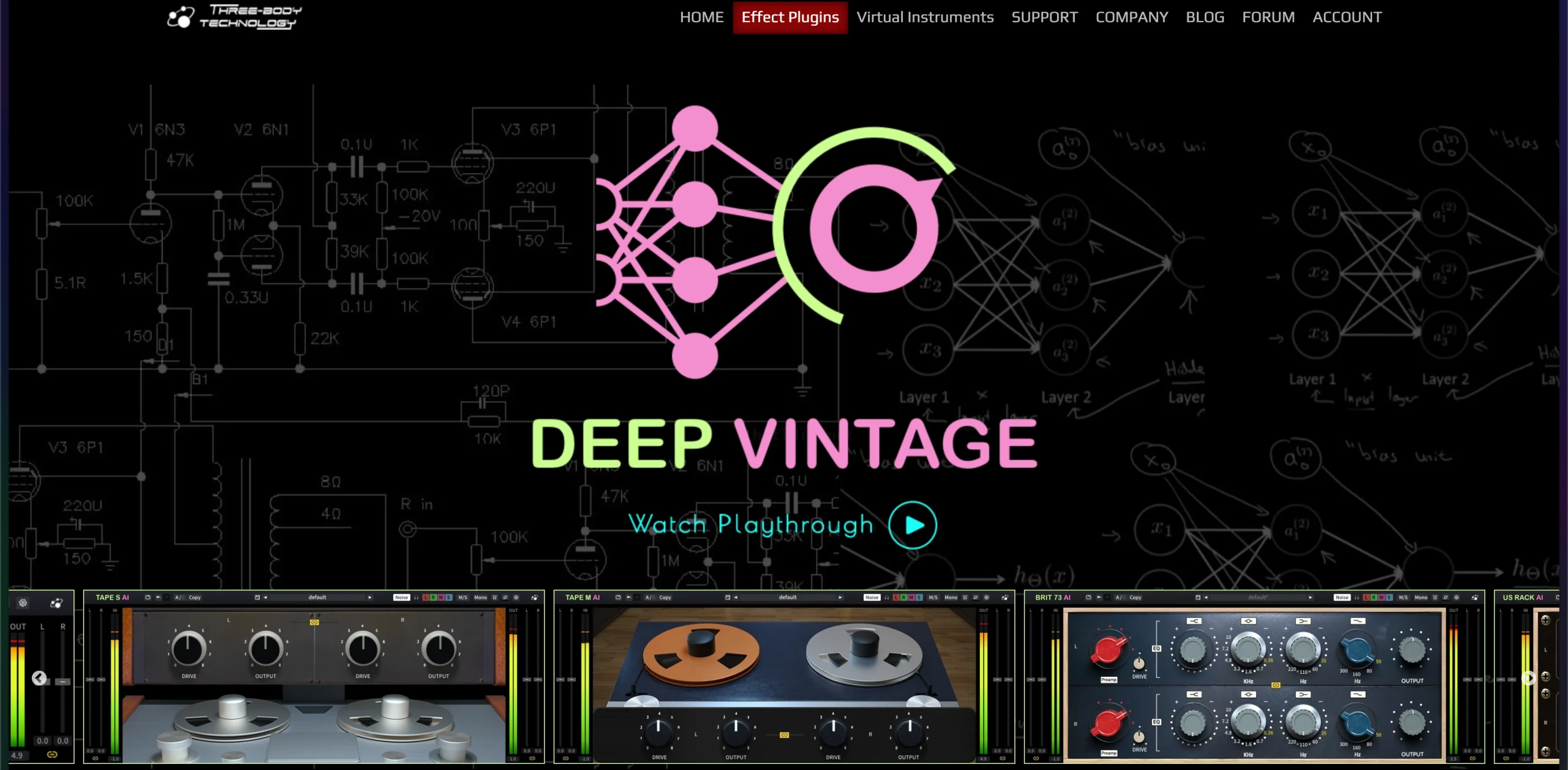
Deep Vintage is a series of vintage hardware emulation plug-ins from Three-Body Tech, powered by its APNN AI technology. Instead of conventional circuit modeling, the system trains an AI model to reproduce the hardware's output waveform, aiming for exceptionally accurate emulation. The original review listed models including Brit 73 AI and US Rack AI at $39–$69, covering vocals, drums, guitar and other tracks. Brit 73 AI is particularly convenient because its Drive control changes distortion without a corresponding increase in output level. An optional noise function adds another aspect of the hardware experience, making the series appealing to beginners and experienced producers alike.
Hardware emulation keeps evolving! How does it compare with conventional plug-ins?
The distinctive sound of analog hardware, often called outboard gear, remains highly valued in music production for the warmth and depth it can add to a track.
Many plug-in manufacturers therefore offer emulations of vintage equipment. Understanding the differences and choosing the right one can be challenging, especially for beginners.
Three-Body Tech's Deep Vintage plug-in series uses APNN AI technology to faithfully recreate vintage sounds in a digital environment.
What is APNN?
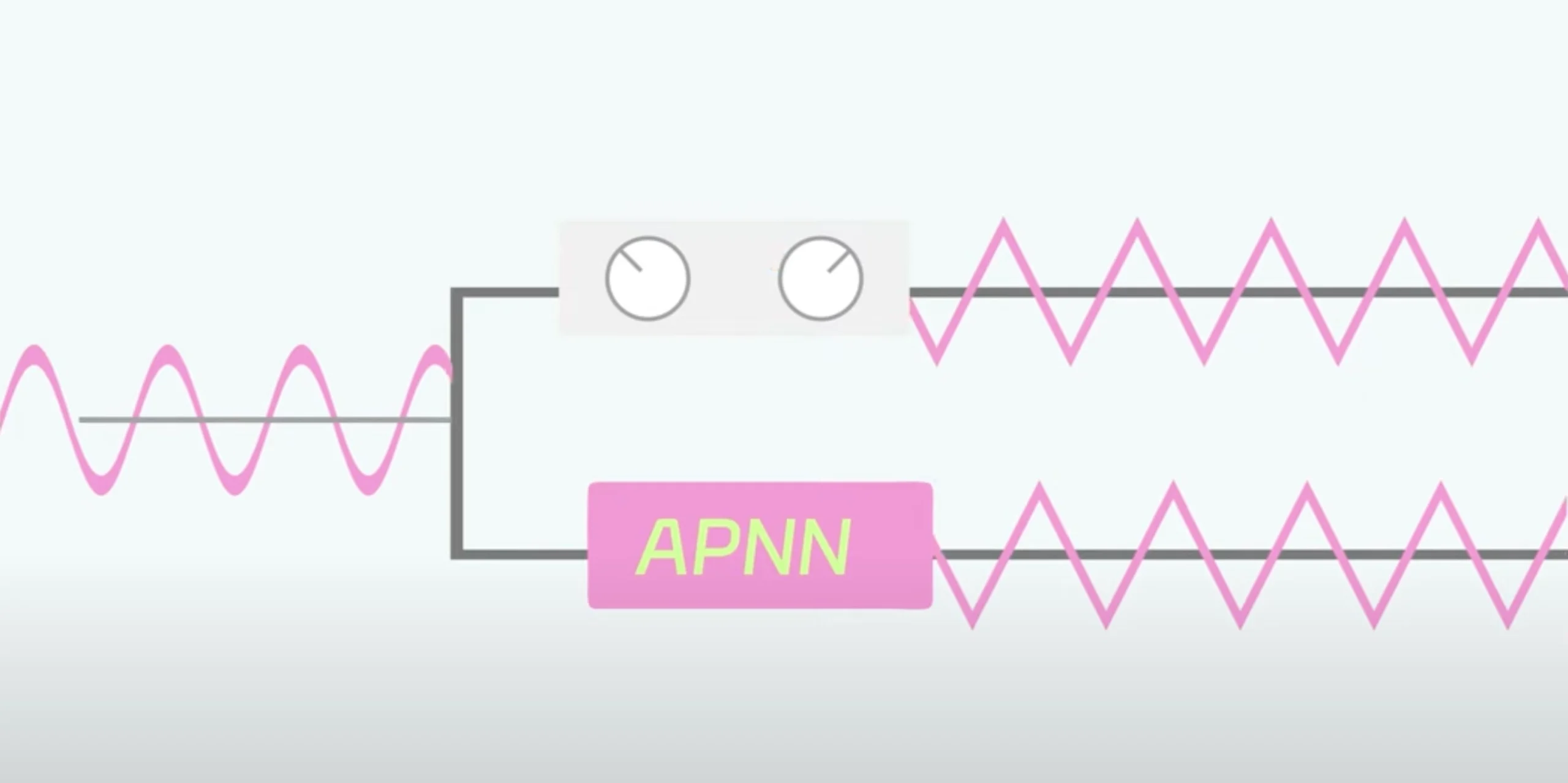
Unlike conventional circuit modeling or impulse-response techniques, APNN uses a different approach: an AI model analyzes the hardware and is trained until the waveform it produces matches the hardware's output as closely as possible.
According to the manufacturer's demonstration, inverting the polarity of one signal and comparing the hardware output with the Deep Vintage output leaves a residual below perceptible levels, suggesting very high emulation accuracy in that comparison.
Deep Vintage introduction video: from 8:29
The Japanese guide below explains the process of getting Three-Body Tech plug-ins running in your DAW.

The Deep Vintage line-up
Deep Vintage includes emulations of a range of legendary hardware units.
Brit 73 AI: $69 at the time of the original review
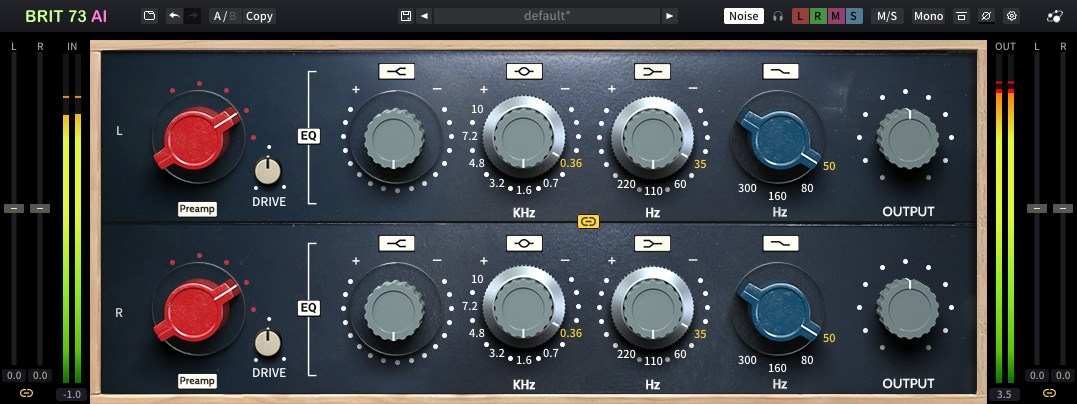
- Features: Based on Neve's legendary Class A transistor preamp.
Faithfully recreates the iconic preamp circuitry of a Neve console. - Sound: Clear and bright, making it a good choice for vocals and drums.
US Rack AI: $69 at the time of the original review
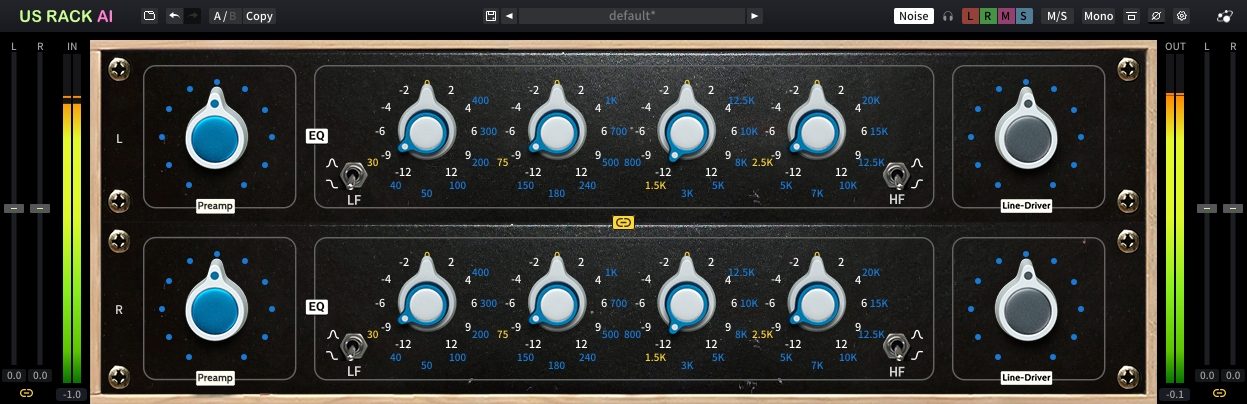
- Features: A channel strip combining an API-style preamp, line driver and equalizer.
Models API modules closely associated with the American rock sound. - Sound: Punchy and powerful, making it well suited to drums and guitar.
Thick Pre AI: $59 at the time of the original review
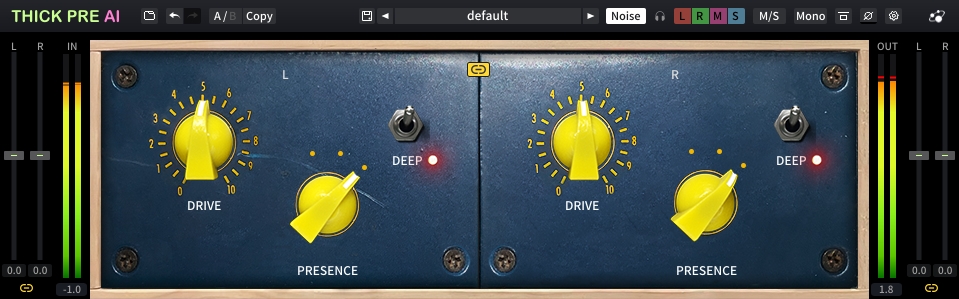
- Features: Based on a Neve microphone preamp, with a thick, warm sound.
- Sound: Adds low-mid weight and presence for a rich, rounded sound on vocals and drums.
Green AD AI: $39 at the time of the original review
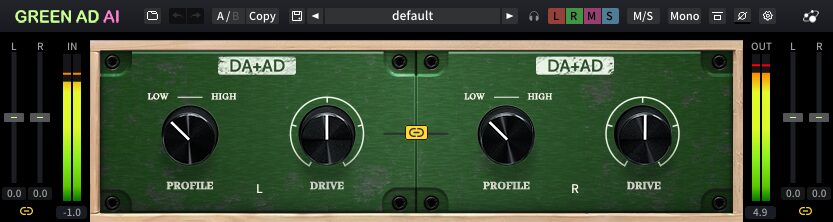
- Features: Emulates a high-quality Lavry AD/DA converter and supports sample rates up to 192 kHz.
- Sound: Recreates aspects of analog character and warmth in a digital environment.
Tape S AI & Tape M AI: $39 each at the time of the original review
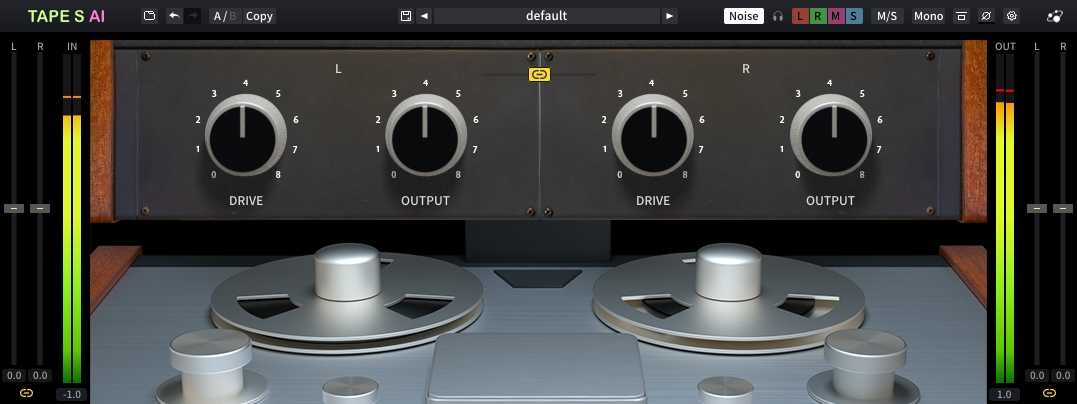
- Features: Warm midrange, smooth highs and rich harmonics.
- Sound: Also recreates tape compression and saturation.
The relatively affordable prices make the range easy to explore.
Exploring Deep Vintage with Brit 73 AI
For the following comparisons, we will focus on Brit 73 AI, a particularly versatile model with plenty of comparable plug-ins available.
Brit 73 AI combines a preamp and EQ in an emulation of the Neve 1073 whose distinctive sound is especially popular with rock artists.
On the original 1073, the preamp section produces rich harmonics and distortion that are highly valued in music production. Brit 73 AI recreates this character convincingly in our tests.
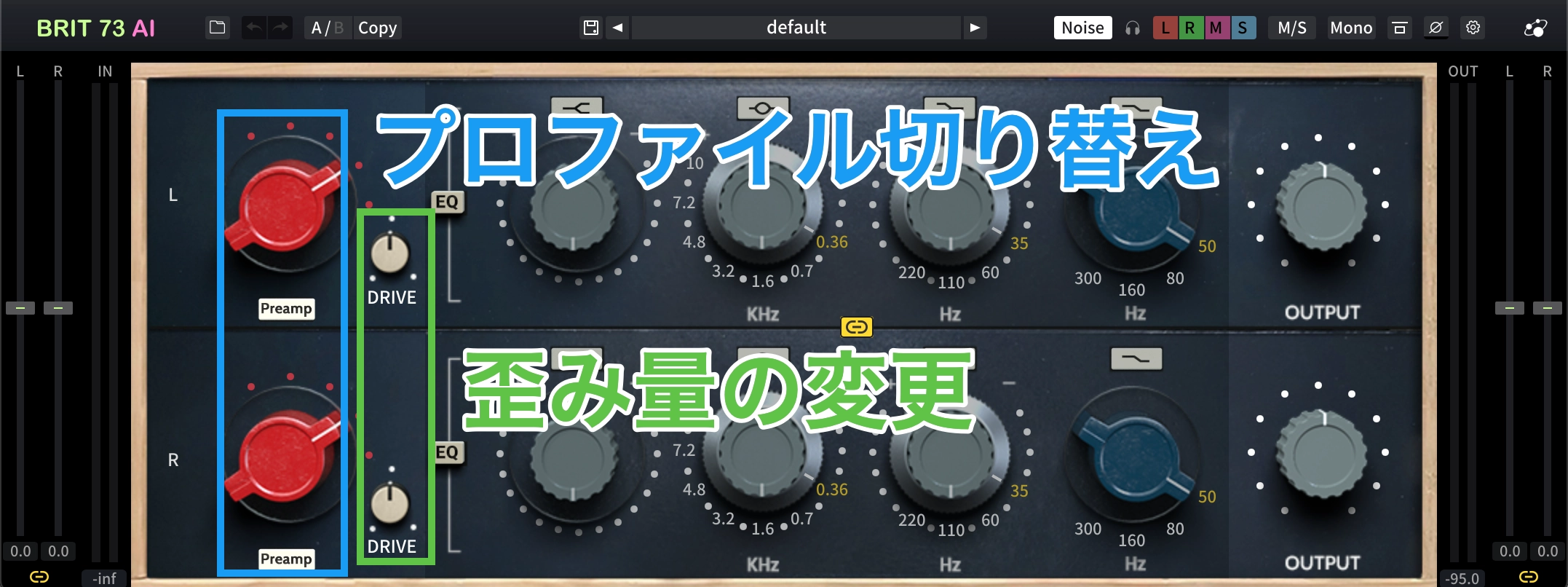
To change the character further, the preamp section on the left-hand side of the interface includes controls for switching the distortion character using a Profile switch and for adjusting the amount of distortion with the Drive knob.
Let's hear how an analog-style preamp can change the sound.
With a substantial amount of distortion, the attack becomes rounder and the sound seems to gain body extending into the upper frequencies.
In a typical preamp emulation, increasing gain adds distortion and also raises the volume, just as it does on the hardware. This means adjusting both distortion and output level.
With Brit 73 AI, however, increasing the Drive control does not itself raise the output volume, which makes shaping the sound more convenient.
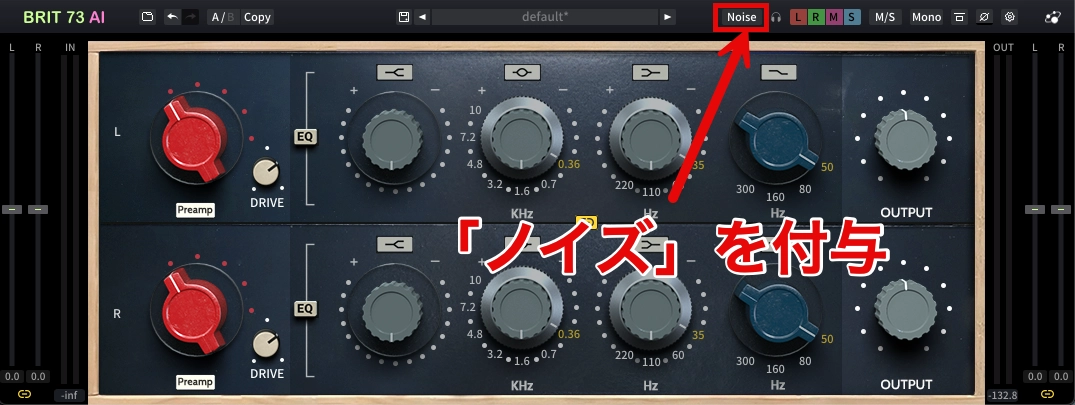
Another distinctive feature is the ability to add the noise associated with passing a signal through analog circuitry, bringing another element of the hardware experience to the sound.
Comparing Deep Vintage with other plug-ins
To evaluate Deep Vintage, we will compare its sound with other Neve 1073 emulation plug-ins.
For this comparison, we chose two other emulations of the same hardware:
- UAD Neve 1073 Preamp and EQ
- IK Multimedia TR5 EQ73
These will help us explore how Brit 73 AI differs from more conventional plug-ins.
Sine-wave test: Harmonics generated by the preamp
To compare the harmonics added by each preamp section, we feed in a sine wave and examine the results at minimum gain and with enough gain to produce some distortion.
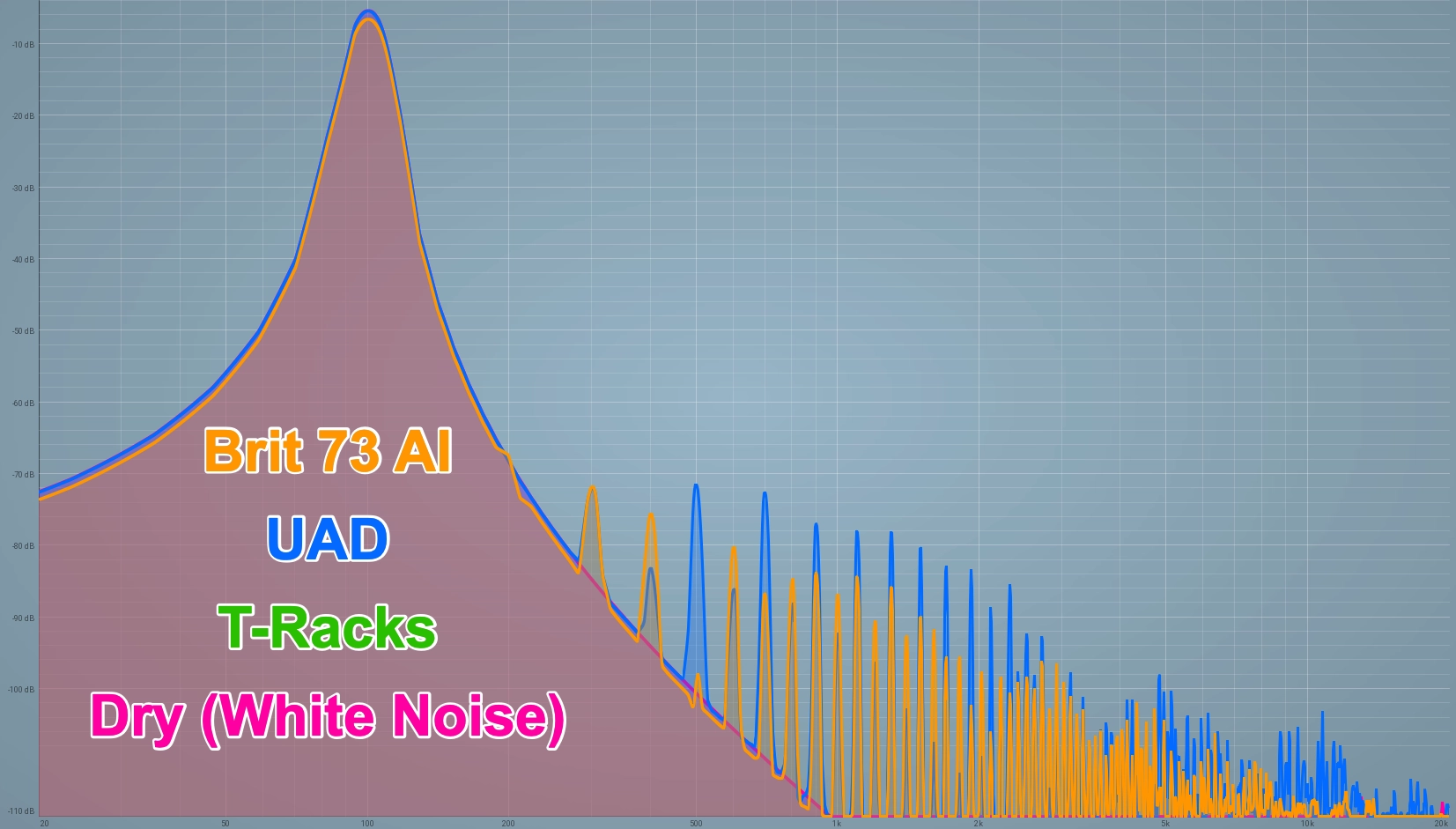
The original signal is a sine wave without harmonics. With Brit 73 AI and UAD, even before increasing the gain, the preamp section already adds distortion.
The strength and distribution of harmonics can reflect differences between the individual hardware units being modeled. UAD emphasizes odd harmonics, whereas Brit 73 AI raises the integer harmonics relatively evenly, giving the two plug-ins different tonal characters.
At low gain, the audible differences are subtle. Let's increase the gain until each plug-in produces a noticeable amount of distortion and compare them.
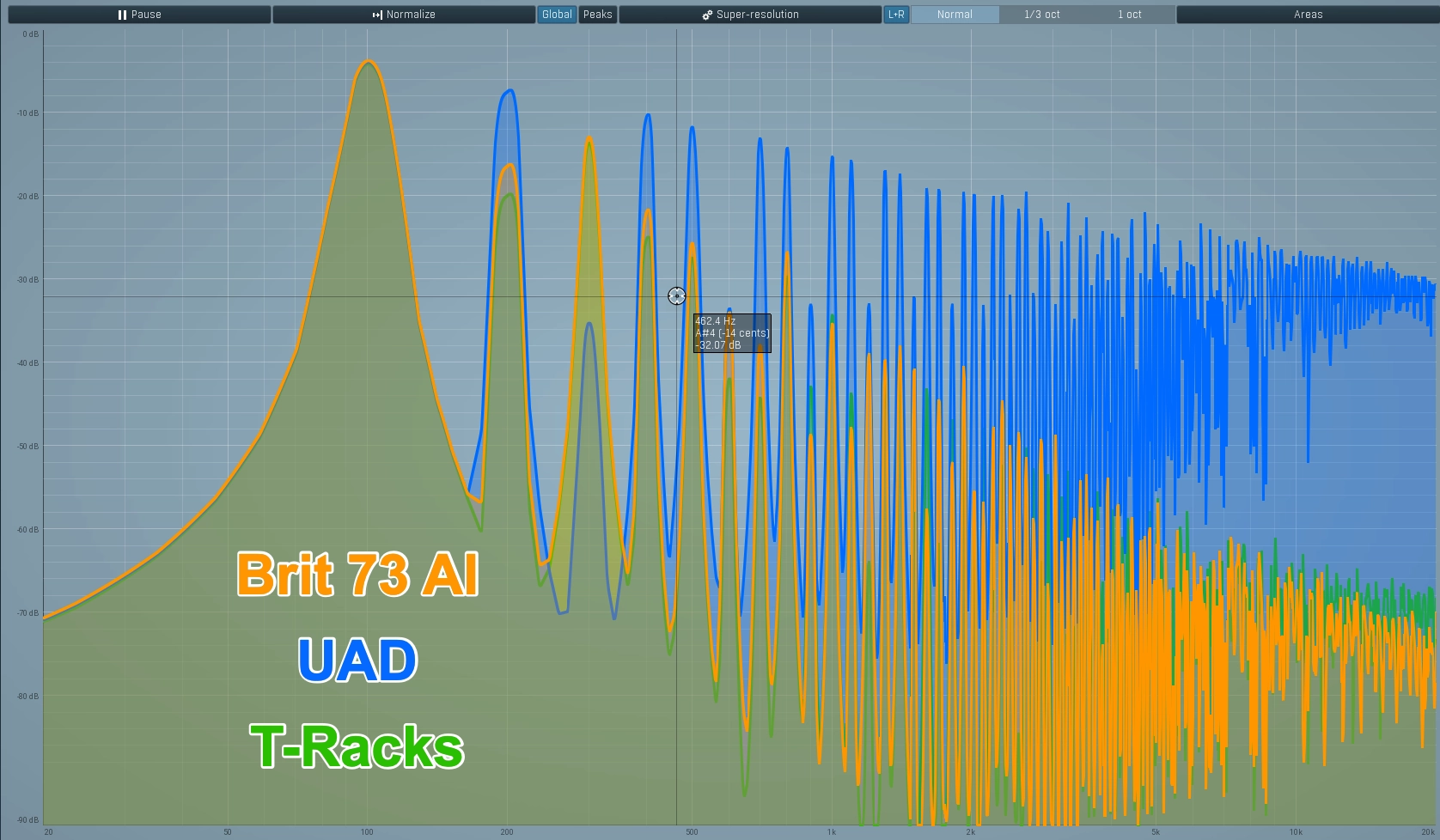
At maximum gain, UAD could produce stronger distortion than the other two products.
Regardless of where you might use that extra distortion, UAD offered the widest range of tonal change in this test.
EQ-section test: Comparing tonal shaping
Next, we compare the results of applying equivalent EQ settings to white noise.
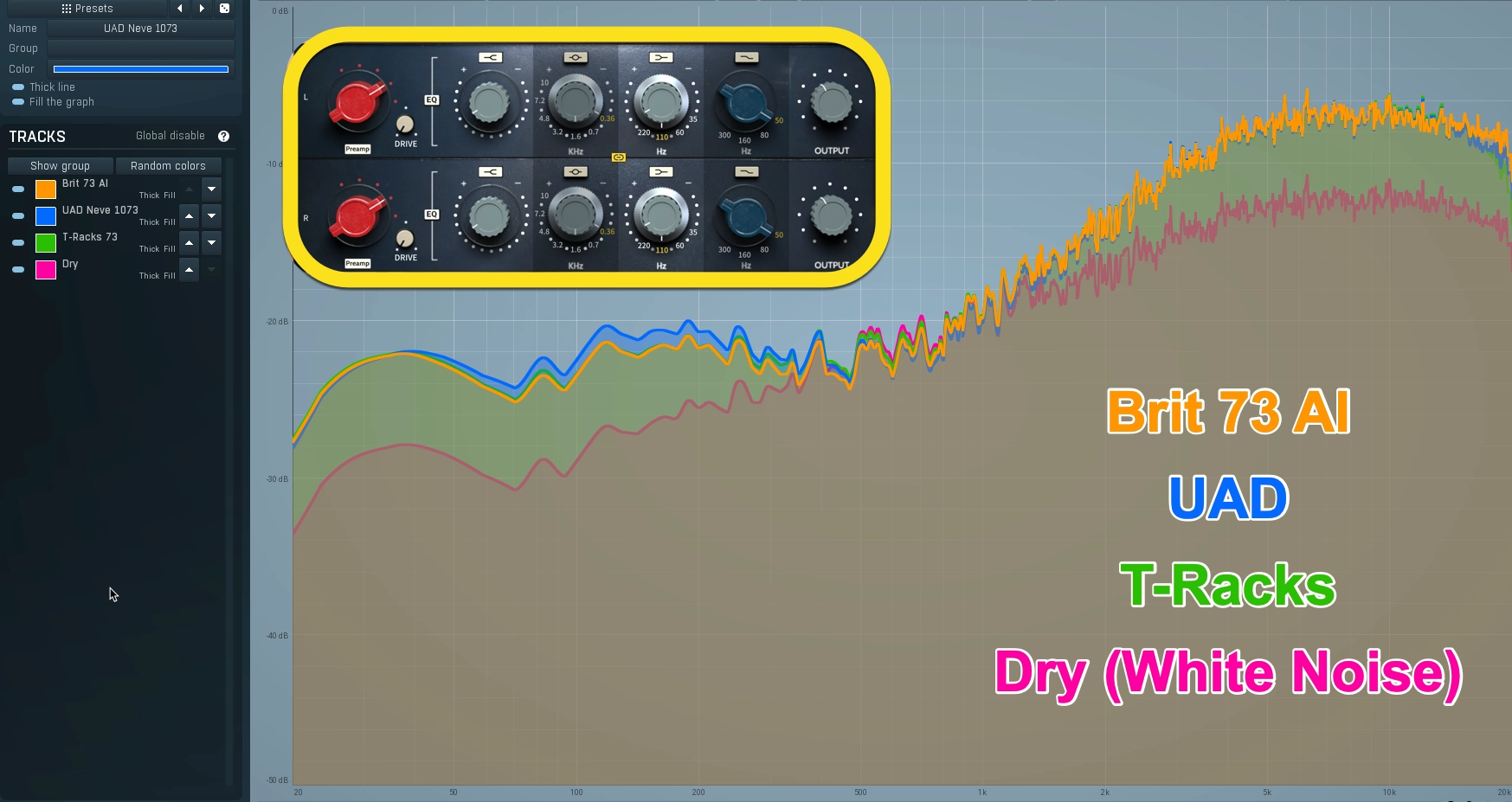
We adjusted the controls to obtain results as close as possible across all three products, but each showed its own tendencies.
In particular, Brit 73 AI produced a broader filter response, boosting a wider frequency range.
When boosting the high-frequency band, Brit 73 AI also tended to boost the very high frequencies around 20 kHz most strongly.
Sound comparison using both preamp and EQ
We also compare the sound with both the preamp and EQ sections enabled.
Although each product sounds slightly different, Brit 73 AI and UAD in particular delivered a convincing analog character. Both felt good enough for the choice to come down to taste.
Comparing processing load with performance monitors
Finally, we compare the processing load of the three plug-ins.
We tested on a MacBook Pro with an M1 Pro chip, measuring the load when each plug-in was inserted on an audio track in Ableton Live and Studio One.
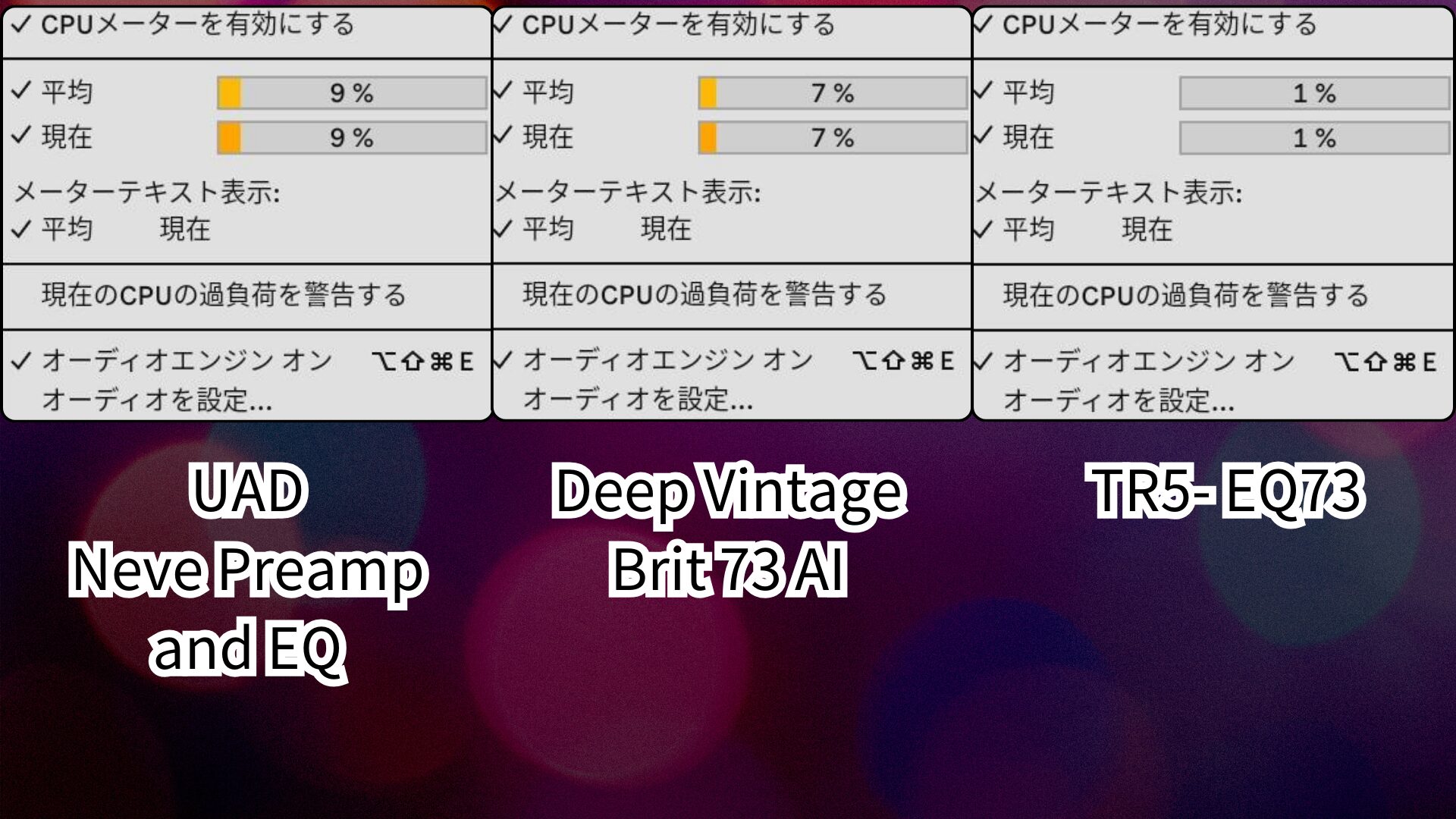
In Ableton Live, UAD produced the highest load, followed by Brit 73 AI. TR5 EQ73 increased the displayed load by only about 1%.
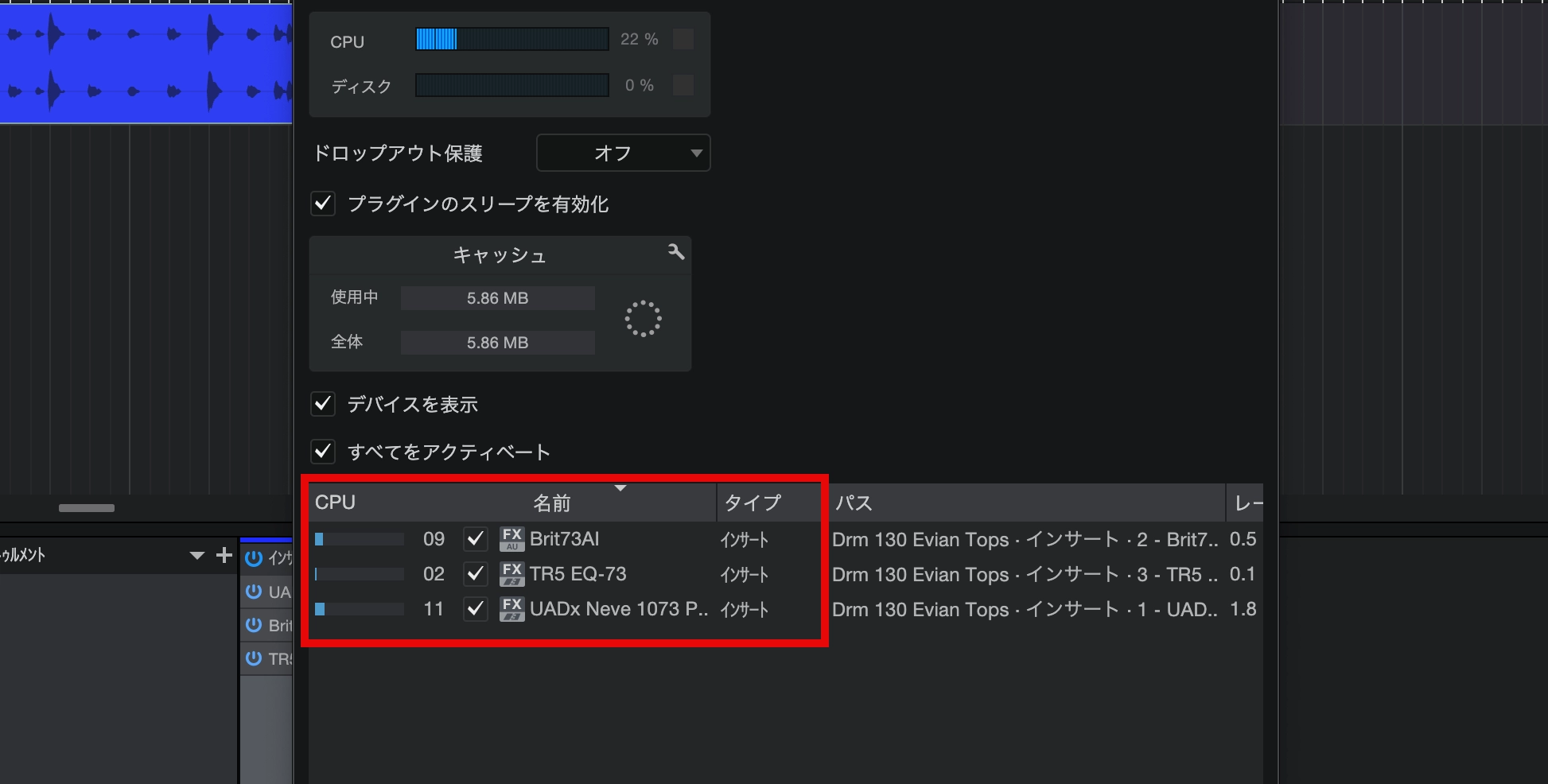
We then checked each plug-in with Studio One's performance monitor and obtained similar results.
Although Brit 73 AI was lighter than UAD, at the time of this test it still felt more demanding than lightweight circuit-modeling plug-ins.
AI-based hardware emulation was still relatively new when this review was written, leaving room for further development.
We look forward to improvements that combine greater efficiency with high-quality sound.
TR5 EQ73 sounded less distinctly analog to us than the other two, but its substantially lower processing load made it easy to use freely throughout a project.
What did you think of the comparisons?
We felt that Deep Vintage could stand alongside popular, high-quality alternatives while capturing even the character and atmosphere of the hardware at an attractive price.
This was also our first experience of this type of AI emulation plug-in. Among the many similar products available, its particularly analog-sounding character gave us a sense of APNN's potential.
We will keep an eye on developments and introduce more interesting products as we find them.
Sale and purchase information from the original review
As outlined above, the Deep Vintage series contained six plug-ins. The individual sale prices listed in the original review ranged from $29 to $49; the regular and sale prices recorded at that time are shown below. These are historical offers, not confirmed current prices.
- Brit 73 AI: An emulation of Neve's legendary Class A transistor preamp
Regular price at that time: $69 → Sale price at that time: $49 - US Rack AI: A channel strip with an API-style preamp, line driver and equalizer
Regular price at that time: $69 → Sale price at that time: $49 - Thick Pre AI: A Neve-style microphone preamp emulation with a thick, warm sound
Regular price at that time: $59 → Sale price at that time: $39 - Green AD AI: An emulation of a high-quality Lavry AD/DA converter
Regular price at that time: $39 → Sale price at that time: $29 - Tape S AI: Based on the Studer A80 MK II quarter-inch, two-track tape machine
Regular price at that time: $39 → Sale price at that time: $29 - Tape M AI: Based on the Studer A810 quarter-inch, two-track tape machine
Regular price at that time: $39 → Sale price at that time: $29
The original review also listed the Deep Vintage Bundle containing all six plug-ins at a regular price of $314, with a limited-time price of $149.
That offer was available when the review was written. Please check the manufacturer's website for current pricing and availability.
Frequently asked questions
Q1. How does Deep Vintage's APNN differ from conventional plug-ins?
APNN analyzes hardware with AI and trains a model to reproduce its output waveform. Unlike conventional circuit modeling or impulse-response techniques, it aims for extremely accurate emulation. The manufacturer demonstrates this with a polarity-inverted comparison in which the residual is described as below perceptible levels.
Q2. What is the benefit of Brit 73 AI's Drive knob?
With typical preamp emulations, increasing gain also increases volume. Brit 73 AI lets you adjust the amount of distortion without a corresponding rise in output level, making distortion and volume easier to control independently.
Q3. What is the price range of Deep Vintage plug-ins?
The regular prices listed in the original review were $39 for Green AD AI and Tape S/M AI, $59 for Thick Pre AI, and $69 for Brit 73 AI and US Rack AI. These relatively affordable prices made the series approachable. Check the manufacturer's website for current prices.
Q4. Which plug-ins work well for vocals and drums?
Brit 73 AI offers a clear, bright sound, while Thick Pre AI adds warmth and low-mid weight, making both suitable for vocals and drums. US Rack AI's punchy, powerful sound also suits guitar.
NEW ARTICLES
Latest English Articles










































































