Programming bass in a DAW has a major influence on the overall feel of rock and pop productions. This article explains practical techniques for beginners from a bassist’s perspective. Learn to build a stable bass line around chord roots, strengthen the rhythm by working with the kick drum, and connect chords smoothly using fifths and thirds. We then work through chromatic approaches, pentatonic scales, and fills, helping you program bass parts with the realism of a live performance.
A bassist explains the essentials of programming bass
Bass lines and rhythms are important elements of an arrangement. However, many people find them difficult to program because they have no experience playing the instrument.
Using Yorushika’s popular song “Tada Kimi ni Hare” as a reference, we will explain how to create rock and pop bass lines and program them with the realism of a live performance.
Video: Professional bass programming techniques

The basics of building a bass line
Bass patterns vary with the genre and song. Let’s start with the fundamental points to consider when creating a bass line.
Pitch basics
The most basic approach to bass pitch is to play the root of the chord.
For example, the root of C is C, and the root of Fm is F. Playing the note identified by the chord’s letter name gives the bass line stability.
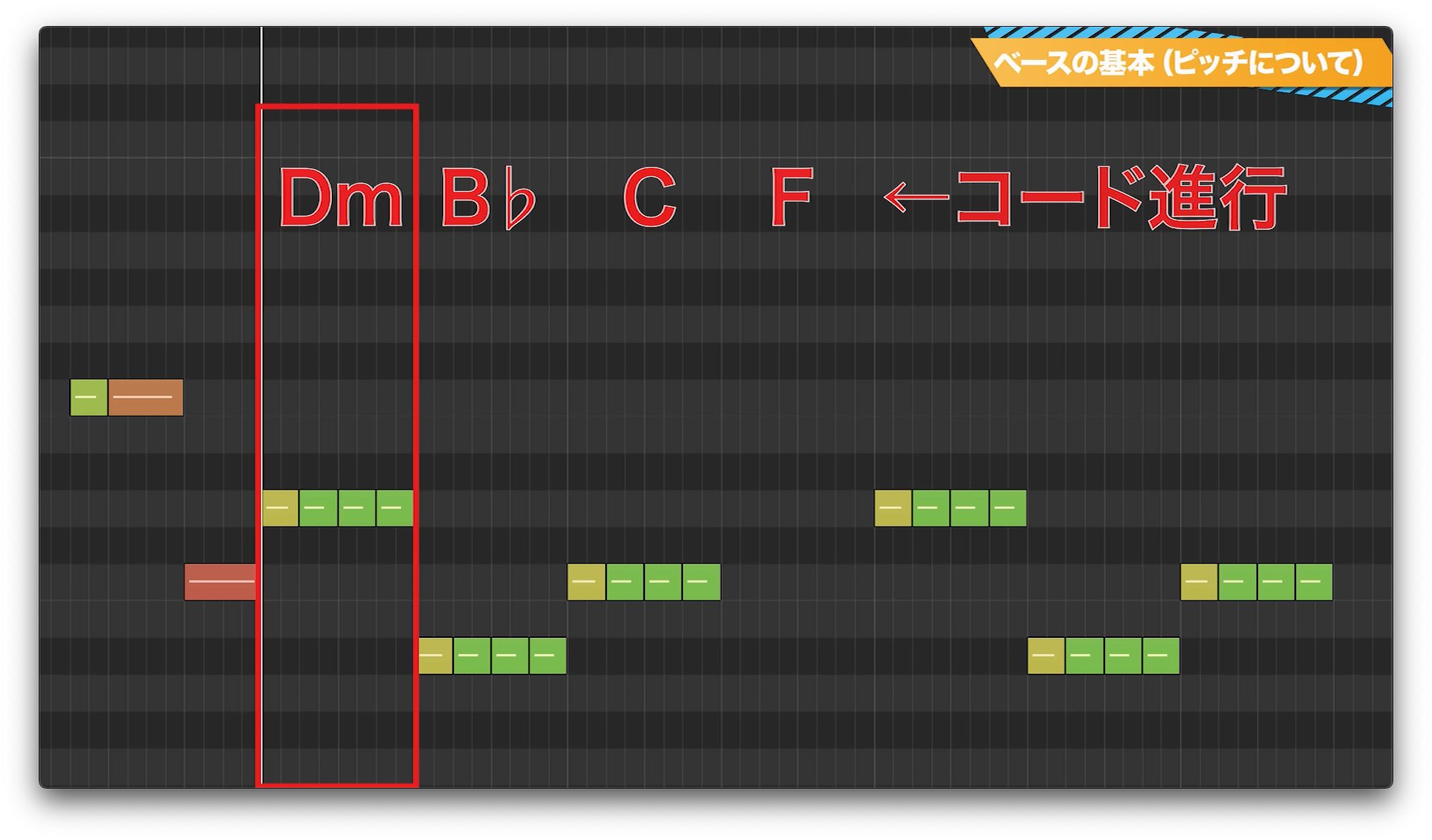
This is the bass line from the chorus of our reference song. Notice that it plays only the root of each chord.
Root-note bass line
This approach is called playing the roots. Playing them in eighth notes is a classic pattern that gives a song momentum.
The bass also gives the whole song a sense of stability by firmly supporting the chord roots.
Rhythm basics
Together with the drums, the bass forms the rhythm section and supports the rhythmic framework of a song.
Its relationship with the bass drum, or kick, is particularly close because both occupy the low end. Keep the kick’s rhythm in mind when creating a bass line.
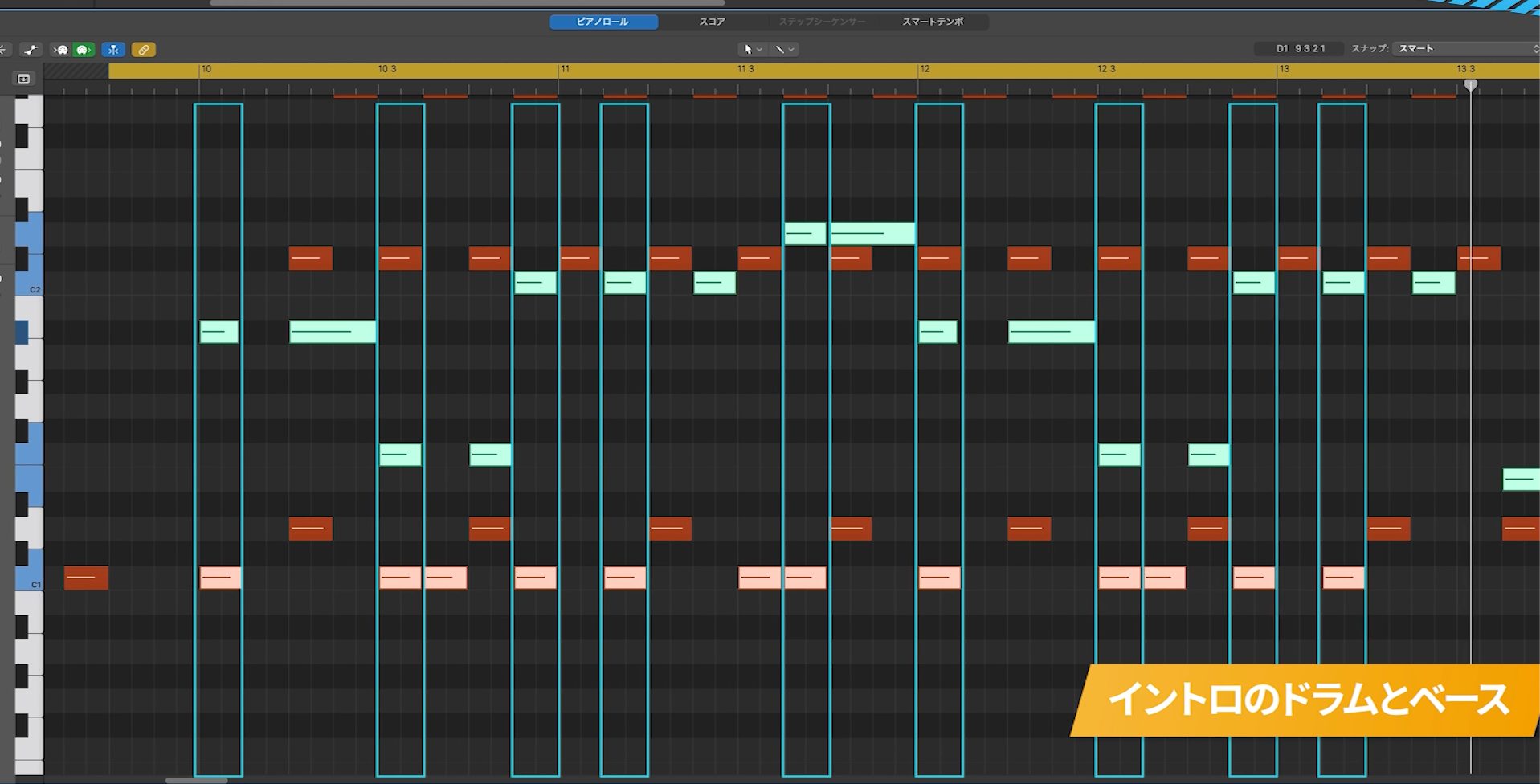
In the verse of our reference song, the kick and bass play together at the highlighted points.
You do not have to put a bass note on every kick hit. Align them where you want a low-end accent to give the rhythm definition and contrast.
Moving beyond the root
Playing roots alone can produce a complete bass line, but using other pitches adds color.
Here are some of the non-root notes that are particularly useful when writing bass lines.
Using the fifth of the chord

The fifth of the chord is one of the easiest notes to use when adding movement to a bass line.
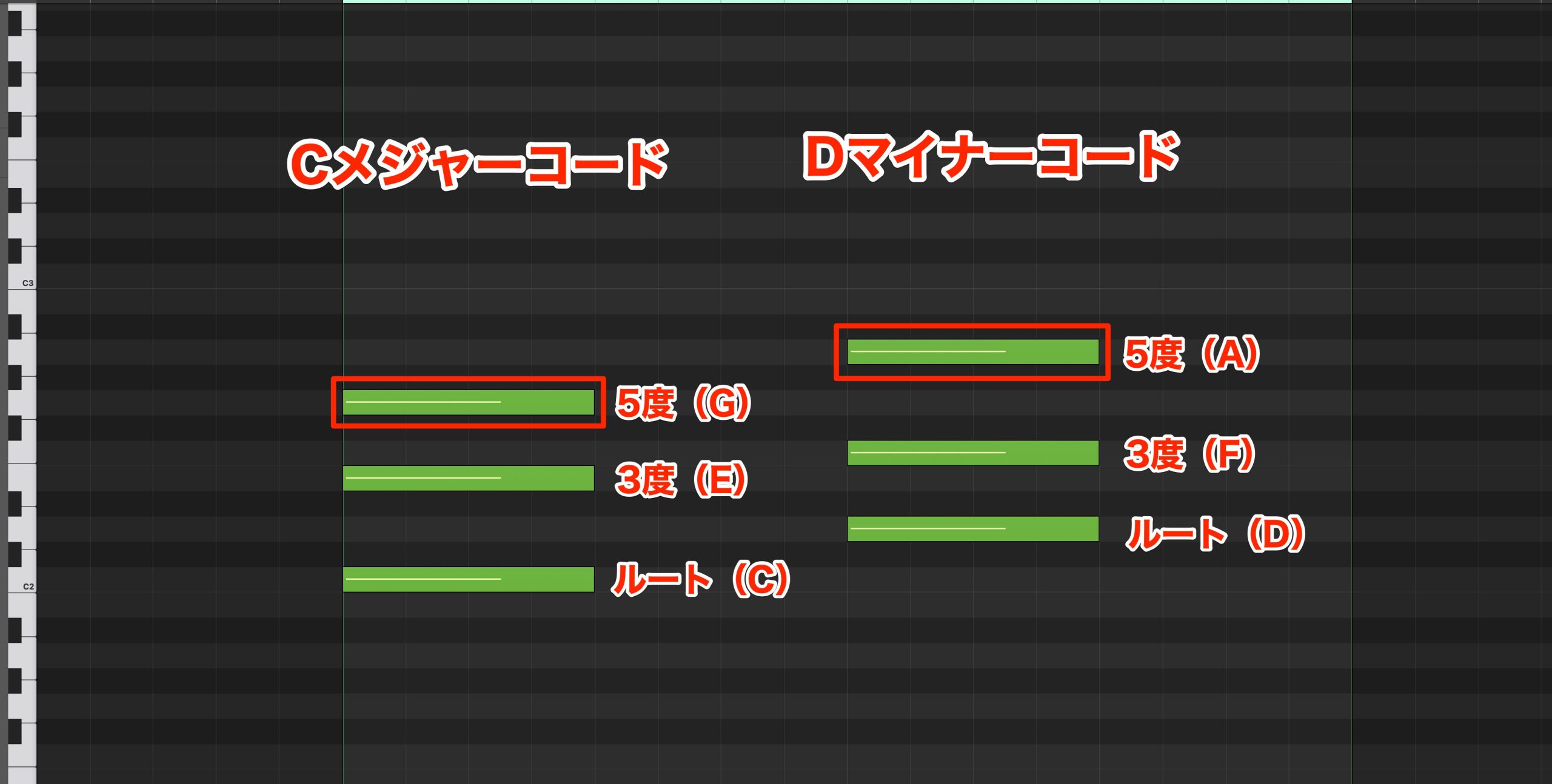
In a major or minor chord, the fifth is a perfect fifth above the root.
For example, the fifth of C major is G, and the fifth of D minor is A.
The fifth can be used at points other than the beginning of a chord change. A good place to start is in the transition between chords.
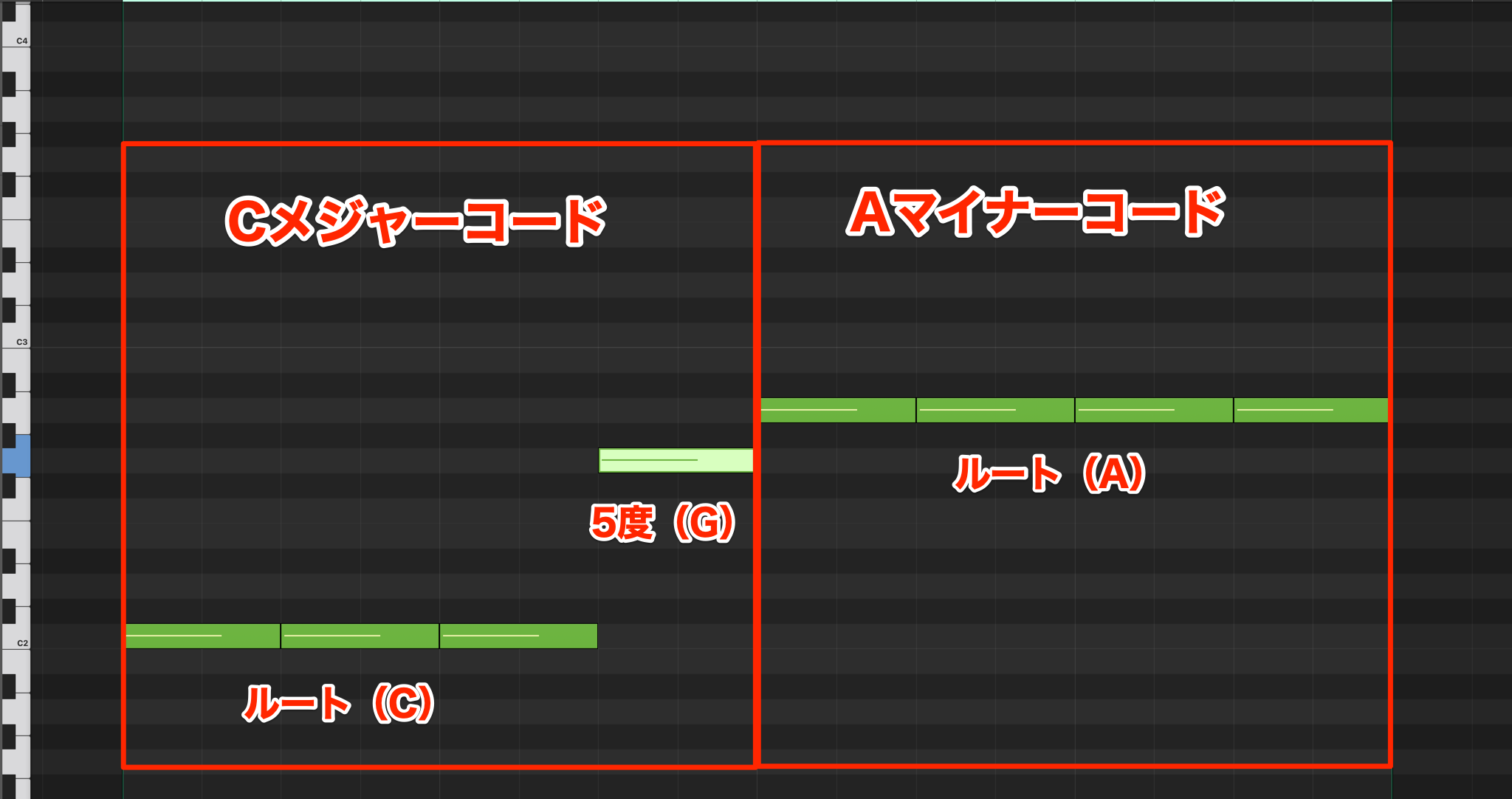
Here, inserting the fifth at a chord change creates a smooth connection from one root to the next.
Using the third of the chord
After the fifth, the third is another useful note.
In a major chord, it is a major third above the root; in a minor chord, it is a minor third above the root. This note determines the chord’s major or minor character.
It is therefore useful when you want the bass to convey the character of the chord.
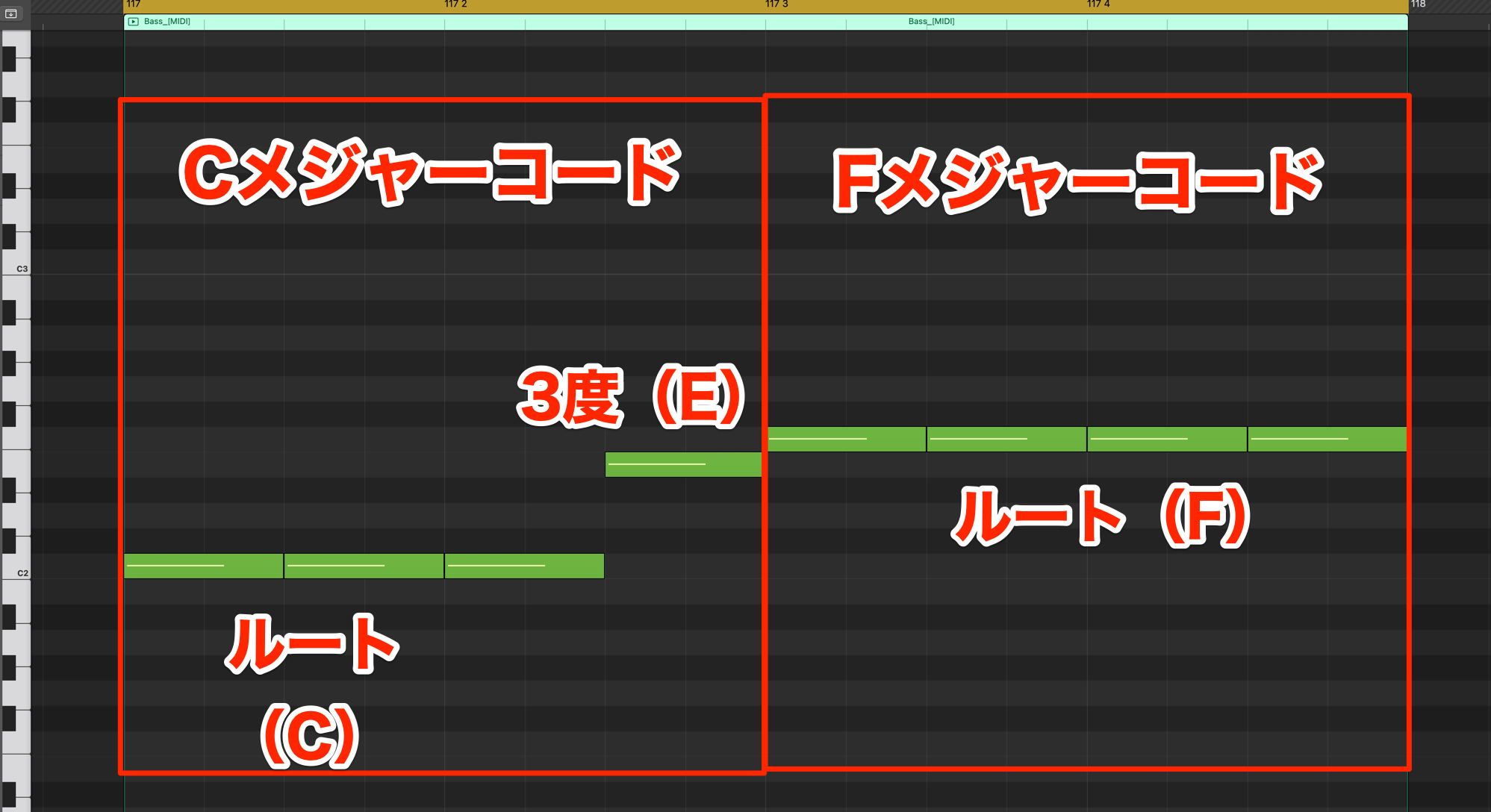
Depending on the progression, the third can also lead smoothly into the next root, much like the fifth.
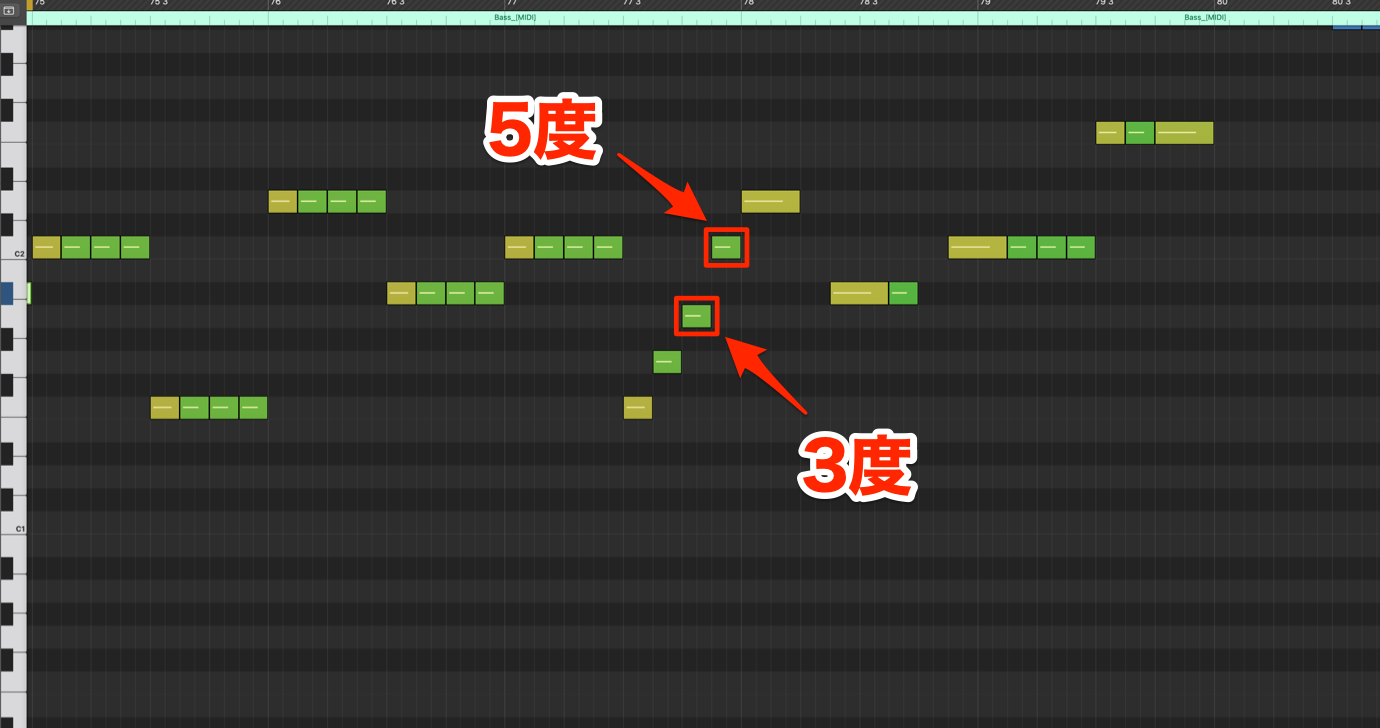
Our reference song also uses fifths and thirds to connect roots smoothly in this way.
Connecting roots with fifths and thirds
Using chromatic approaches
A chromatic approach is another effective technique for connecting pitches smoothly.
When the chord changes, a chromatic approach uses the note a semitone above or below the target immediately before it, creating a smooth connection.
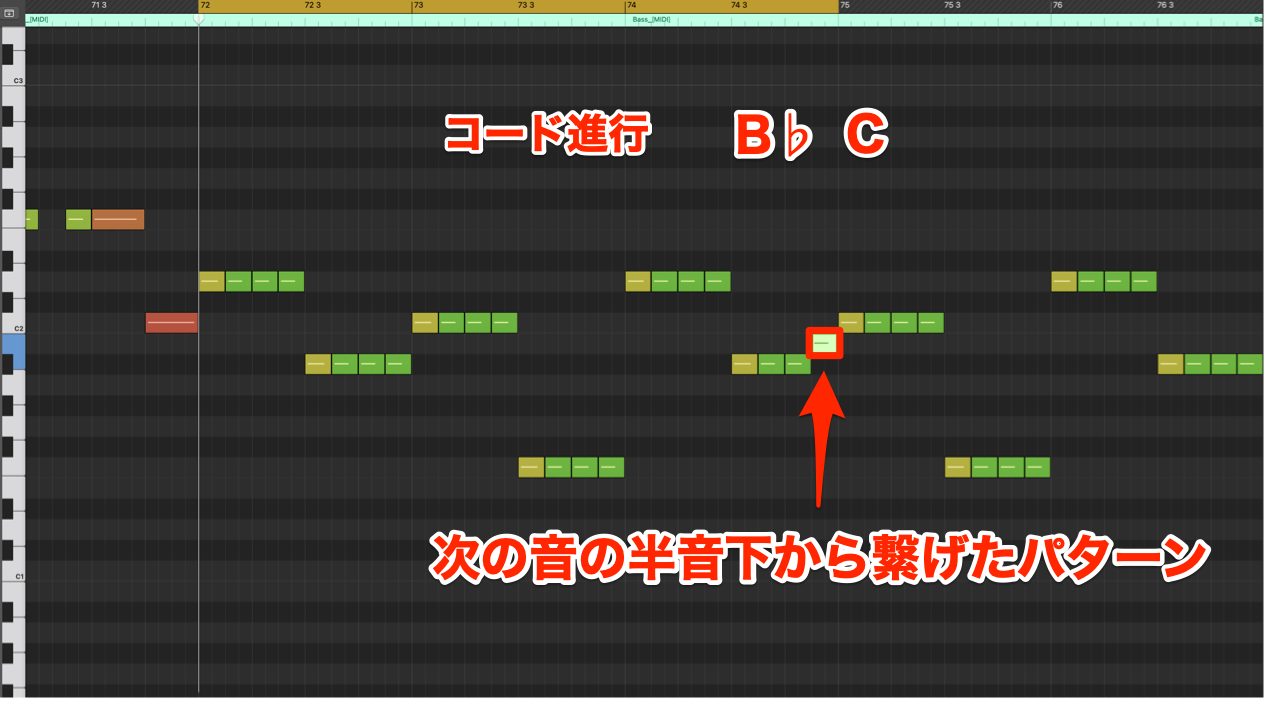
As shown above, this often involves notes outside the scale and introduces a little tension.
However, if a chromatic approach note is held too long, it can muddy the harmony or even change how the chord progression is heard. We recommend keeping its duration short.
Creating melodic phrases
So far, we have focused mainly on smooth bass lines.
Taking the arrangement a step further, the bass can also play melodic, more intricate phrases.
The pentatonic scale is frequently used to create melodic bass phrases.
It often appears in passages where the bass comes to the foreground, sometimes called pickup phrases, and in solo phrases.
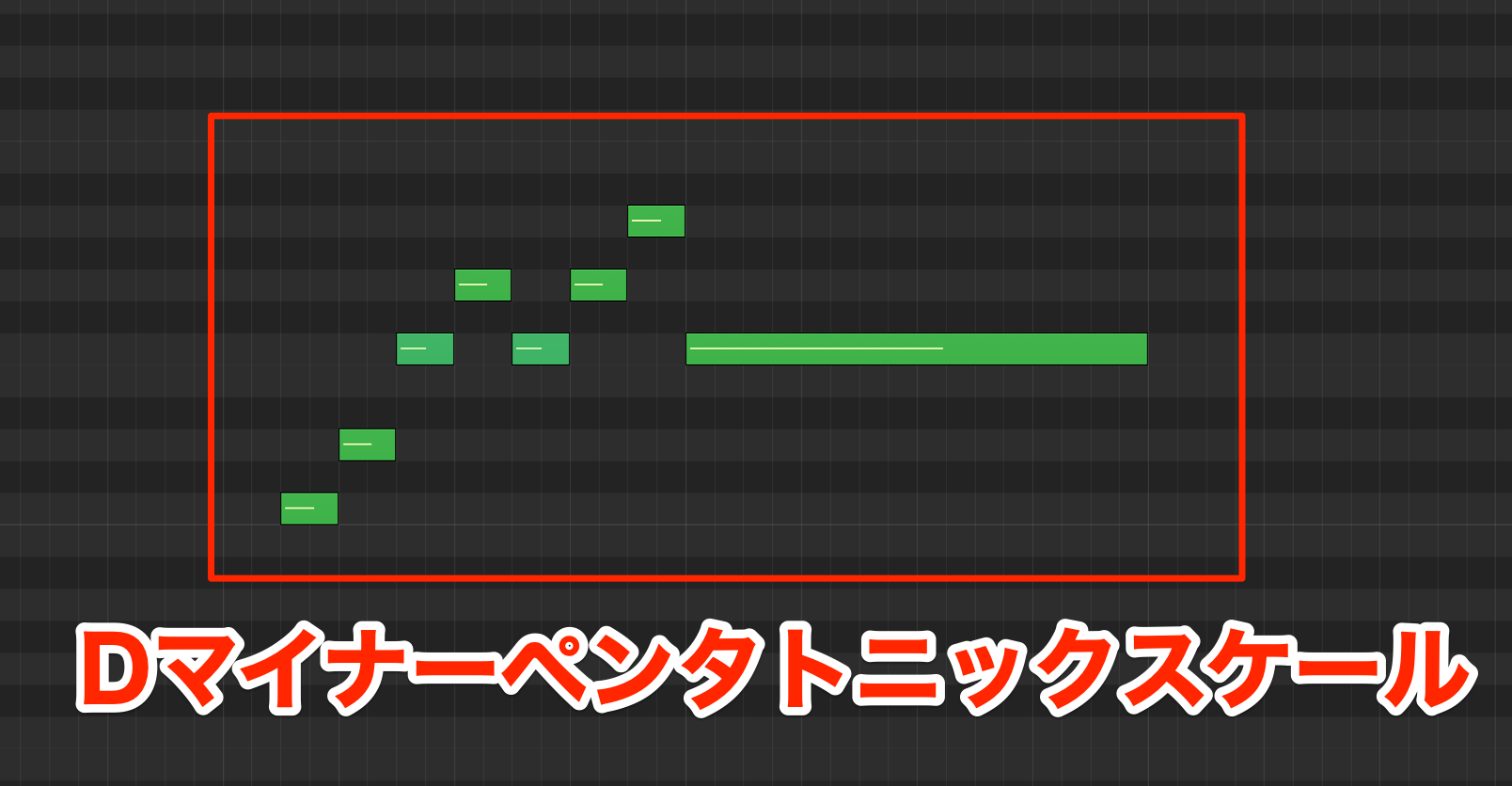
In the second verse of our reference song, the bass plays a melodic phrase using a pentatonic scale.
D minor pentatonic phrase
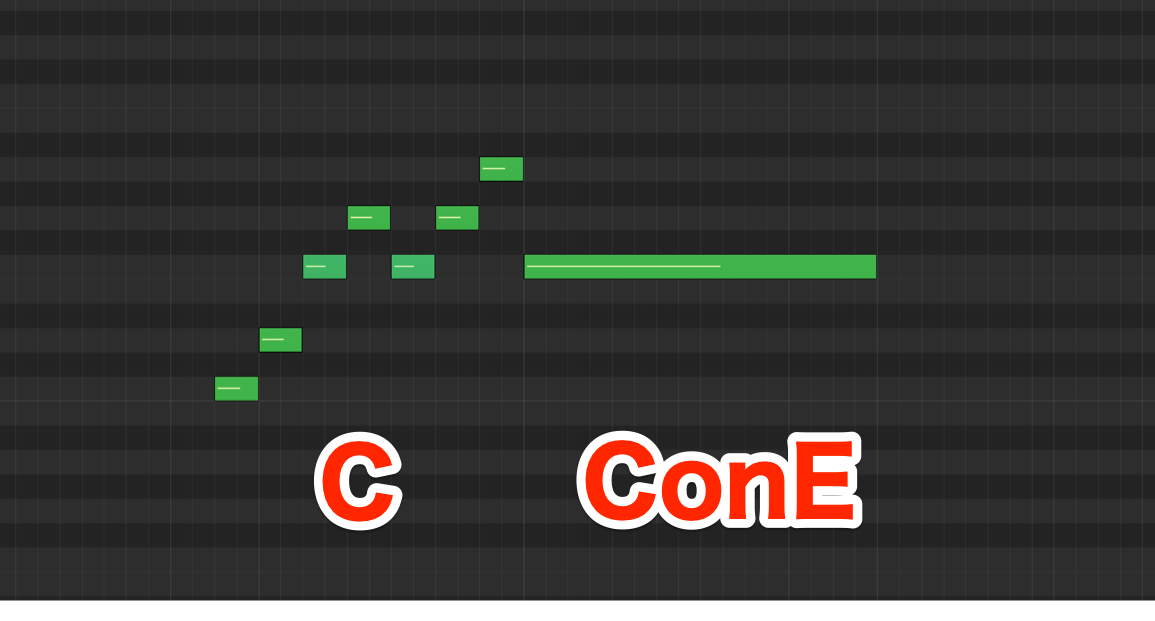
Over the C major and C/E chords,
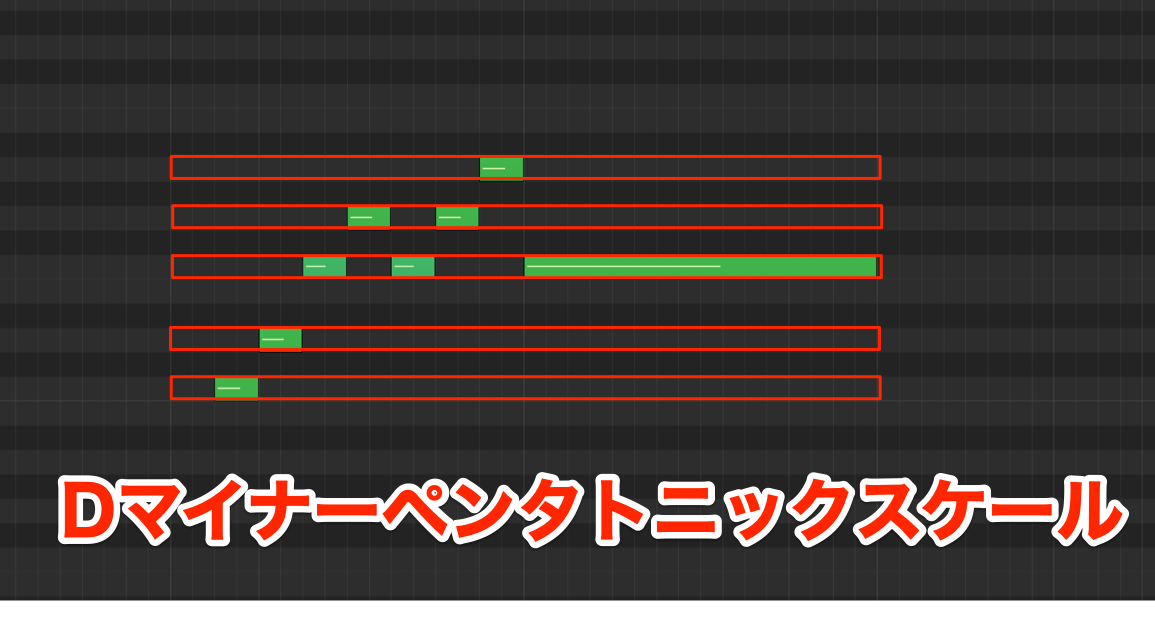
the phrase uses D minor pentatonic—D, F, G, A, and C—which corresponds to the song’s key of D minor.
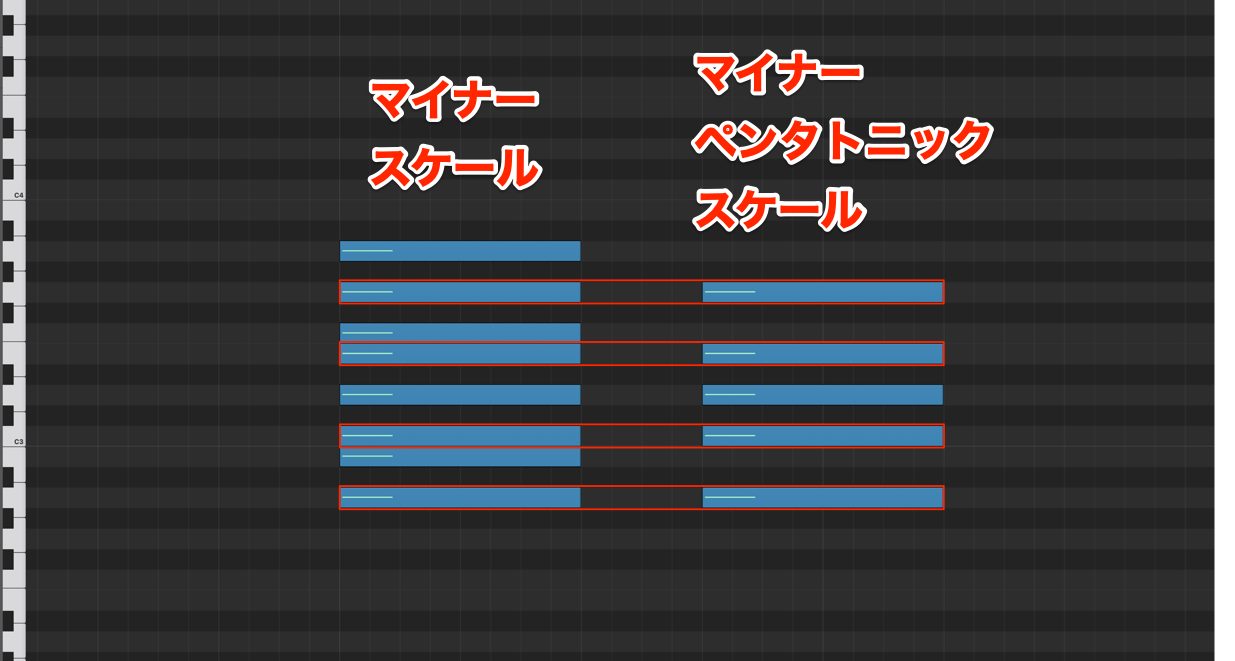
Minor and major pentatonic scales contain five notes, omitting two notes from the corresponding seven-note scale. A pentatonic scale that fits the key is therefore relatively easy to use.
Creating fills
Bass fills are an advanced technique that can add just the right amount of contrast to a song, even though they may stand out less than fills on other instruments. Many people therefore find them challenging.
Let’s use the reference song to examine how a fill is constructed.
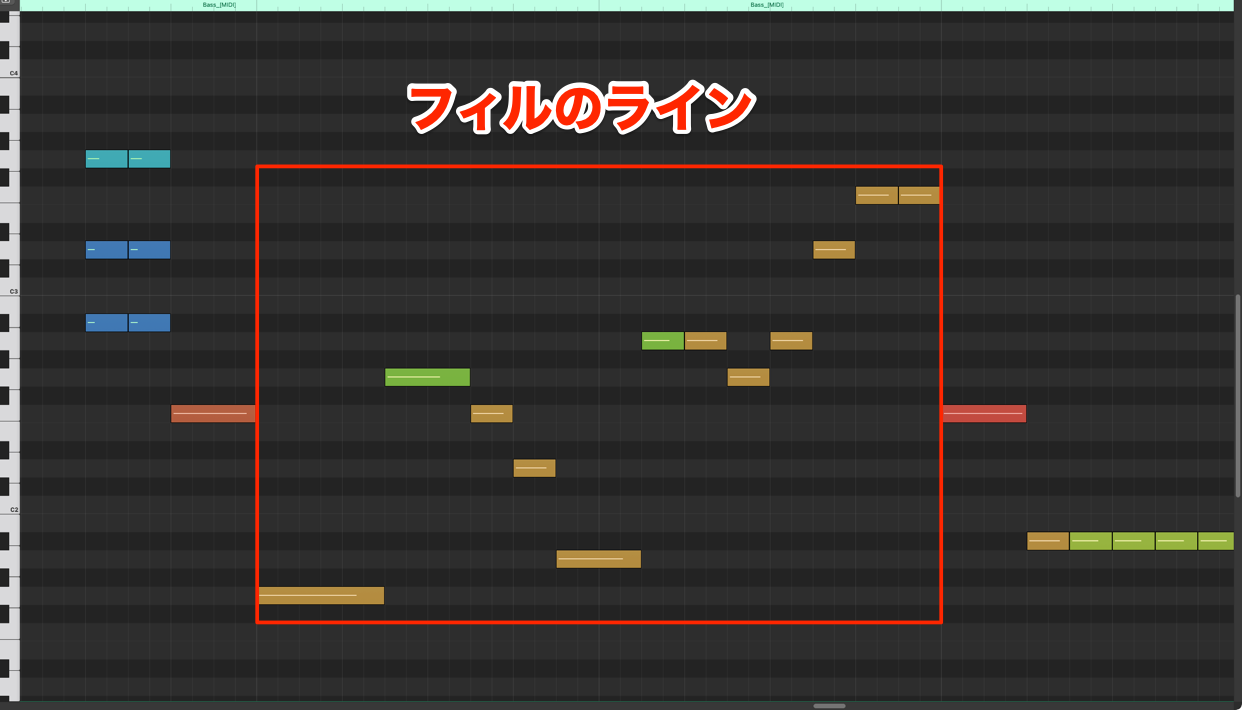
In the latter half of the instrumental break, where the bass is most active, the pitches move boldly up and down.
Bass fill
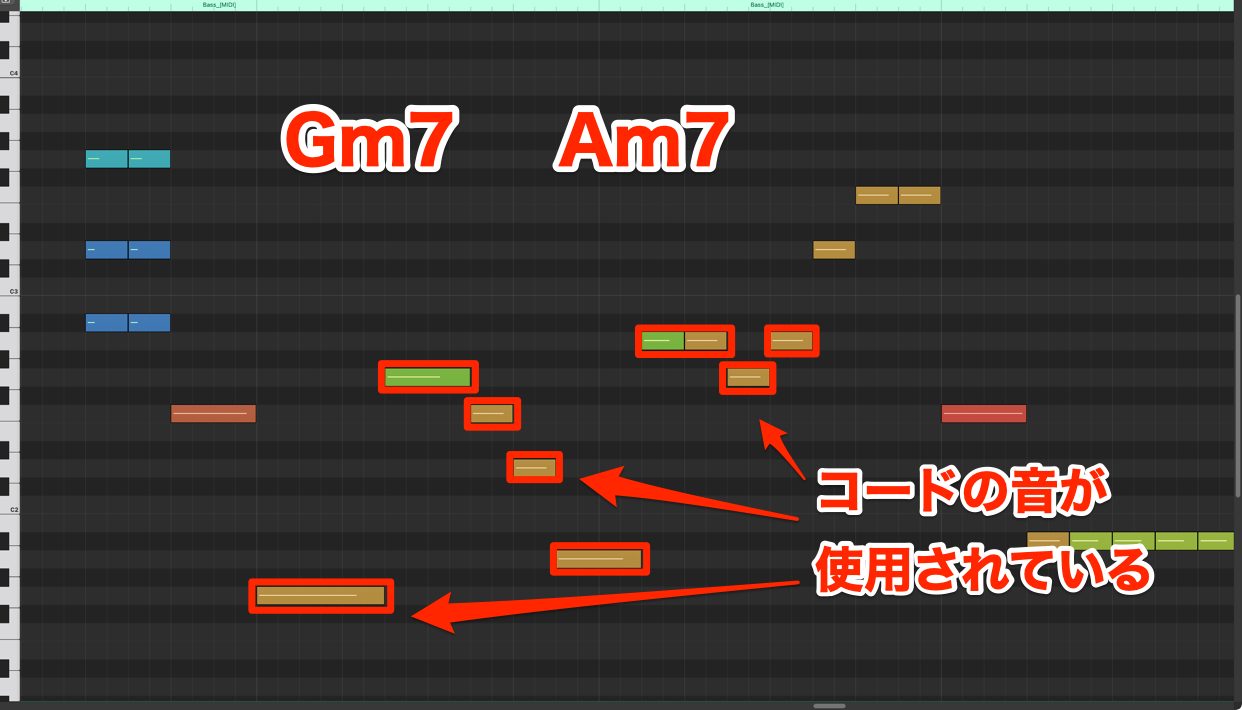
The many notes may look complicated at first, but the phrase uses only chord tones, such as the root and flat seventh.
Playing the root an octave higher makes the phrase more striking and colorful.
This suggests that wide pitch movement, even with a simple selection of notes, is one key to creating an exciting bass fill.
The pentatonic scale introduced above is also frequently used for lively bass fills, so give it a try.
Tips for programming MIDI notes
When programming the sound of a real instrument, two important considerations are velocity, or playing strength, and note duration.
Let’s look at both in the context of a bass line.
Velocity
Bass is often processed with a compressor or limiter to even out its volume and attack, so variations in playing strength may have a less obvious effect.
However, real performances naturally contain dynamic variation, and some virtual instruments change timbre with velocity. Vary the dynamics if you want a more realistic programmed bass part.
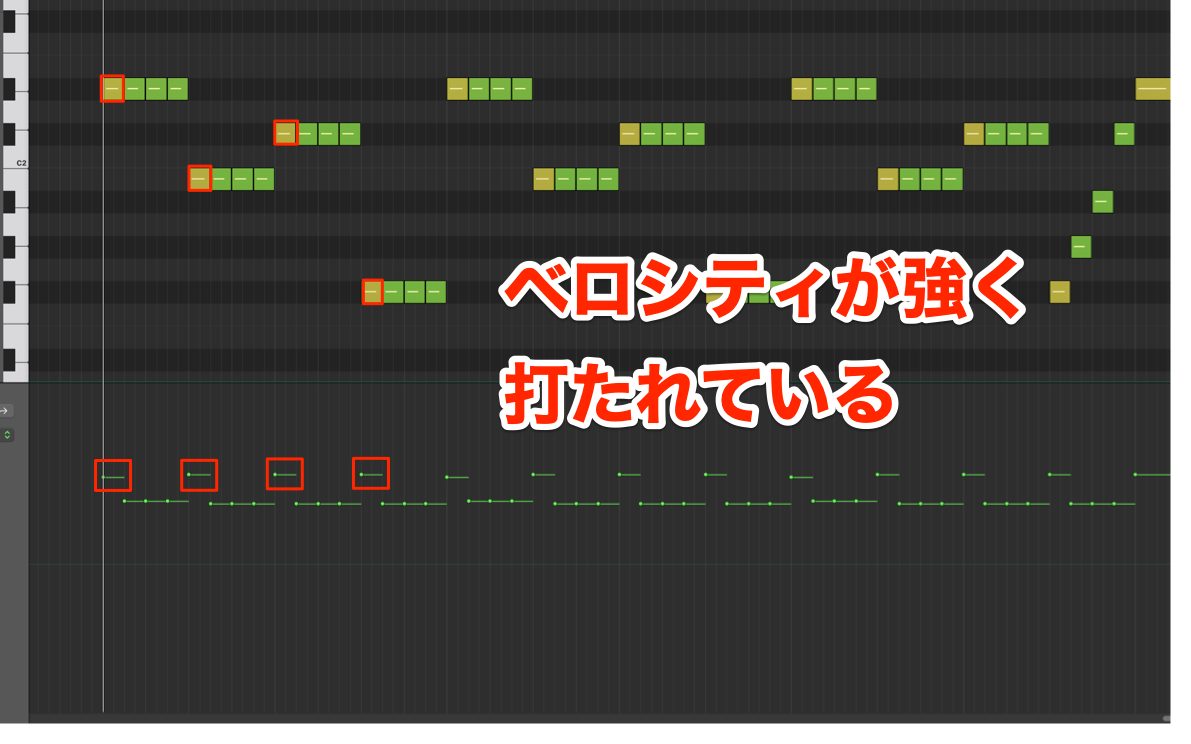
As shown in the image, making the first note of each chord or phrase slightly stronger can give the part more of a live feel.
Note duration
We discussed how the bass works with the kick to form the rhythm. One aspect of this is that the bass can express a perceived duration for the kick.
The kick, as a percussion instrument, does not have a sustained note in the same way as the bass. Holding a bass note that starts with a kick can make the kick feel longer.
In other words, lengthening and shortening bass notes creates rhythmic effects that the kick alone cannot provide.
As a general guide, shorter bass notes give a tighter feel, while longer notes create a more flowing groove.
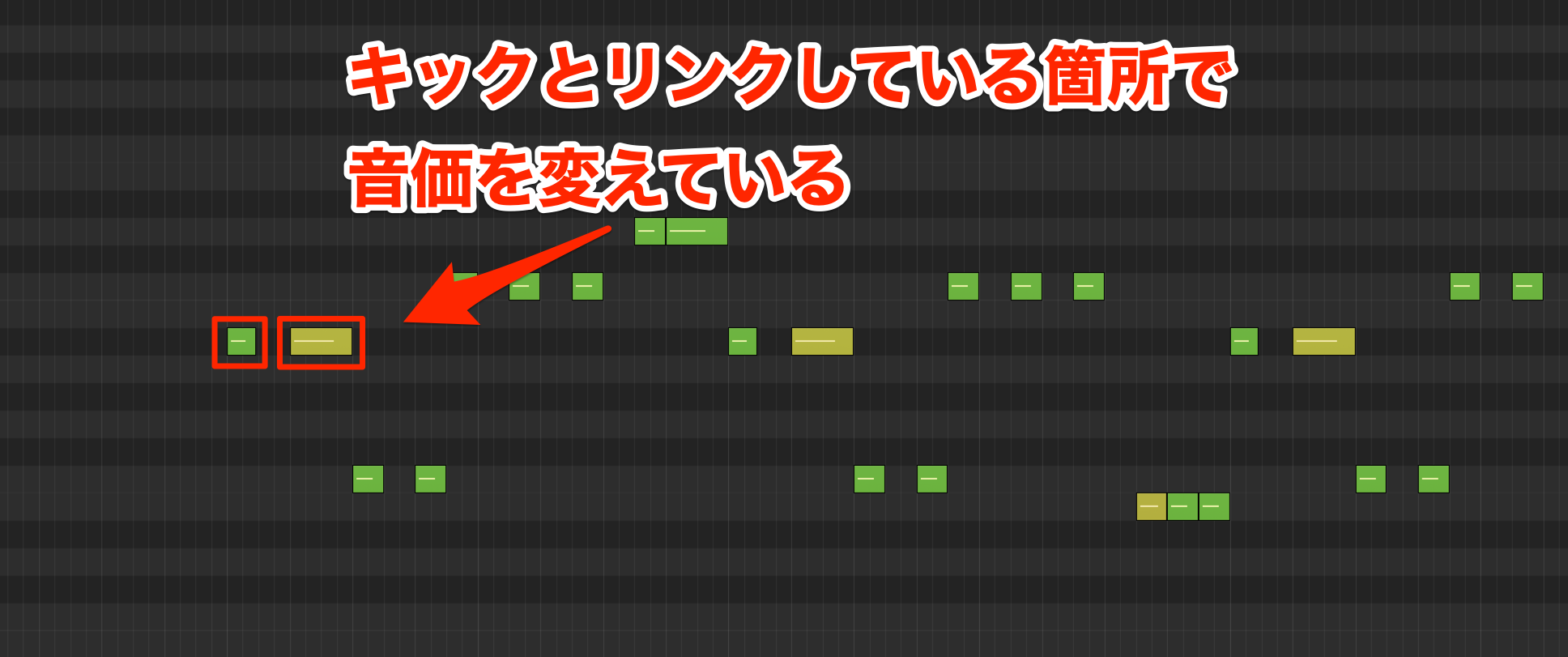
In the first verse of our reference song, note durations help create the feel of the part.
Compare how it would sound if these two notes had the same duration.
Bass notes with varied lengths
Bass notes with equal lengths
Using the same duration gives a tighter rhythmic impression. Varying their lengths creates contrast between the two notes and gives the rhythm more definition.
A live bassist adjusts note lengths even more subtly to shape the groove. Even broad differences, such as eighth-note and sixteenth-note lengths, can make a programmed rhythm expressive.
Articulations for greater realism
An articulation is a way of playing an instrument. Guitar, bass, piano, and other instruments each have their own playing techniques.
Using an instrument’s characteristic articulations helps create phrases that sound natural and realistic, so these are useful techniques to learn.
Four common electric-bass articulations are:
- Slides
- Hammer-ons
- Pull-offs
- Ghost notes
Many modern dedicated bass virtual instruments can reproduce all of these techniques.
Slides
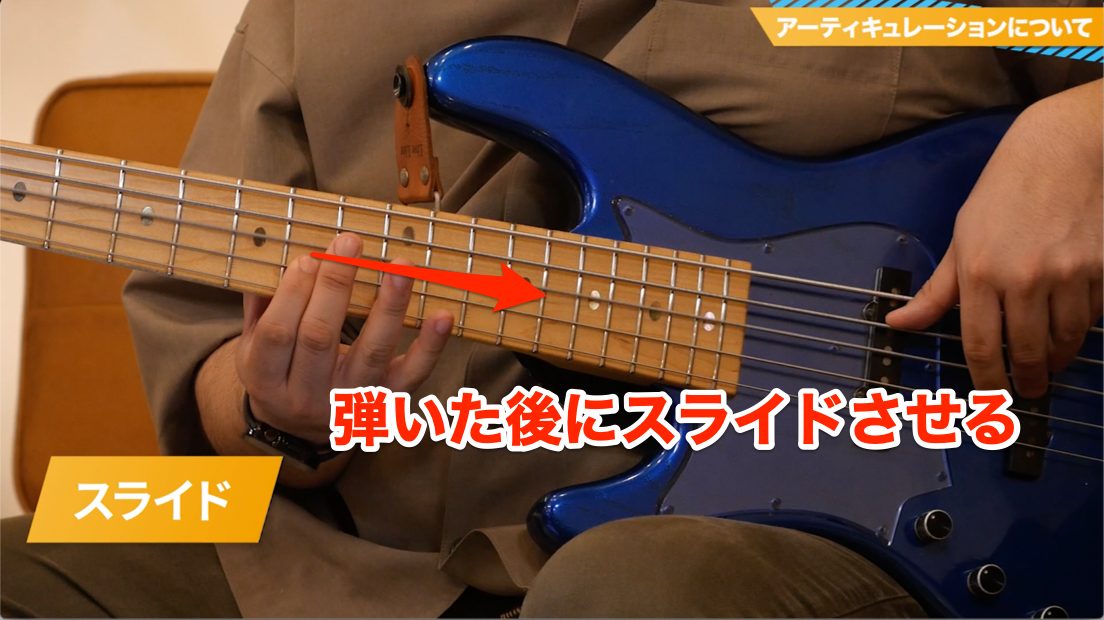
After plucking a string, the player slides along the fingerboard to change pitch. A slide has a defined starting and ending note, such as C to D.
The pitches passed through along the way are also heard.
Adding slides to a phrase creates a driving, pulling effect. They can also connect widely separated pitches smoothly, producing portamento.
Slide articulation
Because the bass is a stringed instrument, a large pitch change may require the fretting hand to move to another position, depending on the fingering.
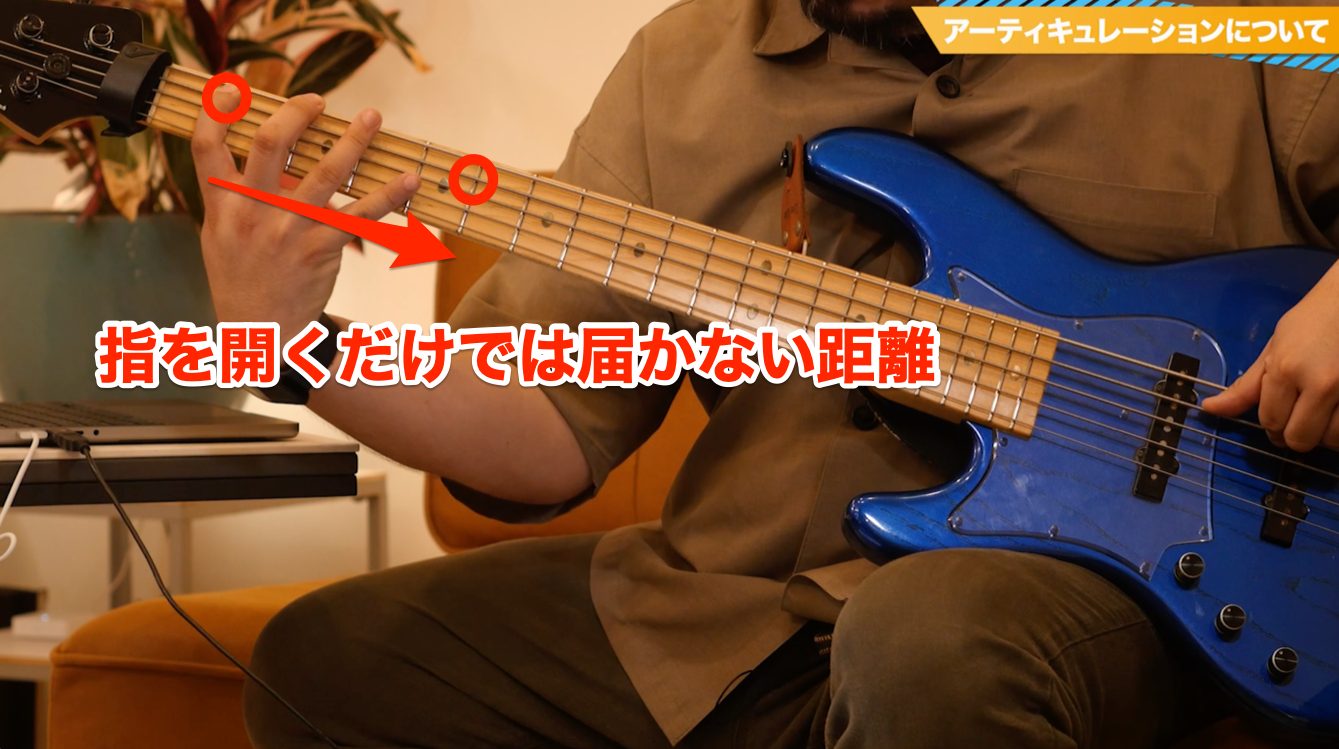
When the target note is beyond the reach of the fingers, the hand normally slides to the new position.
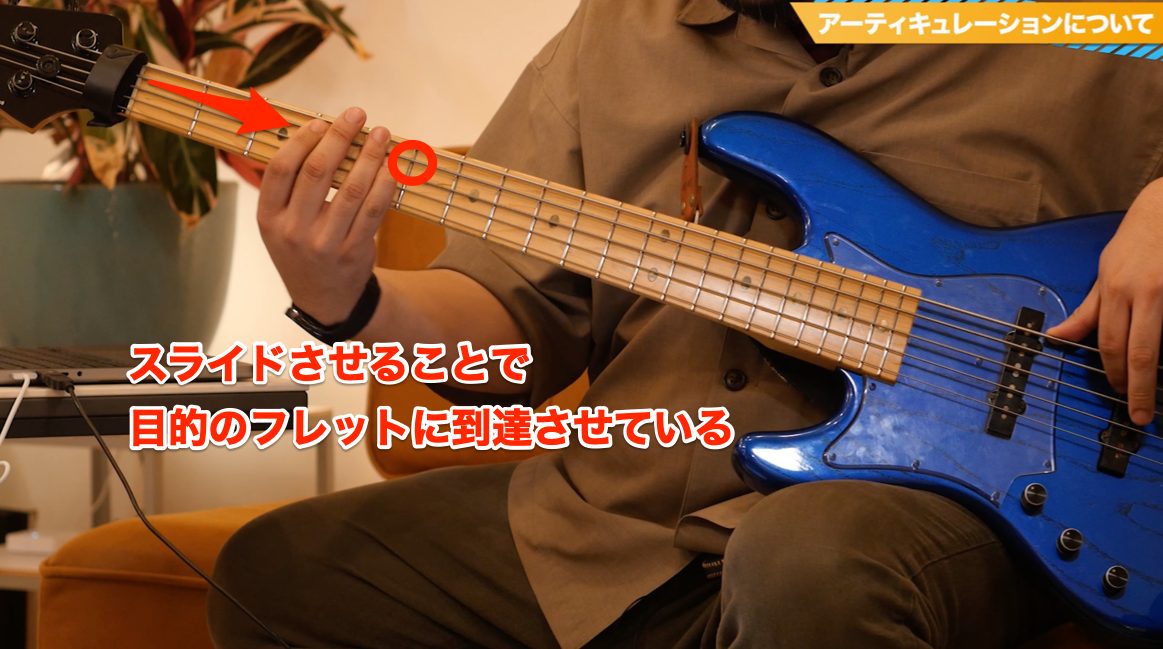
Try programming slides to add this string-instrument realism to your bass part.
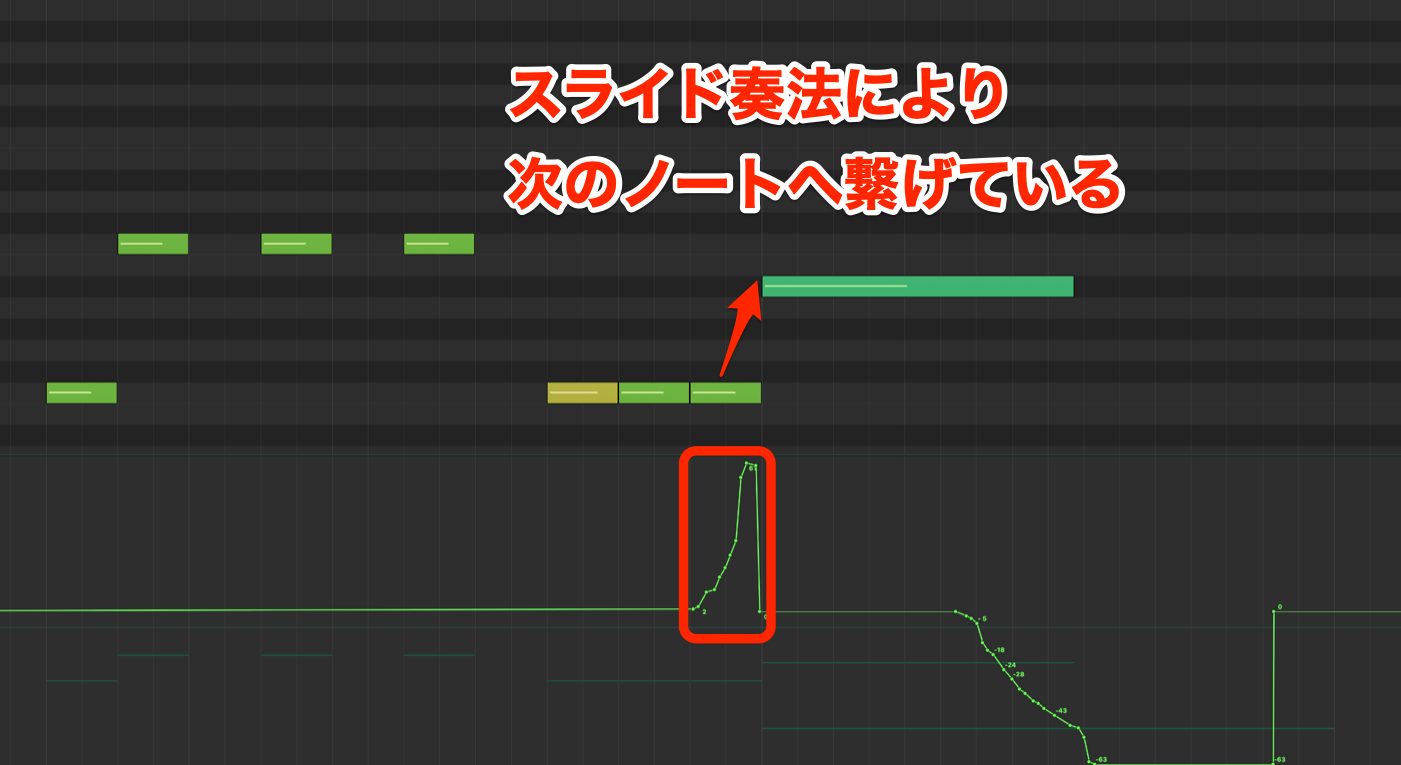
Even without knowing the exact fingering, adding a slide to a large pitch change can make the part feel more like a real performance.
Hammer-ons
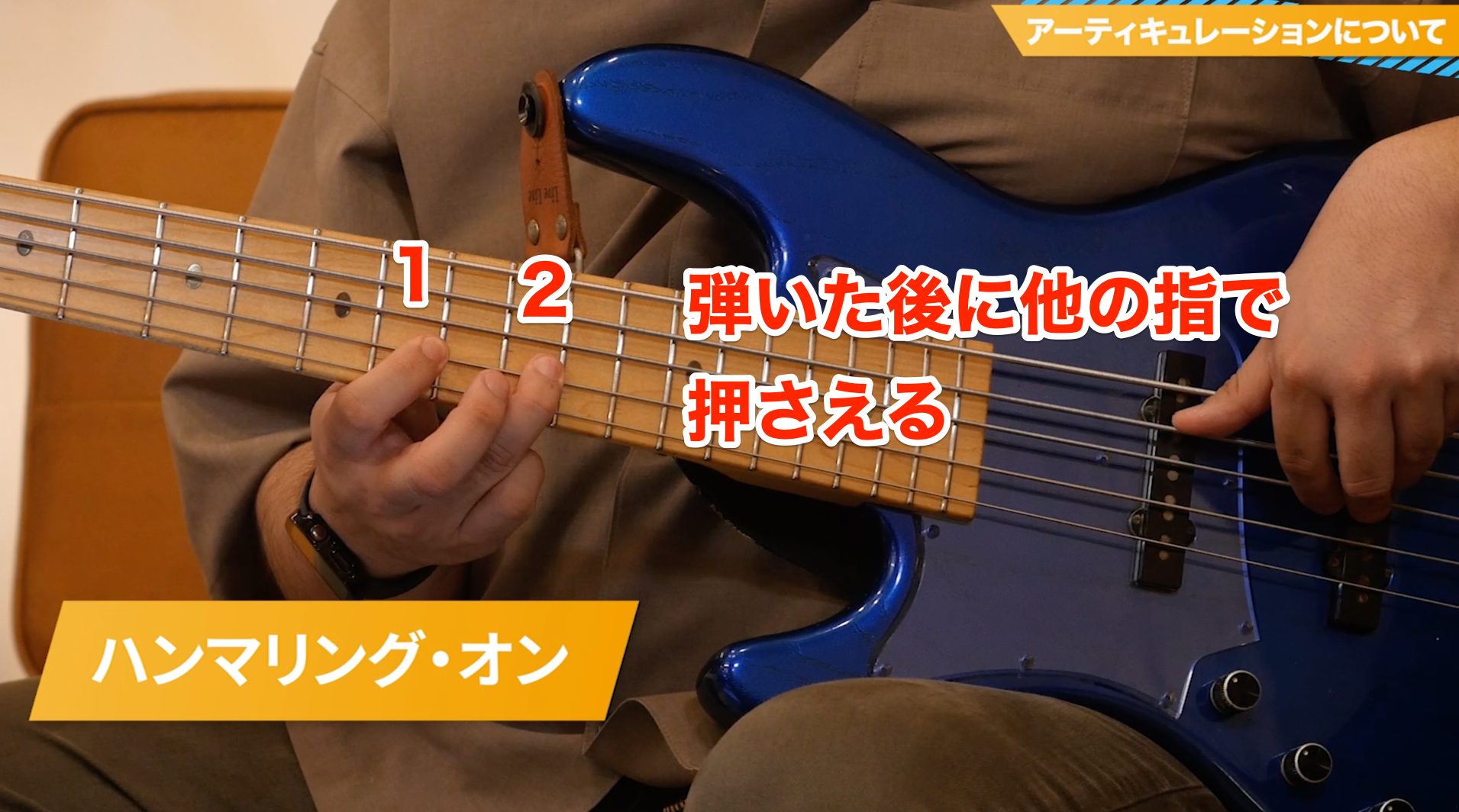
After sounding a note, the player uses another finger of the fretting hand to strike a nearby fret and change the pitch.
Hammer-on articulation
Pull-offs
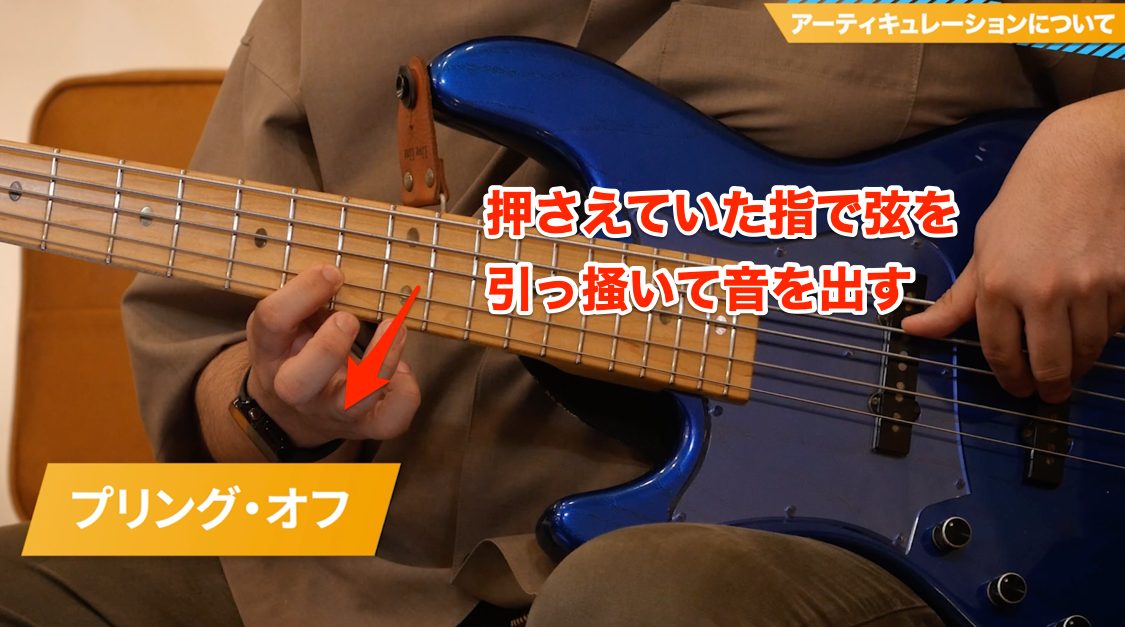
The reverse of a hammer-on: the fretting finger releases the string with a small plucking motion to sound another note.
Hammer-ons and pull-offs allow faster pitch changes than ordinary picking or fingerstyle playing, making them ideal for connecting fast phrases smoothly in legato.
Slides, hammer-ons, and pull-offs all have smooth pitch connections in common.
There is no fixed rule for choosing between them. Select the articulation that suits the nuance of the phrase.

Ghost notes
Ghost notes support the rhythm by filling spaces that would otherwise be rests.
They are used less often in a song based mainly on an eighth-note feel, like our reference track. They occur frequently in funk and other music with a swinging sixteenth-note feel, adding a groovy nuance.
Ghost notes
We have covered the fundamentals of programming bass and several ways to take your parts further.
There is no single mandatory approach, but keeping these ideas in mind will help you program tracks that sound more like an electric bass.
Try them in your own productions.
Professional bass programming techniques
Using Yorushika’s popular song “Tada Kimi ni Hare” as a reference, we explain how to create rock and pop bass lines and program them with the realism of a live performance.Details: https://t.co/RpQ6pQV0Xd#DTM #DTMer #Bass pic.twitter.com/rH8OmZlNhw
— SLEEP FREAKS (@SLEEPFREAKS_DTM) June 4, 2022
Frequently asked questions
Q1. What should I learn first when programming bass?
Start by playing the roots of the chords. An eighth-note root pattern gives the whole song stability and provides a foundation for the bass line.
Q2. How can I make a bass line work with the drums?
Pay attention to the kick pattern. You do not need a bass note on every kick; align them where you want a low-end accent to create rhythmic contrast and a more effective combination.
Q3. Can beginners create melodic bass phrases?
Yes. Pentatonic scales are simple five-note scales. A pentatonic scale that fits the key is easy to use and effective for creating melodic phrases that stand out.
Q4. How do I create bass fills?
Use a limited selection of notes, such as the root and flat seventh, and move boldly up and down in pitch. This can make a simple note selection sound like a colorful, intricate fill.
Q5. What should I watch out for when using chromatic approaches?
Keep chromatic approach notes short. Holding them too long can change how the chord progression is heard. The aim is to add tension while avoiding muddy harmony.
NEW ARTICLES
Latest English Articles