Your First Studio Headphones: A Guide to Better Music Production
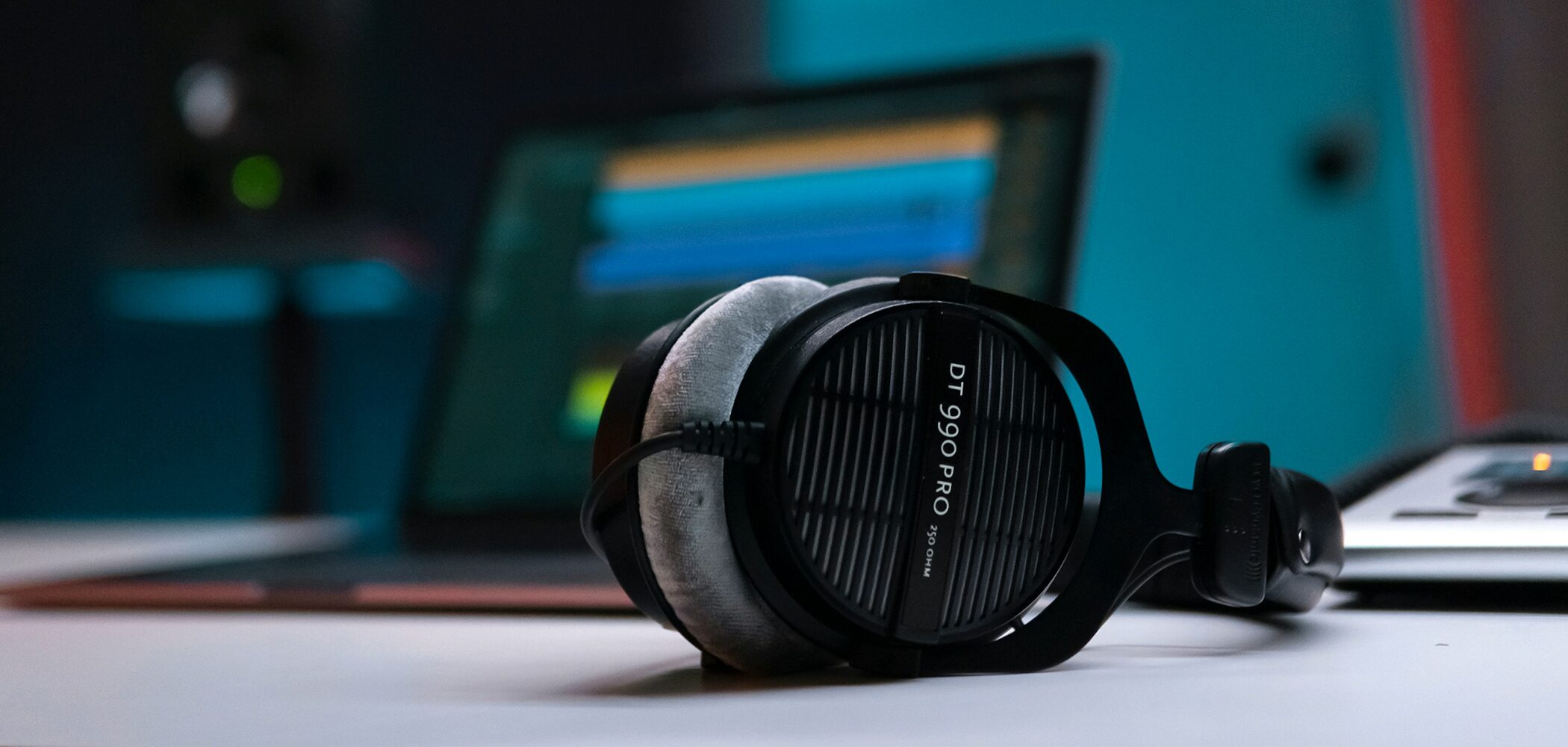
Hearing your audio accurately is an important part of making music on a computer.
You can produce music with built-in computer speakers or earbuds, but if you cannot hear clearly, the quality of your work can suffer and your motivation may drop.
That is why studio headphones are one of the first things we recommend getting when you start making music.
With so many models available, though, you may wonder what makes studio headphones different and which ones to choose.
This article explains the basics for beginners and introduces our recommended models as of 2025.
Choosing Studio Headphones for Music Production: 2025 Video
Selected Questions and Answers from the YouTube Video

May I ask about the beyerdynamic DT 990 PRO 250Ω? I want to get serious about composing!

The DT 990 PRO 250Ω offers a wide soundstage and makes small details easy to hear, so it is a popular option for composing and mixing. With its 250Ω impedance, however, it is best to have an audio interface or headphone amplifier that can drive it properly.
I am deciding between the K317 and Hi-X20. Which would you buy for hip-hop mixing and mastering?
If by K317 you mean the AKG K371, I would lean toward the K371 for hip-hop mixing and mastering, particularly for judging the low end of kicks and bass. The Hi-X20 is also a good headphone, but if mixing is your priority and you are buying just one pair, my personal recommendation is the K371. Comfort and sound preferences vary, so audition them if you can.
Can the ADAM AUDIO H200 and Austrian Audio Hi-X20 also be used for DJing?
Both the ADAM Audio H200 and Austrian Audio Hi-X20 are closed-back studio headphones, so you can use them for both music production and DJing. They are oriented more toward studio work than dedicated DJ use, though. For DJing, check isolation, how easily you can monitor with one ear, available volume, and cable handling. They are worth considering if production is your main use and you also want to DJ.
I bought the HPH-MT8 and really like the treble, but I find the bass hard to hear. As a result, I made my tracks too bass-heavy. I am considering a second pair of studio headphones to avoid this. Which standard model would you recommend? I would like to keep using the HPH-MT8, perhaps for recording or mixing, so please suggest how to divide their roles. Models outside this video are fine. My budget is under ¥40,000. I mainly make Vocaloid music and J-pop, with occasional EDM, and I cannot use speakers at home. Thank you.
If bass is the priority, I recommend the SONY MDR-M1ST. Its substantial low-mid response seems well suited to your needs, budget, and genres. Preferences vary, however, so try it in a store before buying if possible.
Could you explain specifically why you consider the Austrian Audio Hi-X15 better for songwriting than the 900ST?
I found the Austrian Audio Hi-X15 particularly good for precise sound and separation. That is why I recommend it for songwriting, mixing, and mastering. It is also relatively easy to listen to for long sessions without fatigue.
How does the MDR-M1ST compare with the standard models you recommended here?
I was torn between including it and the YAMAHA HPH-MT8. Both are balanced, versatile products, but the MDR-M1ST had a fuller low end and a more modern sound.
Which would you recommend, the MDR-7506 or Hi-X15?
They have very different characteristics, so the recommendation depends on your purpose. Personally, I recommend the MDR-7506 for hearing fine details when editing vocals or finding noise, and the Hi-X15 as a versatile all-rounder.
I am looking for studio headphones for mixing under ¥20,000. The Audio-Technica M50x and Austrian Audio Hi-X20 cost about the same. Which do you recommend?
Both perform well enough for mixing, so I do not think either would be a bad purchase. As a general tendency, Austrian Audio makes the low end easier to judge, while Audio-Technica makes the midrange easier to judge. Use that as a guide and choose according to your taste and genre. I strongly recommend auditioning them if possible.
Would spending about ¥5,000 more than the Austrian Audio Hi-X15 to get the ATH-M50x be a reasonable choice?
Yes, I think that is a good option.
What is the difference between the MV1 and M1?
Their names are similar, but they are completely different products with different concepts and sounds. The MV1 is open-back and also supports spatial-audio monitoring. We reviewed it previously, so please take a look: https://youtu.be/9f0C-pbNhm4?si=gUAvjem57NbWgIi_
I am interested in Austrian Audio. If I can afford the ¥5,000 difference between the X15 and X20, would you recommend the X20?
Yes. I found the X20 more precise!
I have heard that listening closely to vocals and melodies helps you learn songs and sing. Would an entry-level model be enough? Leaving listening skills aside, I currently use an AKG K240 MKII.
For listening to vocals and melodies, an entry-level model is sufficient. I think your current headphones can also do that job perfectly well.
Why Use Studio Headphones? How They Differ from Other Audio Devices
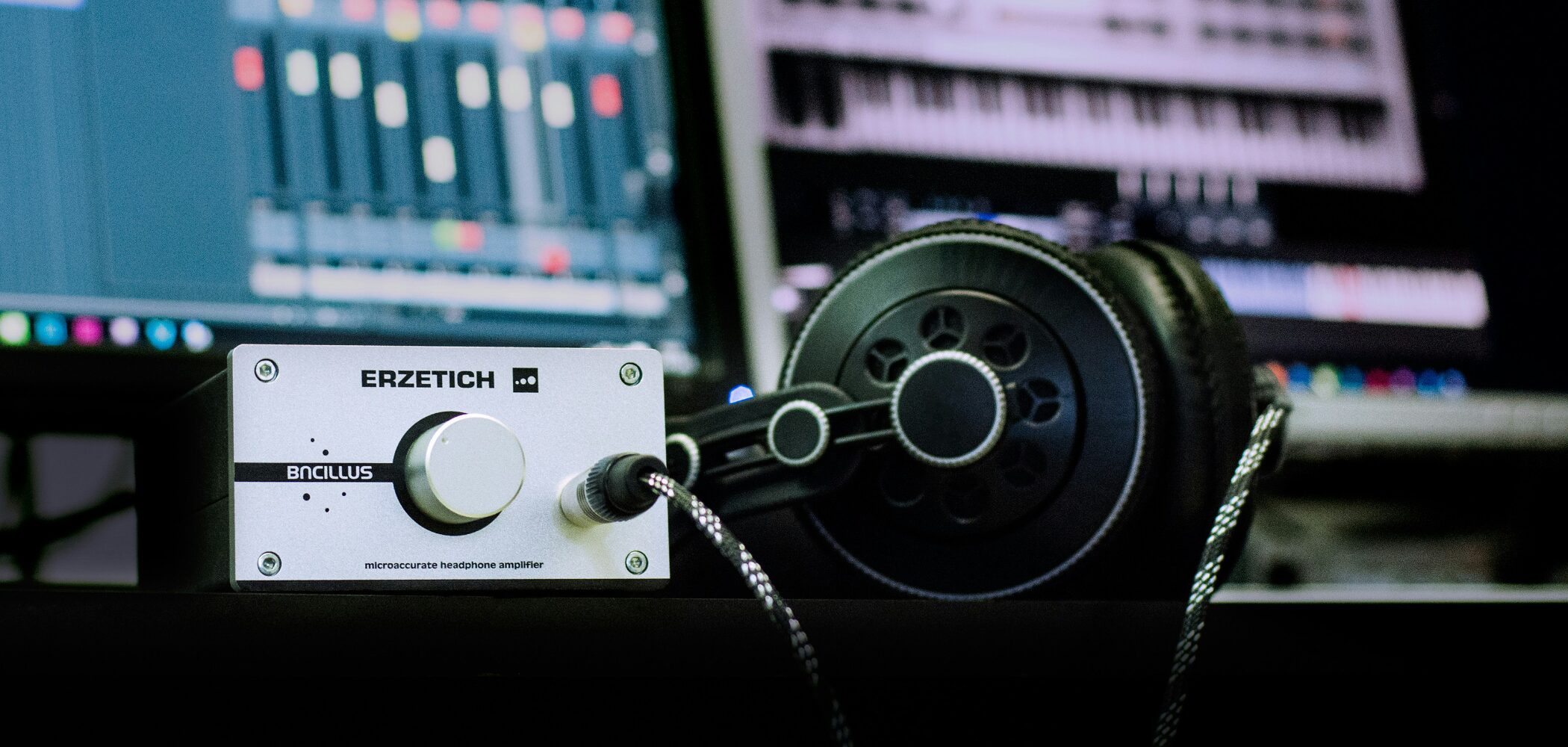
Audio devices are designed for different purposes, which affects how they reproduce sound.
Studio speakers and headphones are designed to reproduce the original sound accurately without emphasizing a particular frequency range.
Music production requires accurate judgments of instrument levels, effects, and stereo placement, which makes studio monitoring equipment the most suitable choice.
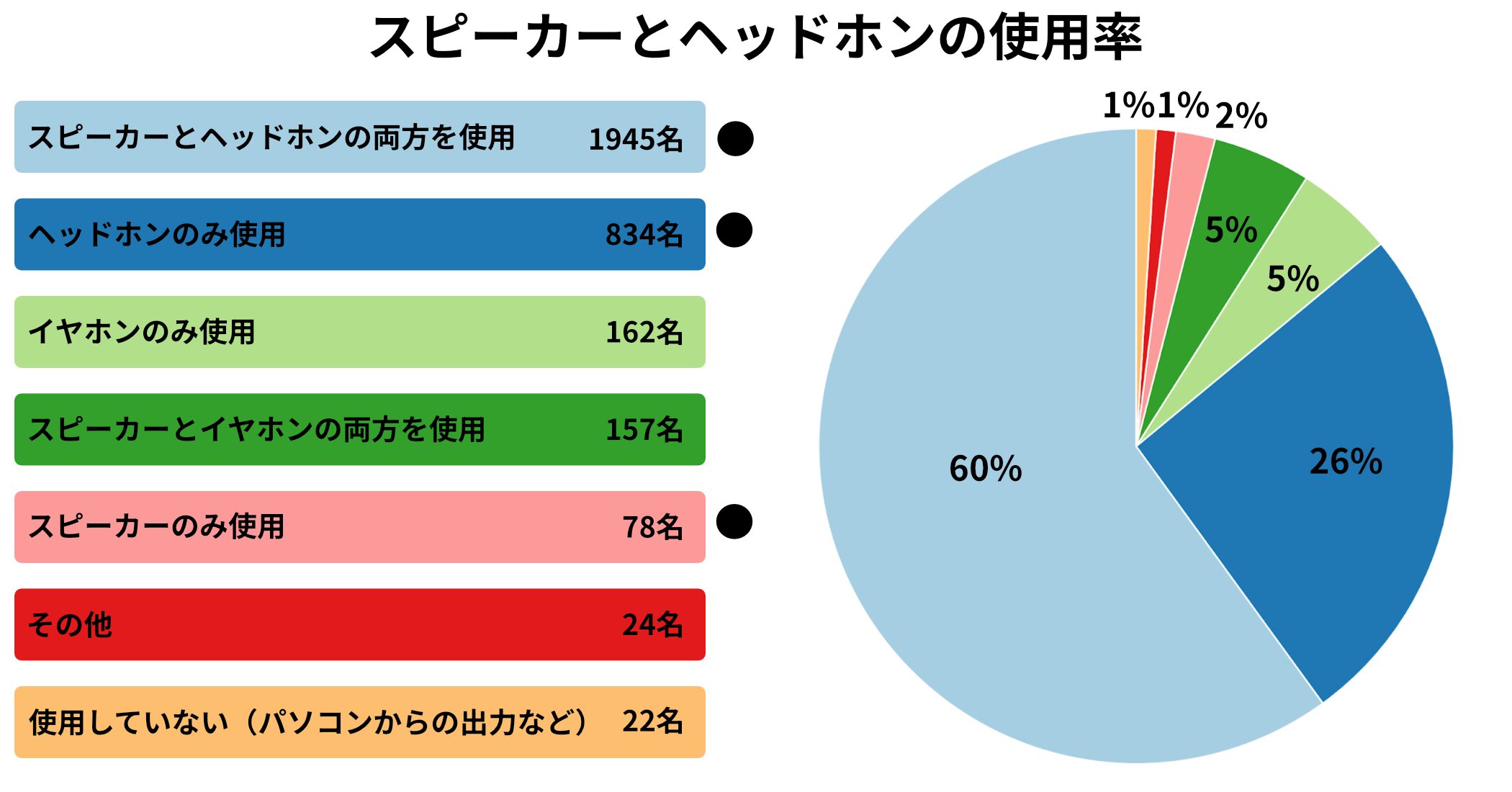
As mentioned in our previous studio-speaker guide, a survey of music producers found that around 60% use both headphones and speakers, while around 26% produce using headphones alone.
Even with studio equipment, speakers and headphones sound different, so ideally you will eventually be able to choose between them according to the situation.
However, for beginners or anyone with budget or environmental restrictions, getting a good pair of studio headphones first can help you build a practical production setup.
For a more detailed explanation of the differences between studio speakers and headphones, see the following article.
Benefits of Studio Headphones
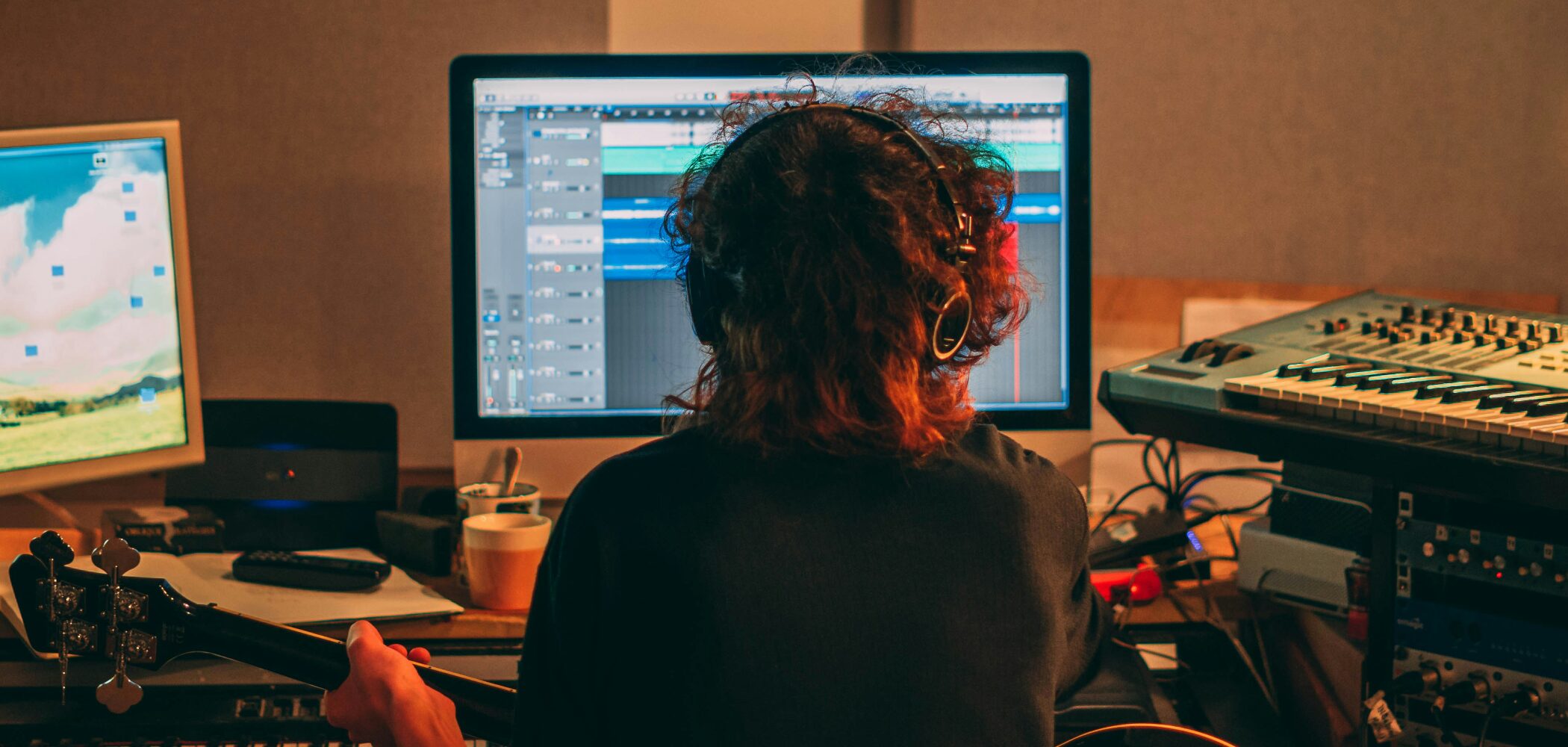
The main benefits of studio headphones include:
- Hearing fine details accurately with less interference from surrounding noise
- Working late at night or in an apartment without worrying about playback volume
- Taking up little space and being easy to carry
- Avoiding the influence of room acoustics
- Building a high-quality monitoring setup relatively affordably
In particular, when recording, you need to prevent playback from leaking into the microphone, making studio headphones essential for recording.
A common drawback is fatigue during long sessions, but choosing comfortable headphones can help reduce it.
Next, let us look at the key points for choosing a pair.
Studio Headphone Basics: What to Look For
There are several things to check when choosing studio headphones. For a first purchase, we will focus on the basics of headphone construction and types.
Closed-Back vs. Open-Back
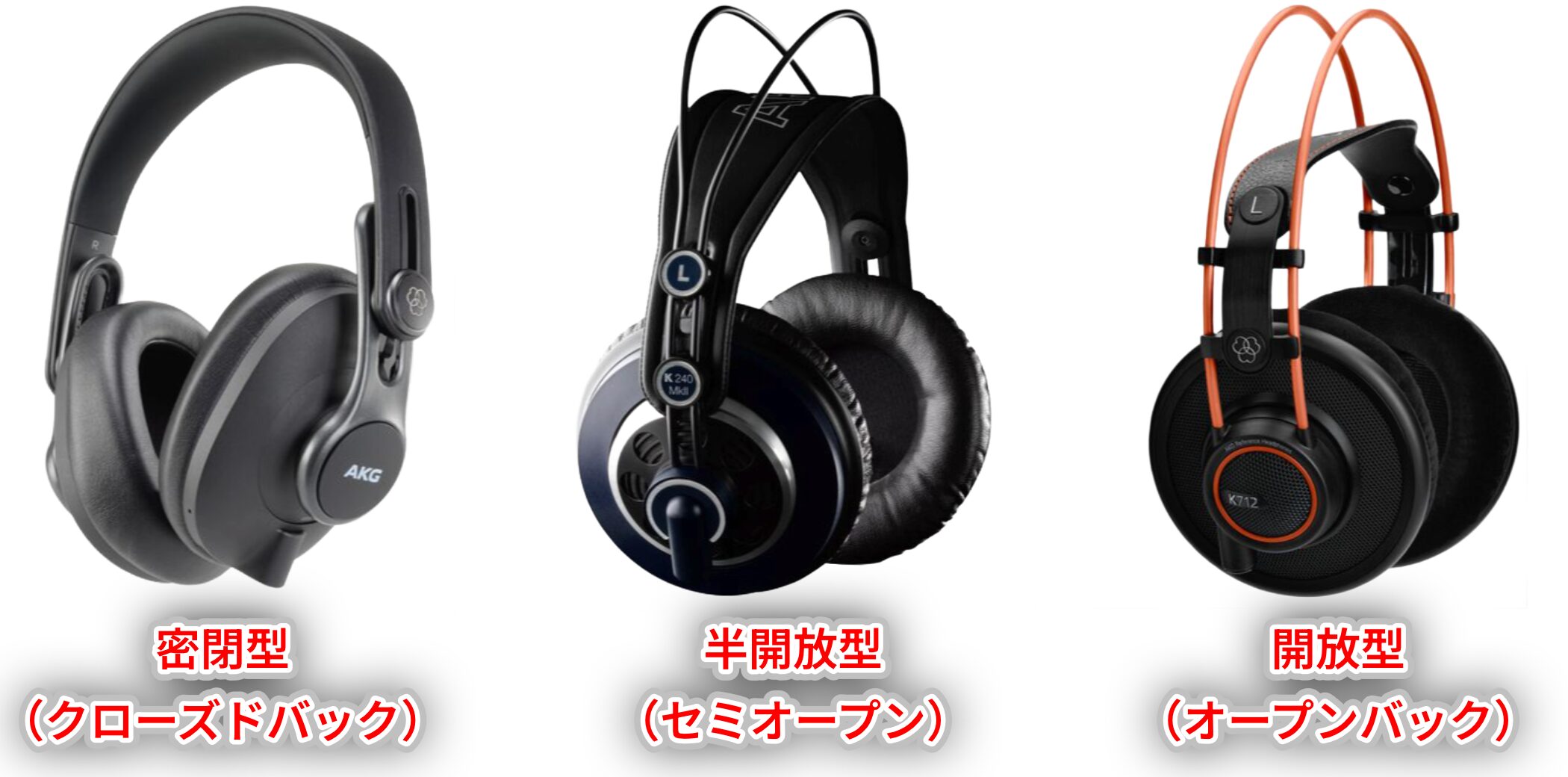
Studio headphones broadly fall into three types:
- Closed-back: The earcups, which cover your ears, are fully enclosed
- Semi-open-back: A design with characteristics between closed-back and open-back headphones
- Open-back: The backs of the earcups are open, often through mesh, allowing sound to pass out naturally
Each has its own strengths, but for beginners we generally recommend closed-back headphones first.
They leak less sound, making them useful for recording, and block outside noise so you can focus on mixing. Their main advantage is versatility across many different uses.
Here are the main characteristics of closed-back and open-back designs.
Characteristics of Closed-Back Headphones
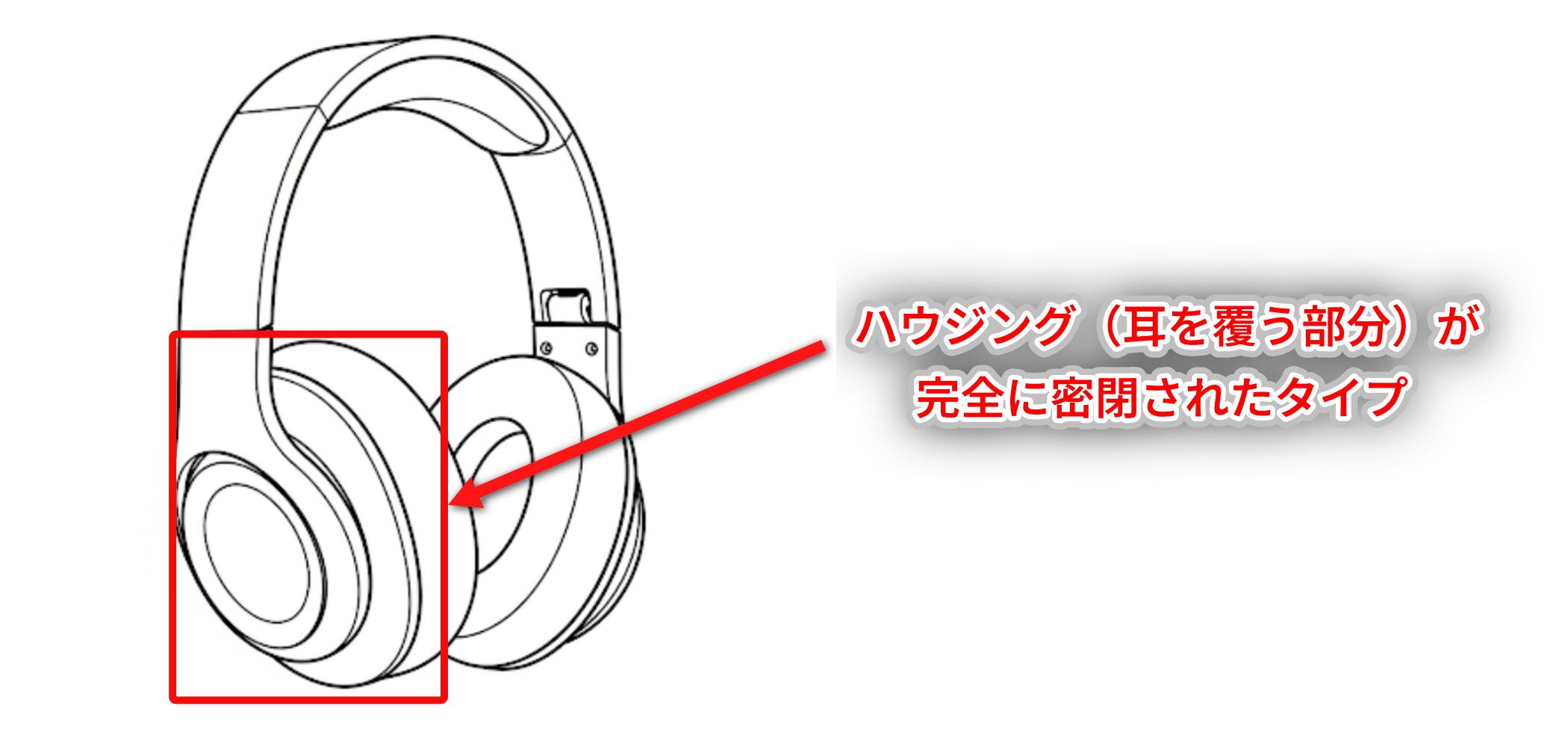
- Advantages
• Less outside noise gets in, making it easier to concentrate
• Less sound leakage, useful for recording and situations where you need to consider people nearby
• Strong bass reproduction
- Disadvantages
• Your ears can become warm and sweaty during long sessions
• The enclosed design can sound somewhat muffled or make the soundstage feel narrow
Characteristics of Open-Back Headphones
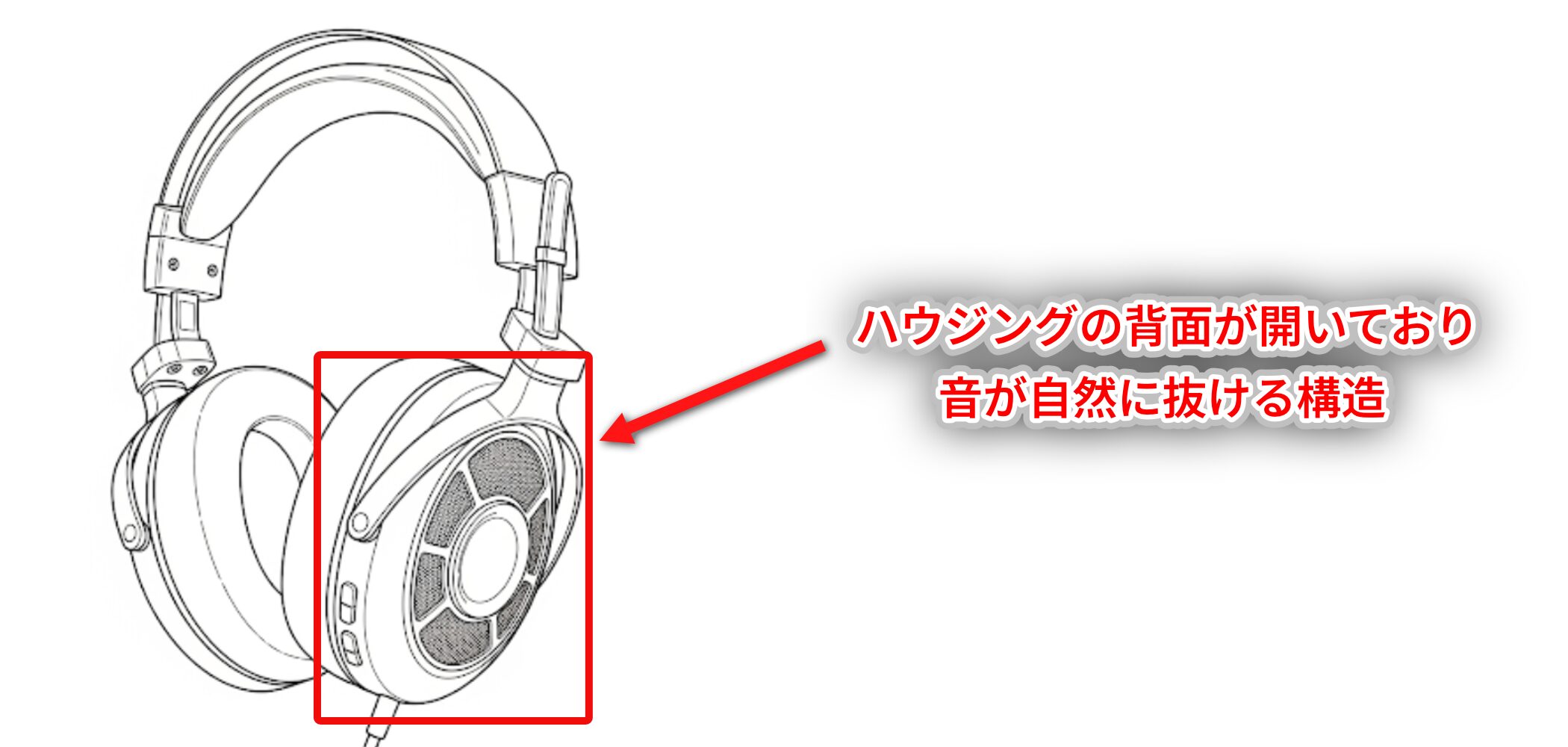
- Advantages
• Natural sound dispersion with a wide, speaker-like soundstage
• Less of a closed-in feeling and relatively low fatigue during long sessions
• An airy, clear sound
- Disadvantages
• Bass can feel less prominent
• More sound leaks out and can be heard by people nearby
• Outside noise also gets in, so you need a quiet environment
Earpad Materials and Fit
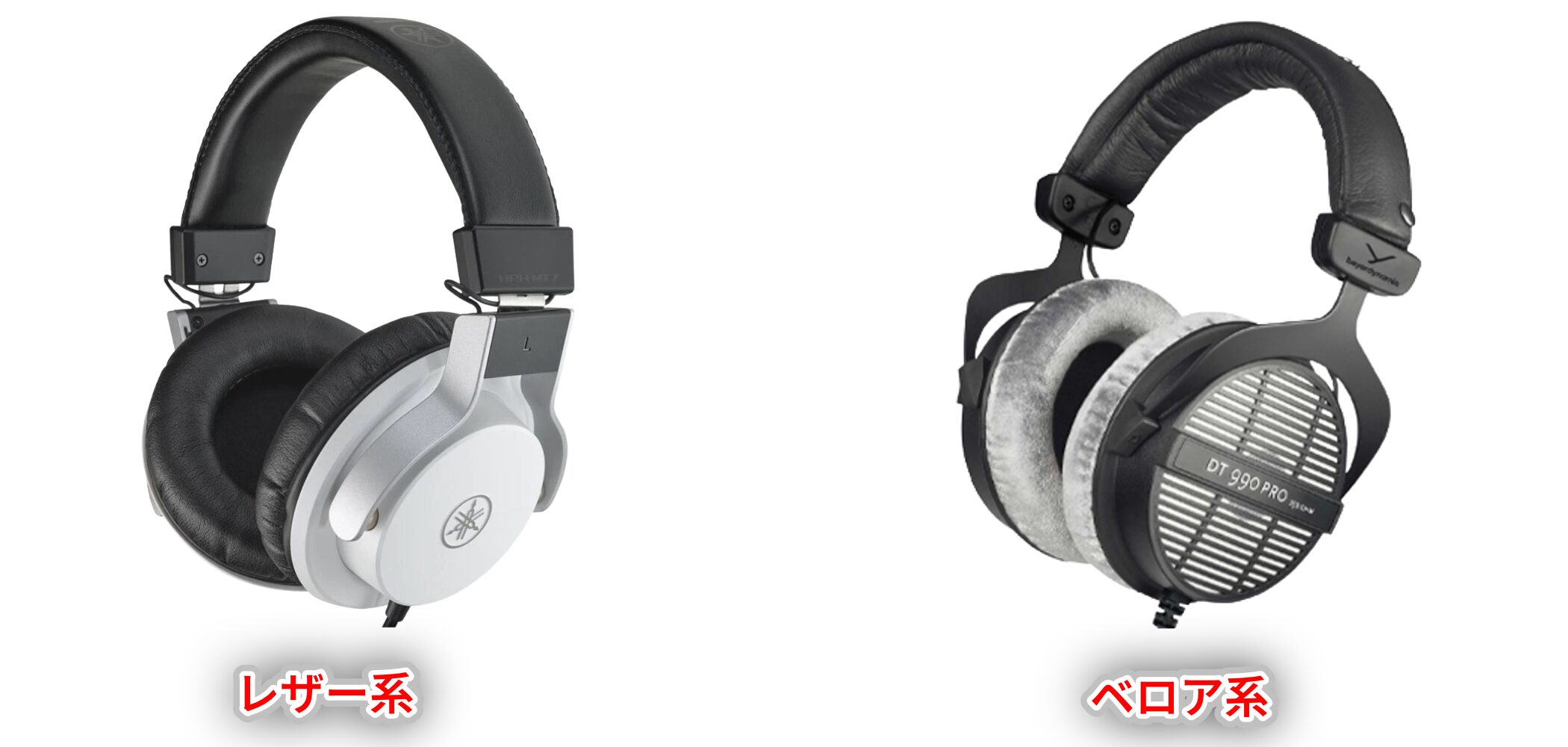
Music production often involves wearing headphones for hours, so comfort has a major effect on how effectively you can work.
Studio headphone earpads mainly use two types of material: leather-like coverings and velour. Your choice affects not only comfort but also sound quality.
- Leather-like coverings: A tighter seal often gives a stronger bass impression, but can trap heat and feel more pressurized
- Velour: A soft, breathable material with an airy sound and comfortable fit, although it provides less of a seal than leather-like coverings
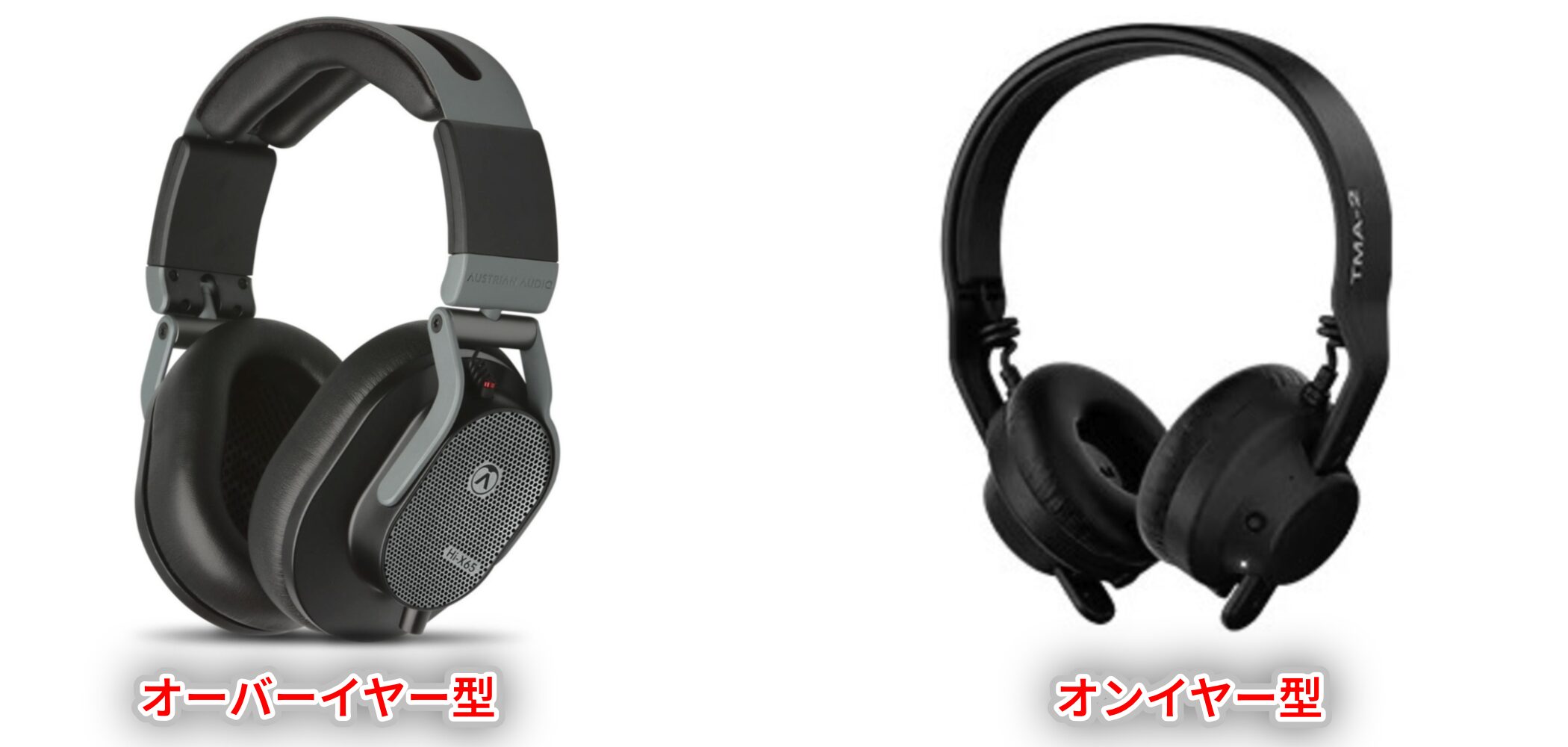
Studio headphones also come in over-ear designs that fully surround the ear and on-ear designs that rest directly on the ear. Over-ear models are generally better suited to long sessions.
Recommended Studio Headphones for 2025, by Price Range
Here are our recommended studio headphones as of 2025, divided into entry-level, standard, and high-end models.
The specifications include frequency response and impedance. Use them as a guide as follows.
- Frequency response: The range of pitches the headphones can reproduce
A wider range covers a broader span of sound - Impedance: A guide to the power needed to drive the headphones
Lower impedance, up to around 80Ω, is easier to drive and can work directly from a phone or computer
Higher impedance, around 80Ω and above, offers high sound quality but may require a dedicated amplifier
All models recommended in this article have an impedance of 80Ω or less.
Entry-Level Models: Up to the Low ¥10,000s
For beginners starting music production, we selected products you can confidently use as your first pair.
Our criteria were not simply affordability, but also solid basic monitoring performance.
If you want to keep costs down without compromising satisfaction, these models are good starting points.
audio technica ATH-M20x (Closed-Back)
An entry-level model in Audio-Technica's established M series.
Despite its affordable price, it delivers the essential performance expected of studio headphones.
Its flat response and good bass reproduction make it a great first pair of studio headphones, while also being useful as a secondary pair.
The lightweight design is another welcome feature for long sessions.
Within this price range, it offers excellent reliability and an established track record.
- Price: Around ¥8,000
- Type: Closed-back
- Frequency response: 15Hz–20kHz
- Impedance: 47Ω
Austrian Audio Hi-X15 (Closed-Back)
A high-value model from a brand founded by former AKG engineers.
Along with the flat sound essential for production, its appeal is a clear midrange and treble that reveal the outlines of vocals and instruments.
It is lightweight and comfortable, making long sessions easier.
If you want dependable quality from your very first pair, this is an excellent choice.
- Price: Around ¥14,000
- Type: Closed-back
- Frequency response: 12Hz–24kHz
- Impedance: 25Ω
AKG K240 MKII (Semi-Open-Back)
A classic AKG model that has been a studio favorite for many years.
Its greatest strength is the natural, spacious sound of its semi-open-back design.
Its detailed midrange and treble are ideal for hearing subtle nuances in vocals and acoustic instruments.
Despite its professional reputation, it is very reasonably priced, and particularly comes into its own in productions centered on acoustic instruments.
- Price: Around ¥10,000
- Type: Semi-open-back
- Frequency response: 15Hz–25kHz
- Impedance: 55Ω
Standard Models: From the High ¥10,000s to the ¥30,000s
Our standard selections are for people moving beyond entry-level equipment and aiming for more serious music production.
At this price level, resolution and stereo imaging improve noticeably, so we chose practical models capable of detailed mixing and audio analysis.
If you want to move beyond a hobby and get closer to professional quality, these models can support that ambition.
Austrian Audio Hi-X20 (Closed-Back)
A standard model that builds on the popular Hi-X15 with improved sound and practicality.
It retains the Hi-X15's strengths while improving separation and clarity in the midrange and treble.
This allows more detailed mix analysis.
Its convenient folding mechanism lets you store it compactly, making it useful in many situations.
If you want to step up from an entry-level model, this is a pair that offers a satisfying upgrade.
- Price: Around ¥20,000
- Type: Closed-back
- Frequency response: 12Hz–24kHz
- Impedance: 25Ω
ADAM AUDIO H200 (Closed-Back)
Studio headphones developed using the expertise of ADAM AUDIO, a company highly regarded for its studio monitors.
Their standout feature, reminiscent of the company's speakers, is exceptionally clear high-frequency reproduction.
This transparent sound accurately conveys the delicate resonance of cymbals and strings, helping to greatly improve mixing precision.
A flat response geared toward DAW work and a comfortable fit for extended use are further attractions.
They are a good choice not only for fans of ADAM's sound but also for creators seeking accurate, transparent audio.
- Price: Around ¥22,000
- Type: Closed-back
- Frequency response: 2Hz–23.5kHz
- Impedance: 32Ω
YAMAHA HPH-MT8 (Closed-Back)
High-quality studio headphones carrying forward the philosophy of YAMAHA, a worldwide name in studio monitoring.
Their concept is accurate monitoring that remains faithful to the source.
A flat, unexaggerated response supports accurate mix decisions through high-resolution sound.
A robust build for demanding studio environments and a comfortable fit for long sessions also make them a professional choice.
They are a dependable pair that delivers a reference sound for music production.
- Price: Around ¥25,000
- Type: Closed-back
- Frequency response: 15Hz–28kHz
- Impedance: 37Ω at 1kHz
AKG K712 PRO (Open-Back)
A model in AKG's flagship line of open-back headphones.
It offers an expansive soundstage that seems to spread out in front of you, making it particularly useful for adjusting spatial effects and creating three-dimensional mixes.
A comfortable fit that reduces fatigue over long sessions is another attraction.
It is especially suited to complex productions with many simultaneous instruments, such as orchestral music and jazz.
- Price: Around ¥35,000
- Type: Open-back
- Frequency response: 10Hz–39.8kHz
- Impedance: 62Ω
High-End Models: ¥40,000–¥70,000
Our high-end selections are for creators who want to reproduce the reference sound professionals hear in a studio within their own production environment.
At this level, you can choose models that push spaciousness and resolution to exceptional levels.
Their ability to reproduce subtle sonic nuances accurately can be a major asset when building your ideal production setup.
SONY MDR-MV1 (Open-Back)
Sony's high-end studio headphones.
The natural, expansive soundstage of their open-back design and their impressive frequency response faithfully reproduce even subtle nuances in high-resolution audio.
They also offer the reliability demanded in professional production, making them particularly well suited to music requiring delicate expression, such as classical and acoustic music.
- Price: Around ¥50,000
- Type: Open-back
- Frequency response: 5Hz–80kHz
- Impedance: 24Ω
TAGO STUDIO T3-01 (Closed-Back)
Premium studio headphones that embody Japanese craftsmanship.
Each pair is carefully adjusted by hand to achieve exceptional separation and stereo imaging.
This makes it easier to identify the outline of each part, even in a complex mix.
They combine the durability required for professional work with comfort for extended sessions.
If you pursue uncompromising sound, this is an excellent pair to consider.
- Price: Around ¥70,000
- Type: Closed-back
- Frequency response: 5Hz–40kHz
- Impedance: 70Ω
Final Thoughts
As these examples show, studio headphones vary considerably in comfort and sonic character.
If possible, visit a retailer and audition them with music you listen to regularly.
These are tools you will use for a long time. Taking the time to find the right pair can make creating music even more enjoyable.
The prices listed are only guides and vary by retailer and purchase date, so always check the latest information before buying.
Frequently Asked Questions
I have heard that listening closely to vocals and melodies helps you learn songs and sing. Would an entry-level model be enough?
I currently use an AKG K240 MKII.
For listening to vocals and melodies, an entry-level model is sufficient. I think your current headphones can also do that job perfectly well.
I am looking for studio headphones for mixing.
My budget is under ¥20,000, and the Audio-Technica M50x and Austrian Audio Hi-X20 cost about the same. Which do you recommend?
Both have enough performance for mixing, so I do not think either would be a bad purchase.
As a general tendency, Austrian Audio makes the low end easier to judge, while Audio-Technica makes the midrange easier to judge.
Use that as a guide and choose according to your taste and genre.
I strongly recommend auditioning them if possible.
Which would you recommend, the MDR-7506 or Hi-X15?
They have very different characteristics, so it depends on your purpose. Personally, I recommend the MDR-7506 for hearing fine details when editing vocals or finding noise, and the Hi-X15 as a versatile all-rounder.
What is the difference between the MV1 and M1?
Their names are similar, but they are completely different products with different concepts and sounds.
The MV1 is open-back and also supports spatial-audio monitoring.
NEW ARTICLES
Latest English Articles