Our 2020 survey of 3,272 music makers revealed their five most popular MIDI-keyboard series. KORG microKEY led the overall results, with its compact design and value making it an accessible beginner option. KOMPLETE KONTROL ranked second and had a strong professional following, helped by its integration with Native Instruments instruments. Roland A, M-Audio Keystation and AKAI MPK rounded out the top five, offering different approaches for beginners and experienced users. These are historical survey results; model specifications, prices and software bundles refer to the period of the original article, not current offers.
The Most Popular MIDI Keyboards: Survey Results
Here are the results of the equipment survey we conducted.
A total of 3,272 people responded, split between amateur and professional music makers as follows.
- Amateur music makers: 2,769 (approximately 85%)
- Professional music makers: 503 (approximately 15%)
Keep that breakdown in mind as you explore the results.
Respondents Who Did Not Use a MIDI Keyboard
These respondents reported making music on a computer without using a MIDI keyboard.
- Amateurs: 763 (approximately 28%)
- Professionals: 71 (approximately 14%)
I was surprised that more people than I expected did not use a MIDI keyboard.
The range of chord-entry features and supporting software available at the time may have been one reason.
Now let’s look at the product rankings.
1st: KORG microKEY Series — 369 Users

Manufacturer’s website: https://bit.ly/2QvHu3p
The series had 369 users: 330 amateurs and 39 professionals.
The most popular individual model was the microKEY-25, with 149 users: 139 amateurs and 10 professionals.
It is a compact product with the essential controls.
Its portability and value also make it suitable for auditioning instrument sounds or quickly entering MIDI notes.
The original article listed the following bundled software, intended to help users start making music.
The list below was quoted from the Sound House website at the time; it is not a guarantee of the bundle offered today.
- KORG Legacy Collection – M1 Le (software synthesizer)
- UVI Digital Synsations (software synthesizers)
- AAS Ultra Analog Session (software synthesizer)
- AAS Strum Session (acoustic-guitar instrument)
- AAS Lounge Lizard Session (electric-piano instrument)
- Propellerhead Reason Limited (DAW software)
- US$50 Ableton Live discount coupon (DAW software)
A microKEY can also be a useful secondary keyboard alongside an 88-key model. Compatible models support playing and recording MIDI on iOS; the required Apple adapter and any power arrangements depend on the model and device.
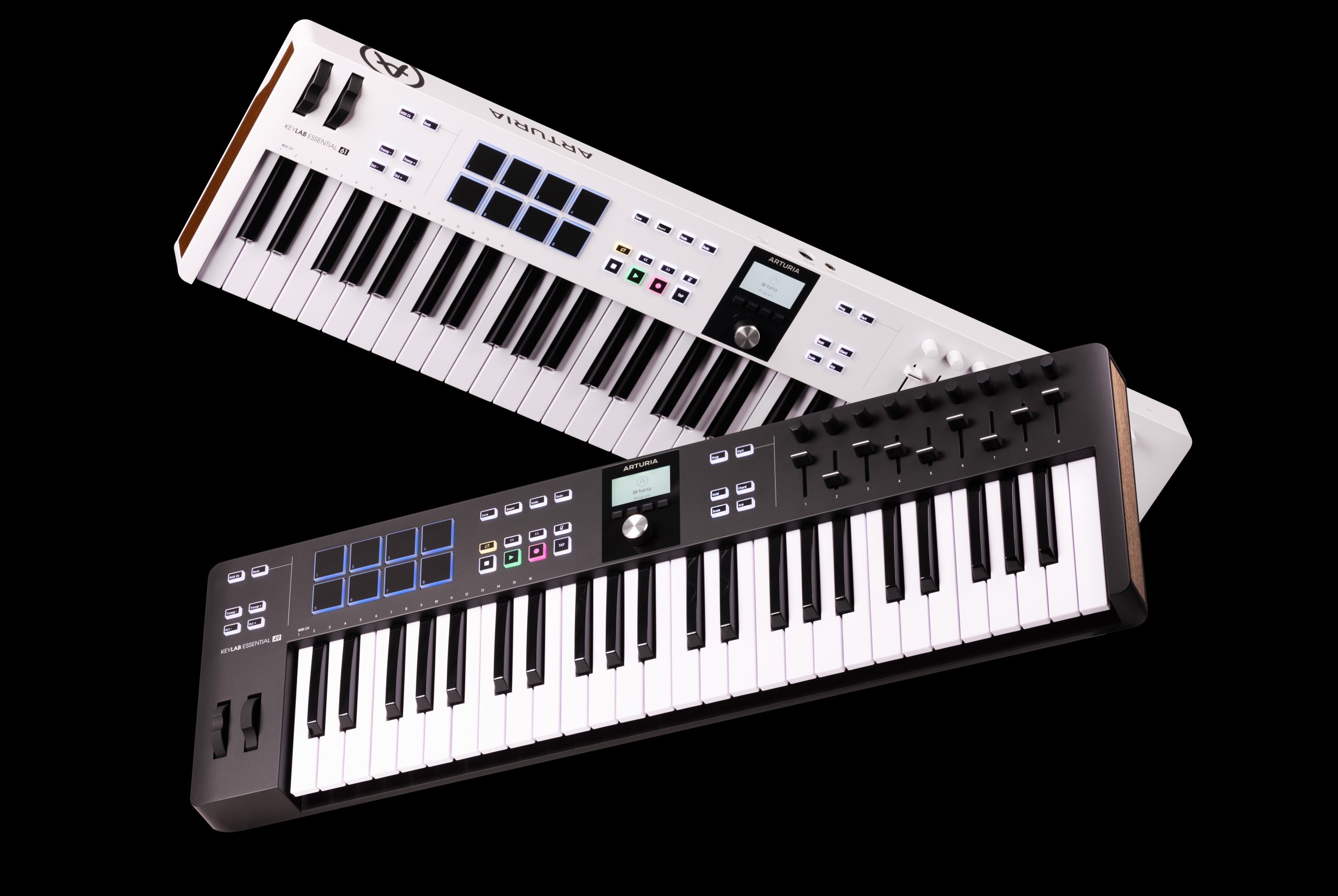
2nd: KOMPLETE KONTROL Series — 285 Users

Manufacturer’s website: https://bit.ly/34GP9Uw
The series had 285 users: 214 amateurs and 71 professionals.
The most popular individual model was the KOMPLETE KONTROL S61, with 125 users: 96 amateurs and 29 professionals.
The proportion of professional users was relatively high. Its focus on controlling Native Instruments’ popular KOMPLETE instrument collection may be a major reason.
The S-series keyboard described here uses Fatar keys, which I found smooth and comfortable to play. Design is a matter of taste, but I also felt it had a premium appearance.
It is also a capable MIDI controller, allowing MIDI CC messages to be sent directly from the hardware.
It supports DAW integration for hands-on transport control. The original article also listed the bundled KOMPLETE 12 SELECT (version 13 from October 1, 2020) instrument collection.
3rd: Roland A Series — 231 Users

Manufacturer’s website: https://bit.ly/3gBZaF0
The series had 231 users: 200 amateurs and 31 professionals.
The most popular individual model was the A-49, with 141 users: 121 amateurs and 20 professionals.
This familiar MIDI-keyboard range offers hands-on instrument control in a compact design. The A-49 can also connect to an iPad with the appropriate Apple camera adapter and power setup.
The original article positioned it as a comparatively higher-priced option for its range of functions; that comparison reflects the market at the time.
The article listed Ableton Live Lite as the bundled DAW, providing a starting point for music production after installation and activation.
4th: M-Audio Keystation Series — 202 Users

Manufacturer’s website: https://bit.ly/3hC8fyZ
The series had 202 users: 168 amateurs and 34 professionals.
The most popular individual model was the Keystation 49, with 87 users: 71 amateurs and 16 professionals.
Its straightforward design makes it easy to get started without a complicated set of controls.
The original article listed SONiVOX Eighty Eight Ensemble and AIR Xpand!2 as the included instruments, along with Ableton Live Lite as the bundled DAW.
5th: AKAI MPK Series — 123 Users

Manufacturer’s website: https://bit.ly/3lk995k
The series had 123 users: 108 amateurs and 15 professionals.
The most popular individual model was the MPK mini, with 106 users: 100 amateurs and 6 professionals.
Despite its compact, 25-key design, its pads and knobs allow intuitive MIDI entry and editing.
The combination of features and an accessible price was another attraction. Power options depend on the model: the MPK mini mkII is USB-powered, while the distinct MPK mini Play supports batteries as well as USB. Battery operation should not be assumed for every MPK mini.
I also thought its eye-catching design might appeal to women.
The original article listed AIR Hybrid 3, SONiVOX Wobble and MPC Essentials as the included software.
Professional Users’ Top Three: Individual Models

Next, let’s look at the individual models used by professional respondents.
- 1st: KOMPLETE KONTROL S61 (29 users)
- 2nd: Roland A-49 (20 users)
- Joint 3rd: KOMPLETE KONTROL S88 (16 users)
- Joint 3rd: M-Audio Keystation 49 (16 users)
The results were broadly similar to the overall ranking above.
Native Instruments’ KOMPLETE instruments were clearly popular. The ability to control those instruments appears to have been an important consideration when choosing a keyboard.

What to Consider When Choosing a MIDI Keyboard
We have also prepared an article for anyone choosing their first MIDI keyboard.
We hope it helps you decide which features matter when comparing products.

Coming Next in the 2020 Survey Series
Did the product you use appear in the rankings?
The next installment in this survey series reveals the most popular monitor speakers. Stay tuned!
Equipment Survey, Part 2!
🎹 Which MIDI keyboard is the most popular? 🎹
🎉 The top five, based on responses from 3,272 music makers! 🎉Amateurs: 2,769
Professionals: 503See the survey results: https://t.co/hiERDCdOGx #DTM #DAW #DTMer pic.twitter.com/K6pMhiuYU4
— SLEEP FREAKS (@SLEEPFREAKS_DTM) September 7, 2020
Frequently Asked Questions
Q1. Which MIDI keyboard did this article suggest for beginners?
The article suggested the KORG microKEY series for its compact design, essential functions and accessible price. The software bundle listed at the time helped users begin making music, while its portability also made it useful as a secondary keyboard. Check the specific model and current bundle before buying; this is a 2020 survey, not a current buying guide.
Q2. Which MIDI keyboard was most popular among professional respondents?
The KOMPLETE KONTROL S61 led the individual-model ranking with 29 professional users. Its focus on controlling Native Instruments’ KOMPLETE instruments and managing instrument presets was a notable attraction.
Q3. Can I make music on a computer without a MIDI keyboard?
Yes. Approximately 28% of amateur respondents in this survey did not use a MIDI keyboard. Notes can be entered with a mouse, and chord-entry tools can assist with composition; a keyboard is useful but not essential for every workflow.
Q4. What are the advantages of a compact MIDI keyboard?
It is portable and takes up little desk space, making it useful in a small setup. Some 25-key controllers, such as the AKAI MPK mini, also include pads and knobs for hands-on MIDI entry and editing.
Q5. What software did the MIDI keyboards in this article include?
The bundles described varied by product. Examples included DAWs such as Ableton Live Lite or Reason Limited, software synthesizers, and electric-piano or guitar instruments. These were the offers described in the original article; included software, eligibility and compatibility may change, and installation or activation is required before use.
NEW ARTICLES
Latest English Articles