
Guitar Rig 5 is a high-quality amp simulator from Native Instruments that lets guitarists create convincing amp sounds without playing through a loud physical amp. This guide covers loading presets, customizing amps and effects, and combining effects. Adjust controls such as MASTER, PRE-AMP, BASS, MID, TREBLE, and PRESENCE to shape your sound, then save your settings as a preset for reuse. Guitar Rig 5 can also process non-guitar tracks, including drums and the master track, and includes DJ-style effects such as Traktor’s 12.
Guitar Rig: A high-quality amp simulator
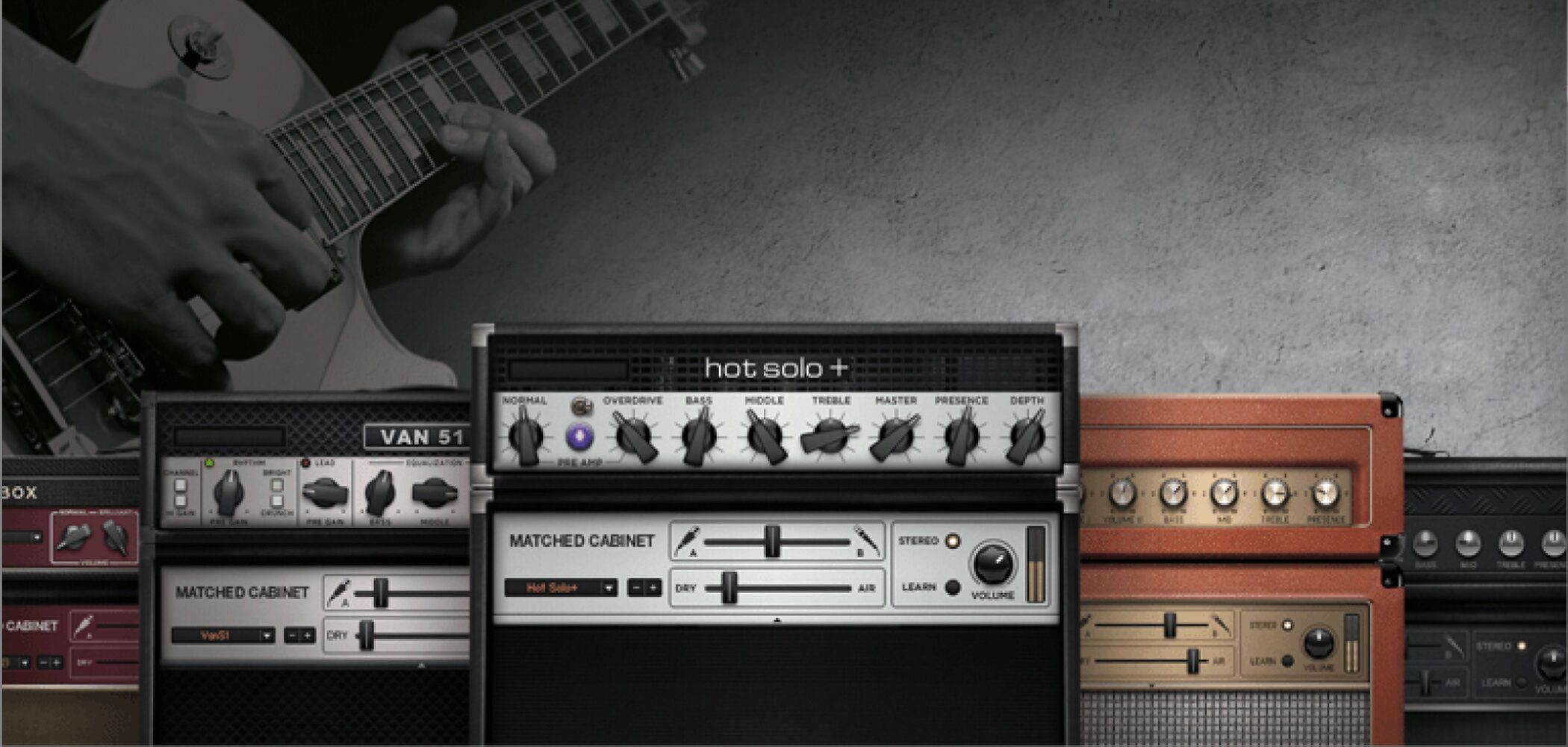
The guitar amp
is essential to guitarists. Playing music loud can be a lot of fun.
But playing at full volume whenever you like can cause friction with your neighbors—and, at worst, leave your family treating you like a stranger.
That is when an amp simulator comes in handy.
It can produce a powerful sound reminiscent of playing through a real amp.
Here we will look at Guitar Rig from the popular KOMPLETE collection.
Video: Preamps and cabinets
Loading presets
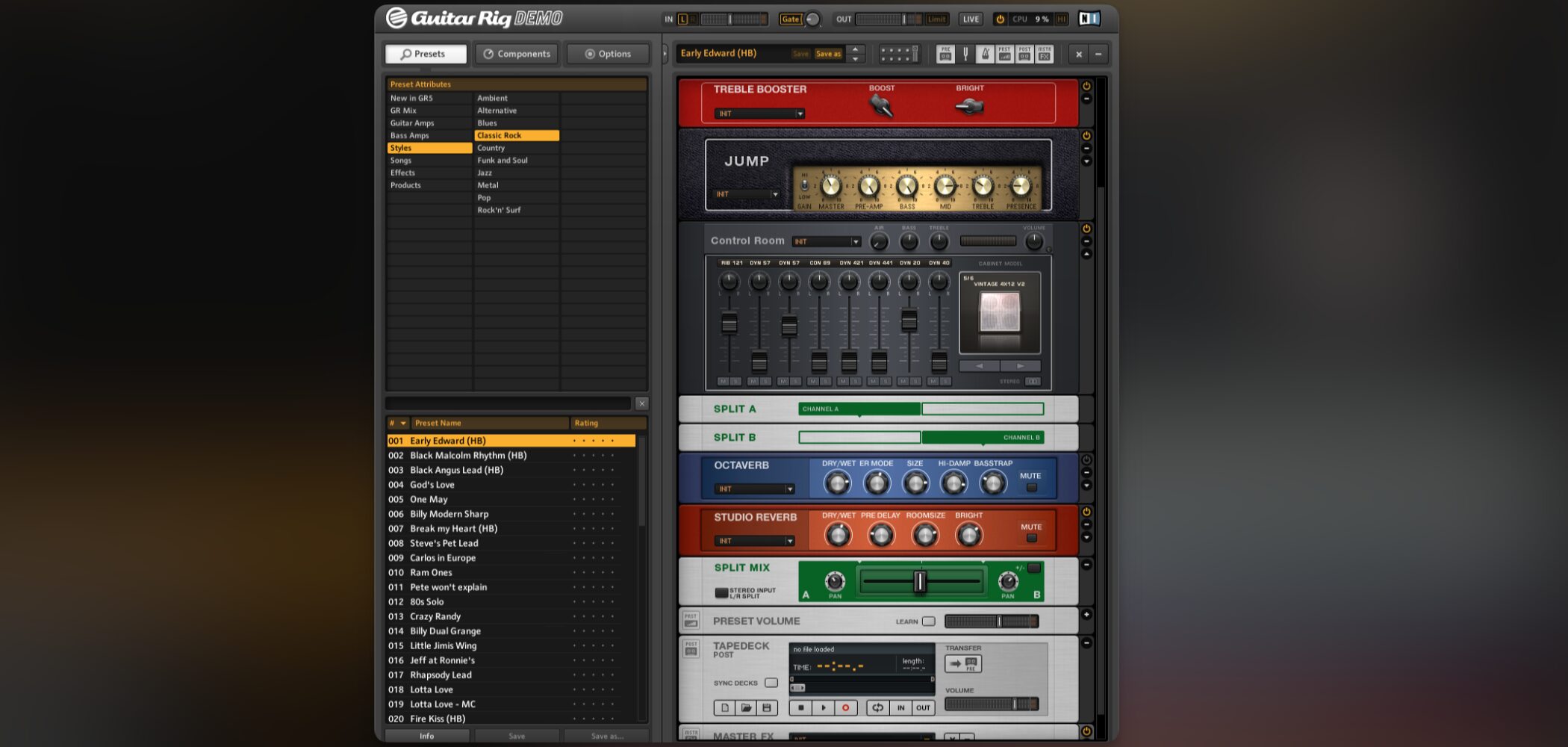
Let’s start with the basics of amps and their settings.
Guitar Rig includes a wide range of presets.
Even beginners and people who have never played guitar can use the preset browser to find a setting they like.
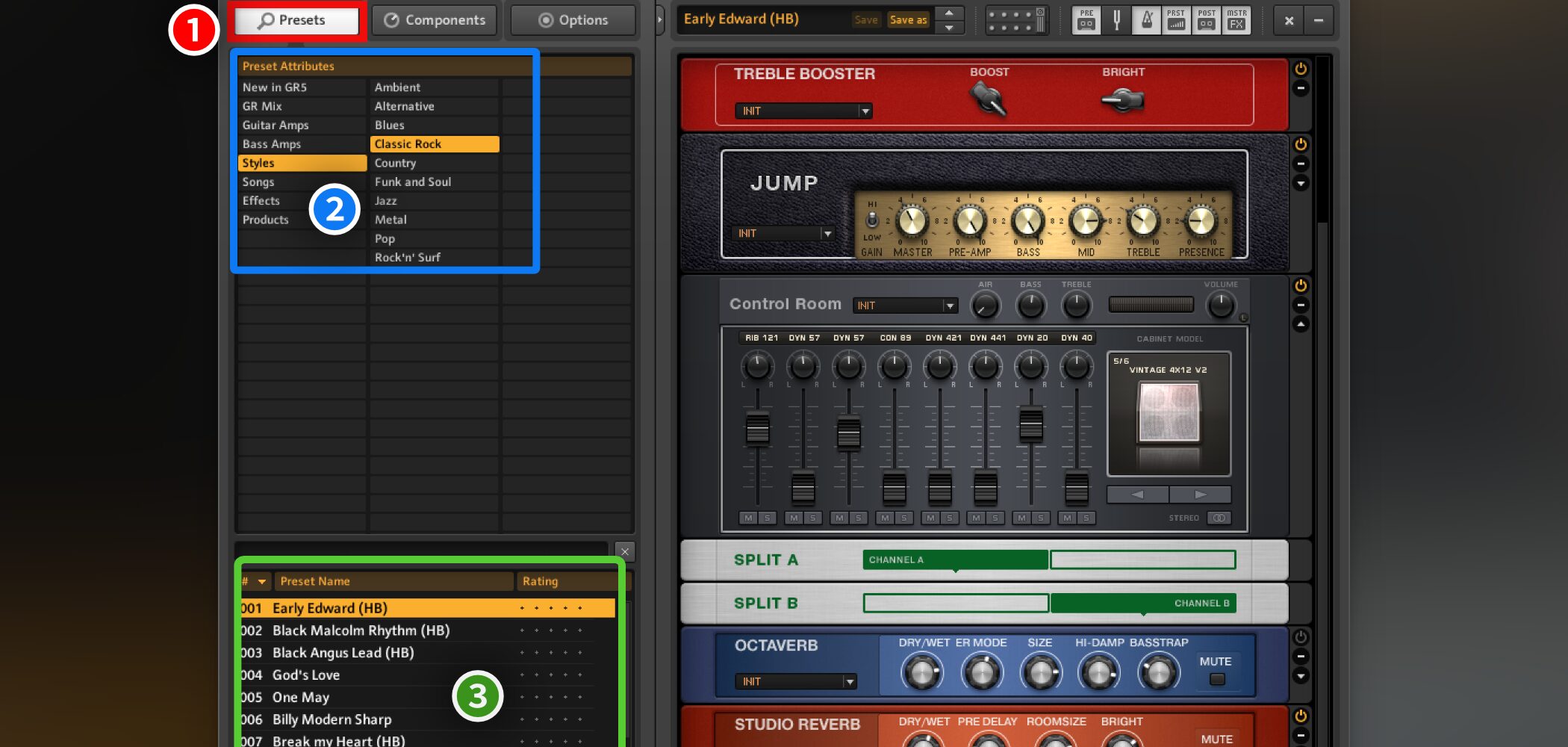
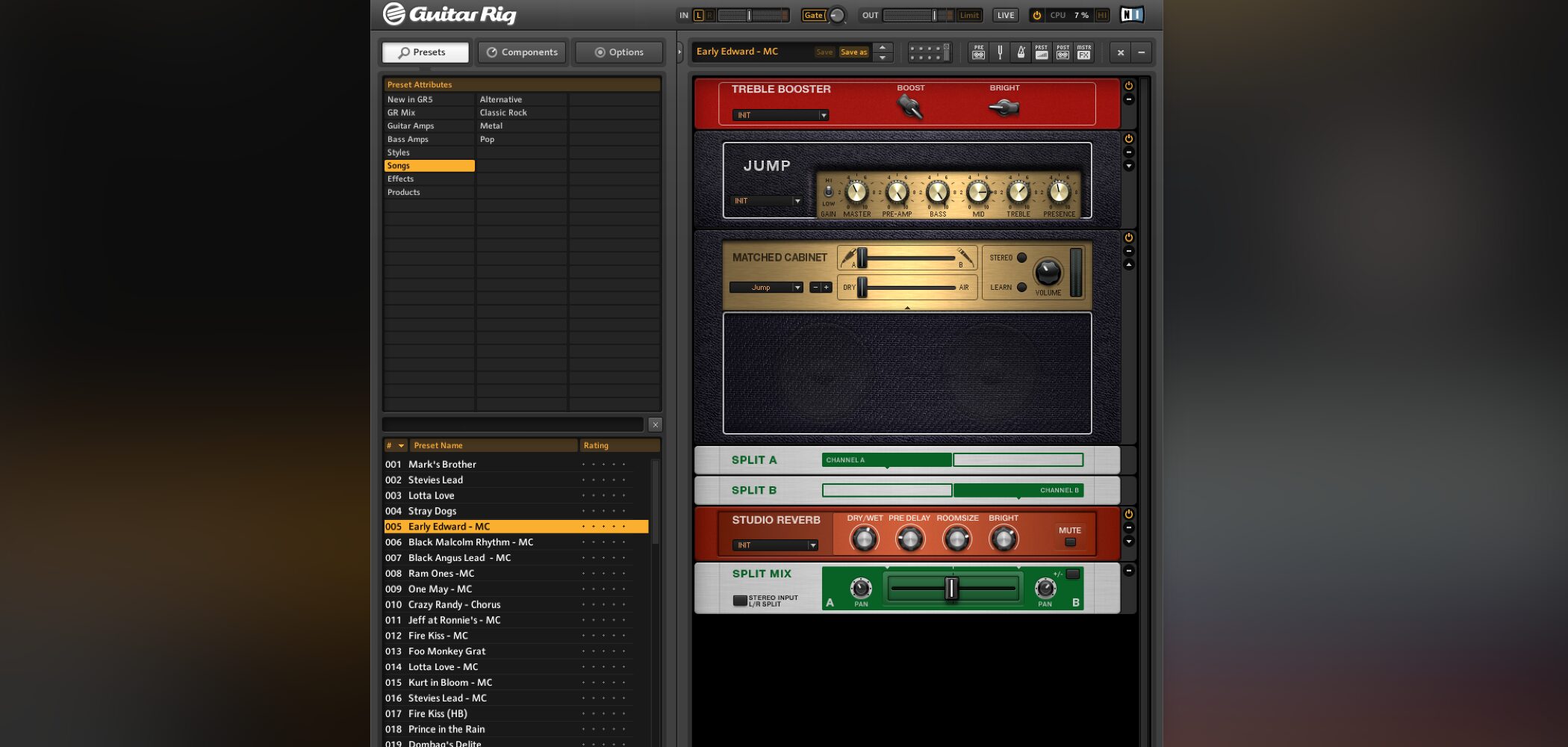
① (red): Click Presets to activate it.
② (blue): Select a genre or type of amp.
③ (green): The search results appear; double-click a preset to load it.
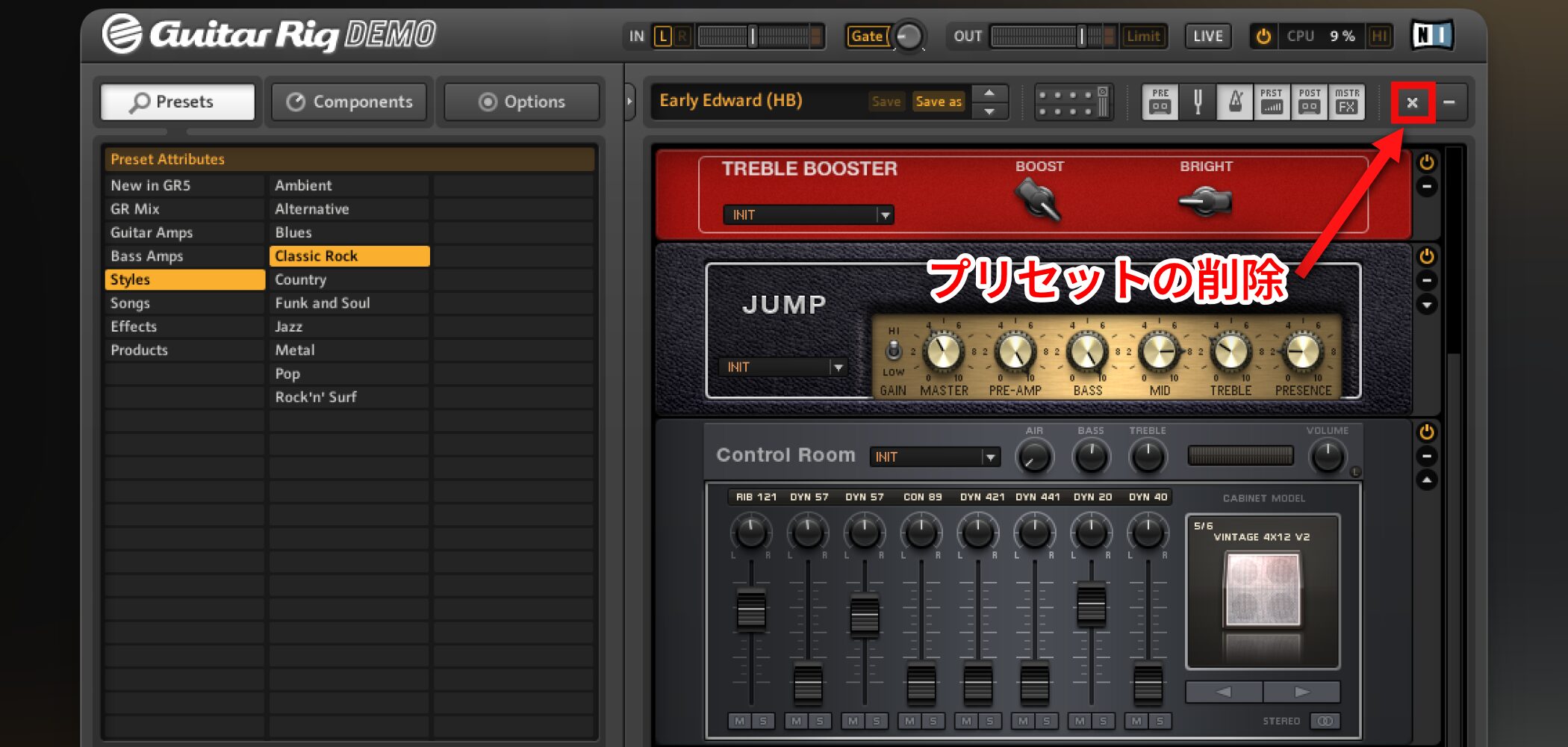
To clear a preset, click the clear button.
Bypassing a particular effect
If a preset contains an effect you do not need, such as reverb, you can disable or bypass that effect or device.
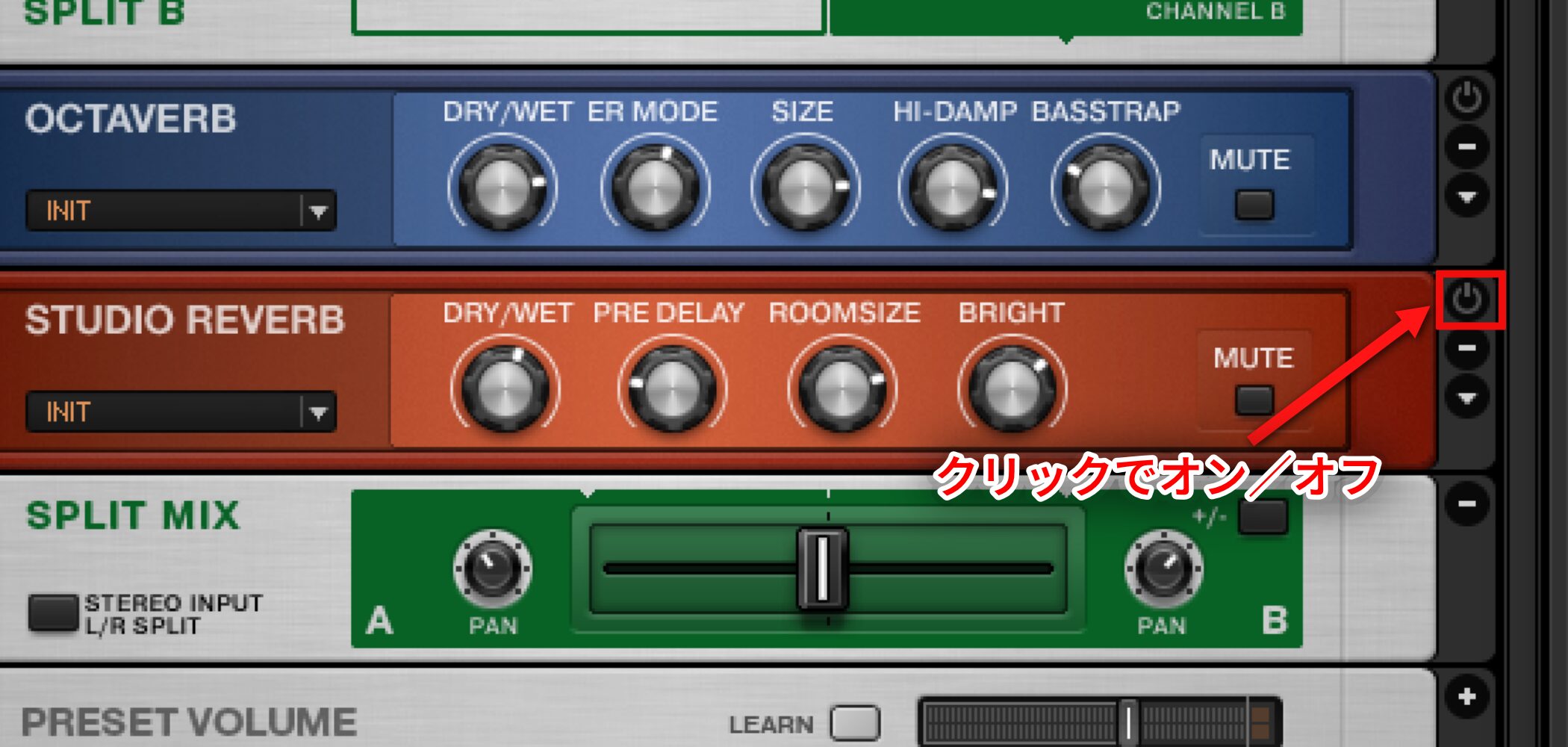
Click the power button at the upper right of the effect to turn it off.
You can also select an effect and press Delete to remove it completely.
Adding amps and effects
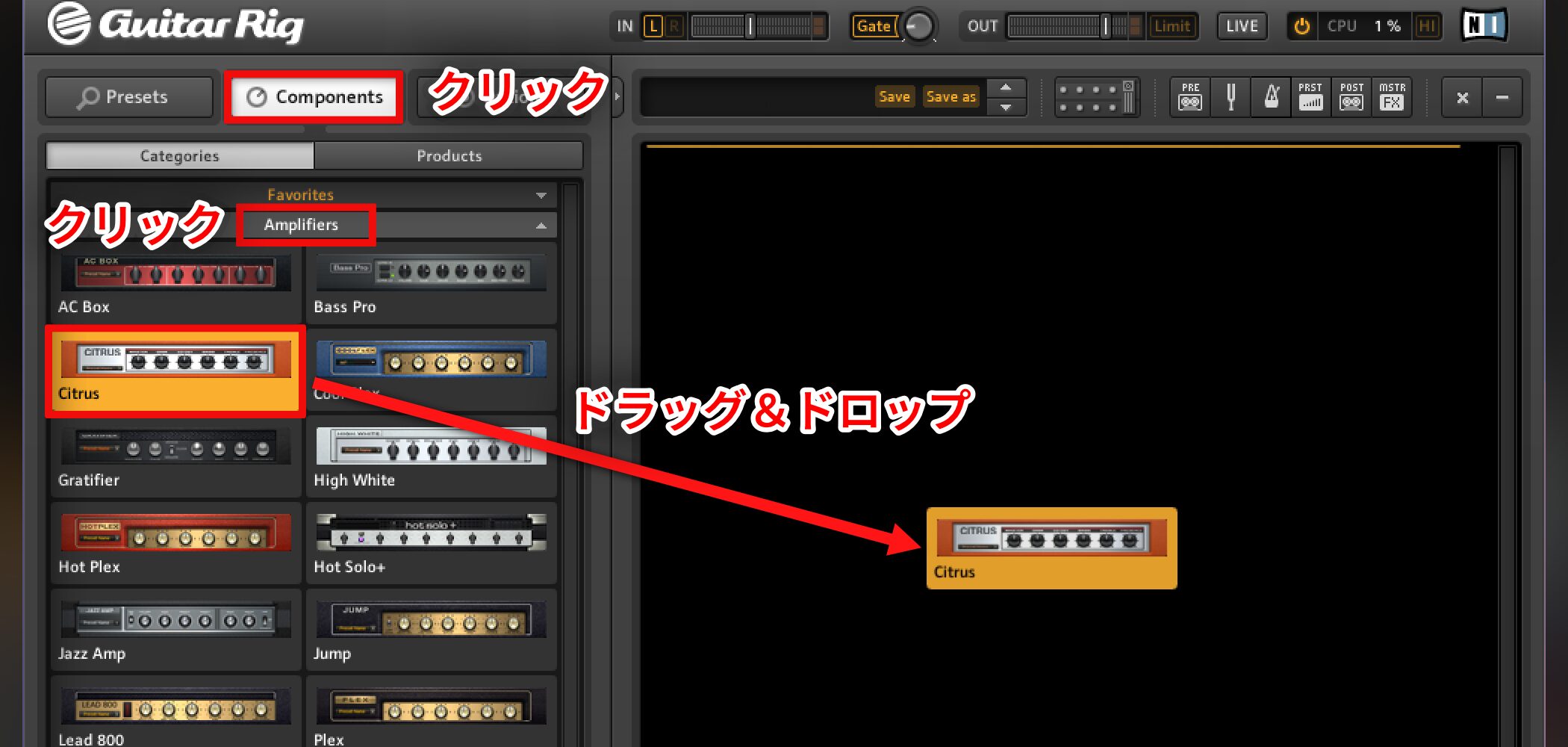
To create your own setup, first click Components.
Amps and effects are organized into categories.
You can add a device by dragging it into the window on the right.
Basic amp settings
After adding an amp, adjust it to suit the song.
These controls are common to most amp simulators.
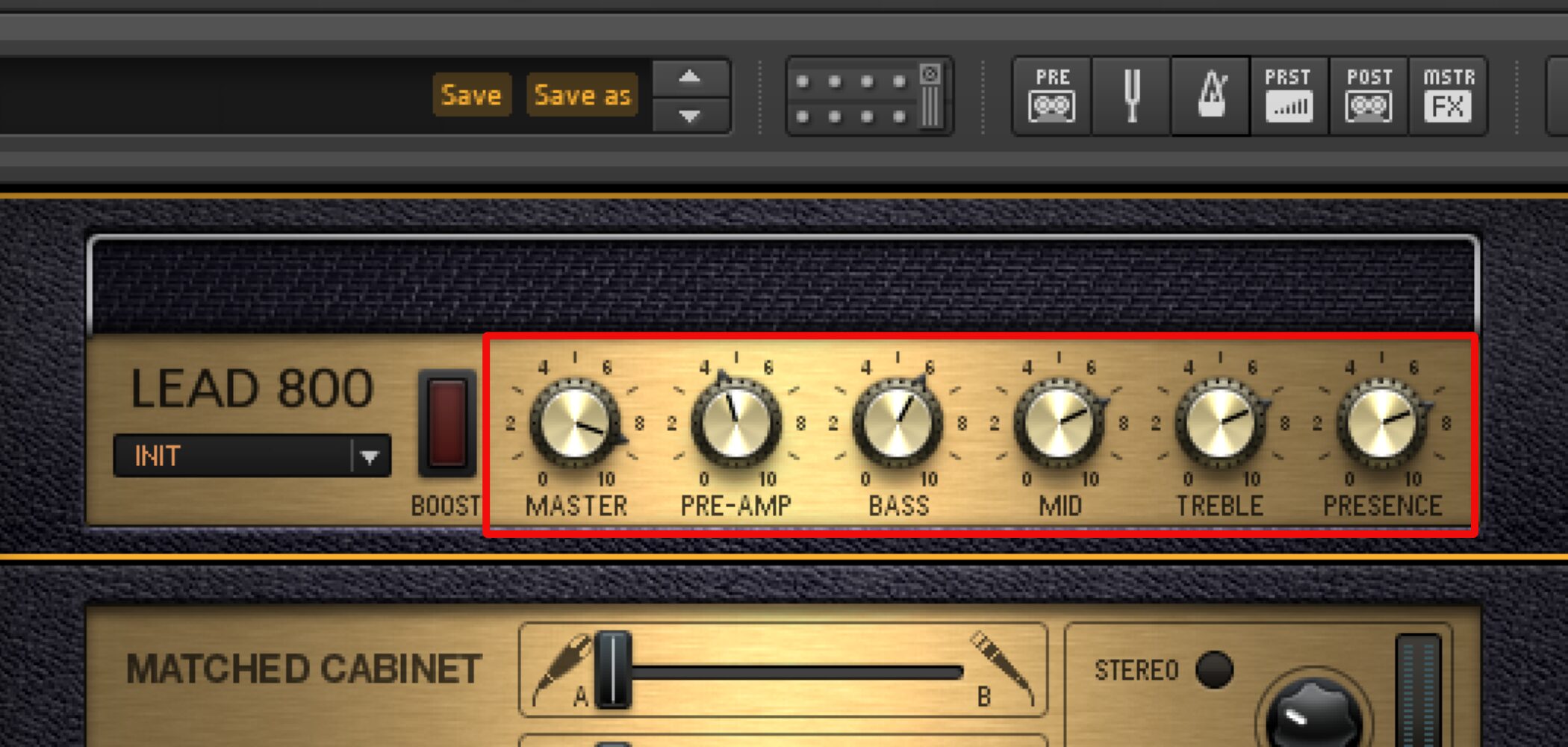
- MASTER: The volume of the guitar amp itself.
- PRE-AMP: The amount of distortion, often called gain.
- BASS: Boosts the low frequencies and adds body.
- MID: Boosts the midrange and shapes the character of the sound.
- TREBLE: Boosts the highs and helps the sound cut through.
- PRESENCE: Emphasizes the upper highs and adds definition.
A note on levels
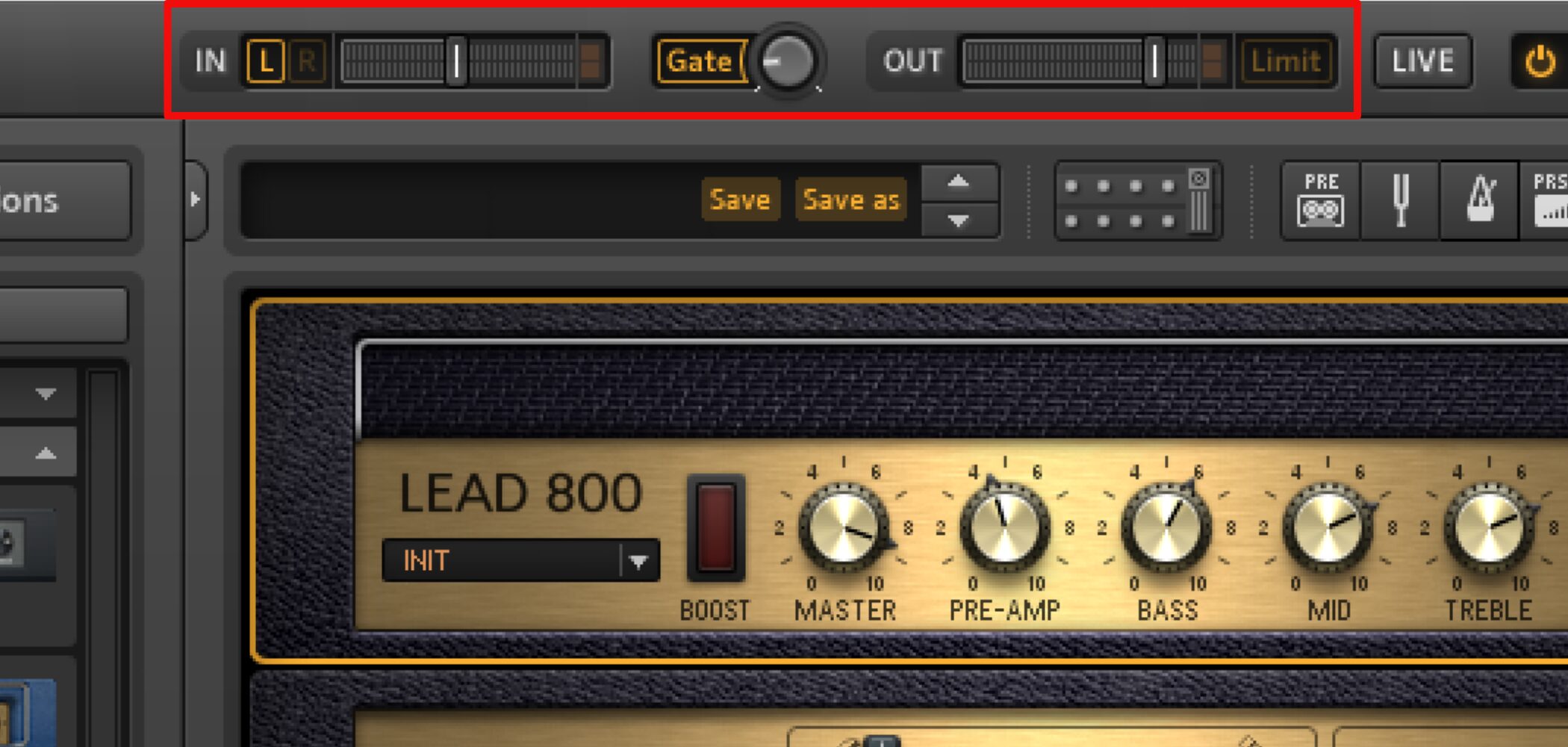
You can monitor the input and output at the top of the interface.
If the meter turns red, it indicates clipping.
In that case, lower the slider to adjust the level.
Build your sound with a wide range of effects
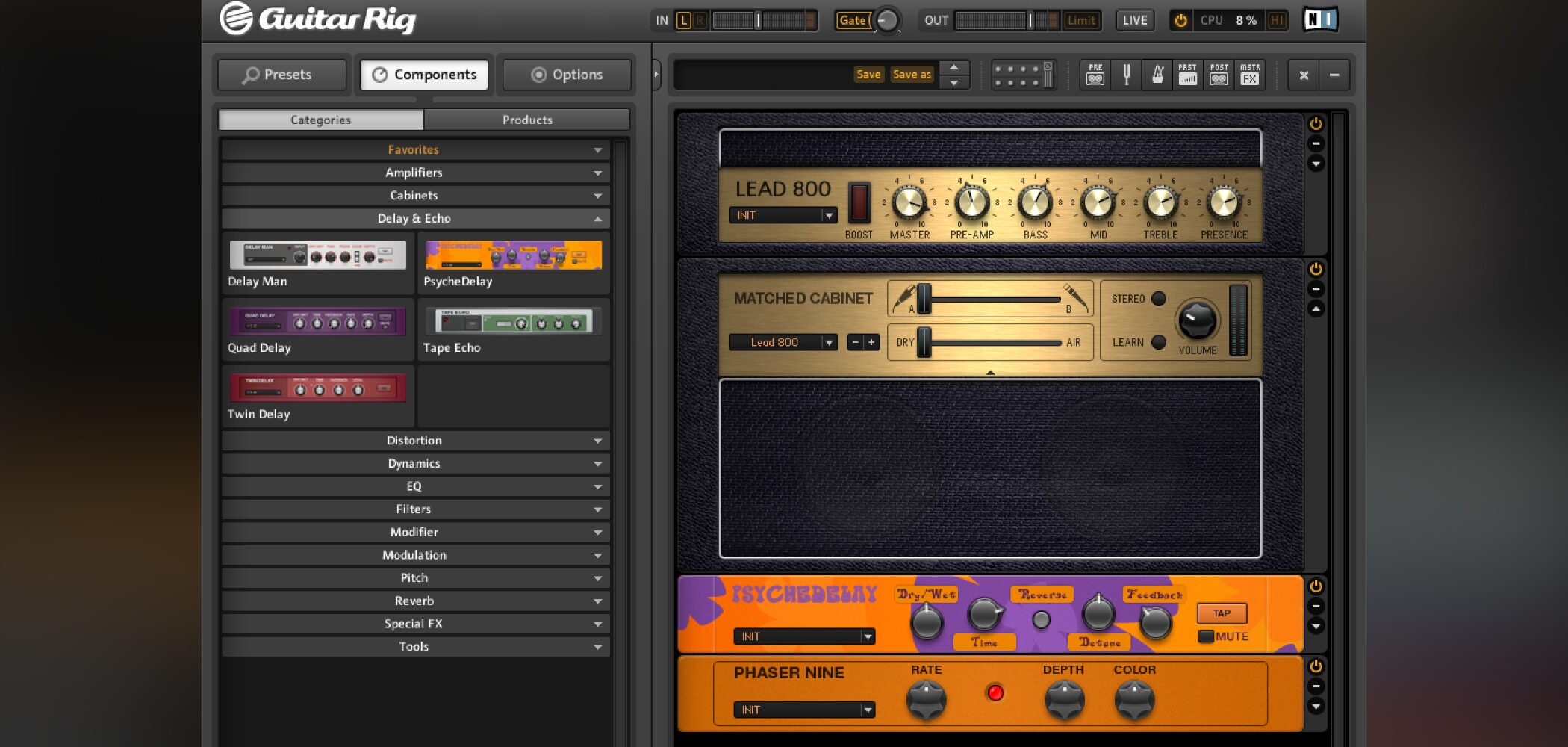
When it comes to guitar, effects are essential.
Guitar Rig includes many different effects.
Combine them freely to create your own high-quality sounds.
Next, we will explain how to apply effects and save your sounds.
Video: Applying effects and saving presets
Choosing and applying effects
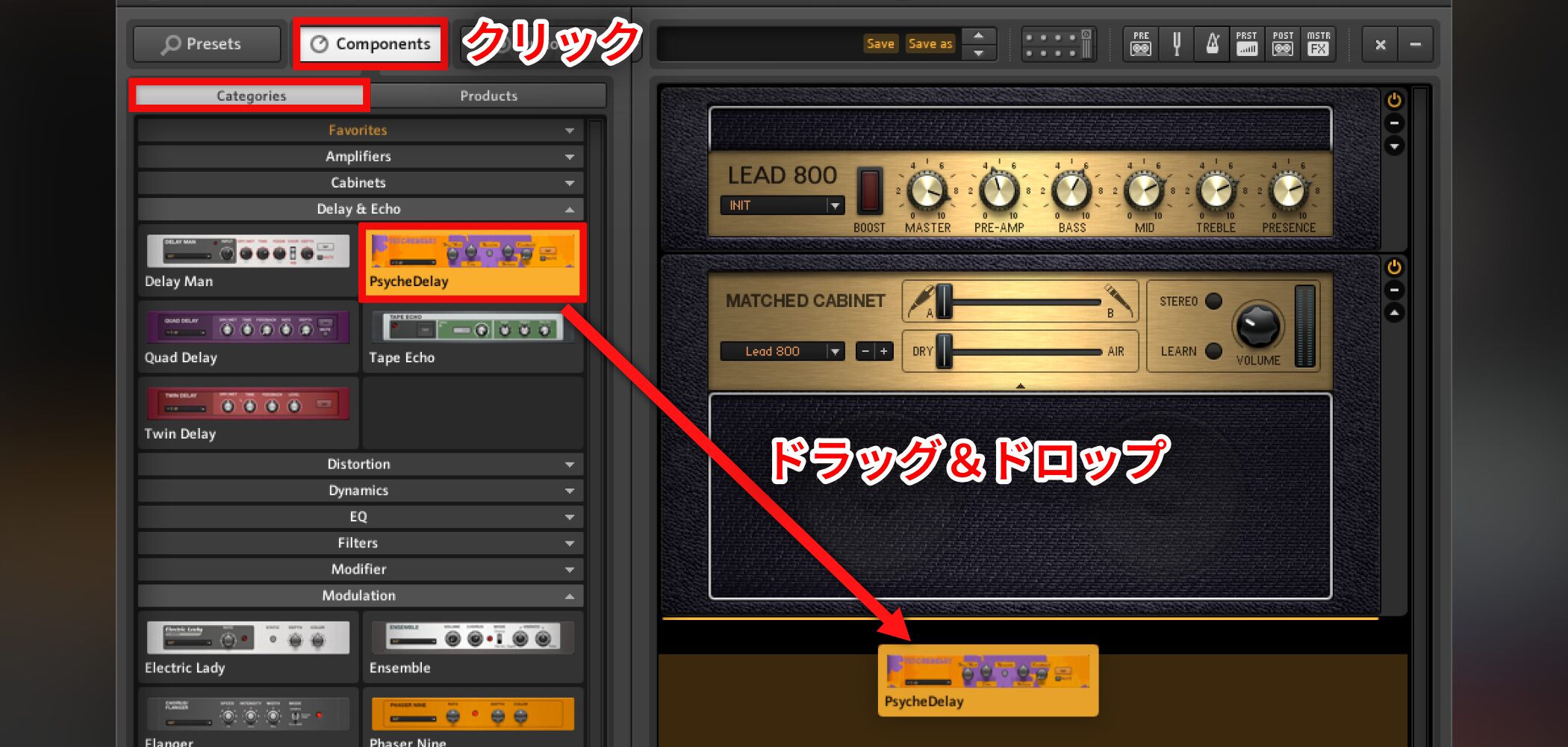
Under Components, select Categories.
Effects are organized by type.
Select the effect you want and drag and drop it into the right-hand section.
Changing the order of effects
Audio flows through Guitar Rig from top to bottom.
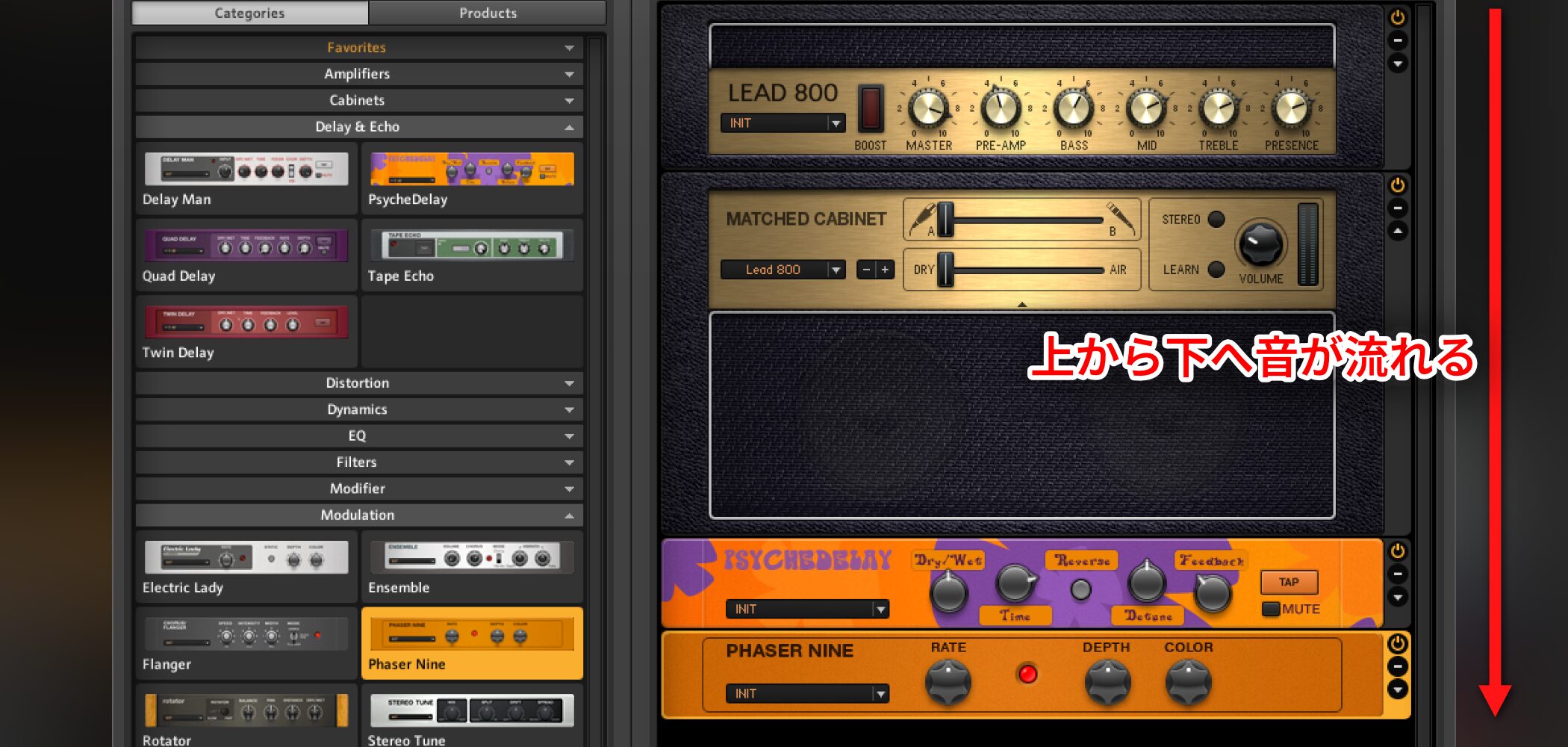
The order of effects therefore changes the sound.
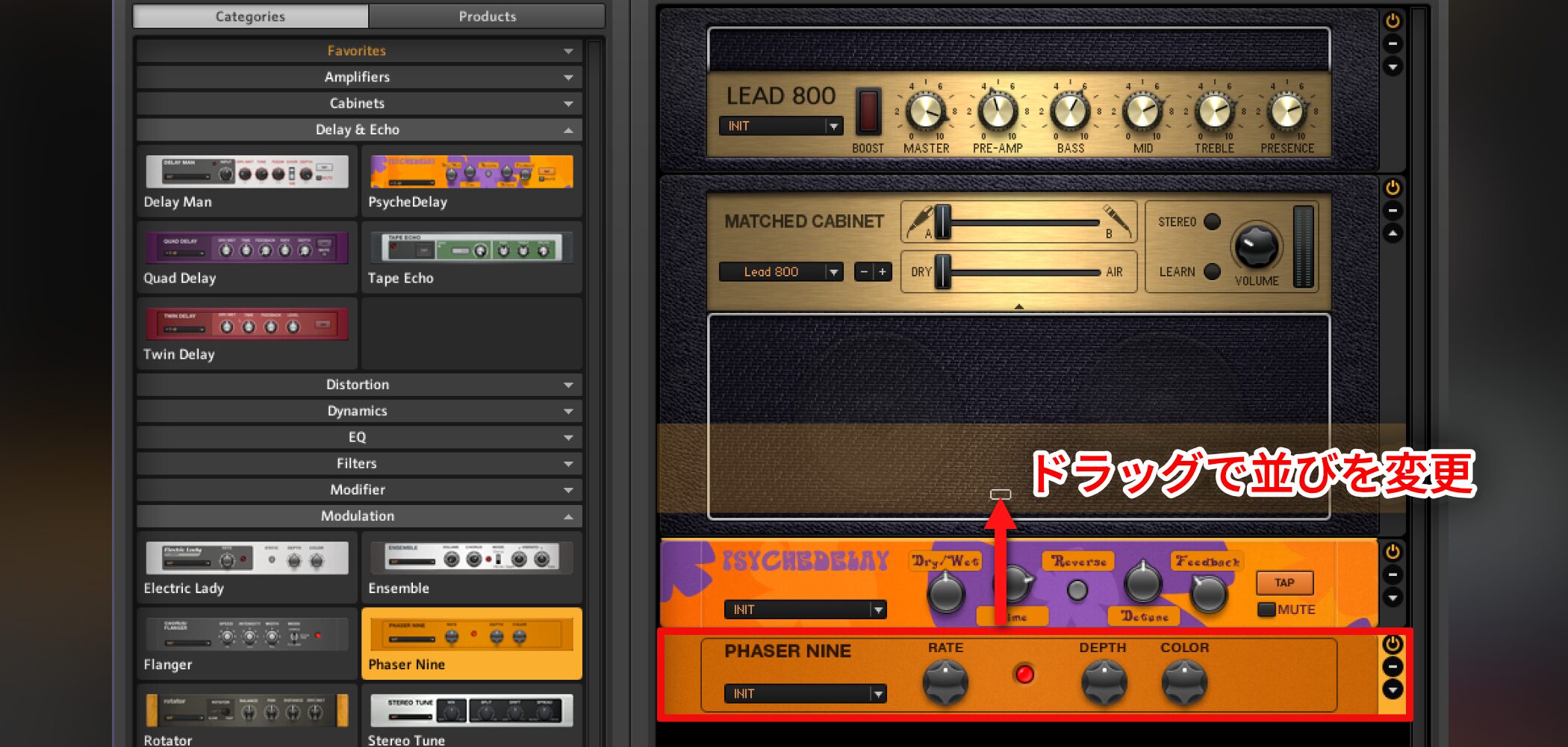
To rearrange an effect, select it and drag it to a different position.
Bypassing or removing effects
To temporarily disable an effect while retaining its settings, use bypass
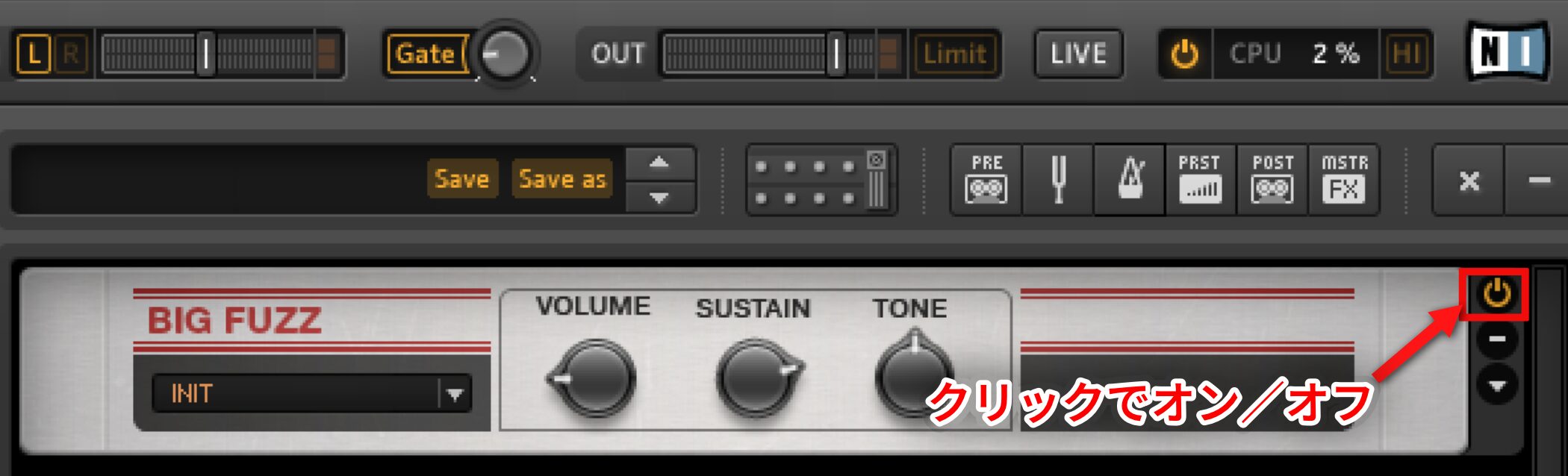
Click the effect’s power button to turn it off.
To remove an effect entirely,
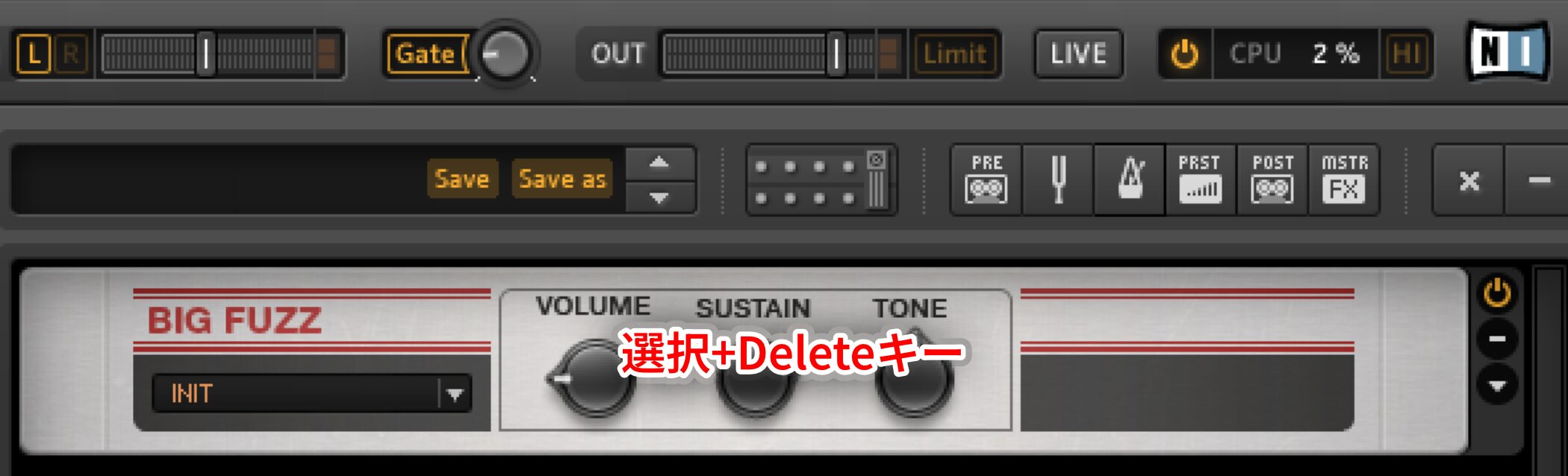
select it and press Delete.
Saving presets
Save a sound you have created so you can easily recall the same settings on other tracks or in other songs.
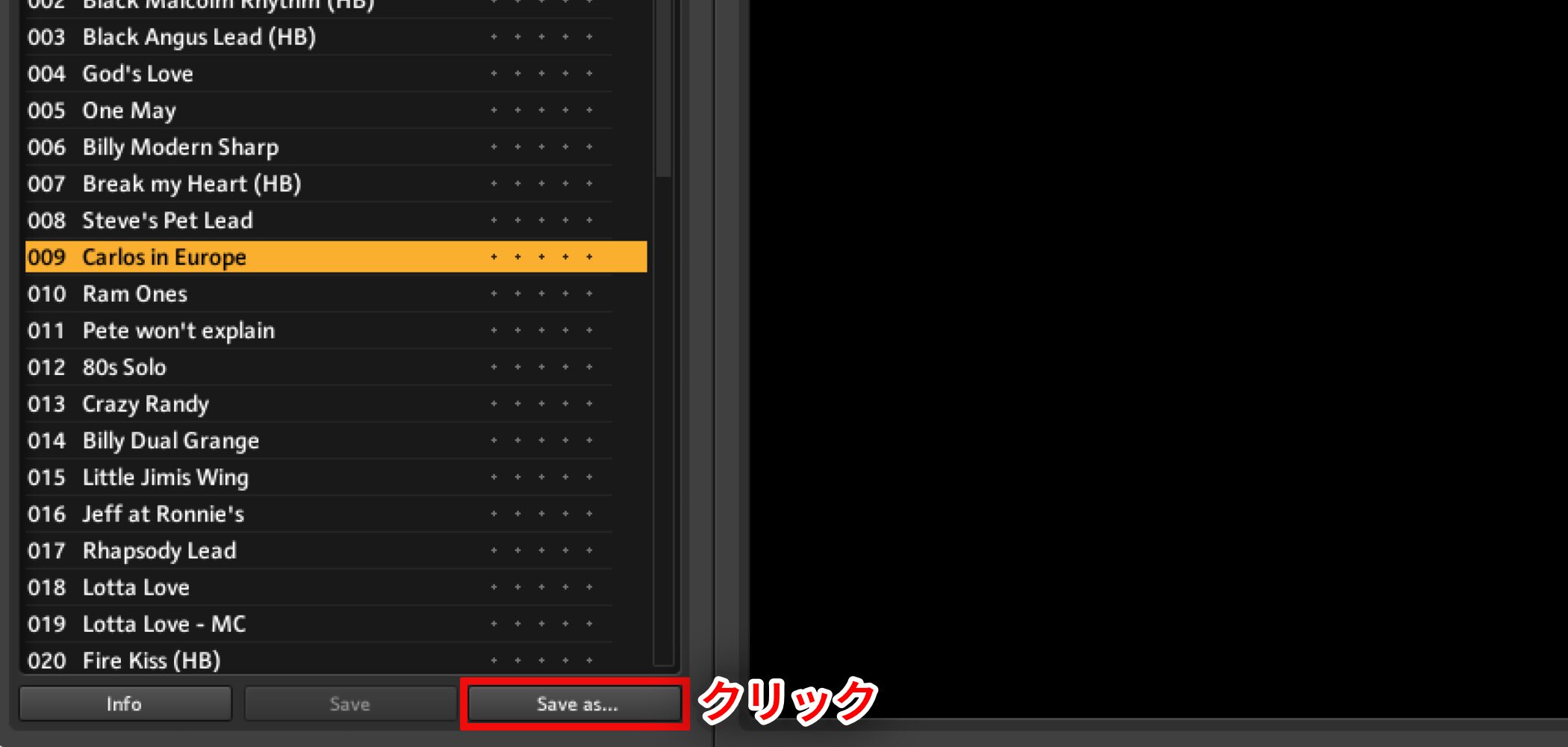
In the preset area at the lower right of Guitar Rig, choose Save As.
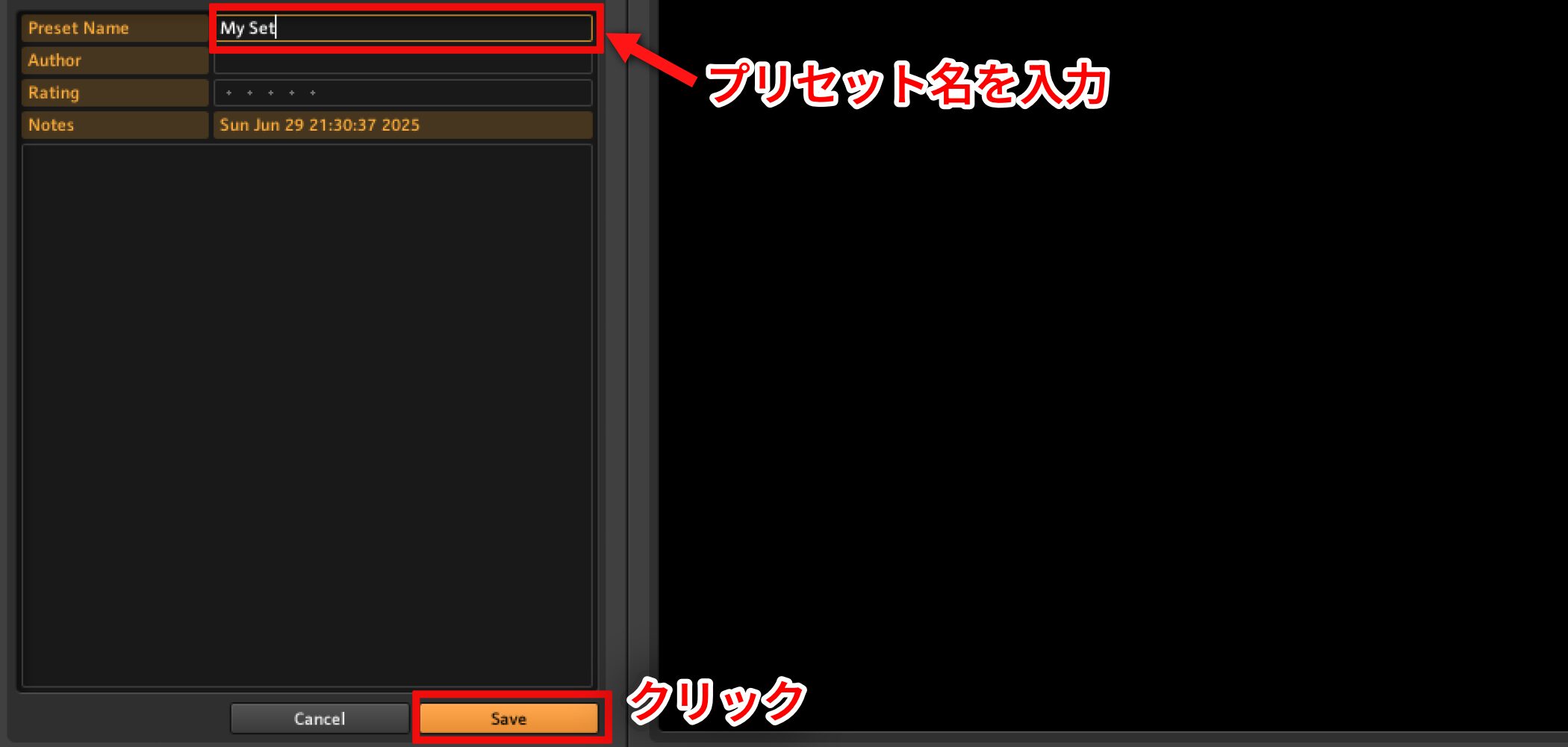
Enter a name in the window that appears and select Save.
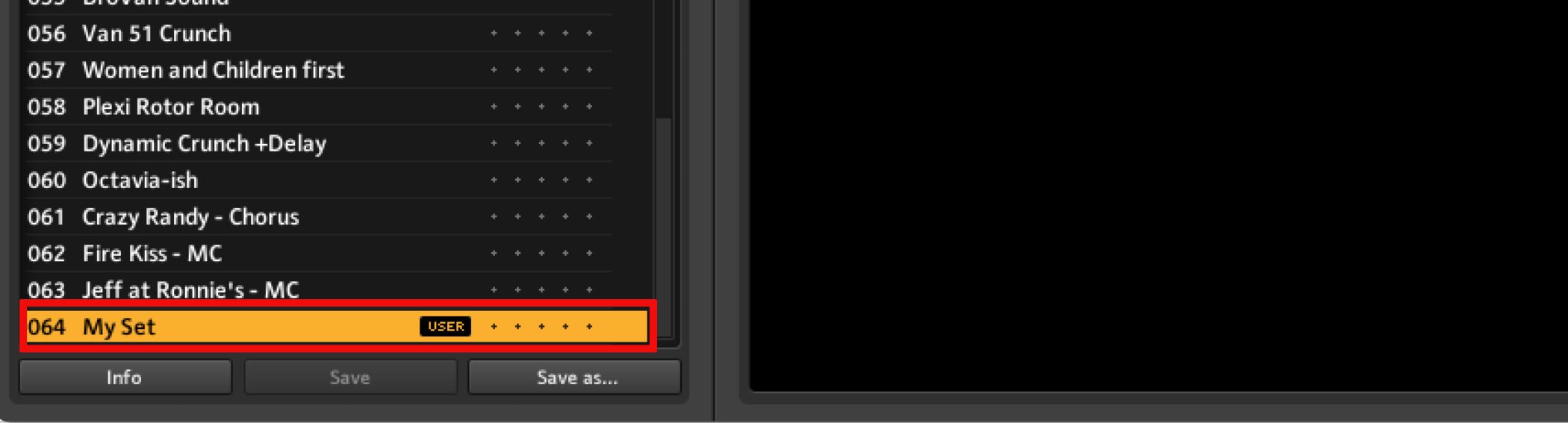
Your preset is now saved.
A range of effects for more than just guitar
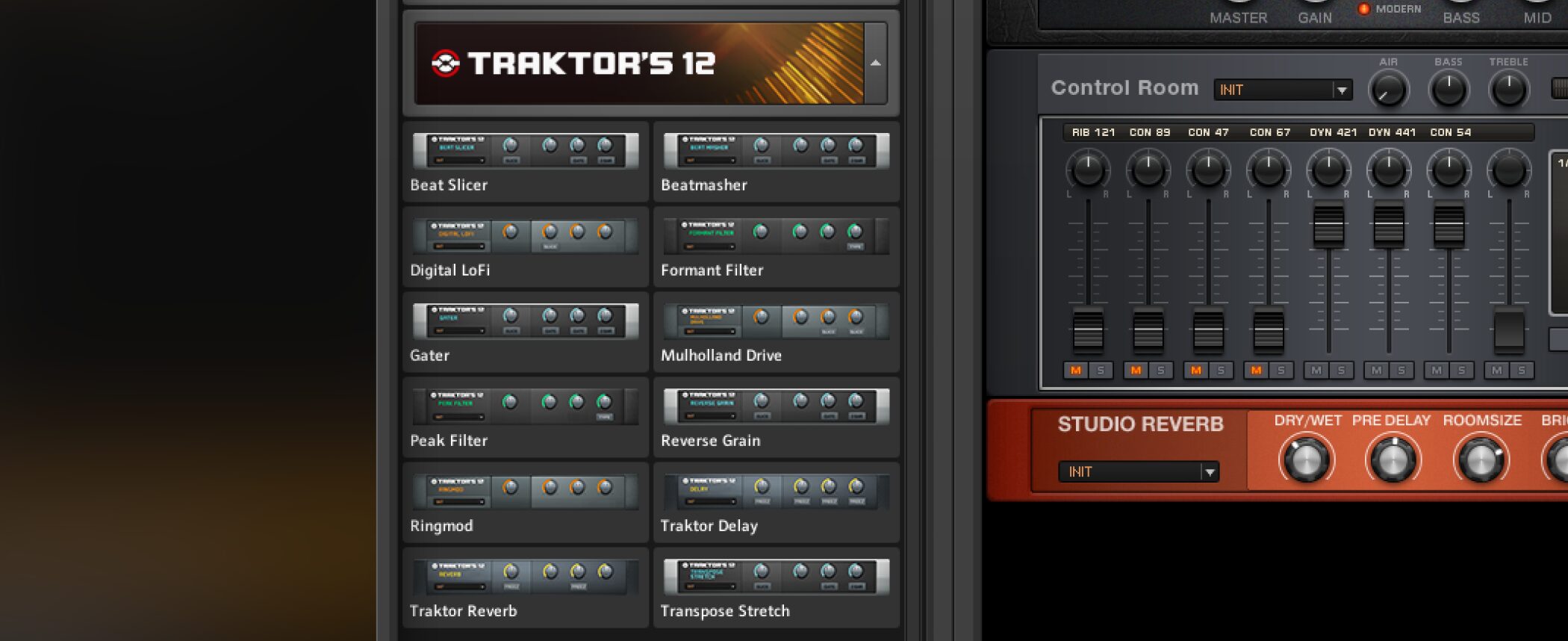
Let’s continue exploring effects.
Despite the name Guitar Rig, it can be used on many kinds of tracks besides guitar.
Here we apply the recommended Traktor’s 12 series to the master and drum tracks.
Traktor’s 12 can also be used in a DJ-like way to create interesting effects.
Video: Pitch / Special FX
Finding Traktor’s 12
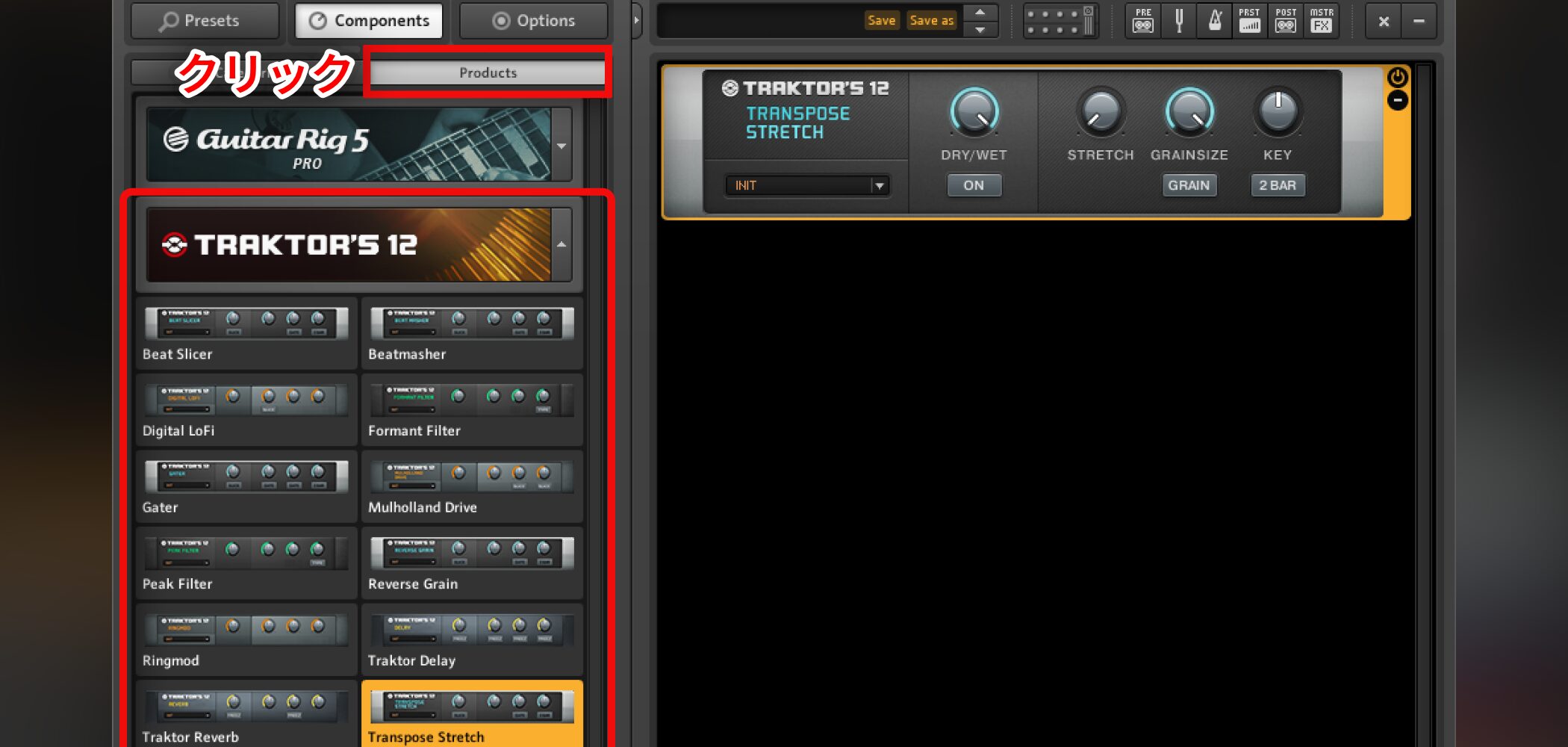
You can find these effects through the effect categories, but Products lets you see all of Traktor’s 12 together.
How Traktor’s 12 works
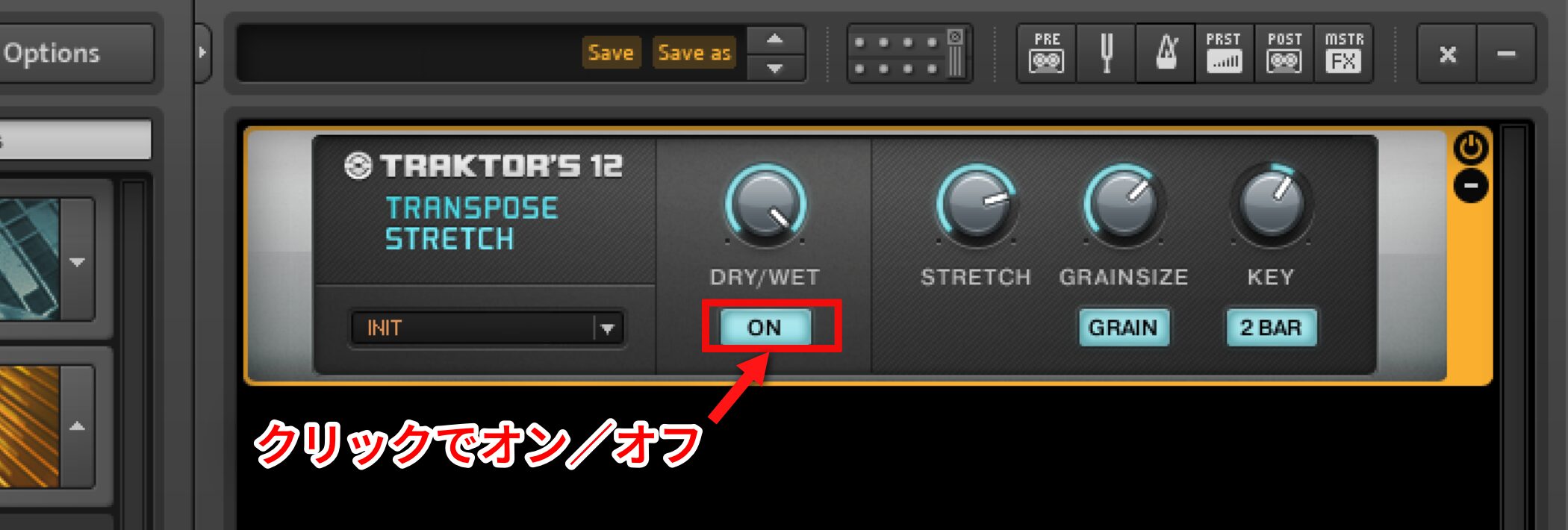
Half of the Traktor’s 12 effects use this type of interface.
Generally, turn ON on to activate the effect.
Note: Some effects may continue looping a section after the DAW stops. Toggle ON/OFF if this happens.
Automate Guitar Rig controls in your DAW
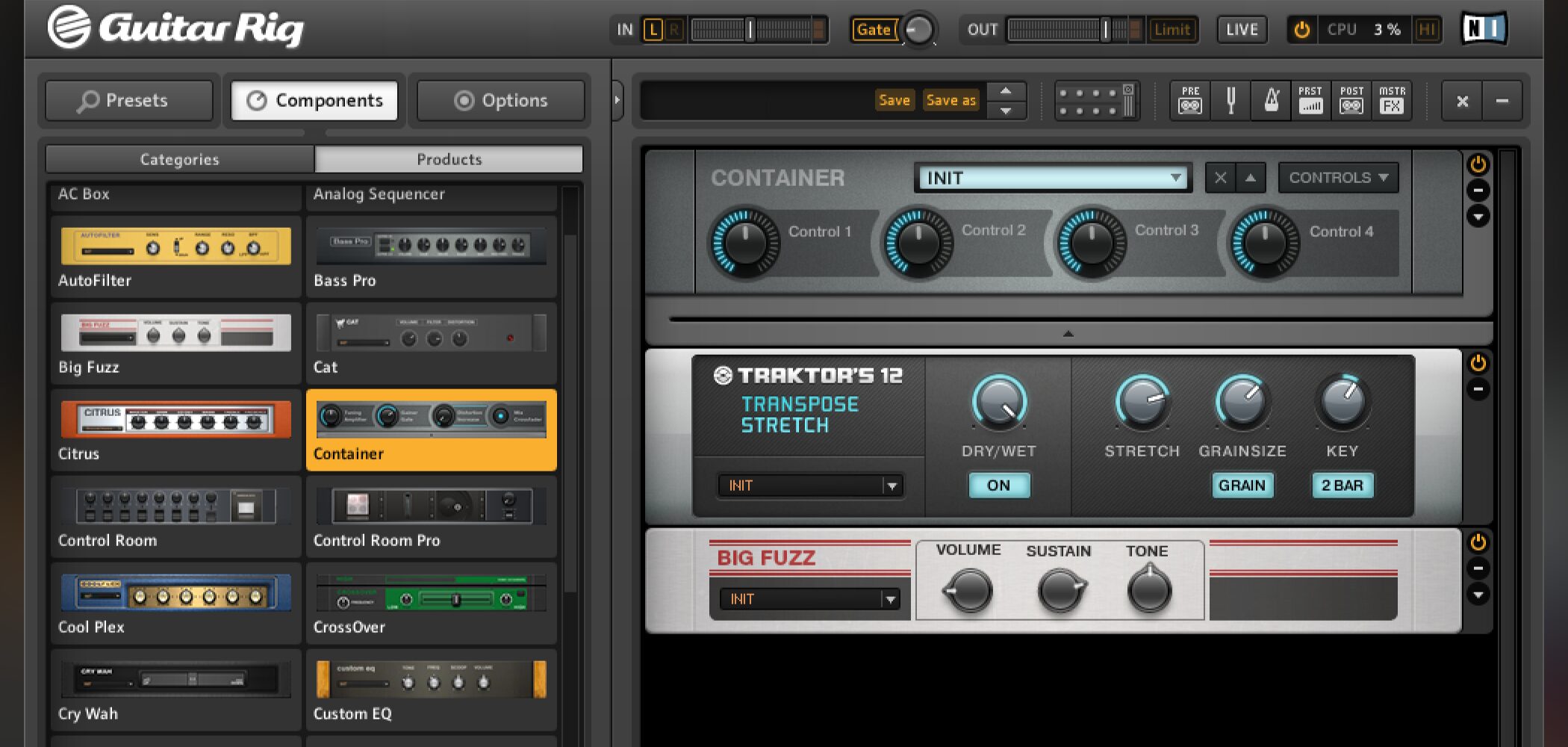
So far we have covered devices within Guitar Rig.
Next, we will control their knobs from the DAW.
With automation, you can also change device controls in Guitar Rig as the song plays.
Video: Automation control
Finding and recording automation IDs
To automate a control, it helps to identify the ID of the button or knob you want to record.
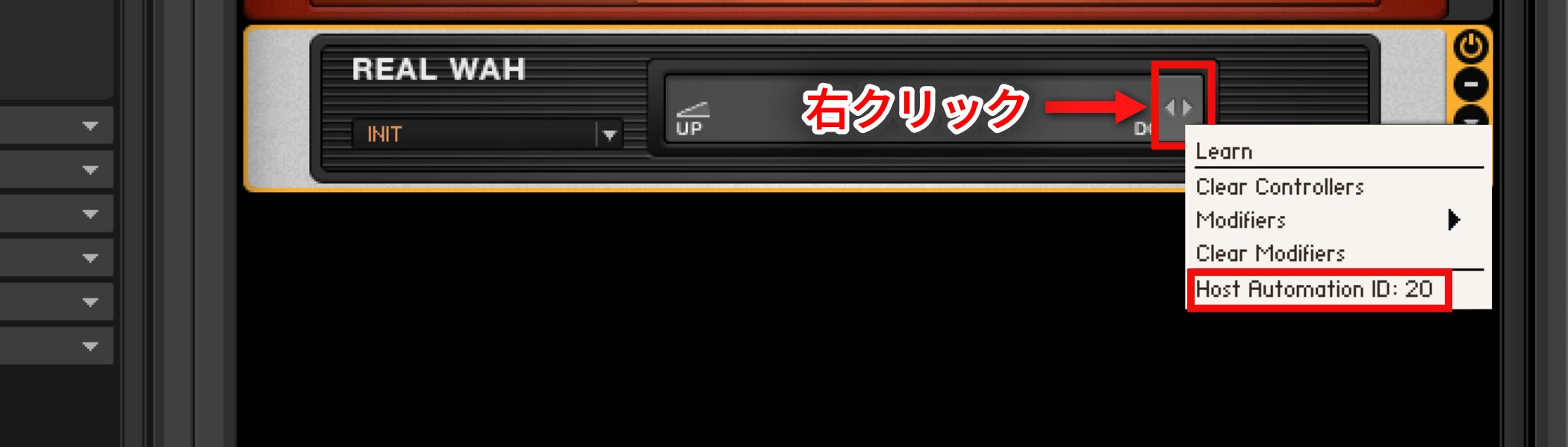
Right-click the button or knob you want to control.
Its ID appears in the menu.
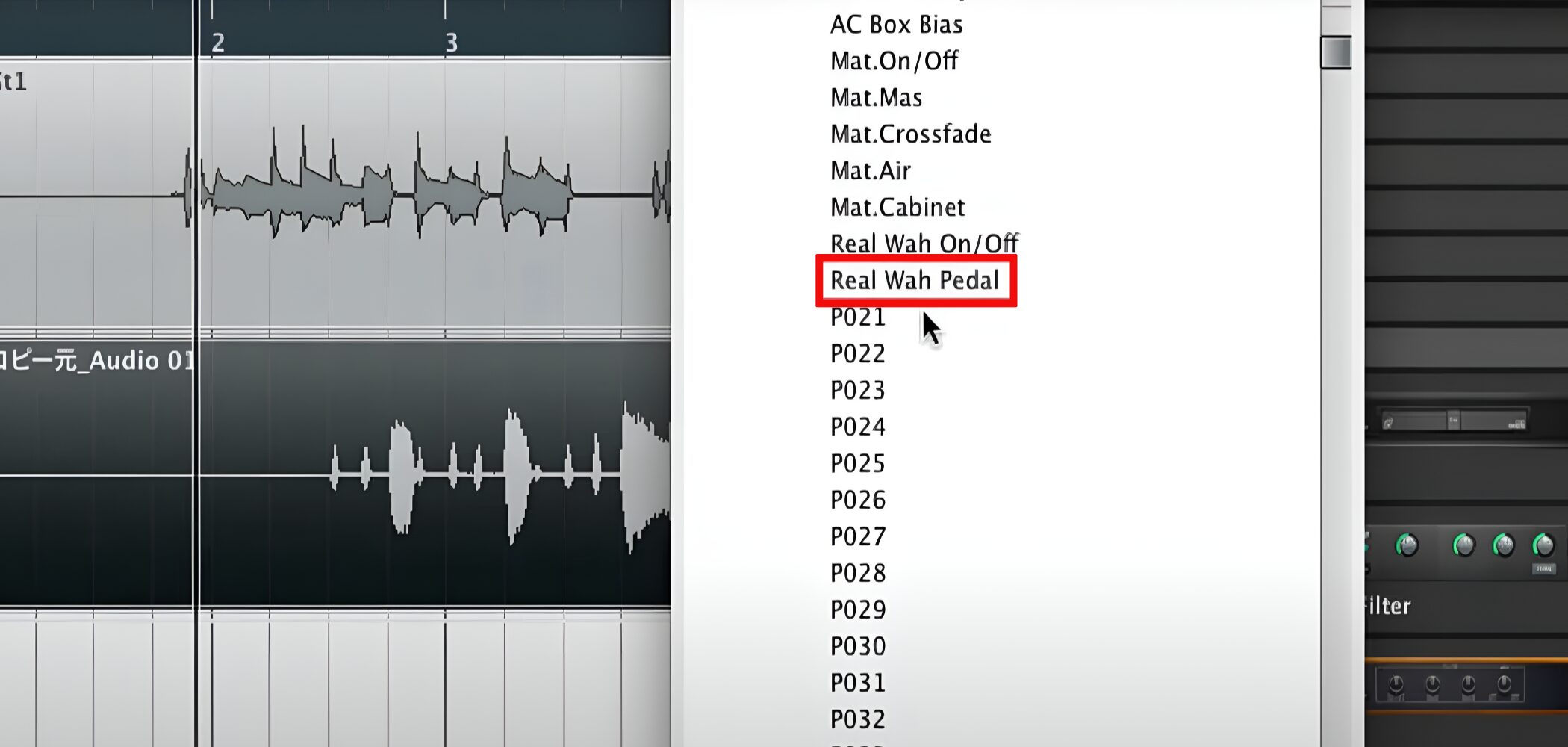
You can access the ID parameter from your DAW’s automation menu.
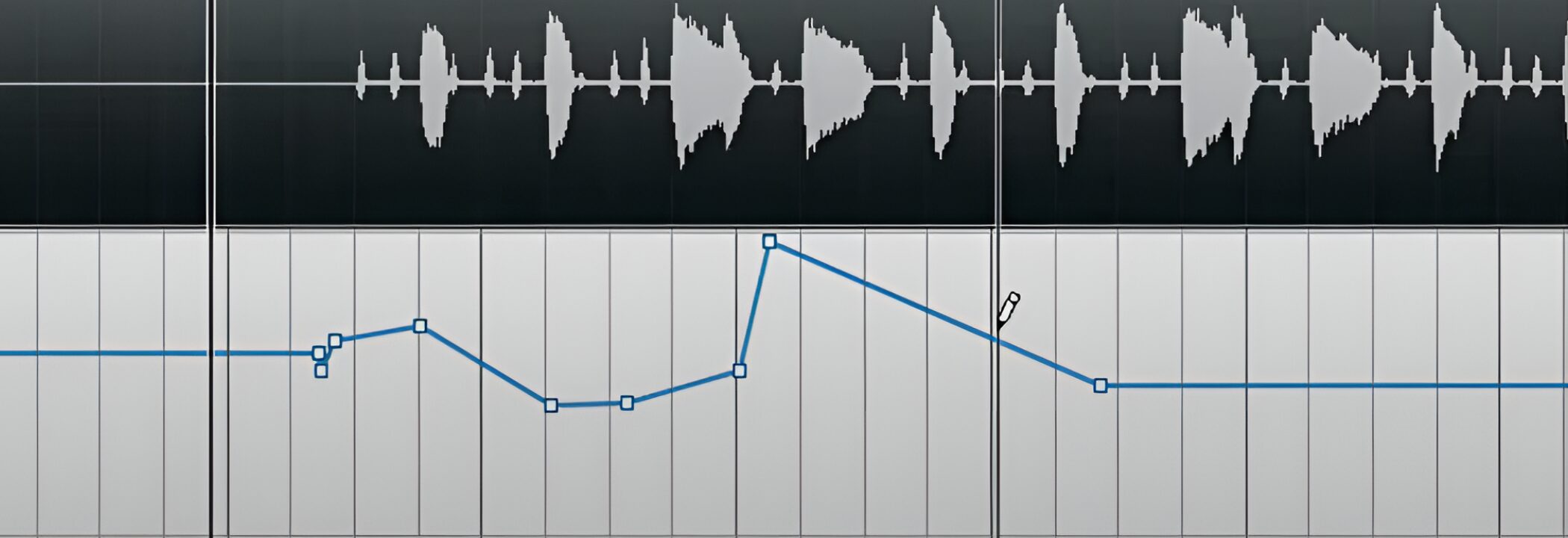
Then record automation as usual.
Using CONTAINER
CONTAINER lets you control several different knobs or buttons at the same time.
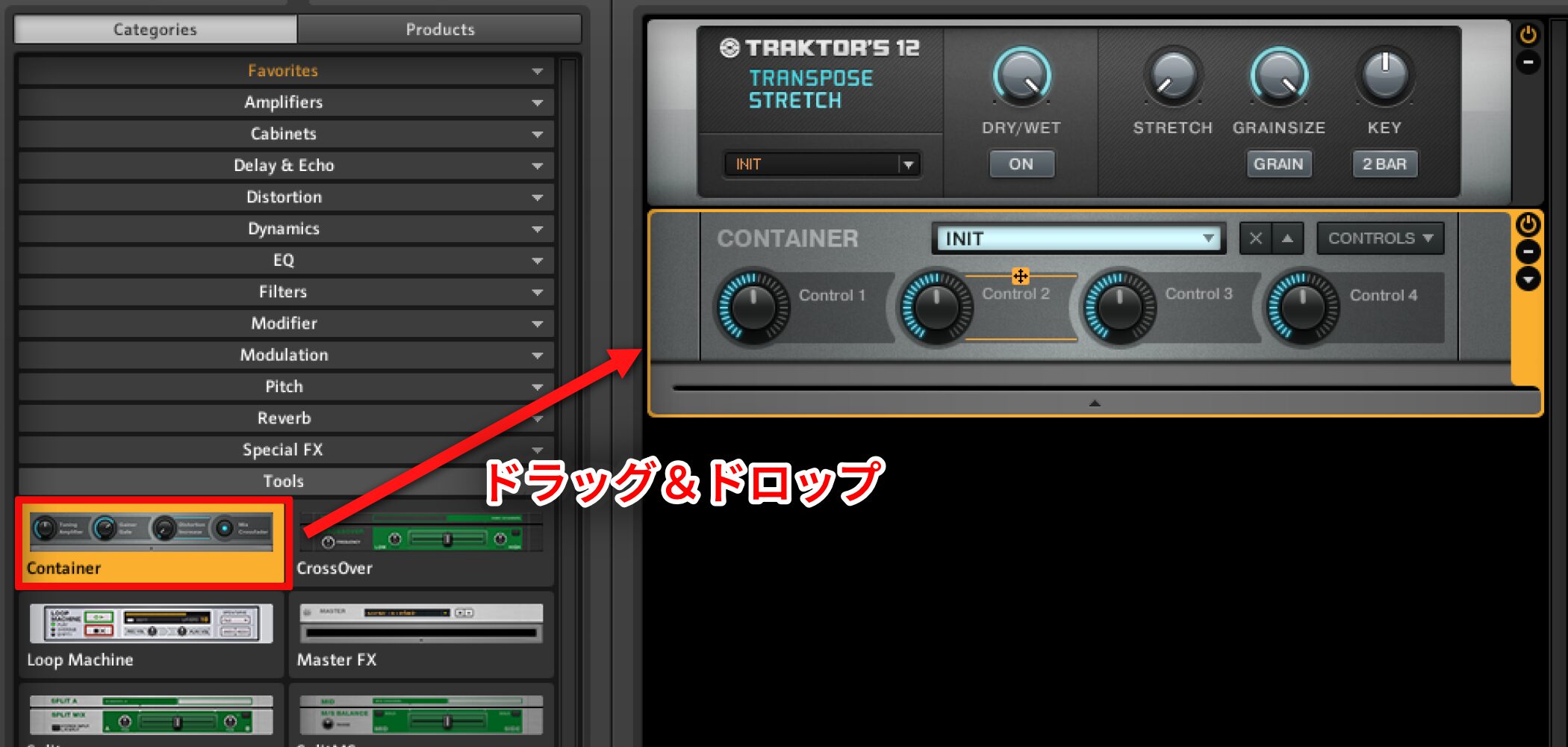
CONTAINER is found under Tools.
Drag and drop it into the rack.
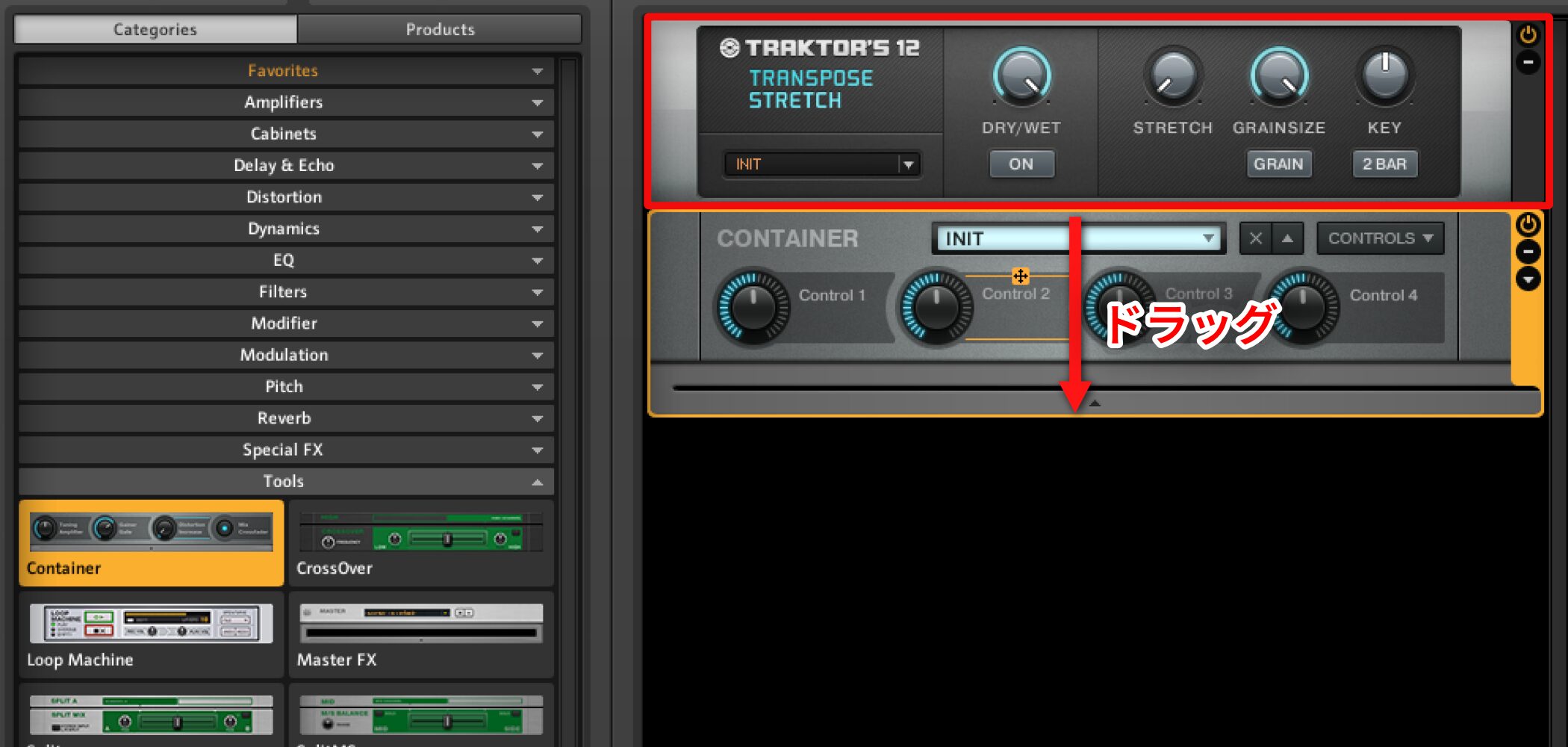
Drag and drop the devices you want to control together into CONTAINER.
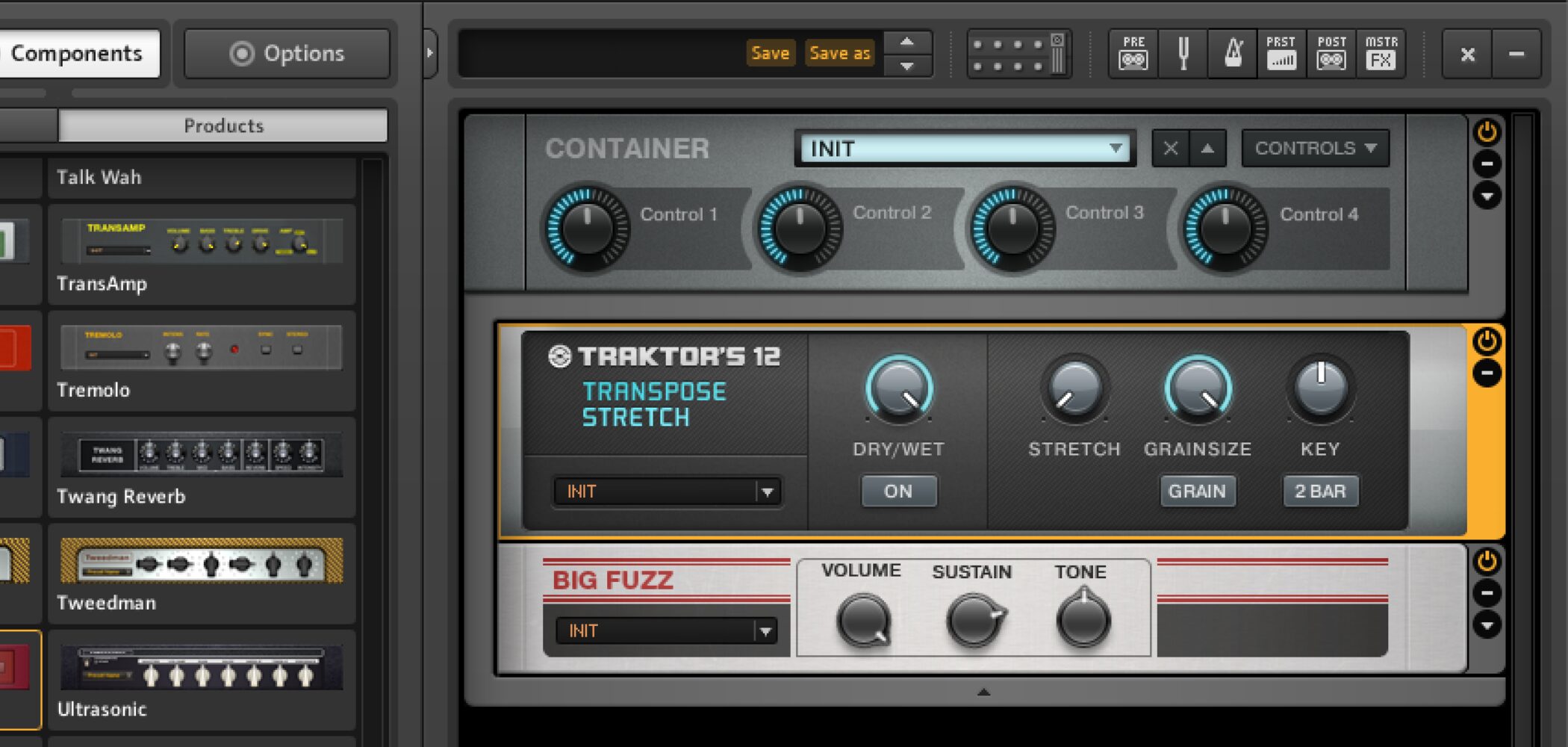
They will be placed inside it.
As shown above, you can insert multiple devices.
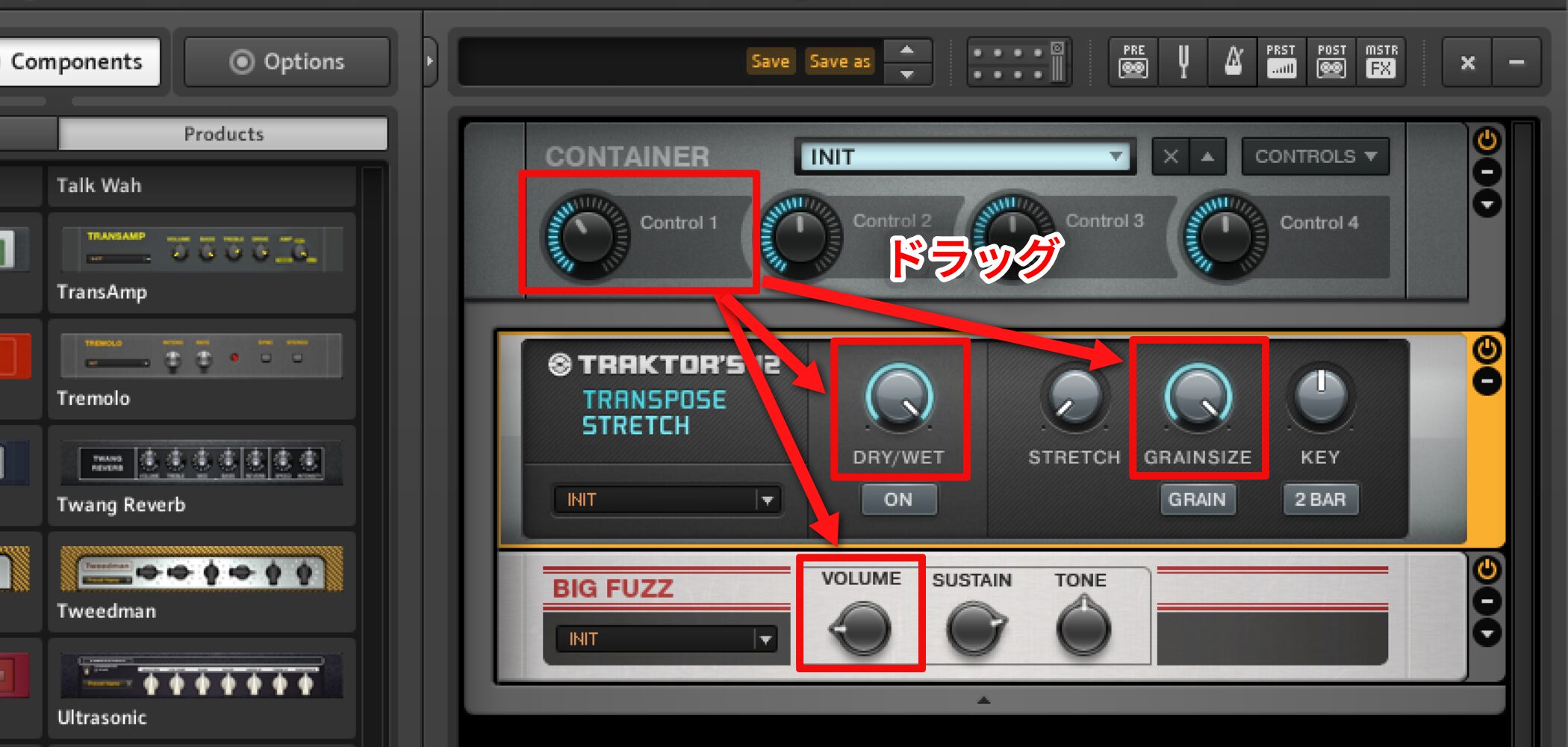
Drag a CONTAINER knob onto each device knob you want it to control.
The setup is now complete.
Moving the CONTAINER knob now controls all assigned knobs at once.
Automation guides for each DAW
 Logic
 GarageBand
 Cubase
 Ableton Live
 Studio One
 FL Studio
Using Guitar Rig on a stereo track
As its name suggests, Guitar Rig is an amp simulator designed for guitar, but its many effects can be applied to a wide range of other tracks.
However, when applied to a stereo track, it may initially process the signal in mono.
The solution is simple.
Video: Switching between mono and stereo
Video highlights
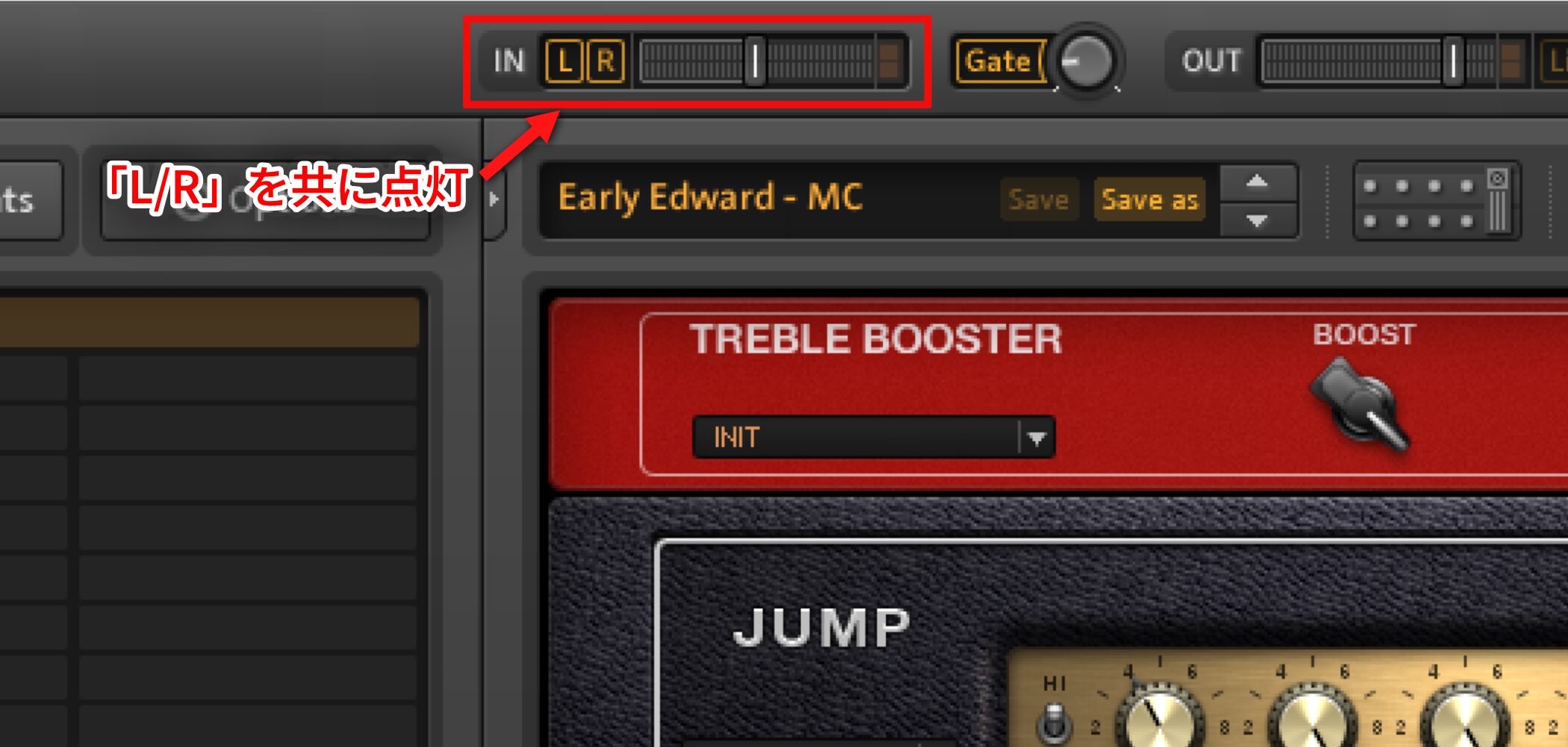
Turn on both L and R at the top.
The effect will then process the signal in stereo.
Frequently asked questions
Q1. How do I find and use presets in Guitar Rig 5?
Click Presets to activate it and filter by genre or amp type. Double-click a preset in the results to load it. This makes it easy even for beginners to find a setting and get started.
Q2. How can I temporarily disable just one effect?
Click the power button at the upper right of the effect to bypass it while retaining its settings. To remove it completely, select it and press Delete.
Q3. Can I reuse a sound in multiple songs?
Yes. Choose Save As in the preset area at the lower right of Guitar Rig, give the sound a name, and save it. You can then recall that preset on other tracks or in other songs.
Q4. Can Guitar Rig 5 be used on sources other than guitar?
Yes. You can use it on many tracks, including drums and the master track. It also includes DJ-style effects such as Traktor’s 12 for processing non-guitar sources.
Q5. What should I do if the sound clips?
If the input or output meter at the top turns red, the signal is clipping. Lower the corresponding slider to adjust the level.
NEW ARTICLES
Latest English Articles














































































































































































































































































































































































































































































































































































































































