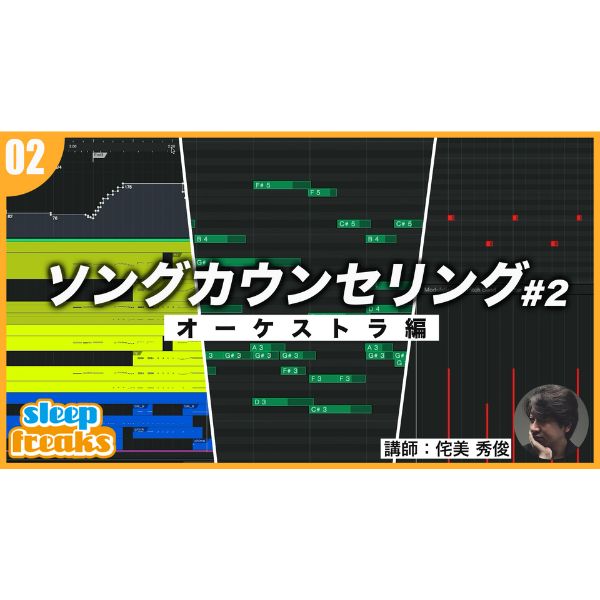
Using the Dragon Quest Overture as a case study, this article explores the fundamentals of producing orchestral music in a DAW. Listen to audio examples as we examine the standard orchestra with woodwinds in pairs, instrument choices by section and musical role, the characteristics of a march, and effective uses of instruments such as harp and horn. These practical techniques are useful for aspiring film and game composers and anyone learning orchestration with virtual instruments.
Learn orchestration in a DAW with the Dragon Quest Overture
Our song-analysis video series examines what makes well-known music appealing and draws out ideas you can use in your own productions. This installment takes a different approach by focusing on orchestral music.
Our example comes from Dragon Quest, a game series that has become a household name in Japan: its Overture.
Composer Koichi Sugiyama passed away in 2021, the year before this article was published, prompting renewed appreciation of his achievements. Music from Dragon Quest was also heard at the Olympics and Japan’s year-end Kohaku Uta Gassen music show.
With this familiar orchestral piece as our example, we aim to offer useful insights for anyone learning orchestral fundamentals, aspiring to write film or game music, or creating orchestral arrangements in a DAW.
The video is an hour long, but it is packed with material. We hope you will take a look.
Song Analysis: The Orchestral Edition — Video
Featured piece
“Overture XI” from Dragon Quest XI: Echoes of an Elusive Age
Full arrangement: Overture XI
Composed by: Koichi Sugiyama
MIDI programming: Hidetoshi Takumi
DAW: Steinberg Cubase
Virtual instrument: Steinberg HALion Symphonic Orchestra
Interviewer and article: Nobuhiko Otsuru
An overview of the piece
The Dragon Quest Overture has three main sections.
- Introduction: a majestic fanfare, marked Maestoso
- Main theme: a march featuring the familiar melody
- Ending: a sudden quiet passage, followed by a slower conclusion marked Più Lento
The introduction is the familiar fanfare, but the repeated exchanges in version XI make it even more dramatic.
The main section adds a lively snare-drum rhythm that gives it the character of a march.
At the end, a melodic string passage leads into a lavish, triumphant conclusion.
The progression has a strong sense of narrative, creating the excitement of setting out on an adventure.
Marches have often been used to raise military morale. Their character makes them a natural fit for openings to role-playing games such as Dragon Quest and to military strategy games.
Instrumentation
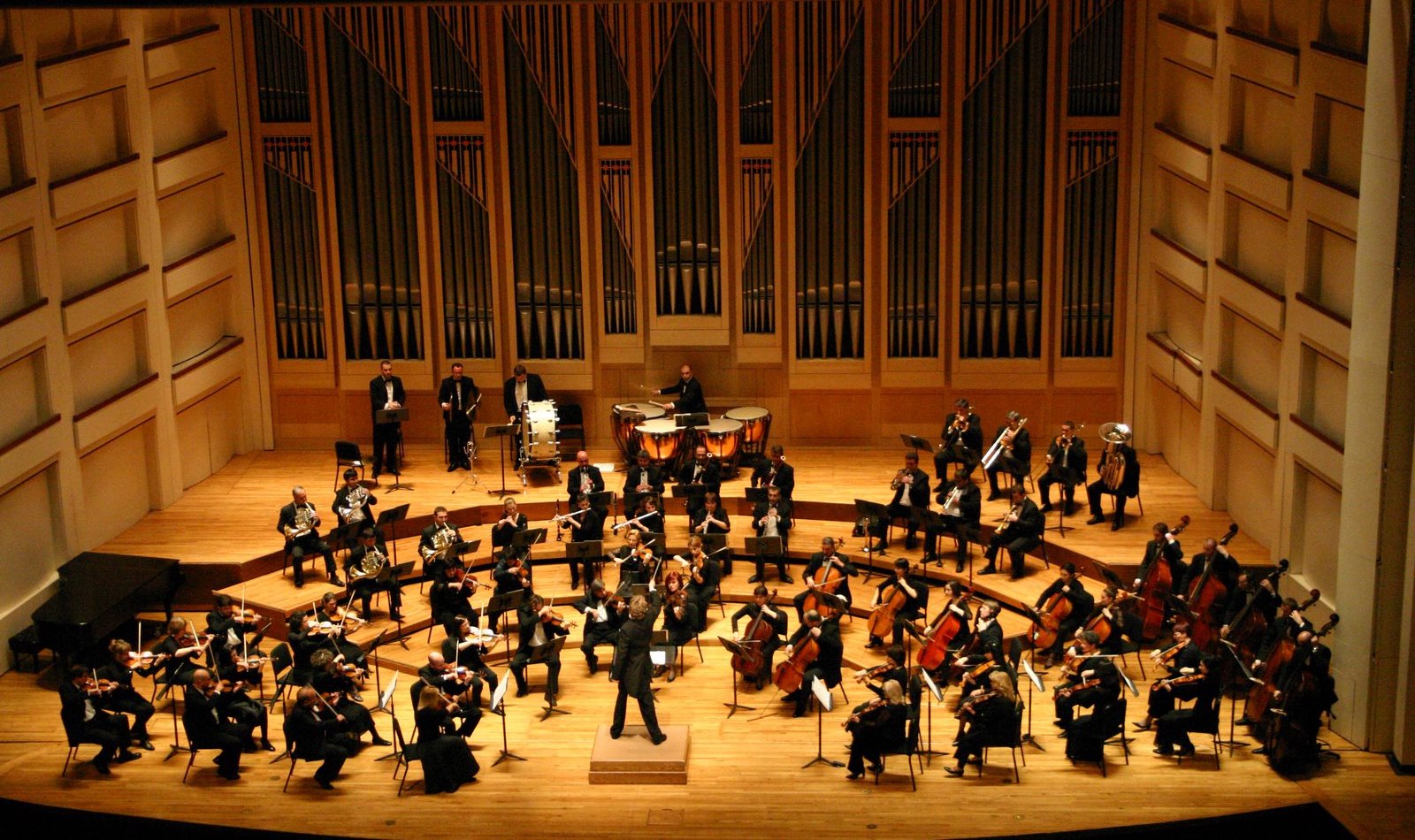
Let’s use the Dragon Quest Overture to explore the basic makeup of an orchestra.
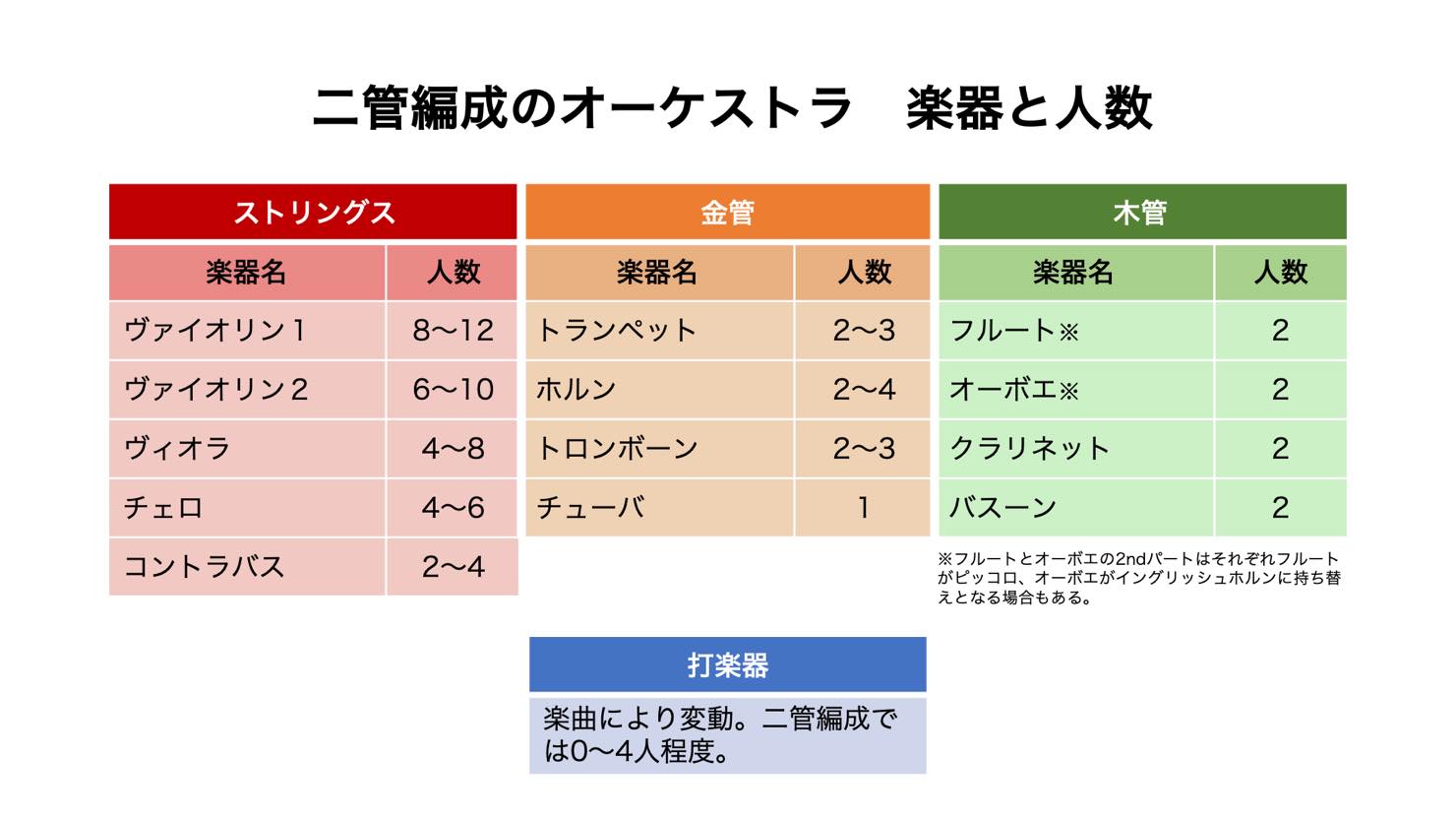
An orchestra’s size is often described in terms of its woodwind complement. As in the diagram above, an orchestra with two players in each woodwind section, with strings and brass sized accordingly, is called an orchestra with woodwinds in pairs. The Dragon Quest Overture uses this standard-sized orchestral setup.
One player per woodwind section gives a single-wind orchestra, while three per section gives triple winds. The other sections are scaled accordingly.
There are several explanations for using the woodwind complement as the reference. A commonly cited one is that woodwinds are relatively quiet compared with other orchestral instruments.
String-section sizes, meanwhile, are typically adjusted in pairs.
This comes from the practice of two orchestral string players sharing one music stand. Each pair is called a desk, or Pult. Ten violinists, for example, make up five desks.
Listen by orchestral section
First, listen to the strings, brass, woodwinds, and percussion as separate sections.
Strings
Brass
Woodwinds
Percussion and harp
We do not often get the chance to hear an orchestra broken down by section, do we?
Listening this way, the strings and brass each seem to contain a complete arrangement within their own section. This connects to the analysis by musical role in the next section.
The woodwinds stand out for their decorative high-register phrases, but the bassoons also contribute to the bass line.
In the percussion, the snare gives the march section its distinctive character, while crash cymbals, timpani, and bass drum add accents at key moments. We will return to the harp later.
Listen by musical role
Next, let’s group the instruments by roles such as melody and bass.
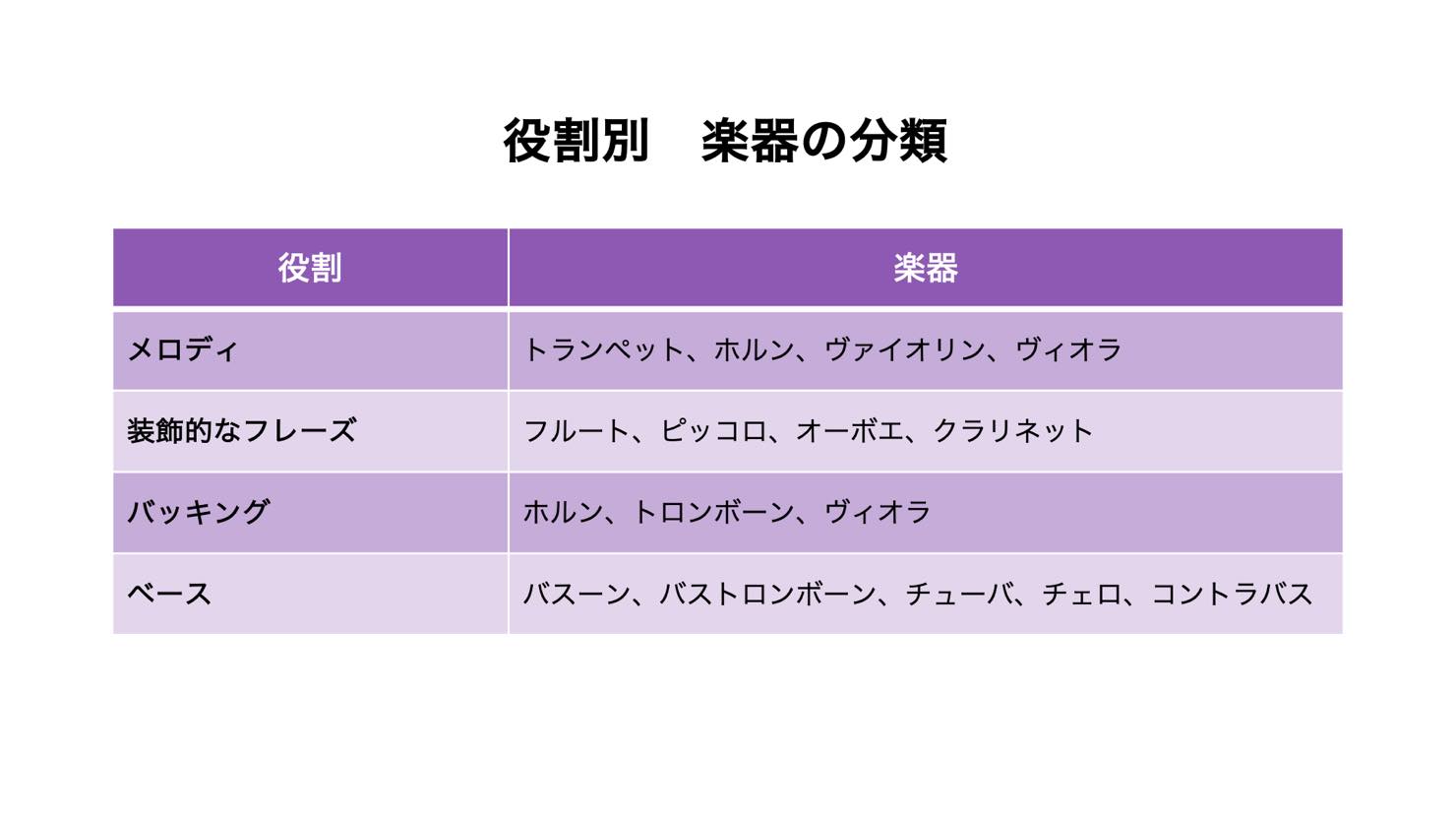
Melody
Although this example is labeled “Melody,” the horns and violas have varied roles, so you can hear several kinds of phrase. The impact when the horns take the melody is particularly striking.
Echoing the character of the introduction, their sound conveys a heroic feeling.
Decorative phrases
Heard on their own, these phrases sound charmingly like birdsong, yet they help establish the march character.
The article traces this style of phrase to “The Stars and Stripes Forever” by John Philip Sousa, the “March King”—a work often counted among three great marches in Japan—and notes its use in many subsequent marches. This tradition may help explain why the Dragon Quest Overture feels so familiar and approachable.
Accompaniment
The horns and violas return here. These versatile instruments also make their presence felt in the accompaniment. Moving from typical march offbeats to triplet figures joined by the trombones, they create an accompaniment hook that responds to the melody and keeps the arrangement engaging.
Bass
Several low-register instruments layer the bass line, giving the music a firm foundation. They play essentially the same phrase in unison, but some parts are in different octaves. Like added harmonics, these layers give the tone greater breadth and presence.
Also worth noticing are the occasional staccato obbligato figures. Interacting with the triplet phrases mentioned above, they add color to the arrangement.
Viewed this way, even though an orchestra contains many instruments, its musical roles can be surprisingly simple, with many instruments doing the same thing. The real pleasure of orchestral arranging, however, lies in how those roles are exchanged and then returned for musical effect.
The introduction
The introduction immediately draws attention to the exchanges between horns and trumpets.
Their distinctive two-part harmonies use a traditional pattern known as horn fifths.
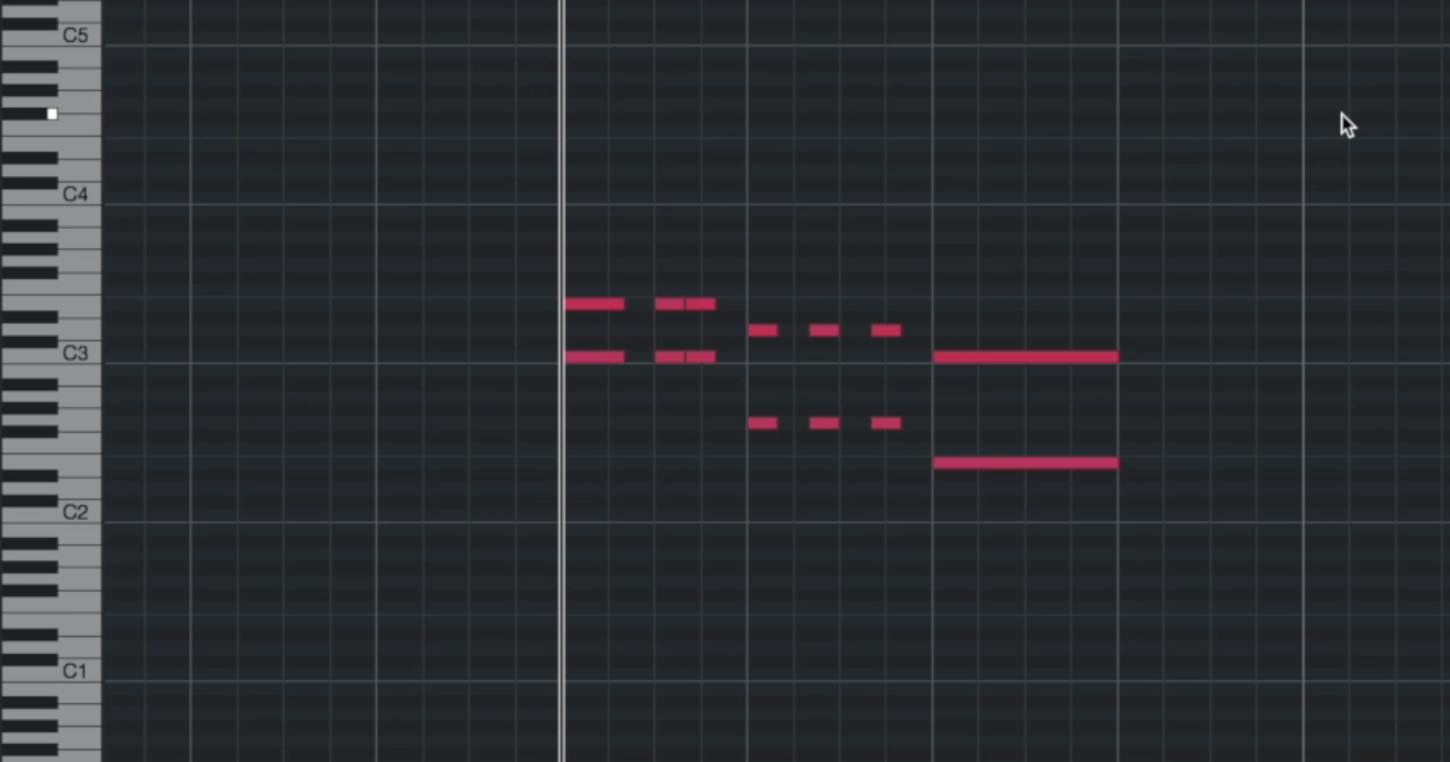
The central interval in the sequence is a fifth. Its beautiful sound on horns has made this pattern a familiar device since at least Beethoven’s time.
Next, let’s look at the harp, which plays only in the introduction and ending.
Using the harp selectively gives those passages a distinctive atmosphere.
Here, it uses glissando, a technique in which the player sweeps across the strings. Together with woodwind trills and string tremolos, it creates a fantastical, almost celestial atmosphere.
Take care when programming harp glissandos. The score does not spell out every individual note, so you need to check the scale currently available on the harp and arrange the notes accordingly.
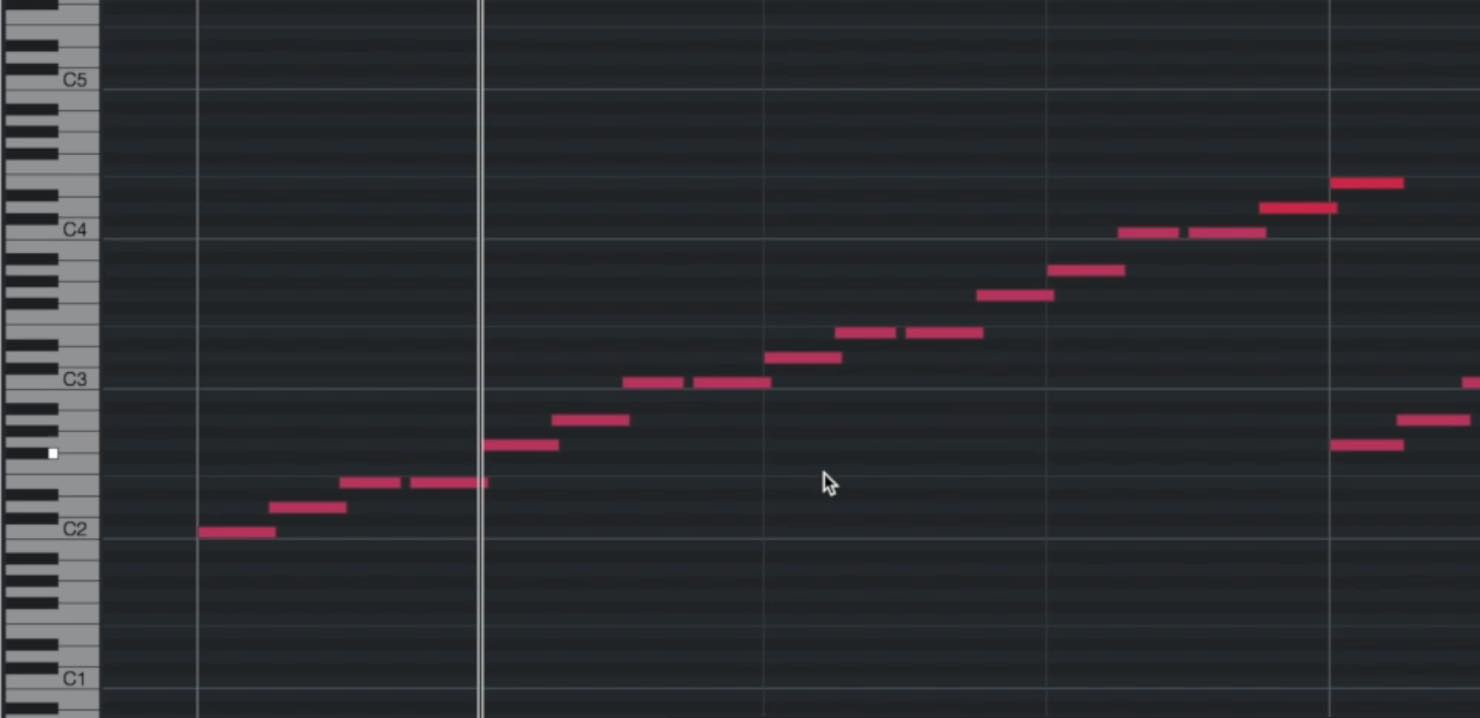
The example above shows the harp glissando in the ending. Depending on the scale, adjacent strings can produce the same sounding pitch, such as E followed by F-flat.
This is part of the secret to creating a convincing harp glissando.
Harp glissando
The fanfare then reaches its peak, with all the parts moving together in harmony and octave doublings.
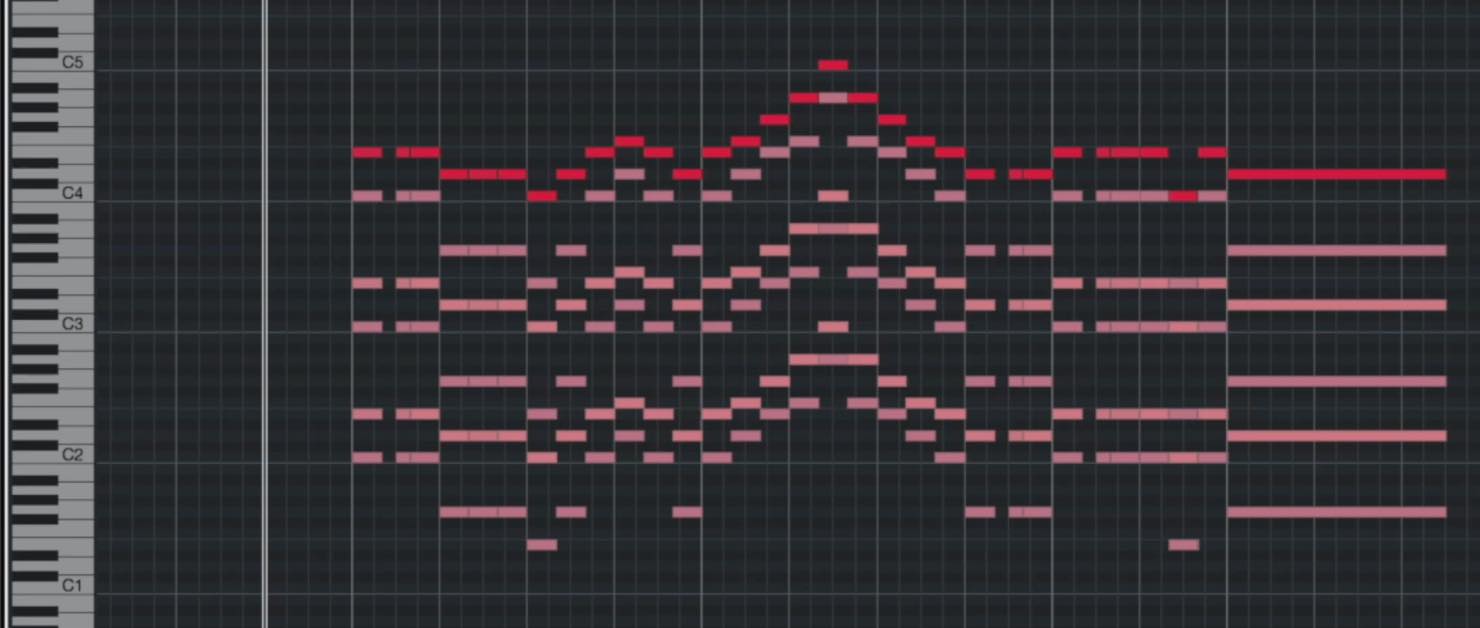
From the oboes at the top to the tuba at the bottom, the instruments share the same rhythmic pattern. This firmly establishes the phrase and seems to proclaim the end of the introduction and the beginning of the main theme.
The ending
At the start of the ending, the march suddenly stops. The tempo eases back and the strings play alone.
This resembles the stripped-back chorus effect often used in pop, creating a highly dramatic transition.
The brass and woodwinds then join in for a finale that is relaxed in tempo yet powerful in delivery.
Within it, the brass play a distinctive figure.

The ascending thirds also appear in the march section of the main theme, so this can be heard as a more lavish version of that idea. Each part also breaks up and ascends through the upper notes of the chord—F-sharp, A, and C over D7—so the phrase can be understood as an arpeggio.
Here the tempo slows and the melody uses sustained notes. The figure adds enough rhythmic activity to keep the passage from dragging.
Tips for programming an orchestra
A key point when programming orchestral music is to avoid overly rigid quantization.
An orchestra has many players. Their subtle timing differences help create its richness and sense of scale.
However, articulation switching by keyswitch is common in orchestral libraries. This can make it awkward to randomize note timing after entering everything exactly on the grid.
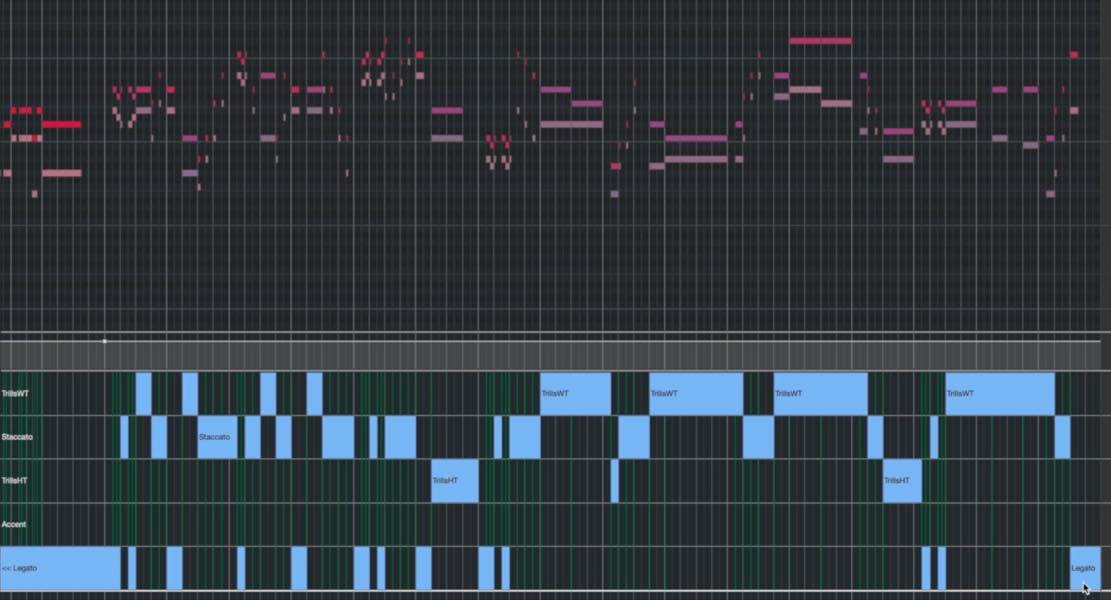
Ideally, you would fine-tune the keyswitch timing too. When time or resources do not permit that, a useful alternative is to offset the timing of an entire track.
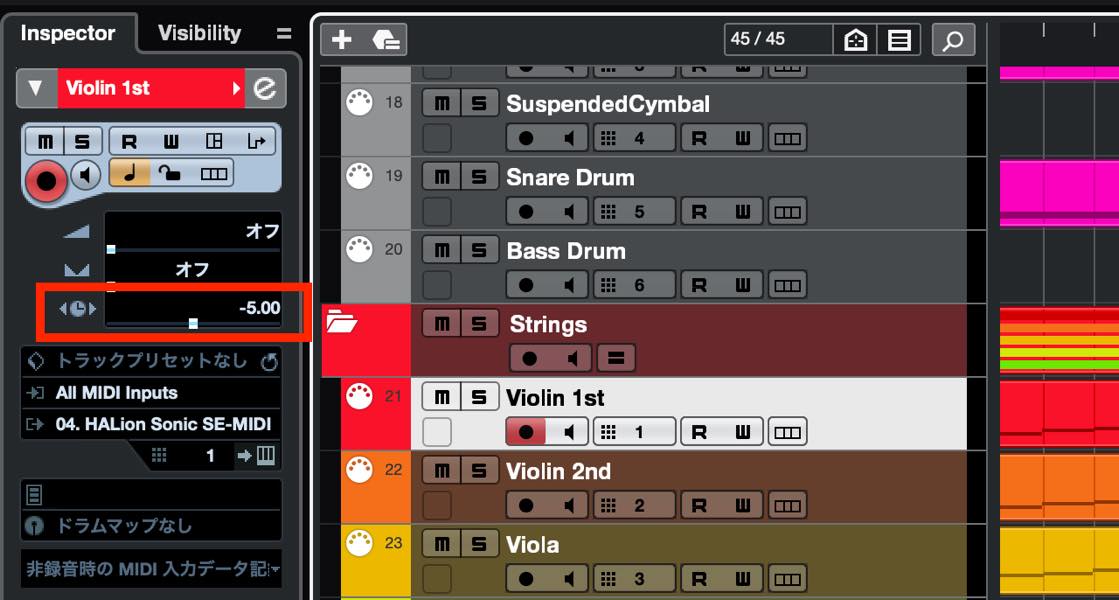
In Cubase, you can do this with Track Delay in the Inspector.
A shift of just a few milliseconds can change the character when the track plays alongside another track performing the same phrase.
Another essential part of orchestral writing is dynamic expression.
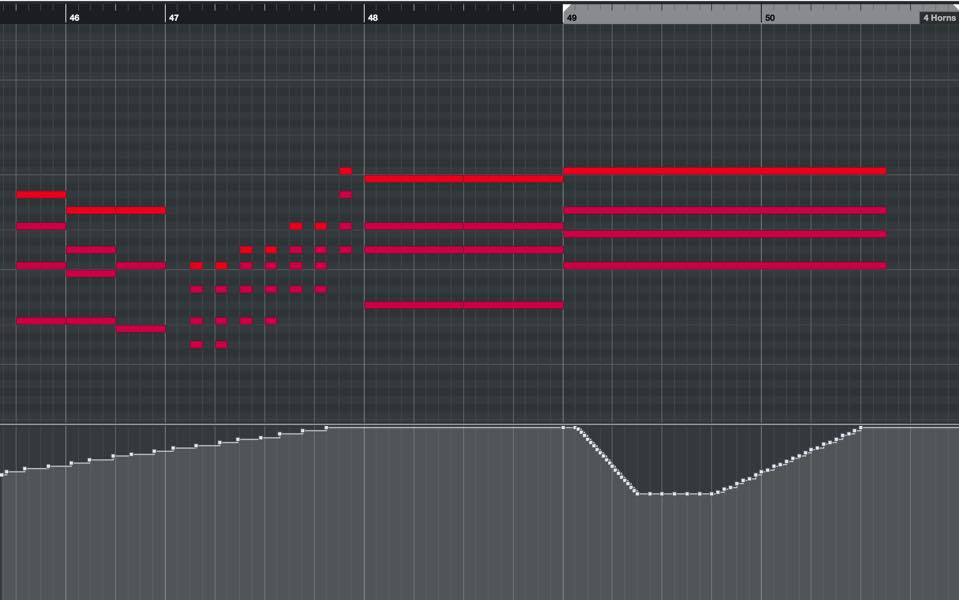
Velocity determines attack strength, but gestures such as crescendos over sustained notes need to be programmed using MIDI CC data.
Drawing every detail can take considerable effort. We recommend using a hardware controller, such as a fader, to enter the data musically in real time.
For instruments that let you control dynamics with modulation (CC01), such as the HALion Symphonic Orchestra used here, a modulation wheel is another option.
Mixing an orchestra
The most important elements in an orchestral mix are panning and depth created with reverb.
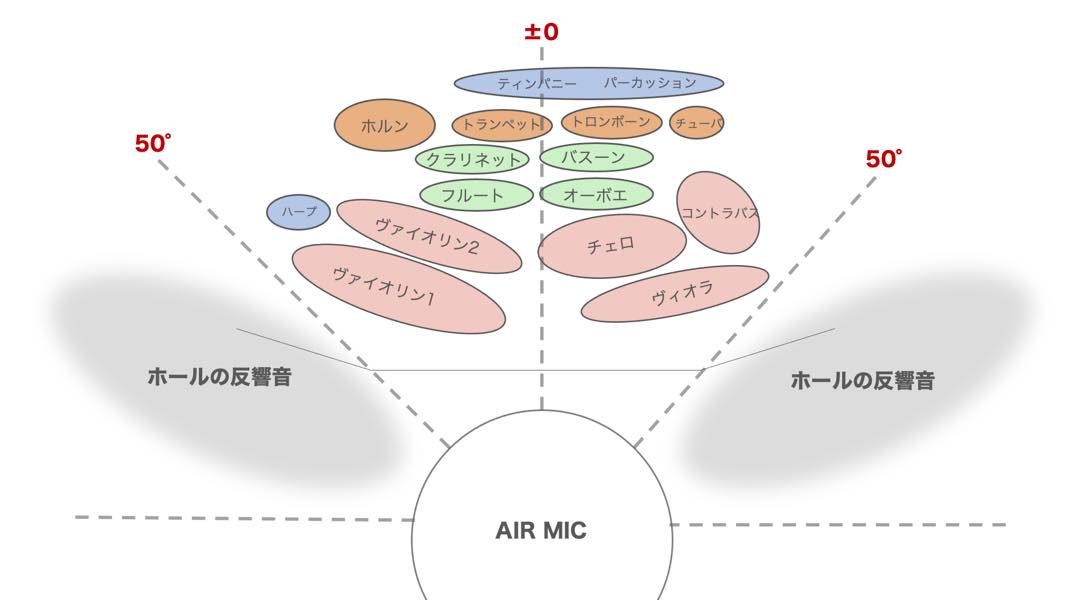
The diagram above shows one possible orchestral layout. A common general arrangement puts strings at the front, woodwinds in the middle, brass farther back, and percussion at the rear.
Gradually increase the reverb depth for sections farther back. These differences help convey the depth of the orchestra.
For panning, higher-register instruments tend to sit to the left and lower-register instruments to the right. In some arrangements, however, the first and second violins sit on opposite sides.
The perceived stereo width also changes with the listening position. For a closer perspective, use a wider image. For a more distant perspective, narrow it and increase the reverb depth accordingly.
If you are imagining a studio orchestra recorded with close microphones rather than a concert-hall recording, you have more freedom with positioning and level balance. For example, a harp may sound very quiet in a hall recording, while a studio production may deliberately bring it forward for dramatic effect.
That approach can also suit film and game music that does not aim for a traditional concert-orchestra presentation.
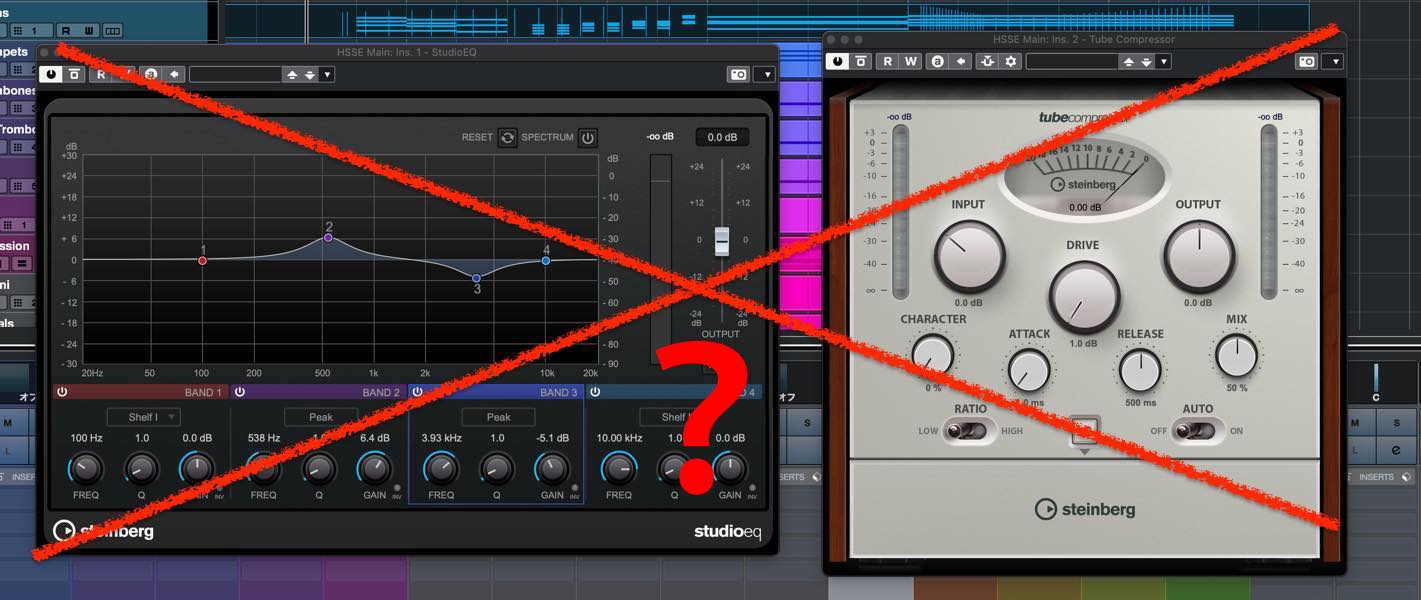
Compared with their familiar role in pop mixing, EQ and compression tend to be used less in orchestral mixing.
Realistic instrumental tone and a wide expressive dynamic range are central to the orchestral sound, so these processors are generally used sparingly unless needed.
They can still be useful for correcting problems in the source sound or matching multiple libraries. Judge their use according to the situation.
Tips for composing film and game music
Film and game music needs to suit its scene and support the story.
When composing from images or a narrative, what can provide the starting point?
There are many approaches, but Hidetoshi Takumi, who explains the music in this installment, says he often starts with timbre.
Sound itself may carry fundamental qualities such as joy, unease, or sadness. Even without a prominent phrase, it can speak directly to the audience’s emotions. As a general rule, background scoring does not favor melodies so memorable that they distract from dialogue or atmosphere.
The Dragon Quest Overture is melodic because it is an opening theme. Even so, its opening trumpet and horn fanfare alone seems capable of transporting players straight into Dragon Quest’s world: a hero setting off on an adventure in a setting reminiscent of medieval Europe.
Orchestral instruments offer a vast range of timbres. Beyond the differences between instruments, even the same instrument can make a very different impression depending on register and playing intensity.
Listen closely to a wide range of music and study scores regularly. Build a repertoire of timbral choices that suit different emotions.
We hope you enjoyed this first exploration of DAW-based orchestral production on our site.
By focusing on the familiar Dragon Quest Overture, we hope to introduce more listeners to orchestral music and the worlds of film and game scoring.
With a DAW, a single computer lets you direct an orchestra of dozens of players. Alongside composing your own music, recreating favorite game soundtracks or classical pieces can be an enjoyable pursuit.
If you have never tried it, why not give it a go?
Using the Dragon Quest Overture as our example, we aim to offer useful insights for anyone learning orchestral fundamentals, aspiring to write film or game music, or creating orchestral arrangements in a DAW.
Details: https://t.co/nbQHnU91Sw #DTM #DAW #DragonQuest pic.twitter.com/6foMh2zYt7
— SLEEP FREAKS (@SLEEPFREAKS_DTM) March 11, 2022
Frequently asked questions
Q1. How is the Dragon Quest Overture structured?
It has three sections: an introduction (fanfare), a main theme in march form, and an ending that begins quietly and moves to a slower tempo. Exchanges between horns and trumpets distinguish the introduction, while a lively snare-drum rhythm characterizes the main section.
Q2. What does an orchestra with woodwinds in pairs mean?
It means two players in each woodwind section. The woodwind complement serves as the reference for the size of the strings and brass. The Dragon Quest Overture uses this standard setup to create a balanced orchestral sound.
Q3. What matters when arranging orchestral music in a DAW?
Several instruments can share the same role while octave doublings and subtle differences in timbre create breadth. Exchanging roles effectively is also important. Using instruments such as harp and horn selectively can give particular passages a distinctive atmosphere.
NEW ARTICLES
Latest English Articles