FabFilter Pro-Q 3 is a powerful equalizer plug-in for everyone from music-production beginners to advanced users. This article explains the enhanced M/S mode introduced in version 3. Mid/side processing lets you adjust the center and side components separately, and can now be combined with conventional EQ processing. By choosing Mid or Side for each EQ band, you can control the tightness and width of the sound, making professional level shaping and mixing techniques more efficient.
Pro-Q 3: More Powerful Than Ever, with Practical New Features
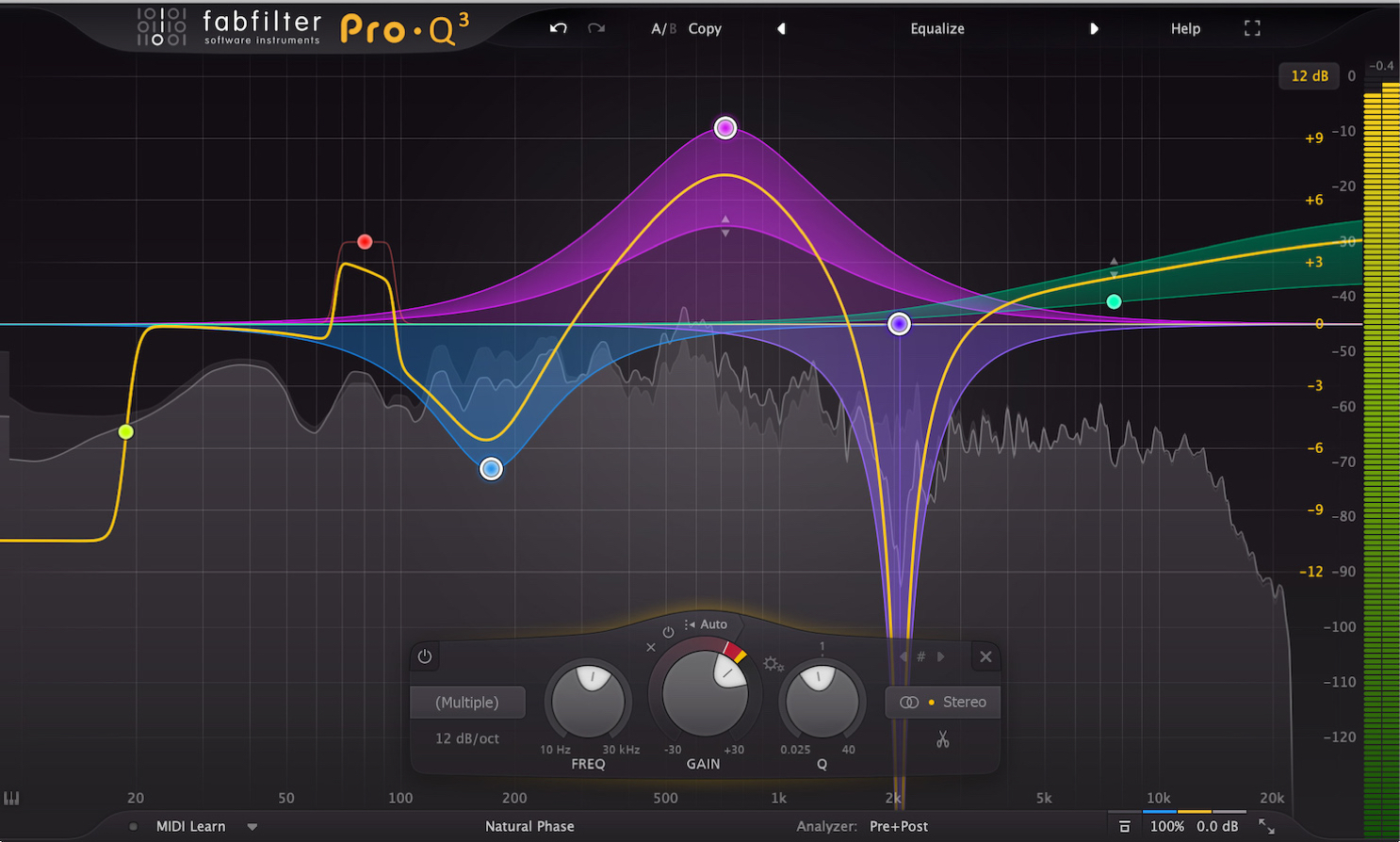
FabFilter has released the long-awaited Pro-Q 3.
Many manufacturers offer equalizers, but in our view, Pro-Q 3 is undoubtedly among the top three for both ease of use and sound quality.
It suits everyone from beginners to advanced producers and works across genres.
This version introduces:
- Enhanced M/S mode
- Dynamic EQ
- New filter types
- Spectrum visualization from other tracks
- Surround support
These welcome additions make this an exceptionally powerful update.
Let’s start with the improvements to M/S mode.
FabFilter Pro-Q 3 M/S Mode Video Tutorial
- 1FabFilter Pro-Q
- 2FabFilter Pro-Q 2: Auto Gain and Other New Features
- 3FabFilter Pro-Q 2: Spectrum Grab and EQ Match
- 4FabFilter Pro-Q 3: Enhanced M/S Mode
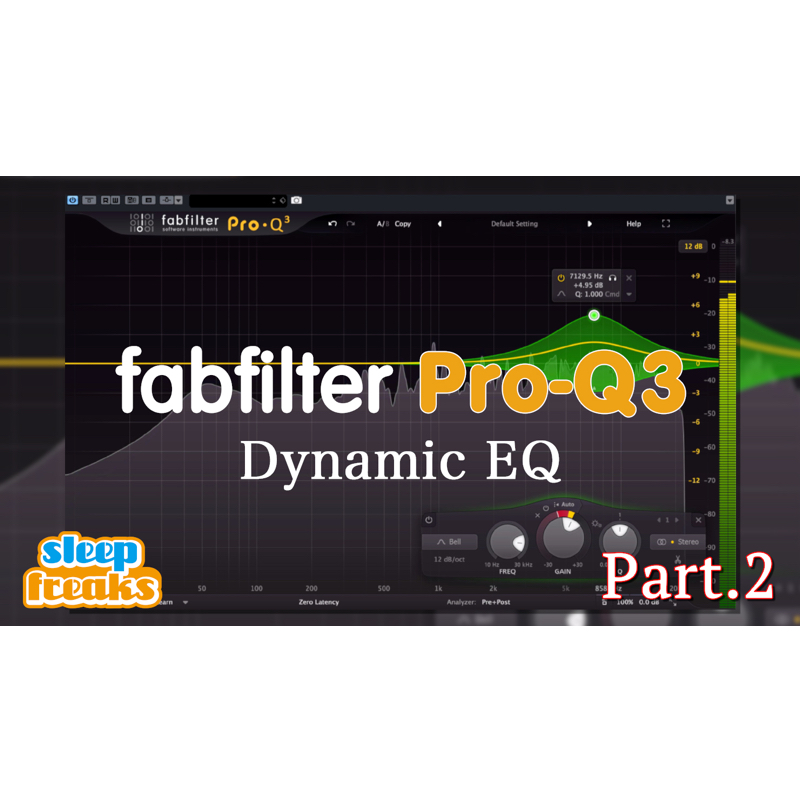
- 5FabFilter Pro-Q 3: Dynamic EQ
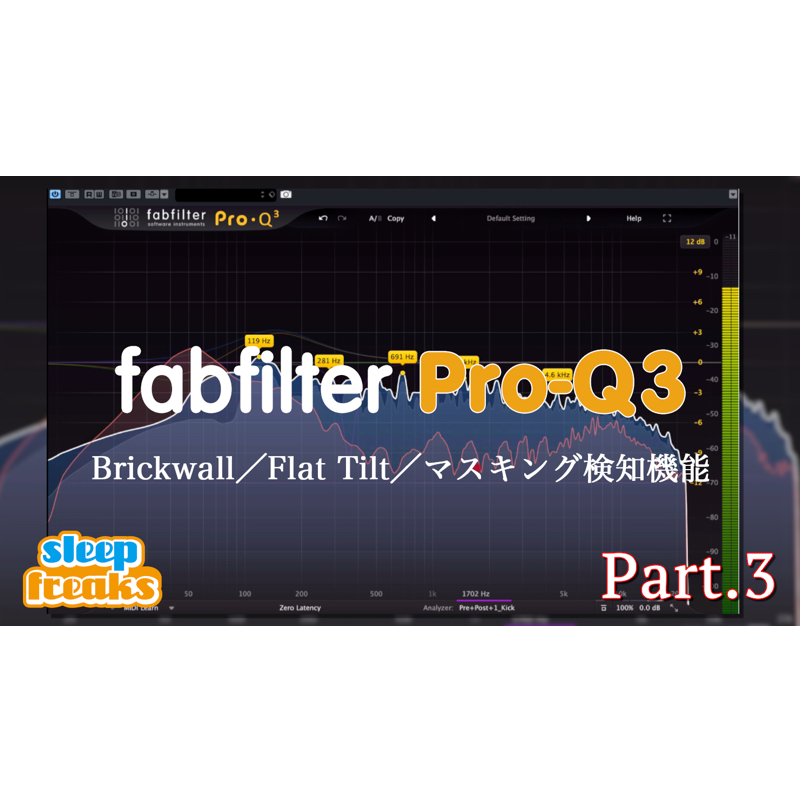
- 6FabFilter Pro-Q 3: Brickwall Slopes, Flat Tilt, and Masking Detection
- 7FabFilter Pro-Q 4 Is Here: A Closer Look at Key New Features
Shape Your Sound with M/S Mode
First, let’s review what M/S means.
- M stands for Mid (Middle): the center component of the sound.
- S stands for Side: the component that contributes to stereo width.
M/S processing lets you adjust the center and side components separately.
Previous versions also offered M/S processing, but this version lets you combine M/S processing with conventional EQ processing.

Right-click an EQ point and open Stereo Placement.
Simply choose Mid or Side, depending on which component you want to process.

An S or M appears on the point, as shown here, and only the selected component is processed.
Cutting low frequencies in a full mix can tighten the sound or make the high frequencies stand out naturally.
You can also easily adjust the overall Mid/Side level balance.
This makes techniques such as raising the Side level slightly to widen a mix easy to apply.

Click the output section at the bottom right and switch the mode to M/S.

Drag the outer control to adjust the Mid/Side level balance.
Starting from the center position:
- Turning right lowers the Mid level.
- Turning left lowers the Side level.
Turn the control right to lower the Mid level, as shown in the image.

Then use the center knob to raise the overall output level to compensate for the reduction in Mid level.
This increases the Side level relative to the Mid level.
In this tutorial, we used practical examples to explore the enhanced M/S mode.
These features, including Mid/Side level adjustment, should prove very useful.
Next time, we’ll take a look at the remaining new features!
- 1FabFilter Pro-Q
- 2FabFilter Pro-Q 2: Auto Gain and Other New Features
- 3FabFilter Pro-Q 2: Spectrum Grab and EQ Match
- 4FabFilter Pro-Q 3: Enhanced M/S Mode
- 5FabFilter Pro-Q 3: Dynamic EQ
- 6FabFilter Pro-Q 3: Brickwall Slopes, Flat Tilt, and Masking Detection
- 7FabFilter Pro-Q 4 Is Here: A Closer Look at Key New Features
Frequently Asked Questions
Q1. What is M/S mode in FabFilter Pro-Q 3?
M/S mode lets you process the center (Mid) and side (Side) components of a mix independently. Conventional stereo EQ applies linked processing to both channels, whereas M/S processing gives you precise control over stereo width and the sense of placement.
Q2. What are the practical benefits of M/S mode?
You can raise the Side level to widen a mix or cut low frequencies in the Mid component to tighten the overall sound. It also makes it easier to bring out elements such as vocals and bass, helping you achieve a professional mix.
Q3. Can music-production beginners use Pro-Q 3?
Yes. Its user-friendly design makes it intuitive for beginners. Right-click a band, open Stereo Placement, and select Mid or Side to apply M/S processing easily.
NEW ARTICLES
Latest English Articles