
To create beats with the impact of professional productions, combine six techniques: shaping rhythmic dynamics with velocity, adjusting kick tails, controlling snare reverb time, adding delay, choosing unexpected points to drop the low end in and out, and coordinating upper-part samples with fills. Each is a small adjustment, but together they add depth and groove, helping you produce polished tracks that leave a strong impression.
Six Ways to Make Your Beats More Convincing and Add Another Layer of Depth

In beat-driven styles such as hip-hop and trap, the feel of the rhythm track plays a major role in the quality of the song.
These styles have increasingly influenced K-pop, J-pop, and the Japanese music scene, encouraging more people to try producing them.
Although the patterns may look simple, you may find that programming the notes is not enough: compared with professional productions, your groove can still feel flat.
This article explains six ways to give your tracks more impact, focusing on advice that is particularly useful for beginners.
Hip-Hop Beatmaking Video Tutorial
About the Demo Track
First, compare the sound with and without the techniques discussed here.
The demo uses a beat in the internationally popular style known as UK drill.
In the comparison, the groove becomes clearer and the arrangement gains stronger contrasts, resulting in a more convincing beat.
Let's work through exactly what was done to the demo track, one step at a time.
Tip 1. Control the Dynamics of the Rhythm Track
In beatmaking, creating clear dynamic contrasts in the rhythm is fundamental, yet easily overlooked.
Use Dynamics to Create the Groove
When entering notes into a step sequencer or piano roll with a mouse, it is easy to forget to adjust their velocity.
Varying velocity between accented notes and the notes around them helps a pattern feel less uniform and flat.
In hip-hop in particular, kick dynamics have a substantial effect on the whole track, so controlling them carefully helps establish the groove.
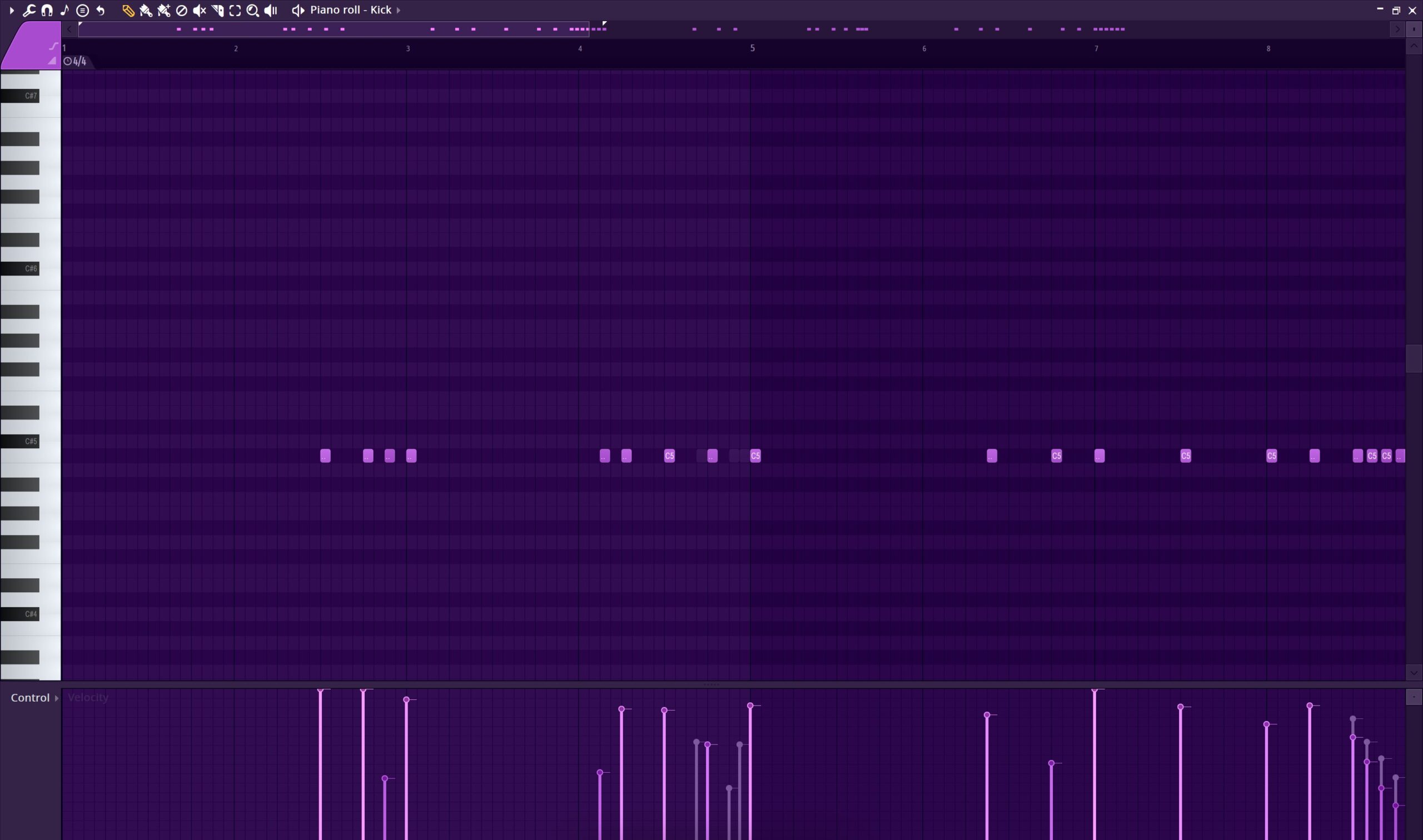
Simply deciding where the accents belong and reducing the velocity of other notes can add depth to the rhythm.
Vary the Dynamics Within Repeated Patterns
Within a rhythm pattern, varying repeated accents can add expression to the groove.
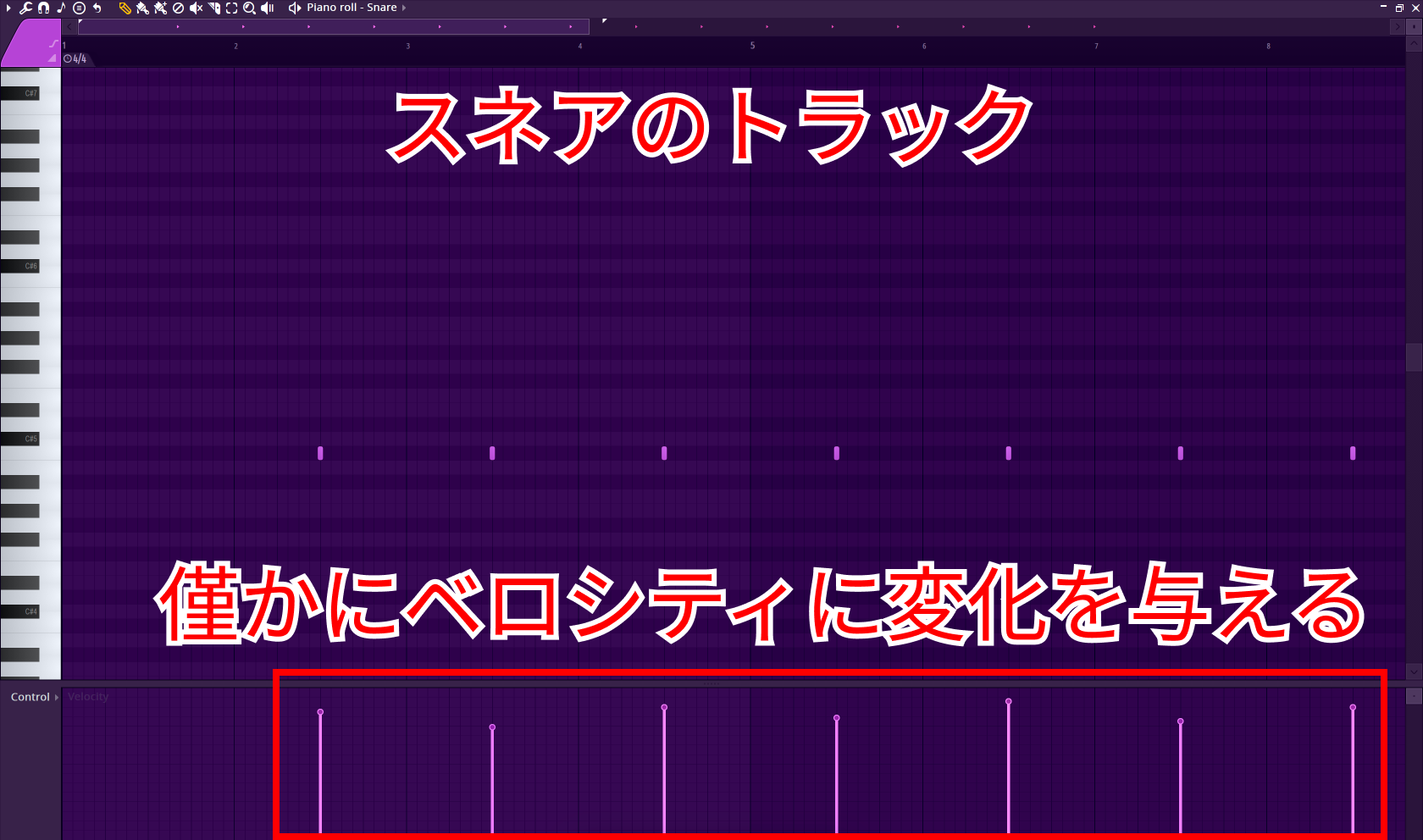
In the example, the snare accents on beats 3 and 6 occupy corresponding positions. Giving them different velocities adds movement and a sense of flow to the repeating beat.
Tip 2. Control the Kick's Tail
The decay of each sound has a major influence on the groove, but it is another detail that is easily overlooked.
Choosing the right kick sound and adjusting its tail can significantly improve the feel of the whole track, especially because the kick forms the rhythmic foundation.
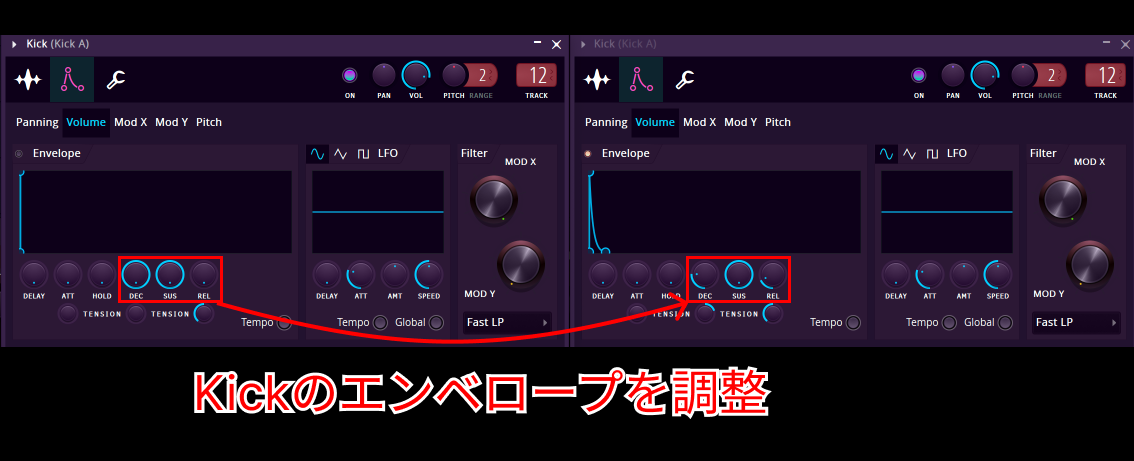
There are several ways to control a kick's tail. When using a sampler, as in this demo, adjust its envelope.
Listen closely as you set the duration of the kick, so its tail does not overlap other parts unnecessarily.
This helps the rhythm sound tighter.
Tip 3. Control the Snare's Reverb Time
Alongside the kick, the snare is a key part of the beat's foundation. Shaping its tail can therefore help the rhythm feel more cohesive.
Unlike a kick, however, a snare often gets its tail from reverb, so the adjustment is different.
Adjust the Reverb's Decay Time
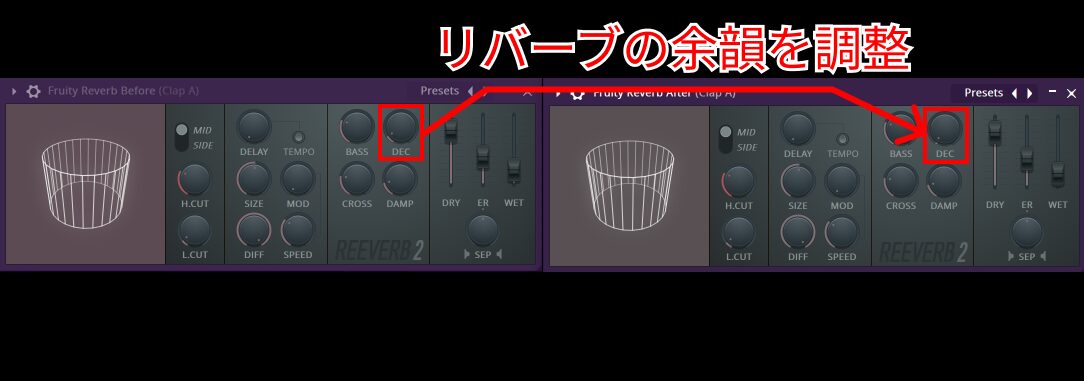
Adjusting Decay Time—the parameter controlling how long the reverb lasts—to suit the BPM gives the snare's tail a deliberate rhythmic role, improving the groove.
Listen carefully as you adjust it, paying attention to whether the point where the tail ends contributes to the groove at the track's tempo.
Rather than simply adding ambience, make the ambience itself feel rhythmic. This alone can give the track a stronger sense of purpose.
Tip 4. Add Rhythmic Depth with Delay
Delay repeats a sound. Its echoes can add depth to a part and make the sound feel more three-dimensional.
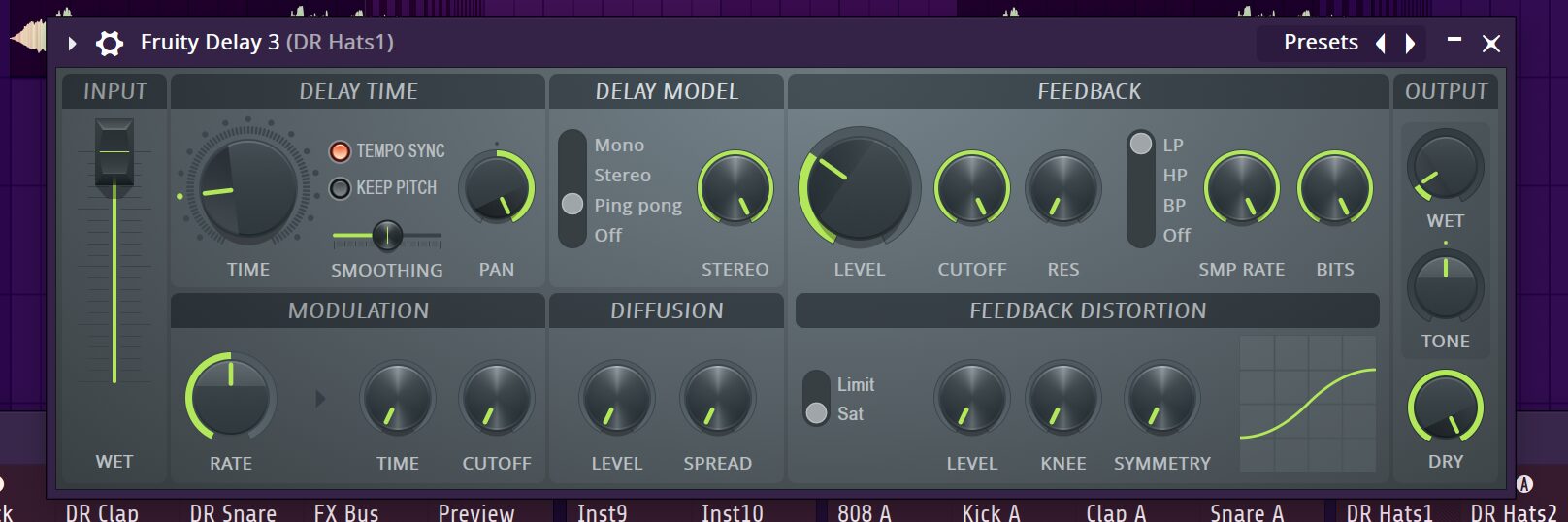
With tempo-synced delay, the repeats follow the DAW's BPM. They can create a pattern different from the original rhythm and add depth to the groove.
Applying this too heavily to foundational parts such as the kick or snare can make the rhythm feel cluttered. Try it on lighter sounds, such as the hi-hat shown above.
It can be especially effective when the groove feels lacking, so give it a try.
Combining Several Techniques
Applying all the techniques covered so far can make this much difference to the drums alone.
Each technique is a small detail, but combining them can produce a noticeable increase in depth and groove.
Tip 5. Surprise the Listener with Kick and 808 Dropouts
Loop-based tracks can become repetitive. Varying where the kick and 808 bass drop out and return is a simple way to introduce surprise.
Dropping the low end at the end of a loop is a familiar technique, but it can also be predictable.
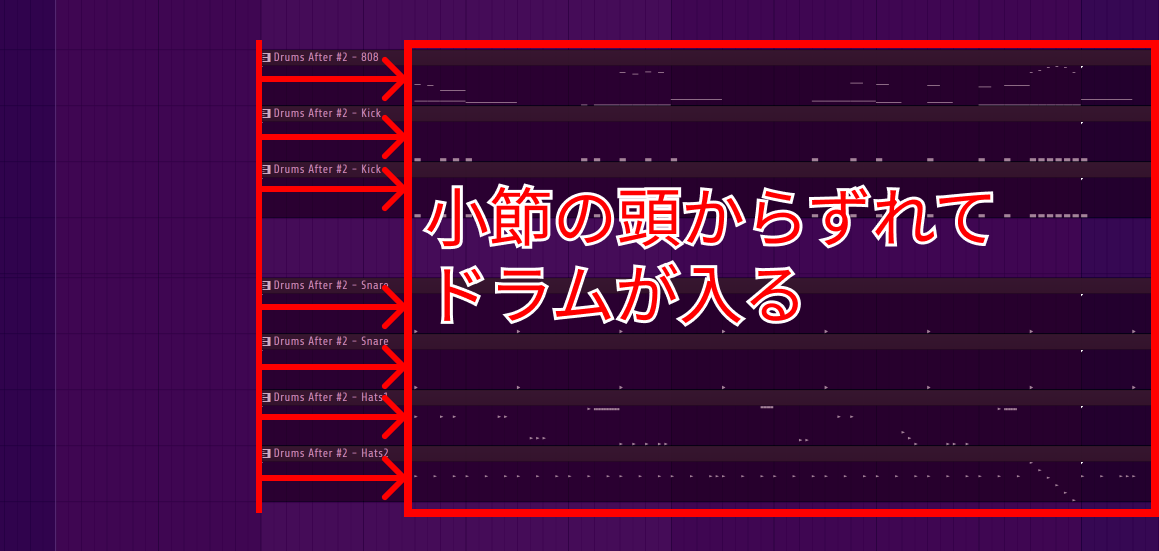
As shown in the screenshot, try a pattern that drops out from the start of the bar and brings the low end back on beat 2 or 3. Unexpected dropouts and entrances can pleasantly challenge the listener's expectations and make the track more memorable.
Tip 6. Coordinate Upper-Part Samples with the Kick and 808 to Emphasize Fills
During fills, coordinating upper-part samples—vocals and piano in this example—with the rhythm lets you emphasize the fill while retaining the fullness of the arrangement.
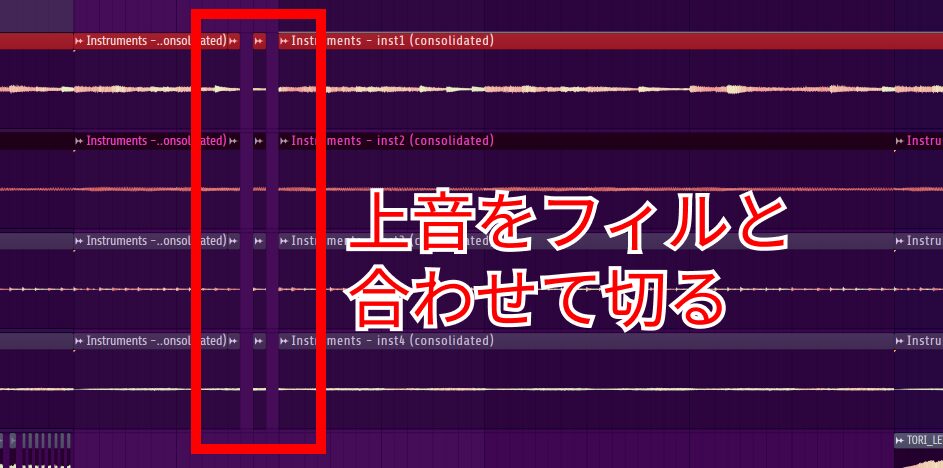
Temporarily stop sample playback in time with the fill's rhythm. This small change can make the rhythmic phrasing much clearer.
What did you think?
These techniques are useful well beyond UK drill: try them in J-pop, Vocaloid music, house, EDM, and other styles where groove matters.
Bring them into your own productions and use them to improve the quality of your tracks.
The original author also described beatspace, the beat-selling platform he ran, as a place accepting track submissions. Its aim was to let creators present their work to listeners and artists around the world, and experience the satisfaction of having their beats appreciated and used by other artists.
The original article encouraged creators to try beatspace when they had a track they were proud of. This is the author's description at the time of publication, rather than a confirmation of current submission availability.
Frequently Asked Questions
Q1. Are there techniques that beginner beatmakers can try?
Yes. Start with fundamental techniques such as varying velocity and shaping the tails of kicks and snares. These are relatively simple but effective ways to improve a track's overall impression.
Q2. How should I set a reverb's Decay Time?
Adjust it to suit the DAW's BPM. Listen as you fine-tune it, making sure the point where the snare's tail ends contributes to the groove.
Q3. Should I use delay on every drum part?
No. It can become excessive on foundational parts such as the kick and snare, so try lighter sounds such as hi-hats. It is particularly useful when a part needs more groove.
Q4. Are these techniques only for a specific genre such as UK drill?
No. They are broadly applicable to beatmaking in hip-hop, trap, K-pop, J-pop, and many other styles.
NEW ARTICLES
Latest English Articles







































































