This beginner’s guide explores quarter notes, a foundation of rhythm, through the piano roll. In the 4/4 examples, a bar divides into four quarter-note beats, like a drummer’s count of “one, two, three, four.” Understanding the quarter-note basis of the tempo setting can make a DAW easier to navigate and help you program music more precisely.
Understand rhythm to improve your programming
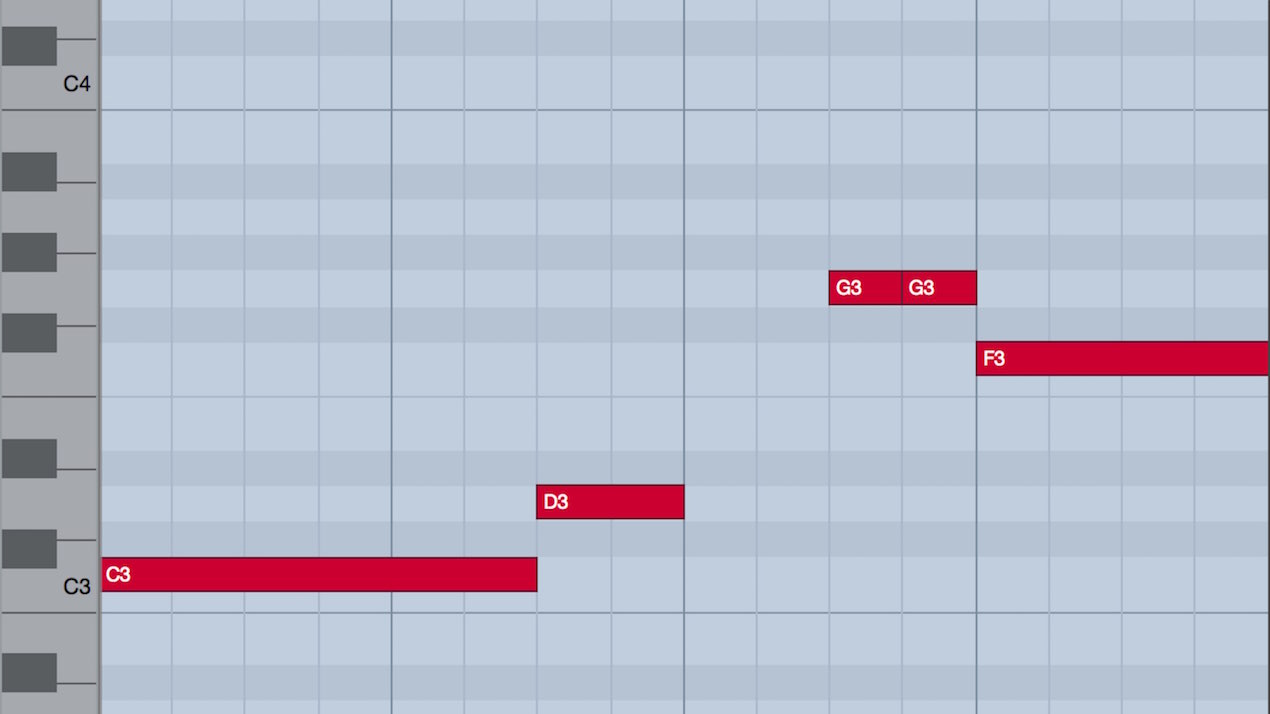
Using the piano roll, an essential part of music production,
we’ll explain the basics of rhythm and how to read it.
Understanding these ideas can make music production much easier and help your workflow.
This time, let’s look at quarter notes, a foundation of rhythm.
Tutorial video
- 1MIDI Basics
- 2MIDI Parameters and Values
- 3Software Synths and Plug-ins: DAW Format Compatibility
- 4What to Consider When Choosing an Audio Interface
- 5Samplers 1: Sample Material to Make Rhythm Instruments
- 6Samplers 2: Make Pitched Instruments from Samples
- 7Reading the Piano Roll and Rhythm, Part 1
- 8Reading the Piano Roll and Rhythm, Part 2
- 9Reading the Piano Roll and Rhythm, Part 3
- 10Basic Tuning: A Shared Pitch Reference for Your Music
- 11Understanding Tuplets
Understanding the Basics of Rhythm

Music is organized into units called bars.
Most DAWs display numbers and markers like these across the top of the screen to show the bars.
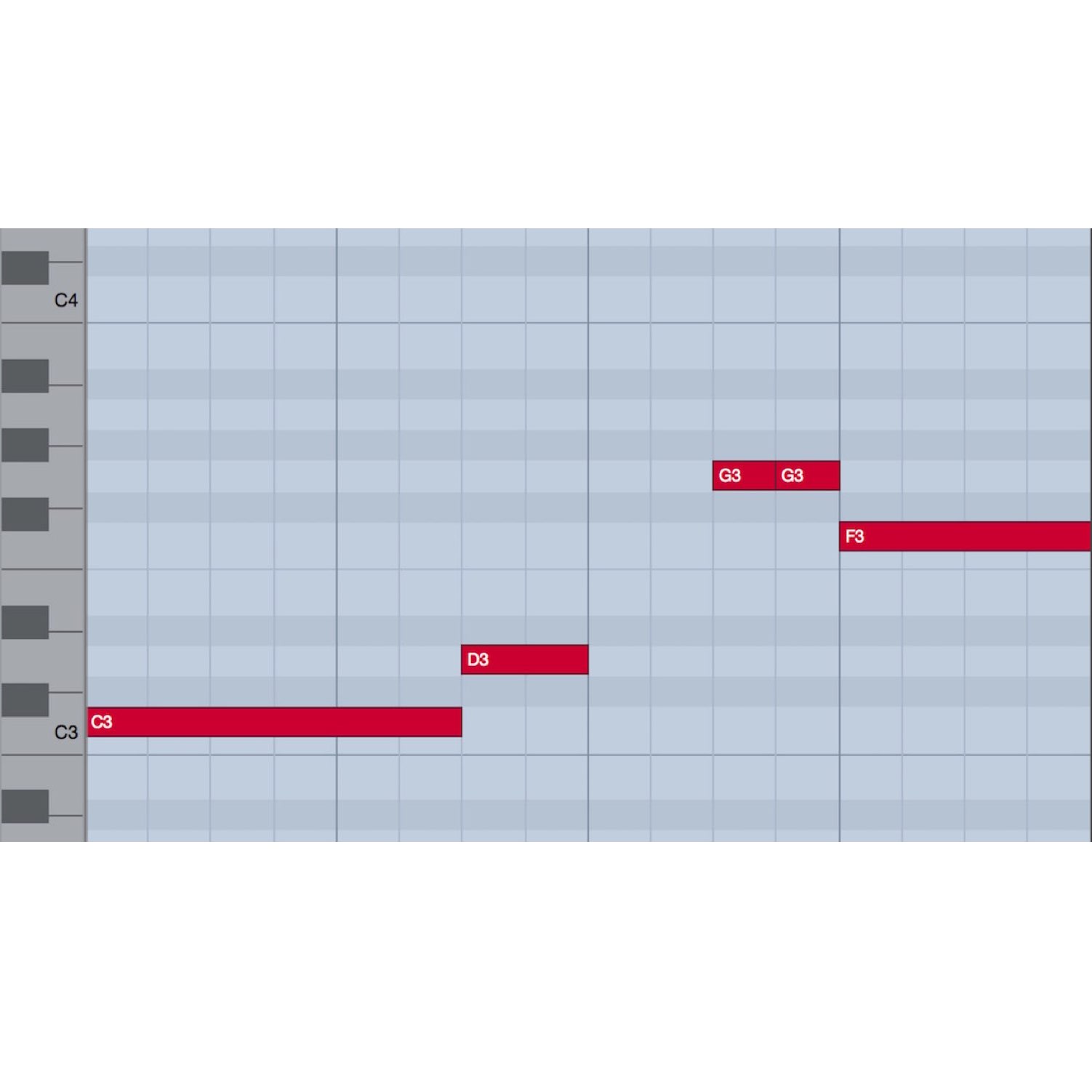
Let’s open one bar in the piano roll.

In this 4/4 example, a bar is divided into four equal parts, each one quarter note long.
A sound lasting that long is a quarter note; an equally long silent interval is a quarter rest.
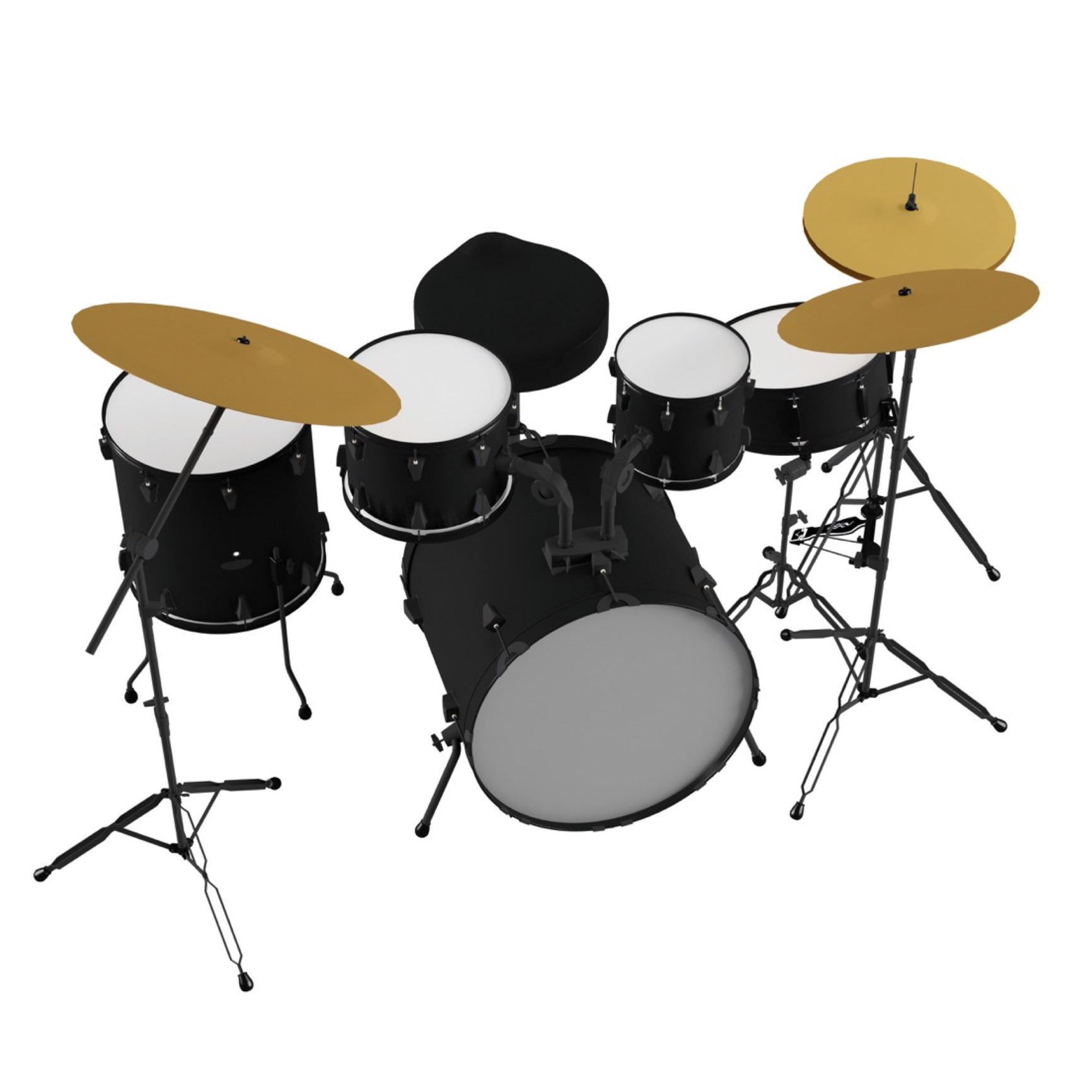
A drummer in a band will often count “one, two, three, four”
using quarter-note beats.

If we program quarter notes into this bar,
four notes fit evenly, as shown.
That is why they are called quarter notes: each occupies one quarter of this 4/4 bar. Simple, isn’t it?
The quarter note is a useful rhythmic foundation, so understanding this point is enough for now.
Song Tempo and the Metronome Use Quarter Notes

Tempo expresses the speed of a song; the number here is also based on quarter notes.

You specify the song’s tempo, or speed, with a number.
This number tells you how many quarter notes occur in one minute.
In the image above, the tempo is 89, so there are 89 quarter notes per minute.
At a tempo of 60, each quarter note lasts exactly one second.
Keeping this in mind will help you understand tempo.
Next time, we’ll explore note values other than quarter notes.
Frequently Asked Questions
Q1. Why is understanding quarter notes important in music production?
Quarter notes provide a useful foundation for rhythm. Understanding them makes programming in the piano roll more intuitive and helps you understand more complex rhythmic patterns.
Q2. How does the length of a quarter note differ at tempos of 60 and 89?
Here tempo indicates the number of quarter notes per minute. At 60, a quarter note lasts exactly one second; at 89, it lasts about 0.67 seconds. The higher the tempo, the shorter the quarter note.
Q3. Does a drummer’s “one, two, three, four” count correspond to quarter notes?
Yes. In the 4/4 example, the drummer counts the four quarter-note beats in a bar so the band can align its rhythm.
NEW ARTICLES
Latest English Articles