
Choosing an equalizer is an important part of improving sound in modern music production. This article explores three products that approach sound shaping differently: Sonnox Claro, Three-Body Technology Kirchhoff-EQ, and Eventide SplitEQ. Claro emphasizes efficiency through an intuitive, workflow-focused design; Kirchhoff-EQ offers extensive features and precise processing; and SplitEQ takes an innovative approach beyond conventional EQ. At the time of our original March 2022 review, free demos were available for all three, allowing producers to compare them against their own needs.
Comparing three equalizers for the next generation
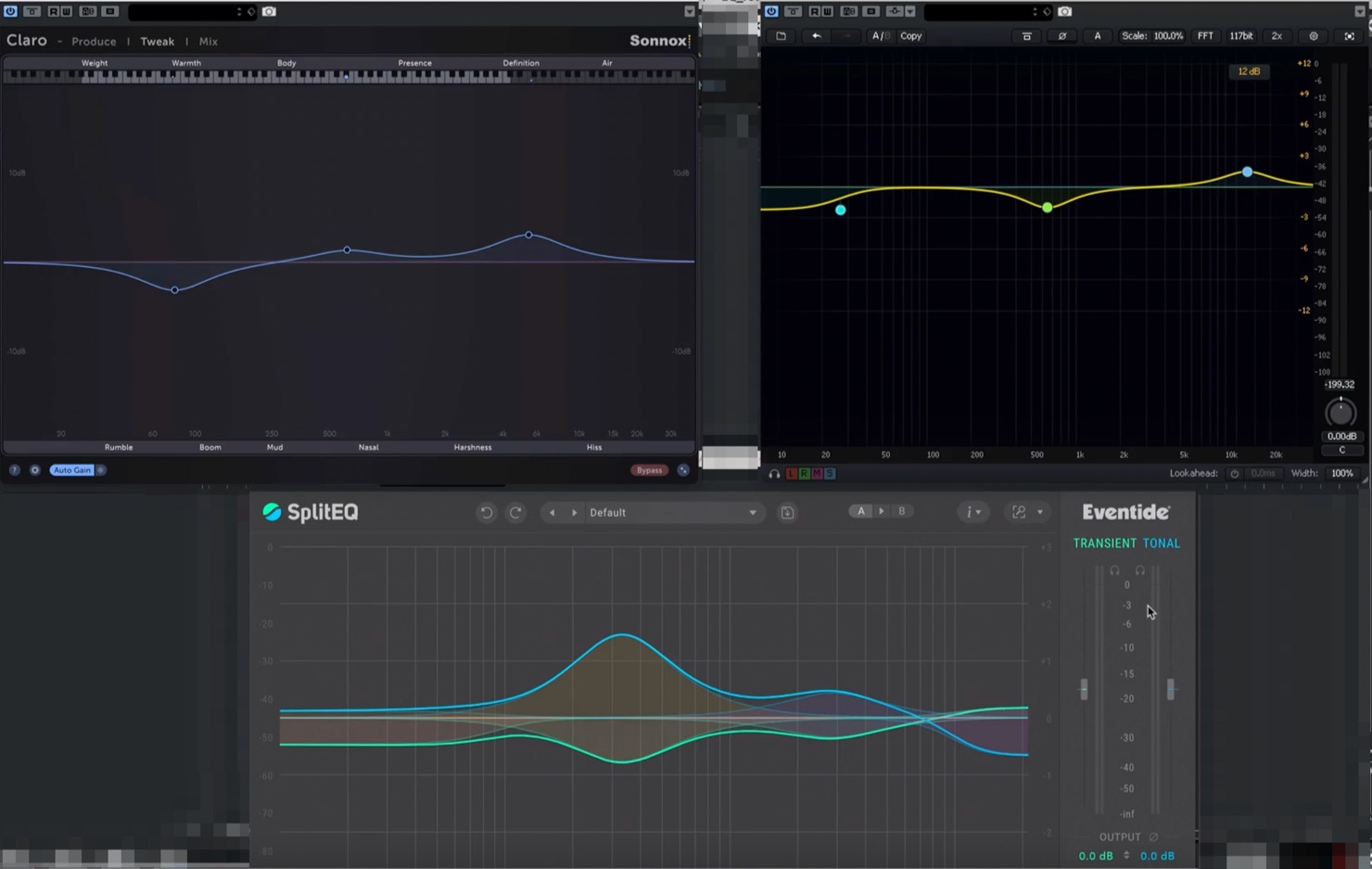
In the period leading up to this March 2022 review, a succession of new equalizers introduced significant advances. Some offered mixing possibilities beyond conventional EQ, while others showed the potential to become new standards. Both approaches attracted attention.
Here, we will look at these three products:
Our overall impressions are as follows:
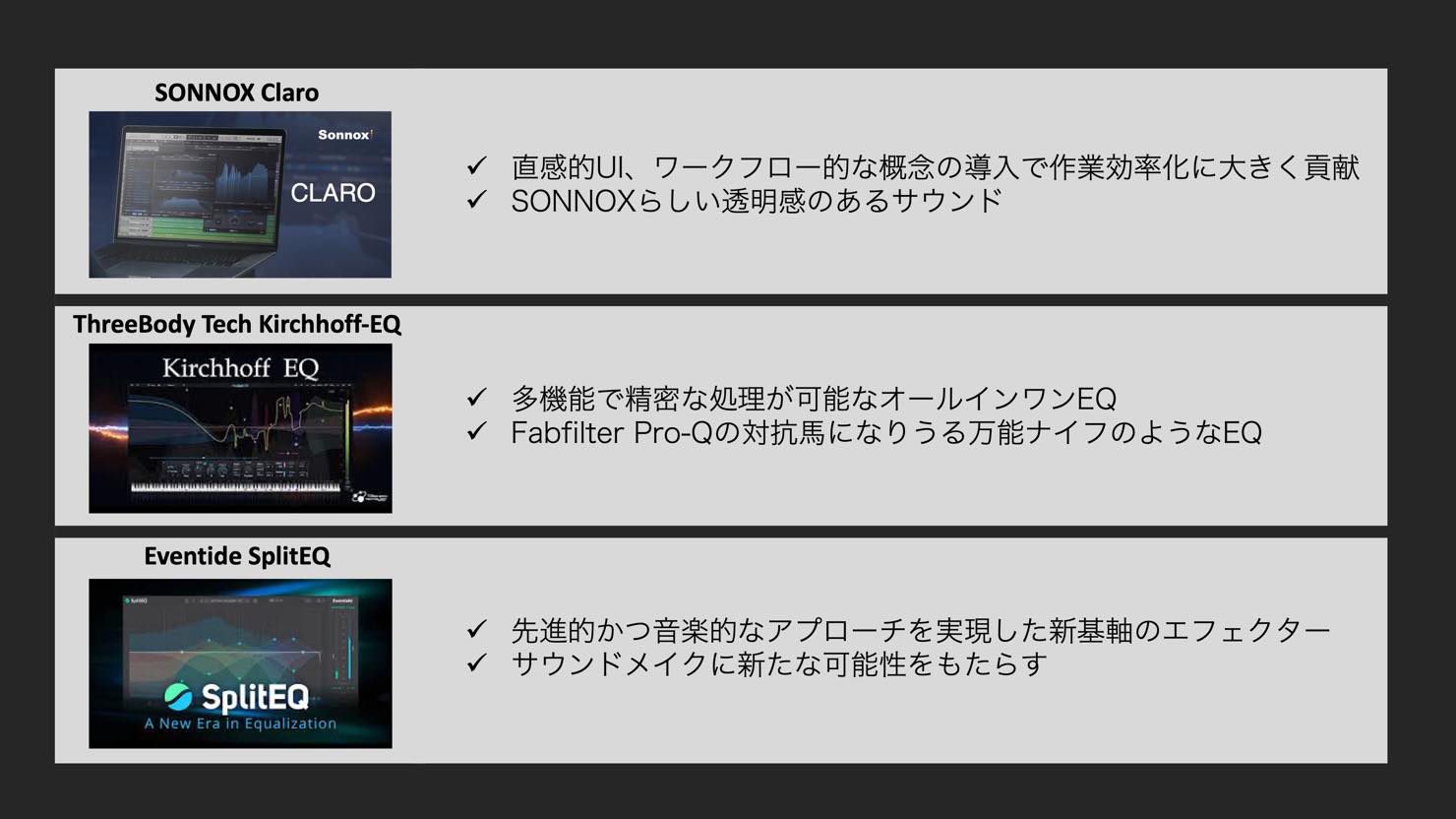
- Claro: An intuitive interface and a workflow-based approach that can greatly improve efficiency.
- Kirchhoff-EQ: An all-in-one EQ with extensive features and precise processing—a versatile Swiss Army knife with the potential to challenge FabFilter Pro-Q.
- SplitEQ: An advanced yet musical processor that approaches EQ from a different angle, opening up new sound-design possibilities.
Everyone will have their own impressions, but we hope this guide helps you evaluate the options.
Comparing the features and functions of three innovative equalizers
Buy the products
• Sonnox Claro
• Three-Body Technology Kirchhoff EQ
• Eventide SplitEQ
At the time of the original March 2022 article, demo versions were available for all three products. Claro and SplitEQ required an iLok account.
Sonnox Claro
Coming from Sonnox, a company known for high-end plug-ins with a clear, detailed, and natural sound, Claro inspires confidence from the outset.
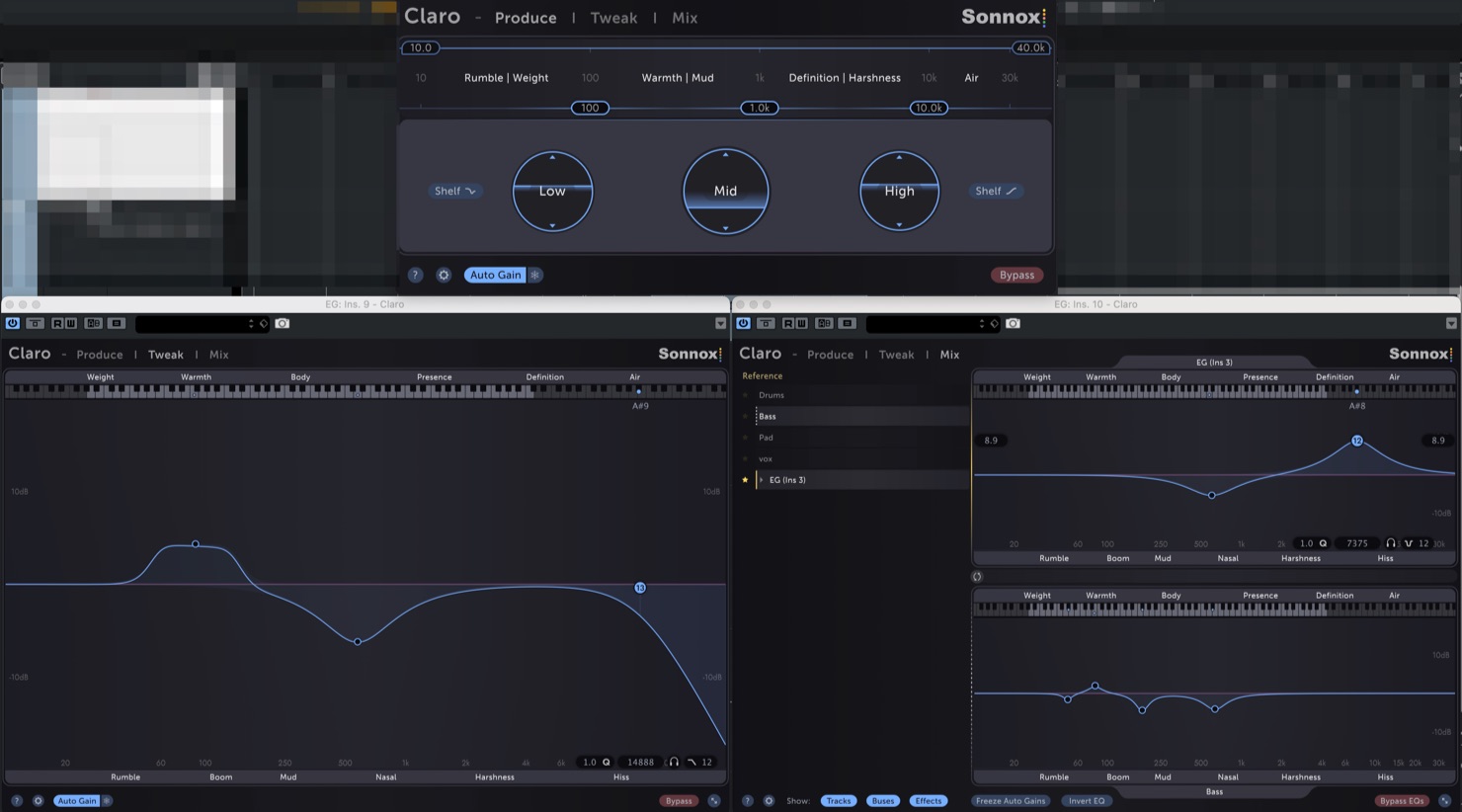
Feature 1: Three views for different stages of production
You can switch between three views throughout your workflow to handle EQ comprehensively.
- Produce: A view for broad, analog-style EQ adjustments.
- Tweak: A conventional digital-EQ view for more detailed adjustments.
- Mix: Adjust the overall balance while visualizing masking and interaction between tracks.
First shape sounds broadly during arranging, then refine each track, and finally mix while considering its relationship with other tracks. This is a three-stage design that follows a modern production workflow.
You do not have to follow these stages in order, of course. You can switch to any view whenever you like.
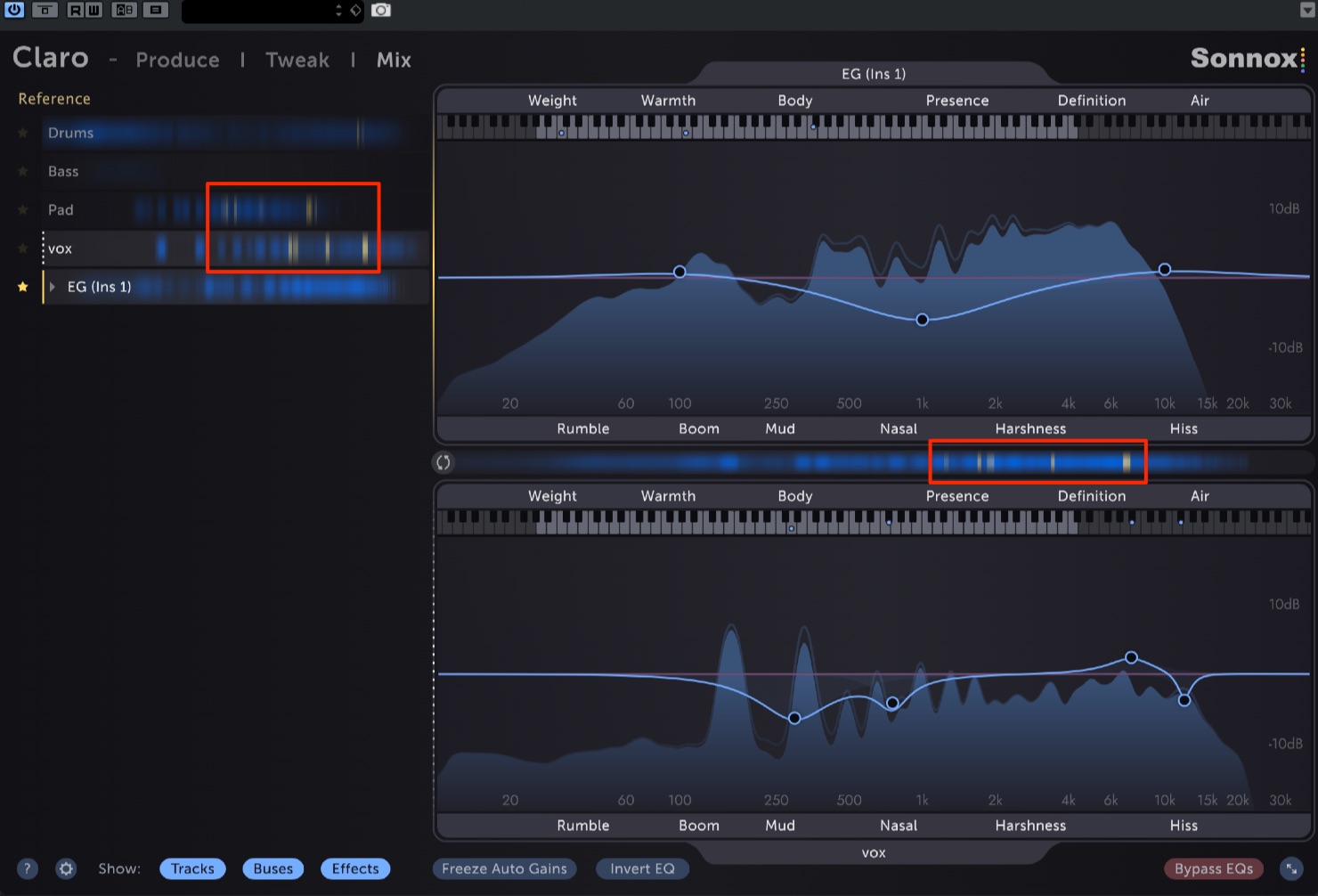
Mix is particularly distinctive: the list on the left clearly shows frequency masking between tracks.
The Tweak-like display on the right lets you adjust two tracks simultaneously, making it easy to balance them without opening multiple EQ windows.
Feature 2: An intuitive user interface
The simple interface focuses on the functions you need, making it easy to find your way around.
Using keyboard shortcuts while dragging an EQ point can greatly speed up your work.
- Audition the selected frequency band: Mac: Option / Windows: Alt
- Adjust Q: Mac: Command / Windows: Control
- Fine parameter adjustment: Shift
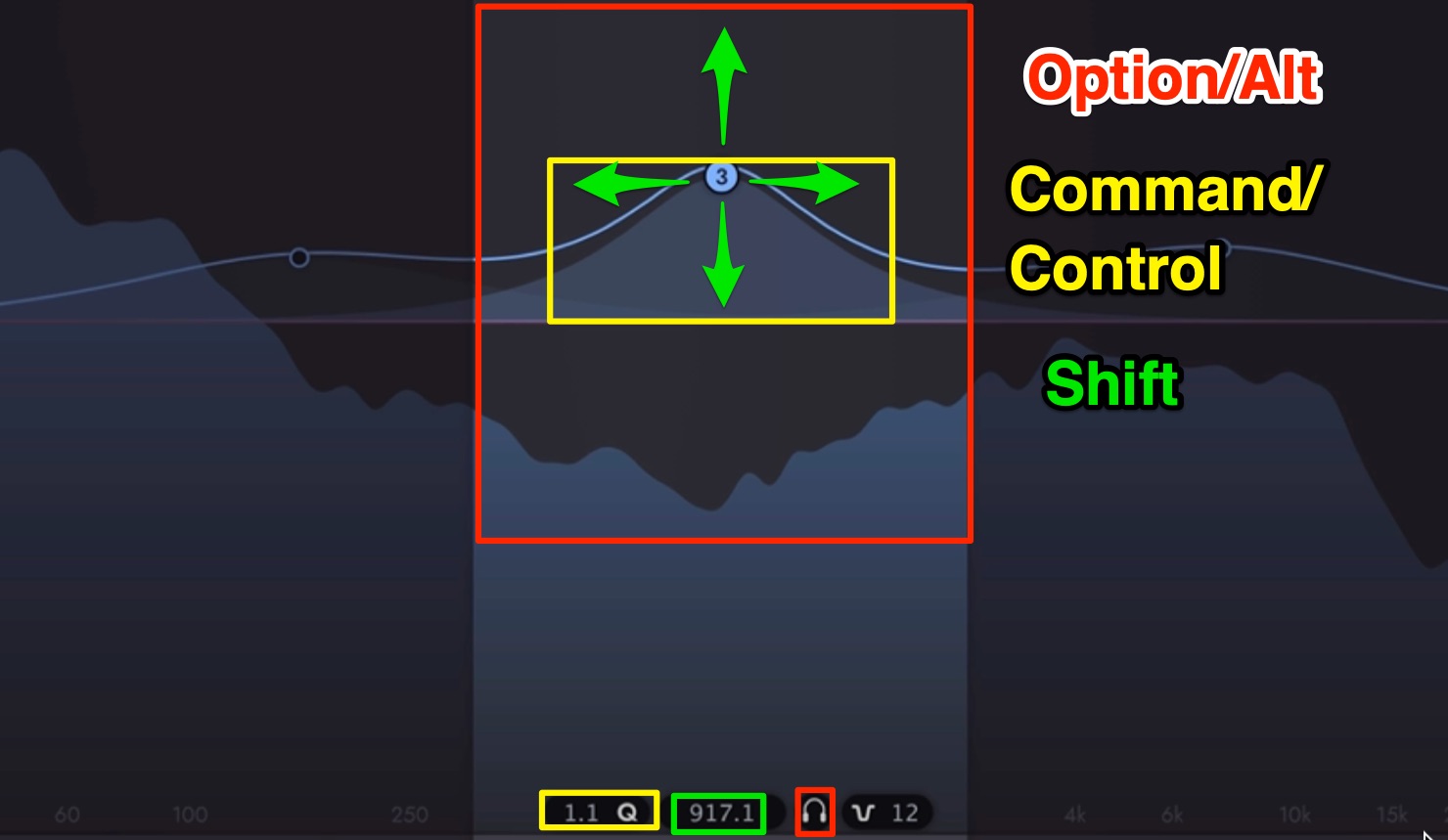
These shortcuts appear in many other EQs, so they may not seem new. However, Claro responds so smoothly that you can concentrate on the work without friction. Try the demo to experience it.
Feature 3: Excellent auto gain
The auto-gain function is also excellent, automatically compensating for level changes caused by EQ.
Boosting frequencies makes the signal louder, which can be mistaken for better sound. Auto gain helps maintain a balanced listening level so you can make more objective EQ decisions.
Claro therefore works well as an equalizer for developing an entire song through a coherent workflow.
Three-Body Technology Kirchhoff-EQ
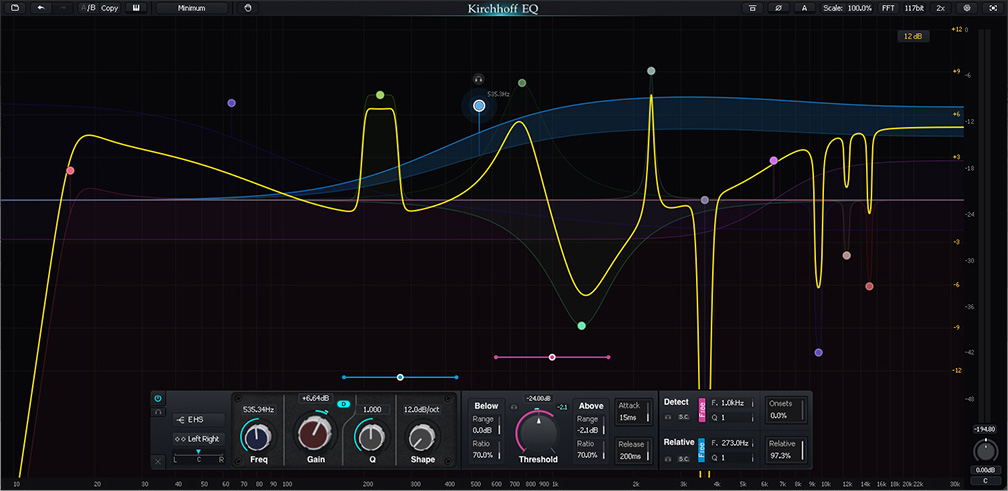
Kirchhoff-EQ is made by China’s Three-Body Technology. Its quality quickly attracted attention when it was released.
It is so feature-rich that it almost feels as though it includes every EQ function released to date.
Feature 1: 41 filter types
There is an extensive selection: 11 conventional digital-EQ filter types and 30 vintage-EQ filter types.
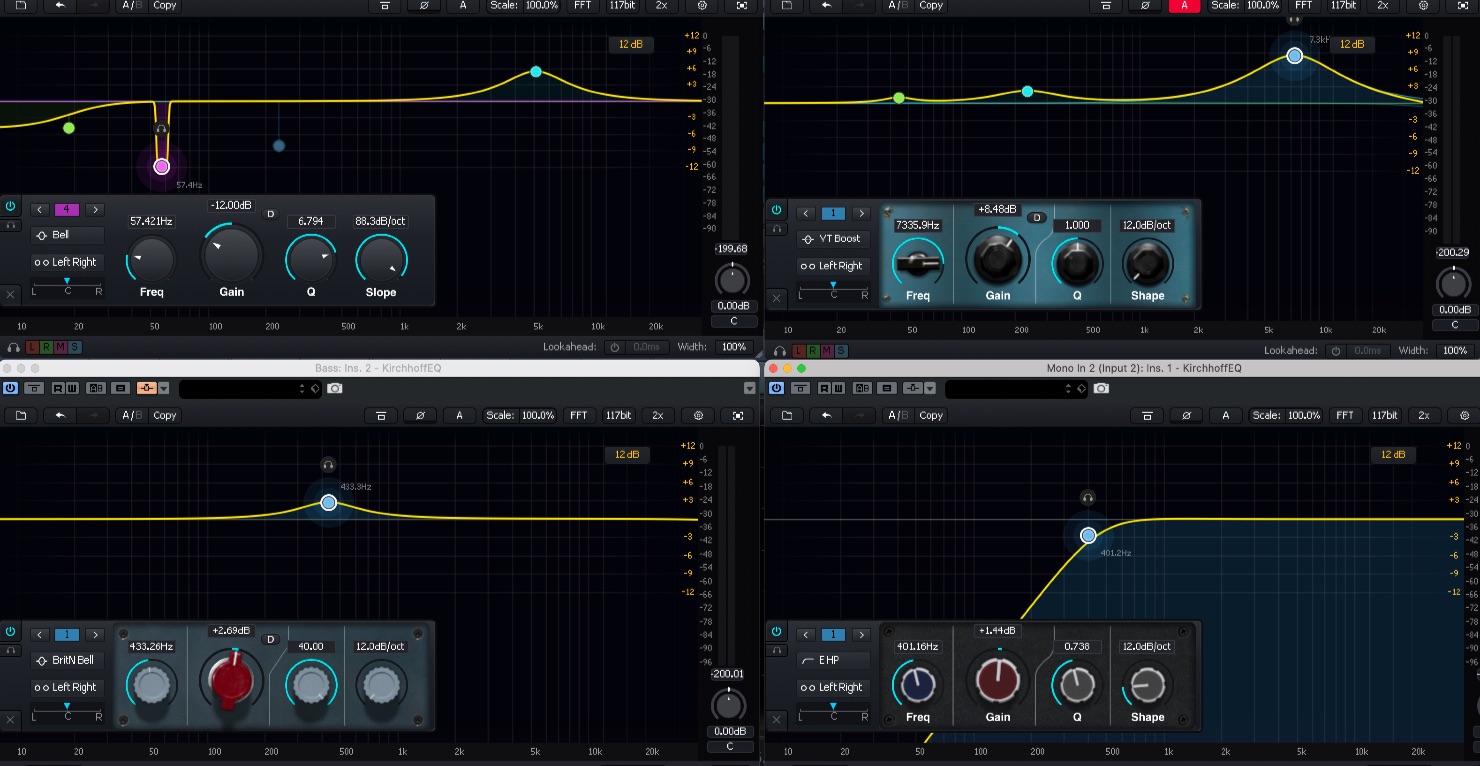
You can combine them in one interface—for example, using digital EQ for precision, a Neve-style filter in the midrange, and a Pultec-style filter for the highs.
Combining the character of several analog EQs with digital ease of use makes this something of a dream EQ.
Feature 2: High-precision processing for sound quality
Kirchhoff-EQ offers four modes with different phase characteristics:
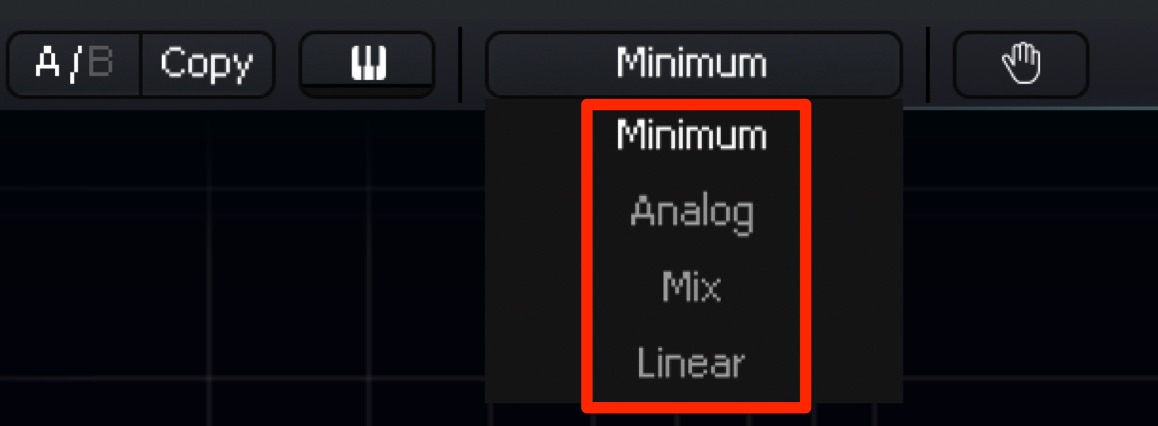
- Minimum-Phase Mode: A zero-latency mode with the lowest latency.
- Analogue Prototype Mode: A mode that corrects amplitude and phase, with higher CPU usage and latency.
- Mixed Phase Mode: Applies minimum-phase processing at low frequencies and linear-phase processing at high frequencies.
- Linear-Phase Mode: A mode that preserves the signal’s phase relationships.
Oversampling can also be enabled or disabled. In addition, internal processing can be raised from the usual 64 bits to 117 bits. At the time, this was described as a world first for an equalizer.
CPU usage increases, but the additional precision offers scope for further improvements in sound quality, so consider using it where it matters most.
Feature 3: An extensive feature set
Beyond everything covered so far, it also includes:
- Up to 32 EQ bands
- Dynamic EQ
- Relative envelope detection
- Spectrum Grab
- Auto gain
There is not enough space to cover every function here. The dynamic EQ, in particular, offers very detailed settings, including the reverse of conventional behavior: you can set the EQ not to act when the input exceeds the threshold.
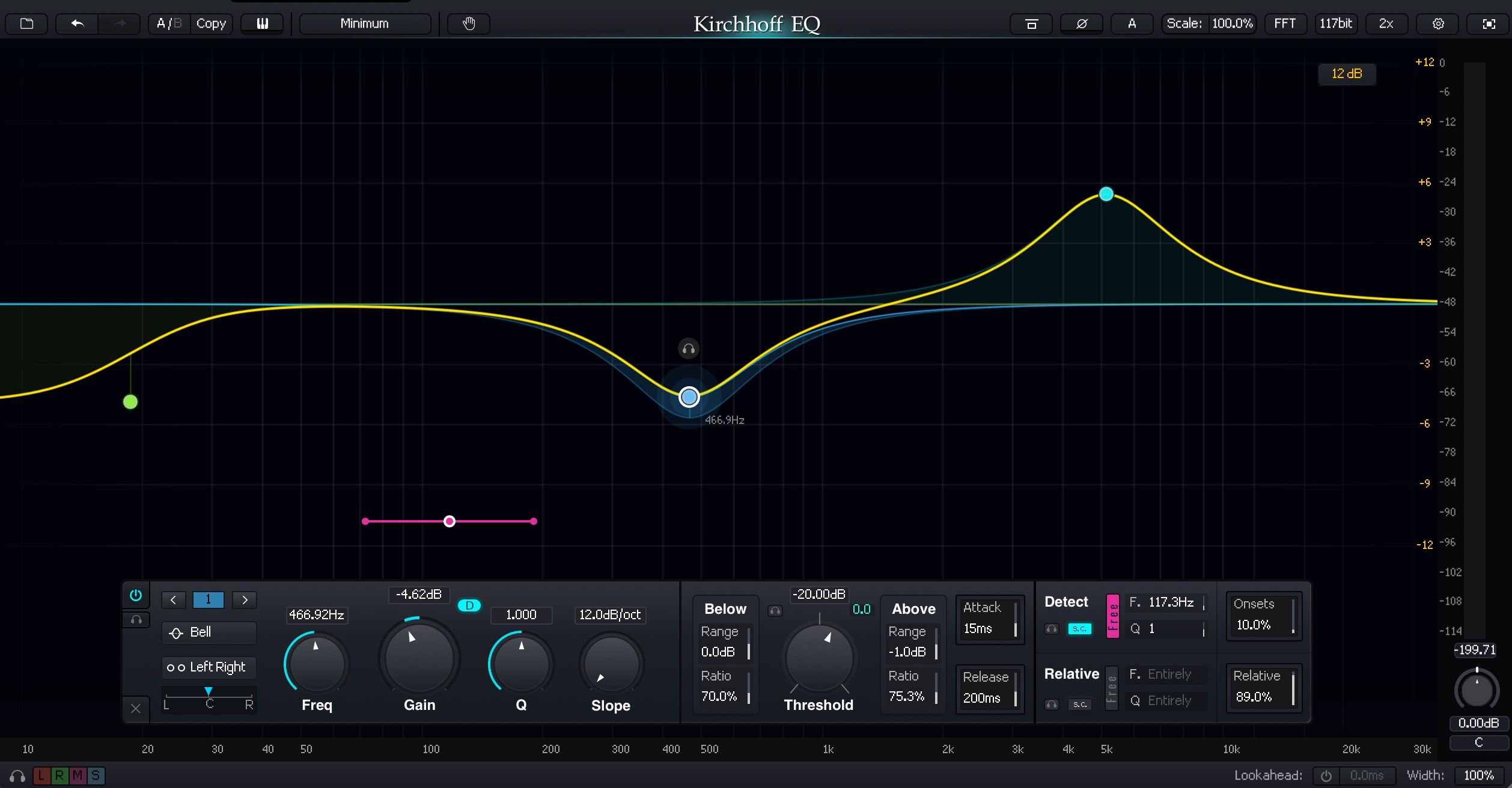
Kirchhoff-EQ’s many features may take some getting used to, but its capabilities more than make up for that. We found it
particularly well suited to precise EQ work on individual tracks.
Eventide SplitEQ
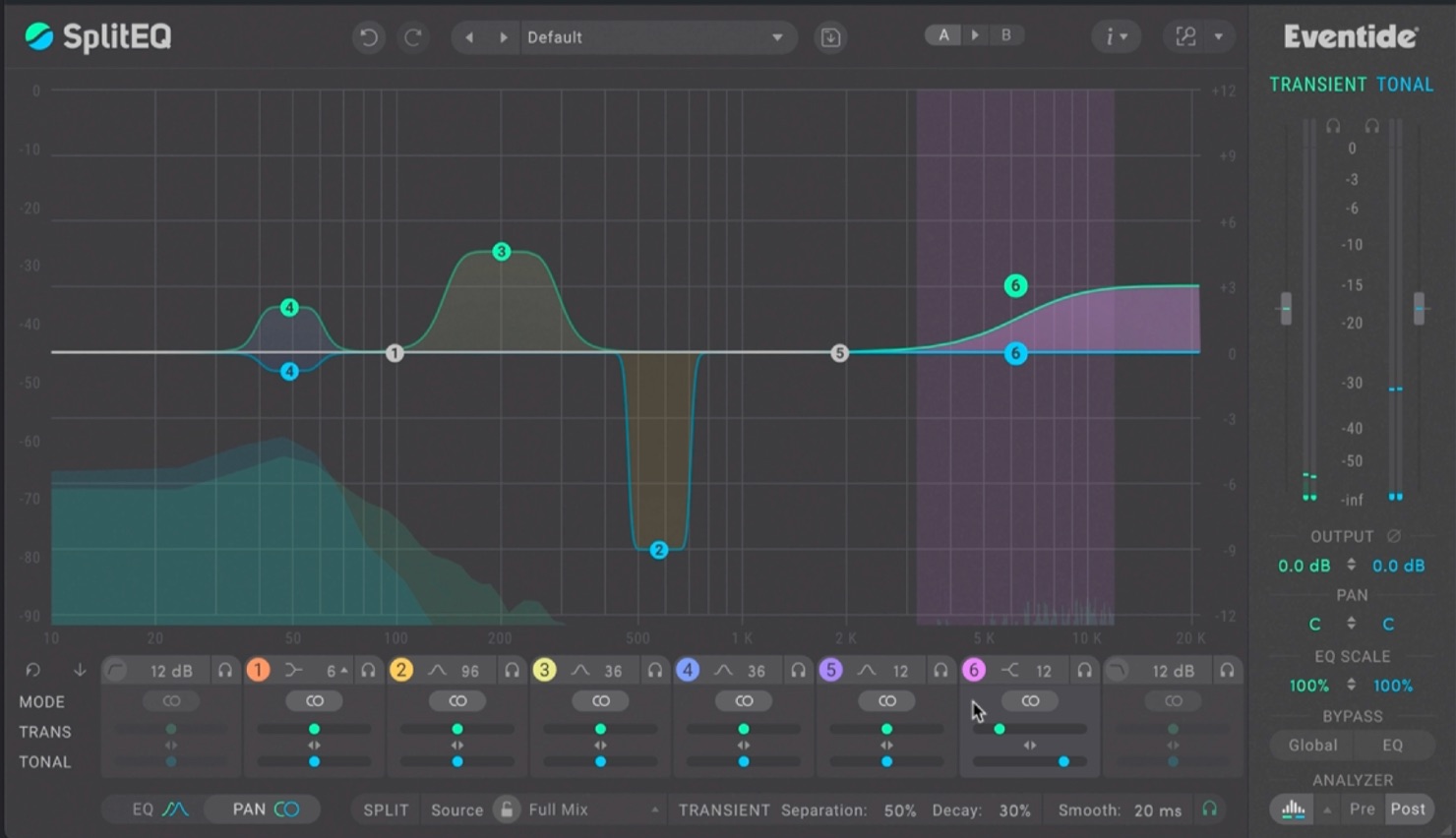
SplitEQ takes a somewhat different approach from the other two. It is an innovative product that makes previously impractical processing possible.
Eventide has developed pioneering products, including the world’s first Harmonizer, so it is no surprise to see the company create such an original equalizer.
Feature 1: EQ attack and sustain components independently
To understand this product, first get familiar with TRANSIENT and TONAL, its two key components.
- TRANSIENT: Corresponds broadly to the attack component.
- TONAL: Corresponds broadly to sustain and release, excluding the attack.
The classification is more complex in detail, but this is a useful starting point.
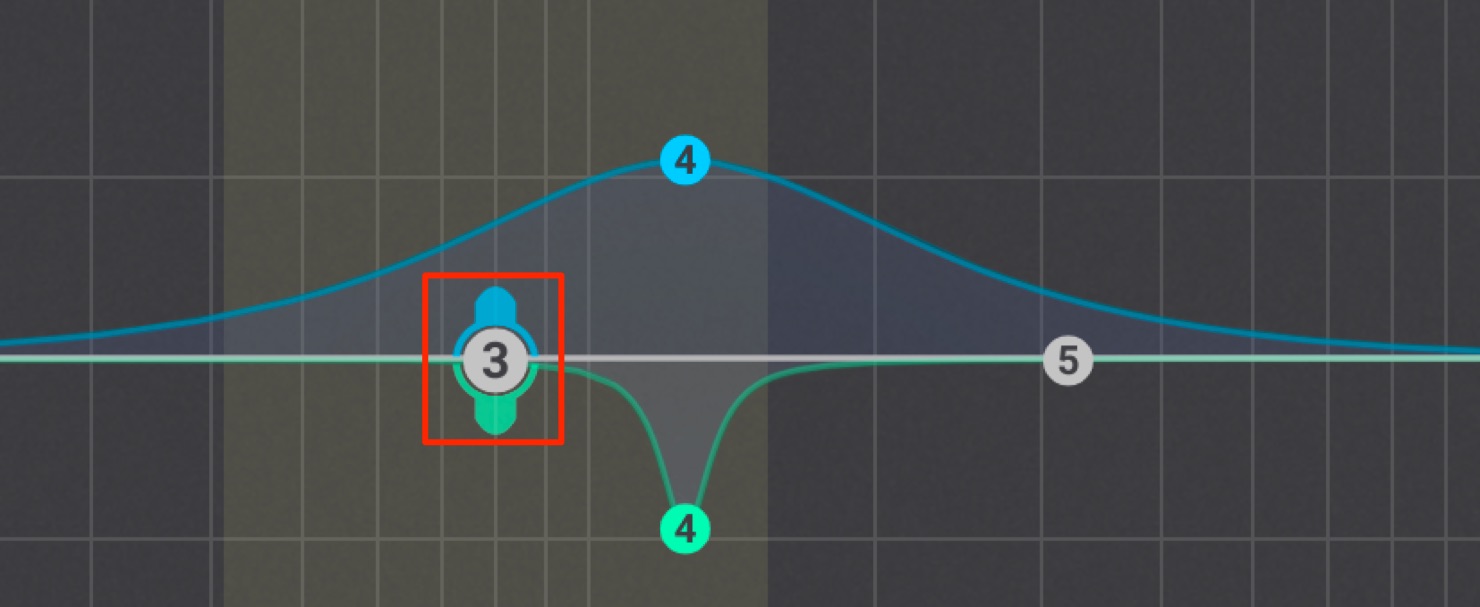
Dragging the center of an EQ point adjusts it like a conventional EQ. Drag the lower green part to EQ TRANSIENT, or the upper blue part to EQ TONAL independently.
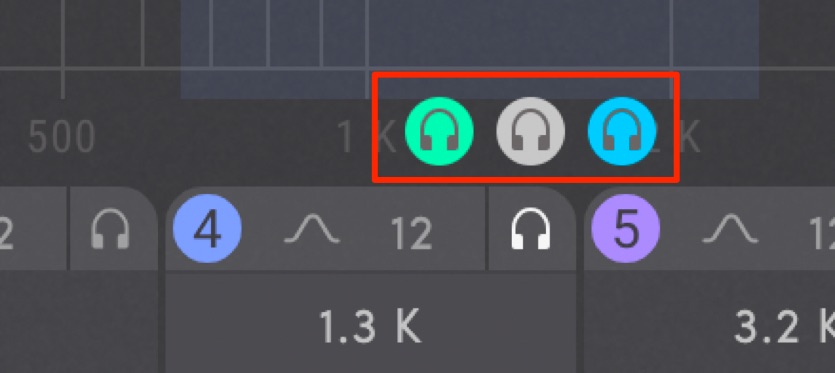
Click the headphone icon to audition TRANSIENT, TONAL, or both within the selected band. This helps you find the right EQ settings efficiently.
Feature 2: New approaches to a wide range of sources
SplitEQ can separate and process TRANSIENT and TONAL with high precision, opening up approaches that were previously considered impractical.
For example, the video demonstrates removing only noise in the sustain component while minimizing the effect on the original sound. Achieving this with other tools can be a laborious process that often fails to deliver the intended result.
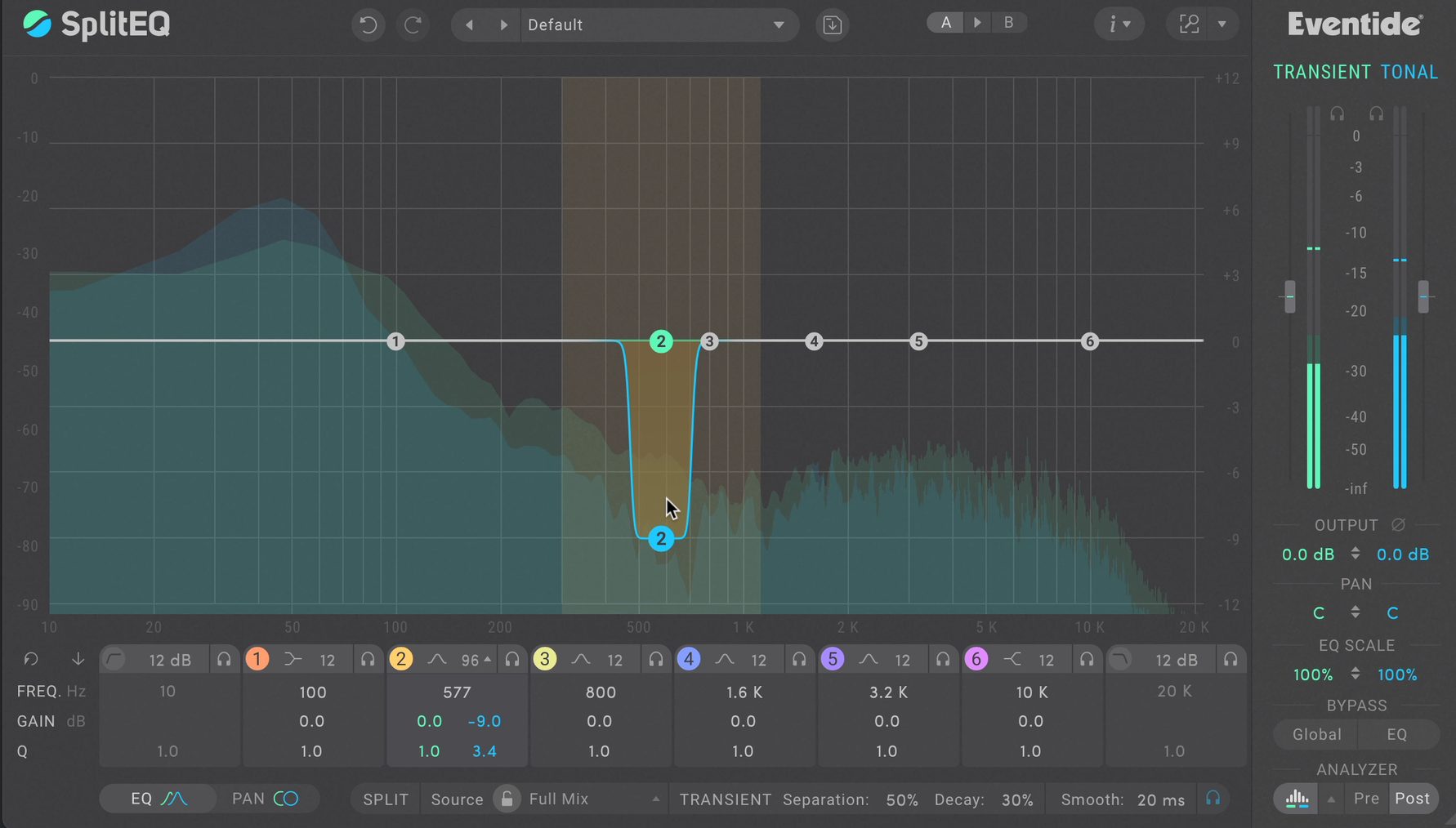
It also handles sources ranging from drums with clear attacks to distorted guitars whose attacks are relatively flattened, setting it apart from conventional transient-shaping processors.
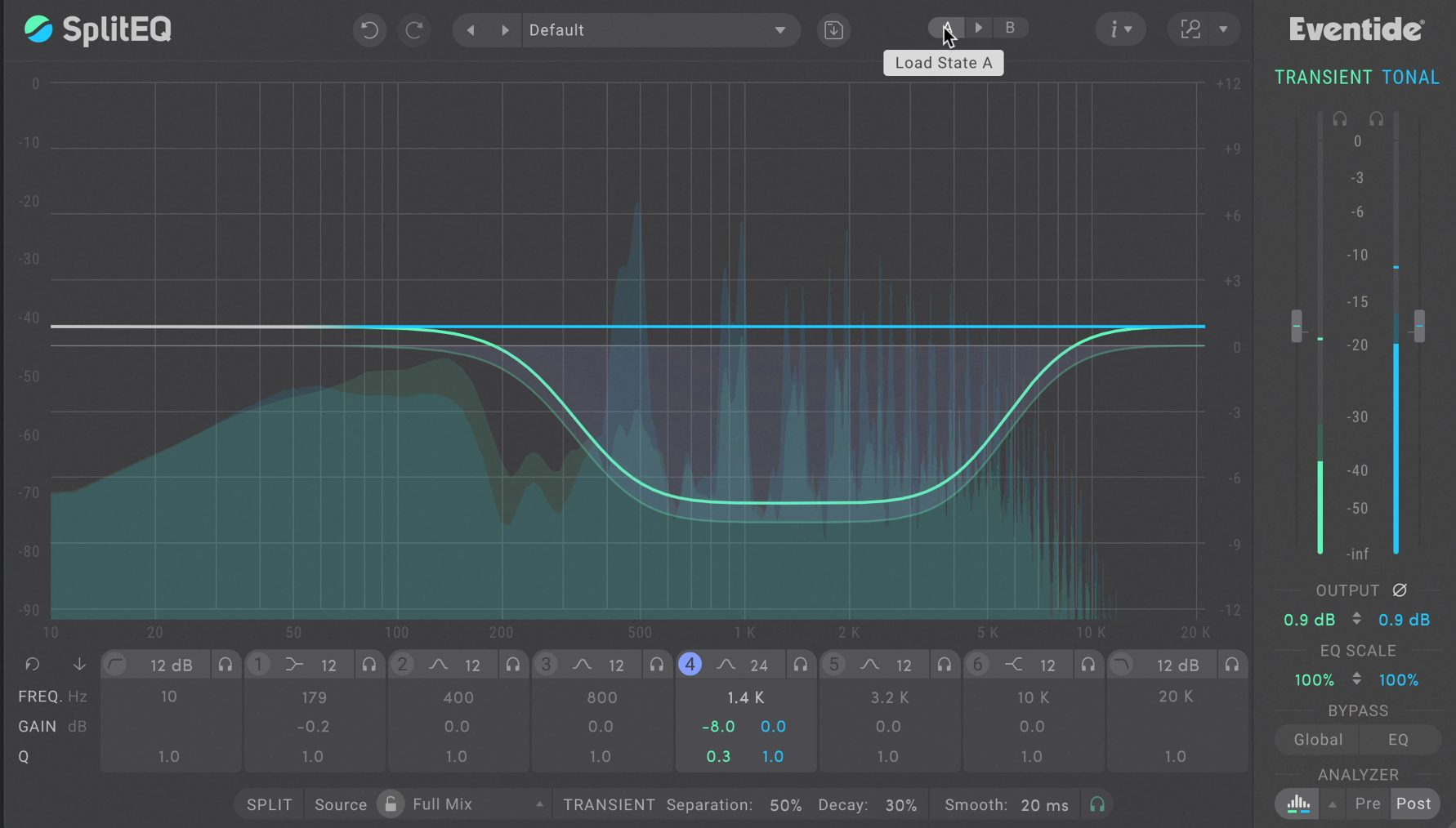
For material you like but have given up using because of sound-quality problems, you can perform surgical sound shaping and turn it into something usable. To us, this is what makes SplitEQ unique.
Used creatively, it can also produce highly original sounds.
Its CPU usage is higher than the other two products, but since it is not intended to replace your main EQ, we do not expect that to be a frequent problem.We found it an irreplaceable tool that is especially valuable when you need its particular capabilities.
That concludes our look at the features of these three innovative equalizers. Each takes a different approach and has situations in which it excels.
Trying whichever one interests you most could change how you think about mixing.
Buy the products
• Sonnox Claro
• Three-Body Technology Kirchhoff EQ
• Eventide SplitEQ
Comparing Three Equalizers for the Next Generation
A succession of innovative equalizers has recently arrived. Here we explore three: Sonnox Claro, Three-Body Technology Kirchhoff-EQ, and Eventide SplitEQ.Details: https://t.co/1VSAQrm14v #DTM #DAW #Mixing #EQ pic.twitter.com/fusxPKG7wJ
— SLEEP FREAKS (@SLEEPFREAKS_DTM) March 28, 2022
Frequently asked questions
Q1. Which equalizer is recommended for beginners?
Of these three, Sonnox Claro is the most beginner-friendly. Its simple, intuitive interface makes it possible to learn EQ fundamentals without complicated controls. The Produce, Tweak, and Mix views also support a gradual learning process.
Q2. What is Kirchhoff-EQ’s 117-bit internal processing?
It is a processing mode that uses greater numerical precision than typical EQ plug-ins. The aim is more transparent, high-quality equalization. Because it increases CPU usage, consider reserving it for important tasks.
Q3. Can I try these three products before buying?
At the time of this March 2022 review, free demos were available for all three. Claro and SplitEQ required an iLok account, so users needed to prepare one in advance.
Q4. Which equalizer is best for multitrack production?
Claro’s Mix view visualizes masking between tracks, helping you balance the overall mix efficiently. Kirchhoff-EQ, meanwhile, excels at detailed processing on individual tracks. Choose according to your production style.
NEW ARTICLES
Latest English Articles





















































































































