This seventh installment in our analysis of “Heavenly Flight” from Dragon Quest III provides a practical introduction to pedal points. A pedal point holds the same note through changing chords. Through bass inversions, sus4 chords, and the placement of tension notes, we explore dramatic contrasts between tension and stability and ideas for richer harmony and arrangement in music production.
Analyzing the final two bars of the second half of “Heavenly Flight”

This is the seventh installment of our practical music theory analysis of “Heavenly Flight” from Dragon Quest III: And into the Legend....
This time, we focus on the last two bars of the four-bar passage in the second half.
The music analyzed

Analysis videos
1. Song structure
2. Key and tonality
3. Chord progression
4. Focusing on the bass line
5. Substitute dominant chords
6. Bass line cliché
7. Pedal point (this article)
8. The Picardy cadence
A partial bass pedal point using an inversion
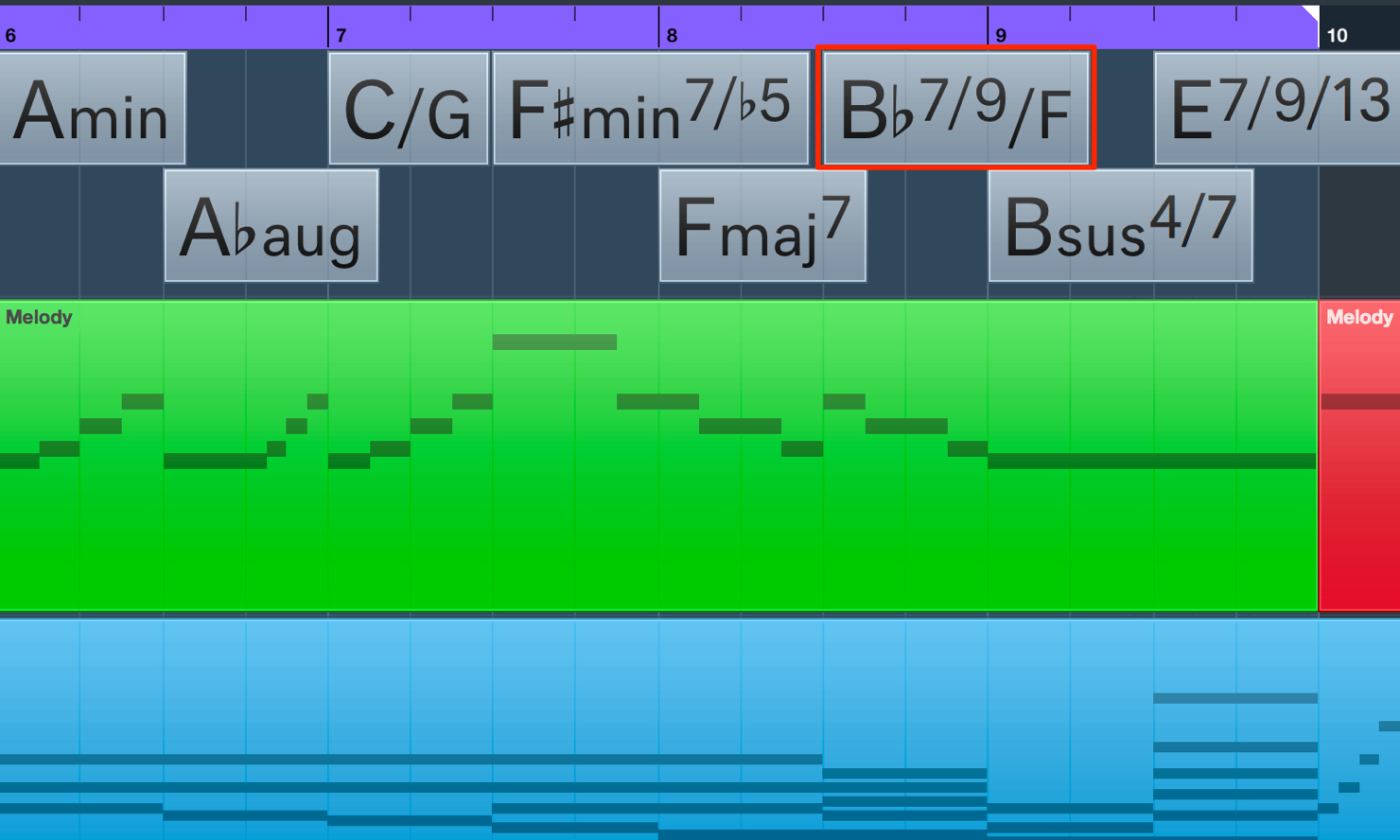
Let’s examine the chord progression in the last two bars of this four-bar passage.
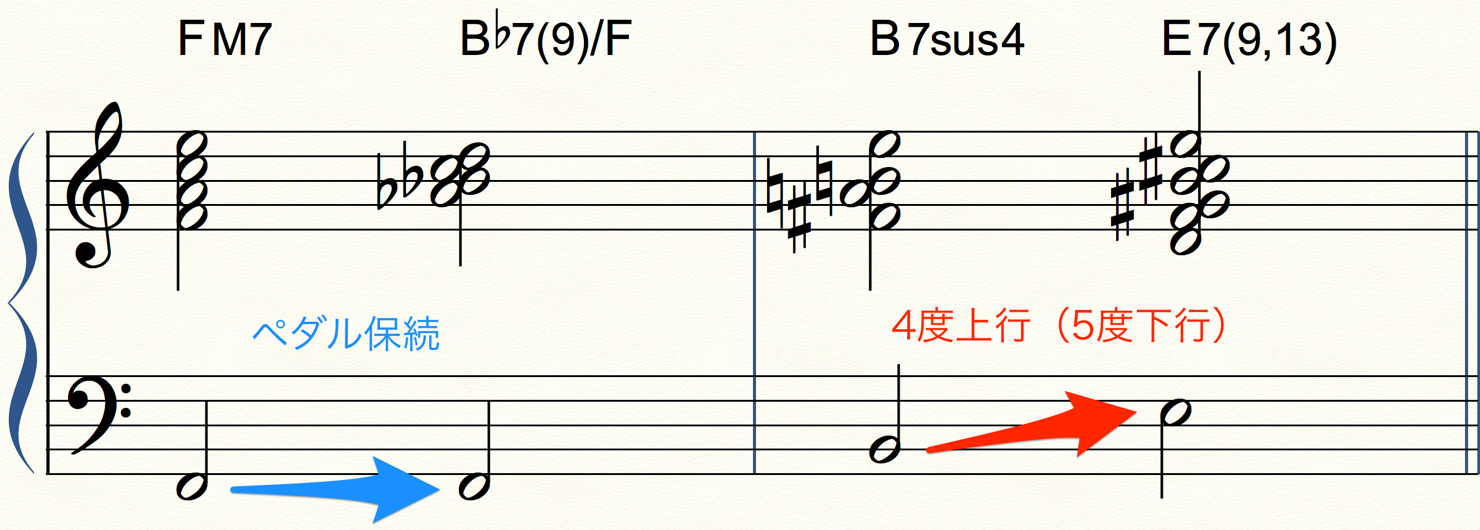
Using the second inversion of B♭7(9), written B♭7(9)/F, puts F in the bass. This allows the bass note to be sustained from the root of the preceding FM7 chord.
This can also be thought of as a bass pedal point within the bar.
What is a pedal point?
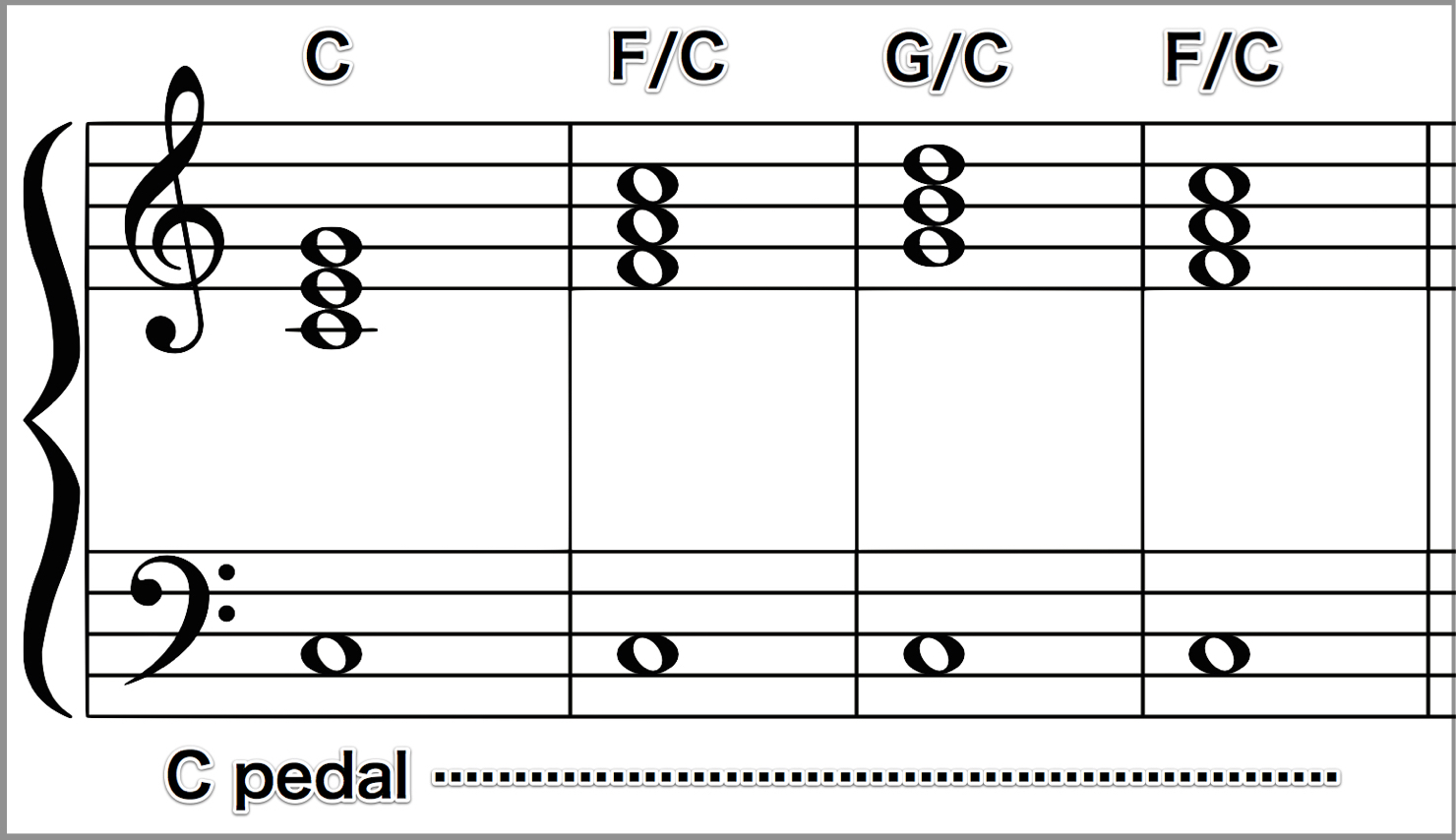
The cliché discussed last time is a technique that moves a particular note by semitones or whole tones. A
pedal point is a technique that holds the same note while the chords change.
It is also called an organ point.
Examples include a tonic pedal point, which uses the root of the tonic chord, and a dominant pedal point, which uses the root of the dominant chord a perfect fifth above the tonic.
A pedal point is not limited to the bass: it can also occur in a middle or upper voice.
Changing the ii–V to include a sus4 chord
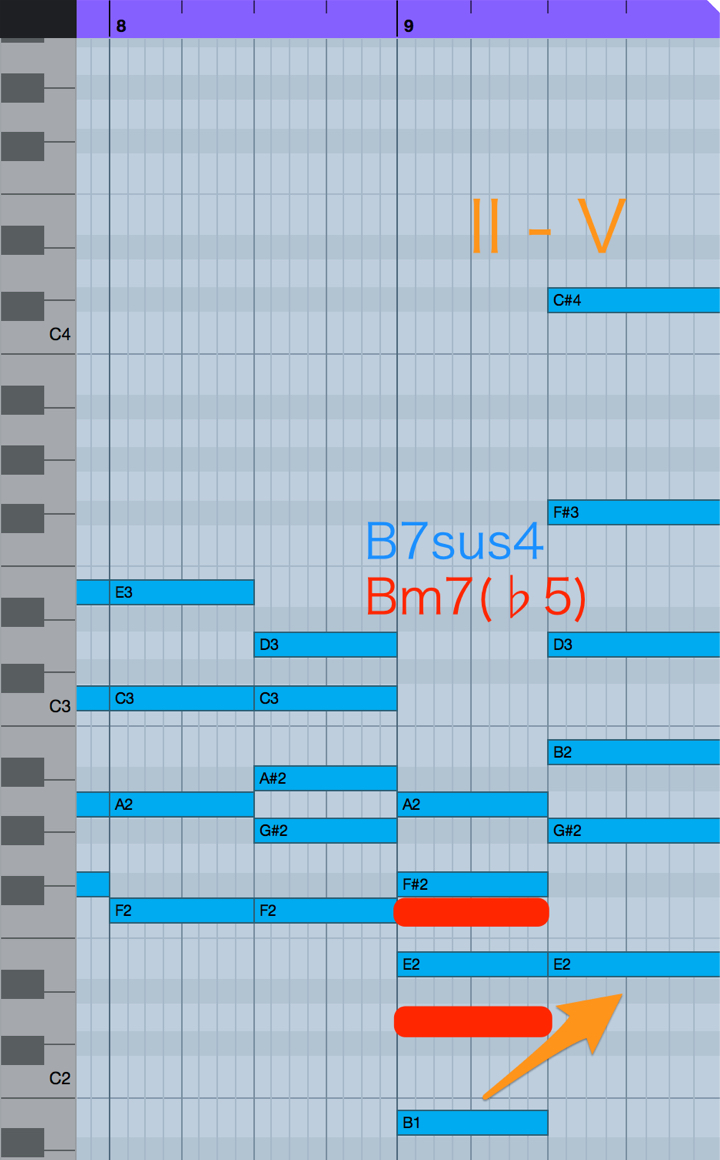
In a harmonic minor ii–V, the usual progression is IIm7(♭5) → V7.
Here, IIm7(♭5) has been changed to II7sus4.
Let’s compare them.
First, the F in Bm7(♭5), its flattened fifth, is a characteristic note of the minor key.
Changing it to F♯ gives us Bm7.
This is the note altered in the melodic minor scale, bringing the sound closer to a major quality.
Next, raising D, the minor third that gives Bm7 its minor quality, to the fourth creates B7sus4, briefly producing an ambiguous, floating sound that feels neither minor nor major.
The E that forms the suspended fourth is shared with the root of the following E7(9,13).
This also helps the progression flow more smoothly.
Melody and tension notes over the dominant
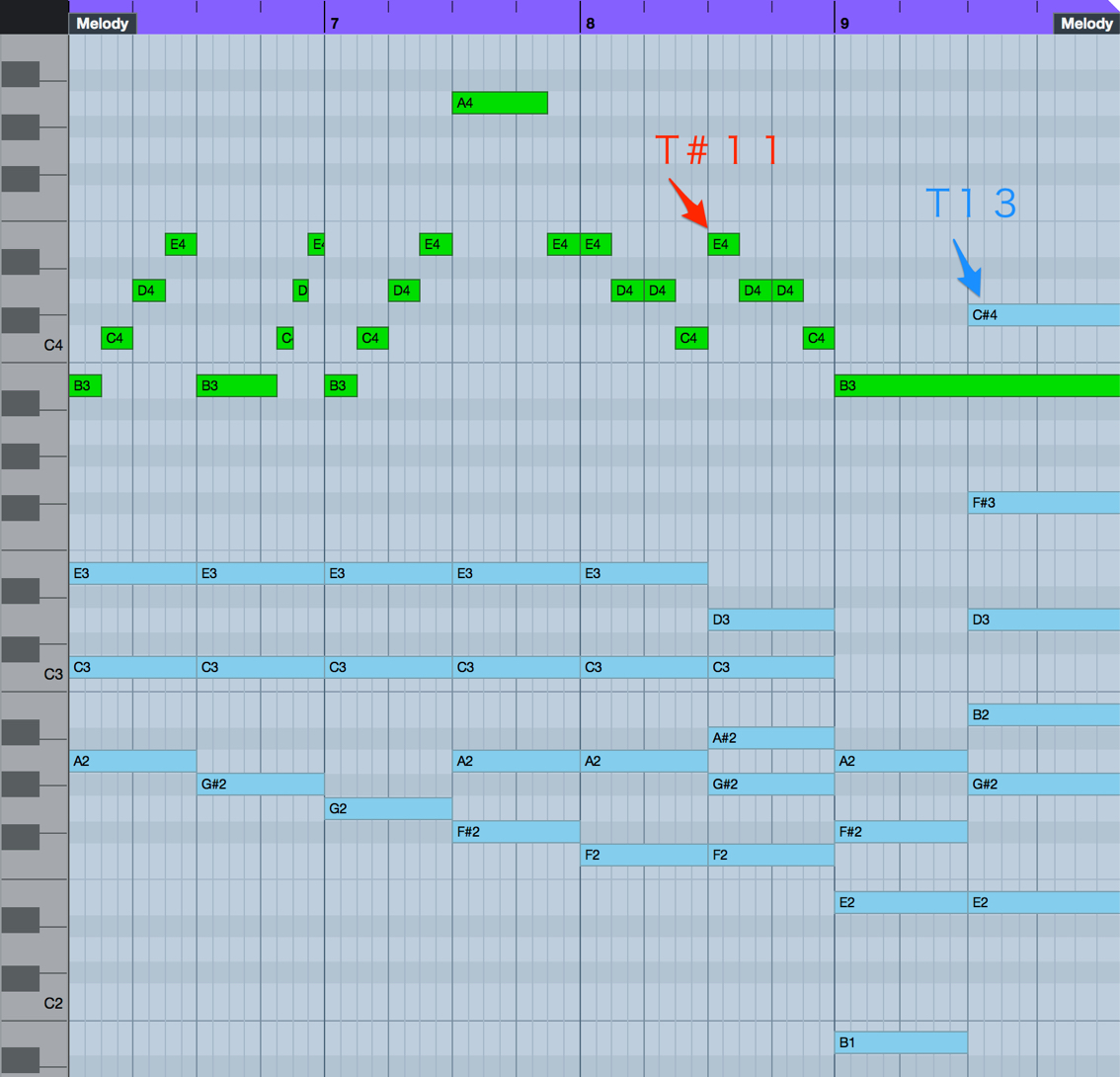
Over B♭7(9)/F, the melody briefly plays E.
As a tension note, this is the ♯11th.
(With F in the bass through the inversion, a clash with the E in the melody is also avoided.)
This creates a highly tense sound, but the melody then lands on B, a chord tone of the following B7sus4, giving a feeling of stability.
The contrast between tension and stability is very dramatic.
The following E7(9,13) also contains a 13th tension note that was not present in the E7(9) in the first half.
C♯ is not a diatonic note either, but it can be understood as an important hint of what follows in the second half.
We will explore this next time.
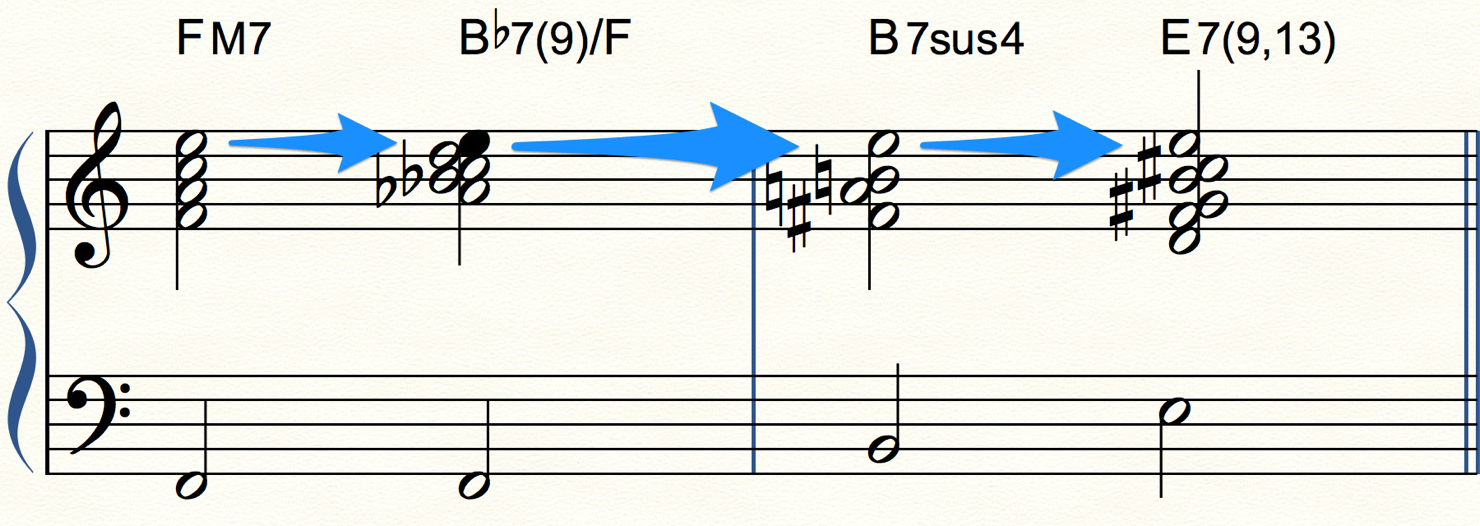
Considering the melody as well, these two bars may also be understood as sustaining E as a common tone (pedal note).
Frequently asked questions
Q1. What is the difference between a pedal point and a cliché?
A cliché moves a particular note step by step in semitones or whole tones, while a pedal point sustains the same note as the chords change. Both can bring movement and tension to a piece.
Q2. How can sus4 chords be used in music production?
A sus4 chord creates a floating sound and can emphasize the sense of resolution to the next chord. It can help create memorable phrases by allowing unexpected harmonic movement while maintaining a natural melodic flow.
Q3. What should I keep in mind when using tension notes such as the ♯11th and 13th?
Tension notes create tension, so it is important to plan their subsequent resolution to chord tones. Consider using inversions to avoid clashes between the melody and bass.
NEW ARTICLES
Latest English Articles