This 2019 DAW ranking is based on a large survey of 4,226 music production software users. Cubase took a commanding first place with 41.6%, followed by Logic and Studio One. The article explores the characteristics of each DAW and trends in using multiple DAWs, providing real survey data to help beginners and existing users choose software that suits them. It also discusses professional production workflows, including using Pro Tools with Logic or combining Cubase and Studio One.
DAW Survey Results from 4,226 Respondents

Here are the most popular DAWs according to the music production survey conducted during our year-end Sleepfreaks Christmas Campaign 2018.
A total of 4,341 people took part. After excluding the 115 respondents who did not yet own a DAW, these are the results from 4,226 respondents.
To prevent repeat voting by the same person, the survey did not accept multiple submissions from the same IP address.
Since many people use two or more DAWs, respondents were allowed to select multiple products. Consequently, the percentages and vote counts add up to more than 100% and 4,226, respectively.
We hope these results help anyone thinking about getting started with computer-based music production.
Where did your DAW rank? Let’s look at the results.
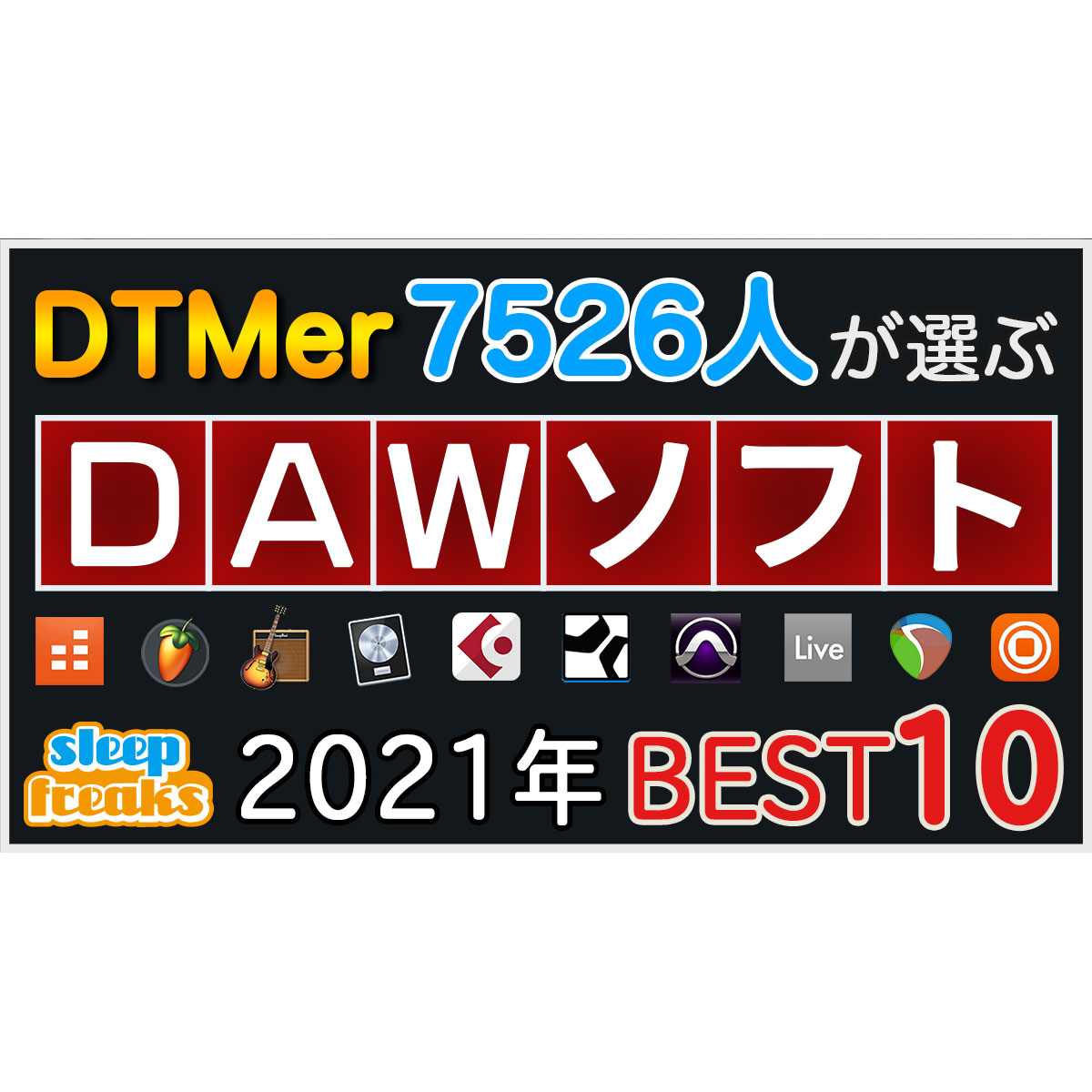
Video: Top 10 DAWs
DAW Ranking Results
Let’s take a look at the survey results.
1st: Cubase — 1,758 Votes (41.6%)

2nd: Logic — 1,043 Votes (24.7%)
3rd: Studio One — 997 Votes (23.6%)

4th: FL Studio — 549 Votes (13%)

5th: Ableton Live — 504 Votes (11.9%)

6th to 10th Place
The results for 6th through 10th place are as follows.
- Pro Tools — 419 votes
- GarageBand — 286 votes
- Sonar / Cakewalk by BandLab — 239 votes
- Maschine — 160 votes
- KORG Gadget (version 2 was due for release soon at the time) — 108 votes

The bar chart below shows the vote counts.

Cubase takes first place by a substantial margin over the runner-up.
It is followed by Logic and Studio One, with only a small gap between them.
Logic performed particularly well considering the article’s estimate that Macs accounted for roughly one-third of the market.
Studio One’s free Prime edition and its mastering features seem to have helped increase its share.
Next comes FL Studio in fourth place, following the addition of Mac support in 2018, with Ableton Live close behind in fifth.
Both DAWs have strong associations with EDM.
They are followed by Pro Tools, which is widely used in recording studios,
and GarageBand, which comes with the Mac.
One product worth watching is eighth-place Sonar. BandLab Technologies acquired it in 2018 and brought it back as Cakewalk by BandLab. At the time of this article, Windows users could use it for free, making its ranking in subsequent years an interesting prospect. Keep an eye on it.
11th Place and Below

Reaper, Reason, and Digital Performer appear from 11th place downward.
With single-digit vote counts, one vote can change the ranking, so we consider these results very close.
“Other” groups together products that received one or two votes, such as Adobe Audition (two votes).
How Many People Use Multiple DAWs?
We also asked respondents about using multiple DAWs.

A total of 1,407 people—33% of all respondents—said they used two or more DAWs.
The chart below illustrates these results.

One striking feature of the chart is the relatively low proportion of Cubase users who also use another DAW.
Cubase is very feature-rich, so perhaps many users are satisfied with Cubase alone.
For second-place Logic and third-place Studio One, around half of the users also used another DAW.
Among paid DAWs in particular, the high proportion of Pro Tools users who also use another DAW stood out.
That figure was 76.6%, meaning roughly three out of four Pro Tools users also used other software.
Common DAW Combinations
Logic was the DAW most frequently used alongside Pro Tools.

We suspect many users take advantage of both programs’ strengths by programming in Logic, then recording and mixing in Pro Tools.
The most common combination overall was:

Cubase and Studio One.
Studio One was created by developers who had worked on Cubase at Steinberg. Its similar operation and relatively light resource demands helped it gain users in the years leading up to this survey. The ability to work from song production through mastering within the same application also appears to be one reason for its popularity.
Although Cubase was very feature-rich, it did not include mastering features such as DDP export at the time of this article.
Some people may use WaveLab, also made by Steinberg, when producing their own CDs. We suspect many others use Studio One alongside Cubase to cover these mastering needs.
WaveLab Tutorial 5: Creating DDP Files for CD Replication

Video: Studio One’s Song and Project Integration

Final Thoughts
Thank you very much to everyone who took part in the survey.
We have also received requests to explain the differences between DAWs, so we would like to create videos and articles on those topics.
We hope to continue running surveys like this in 2019 and beyond, and would appreciate your participation!
🎉 DAW Rankings, 2018 Edition: We Asked 4,226 Music Producers! 🎉
We compiled the results of the music production survey 📝 held during the year-end Sleepfreaks Christmas Campaign 2018 into a ranking.
Where did your DAW rank?
Take a look! 🎵https://t.co/QtpBYHqvPI#DAW #DTM— SLEEP FREAKS (@SLEEPFREAKS_DTM) January 20, 2019
Frequently Asked Questions
Q1. Which DAW was the most popular in the 2019 ranking?
Cubase was the clear winner, with 1,758 votes from 4,226 respondents (41.6%). Logic Pro came second with 24.7%, and Studio One third with 23.6%. These three led the survey results.
Q2. Which DAWs does this article recommend for beginners?
Cubase, Logic, and Studio One all have extensive beginner tutorials and strong support resources. The original article also lists the free Studio One Prime edition and GarageBand as suitable options for beginners.
Q3. What proportion of respondents used multiple DAWs?
A total of 1,407 respondents, or 33%, used two or more DAWs. Pro Tools had a particularly high multiple-DAW usage rate of 76.6%. Around 50% of Logic and Studio One users also used another DAW.
Q4. Which DAW offers extensive mastering features?
The article highlights Studio One’s built-in mastering features, including DDP export, and notes a tendency for Cubase users to also use Studio One for mastering.
Q5. Were any free DAWs available for Windows users?
At the time of the article, Cakewalk by BandLab (formerly Sonar) was available as a free DAW for Windows and ranked eighth in this survey. The article anticipated that its share might grow.
NEW ARTICLES
Latest English Articles