This article uses Ikimonogakari’s “Arigatou” to explain slash chords, which are common in pop music. A slash chord specifies a chord above a bass note. Two common uses are indicating an inversion through the bass note and combining a dominant bass with a subdominant chord for a softer sound. These techniques can expand the expressive range of your own chord progressions.
A chord resolution often used in pop
This is the seventh and final installment of our chord analysis of Ikimonogakari’s “Arigatou.”
You may have seen chord symbols such as G/B or GonB in sheet music.
These are called slash chords or “on chords.”
The note after the slash is the bass, and the chord before it is played above that bass note.
For G/B or GonB:
- Bass → B
- Chord → G
Let’s look at the slash chords in the chorus of “Arigatou.”
The song in this analysis
Video tutorials
1. Finding the key
2. Chord progressions
3. Non-diatonic chords
4. The ii–V progression
5. Pivot chords
6. Secondary dominants and minor subdominants
7. Slash chords — this article
Slash chords

F/G means an F chord played over the single bass note G.
The note below the slash is the bass note, and the chord above it is the harmony.
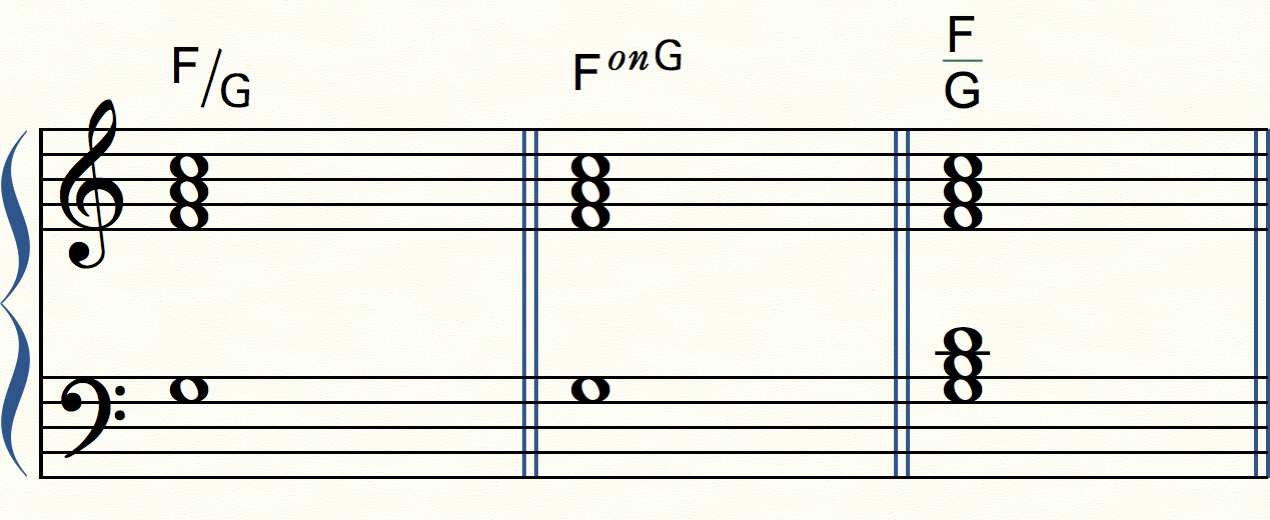
The alternative notation F(onG), sometimes called an “on chord,” means the same thing.
A horizontal fraction bar rather than a slash is also sometimes used,
but that can appear to indicate an upper-structure triad (UST),
in which two chords are stacked.
These notations are sometimes mixed, but their interpretations differ;
where possible, distinguish them clearly in writing.
Types of slash chords
There are two main functional uses of slash chords.
1. Specifying a bass note to suggest a chord inversion
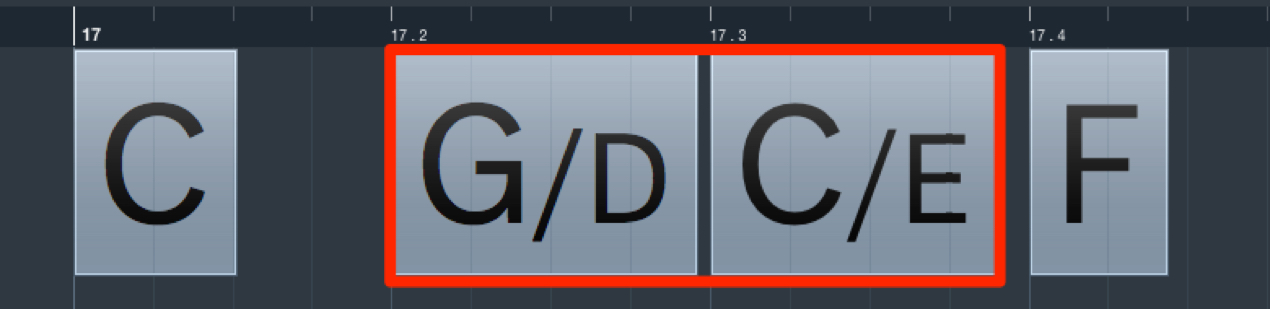
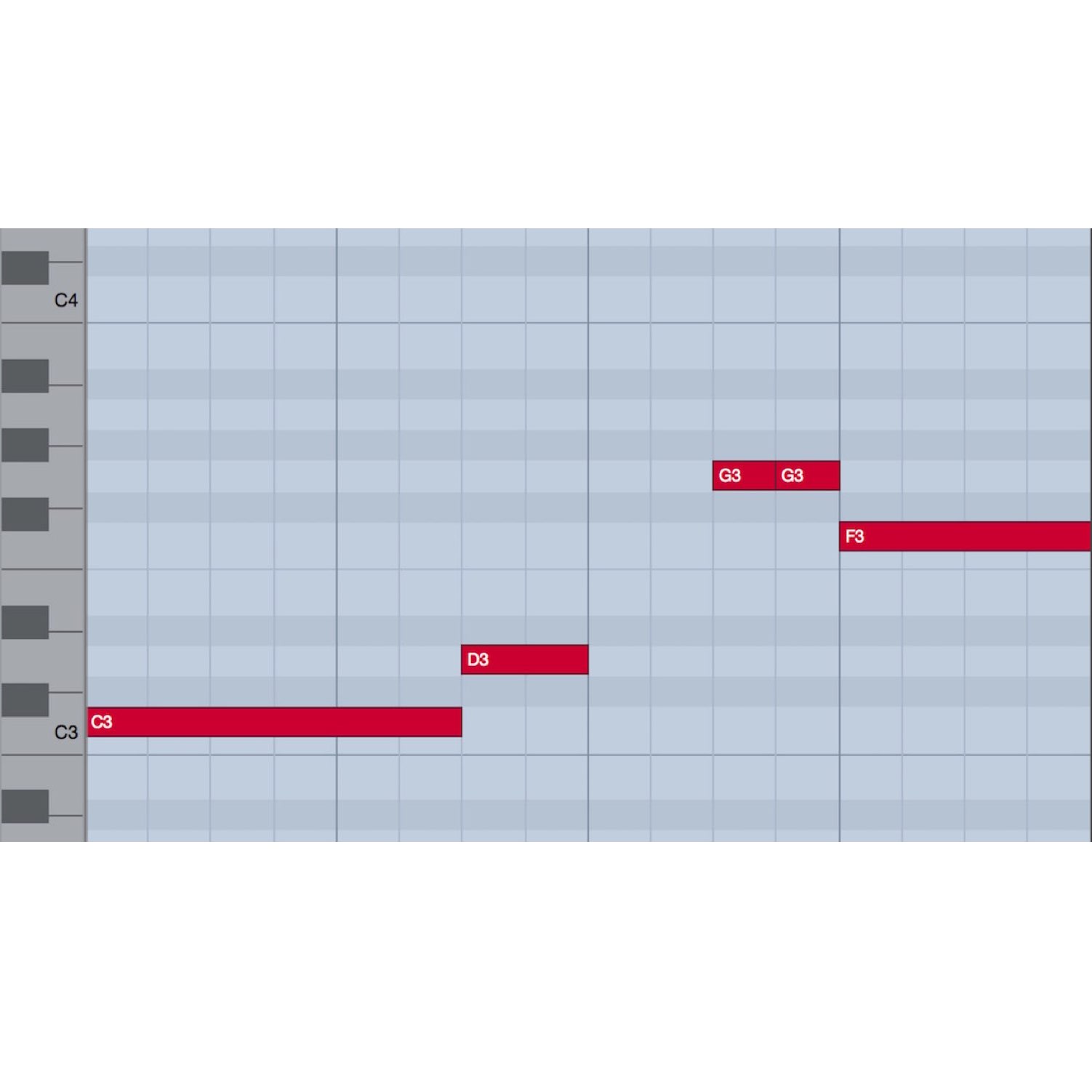
Consider the simple progression C → G → C → F.
By specifying the bass notes as C → G/D → C/E → F,
the bass line rises through the scale as C → D → E → F,
creating a calm and stable impression.
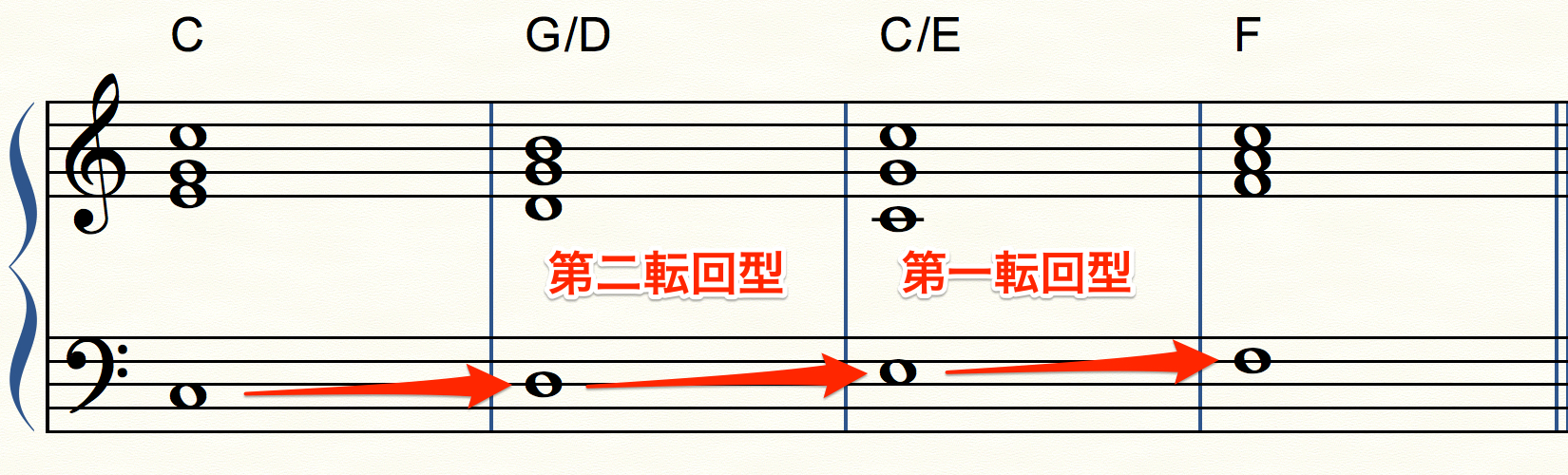
In both slash chords, the specified bass note is a note contained in the chord.
G/D is therefore G in second inversion, while C/E is C in first inversion.
Another familiar example is C → G/B → Am → C/G → F → C/E → Dm7 → G:
a classic hit-song progression with a descending scalar bass-line cliché
that makes effective use of slash chords.
2. A dominant bass note with a subdominant chord above it
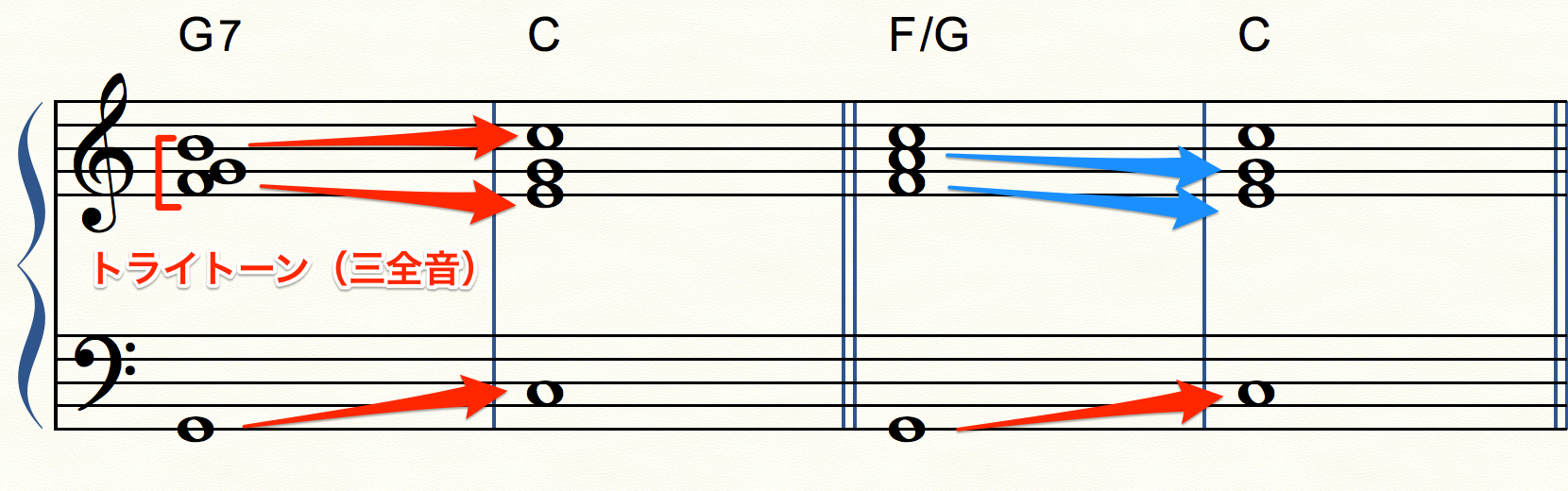
This is the pattern used in the song.
When the dominant resolves to the tonic,
the bass makes a strong root movement up a fourth (or down a fifth), while
the chord above it forms a gentler subdominant-to-tonic cadence.
Combining these two qualities softens the strong impression of a pure dominant, resulting in
a gentle, floating sound and chord resolution.
Its understated sound fits pop music well, which is why it is often used.
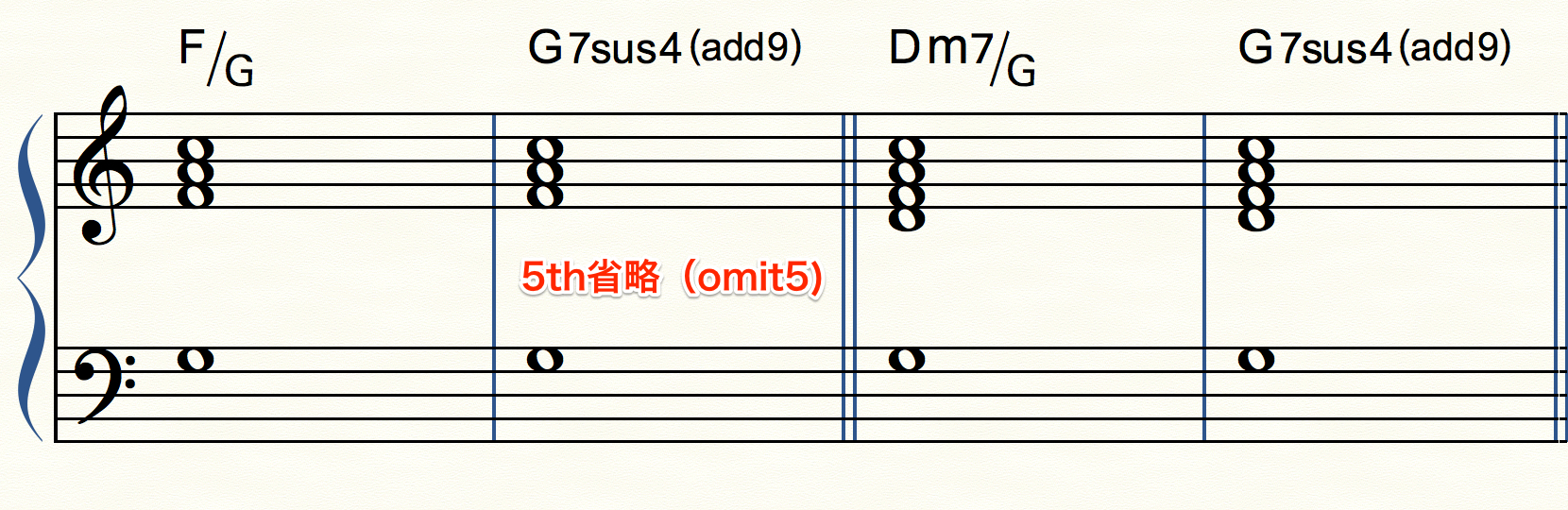
You can also use ii m(7), which has the same subdominant function, in place of IV.
Comparing their notes, F/G and Dm7/G are almost the same.
If we rewrite them as chords with G as the root,
both correspond to G7sus4(add9); F/G omits the fifth.
The absence of the third in a sus4 chord also contributes to its distinctive floating quality.
Conclusion
Across these seven installments we have examined the chorus of Ikimonogakari’s “Arigatou.”
It contains many techniques that can be useful references for composition.
We hope you can apply them in your own music and broaden your range of chord progressions.
Next time, we plan to analyze a different song.
Thank you for following the series to the end.
Frequently asked questions
Q1. What is the difference between G/B and GonB?
They are two ways of writing the same slash chord. G/B uses a slash, while GonB uses “on”; both indicate a G chord over B in the bass.
Q2. Why are slash chords common in pop?
A subdominant chord over a dominant bass can soften the strong dominant function, creating a gentle, floating sound that suits the understated and approachable character of pop.
Q3. Why specify the bass notes in C → G/D → C/E → F?
The bass rises stepwise through C → D → E → F, creating a calm, stable impression and giving the bass line motion and continuity. This is a common pattern in pop.
NEW ARTICLES
Latest English Articles