This article examines the chord progression of “Heavenly Flight” from Dragon Quest, a piece built around a simple melody and arpeggiated accompaniment. Even its opening four bars contain useful ideas for music production, including the way the harmony changes every two beats. We also look at how chords such as Em/G and B♭7(9) add distinctive color to the progression.
The Chord Progression

This time, let’s examine the chord progression of “Heavenly Flight.”
A close look at a celebrated piece can reveal many useful ideas,
and even the short opening four-bar phrase is full of details worth studying.
The Piece

Video Tutorial
1. Song Structure
2. Key and Tonality
3. Chord Progression (this article)
4. Focus on the Bass Line
5. Tritone Substitution
6. Bass-Line Cliché
7. Pedal Points
8. The Picardy Cadence
Identifying the Chords
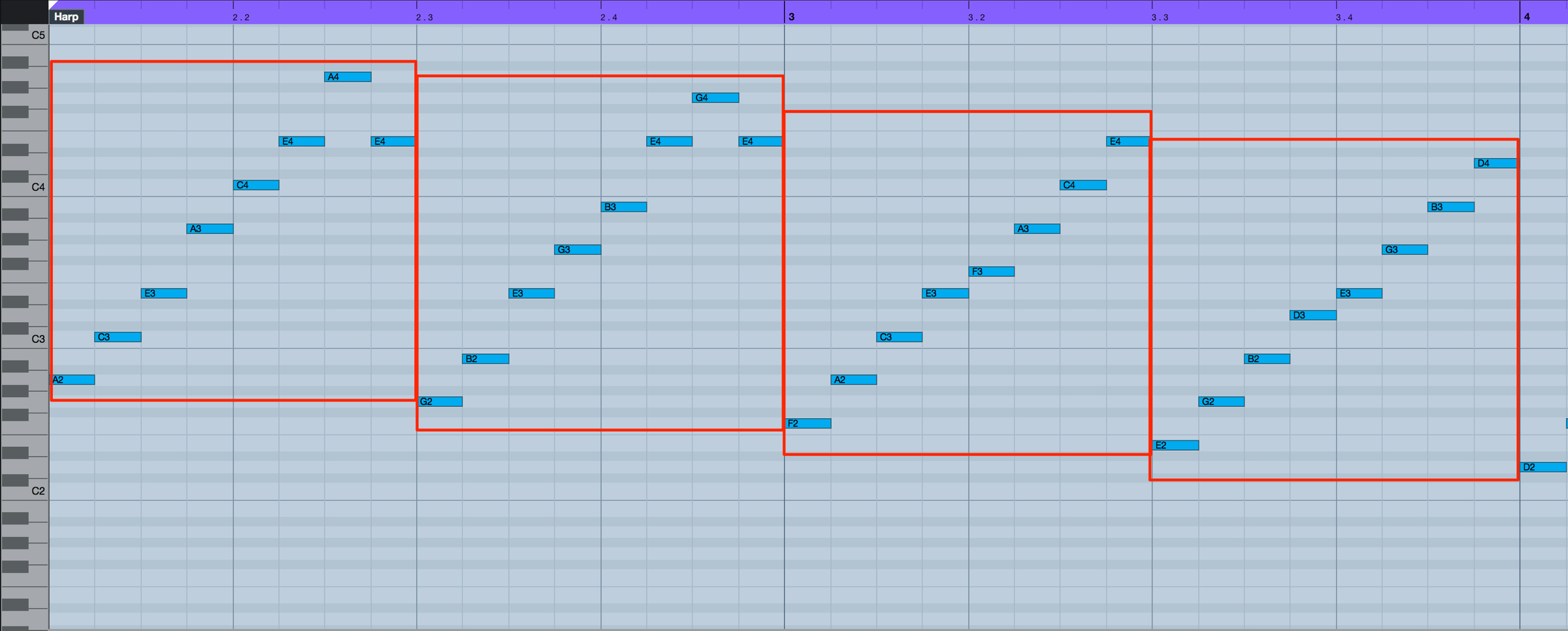
The arrangement consists simply of a melody and arpeggiated accompaniment.
Each group of notes in the arpeggio contains the notes of a chord.
Pay attention to when the harmony changes.
Here, the chords change every two beats, or twice per bar.
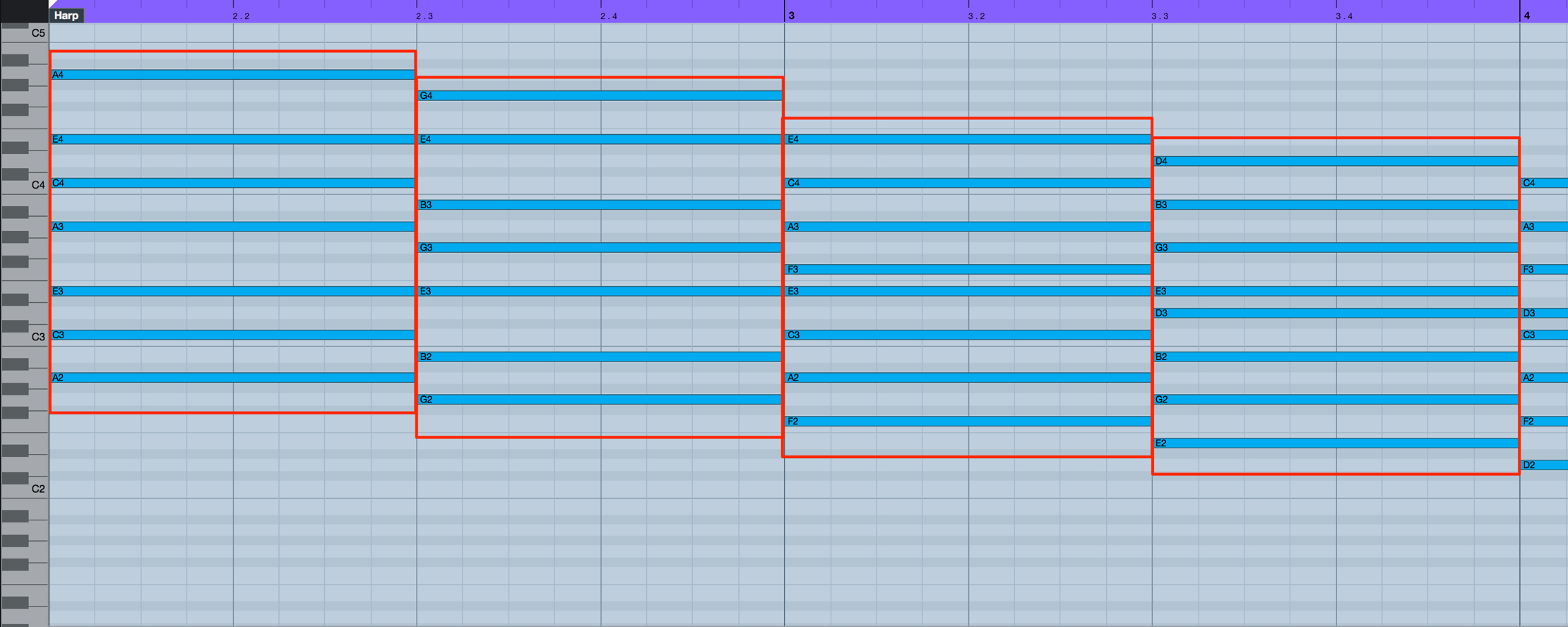
Let’s reduce the arpeggios to block chords.
Video: What Is an Arpeggio?
Identifying Chord Names
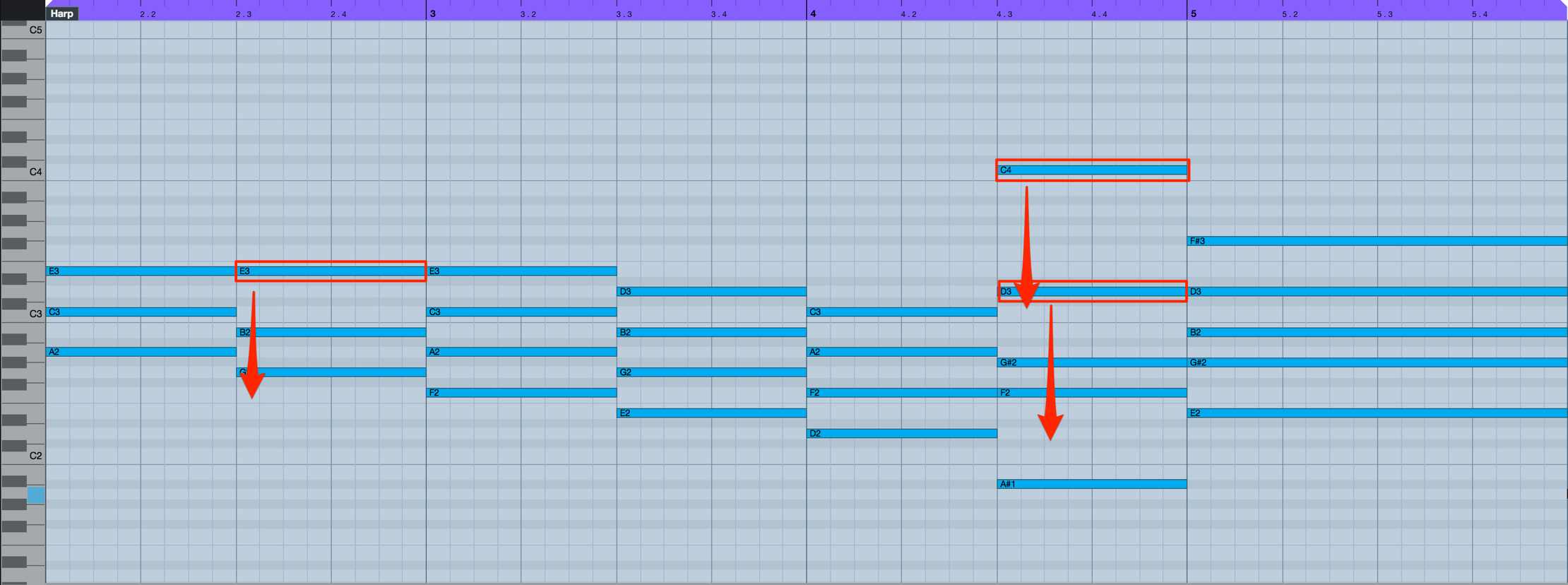
Removing repeated notes makes the individual chord tones easier to see.
Try changing their octaves so each chord can be viewed as notes stacked in thirds,
skipping alternate scale degrees, as in C–E–G.
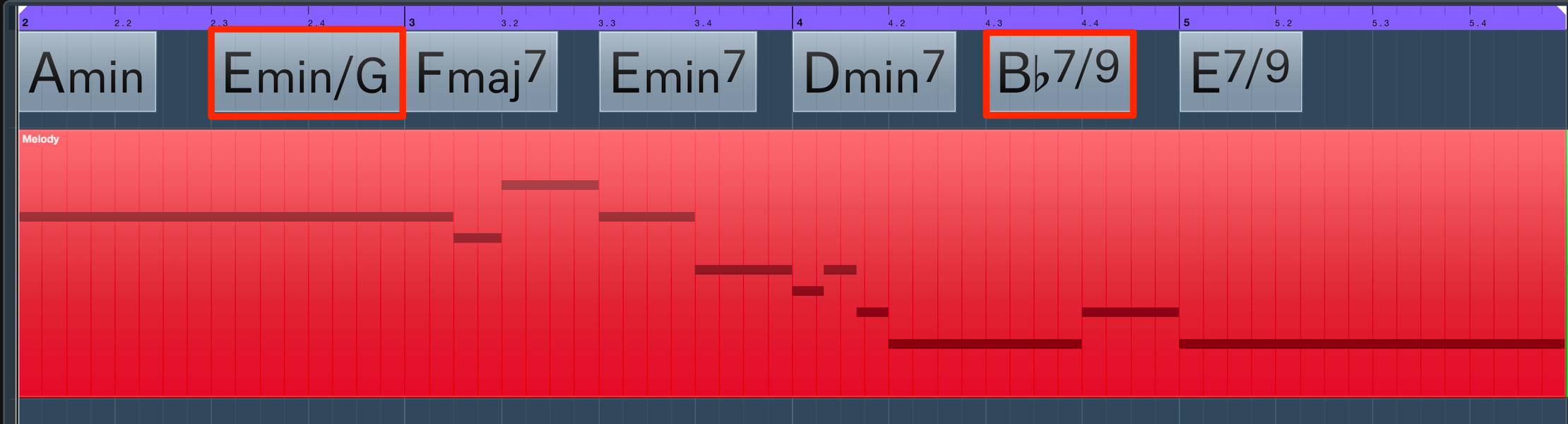
Written as chord symbols, the progression looks like this.
The second chord, Em/G, and the B♭7(9) appear to provide some of the song’s distinctive flavor.
We’ll explore these details further in the next installment.
Frequently Asked Questions
Q1. How can studying the chord progression of “Heavenly Flight” help my own songwriting?
Looking at the techniques in the piece, especially distinctive chords such as Em/G and B♭7(9), can suggest ways to add depth and color to your own music.
Q2. Why understand the relationship between arpeggios and block chords?
Reducing arpeggios to block chords clarifies the song’s harmonic structure and makes it easier to see which chord is used at each point.
Q3. Can beginners follow this chord progression analysis?
Yes. The article explains the process step by step, starting with chord basics, so beginners can study it systematically.
NEW ARTICLES
Latest English Articles