Changing chords with common tones is a practical way for beginning and intermediate music producers to break out of repetitive progressions. By deliberately using notes shared by multiple chords, you can create smoother transitions and new variations without needing advanced music theory. Changing the bass notes or voicings can give the same melody a different character, helping keep choruses and loops fresh and expanding your options for composition and arrangement.
Break Out of Repetitive Progressions with Common Tones
Once you become comfortable writing music and can produce songs regularly,
you may find yourself thinking:
“My progressions always sound similar; I want more variety.”
“They feel ordinary; I want to add a distinctive atmosphere.”
“I want to change the feel of the chords while repeating a melody.”
The common-tone chord-changing technique in this tutorial can be very useful in these situations.
You do not need advanced music theory to try it, so give it a go.
Video: Changing Chords with Common Tones
Selected Questions and Answers from the YouTube Video

Which acoustic and electric guitar sound libraries were used?

We checked with the instructor: the acoustic guitar is Prominy Hummingbird. The electric guitar uses NI KONTAKT Factory Library / Band / 5-Guitar / Elektrik Guitar with the Guitar Rig preset “Green Idiot.”
Why is the E changed to a B at 4:30?
This leads into the explanation that you can create a variety of progressions by changing the bass under two upper-note groupings: G–B–D and F♯–A–D in the G major scale, corresponding to scale degrees 1–3–5 and 2–5–7. The original C chord ultimately becomes Cmaj9, giving it a somewhat more ambiguous sound that can suit the mood of certain songs.
Smooth Out Chord Changes with Common Tones
We will use this progression as our starting example.

First, look for notes that could serve as common tones and add them to the chords.
Look across the whole progression for a note that appears relatively often.
Here we add D as a common tone, turning Em into Em7 and each C into Cadd9.
The result should still sound natural.

Even simply adding a common tone like this makes the transitions between chords smoother.
Create Variations by Changing the Bass
To make the common tones easier to see, let’s change the voicings so they line up horizontally.

Looking at it this way, the three upper notes alternate between two groupings, G–B–D and F♯–A–D,
corresponding to scale degrees 1–3–5 and 2–5–7 in G major; these groupings repeat.
Against this repeating pattern, by changing the bass notes,
you can explore different chord progressions.
Examples of Variations
Let’s look at examples created by changing the bass.
The upper voicings have been rearranged slightly, but the notes used are the same.
Bass Variation 1

We have changed the progression using some slash chords.
The change in bass movement between the first and second halves gives the progression a noticeably different feel.
Bass Variation 2

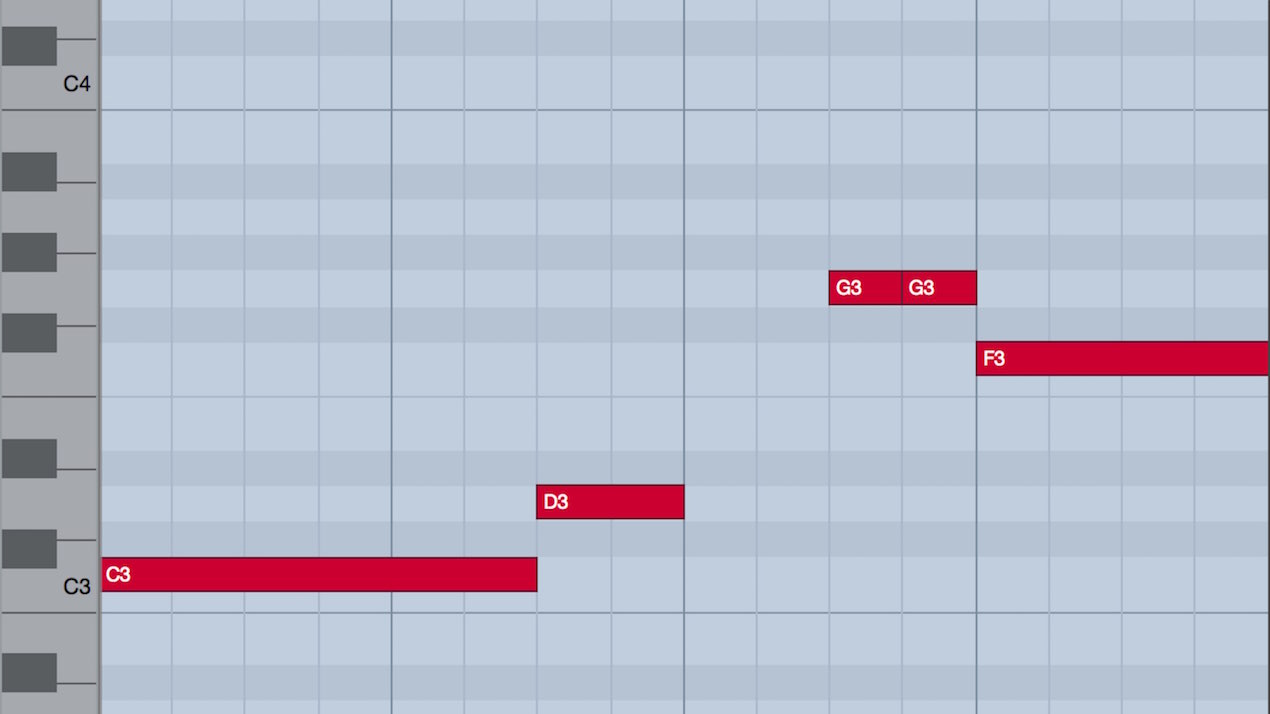
Starting the bass on C, the fourth degree of the G major scale, gives the progression a very different character.
Another feature is the stepwise movement downward and back up.
This can be effective in a later chorus or anywhere a repeated melody starts to feel monotonous.
A Variation with Different Voicings

Another approach is to keep common tones in the upper register.
This smooths out the progression and makes the two notes especially memorable.
You can apply this to arrangements for multiple instruments as well as piano.
For example, let a guitar or synth sustain the common tones while the piano plays chord accompaniment.
Frequently Asked Questions
Q1. How do I find common tones?
Look across the progression for notes that occur relatively often. In this example, D is used as a common tone: it is added to the Em and C chords to make Em7 and Cadd9. You can choose by ear or use music theory.
Q2. Can beginners use this technique?
Yes. As the article notes, you do not need advanced theory. Layer notes on a piano or in your DAW, listen to the result, and let your ears guide you.
Q3. What is the benefit of changing voicings?
Rearranging the notes in the chords can make common tones clearer both visually and by ear, emphasizing smooth transitions. It can also make the idea easier to apply across multiple instruments.
Q4. What kinds of songs benefit from this technique?
It is especially useful when a melody repeats in a chorus or loop. Different chord colors under the same melody can add depth and help maintain the listener’s interest.
Q5. Can this be used beyond piano arrangements?
Yes. You can divide the parts among several instruments: for example, have the piano play chord accompaniment while a guitar or synth sustains the common tones.
NEW ARTICLES
Latest English Articles