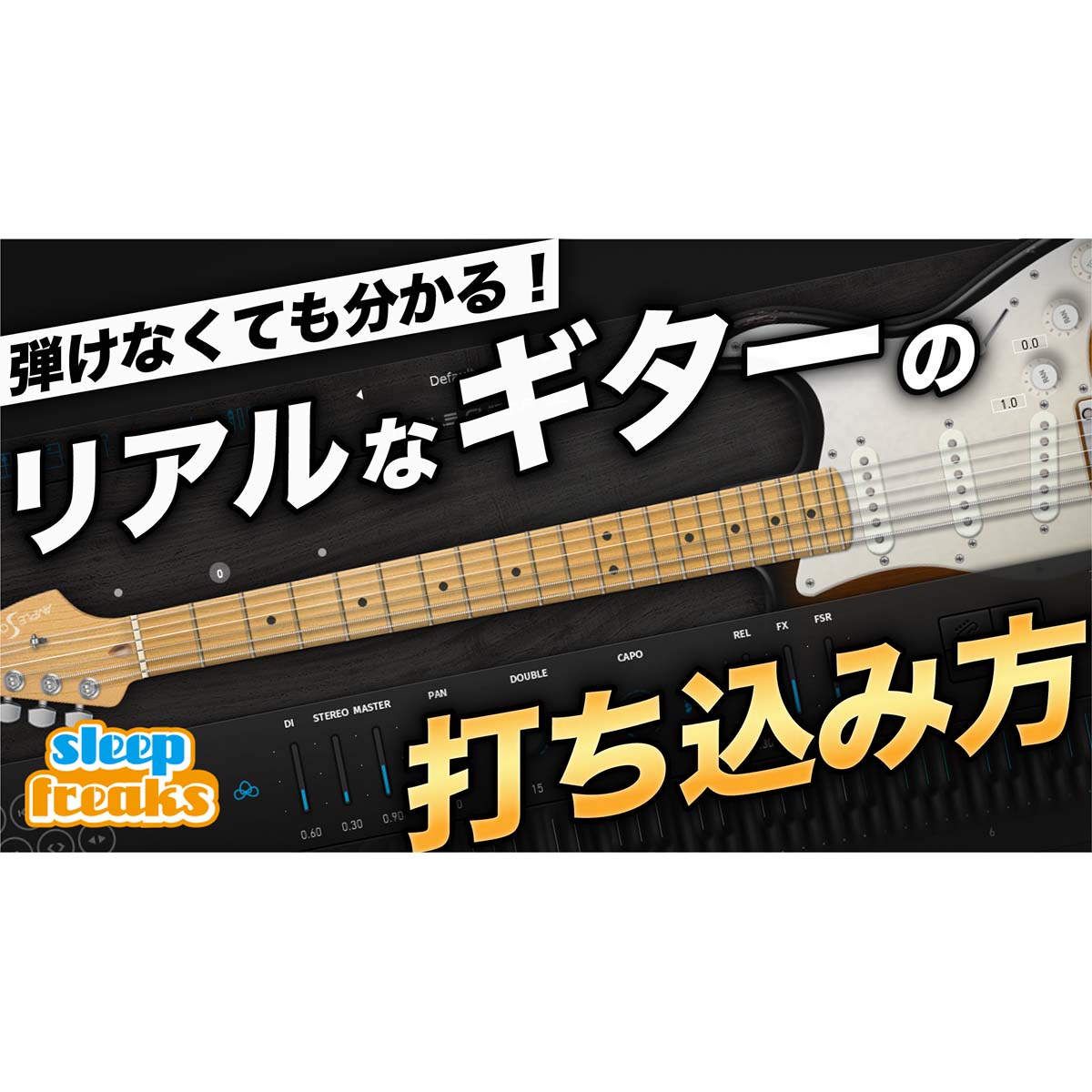
Scarbee Funk Guitarist by Native Instruments specializes in rhythmic guitar playing. Combine keyboard-assigned chords with backing patterns to create realistic funk guitar parts, from dance and EDM to pop. Alongside presets, its piano-roll editor lets you customize picking direction, volume, timing and other details.
Recreate Funk Guitar for Dance and EDM

Scarbee Funk Guitarist specializes in rhythmic guitar parts.
Control its pre-recorded chords and backing patterns to create realistic guitar sounds that can be difficult to program from scratch.
You can recreate funky rhythm guitar like that heard in Daft Punk’s “Get Lucky” or Mark Ronson’s “Uptown Funk.” Try these funky rhythm parts in your own music.
They also work well in upbeat pop.
First, we’ll cover the basics and chord and pitch control.
Video: Overview and Chord Management
Questions and Answers from the YouTube Video
I’m programming MIDI in my song, but once playback starts the rhythm guitar keeps playing even where there are no MIDI notes. How can I stop it?

You can stop playback with the red keys on the keyboard displayed in Kontakt. See the illustrated section in this article. https://sleepfreaks-dtm.com/softsynth/scarbee-funk-guitarist-1/
What are these drums? They sound so familiar...
Thanks. I used Stylus RMS. https://youtu.be/obEUsoY56ok
Thank you for the videos. How much can the phrase patterns be edited? Can I move accents in preset patterns or adjust swing?
Yes, those adjustments are possible. The next video covers that topic; at the time of this reply it was planned for later that month.
Understanding the Keys
To use the instrument effectively, first learn the roles assigned to the keyboard notes.

- Yellow: plays assigned chords.
- Red: stops playback.
- Green: selects the basic pattern used to play the chord.
Three patterns are shown in the image. - Blue: adds variations such as slides to the basic pattern.
The variation is active only while the key is held.
Transpose

Use this control to change the key to suit your song.
Transposing the MIDI notes in your DAW can change which assigned chords are triggered.
Chord Presets and Assignments

The instrument includes a range of chord presets.
Select the Chords tab at the bottom to access them.
Presets appear in the center list.
Double-click a preset to load it and assign its chords to the keyboard on the left.

You can also select chords individually to suit your song and preferences.
Select the MAP tab to show the chord filter on the right.
Check the desired chord names to show matching results in the center list.
Double-click a chord name to audition it.

- CHORD: displays the chord name.
- TOP: displays the top note of the voicing.
Its pitch can significantly change the character of the chord. - FRET: displays the fret where the chord is played.
- STRINGS: displays the number of strings played.
More strings produce a fuller sound.

Once you find a chord you like, assign it to a key.
Select the chord in the center list, then click the pencil icon on the key you want to assign it to.

You can also search for chords with a MIDI keyboard.
This lets you find a suitable chord by sound even if you do not know its name.
Select the MIDI tab and turn on REC.
Play notes on your MIDI keyboard to list chord candidates containing those notes.
AUTOMAP can assign the listed chords to keys in one operation.
Note that this replaces the current chord assignments.
Control Rhythm Guitar Variations

Scarbee Funk Guitarist makes convincing rhythmic guitar parts.
Following the chord and pitch controls above, let’s move on to selecting and creating backing patterns.
Combine the built-in pattern variations to fit a guitar phrase to your song.
You can also customize phrases with the pattern editor.
Video: Editing Patterns
Selecting Preset Patterns

Select Grooves to choose a preset pattern set.
Patterns are listed by genre in the center; double-click one to load it.
This method replaces all patterns on the keyboard.

Select MAP to display individual patterns.
You can click the play icon to the right of a pattern to audition it.

You can also assign a selected preset to an individual key.
Select the pattern and click the pencil icon next to the destination key.
Editing a Pattern

Start with a preset or an empty pattern to create your own pattern.
Select the key for the pattern you want to create and press Edit.

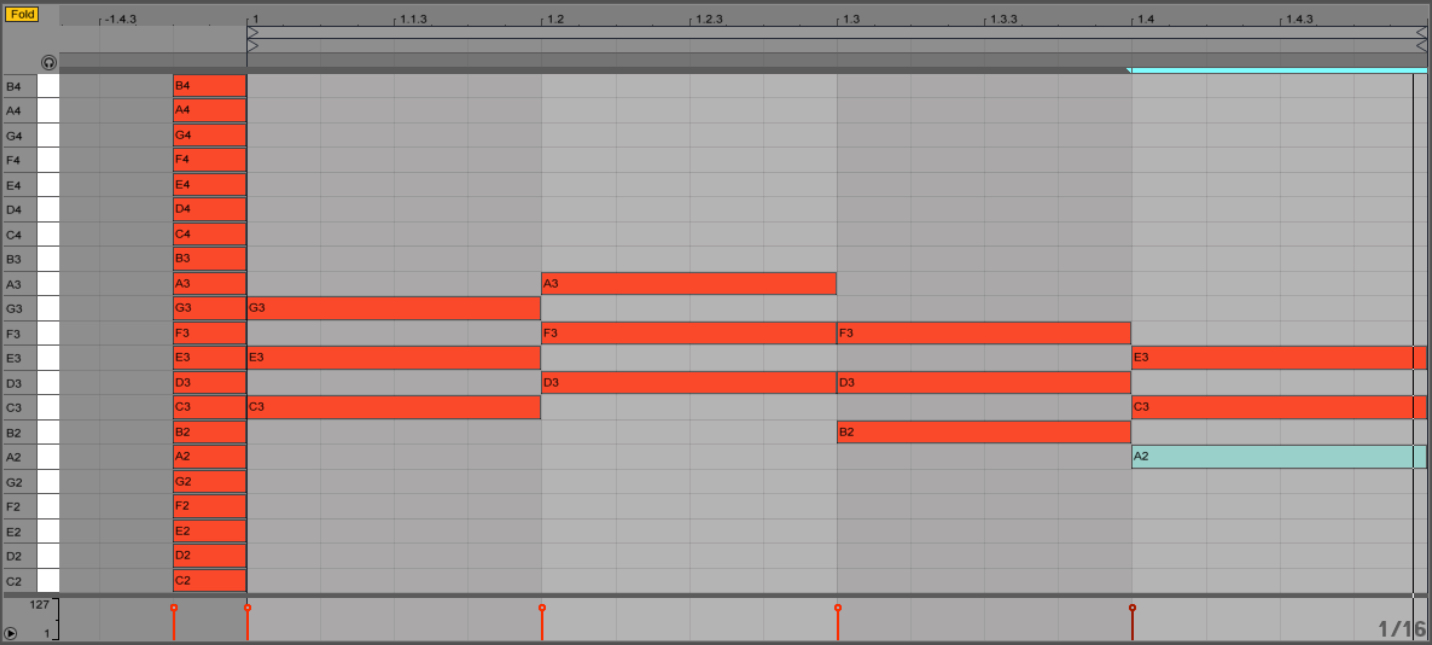
A screen resembling a DAW piano roll opens.
Many of its functions are similar.
① Yellow: sets the note-value grid for entering notes.
The grid below changes accordingly.
② Blue: sets the pattern length from 1 to 4 bars.
If a pattern contains only the first bar, it repeats that bar rather than playing the later bars.
③ Green: lists the guitar articulations.
Enter a note to the right of an articulation to play it.
④ Purple: select the pencil and double-click the piano roll to enter a note.
Only one note can be placed at a given time position.
Select the eraser to show a delete mark next to each note.
Click the mark to delete the note.

You can also make finer adjustments to each note.
Select a note and adjust the following:
- Stroke: selects upstroke or downstroke.
Alternating them generally produces a natural feel. - Volume: adjusts the note’s level.
- Length: sets the note duration.
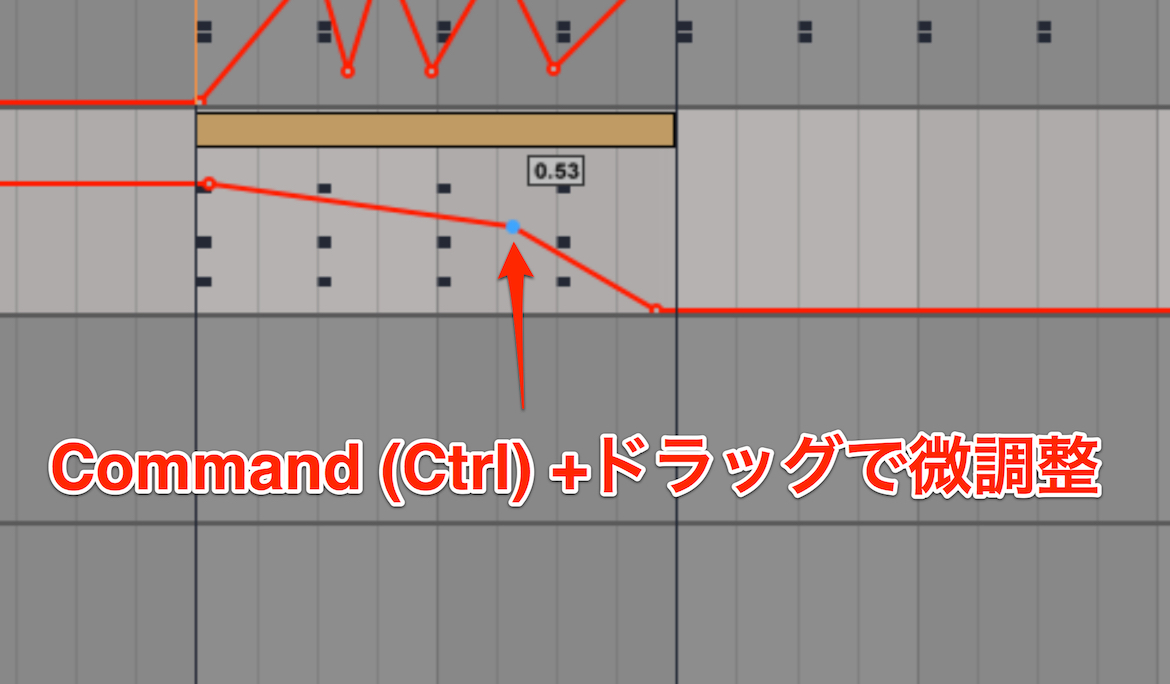
- Timing: moves the note slightly earlier or later to shape the groove.
- Chord reset: returns a chord altered by an articulation such as a hammer-on to its original form.
You can also drag notes up or down to change the strength of the performance.
Frequently Asked Questions
Q1. Which genres suit Scarbee Funk Guitarist?
It works well for EDM, dance and funk, as well as upbeat pop and other energetic tracks. It can cover modern funky rhythm guitar as well as lighter pop styles.
Q2. Can I select chords without a MIDI keyboard?
Yes. Search for and select chord names with the mouse. With a MIDI keyboard, REC can also list candidate chords from the notes you play.
Q3. Can I create my own guitar patterns?
Yes. The piano-roll editor lets you customize articulations, stroke direction, volume, timing and note length to create original patterns.
Q4. Why is the transpose control useful?
Transposing the triggering MIDI notes in your DAW can change which assigned chords are selected. The instrument’s transpose control changes the key while retaining the assignments.
Q5. How many chord presets are included?
This article does not specify a count. It includes a range of chord presets, and you can search and customize chords with the filter in the MAP tab.
NEW ARTICLES
Latest English Articles