Waves Gold Bundle is a go-to plug-in collection for many music producers, but its capabilities often go underused. This article offers practical examples of saving time on drums with Eddie Kramer Drum Channel, bringing up quiet sounds with MV2, processing guitar and bass with Renaissance Axx, designing sounds using only Vitamin's enhanced signal, and applying parallel compression with H-Comp. These techniques can help you improve your mixes while working more efficiently.
Get More from a Classic Bundle
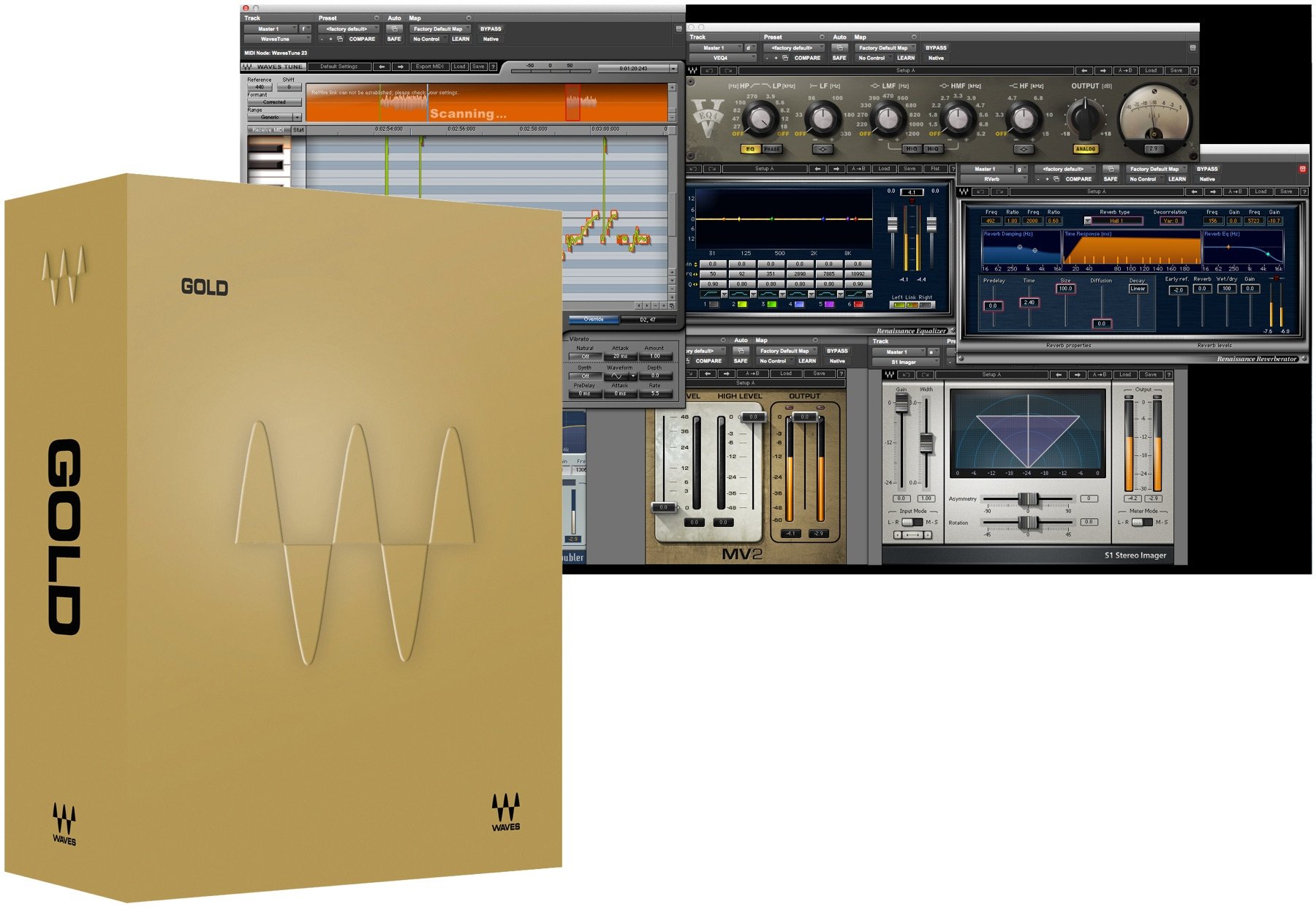
In this article, we will share tips for Waves Gold Bundle, the familiar collection of essential plug-ins, focusing on a few selected processors.
We will explore distinctive features and some less obvious ways to use them, so read on to the end.
Let's take a closer look at each plug-in.
Better Mixing Tips: Waves Gold Bundle — Video
Selected Questions and Answers from the YouTube Video

I always learn a lot from your videos! I'm looking for a plug-in with sound effects that build excitement just before a chorus or help one phrase transition smoothly into the next. Do you know of any?

Using a sound-effects library is one option. https://sonicwire.com/product/fx
▶ Buy the product
Eddie Kramer Drum Channel
First up is Eddie Kramer Drum Channel.
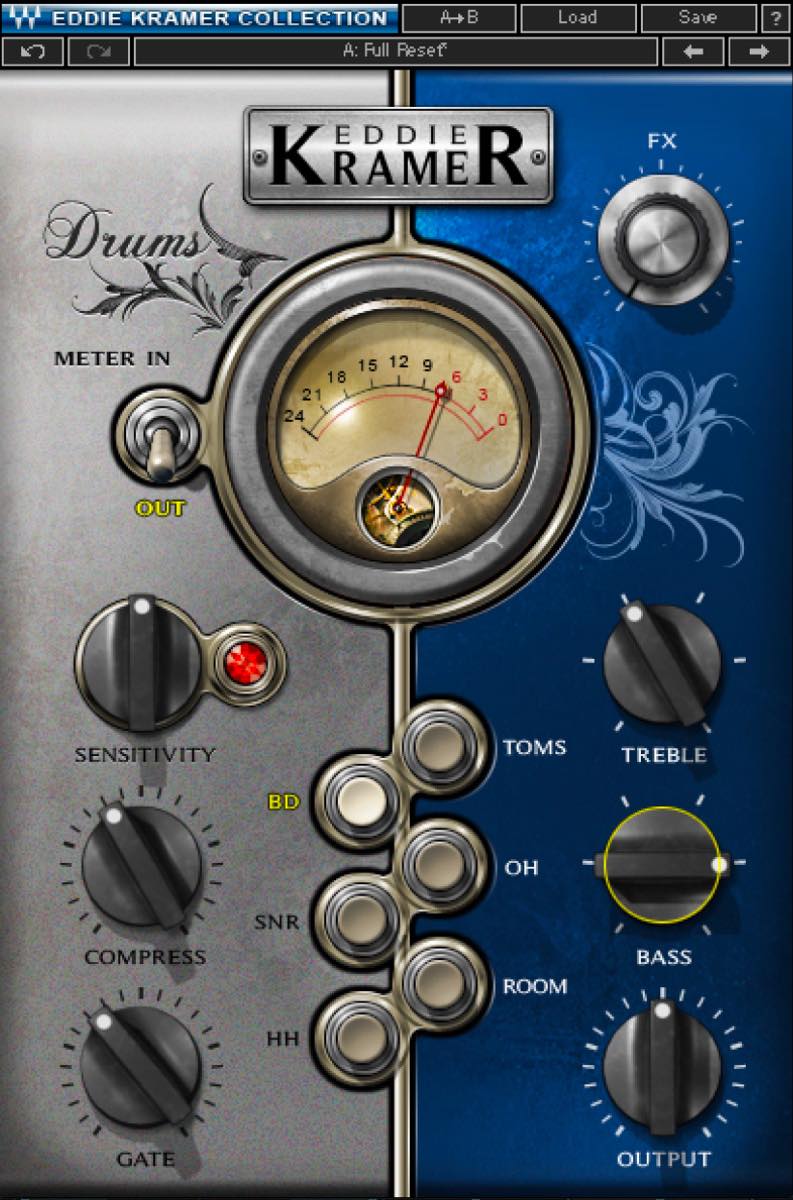
Developed under the supervision of Eddie Kramer, an engineer who has worked with artists including the Beatles, Jimi Hendrix, and Led Zeppelin, this plug-in is designed to make elements of his approach readily accessible.
It lives up to that description: simply insert it and select the appropriate drum type to quickly establish a starting point for your mix.
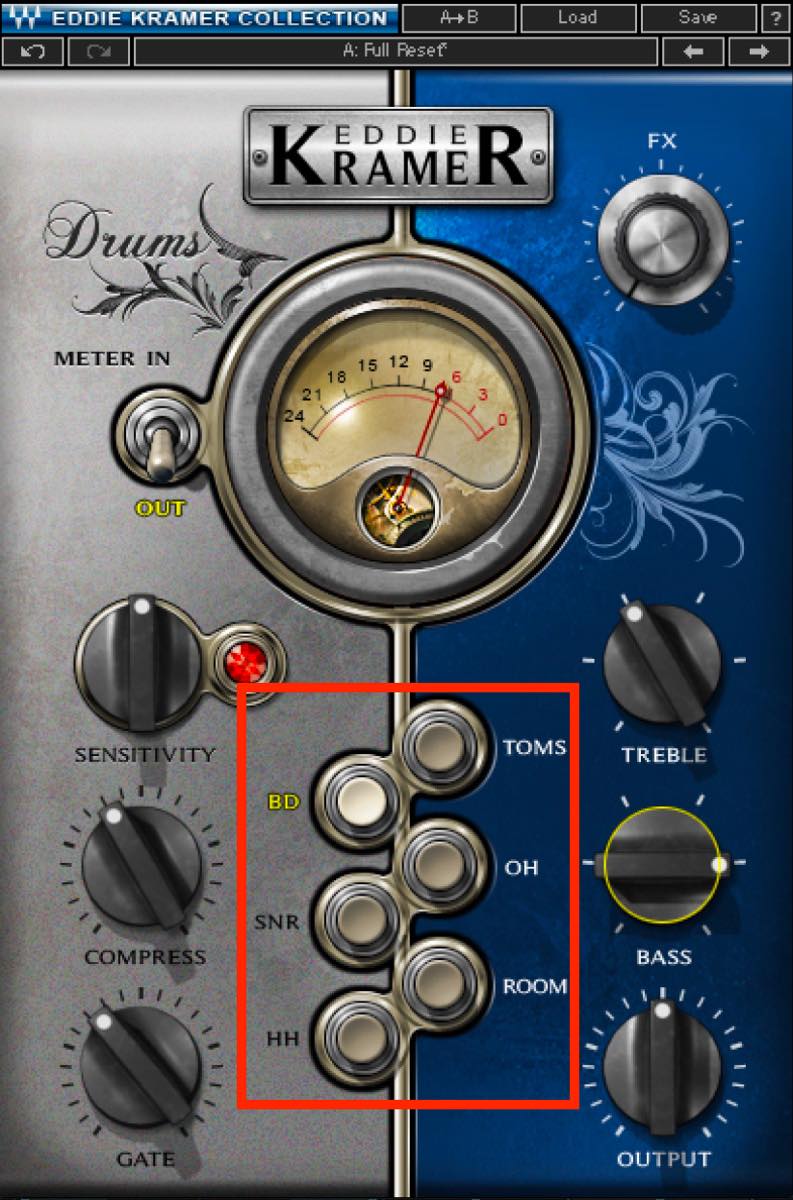
Then adjust the EQ and other controls to taste. Let's compare the sound before and after processing.
(The plug-in is applied to the snare and kick.)
Eddie Kramer Drum Channel — Before
Eddie Kramer Drum Channel — After
The great thing about this plug-in is how quickly you can work. If its character matches the sound you have in mind, you can shape that sound with very little effort—and the results are highly usable. Consider adding it to your toolkit as you would a piece of outboard gear that makes things sound good simply by passing audio through it.
MV2
Next is MV2.
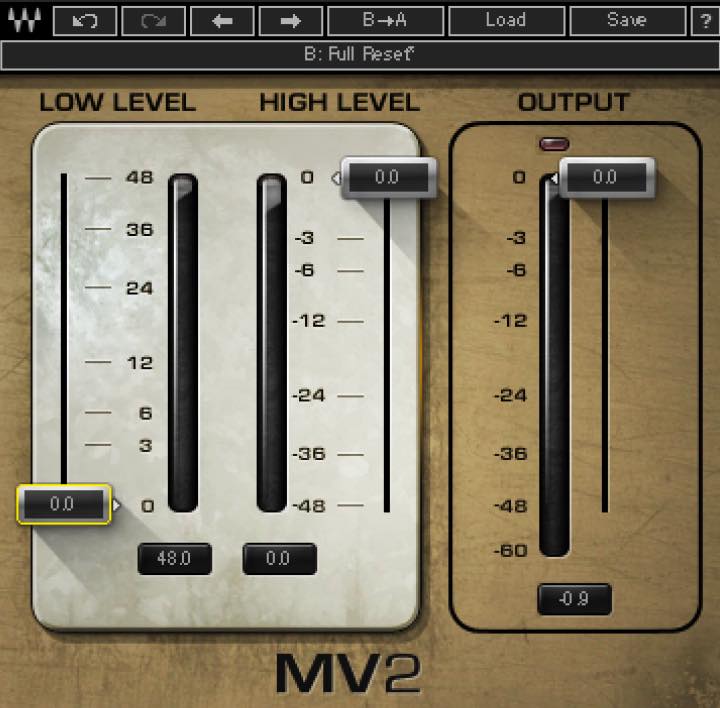
This is a dynamics processor, but its standout feature is that it can bring up quiet sounds instead of reducing loud peaks like a conventional compressor.
It is particularly useful when you want to even out levels without losing the nuances of the original sound, or bring forward details that tend to get buried.
Let's apply it to a guitar track. Here is the phrase we will use.
MV2 — Before
The muted notes between the main notes are quiet, so some of the groove gets lost when the guitar is combined with the other tracks.
Raise the LOW LEVEL slider to bring up those quieter sections.
The ratio appears to vary with the signal level, so try a substantial increase here and lower the output to compensate.
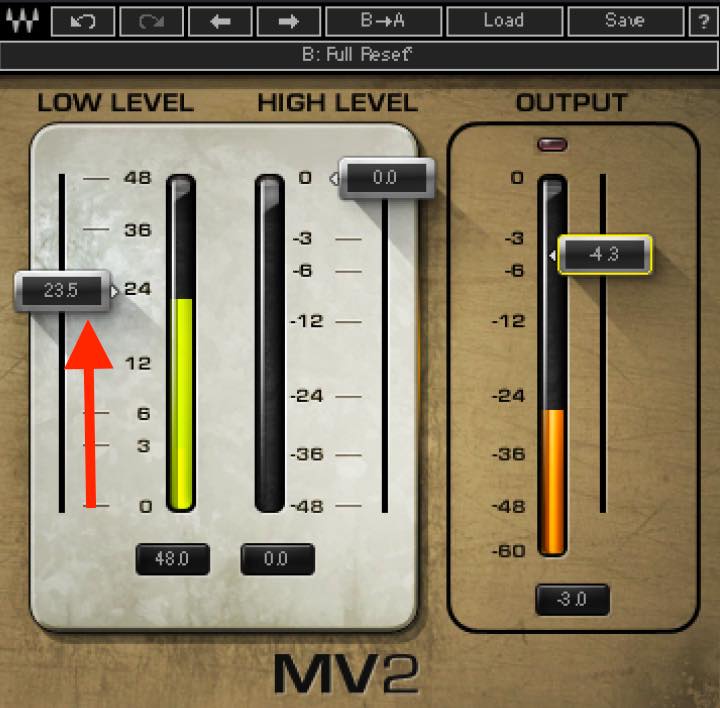
Here is the processed sound.
MV2 — After
The muted notes are clearly louder. The other notes also have a pleasing amount of sustain, giving the part more presence.
Renaissance Axx
Next up is Renaissance Axx.
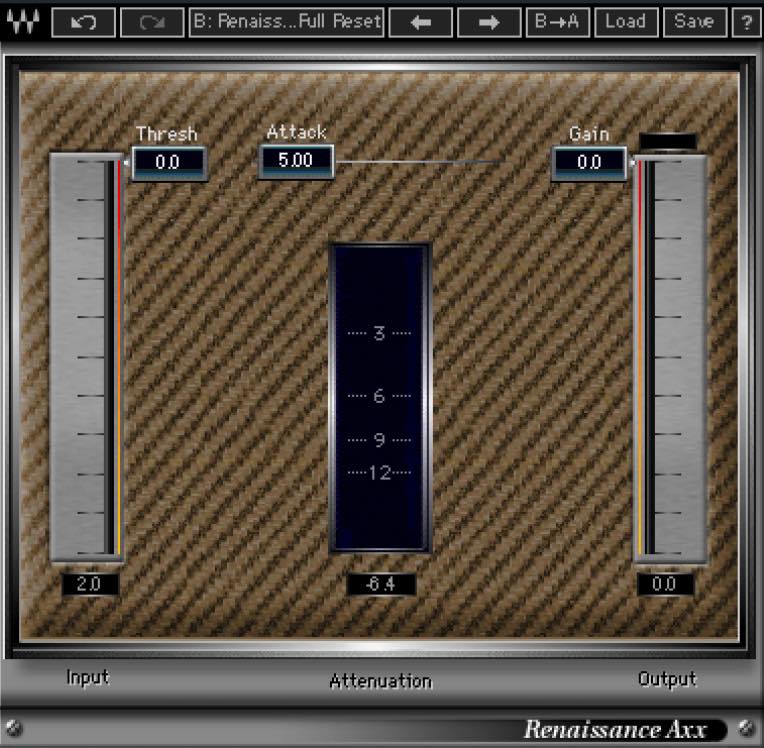
This compressor is tuned especially for guitar and bass. Its simpler set of controls makes it quick and easy to get results compared with more elaborate compressors.
Let's try it on this arpeggiated guitar track.
Renaissance Axx — Before
Our goal is to even out the attacks while adding a little sustain.
First, lower the threshold to introduce compression. This threshold control behaves somewhat like a maximizer: lowering it also increases the gain.
If you want to keep the perceived volume similar, hold Shift to select Threshold and Gain together, then lower them at the same time.
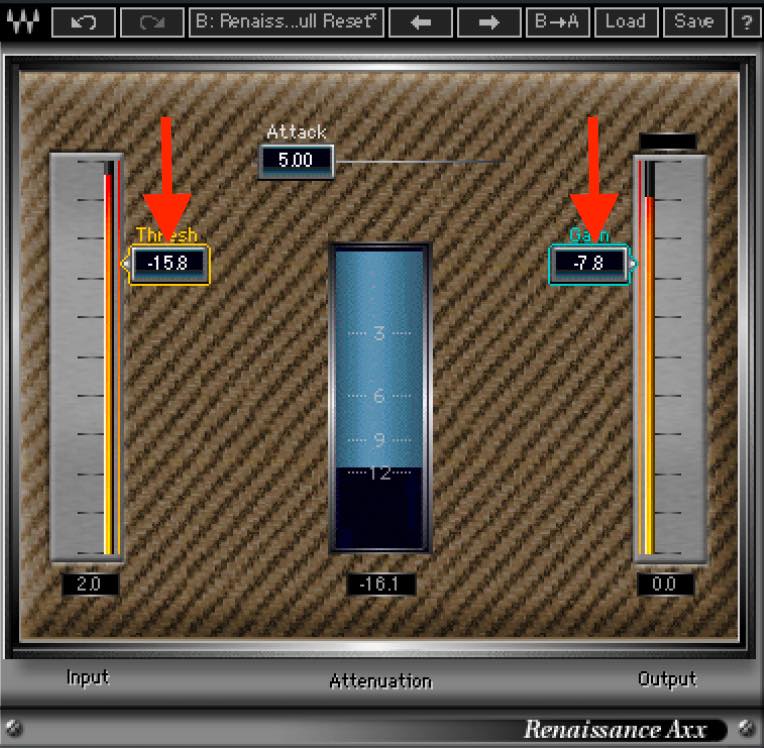
Even with fairly heavy processing, the result does not sound excessively compressed.
All that remains is to adjust the attack to taste. A faster setting softens the touch, while a slower setting lets more of the picking detail through.
Here is the processed sound.
Renaissance Axx — After
The result has more sustain and sits comfortably in the backing track.
Try it whenever you want to control the dynamics of a guitar or bass quickly.
Sound Design Using Only Vitamin's Enhanced Signal
Next is Vitamin.
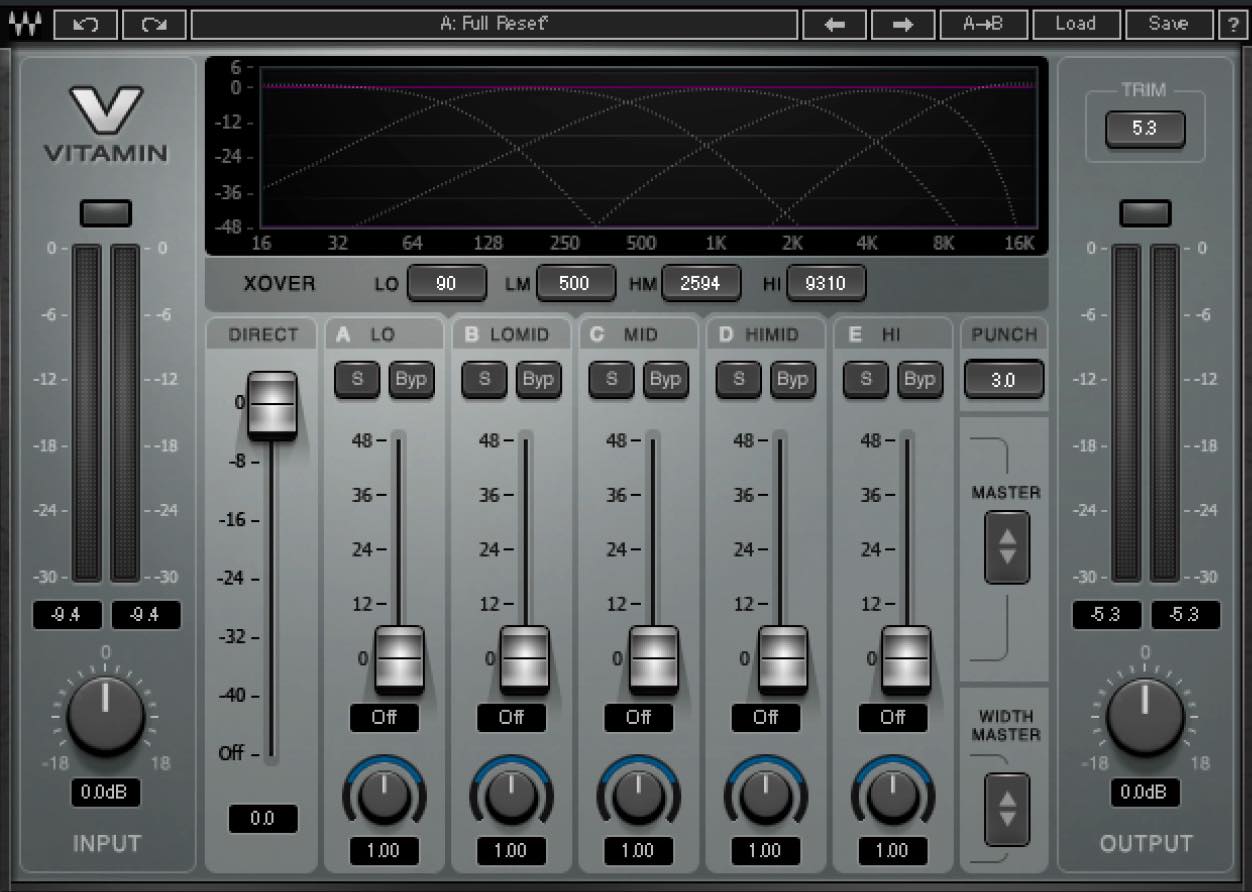
As a multiband harmonic enhancer, Vitamin lets you adjust the enhancement separately for each frequency band. Here, we will explore a slightly unusual way to use it.
This is the sound we will process.
Vitamin: Harmonic Sound Design — Before
We want this guitar track to occupy mainly the high frequencies. Even when it plays high notes, however, it contains relatively few harmonics above 5 kHz, so it tends to get buried.
That is part of the character of electric guitar, but let's be adventurous and use Vitamin to create a sound the instrument would not normally produce.
First, pull the DIRECT slider all the way down. Since we have not added any enhancement yet, the output will naturally be silent.
Now raise the sliders for the individual bands to build a sound using only the enhanced signal.
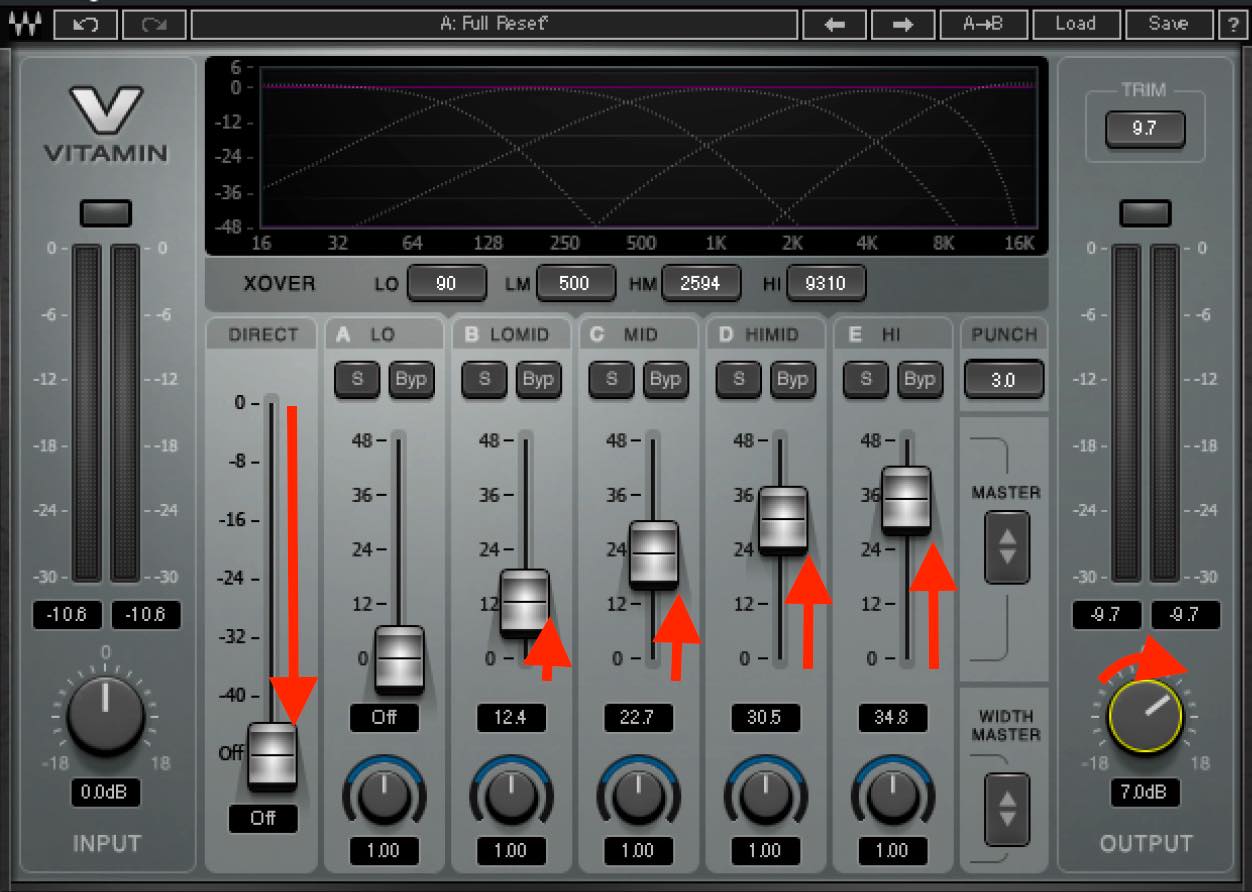
We want more high end, so raise that band generously. Bring up the other bands to support it. The low mids are already crowded in this mix, so we do not need much there.
The overall level drops a little, so raise the output.
Here is the processed sound.
Vitamin: Harmonic Sound Design — After
The texture has changed so much that it almost sounds like a different instrument. Depending on how you use it, this approach could produce some quite unusual sounds.
Treating Vitamin as a sound-design tool is another interesting way to explore it.
Parallel Compression with H-Comp
Let's move on to H-Comp.
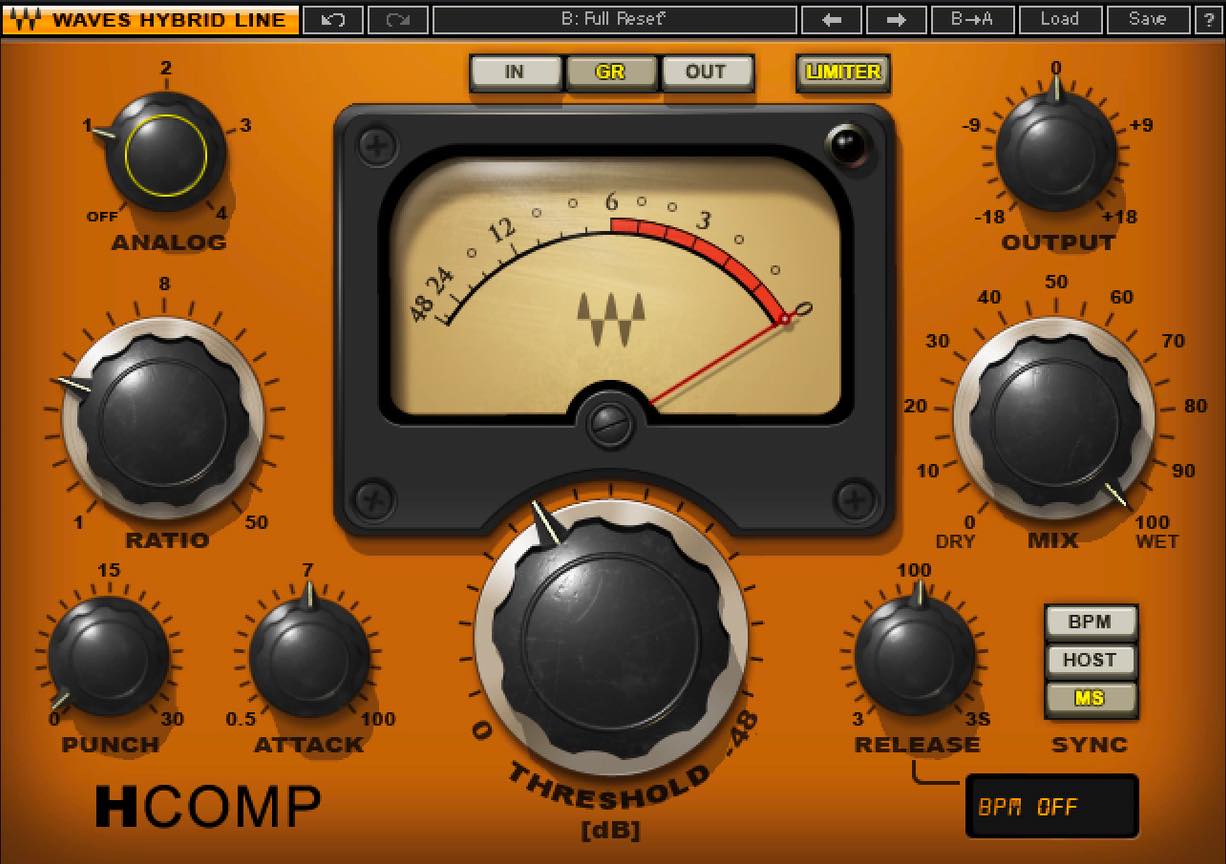
Alongside RComp, H-Comp is one of Waves' staple compressors. Its MIX knob is particularly useful, letting you set up parallel compression entirely within a single track.
Let's try it on this electric piano part.
H-Comp: Parallel Compression — Before
Incidentally, the instrument used here is Electric Grand 80, which is also included in the Gold Bundle discussed in this article.
We want to use compression creatively to shape the sound, but conventional settings are not producing the result we have in mind. This is a good time to try parallel compression.
Set a fairly high ratio, relatively fast attack and release times, and a low threshold. The key is to make the compression sound slightly excessive on its own.
Turn MIX fully counterclockwise to start with the dry signal. Gradually blend in the compressed sound, stopping when the balance feels right.
Finally, raise the output to compensate for the gain reduction.
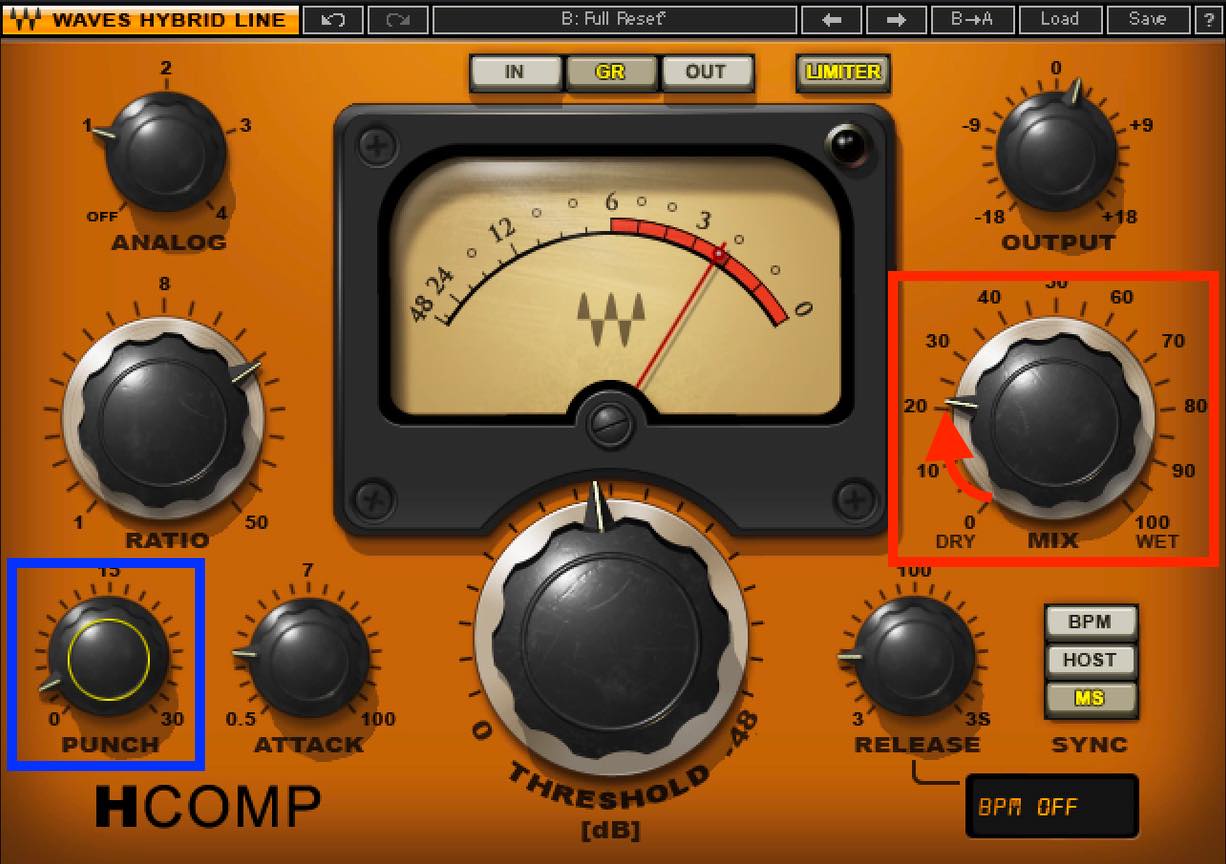
The PUNCH knob is another distinctive H-Comp feature. Even a small increase can emphasize the attack more strongly than simply lengthening the attack time, producing the punch of a vintage compressor being driven hard.
Here is the sound with all of those settings applied.
H-Comp: Parallel Compression — After
Parallel compression lets you find the right amount of processing by adjusting MIX, helping you achieve a more natural result.
Mid/Side Processing with S1 MS Matrix and Q10
Next, let's look at a technique using S1 MS Matrix and Q10.
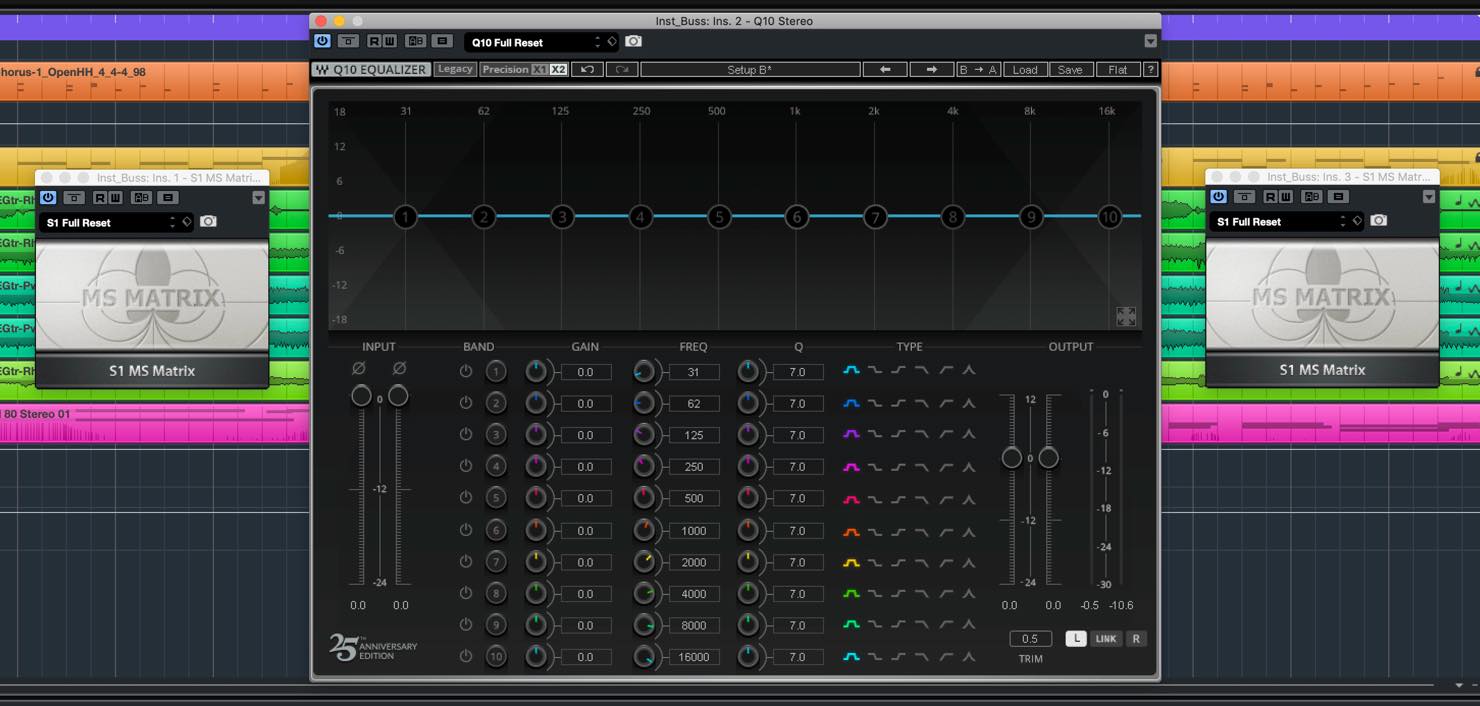
Insert two instances of S1 MS Matrix in the order shown, using them as a pair.
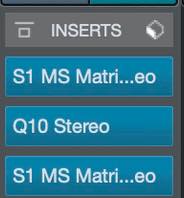
The first converts the left/right stereo signal to mid/side. Process that signal with another plug-in, then use the second matrix to convert it back to left/right.
Between the two MS Matrix instances, the left channel carries the mid signal and the right channel carries the side signal. Independent left/right settings in the intervening plug-in therefore let you process mid and side separately.
Here, we will use a Q-series EQ, which lets you unlink the channels and set the left and right sides independently, as shown.
The Q series received more than a visual update for Waves' 25th anniversary. Additions include proportional Q, which varies the Q appropriately with gain; a band-focus function; and double-precision processing that uses 64-bit precision for 32-bit floating-point audio.
Let's put this mid/side setup to work. We will process a bus containing all the tracks except drums, bass, and melody.
The MS Matrix setup lowers the level by 6 dB, so raise the track fader by 6 dB to compensate.
Start by cutting low frequencies from the sides. Select the R channel—the side signal—and set band 1 to a high-pass filter at around 160 Hz. As you adjust it, listen to the presence and tightness of the kick and bass.
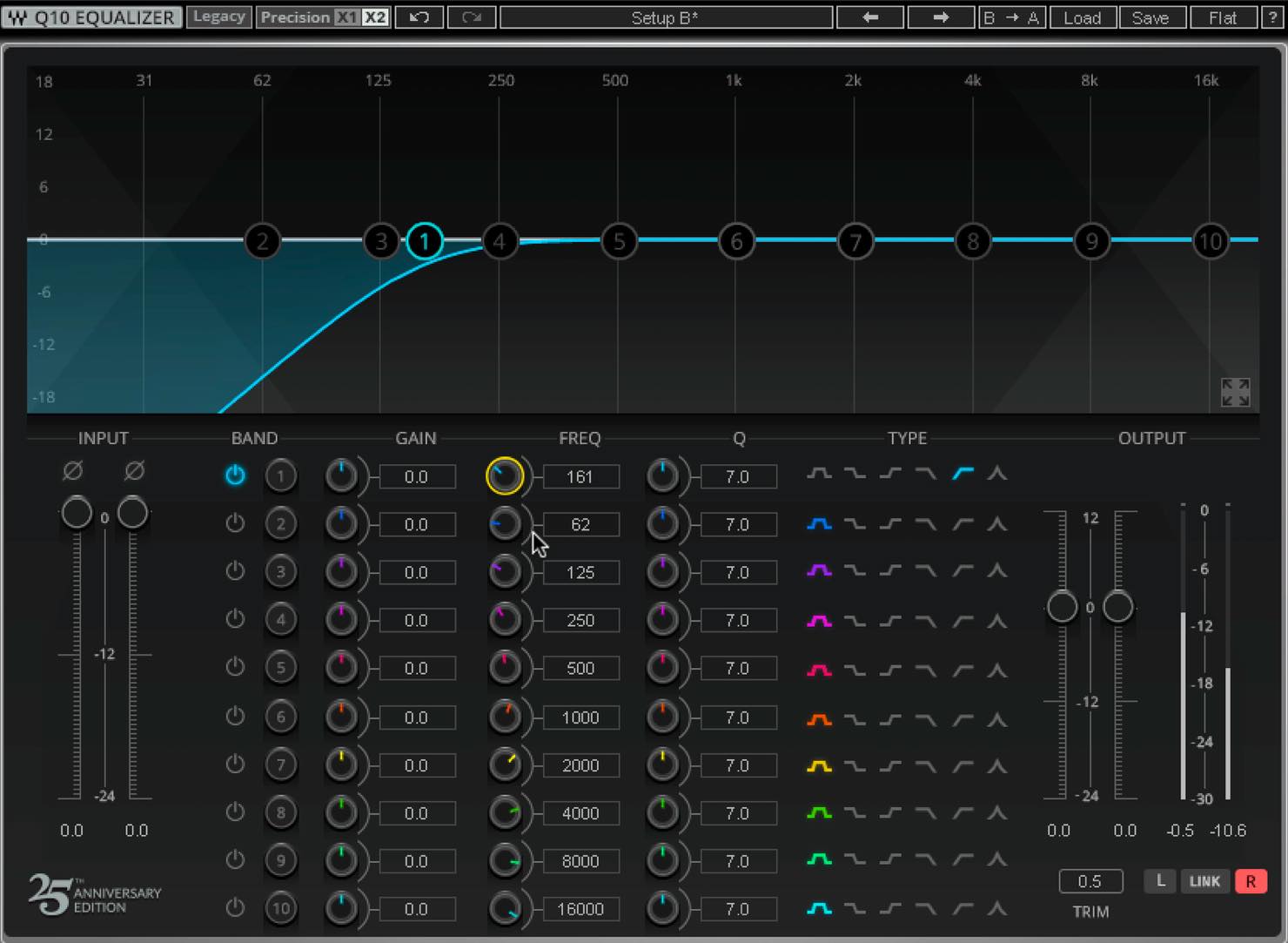
Next, select the L channel—the mid signal—and cut around 1.6 kHz to make room for the melody. Listen to how clearly the melody stands out as you adjust the EQ.
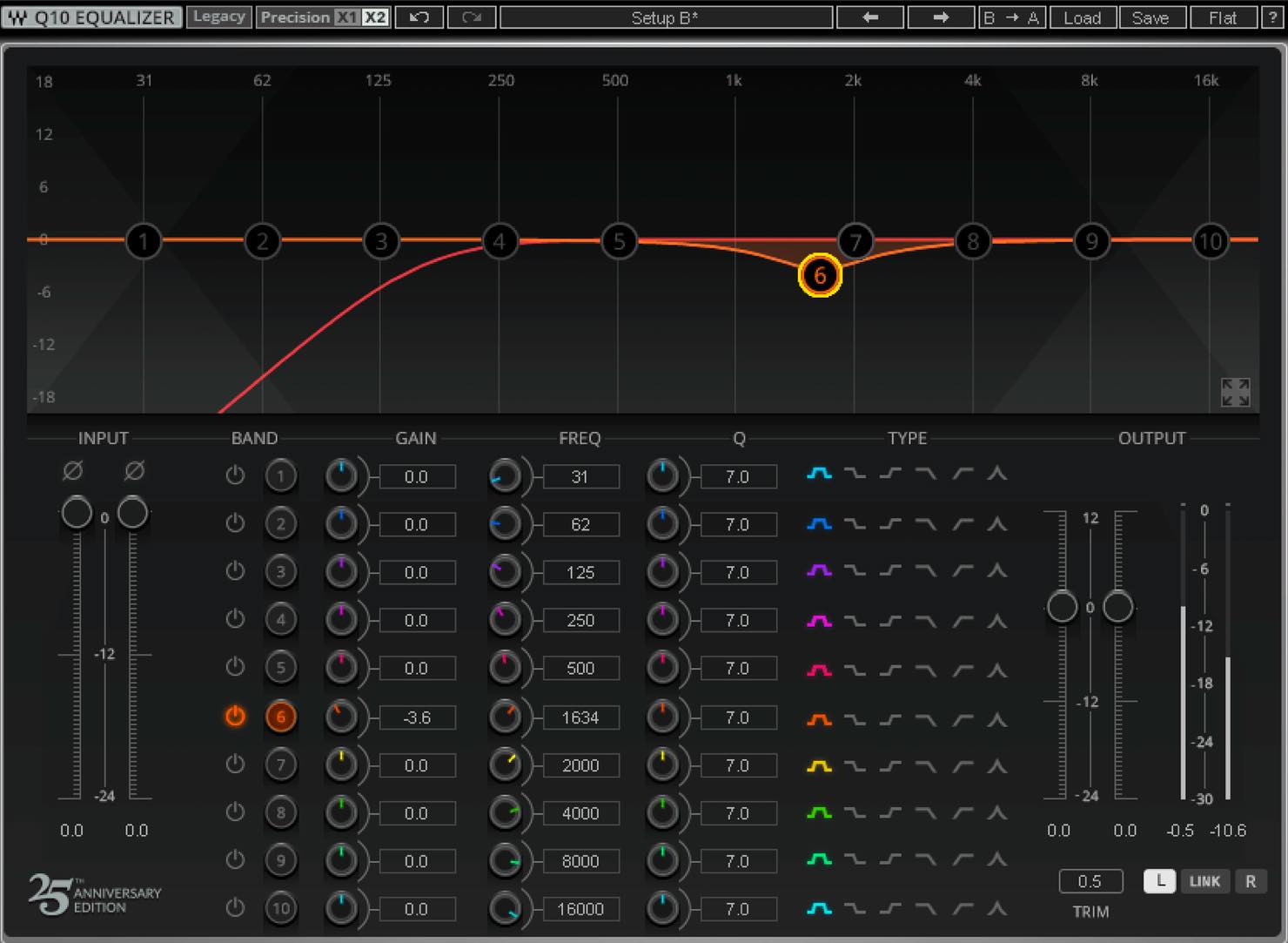
You can also try similar processing on the reverb track. Here, we high-pass both mid and side, then cut around 1.6 kHz in the mid signal only.
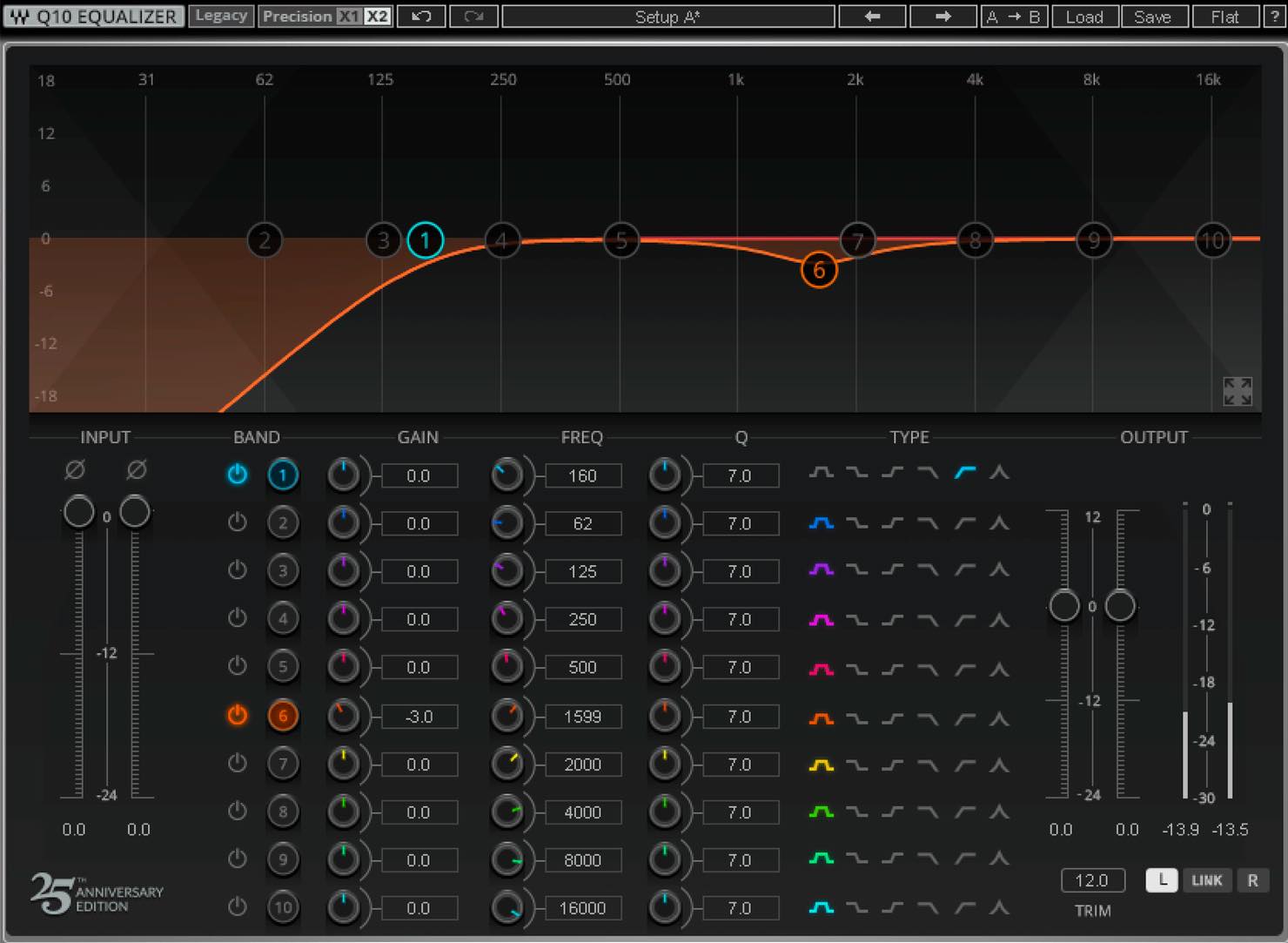
Let's compare the entire mix before and after these changes.
S1 MS Matrix and Q10: Mid/Side EQ — Before
S1 MS Matrix and Q10: Mid/Side EQ — After
The low end is cleaner, the stereo positioning is more focused, and the melody is clearer.
Mid/side processing is useful beyond mastering. Applying it to buses and reverb returns lets you fine-tune the stereo image and separation between parts.
Multiband Stereo Imaging with Vitamin
Finally, let's explore another way to use Vitamin.
In addition to harmonic enhancement, Vitamin provides multiband stereo imaging.
Insert it on the master bus and narrow the stereo spread of the low end.
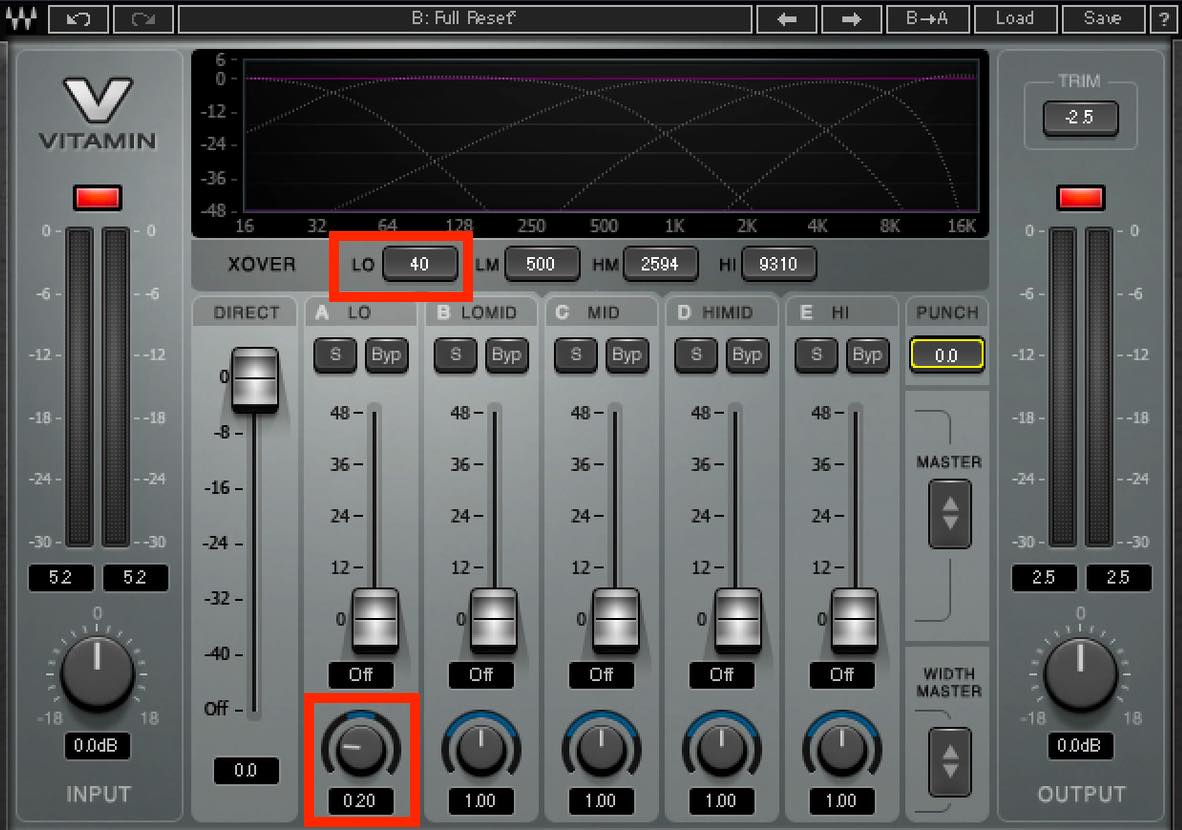
Set the low-band crossover to around 40 Hz, then turn that band's STEREO WIDTH control counterclockwise to bring it closer to mono.
Depending on the genre, you might make this band completely mono. Here, we will use a setting of around 0.2.
We do not need the transient-shaping PUNCH control for this example, so set it to 0.
Let's compare the sound before and after processing.
Vitamin: Low-Band Stereo Width — Before
Vitamin: Low-Band Stereo Width — After
The low end is tighter still, and the kick and bass seem to have more weight. The low mids also sound less muddy, giving the whole mix greater clarity.
Vitamin is a versatile plug-in, but it can also be effective for a very specific task like this.
It is light on processing resources too, so give it a try in your mixes.
What did you think?
Gold Bundle may seem like a basic collection of familiar tools, but it also includes plug-ins with some distinctive capabilities. If you own it, explore these features and experience both how quickly you can work and how much depth these tools offer.
This video runs a little over 17 minutes. We share tips using selected plug-ins with distinctive features from the familiar Waves Gold Bundle.
› Better Mixing Tips #3
📝 Article: https://t.co/YC40l1Ln2D🎥 YouTube: https://t.co/7qUy1NjKVh@WavesAudioLtd @minetjp pic.twitter.com/M1Akj6bKC7
— SLEEP FREAKS (@SLEEPFREAKS_DTM) September 21, 2019
Frequently Asked Questions
Q1. What is Eddie Kramer Drum Channel best suited to?
Its preset-based processing helps you quickly achieve a polished drum sound. It is especially useful for beginners establishing a starting point for a mix, or for productions where speed matters.
Q2. How does MV2 differ from a conventional compressor?
A conventional compressor reduces louder sounds, while MV2's low-level processing brings up quieter sounds. This makes it useful for evening out levels while retaining the original nuances, or bringing forward details that might otherwise get buried.
Q3. How does H-Comp's parallel compression work?
H-Comp's MIX knob blends the compressed and dry signals within the same track. This offers flexible, natural-sounding dynamics control that can be difficult to achieve with conventional compression settings alone.
NEW ARTICLES
Latest English Articles